Monsoon Weddings: Risks, Reality and Romance
The NRI couple's honest guide to the season that is simultaneously India's most romantic and most logistically demanding — understanding what the monsoon actually is, what it requires, and how to plan the wedding that uses the rain rather than being undone by it
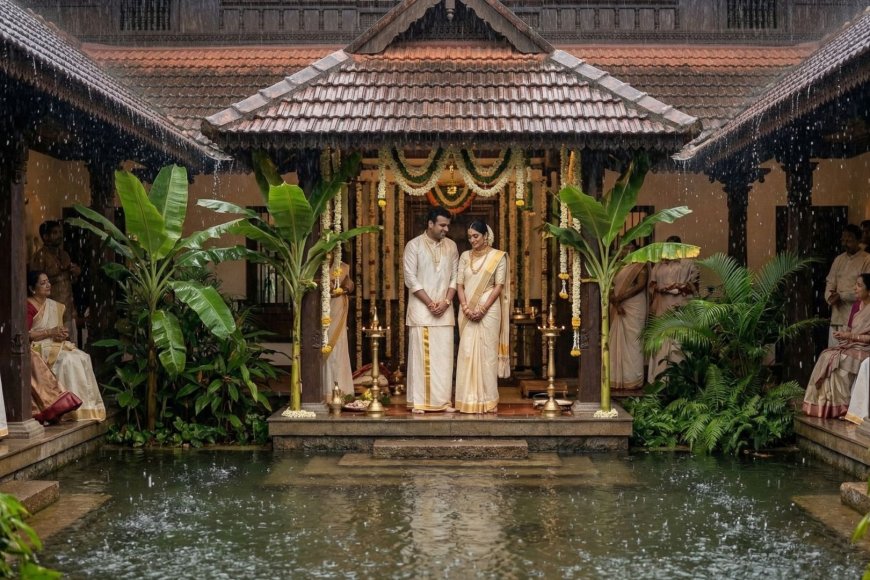
The Wedding That Happened in the Rain
The couple had not planned to get married in the rain.
They had planned to get married in July — a date chosen for the muhurat the Pandit had identified, for the availability of the specific Kerala venue they had wanted, for the leave schedules of the international guests who could not have made June or August work. They had known, when they chose July in Kerala, that they were choosing the monsoon. They had read the weather data. They had understood, in the abstract, what the monsoon meant.
The abstract understanding and the specific reality of the monsoon at the venue were different things.
The rain began two hours before the ceremony. Not the gentle, atmospheric rain of the romantic imagination — the monsoon that provides the backdrop without the inconvenience — but the specific rain of the Kerala monsoon in July: dense, warm, loud, relentless, the rain whose sound on any surface dominates all other sounds and whose volume in four hours can exceed what some places receive in a month.
The ceremony was moved indoors. The outdoor photograph session that had been planned for the terrace was moved to the covered veranda. The reception that had been planned for the garden was moved to the interior hall.
The wedding was extraordinary.
Not despite the rain. Not regardless of the rain. Because of the decisions that had been made in the planning — the venue whose indoor spaces were as beautiful as the outdoor ones, the photographer who knew how to work with the monsoon light and the rain-streaked windows and the specific quality of the illumination that the overcast sky produced, the caterer whose hot food was even more welcome than it would have been on a dry evening, the décor that used the rain's presence as part of the aesthetic rather than treating it as the occasion's failure.
The guests, afterward, said it was the most beautiful wedding they had attended.
The couple said they would not have changed the rain.
This guide explains how to get to that outcome — through planning rather than luck.
Understanding the Monsoon: What It Actually Is
The Indian Monsoon's Geography
The Indian monsoon is not a single weather event. It is a seasonal wind pattern that brings moisture-laden air from the Arabian Sea and the Bay of Bengal across the subcontinent — arriving at different times, with different intensities, and producing different conditions across India's geographic range.
The Kerala and southwest coast monsoon:
The Kerala monsoon — the earliest arrival of the seasonal rain in India, typically reaching the coast by the first days of June — is the monsoon at its most intense and its most sustained. The Western Ghats' geography concentrates the moisture-bearing winds against the mountain range, producing rainfall totals that are among the highest in the world during the season. The monsoon season in Kerala runs from June through September, with July and August at the peak.
The Kerala monsoon wedding's specific character: the intensity of the rain is greater than anywhere else in India during the season. The planning for the Kerala monsoon wedding must account for the possibility of extended, heavy rain in a way that the more moderate monsoon locations do not require.
The Mumbai and western coast monsoon:
Mumbai's monsoon — arriving in June and extending through September — is the city's most dramatic season and the season that has given the city its specific cultural relationship to the rain. The Mumbai monsoon wedding occupies the specific intersection of the city's cultural familiarity with the rain and the practical complexity of the city's infrastructure under monsoon conditions.
The Mumbai monsoon's specific challenge: the city's flooding. The specific areas of Mumbai that flood under heavy rain, the travel time implications of the monsoon's impact on the city's roads, and the airport's specific vulnerability to heavy rain are the planning variables that the Mumbai monsoon wedding must address.
The Rajasthan and central India monsoon:
Rajasthan's monsoon — arriving later than the coastal monsoon, typically in July, and less intense than the western and eastern coastal monsoons — is the monsoon at its most moderate for the wedding planning context. The Rajasthan monsoon brings the specific relief of the rain to the desert landscape, producing the green that the Rajasthani landscape does not have in the other seasons and creating the specific atmospheric quality of the rain-washed sandstone that the wedding photographs from this season capture.
The Rajasthan monsoon wedding's specific advantage: the landscape is transformed by the rain in ways that are genuinely beautiful — the desert's green period, the waterfalls that appear in the Aravalli hills, the specific quality of the post-rain light on the heritage properties. The specific challenge: the Rajasthan monsoon's unpredictability, the flash flooding that can occur in certain areas, and the specific access challenges that the heavy rain creates in a landscape whose road infrastructure is not designed for the water volumes the monsoon occasionally produces.
The North India and Delhi monsoon:
Delhi's monsoon — arriving in late June or early July and extending through September — is among the most dramatic weather transformations of any Indian city. The monsoon that breaks the North Indian summer's specific heat is an event whose relief is genuinely physical — the temperature drop that accompanies the first significant rains is the transformation of the city's ambient experience.
The Delhi monsoon wedding's specific character: the intermittent quality of the monsoon in the north — the heavy rain that arrives, passes, and gives way to the clear, washed sky — is different from the sustained monsoon of the coastal regions. The Delhi monsoon wedding's outdoor elements are not impossible; they are variable. The planning for the Delhi monsoon wedding is the planning for the variable condition rather than the sustained rain.
The Monsoon's Specific Beauty
The monsoon's specific beauty — the element that makes the monsoon wedding a genuine aesthetic choice rather than merely a logistical compromise — is real and worth understanding.
The light:
The monsoon's overcast sky produces a specific quality of diffuse, even light that is among the most beautiful available for the outdoor wedding photograph. The harsh shadows of the midday summer sun — the shadows that require the photographer to manage the subjects' positioning to avoid the unflattering angles — are absent in the monsoon's overcast light. The diffuse light that covers the entire sky is the light that flatters faces, that produces the deep colours in the florals and the textiles, and that gives the heritage property's sandstone walls the specific warmth of the light that bounces from all directions rather than casting from one.
The green:
The monsoon transforms the North Indian landscape in ways that no other season does — the specific deep green of the vegetation that the monsoon brings, the flowering that the rain triggers, the specific lushness that the landscape has for the two to three months of the season. The garden wedding in August, in the full green of the monsoon season, occupies a landscape whose richness is entirely specific to this season.
The rain itself:
The rain — the specific sensory experience of the warm monsoon rain — is the element of the monsoon wedding that is most genuinely romantic and most specifically Indian. The petrichor: the specific smell of the rain on dry earth that has no equivalent in any other climate or season. The sound of the rain on the roof of the covered terrace. The specific quality of the light through rain-streaked glass. The experience of being warm and dry inside a beautiful space while the monsoon provides the most dramatic possible backdrop through every window and every open door.
The monsoon wedding that uses these elements — that designs for them rather than working against them — produces the specific aesthetic that the dry-season wedding cannot reproduce.
The Risks: What the Monsoon Actually Threatens
The Travel Disruption
The monsoon's most significant risk for the NRI wedding is the travel disruption — the impact of the rain on the ability of the international guests, the local guests, and the vendors to reach the wedding venue.
The flight disruption:
The monsoon's heavy rain reduces airport visibility and creates the specific conditions — wind shear, turbulence, low visibility approaches — that result in flight delays and diversions. The major Indian airports that serve the popular monsoon wedding destinations — Kochi, Mumbai, Delhi — all experience specific monsoon-related disruption whose frequency and severity vary by year and by season intensity.
The international guest whose flight has been delayed by six hours arrives at the wedding in a different condition from the guest whose travel has been straightforward. The wedding programme that can absorb a six-hour guest arrival delay — that does not place the first significant event in the first two hours after the latest international arrivals are expected — is the programme that serves the monsoon wedding's travel reality.
The road travel:
The rain that is heavy enough to cause flooding in specific areas, to close specific roads, and to make the travel time from the airport to the venue significantly longer than the dry-season equivalent is the rain that the monsoon wedding's ground transport planning must address.
The transport planning for the monsoon wedding should include: the specific roads that are most vulnerable to flooding, the alternative routes, the additional time built into every transfer, and the communication protocol for guests whose transport is delayed.
The Outdoor Event Risk
The outdoor event in the monsoon season is the event that is most directly at risk — the ceremony in the open garden, the reception on the terrace, the photograph session in the grounds. Each of these events requires specific monsoon planning.
The shelter infrastructure:
The tent or the shamiana — the traditional Indian wedding's outdoor structure — is the shelter infrastructure most commonly used for the monsoon wedding's outdoor events. The tent that is appropriate for the monsoon is not the decorative tent of the dry-season wedding — it is the waterproof, properly anchored, drainage-considered structure that can manage the specific water volumes the monsoon produces.
The tent's waterproofing: the tent that leaks in the monsoon rain is the tent that was not selected with the monsoon in mind. The specific membrane, the quality of the seams, the drainage of the water from the roof surface — these are the specifications that the monsoon tent requires and that the standard wedding tent may not provide.
The tent's anchoring: the monsoon's wind accompanies the rain, and the wind that arrives with the heavy rain is the wind that tests the anchoring of the outdoor structure. The tent that has been properly anchored for the wind conditions of the monsoon season is the tent that remains in position during the storm. The tent that has been anchored for the dry-season decorative function is the tent that becomes the programme's emergency.
The drainage:
The venue's drainage — its capacity to move the monsoon's water volumes away from the event spaces — is the venue selection criterion that the monsoon wedding requires and that the dry-season wedding does not need to consider.
The courtyard that floods under heavy rain, the garden whose grass becomes waterlogged, the terrace whose drainage cannot manage the monsoon's hourly water volume — these are the venue characteristics whose discovery on the wedding day is too late. The venue assessment for the monsoon wedding must include the specific inquiry into drainage capacity and the specific review of how the venue has managed the rain at previous monsoon events.
The Vendor Reliability
The monsoon's impact on vendor travel — the florist whose delivery van cannot reach the venue because of flooding, the decorator whose setup crew is delayed by the rain, the caterer whose additional equipment is delayed in transit — is the vendor reliability risk that the dry-season wedding does not face.
The monsoon wedding's vendor management requires the specific conversation about the rain contingency: what is the vendor's plan if their setup team is delayed by rain-related travel disruption? What is the backup plan for the delivery that cannot make the scheduled time? The vendor who has answered these questions specifically — who has a specific monsoon contingency plan based on their experience with the season — is the vendor whose reliability in the monsoon can be assessed rather than assumed.
The Planning: How to Use the Rain Rather Than Fight It
The Venue Selection
The monsoon wedding's most important planning decision is the venue selection — specifically, the selection of the venue whose indoor spaces are as beautiful as its outdoor ones.
The venue whose appeal is entirely its outdoor garden — whose interior is a functional but not beautiful space — is not the venue for the monsoon wedding. The venue that has been chosen for the monsoon wedding should be beautiful in the rain: the indoor spaces that carry the same aesthetic quality as the outdoor ones, that are designed to be experienced as the primary event spaces rather than as the fallback when the outdoor spaces become unusable.
The Kerala homestead:
The traditional Kerala homestead — the nalukettu or the tharavadu — is the venue whose architecture is specifically designed for the monsoon. The central courtyard that receives the rain is the design element that makes the monsoon the building's living feature rather than its adversary. The covered verandas that surround the courtyard allow the ceremony and the celebration to be conducted in proximity to the rain without the rain's direct impact. The Kerala homestead wedding in the monsoon is the wedding whose venue uses the season as its aesthetic resource.
The heritage haveli with covered spaces:
The Rajasthani haveli whose coverage of verandas, jarokhas, and covered interior courts allows the celebration to move between the covered and the uncovered elements in response to the rain — the haveli that is designed to be lived in through the monsoon rather than closed against it — is the heritage venue most appropriate for the monsoon wedding.
The contemporary property with flexibility:
The contemporary destination property — the resort, the boutique hotel — whose event spaces include both the outdoor garden and the indoor hall of equivalent quality, and whose management has specific experience with the monsoon wedding's flexibility requirements, is the venue whose professional management provides the specific contingency capability that the monsoon requires.
The Programme Design for Flexibility
The monsoon wedding's programme should be designed for flexibility — the programme that can absorb the rain's arrival and departure without losing its essential character.
The rain contingency plan:
Every outdoor element of the programme should have a specific indoor alternative — not "we will move inside if it rains" as a general intention, but the specific indoor configuration for each outdoor event, confirmed in advance with the venue, sized for the full guest count, and beautiful enough to be the event's genuine location rather than its emergency.
The contingency plan should be communicated to the wedding planner, the venue, and the vendors before the wedding day — so that the decision to move indoors is the execution of a plan that everyone is prepared for rather than the management of a crisis that nobody has anticipated.
The programme timing:
The monsoon's rain is often not constant — the heavy rain that arrives in the afternoon may clear by evening, the morning that begins overcast may be clear by noon. The programme designed with specific flexibility in the timing — the ceremony that can move earlier if the weather is good in the morning, the reception that can begin outdoors and move inside as the rain arrives — uses the monsoon's variability rather than being fixed to a schedule that the weather cannot guarantee.
The photography programme:
The monsoon wedding's photography programme should include the specific shots that use the rain — the photograph session in the courtyard as the rain falls, the portraits with the rain-streaked window behind the couple, the early morning session in the post-rain light when the landscape is washed and luminous. The photographer briefed on the monsoon's specific beauty is the photographer who captures the season's specific gifts rather than only the challenges.
The Décor for the Monsoon
The monsoon wedding's décor should be designed for the indoor-outdoor flexibility — the décor that works equally well in the indoor configuration and the outdoor configuration, that uses the season's visual vocabulary rather than being defeated by the inability to use the outdoor spaces fully.
The colour palette:
The monsoon's colour vocabulary — the deep greens, the specific blues, the rich earth tones of the rain-soaked landscape — is the palette that the monsoon wedding's décor can use to create the specific visual coherence of the occasion with its season. The bright white and gold of the winter wedding is replaced by the deeper, richer palette that the monsoon's quality of light brings to its best.
The floral choices:
The monsoon's floral market — the specific flowers that are available and at their best in the rain season — is different from the winter market's abundance. The monsoon florals: the tropical flowers that thrive in the humidity, the jasmine whose fragrance is intensified by the rain, the water lilies and the lotus whose aquatic habitat makes them specific to this season. The florist who knows the monsoon's floral vocabulary designs the monsoon wedding with flowers that are at their best in this season rather than flowers that are optimal in other seasons and merely available in this one.
The water features:
The water feature — the fountain, the reflecting pool, the specific use of water as a design element — is the décor element that the monsoon wedding can use with the specific resonance of the season. The water that is falling outside and the water that is incorporated into the décor create the specific coherence of the occasion whose design has acknowledged what the season is.
The Guest Communication
The monsoon wedding's international guests — particularly those from climates where the Indian monsoon has no equivalent — need specific preparation for what the monsoon is and what the wedding in the monsoon will involve.
The guest communication should include: the honest description of the monsoon season and its specific character at the wedding location, the practical advice for the clothing and footwear appropriate for the monsoon, the specific note about the flexibility of the programme and the indoor contingency plan, and the reassurance that the wedding has been specifically planned for the monsoon rather than being planned in spite of it.
The guest who arrives prepared — who has the waterproof wrap, who understands that the rain may arrive and that the programme is designed to accommodate it, who has been given the specific picture of what the occasion will be — is the guest who experiences the monsoon's beauty rather than the guest who is surprised by its reality.
The Specific Destinations: Monsoon by Location
Kerala: The Monsoon's Heartland
Kerala in the monsoon is the most specifically Indian monsoon experience available — the landscape that the rain transforms most completely, the culture that has the deepest relationship with the season, the cuisine and the aesthetics that are most fully expressed in the rain.
The Kerala backwater wedding in the monsoon — the houseboat, the homestead, the heritage property on the water — is the wedding whose setting is most specific to the season. The rain on the backwaters, the specific green of the coconut palms in the monsoon, the quality of the monsoon light on the water — these are the elements that make the Kerala monsoon wedding the specific, unrepeatable experience that the dry-season wedding cannot be.
The Kerala monsoon wedding's specific requirements: the venue whose architecture is monsoon-designed, the programme whose flexibility is maximum rather than minimal, the photographer who knows the Kerala monsoon light, and the guest communication that is specific about the intensity of the rainfall the guests will encounter.
Mumbai: The City and the Rain
The Mumbai monsoon wedding is the wedding in the city that has the most developed cultural relationship with the seasonal rain — the city whose social and aesthetic life has incorporated the monsoon as part of its character rather than treating it as the season to be endured.
The Mumbai monsoon wedding's specific setting: the restored colonial-era bungalow whose covered verandas are the monsoon's natural wedding space, the heritage property whose architecture uses the rain, the specific corners of the city whose beauty the monsoon intensifies rather than diminishes.
The Mumbai monsoon wedding's specific challenge: the city's logistics under monsoon conditions. The specific areas that flood, the travel time that the rain extends, the airport and transport planning that the monsoon requires.
Rajasthan: The Desert in the Rain
The Rajasthan monsoon — the lightest of the major monsoon wedding destinations — produces the specific spectacle of the desert in the rain: the green that appears in the landscape within days of the first significant rainfall, the waterfalls that cascade from the Aravalli hills, the specific quality of the post-rain light on the sandstone.
The Jaipur, Jodhpur, and Udaipur monsoon wedding occupies the specific window between the heritage properties' summer availability and the peak winter season's demand. The bookings that could not be confirmed for November may be available for August at a meaningfully different price point.
The Rajasthan monsoon's specific advantage beyond the lower demand and the potentially lower pricing: the green transformation of the landscape that the winter's dry season does not have, and the specifically atmospheric quality of the heritage property in the rain that the clear winter day, for all its beauty, cannot replicate.
The Romance That Is Specifically the Monsoon's
The romance of the monsoon wedding is not the romance of the perfect day — the clear sky, the warm sun, the conditions that cooperate with the programme without requiring the programme to accommodate them.
It is a different and more specific romance: the romance of the occasion that is conducted in the awareness of something larger than itself, the wedding that takes place in the rain and whose guests are brought closer together by the specific intimacy of shelter, warmth, and the shared sensory experience of the season.
The guests at the monsoon wedding remember the rain. They remember the smell of it. They remember the sound of it on the roof of the covered terrace. They remember the specific quality of being warm and together inside a beautiful space while the monsoon provided the occasion's backdrop. They remember the way the heritage property's stone held the light in the overcast afternoon and the way the marigold looked against the grey sky and the way the bride's silk caught the rain-diffused light at the moment of the ceremony.
These are the specific memories that the dry-season wedding does not produce — because the dry season's perfection is, in its own way, generic. The monsoon's beauty is specific. It is available only in this season, only in this country, only in this climate.
The couple who planned for it correctly did not get the wedding in spite of the rain.
They got the wedding that the rain made.
NRIWedding.com — Expert guidance for Indian weddings planned across borders.
0 comments
Real names and courtesy, please. Every comment is read by a person before it appears.
Nothing yet. Start it off.
Comments are closed on this article.