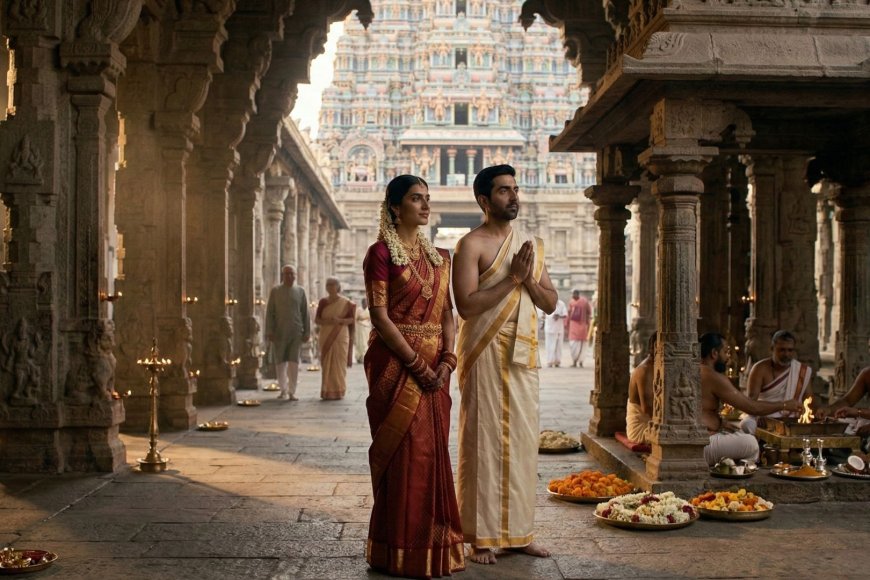
Temple Weddings: Traditional Ceremonies at Sacred Sites
The Couple Who Chose Differently
They had looked at every major wedding venue in Jaipur.
The heritage hotels were extraordinary — the kind of palatial properties that produce photographs of such consistent beauty that the photographs themselves have become the primary reason couples choose them. The lawns, the courtyards, the arched corridors, the specific quality of late afternoon light on Rajasthani sandstone — the venues delivered everything the wedding photography brief asked for and more.
Something was missing.
Not from the venues — the venues were everything they claimed to be. What was missing was in the conversation the couple kept having after each site visit, in the car on the way back to the hotel, in the low-voiced exchanges over dinner that kept returning to the same unresolved question.
The question was not aesthetic. It was not logistical. It was something more fundamental — the question of whether the ceremony they were planning was going to happen in a place that had any relationship to what the ceremony actually was. The heritage hotel was beautiful. It was also a party venue that happened to accommodate the mandap. The sacred fire that would witness their vows would be burning in a ballroom that had hosted corporate conferences the previous week.
They wanted the ceremony to happen somewhere that was already sacred. Not made sacred for the occasion — not sanctified by the presence of the pandit and the fire and the intention — but somewhere that had been understood as sacred for longer than either of them had been alive. Somewhere that carried the weight of accumulated prayer and devotion and the specific quality of presence that ancient sacred sites develop over centuries of continuous worship.
They got married in a temple.
Not the largest ceremony they could have had. Not the most logistically straightforward. Not the most immediately understandable option for the guests who had flown in from Toronto and London and Melbourne and who had expected the heritage hotel. But the right ceremony, in the right place, for the specific reasons that had been driving the unresolved dinner conversation — reasons that became fully articulable only in retrospect, when the ceremony was over and they were sitting in the temple courtyard in the evening light and the question of what had been missing at the heritage hotels had finally been answered.
This guide is for the NRI couples who are asking the same question — and for those who have not yet found the language for it but will recognise it when they see it.
The Core Reality: What a Temple Wedding Actually Is
The Distinction That Matters
A temple wedding is not simply a wedding held at a temple venue. The distinction matters because it determines everything about how the ceremony is approached, planned, and experienced.
A wedding held at a temple venue — using the temple's premises as a location while following the same planning logic as any other venue — is a venue choice. The sacred character of the location is aesthetic context rather than ceremonial meaning.
A temple wedding — conducted within the living religious and ritual framework of the specific temple, according to the specific ceremonial conventions of the deity to whom the temple is consecrated, with the temple's own priests and the temple's own ritual sequence — is a fundamentally different kind of ceremony. The location is not context. It is participant. The deity who is worshipped there is understood as the witness to the vows in a way that goes beyond even the sacred fire's witness in a standard Hindu ceremony.
The NRI couple choosing a temple wedding is making a choice about what they want the ceremony to be — a ceremony that is embedded in the living sacred framework of a specific religious tradition, conducted in a place where the divine presence is understood as resident rather than invoked for the occasion.
This is a more demanding choice than a venue selection. It requires a deeper engagement with the specific religious tradition of the temple. It involves logistical constraints that a commercial venue does not impose. It produces a ceremony whose character is determined more by the temple's tradition than by the couple's planning preferences.
It also produces something that no commercial venue can replicate — the specific quality of a ceremony conducted in a place that has been understood as sacred for centuries, within a religious framework that has its own integrity and its own beauty and its own claim on the occasion.
The Types of Temple Weddings Available to NRI Couples
Not all temple weddings are the same. The range of options available to NRI couples — from the intimate family ceremony in a village temple to the elaborate multi-day celebration at one of India's great pilgrimage sites — is wider than most couples realise when they first consider the option.
The private temple ceremony: Many Indian families have a relationship with a specific temple — a kula devata temple, the family deity's shrine — that is the natural location for a ceremony of genuine religious significance. The private temple ceremony at the family's kula devata temple is among the most personally meaningful forms of temple wedding — the ceremony conducted in the presence of the deity who has been the family's specific divine guardian across generations.
The community temple ceremony: Temples in India's major cities and at significant religious sites offer wedding ceremonies as a standard service — conducted by the temple's own priests, following the temple's specific ritual conventions, available to couples who meet the temple's requirements for access. These ceremonies range from brief, simple ceremonies to elaborate multi-hour rituals depending on the temple and the specific ceremony being requested.
The pilgrimage site ceremony: Some of India's most significant pilgrimage sites — Tirupati, Guruvayur, Vrindavan, Kashi — offer wedding ceremonies that carry specific religious significance because of the site's particular sanctity. A wedding at Tirupati, conducted in the presence of Lord Venkateswara, is understood within the Vaishnavite tradition as carrying a specific blessing that no other location can replicate. A wedding at Guruvayur is similarly understood within the Kerala Hindu tradition.
The heritage temple ceremony: India's ancient temple complexes — the great Dravidian temples of Tamil Nadu, the temples of Rajasthan's old cities, the temple towns of Odisha — offer the specific combination of religious sanctity and architectural magnificence that makes them among the most extraordinary settings for a wedding ceremony anywhere in the world. The ceremony conducted in the morning light in the prakaram of a great Chola-era temple is an experience of singular beauty and singular significance.
The Major Temple Wedding Destinations
Tirupati — Sri Venkateswara Temple
The Sri Venkateswara Temple at Tirupati — Tirumala, in Andhra Pradesh — is the most visited religious site on earth, receiving more pilgrims annually than any other sacred site in any tradition. For Vaishnavite Hindu families across South India and across the NRI world, a wedding conducted in the presence of Lord Venkateswara carries a specific religious significance that makes Tirupati the most desired of all temple wedding destinations.
The Tirumala Tirupati Devasthanams — the trust that manages the temple — has a well-organised wedding ceremony programme. Kalyana Mandapams — wedding halls on the temple premises — accommodate ceremonies for couples who have obtained the required permissions and met the religious requirements for access to the ceremony facilities. The ceremony is conducted by temple priests following the specific Vaishnavite ritual tradition of the temple.
The NRI planning considerations for Tirupati:
The demand for Tirupati wedding ceremonies is extremely high, and advance booking — months rather than weeks in advance — is essential. The temple's requirements for ceremony access include religious eligibility criteria that should be confirmed with the Tirumala Tirupati Devasthanams directly and well in advance of planning. The pilgrimage character of the site means that the wedding experience is embedded in the larger context of the pilgrimage — the specific protocols and practices of the temple apply to the wedding occasion as to any visit.
The logistical complexity of hosting guests at Tirupati — the accommodation options on the hill, the access arrangements, the specific protocols for the wedding day — requires a wedding planner or coordinator with specific Tirupati wedding experience. This is not a logistics challenge that general destination wedding expertise resolves.
Guruvayur — Sri Krishna Temple
The Guruvayur Sri Krishna Temple in Kerala is, after Tirupati, among the most sacred and most sought-after temple wedding destinations in India. Guruvayur weddings — Guruvayur kalyanam — are understood within the Kerala Hindu tradition as having a specific auspiciousness that comes from the presence of Guruvayoorappan, the specific form of Lord Krishna enshrined at Guruvayur.
The Guruvayur Devaswom — the temple's managing authority — organises wedding ceremonies in the Nemom Auditorium and other facilities adjacent to the main temple. The ceremonies follow the specific Kerala Hindu ritual tradition and are conducted by the temple's own priests.
The specific character of the Guruvayur wedding:
The Guruvayur wedding is embedded in the specific cultural and religious tradition of Kerala Hindu practice — the specific rituals, the specific aesthetic, the specific role of the temple's priests and the temple's tradition in the ceremony. For NRI couples from Kerala Hindu families, the Guruvayur kalyanam is often the most deeply personally significant of all temple wedding options — the ceremony conducted in the presence of the deity who has been present at the family's significant occasions across generations.
The NRI planning considerations for Guruvayur:
Advance booking is essential — the demand for Guruvayur wedding dates is very high, particularly during the auspicious calendar periods. The temple has specific requirements for the eligibility of couples seeking wedding ceremonies — Hindu background is required for both parties, and specific ritual preparations may be required before the ceremony. The accommodation in and around Guruvayur varies significantly in quality — advance research and booking through a planner with specific Guruvayur experience is strongly recommended.
Vrindavan and Mathura — The Land of Krishna
The Braj region of Uttar Pradesh — the sacred landscape of Lord Krishna's life as described in the Puranas — is among the most spiritually significant landscapes in the Hindu tradition, and the temples of Vrindavan and Mathura offer wedding ceremony settings of extraordinary religious depth for Vaishnavite families.
The ISKCON temple in Vrindavan — among the most beautiful contemporary temple constructions in India — offers wedding ceremonies within its complex that combine the Vaishnavite tradition's religious framework with facilities and accessibility that are significantly more manageable for NRI couples than the older pilgrim-oriented sites. The Banke Bihari Temple, the Radha Raman Temple, and the other historic temples of Vrindavan each have their own conventions for wedding ceremonies.
The aesthetic of the Vrindavan wedding:
The Braj landscape — the Yamuna river, the ghats, the ancient kadamba groves, the specific quality of devotional intensity that the concentrated sacred geography of the region produces — creates a wedding ceremony setting that is unlike any other in the world. The NRI couple for whom the story of Radha and Krishna is the specific mythological reference point of the Hindu understanding of love finds in Vrindavan a wedding location of singular significance.
The Great Dravidian Temples of Tamil Nadu
Tamil Nadu's great Dravidian temple complexes — Madurai Meenakshi Amman, Rameswaram Ramanathaswamy, Chidambaram Nataraja, Kanchipuram's cluster of ancient temples — are among the most architecturally magnificent sacred sites in the world and among the most religiously significant in the Shaivite and Vaishnavite Hindu traditions.
Madurai Meenakshi Amman Temple:
The Meenakshi temple in Madurai — dedicated to the goddess Meenakshi and her consort Sundareshwarar — is both one of the greatest architectural achievements of the Dravidian temple tradition and a living centre of worship of continuous intensity. Weddings conducted at Meenakshi temple carry the specific blessing of the goddess who is herself understood as the archetypal bride — whose own divine wedding to Sundareshwarar is celebrated annually in the Meenakshi Tirukalyanam, one of the most significant temple festivals in South India.
For Tamil Hindu families, a wedding at Meenakshi temple is an engagement with the specific mythological and devotional tradition of the Tamil Shaivite world — the ceremony conducted in the presence of the goddess whose own divine marriage is the template for the human wedding.
The South Indian temple wedding aesthetic:
The great Dravidian temples' specific aesthetic — the towering gopurams painted in vivid colour, the temple tanks reflecting the temple's architecture, the specific quality of lamplight in the inner sanctum, the scent of camphor and jasmine and sacred smoke — creates a wedding ceremony setting of extraordinary sensory richness and religious depth. The ceremony conducted in these settings is not simply beautiful. It is embedded in a living aesthetic tradition that is inseparable from the religious tradition it expresses.
Kashi — Varanasi
Kashi — the sacred city of Varanasi — occupies a unique position in the Hindu tradition as the city of Shiva, the place where the divine presence is understood as most concentrated and most accessible, and where religious acts are understood to carry the maximum auspicious consequence.
A wedding conducted in Kashi — particularly at one of the significant temples of the city — carries a specific weight in the Hindu religious imagination. The Kashi Vishwanath temple, the Sankat Mochan Hanuman temple, and the various temples along the ghats each have their own ceremonial traditions for wedding ceremonies.
The Kashi wedding's specific character:
The Varanasi wedding is embedded in the specific intensity of the city's religious life — the ghats, the Ganga aarti, the constant presence of pilgrimage and devotion and the city's specific understanding of the sacred as entirely continuous with the everyday. The wedding ceremony at Kashi is not a discrete event — it is an occasion that is held within the larger continuous sacred intensity of the city.
For NRI couples who are drawn to the depth rather than the spectacle of the Hindu sacred tradition, Kashi offers a wedding setting of singular seriousness and singular significance.
Udupi and the Coastal Karnataka Temples
The coastal Karnataka temple tradition — centred on the Udupi Sri Krishna Matha and the network of significant temples in the Tulu Nadu region — offers temple wedding possibilities of great beauty and cultural specificity for NRI families from the Tulu and Kannada Hindu communities.
The Udupi Sri Krishna Matha's conventions for wedding ceremonies reflect the specific Madhva Vaishnava tradition of the region — one of the most distinctive and most philosophically rich of the Vaishnavite traditions — and the ceremony conducted there carries the specific blessing of the tradition that produced the Udupi style of temple worship and the Udupi cuisine that has become among the most globally recognised of Indian food traditions.
The Planning Framework: What Temple Weddings Actually Require
The Permission and Eligibility Process
Every temple wedding begins with a permissions and eligibility process that has no equivalent in commercial venue booking. The temple's managing authority — the Devasthanam, the Devaswom, the trust, or the hereditary trustee depending on the specific temple — determines who may conduct a wedding ceremony at the temple, under what conditions, and following what specific ritual requirements.
The standard eligibility requirements at most Hindu temples:
Both parties must be Hindu — with the specific definition of Hindu varying by temple and by the specific tradition governing the temple. Some temples require documentation of religious background. Some require specific ritual preparation — a visit to the temple, a specific puja, a specific vow — before the wedding ceremony can be conducted. Some temples require the ceremony to follow the specific ritual tradition of the temple without modification.
The documentation requirements:
Standard documentation requirements for temple wedding permissions include identification for both parties, family background information including gotra for Brahmin families, horoscope documents for temples where muhurta calculation is part of the ceremony process, and letters of introduction or recommendation from the relevant community or religious authority in some cases.
The advance booking requirement:
Temple wedding dates at significant sites are booked months to years in advance for auspicious dates. The Tirupati Kalyanam dates during significant festival periods, the Guruvayur wedding calendar during the most auspicious months — these require advance planning that is significantly beyond what a commercial venue demands.
The practical guidance: Begin the permission and eligibility process at least six to twelve months before the intended wedding date for significant pilgrimage sites. Engage a coordinator or agent with specific experience of the particular temple's process — the permission process is temple-specific and the documentation requirements, the contacts, and the process are not generalisable across sites.
The Ceremony Structure at Temple Weddings
The wedding ceremony at a temple follows the temple's specific ritual tradition — not the couple's preferences or the pandit they have separately engaged. This is one of the most important distinctions between a temple wedding and a standard wedding with a separately engaged pandit.
The temple's own priests conduct the ceremony according to the Agama — the specific sacred text that governs the worship tradition of that temple. For Shaivite temples, this is typically the Shaiva Agama. For Vaishnavite temples, it is the Vaishnava Agama in one of its specific forms. The ceremony follows this tradition with a fidelity that is not negotiable — the temple's ritual integrity is not modified for the couple's preferences.
What this means for NRI couples:
The personalisation options that exist at a standard wedding — the English explanations, the modified ritual forms, the ceremony programme — are significantly more constrained at a temple wedding. The ceremony is the temple's ceremony, conducted in the temple's tradition, by the temple's priests. The couple's role is to participate with understanding and devotion rather than to direct the ceremony's form.
This constraint is also the gift. The temple ceremony's integrity — the fact that it is conducted according to a living tradition of religious practice rather than assembled to the couple's specifications — is precisely what gives it the character and the weight that the commercial venue ceremony cannot achieve. The loss of control over the ceremony's form is the price of access to the ceremony's depth.
The Guest Experience at Temple Weddings
Temple weddings create a specific guest experience that differs significantly from the standard destination wedding and requires specific management for NRI couples whose guest list includes international visitors and non-Indian guests.
The access requirements:
Most significant Hindu temples require that visitors be Hindu — either by birth or by sincere practice — and do not permit entry to non-Hindus to the inner sanctum or the ceremony space. This creates a specific challenge for NRI couples whose guest list includes non-Hindu family members and friends.
The honest engagement with this challenge is more productive than the attempt to navigate around it. Some temples have accessible courtyards or outer areas where non-Hindu guests can be present without entering the inner sanctum — allowing them to be present at the wedding occasion without violating the temple's access requirements. Some temple wedding formats include a separate reception in an accessible venue following the temple ceremony — giving the complete guest community the opportunity to celebrate together even if the ceremony itself was accessible only to Hindu guests.
The physical requirements:
Temple visits require specific dress — typically traditional Indian attire, with specific conventions about footwear, head covering, and the amount of the body that should be covered. The specific requirements vary by temple and by tradition. International guests who are attending a temple wedding need specific, advance guidance on what to wear — and the couple's communication to guests should include this guidance clearly.
The experience for guests who are present:
For guests who are present at a temple wedding — who have made the journey to the temple, dressed appropriately, removed their footwear, and entered the sacred space — the experience of witnessing the ceremony in its specific context is among the most powerful that the Indian wedding occasion offers. The temple's specific sensory environment — the smell of incense and flowers and sacred oil, the sound of the priests' chanting, the visual intensity of the deity's decorated form — creates a ceremony experience that is entirely unlike anything available at a commercial venue.
The Photography Challenge and Opportunity
Temple wedding photography presents specific challenges and specific opportunities that distinguish it from standard Indian wedding photography.
The challenges:
Most temples have restrictions on photography — either complete prohibitions in the inner sanctum, restrictions on the use of artificial lighting, or requirements that photography be conducted in specific ways that do not interfere with the temple's religious activity. These restrictions are not negotiable and must be confirmed with the temple management before the photographer is briefed.
The specific lighting conditions inside most temples — the combination of dim interior lighting, the specific quality of lamplight and sacred fire, the limited access for positioning — require a photographer with specific experience of low-light temple photography. The standard wedding photographer who has worked exclusively in well-lit ballrooms and outdoor venues is not the right photographer for a temple wedding.
The opportunities:
The temple wedding's specific aesthetic — the carved stone architecture, the sacred fire in the context of the temple's inner sanctum, the priests in their ceremonial dress, the specific quality of natural light entering the temple's spaces — offers a photographic environment of extraordinary beauty and distinction. The wedding photographs taken in a great South Indian temple or in the ghats of Varanasi look unlike any other wedding photographs in the world — not because of production values but because the setting itself is of such singular character.
The photographer selection guidance:
For a temple wedding, the photographer must be researched specifically for their experience with temple and low-light photography. Request to see their existing temple wedding portfolio — not their general portfolio. A photographer who has not worked in temples before is a significant risk in an environment where the lighting conditions are challenging and the restrictions on equipment are significant.
The Specific Rituals of the Temple Wedding Context
The Devalaya Vivaha — Marriage in the House of the Divine
The temple wedding — the Devalaya Vivaha — has specific ritual elements that are distinct from a home or venue wedding because the ceremony is conducted in the deity's specific presence in their specific dwelling. The rituals that precede the marriage ceremony — the specific pujas, the offerings to the deity, the seeking of divine blessing before the ceremony begins — are integral to the temple wedding in a way that they are not in a standard ceremony.
For the couple participating in a temple wedding, the ceremony begins not at the mandap but at the moment of entering the temple — at the darshan of the deity, the specific act of seeing and being seen by the divine presence in whose house the marriage is taking place. The ceremony is a guest in the deity's home, and the specific quality of attention and devotion that this status requires is part of the temple wedding's specific character.
The Muhurta — The Auspicious Timing
The muhurta — the auspicious time calculated by the temple's jyotishi for the wedding ceremony — is more precisely and more seriously calculated at a temple wedding than in most standard Hindu wedding contexts. The temple's tradition of continuous religious practice creates a context in which the specific timing of the ceremony — within the larger rhythms of the temple's daily worship cycle and the astrological framework — is understood as having genuine significance rather than being primarily a scheduling convenience.
For NRI couples who are approaching the muhurta calculation with genuine seriousness rather than as a formality, the temple context provides the most rigorous engagement with the astrological dimension of the wedding timing that is available in the contemporary Indian wedding context.
The NRI Logistics: Managing a Temple Wedding From Abroad
The Coordinator Requirement
A temple wedding in India cannot be effectively managed from abroad without a coordinator who has specific experience of the particular temple's processes, requirements, and conventions. The standard destination wedding planning expertise does not cover the temple-specific knowledge that makes the difference between a smoothly conducted temple ceremony and a logistically confused experience.
The coordinator for a temple wedding must understand: the temple's permission process and documentation requirements, the specific ritual sequence and the couple's role in it, the access requirements and their implications for the guest list, the photography restrictions and how to work within them, the accommodation and logistics for guests at the specific location, and the relationship between the temple ceremony and any additional celebration the couple is planning.
Finding this coordinator: The most reliable route is the recommendation of families who have had temple weddings at the specific site — the NRI community's own networks, diaspora associations, and the personal recommendations of people whose specific experience at the specific temple is relevant. General destination wedding planner directories are less reliable for this specific requirement.
The Pre-Wedding Visit
For NRI couples planning a temple wedding, a pre-wedding visit to the specific temple — separate from the wedding visit, ideally six to twelve months before — is strongly recommended. The pre-wedding visit accomplishes several things that remote research and remote communication cannot.
It allows the couple to experience the temple's specific character — the scale, the specific quality of the space, the daily rhythm of worship — before committing to the ceremony location. It allows the couple to meet the temple authorities and the priests who will conduct their ceremony. It allows the couple to understand the specific experience their guests will have and to plan accordingly. And it allows the couple to develop a genuine relationship with the place that transforms the ceremony from an event at a remarkable location into a ceremony at a place that has become personally significant.
The Intimate Scale: Why Temple Weddings Often Work Best Small
The Scale Question
One of the most important planning realities of the temple wedding is that the intimate scale — ten to fifty guests — is typically more aligned with the temple context than the large Indian wedding model of three hundred or more.
This is partly practical: many temple ceremony spaces accommodate small numbers of people. It is also theological: the temple ceremony's character — its intimacy, its focus on the religious act rather than the social occasion, its specific quality of concentrated devotional attention — is better served by a small gathering of close family and the most important people than by the large assembly that the standard NRI wedding model assumes.
The NRI couple who chooses a temple wedding often chooses it precisely because they want a ceremony rather than a production — a genuine religious act conducted with genuine religious attention rather than a spectacle of cultural identity. The intimate scale serves this intention.
The walima or reception celebration — the social celebration of the marriage — can happen separately, in a location and at a scale that serves the social purpose without requiring the ceremony itself to become a social production. Many NRI couples who have had temple weddings have found this separation — the ceremony in its sacred context, the celebration in its social context — to be among the most satisfying structural decisions of their wedding planning.
Common Mistakes NRI Couples Make With Temple Wedding Planning
The first mistake is approaching the temple wedding with the standard venue-selection logic — researching the location primarily for its aesthetic properties and assuming that the religious and logistical requirements will be manageable once the location is chosen. The temple wedding's requirements are the primary consideration, not the secondary ones. Begin with the temple's requirements and assess whether the couple's situation is compatible with them, rather than choosing the temple for its beauty and then discovering the requirements.
The second mistake is underestimating the advance planning requirement. The NRI couple who begins the Tirupati or Guruvayur permission process three months before the wedding date has almost certainly missed the available dates. Begin the permission process twelve months before the intended wedding date for any significant pilgrimage site.
The third mistake is not managing the non-Hindu guest experience proactively. The international guests who travel to India for a temple wedding and discover upon arrival that they cannot enter the ceremony space have had a guest experience that the couple should have anticipated and addressed in the planning. The honest communication of access requirements — and the provision of an alternative meaningful participation for guests who cannot enter the temple — is the couple's responsibility.
The fourth mistake is booking a photographer without temple-specific experience. The temple's specific conditions — the lighting, the restrictions, the physical access limitations — require specific photographic experience. The photographer who is extraordinary in a well-lit ballroom may produce disappointing results in the challenging conditions of a temple inner sanctum.
The fifth mistake is approaching the ceremony as a venue booking rather than as a religious participation. The temple wedding's most significant benefit — the specific quality of ceremony that is only available in a living sacred site — is available only to couples who approach it as genuine religious participants rather than as consumers of a location. The preparation that makes this possible — understanding the temple's tradition, learning what the ceremony's rituals mean in the specific tradition of the temple, arriving at the ceremony with genuine devotion rather than aesthetic appreciation — is the preparation that determines the quality of the experience.
The Ceremony That the Place Has Always Been Holding
Every great temple has hosted thousands of weddings. The Meenakshi temple has witnessed marriages for more centuries than most of the world's countries have existed as political entities. The deity at Guruvayur has been the witness at kalyanams that stretch back through generations of Kerala Hindu families to a devotional tradition of extraordinary depth.
When an NRI couple chooses a temple wedding, they are choosing to place their ceremony within this continuity — to add their specific union to the unbroken chain of unions that the temple has witnessed, to be seen by the divine presence that has always been in residence, to have their vows ratified by the same sacred framework that has ratified the vows of everyone who came before them.
This is not available at the heritage hotel. No amount of mandap decoration or sacred fire preparation can replicate the specific quality of a ceremony conducted in a place that has been sacred for longer than memory reaches.
The NRI couple for whom this matters — for whom the ceremony's location in a living sacred tradition is not aesthetic preference but genuine religious need — will find in the temple wedding the most complete expression of what the ceremony is for.
Not a venue. A presence.
Not a backdrop. A witness.
Not a beautiful location for beautiful photographs. A sacred site where the most significant ceremony of two people's lives can happen in the most significant context that the tradition offers.
The couple in the opening story sat in the temple courtyard in the evening light after the ceremony and understood what had been missing at the heritage hotels.
Not the decor. Not the production. Not the photographs.
The presence.
It had been there all along, waiting for them to choose it.
Published by NRIWedding.com — The Premium Global Platform for Non-Resident Indians Planning Indian Weddings From Abroad.
0 comments
Real names and courtesy, please. Every comment is read by a person before it appears.
Nothing yet. Start it off.
Comments are closed on this article.