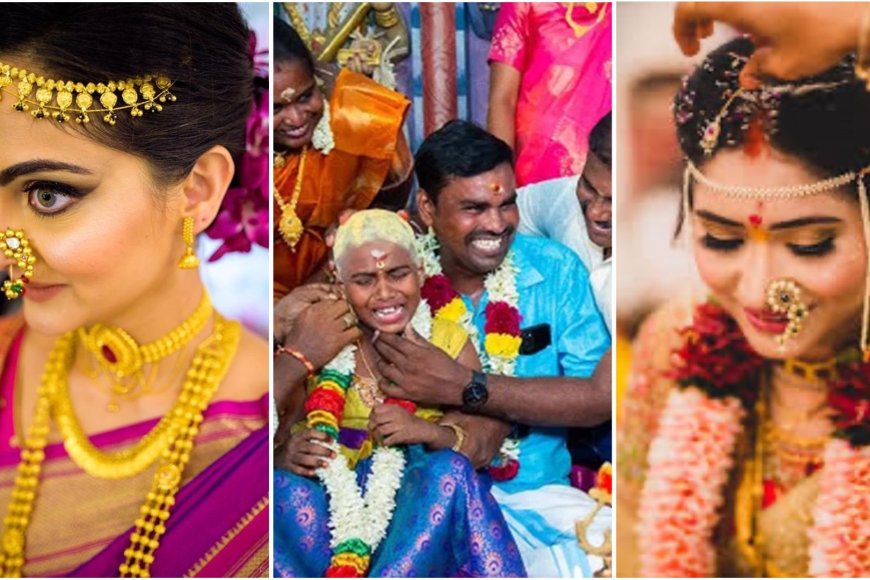
Body adornment in India has long extended beyond aesthetics. Among the most enduring traditions are ear and nose piercings—customs that have functioned for centuries as markers of identity, lineage, spirituality and social belonging. From early childhood rites to bridal symbolism, these small embellishments carry deep cultural weight across regions and communities.
Ancient Rituals and Social Identity
Ear piercing holds formal recognition within Hindu tradition as karṇavedha, one of the sixteen saṃskāras (life-cycle rites) described in classical Brahmanical texts. Historically performed in early childhood, the ritual signified a child’s initiation into social and spiritual life.
References to jewelled ears appear in early Tamil Sangam literature, while archaeological and sculptural evidence from ancient India shows both men and women wearing ear ornaments. Over time, the ceremony became embedded in family tradition, with gold studs commonly gifted to infants as symbols of prosperity and protection.
Medical treatises such as the Sushruta Samhita also mention ear piercing. In Ayurvedic understanding, the earlobe contains marma (vital) points, and piercing was believed to offer both therapeutic and symbolic benefits. While modern medical science does not formally endorse these claims, the association between ornamentation and wellbeing continues in cultural practice.
The Nath: Ornament of Marriage and Regional Identity
If ear piercing marked childhood, nose piercing evolved as a powerful signifier of womanhood and marital status in many Indian communities. The nath—a nose ring worn widely across North and Western India—became closely linked to bridal identity and regional aesthetics.
Iconography of Goddess Parvati, particularly in her married form as Gauri, frequently depicts her wearing a nose ornament. This association strengthened the custom of including a nose ring in wedding attire. In several regions, families regard the bridal nath as an emblem of prosperity, fertility and marital harmony.
Regional variations developed distinctive styles. Maharashtra popularised the curved brahmani nath, Rajasthan favoured large crescent forms often embellished with pearls, and in South India, smaller nose studs known as mookuthi became customary. In some Himalayan communities, septum rings such as the bulak remain part of ceremonial dress.
Ayurvedic belief also connects left-nostril piercing to reproductive health, attributing it to energy channels described in classical yogic texts. Although these ideas remain part of traditional knowledge systems rather than clinical consensus, they continue to influence regional preference—particularly in northern and western India, where left-side piercings are more common.
Mughal Influence and Royal Aesthetics
The evolution of nose jewellery accelerated during the Mughal period. Courtly patronage encouraged intricate craftsmanship, introducing crescent motifs, gemstones and delicate pearl strings into jewellery design.
European travellers such as François Bernier documented the opulence of Mughal ornamentation, noting elaborate facial jewellery among royal women. Rajput and Deccani courts adapted these styles, embedding them within regional identities that still shape contemporary bridal fashion.
By the 19th century, miniature paintings from Jaipur and the Deccan depicted aristocratic women wearing elaborate naths and extended ear chains—evidence of how court culture influenced broader tastes.
Reform, Cinema and Modern Revival
The 20th century brought social reform movements that questioned certain traditional practices, including body adornment. However, cinema soon reintroduced these symbols to mass audiences. Classic Hindi films such as Mera Saayaand Palki prominently featured traditional jewellery, helping to sustain their aspirational appeal.
In recent decades, designers and celebrities have further repositioned the nath and traditional ear ornaments within global fashion discourse. A notable example was Sonam Kapoor Ahuja, who paired a heritage-style polki nath with a contemporary sari at the Cannes Film Festival in 2013, underscoring how historic motifs continue to resonate internationally.
Today, jewellers reinterpret classical forms using modern materials and minimalist design. Brides increasingly blend ancestral pieces with contemporary styling, reflecting a renewed appreciation for tradition within a globalised aesthetic.
A Living Cultural Continuum
Across centuries, ear and nose piercings in India have served as more than decorative choices. They map life stages, signal community belonging and preserve artistic craftsmanship passed down through generations.
What appears as a small ornament—a stud, a hoop or a crescent ring—often embodies layered meanings shaped by religion, medicine, regional identity and royal influence. As India’s fashion and jewellery sectors continue to expand globally, these time-honoured traditions remain central to how heritage is expressed in modern life.
0 comments
Real names and courtesy, please. Every comment is read by a person before it appears.
Nothing yet. Start it off.
Comments are closed on this article.