































































5-Star Hotel vs. Banquet Hall vs. Boutique Venue — Which Indian Wedding Venue Is Right for NRI Couples?
Choosing between a 5-star hotel, a banquet hall, and a boutique venue is one of the most consequential decisions in any NRI wedding — and one that most couples make on the basis of aesthetics and aspiration rather than a clear-eyed assessment of what each category actually delivers. This complete guide breaks down the honest reality of all three venue categories for NRI couples — covering service quality, vendor freedom, aesthetic distinctiveness, true all-in costs, remote management complexity, accommodation integration, and the specific guest profile each category serves best — with a direct comparison framework and decision checklist that cuts through the brochure promises to the planning truth underneath.


Three Venues, One Decision, Everything Riding on It.
You have done the research.
The spreadsheet has three tabs now — one for each venue category that has emerged from weeks of video calls, WhatsApp messages from cousins, website visits at midnight, and the particular kind of research that NRI couples do when they are trying to make a significant decision about a place they cannot physically visit. Each tab has its own rows and columns. Pricing. Capacity. Location. Inclusions. The things that can be quantified.
What the spreadsheet cannot capture — what no spreadsheet ever captures — is the feeling question. The question of which venue will produce the specific experience you are trying to create. Which one will feel right to the guests arriving from London and to the grandparents arriving from the village in Gujarat simultaneously. Which one will hold the ceremony with the gravity it deserves and the reception with the warmth it needs. Which one will look, in the photographs you will look at for the rest of your life, like exactly the right backdrop for the beginning of this specific marriage.
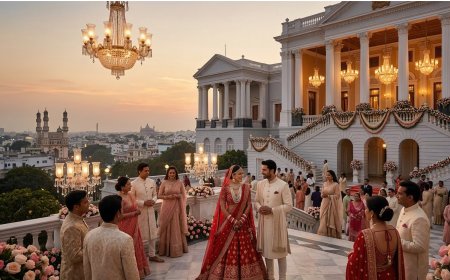
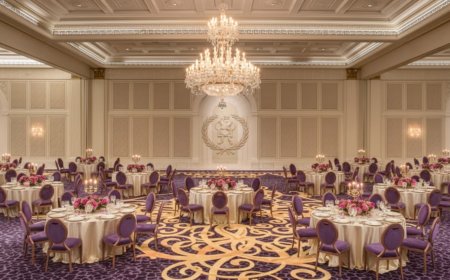
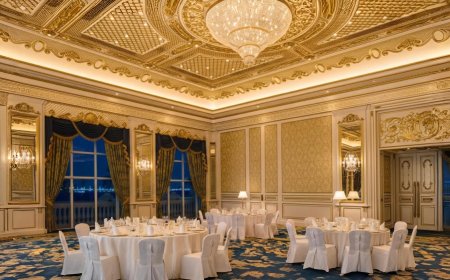
The 5-star hotel. The grand lobby. The established brand. The service infrastructure that has been refined over decades. The confidence of knowing that a property with this name and this reputation has done this before and will do it again with professional precision.
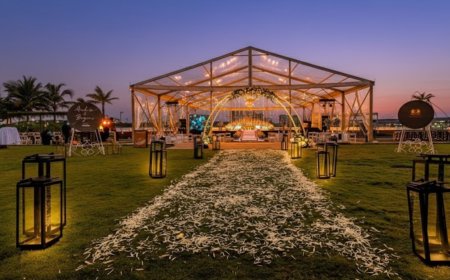
The banquet hall. The honest straightforwardness of a space that exists entirely and specifically for events like yours. The caterer who knows the kitchen intimately. The pricing that makes the guest list expansion your family is inevitably going to request slightly less catastrophic. The pragmatic efficiency of a venue that has no pretensions beyond hosting your celebration well.
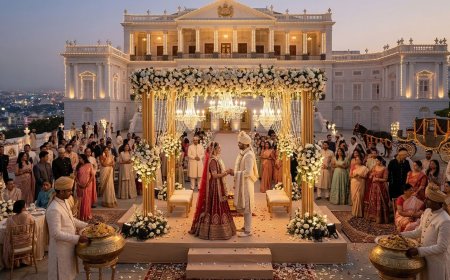
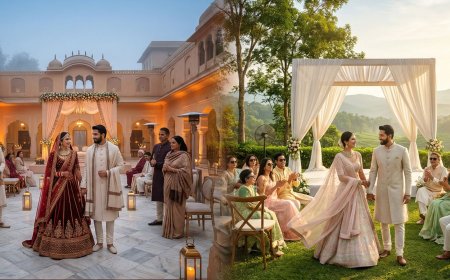
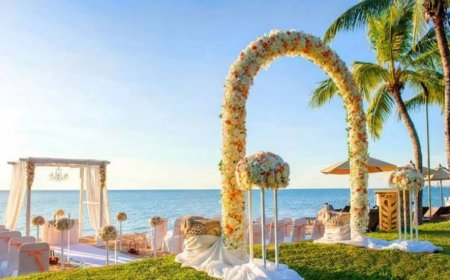
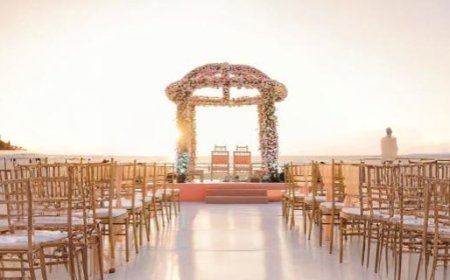
The boutique venue. The heritage haveli in Jaipur. The converted farmhouse outside Pune. The restored Portuguese villa in Goa. The place that has a story before yours begins — a visual distinctiveness that no amount of decor budget can manufacture in a generic ballroom.
Each of these is a legitimate choice. Each serves a different vision of what a wedding should be. And the decision between them — made correctly, with full understanding of what each delivers and what each demands — is one of the most significant planning decisions of the entire NRI wedding process.
This guide makes that decision clearly.
Not by telling you which category is best — there is no universal answer to that question. But by giving you the complete, honest picture of what each category actually delivers, what it actually costs, what its real limitations are, and which couples and which wedding visions each category genuinely serves.
The spreadsheet has the numbers. This guide provides the wisdom.
The Core Reality: What You Are Actually Choosing Between
The Decision Is Not Just Aesthetic
The choice between a 5-star hotel, a banquet hall, and a boutique venue is not primarily an aesthetic decision — though aesthetics are part of it. It is a decision about:
• Service infrastructure — who manages what, to what standard, with what accountability
• Vendor flexibility — what freedom you have to choose your own caterers, decorators, and entertainment
• Risk management — what happens when things go wrong, and who absorbs the cost
• Total cost — not the headline venue fee, but the all-in cost including what each venue requires you to add
• Guest experience — what the venue delivers to the full range of people who will attend, from the NRI guests flying in from four countries to the elderly relatives for whom this will be a significant physical undertaking
Understanding the decision across all of these dimensions — not just the visual appeal of the venue or the per-plate catering cost — is the foundation of a choice that serves the wedding rather than just the planning narrative.
The NRI-Specific Considerations
For NRI couples specifically, the venue category decision carries additional dimensions that domestic couples do not navigate.
Remote management: Which venue category is most manageable from abroad? Which requires the most on-ground coordination that the couple cannot personally provide?
International guest experience: Which category serves the experience of NRI guests flying in from the UK, USA, or Canada — who may have specific expectations shaped by international hotel standards?
Family guest experience: Which category serves the experience of Indian family guests — including elderly relatives, outstation family, and guests whose wedding experience reference point is a traditional Indian celebration?
The tension between these two guest profiles — international NRI guests and traditional Indian family guests — is one of the most consistently underaddressed aspects of NRI venue selection. The venue that impresses one group may be unfamiliar or uncomfortable for the other.
The 5-Star Hotel: What It Delivers and What It Demands
What a 5-Star Hotel Actually Provides
The 5-star hotel is, in the Indian wedding market, the most aspirational venue category — and the most misunderstood. The brand name, the lobby grandeur, and the service reputation are what couples see in the brochure. What the booking process reveals is a more complex reality.
What is genuinely excellent about 5-star hotel weddings:
Service infrastructure that is genuinely professional: A 5-star hotel has a dedicated events team — banquet managers, event coordinators, service captains — who manage weddings as a core business function. The service at the table, the efficiency of the clearing, the responsiveness of the floor staff — these are genuinely better at a well-run 5-star hotel than at most alternatives. For NRI couples whose guests include internationally experienced visitors with high service expectations, this matters.
Accommodation on property: The 5-star hotel solves the accommodation challenge — for the wedding party, for outstation guests, for NRI guests flying in from abroad. Having the celebration and the accommodation in the same property eliminates the logistics of shuttling guests between venues and hotels, simplifies the wedding morning for the bridal party, and creates a genuine sense of a contained, managed event environment.
Brand accountability: A 5-star hotel brand has reputational accountability that independent venues do not. The Taj, the ITC, the Leela, the Oberoi — these brands have standards that are enforced at a corporate level. When something goes wrong, there is an escalation path with genuine commercial consequences for the property. This accountability is not a guarantee that nothing will go wrong — but it is a meaningful risk management factor.
Comprehensive infrastructure: Power backup, professional kitchen, adequate bathrooms for large events, accessibility for elderly guests, security infrastructure, valet parking — these are standard at a 5-star hotel in a way that they are not standard at all venue categories.
What is genuinely challenging about 5-star hotel weddings:
The mandatory vendor ecosystem: Most 5-star hotels require — or strongly incentivise — the use of their in-house catering, their approved décor vendors, and their preferred suppliers for other categories. This is not incidental to the 5-star hotel experience. It is a core part of how 5-star hotels structure their revenue from weddings.
The practical implication: The caterer whose food you love may not be on the approved vendor list. The decorator whose aesthetic perfectly matches your vision may not be permitted to work in the space. The DJ who has been the soundtrack to your friend group for a decade may not be authorised to set up equipment in the ballroom.
For NRI couples with strong vendor preferences — particularly couples who have identified specific photographers, caterers, or entertainers from NRI community recommendations — the 5-star hotel's vendor restrictions may be the most significant planning limitation they encounter.
The per-plate catering premium: In-house 5-star hotel catering is priced at a significant premium over independent catering of equivalent quality. The difference between ₹2,000 per plate from a quality independent caterer and ₹4,000–₹6,000 per plate from a 5-star hotel kitchen is not always a difference in food quality — it is partly a difference in the commercial structure of how 5-star hotels capture revenue from their captive venue clients.
For a wedding of 300 guests, this per-plate premium represents ₹6–12 lakhs in additional catering cost relative to independent catering options.
The corporate atmosphere tension: 5-star hotel ballrooms are designed for corporate events — large, neutral, adaptable. They are spaces that do everything acceptably rather than spaces that do anything distinctively. The transformation of a generic hotel ballroom into a distinctive, personal wedding space requires significant decor investment — and in many cases, the hotel's restrictions on décor execution limit what can be achieved.
The wedding that looks like every other wedding in that ballroom is a genuine risk at a 5-star hotel — unless the decor investment and vendor relationships are exceptional.
The True Cost of a 5-Star Hotel Wedding
The headline venue hire fee for a 5-star hotel is rarely the total cost. The all-in calculation for a 5-star hotel wedding includes:
• Venue hire fee: ₹3–10 lakhs for the main ballroom, depending on city and property tier
• In-house catering: ₹3,500–₹8,000 per plate, mandatory or strongly incentivised
• Accommodation block requirement: Many 5-star hotels require a minimum room block commitment as part of the venue agreement — typically fifteen to thirty rooms • Service charge and taxes: Fifteen to eighteen percent on top of all food and beverage charges
• Audio-visual hire: Often mandatory in-house AV at premium rates
• Décor restrictions and surcharges: External décor vendors may be charged a venue access fee
• Security deposit: Typically ₹1–3 lakhs, returned post-event subject to conditions
Total realistic all-in cost for a 5-star hotel wedding of 300 guests in a Tier 1 Indian city: ₹35–80 lakhs, with significant variation by property and city.
Which NRI Couples Should Choose a 5-Star Hotel
The 5-star hotel is genuinely right for:
• Couples whose primary concern is service quality and operational reliability — who want professional execution above all else
• Couples with a significant proportion of internationally experienced guests with high service expectations
• Couples whose families are deeply invested in the prestige signal of the hotel brand
• Couples who value the accommodation convenience of having the wedding and the rooms in the same property
• Couples with larger guest counts — 300+ — where the scale of coordination benefits most from the hotel's management infrastructure
• Couples with less time for vendor research who benefit from the hotel's curated vendor ecosystem
The 5-star hotel is probably not right for:
• Couples with strong independent vendor preferences who will be frustrated by mandatory vendor restrictions
• Couples whose vision requires a distinctive aesthetic that a generic ballroom cannot provide
• Couples for whom catering cost is a significant budget pressure
• Couples seeking a more intimate or personalised event atmosphere
The Banquet Hall: What It Delivers and What It Demands
What a Banquet Hall Actually Provides
The banquet hall is the backbone of the Indian wedding market — the venue category that hosts more Indian weddings than any other, that has evolved specifically to serve the Indian wedding's practical requirements, and that is consistently undervalued in conversations about aspirational venue choices.
What is genuinely excellent about banquet hall weddings:
Complete vendor freedom: The banquet hall's defining characteristic is its openness to the couple's vendor choices. You bring your own caterer. You bring your own decorator. You bring your own photographer, your own DJ, your own entertainment. The hall provides the space — the decisions about who fills it are entirely yours.
For NRI couples with strong vendor preferences — particularly those who have researched specific caterers and decorators through NRI community networks — the banquet hall's vendor freedom is its most significant advantage.
Honest, straightforward pricing: Banquet hall pricing is typically per-day or per-event for the space — without the complex layering of mandatory catering minimums, room block requirements, service charges, and vendor access fees that characterise 5-star hotel pricing. The total cost is more predictable and more transparent.
Space that is designed for scale: Good banquet halls are designed specifically for large Indian wedding events — with adequate kitchen infrastructure for external caterers, appropriate bathroom provision, reliable power backup, and loading access for vendor equipment. They do not pretend to be something they are not.
Catering flexibility and cost: The ability to bring your own caterer — at ₹1,500–₹3,000 per plate from quality independent caterers rather than ₹4,000–₹6,000 from 5-star hotel kitchens — is a significant budget advantage. For a wedding of 300 guests, this difference can represent ₹7.5–15 lakhs in savings on catering alone.
What is genuinely challenging about banquet hall weddings:
The blank canvas challenge: A banquet hall is a blank canvas — which is an advantage for couples with a clear vision and strong vendor relationships, and a significant challenge for couples who are uncertain about how to fill it. A generic banquet hall without thoughtful décor investment looks like exactly what it is — a large empty room. The transformation of a banquet hall into a beautiful, distinctive wedding space requires the full application of the décor budget and the full capability of a skilled decorator.
Variable quality and accountability: The banquet hall market in India ranges from excellent — professionally managed, well-maintained, responsive to client needs — to deeply inadequate. Unlike 5-star hotels with brand standards enforced at a corporate level, banquet halls are typically independently owned with highly variable management quality.
The risk of a poorly managed banquet hall — one that double-books, one whose kitchen infrastructure fails, one whose management is unresponsive when problems arise — is higher than the equivalent risk at a branded hotel property.
Managing multiple vendor relationships: The vendor freedom that is a banquet hall's advantage is also its operational complexity. Coordinating multiple independent vendors — caterer, decorator, audio-visual, entertainment, photography — each with their own contracts, their own timelines, and their own operational requirements, is significantly more complex than managing a single hotel relationship.
For NRI couples managing from abroad, this coordination complexity is the most significant practical challenge of the banquet hall route. It requires either a trusted local coordinator or a wedding planner with strong vendor management capability.
Accommodation: A banquet hall provides no accommodation. Guests — particularly outstation guests and NRI guests flying in from abroad — must be accommodated in nearby hotels, with transportation logistics between accommodation and the venue to be managed separately.
The True Cost of a Banquet Hall Wedding
• Venue hire: ₹1–5 lakhs per day depending on city and hall quality
• Catering — independent caterer: ₹1,500–₹3,500 per plate
• Décor — full transformation: ₹5–15 lakhs for a quality transformation
• Audio-visual: ₹1–3 lakhs for quality sound and lighting
• Generator backup: ₹50,000–₹1.5 lakhs if not included
• Accommodation — nearby hotels: separate cost, not included in venue
Total realistic all-in cost for a banquet hall wedding of 300 guests: ₹15–35 lakhs, with significant variation by city, vendor choices, and décor scope.
Which NRI Couples Should Choose a Banquet Hall
The banquet hall is genuinely right for:
• Couples with strong independent vendor preferences — specific caterers, specific decorators — who need the freedom to use them
• Couples for whom catering cost is a significant budget consideration
• Couples with larger guest counts — 400+ — where 5-star hotel and boutique venue capacity may be limiting
• Couples whose families are experienced with and comfortable in the banquet hall format — which is the default expectation for many traditional Indian wedding guests
• Couples who have a trusted local coordinator to manage the multi-vendor complexity
The banquet hall is probably not right for:
• Couples who cannot manage multi-vendor coordination from abroad without reliable local support
• Couples whose vision requires a specific aesthetic that a generic hall cannot provide regardless of decor investment
• Couples whose NRI guests have service expectations that banquet hall staffing cannot consistently meet
The Boutique Venue: What It Delivers and What It Demands
What a Boutique Venue Actually Provides
The boutique venue is the most rapidly growing category in the Indian wedding market — and the one that requires the most careful due diligence before commitment. Under the boutique umbrella sits an enormous range of properties: heritage havelis, restored farmhouses, converted industrial spaces, boutique hotels, private estates, palace properties, and any number of distinctive spaces that trade on their visual character and story rather than on scale or brand infrastructure.
What is genuinely excellent about boutique venue weddings:
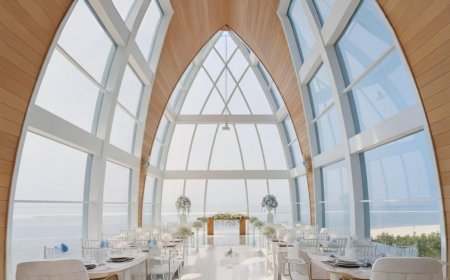
Inherent aesthetic distinctiveness: The boutique venue's greatest gift is that it already looks like something before a single piece of décor is added. The Rajput arches of a Jaipur haveli. The colonial-era stonework of a Pune bungalow. The terracotta and timber of a converted Chettinad manor. These spaces have visual character that no amount of decoration can manufacture in a blank ballroom.
For NRI couples whose wedding vision is centred on a distinctive aesthetic — couples who want the photographs to look like nowhere else, couples whose guest list includes internationally travelled guests who have seen many hotel ballrooms — the boutique venue's inherent character is its most compelling advantage.
Intimacy and personalisation: Boutique venues typically accommodate smaller guest counts — 50 to 200 guests — which creates a more intimate atmosphere than a large hotel ballroom designed for 500. The smaller scale allows for more personal interaction, more distinctive programming, and the feeling that the space was chosen for this couple rather than allocated to them.
The buyout option: Many boutique venues — particularly those with accommodation — offer a complete property buyout option: the couple takes the entire venue and all its accommodation for the wedding period. This creates an exclusive, resort-style wedding experience where the venue belongs entirely to the family for the duration of the celebration.
For NRI families who want the wedding to be a multi-day gathering — with family arriving two days before and departing two days after, with meals and activities and the unhurried time together that NRI families rarely get — the boutique venue buyout is one of the most distinctive and personally resonant options in the Indian wedding market.
What is genuinely challenging about boutique venue weddings:
Infrastructure variability: The heritage property that is visually extraordinary may have electrical infrastructure that has not been updated since the 1970s, bathroom provision that is adequate for a thirty-room boutique hotel but not for a 200-person wedding event, and kitchen facilities that require significant supplementation for full wedding catering.
The gap between the venue's visual promise and its operational infrastructure is wider at boutique venues than at any other category. Due diligence — thorough, specific, infrastructure-focused — is essential before booking.
Vendor management complexity: Boutique venues typically provide the space and not much else. The couple brings everything: catering, décor, entertainment, audio-visual, coordination. The infrastructure for managing all of these in a space that was not designed as an events venue — with its specific access challenges, power supply limitations, and logistical quirks — requires experienced vendors and a coordinator who knows the property.
Remote management difficulty: The boutique venue is the most complex category to manage from abroad. Its distinctive character creates distinctive operational challenges that require on-ground expertise — and its smaller management teams mean less institutional capacity for absorbing the coordination complexity that a large NRI wedding generates.
Regulatory and permission complexity: Heritage properties may have conservation restrictions. Farms and private estates may have municipal permissions requirements for events. The regulatory landscape for boutique venue events is more variable and less predictable than for established hotel and banquet hall venues.
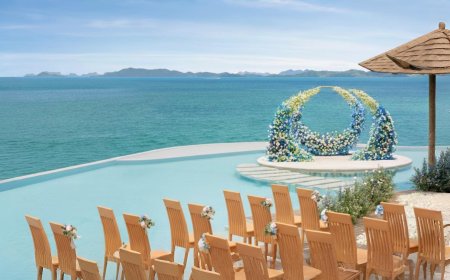
Weather vulnerability: Many boutique venues — particularly farmhouses, garden properties, and open-air heritage spaces — have limited or no indoor backup. In India's variable climate, a venue without reliable indoor capacity is a venue with weather risk that the 5-star hotel and banquet hall categories largely manage through infrastructure.
The True Cost of a Boutique Venue Wedding
• Venue hire or buyout: ₹2–20 lakhs depending on property, duration, and buyout scope
• Catering — independent caterer: ₹2,000–₹5,000 per plate — boutique venue catering often requires specialist outdoor or heritage-appropriate operators at premium rates
• Décor: ₹4–15 lakhs — may require additional structural elements not needed at standard venues
• Audio-visual: ₹1.5–4 lakhs — outdoor or heritage acoustic challenges often require more sophisticated solutions
• Generator and infrastructure: ₹1–3 lakhs — frequently higher than banquet hall requirement due to infrastructure gaps
• Wedding coordinator: ₹3–8 lakhs — boutique venue complexity requires more intensive coordination
Total realistic all-in cost for a boutique venue wedding of 100-150 guests: ₹20–55 lakhs, with significant variation by property, city, and vendor choices.
Which NRI Couples Should Choose a Boutique Venue
The boutique venue is genuinely right for:
• Couples whose wedding vision is centred on aesthetic distinctiveness — who want the photographs and the experience to be unlike any other wedding
• Couples with smaller, more intimate guest counts — 50 to 150 — where the boutique venue's scale is an asset rather than a limitation
• Couples who want a multi-day, property-buyout experience — a contained family gathering rather than a single-day event
• Couples with strong local coordinator support who can manage the operational complexity of a non-standard venue
• Couples whose guest list is primarily composed of internationally experienced guests who will appreciate the distinctive setting
The boutique venue is probably not right for:
• Couples with large guest counts — 300+ — that exceed most boutique venue capacities
• Couples without reliable local coordinator support who will struggle with boutique venue operational complexity from abroad
• Couples in weather-risk seasons or regions where the boutique venue's limited indoor backup creates genuine event risk
• Couples whose family guests expect the familiarity of a standard Indian wedding format— elderly relatives and traditional family guests may find heritage or farmhouse venues confusing rather than charming
The Direct Comparison: A Framework for Your Decision
Service Quality
• 5-Star Hotel: ✓✓ Highest — professional, trained, accountable
• Banquet Hall: ✓ Variable — depends entirely on management quality
• Boutique Venue: ✓ Variable — charming but rarely professional at hotel standard
Vendor Freedom
• 5-Star Hotel: ✗ Most restricted — mandatory or strongly preferred vendors
• Banquet Hall: ✓✓ Maximum freedom — bring any vendor you choose
• Boutique Venue: ✓ Generally open — but venue operational requirements may constrain vendor choices
Aesthetic Distinctiveness
• 5-Star Hotel: ✗ Generic ballroom — requires significant décor investment for distinctiveness
• Banquet Hall: ✗ Blank canvas — distinctive through décor, not inherent character
• Boutique Venue: ✓✓ Inherently distinctive — the space itself is the aesthetic
Total Cost for Equivalent Quality
• 5-Star Hotel: ✗✗ Highest — mandatory catering premium, room block requirements, service charges
• Banquet Hall:✓✓ Lowest — vendor freedom enables cost optimisation
• Boutique Venue: ✓ Mid-range — infrastructure gaps add cost, but base venue fee lower than 5-star
Remote Management Ease
• 5-Star Hotel: ✓✓ Easiest — single relationship, institutional accountability, managed infrastructure
• Banquet Hall: ✓ Moderate — multi-vendor complexity requires coordinator
• Boutique Venue: ✗ Most complex — non-standard infrastructure, higher coordinator dependency
Large Guest Count Suitability
• 5-Star Hotel: ✓✓ Excellent — designed for large events
• Banquet Hall: ✓✓ Excellent — capacity and infrastructure designed for scale
• Boutique Venue: ✗ Limited — most boutique venues cap below 200 guests
Accommodation Integration
• 5-Star Hotel: ✓✓ Best — on-property accommodation for full guest profile
• Banquet Hall: ✗ None — separate hotel arrangement required
• Boutique Venue: ✓ Variable — buyout properties offer integrated accommodation, standalone venues do not
Common Mistakes NRI Couples Make in This Decision
Choosing the Category Before Defining the Vision
Many NRI couples begin the venue search with a category preference — "we want a 5-star" or "we want something heritage" — before clearly articulating what they want the wedding to feel like, what their guest profile requires, and what their budget reality supports.
Correction: Define the wedding vision — intimacy versus scale, traditional versus distinctive, service quality versus aesthetic character — before committing to a venue category. Let the vision determine the category, not the reverse.
Comparing Categories on Headline Price
Comparing a 5-star hotel's venue hire fee with a banquet hall's venue hire fee without accounting for the full cost of what each requires the couple to add — catering, décor transformation, infrastructure — consistently produces misleading comparisons that underestimate the 5-star hotel's true cost and overestimate the banquet hall's.
Correction: Compare all-in costs across categories — including catering, décor, infrastructure, and accommodation — not headline venue fees.
Underestimating the Coordinator Requirement for Boutique Venues
Boutique venues consistently require more intensive coordinator involvement than couples anticipate — particularly for NRI couples planning from abroad. The distinctive charm of a heritage property comes with distinctive operational challenges that a coordinator without specific experience of that property may not manage effectively.
Correction: When shortlisting boutique venues, the coordinator question — who will manage this venue's specific operational complexity — should be resolved simultaneously with the venue shortlisting. A boutique venue without the right coordinator is a beautiful backdrop for an operational disaster.
Not Visiting the Venue in Operational Mode
Boutique venues particularly — and to a lesser extent banquet halls — look different when they are set up for an event than when they are empty or presented in marketing photographs. The heritage property that looks magnificent in daylight may have inadequate lighting for evening events. The farmhouse that photographs beautifully may have access challenges that become apparent only when vendor vehicles are attempting to navigate the same driveway simultaneously.
Correction: Arrange for a representative to visit the venue during an active event if possible — or at minimum during a setup day — to assess the operational reality that marketing photographs do not reveal.
Not Discussing the Guest Profile With the Venue
The venue that is perfect for a predominantly NRI guest list with international service expectations may be inappropriate for a guest list that includes large numbers of elderly traditional Indian family guests with different expectations and different physical requirements.
Correction: Describe your guest profile explicitly to venue candidates — the age range, the proportion of NRI versus India-based guests, the mobility considerations, the cultural expectations. Ask the venue how they serve this specific profile. Their answer reveals whether they have thought about it — or whether they are simply trying to close a booking.
The Emotional and Cultural Layer: What the Venue Choice Says
Every venue choice is, beneath its practical dimensions, a statement about what the couple values and who they are celebrating with.
The 5-star hotel says: We are honoring our guests with the best service infrastructure available. We trust the brand. We value the confidence of knowing that this will be professionally executed. We want our guests — particularly our family guests who have traveled far and for whom this occasion matters enormously — to be treated with the highest level of hospitality.
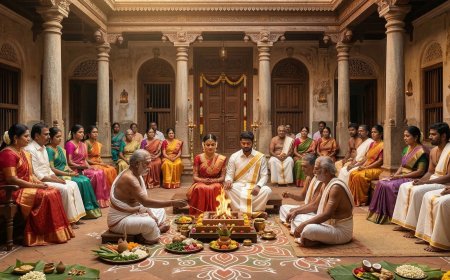
The banquet hall says: We are celebrating in the way that Indian weddings have always celebrated — in a space that is entirely given over to the event, without the commercial overlay of a hotel, with the food and the music and the people chosen entirely by us. We value authenticity over aspiration. We are here for the celebration, not the setting.
The boutique venue says: We want the wedding to be unmistakably ours — a reflection of our aesthetic, our story, our particular combination of cultural roots and international sensibility. We want the photographs to look like nowhere else. We want our guests to arrive somewhere they have never been and feel immediately that it was chosen specifically for this occasion.
None of these statements is wrong. All of them are legitimate expressions of what a wedding can mean. The right choice is the one that most honestly reflects the couple's values, their guest profile, their operational capacity, and their vision — arrived at through the kind of clear-eyed assessment that the spreadsheet supports but never fully completes.
The Decision Checklist
Choose a 5-Star Hotel If:
• Service quality and operational reliability are your primary concerns
• Your guest count is 250 or above
• Your guest profile includes a significant proportion of internationally experienced guests with high service expectations
• On-property accommodation for the wedding party and guests is important
• You value institutional accountability over vendor flexibility
• Your family places significant importance on the prestige signal of the hotel brand
Choose a Banquet Hall If:
• You have strong independent vendor preferences — specific caterers, decorators
• Catering cost is a significant budget consideration
• Your guest count is 300 or above
• Your family and primary guests are comfortable and familiar with the banquet hall format
• You have reliable local coordinator support to manage multi-vendor complexity
• You want maximum flexibility to create the event entirely on your own terms
Choose a Boutique Venue If:
• Aesthetic distinctiveness and a unique setting are central to your vision
• Your guest count is 150 or below
• You want a multi-day, property-buyout experience for an intimate family gathering
• Your guest list is primarily composed of guests who will appreciate the distinctive setting
• You have a coordinator with specific experience of boutique venue management
• Your wedding is in a season and region where weather risk is manageable
The Right Venue Is the One That Serves Your Wedding
There is no universally correct answer to the question this guide poses.
The 5-star hotel that was exactly right for your cousin's wedding may be entirely wrong for yours — because your guest profile is different, your vendor preferences are different, your vision is different, and the statement you want your wedding to make is different.
The banquet hall that your family is pushing for may be the right answer — not because it is the aspirational choice, but because it gives you the vendor freedom to create the specific celebration you have in mind, at a cost that does not compromise everything that comes after it.
The boutique haveli that has been in your mind since you saw it in a photograph may be exactly right — if your guest count fits, if your coordinator can manage it, if your season avoids the weather risk, and if your family guests will find it charming rather than confusing.
The decision is yours. Made not by the spreadsheet alone, and not by the image alone — but by the honest, specific, practically-grounded assessment of what each option actually delivers to the specific wedding you are actually planning, for the specific guests who are actually coming, in the specific budget you actually have.
Make it deliberately. Make it with full information. Make it in the knowledge that the right venue — whatever category it belongs to — is the one that serves the wedding, not the one that sounds best in the announcement.
The celebration is what matters. The venue is what holds it.
Choose the one that holds yours best.
Published by NRIWedding.com — The Premium Global Platform for Non-Resident Indians Planning Indian Weddings From Abroad.
What's Your Reaction?
 Like
0
Like
0
 Dislike
0
Dislike
0
 Love
0
Love
0
 Funny
0
Funny
0
 Angry
0
Angry
0
 Sad
0
Sad
0
 Wow
0
Wow
0