







































































Thank You Card Etiquette for NRI Weddings — Timeline, Format and the Complete Planning Guide
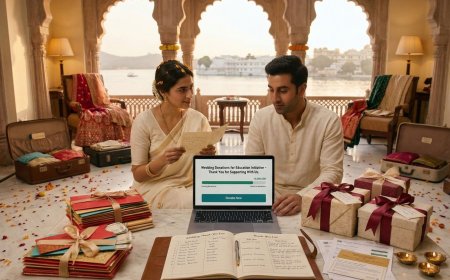
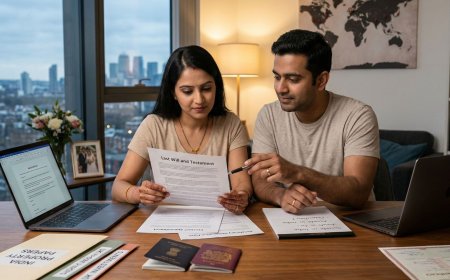
The forty-three thank you cards written, addressed, stamped and never posted — discovered in a box on the shelf eighteen months after the wedding — are not the result of bad intentions. They are the result of good intentions that encountered the specific friction of the post-wedding period without a plan that could survive it. For NRI couples whose thank you exercise spans two hundred and fifty guests across four continents, multiple gift forms, and a compressed post-honeymoon window, the thank you card is the most consistently undermanaged element of the entire wedding planning process. This complete guide gives NRI couples the full framework for getting every thank you written, personalised and posted — covering why the NRI thank you is specifically more complex than a domestic wedding including scale, diversity of gift forms, multi-country postal logistics and post-honeymoon timing compression, the non-negotiable four to six week window and the working backwards calculation that reveals the actual available time, the tiered timeline approach with tier one before the honeymoon and tier two and three in the compressed post-return window, the format hierarchy from handwritten card through printed card with handwritten elements to email as last resort, the complete content framework including the named gift, the specific use or impact, the acknowledged gesture for international guests and the personal note that distinguishes genuine acknowledgment from discharged obligation, specific thank you wording for physical gifts, cash gifts, honeymoon fund contributions, charity donations and the gift of attendance itself, the tracking spreadsheet started at the wedding, card selection and ordering timeline, the division of labour between partners, international posting logistics by country of residence, and the honest late thank you for the cards that missed the window.

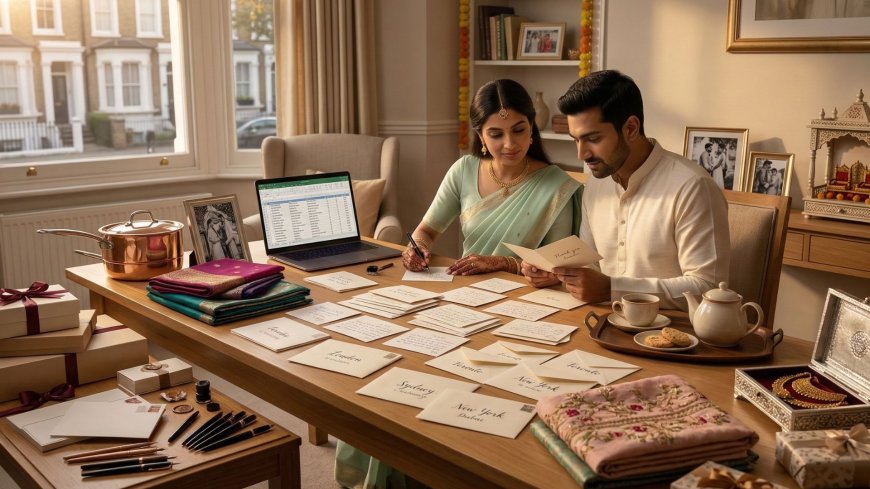
Thank You Card Etiquette for NRI Weddings: Timeline and Format
The Cards That Were Never Sent
She found them in a box eighteen months after the wedding.
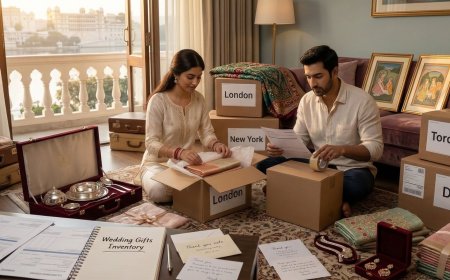
Not all of them — the thank you cards for the Indian family members had been sent, managed by her mother in the weeks after the wedding with the specific efficiency of a woman who understood that the thank you was not optional and had treated it accordingly. But the thank you cards for the international guests — the forty-three cards addressed to the UK, the USA, Canada, Australia, and Germany — were in a box on the shelf in the spare bedroom of the couple's London flat, written, stamped, addressed, and never posted.
She remembered, now, exactly how they had got there. She had written them on a Sunday afternoon six weeks after the wedding — had sat at the kitchen table with the tracking spreadsheet and the box of cards and the pen she had specifically bought for the purpose, and had written all forty-three cards with the specific care that the occasion deserved. She had sealed them. She had addressed them. She had put stamps on them. She had put them in her bag to post on her way to work the following Monday.
On Monday she had been unwell. On Tuesday she had been in back-to-back meetings. On Wednesday she had been traveling for work. By Thursday the bag with the cards in it had been replaced by a different bag and the cards had been transferred to the shelf in the spare bedroom with the intention of posting them that weekend.
That weekend had become the following weekend had become next month had become the box discovered eighteen months later with forty-three cards inside, all of them perfect and none of them received.
The thank you that was written but not sent is not a thank you. It is an intention — a genuine, caring intention that did not complete the specific act the occasion required. The guest who attended a wedding in India from London or Toronto or Sydney, who made the journey and bore the cost and gave the gift, did not receive the acknowledgment that the couple genuinely meant to send.
The gap between the intention and the posted card is the gap that this guide is designed to close — with a specific framework for the timeline, the format, and the management of the thank you card process that is calibrated to the specific complexity of the NRI wedding's global guest list.
The Core Reality: Why the NRI Thank You Is More Complex
The Scale and the Diversity
The NRI wedding thank you is more complex than the domestic wedding thank you in four specific ways that the couple who understands them can plan around.
The scale: The NRI wedding's guest list — typically larger than the average domestic wedding, often spanning two hundred to three hundred guests — produces a thank you volume that is not manageable through the ad-hoc, as-available approach that works for a smaller occasion. Two hundred and fifty thank you cards, written individually, addressed to four continents, posted through international mail systems — this is a specific project with specific resource requirements, not a task that gets done in a free afternoon.
The diversity of gift forms: The NRI wedding receives gifts in multiple forms — cash in envelopes at the ceremony in India, bank transfers from international guests, physical gifts shipped from multiple countries, honeymoon fund contributions, charity donations, and the non-material gifts of attendance and service that deserve acknowledgment even without a physical exchange. Each form requires a different type of acknowledgment — the cash gift's thank you is different from the honeymoon fund contribution's thank you, which is different from the acknowledgment of the guest who flew from Melbourne and whose attendance itself was the gift.
The multi-country postal logistics: Sending thank you cards to forty countries involves the same international postal challenges described in the invitation mailing guide — the addressing conventions, the stamp values, the customs considerations for certain formats. The couple who has not thought about international thank you card postage discovers it when they take the pile of addressed envelopes to the post office and learn that the stamp value and the address format differ by destination.
The time zone and timing complexity: The appropriate thank you window — four to six weeks after the wedding — is complicated by the NRI couple's post-wedding reality: the honeymoon, the return to the country of residence, the re-entry into work, the jet lag, the specific exhaustion of having been the central figures in a major occasion for multiple consecutive days. The couple who intends to write the thank yous during this period discovers that the intention and the available energy do not always align.
The Stakes
The thank you card is not a minor social convention whose observance or non-observance is inconsequential. For the international guest who attended an NRI wedding — who made a significant financial and logistical commitment, who took time from work, who navigated visa applications and health preparation and unfamiliar cultural conventions and long-haul flights — the thank you card is the specific acknowledgment that their effort was noticed and valued.
The absence of the thank you — the forty-three cards in the box on the shelf — communicates something specific to the guest who does not receive one. It does not communicate that the couple is busy or that the cards are in a box. It communicates, in the specific language of social convention, that the couple did not acknowledge the gift or the effort. The guest who attended from London or Toronto or Sydney and did not receive a thank you is the guest who wonders, quietly and without necessarily saying so, whether their presence and their gift were noticed.
This is the stakes of the thank you card. Not a bureaucratic obligation but the specific human act of closing the gift exchange with the acknowledgment that the giver deserves.
The Timeline: When to Send
The Non-Negotiable Window
The standard etiquette guidance for wedding thank you cards is to send them within four to six weeks of the wedding. This guidance exists for a specific reason: the window during which the thank you is received as a timely acknowledgment rather than a belated one closes at approximately eight weeks after the wedding. Beyond eight weeks, the thank you is received with the specific qualifier of lateness — which does not negate the acknowledgment but does change its character.
The four to six week target is the window, not the ideal. The ideal is as soon as possible within the window — the thank you card received two weeks after the wedding is more impactful than the one received six weeks after. The guest who receives a thank you while the wedding is still recent, still vivid, still in the immediate emotional foreground, is the guest whose experience of the acknowledgment is most complete.
The NRI-specific complication:
The four to six week window begins at the wedding — but the NRI couple's timeline after the wedding typically includes a honeymoon of one to three weeks, a return journey to the country of residence, and a return to work that absorbs the first week back. The couple who has a two-week honeymoon followed by a return to work has approximately two to four weeks of the thank you window remaining when they are in a position to begin writing. This is a compressed window that requires specific planning rather than the assumption that the thank yous will be written when time allows.
The working backwards calculation:
If the wedding is on a Saturday and the honeymoon ends three weeks later, the return to work is in week four, and the thank you window closes at week eight — the couple has four weeks between returning to work and the end of the window. If two hundred and fifty thank yous need to be written, addressed, and posted in four weeks, that is approximately sixty per week or ten per working day. This is achievable — but only if it is planned for rather than approached as a task to complete when time permits.
The Tiered Timeline
The most effective approach to the NRI wedding thank you timeline is a tiered approach — sending thank yous in batches prioritised by relationship closeness, gift significance, and the logistics of the recipient's location.
Tier One — Within two weeks of the wedding:
The immediate family members and closest friends whose gifts and presence were most significant to the couple. The parents. The siblings. The oldest friends. The guests who traveled the furthest. These thank yous should be written and sent before the honeymoon begins if possible — or immediately upon returning from the honeymoon if not.
This tier is small — typically twenty to thirty cards — and the investment of writing them before the honeymoon or in the first week after returning ensures that the people most important to the couple receive their acknowledgment with the most immediacy.
Tier Two — Within four weeks of the wedding:
The broader family, the close friends, the guests whose gifts were significant and whose attendance was meaningful. This tier is the bulk of the thank you exercise — typically one hundred and fifty to two hundred cards for a large NRI wedding.
Tier Three — Within six weeks of the wedding:
The remaining guests — the professional contacts, the acquaintances, the guests whose relationship to the couple is warm but less central. These thank yous should be completed by the end of the six-week window even if the earlier tiers have been managed more quickly.
The Gifts Received After the Wedding
Not all gifts arrive at the wedding. International guests frequently send gifts by post before or after the wedding — delivered to the couple's home address rather than brought to the Indian venue. The thank you for a post-wedding gift should be sent within two weeks of the gift's receipt — not within the wedding's thank you window, but within its own specific window calculated from the moment the gift arrived.
The tracking spreadsheet should record the date of receipt for every gift — and the thank you should be generated within two weeks of that date regardless of where in the overall thank you exercise the couple is.
The Format: What the Thank You Should Contain
The Format Options
The handwritten card:
The handwritten thank you card — sent by post — is the gold standard of wedding thank you communication. For the international guest who attended an NRI wedding, the handwritten card is the acknowledgment that most fully matches the weight of their gesture. It communicates that the couple took the specific time to write personally — not to type, not to print, but to write by hand — which is the specific form of effort that the occasion's significance warrants.
The handwritten card is the appropriate format for: all close family and friends, all international guests, all guests who gave significant gifts or made significant gestures of attendance, and any guest for whom the personal relationship makes the handwritten card the clearly correct choice.
The printed card with handwritten elements:
For very large guest lists — two hundred and fifty thank yous entirely handwritten is a significant undertaking — a printed card with a handwritten personal note added to each card is a practical middle ground. The printed card provides the structural elements — the couple's names, the wedding date, a printed message of thanks — while the handwritten addition provides the personal specificity that the purely printed card cannot.
The printed card with handwritten elements is acceptable for: the outer tiers of the guest list where the relationship is warm but less central, and for guests who received modest gifts. It should not be used for close family, closest friends, or guests who made significant gestures of attendance or giving.
The email:
The email thank you is the format of last resort — appropriate for specific situations where the physical card is not possible or not appropriate, but not the primary format for the NRI wedding thank you.
The email thank you is appropriate for: the guest who specifically uses digital communication and for whom an email is more natural than a physical card, the guest whose postal address is uncertain, and as an interim acknowledgment while a physical card is being prepared — the email that says "I wanted to thank you immediately while the physical card is on its way" provides timely acknowledgment without replacing the physical card.
The email thank you is not appropriate as a substitute for the handwritten card for close family and friends — and particularly not for the international guest whose significant commitment of time and money deserves the physical card's specific weight of acknowledgment.
The Content: What a Good Thank You Card Actually Says
The content of the thank you card is where most wedding thank yous fail — not in the timeliness and not in the format but in the specificity of what they say.
The thank you that fails:
"Dear [Name], Thank you so much for your generous gift and for attending our wedding. It was wonderful to have you there and we are so grateful for your kindness. Love, [Names]."
This thank you is technically a thank you. It acknowledges a gift. It acknowledges attendance. It expresses gratitude. But it is not specific — it could have been sent to any guest, about any gift, at any wedding. The guest who receives it knows they have been thanked. They do not know whether their specific gift was noticed, whether their specific presence was meaningful, whether the couple thought about them as an individual when writing.
The thank you that works:
"Dear [Name], The Le Creuset casserole has already been used three times — we made a dal on our first Sunday back in London that we are both fairly certain is the best dal we have ever made, and the pot is absolutely part of the reason. Thank you so much for thinking of us with something so specific and so useful. And thank you for making the journey from Sydney — we know what that trip involves, and having you in the front row of the ceremony meant more to us than we can express. We hope the jet lag has finally relented. With so much love, [Names]."
This thank you is specific — it names the gift, it connects the gift to a real moment of use, it acknowledges the journey the guest made, it references something the couple genuinely knows about the guest's experience. The guest who receives this knows that the couple noticed their gift, their presence, and their effort.
The elements of a good thank you card:
The named gift — every thank you for a physical gift or a monetary contribution should name the specific gift or contribution. Not "your generous gift" but "the beautiful Kanjivaram you chose" or "your contribution to our dinner in Kyoto."
The specific use or impact — how the gift has been or will be used, what the contribution enabled, what the gesture meant in practice. "We used it on our first weekend home" or "We thought of you when we sat down to that dinner."
The acknowledged gesture — for international guests, the specific acknowledgment of the effort their attendance involved. "We know you came from Vancouver and we want you to know that having you there was one of the most important things about the day."
The personal note — something specific to the individual, their relationship to the couple, or a shared moment from the wedding. "I will never forget the way you danced at the garba — we have the photograph framed."
The warm closing — specific to the relationship. Not the generic "with warm regards" but the closing that reflects the actual warmth of the specific relationship.
The Thank You for Different Gift Types
For physical gifts:
Name the gift specifically. Connect it to a real or anticipated moment of use. Express genuine appreciation for the thought behind the choice — not generic gratitude for generosity but specific appreciation for the specific choice.
For cash gifts:
The Indian tradition of the cash gift in an envelope requires a thank you that acknowledges the gift without specifying the amount — naming the amount of a cash gift in the thank you card is considered inappropriate in both Indian and Western convention. "Your generous gift" is the appropriate reference for a cash gift — but the thank you should be made more specific through the personal note and the acknowledgment of the gesture rather than through the gift's specification.
For larger cash gifts — the significant shagun from a close family member — the thank you can reference what the cash will contribute to without specifying the amount. "Your gift will go toward the flat we are hoping to buy next year, and it means so much to know you are part of that."
For honeymoon fund contributions:
As addressed in the honeymoon fund guide — name the specific experience the contribution was designated for, describe what the experience was actually like, and connect the contribution to the specific moment it enabled. The post-honeymoon thank you for the fund contribution is the most specific and most moving of all thank you formats when it is done well.
For charity donations:
Acknowledge the donation with the specific warmth of someone who is genuinely moved by the choice. Name the organisation. Reference what the organisation does and why it is meaningful to the couple. Express what it means to know that the wedding has contributed to this work.
For the gift of attendance:
The international guest who attended without giving a physical gift — whose attendance itself was the significant gesture — deserves a thank you that specifically acknowledges the attendance as the gift. "Coming from Melbourne to be with us in Jaipur was the most extraordinary gift you could have given us. Having you in the room during the ceremony is something we will not forget."
The Physical Card: Choosing and Preparing
The Card Selection
The physical thank you card should be chosen with the same care as any other element of the wedding stationery — not necessarily at the same cost, but with the same attention to quality, consistency, and the specific impression it creates.
The options:
Custom printed thank you cards — cards that carry the couple's names, the wedding date, or a photograph from the wedding, printed in the same design language as the invitation suite — are the most visually consistent choice and the one that most clearly connects the thank you to the specific wedding occasion.
Pre-printed generic thank you cards — elegant, good quality cards from a stationer — are an entirely acceptable alternative and require no production lead time. They should be in a quality and format that reflects the significance of the occasion rather than the efficiency of the purchase.
The card's size should be sufficient for the handwritten content — a small card that physically limits the length of the personal note is a card that inadvertently constrains the thank you's specificity. A standard A5 or A6 card gives adequate space for the content the thank you requires.
The Envelope and Addressing
The envelope for the thank you card is addressed in the same way as any formal correspondence — to the guest's name and address, in the format appropriate to their country of residence.
For international thank you cards — sent from the couple's home in the UK, the USA, Canada, or Australia to guests in various countries — the addressing conventions are standard international correspondence conventions. The stamp value must reflect the international postage rate from the country of posting rather than the domestic rate.
The addressing should be handwritten — not printed — for close family and friends, reflecting the same personal effort that the handwritten card itself represents.
The Management System: Making the Thank Yous Happen
The Tracking Spreadsheet
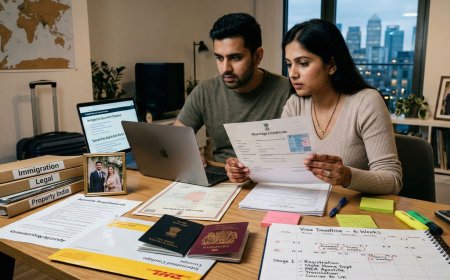
The tracking spreadsheet is the administrative infrastructure that makes the thank you exercise manageable — particularly for a large NRI wedding with gifts received in multiple forms from guests in multiple countries.
The spreadsheet columns:
Guest name and address. Relationship to couple (tier one, two, or three). Gift received — specific description including amount for cash gifts and the designated experience for honeymoon fund contributions. Date gift received. Thank you written (date). Thank you posted (date). Thank you received confirmation (optional — for closest relationships where the couple wants to confirm arrival).
The spreadsheet should be started at the wedding itself — or in the immediate post-wedding period — with the gift information recorded as gifts are received rather than reconstructed from memory weeks later. The detail of the thank you depends on the accuracy of the gift record — the couple who cannot remember what specific gift a specific guest gave cannot write a specific thank you for it.
The Assembly Process
Before the honeymoon:
Order the thank you cards before the wedding — they should be ready to use in the first week after returning from the honeymoon. The couple who has to order cards after the honeymoon adds a week of lead time to an already compressed window.
Write tier one thank yous — the closest family and friends — before the honeymoon if time allows. Twenty to thirty cards written in the week before the honeymoon begins is a specific investment that ensures the most important thank yous arrive within the gold-standard two-week window.
During the honeymoon:
The honeymoon is not the time for thank you cards. It is the time for the honeymoon. But the couple who spends one quiet evening — not a significant portion of the honeymoon, one evening — beginning the tier two thank yous is the couple who has significantly reduced the volume that faces them on return.
After the honeymoon:
The thank you writing schedule should be planned before the honeymoon ends — a specific number of cards per day, a specific day of the week set aside, a specific completion date for each tier. The schedule that is written down is more likely to be executed than the intention that lives in the general awareness of a task that needs doing.
The division of labour:
The thank you card exercise should be genuinely shared between the couple — not assigned entirely to one partner because the other "has more on" or "is better at writing." The thank you from both people should come from both people — with both names signed to every card, and ideally with both partners writing some proportion of the cards rather than one writing all and the other signing.
For the largest NRI weddings — two hundred and fifty or more thank yous — the division of the list into specific batches with specific ownership is the management approach that ensures both partners are genuinely contributing and that the volume is distributed rather than concentrated on one person.
The International Posting
The international thank you cards should be posted through a reliable postal service with appropriate international postage from the couple's country of residence.
For the NRI couple based in the UK: Royal Mail International Tracked is the most reliable option for thank you cards to multiple countries. The postage rate varies by destination country and by the weight of the envelope.
For the NRI couple based in the USA: USPS First Class International is the standard option, with tracking available through registered mail.
For the NRI couple based in Canada or Australia: Canada Post and Australia Post both offer international mail services with tracking options for correspondence.
The posting of one hundred international thank you cards — the volume typical of the NRI wedding's international guest list — is a specific trip to the post office that should be treated as a task with a specific date rather than something that happens when convenient.
The Late Thank You: When the Window Has Passed
The Honest Acknowledgment
The thank you that arrives after the eight-week window — or the forty-three cards discovered in the box eighteen months later — requires a specific approach that the thank you within the window does not.
The late thank you should be sent. Not sending it because the window has passed compounds the absence of acknowledgment with a decision not to close it. The guest who has not received a thank you at eight weeks is more appreciative of a late thank you than of no thank you at all.
But the late thank you should acknowledge its lateness — not with excessive apology that makes the card about the couple's failure rather than the guest's gift, but with a brief, honest acknowledgment that the delay was not a reflection of the significance of the gesture.
The late thank you wording:
"I owe you this thank you and I am sorry it has taken so long to arrive — the post-wedding months were more consuming than I anticipated and this is the specific thing I regret most about them. The [gift] has been [used/will be used] and means so much to us. Your presence at the wedding in Jaipur was one of the things that made it what it was, and I wanted you to know that even if this card is arriving later than it should."
This wording is honest — it acknowledges the delay without over-explaining it, it closes the gap with the specific content the thank you requires, and it communicates the genuine appreciation that was always present but not previously expressed.
The Personal Conversation for the Closest Relationships
For the very closest relationships — the best friend, the sibling, the mentor — where a late thank you card would feel insufficient as the sole acknowledgment of a significant gap, a personal conversation — a phone call, a specific in-person acknowledgment — should precede or accompany the card.
"I have been meaning to say this to you properly and I want to do it now before I lose more time. What you did — coming from Sydney, giving what you gave, being there for the whole week — I have not forgotten it. I have thought about it many times. I have a card that is embarrassingly overdue and I'm sending it this week, but I wanted to say it to you directly first."
This conversation — direct, honest, personal — is the specific form of acknowledgment that the closest relationship deserves, and the card that follows it is the formal closing of the exchange rather than the sole acknowledgment.
Common Mistakes NRI Couples Make With Thank You Cards
The first mistake is not building the thank you timeline into the overall wedding planning. The couple who plans the ceremony, the catering, the florals, and the photography in advance but treats the thank you cards as a post-wedding task to be managed when time allows is the couple whose cards are in a box on the shelf eighteen months later. The thank you exercise should be planned — cards ordered, spreadsheet started, tier one cards written before the honeymoon — as a specific project with specific milestones.
The second mistake is writing generic thank yous that name no specific gift and reference no specific gesture. The "thank you for your generous gift" card is technically a thank you and practically an absence of acknowledgment. The thank you that names the gift, connects it to a real moment of use, and acknowledges the gesture specifically is the thank you that closes the exchange with the warmth the giver deserves.
The third mistake is writing the thank yous but not posting them. The specific failure described at the beginning of this guide — the written, addressed, stamped cards that never left the flat — is the failure of the final step. The posting is the completion of the thank you. A card that is written but not posted is not a thank you; it is a failed intention. Build the posting into the schedule with the same specificity as the writing.
The fourth mistake is assigning the entire thank you exercise to one partner. The thank you from both people should reflect the effort of both people. The partner who signs two hundred and fifty cards that the other partner wrote is not sharing the exercise — they are adding their signature to the other's work. Both partners should write a genuine proportion of the cards, both partners' handwriting should appear in the exercise, and the division of the work should be planned rather than defaulted to the path of least resistance.
The fifth mistake is not starting the tracking spreadsheet at the wedding. The couple who tries to reconstruct the gift record from memory three weeks after the wedding — who cannot remember whether the specific Kanjivaram came from the aunt in Chennai or the aunt in Hyderabad, who does not know whether the bank transfer from the unknown account was the colleague from the Frankfurt office or the university friend who could not attend — cannot write specific thank yous because the specific information is lost. Start the spreadsheet at the wedding. Record every gift as it is received. The specificity of the thank you depends entirely on the accuracy of the record.
The Card That Completes the Occasion
The forty-three cards on the shelf in the spare bedroom were not the result of bad intentions. They were the result of good intentions that encountered the specific friction of the post-wedding period — the honeymoon, the return to work, the compressed window, the Monday illness and the Tuesday meetings and the Wednesday travel — without a specific plan that could survive that friction.
The bride who found them eighteen months later was not a person who did not care. She was a person who cared very much and whose caring had not been translated into the specific, completed act that the occasion required.
The framework in this guide — the tiered timeline, the tracking spreadsheet, the cards ordered before the honeymoon, the tier one cards written before the honeymoon begins, the division of the exercise between partners, the specific daily target, the posting treated as a task with a date — is the specific infrastructure that translates the genuine caring into the completed act.
The international guest who flew from Sydney or Toronto or Amsterdam — who navigated the visa and the health preparation and the long-haul flight and the unfamiliar cultural conventions and the four days of wedding events — deserves the specific acknowledgment that their effort was noticed.
Not the acknowledgment that was intended.
Not the acknowledgment that was written and addressed and stamped and placed in a bag and transferred to a shelf.
The acknowledgment that arrived.
Write it specifically. Post it promptly. Send it to every person who deserves it.
Complete the occasion.
Published by NRIWedding.com — The Premium Global Platform for Non-Resident Indians Planning Indian Weddings From Abroad.
What's Your Reaction?
 Like
0
Like
0
 Dislike
0
Dislike
0
 Love
0
Love
0
 Funny
0
Funny
0
 Angry
0
Angry
0
 Sad
0
Sad
0
 Wow
0
Wow
0