


















































North India vs. South India Destination Wedding — The Complete NRI Comparison Guide
For NRI couples choosing between the architectural grandeur of a Jaipur palace wedding and the cultural depth of a Kerala backwater or Mysore heritage celebration, the North India versus South India destination wedding decision is one of the most consequential and most personally revealing choices in the entire planning process. This complete comparison guide breaks down every dimension of the decision for NRI couples — covering aesthetic tradition, architectural setting, weather and season, food and culinary heritage, music and entertainment, guest profile considerations, photography outcomes, ceremony appropriateness, logistics and connectivity, budget reality, and the decision framework that helps NRI couples identify which vision of India most honestly fits their heritage, their guests, and the beginning they want to create.

The Question That Divides Every NRI Family
It begins, typically, within forty-eight hours of the engagement announcement.
Not with congratulations — those come first, in the warm flood of WhatsApp messages and video calls and the particular joy that an NRI engagement produces in a family that has been waiting for exactly this news. The congratulations are unanimous and genuine.
The disagreement begins with the venue.
Not the specific venue. Not yet. The disagreement begins one level above that — at the level of geography, of cultural allegiance, of the specific vision that each member of the family carries for what an Indian wedding should look, feel, sound, and taste like.
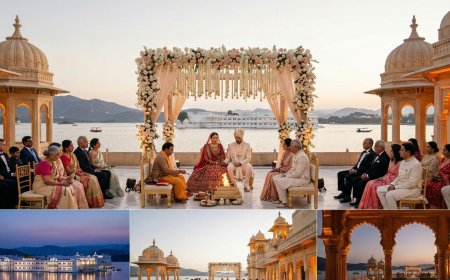
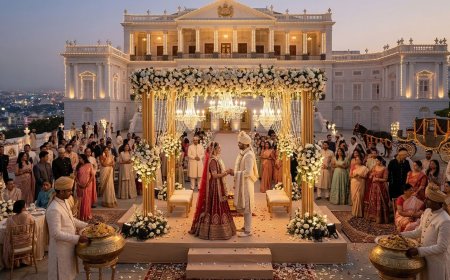
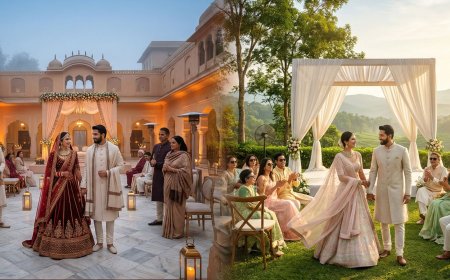
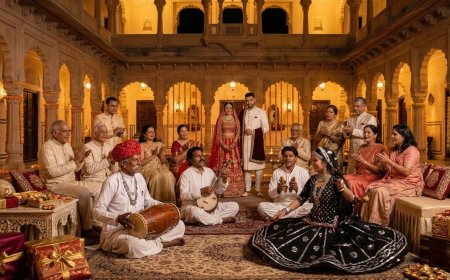
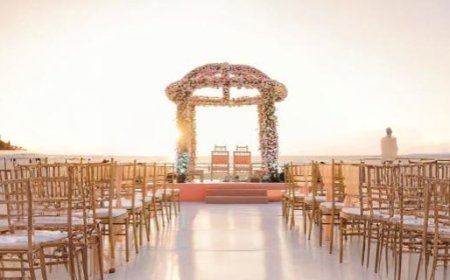
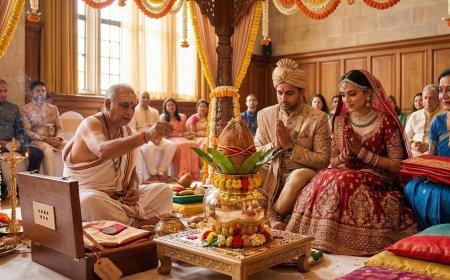
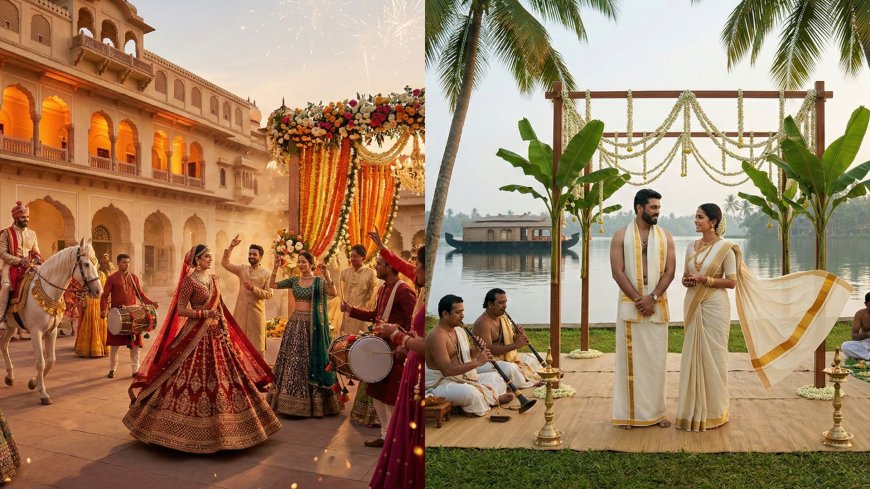
One side of the family sees Jaipur. The pink sandstone. The palace venue. The baraat arriving on horseback through an arched gateway that was built three centuries ago for exactly this kind of arrival. The Rajasthani folk musicians. The royal aesthetic that announces, without apology, that this family is celebrating at the full register of what Indian wedding grandeur can mean.
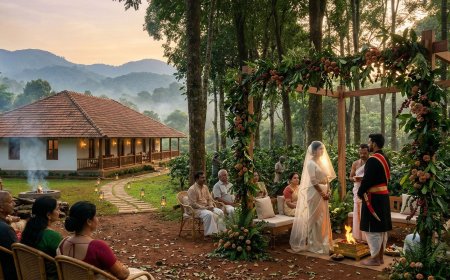
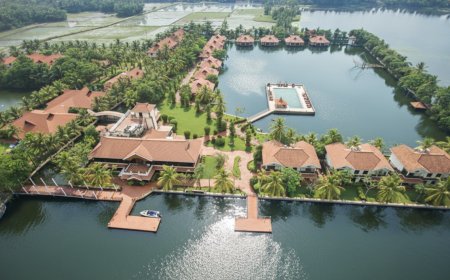
The other side sees Kerala. Or Mysore. Or the backwaters. The coconut palms. The specific quality of South Indian light on water. The sadya on banana leaves. The Carnatic music. The aesthetic restraint that is not absence of beauty but a different, more intimate, more texturally specific kind of it.
Both are right. Both visions are legitimate. Both represent genuine, deeply rooted expressions of what an Indian wedding can be — and the tension between them is not a problem to be resolved but a conversation to be had, with full information, about which vision most honestly fits this specific couple, this specific family, this specific beginning.
This guide provides that full information.
Not as a verdict — there is no universal verdict on a question this personal. But as the complete, honest, comparative picture of what North India and South India destination weddings actually deliver — in aesthetic terms, in logistical terms, in cultural terms, in budget terms, and in the specific, felt terms of what the experience is like for the couple and the guests who attend.
The decision is yours. The information is here.
The Core Reality: Two Different Civilisational Aesthetics
Before the practical comparison — the venues, the seasons, the budgets, the logistics — there is a more fundamental distinction that shapes everything else.
North Indian and South Indian wedding aesthetics are not variations on the same theme. They are expressions of two different civilisational traditions — traditions with different architectural vocabularies, different musical systems, different culinary philosophies, different relationships to colour and ornament and ceremony.
The North Indian Aesthetic
The North Indian wedding aesthetic is rooted in the Mughal and Rajput court traditions — two civilisations that shared an understanding of grandeur as a public statement, of beauty as a form of power, and of ceremony as an expression of social position.
What this produces in weddings:
• Maximalism: The North Indian wedding aesthetic is not afraid of abundance. More flowers. More lights. More musicians. More courses at dinner. More guests. The abundance is not excess — it is expression. It communicates generosity, prosperity, and the family's genuine commitment to honouring their guests.
• Saturated colour: Red, gold, orange, deep jewel tones — the North Indian colour palette is bold and saturated. It catches light dramatically. It photographs with a specific richness that the more muted South Indian palette does not.
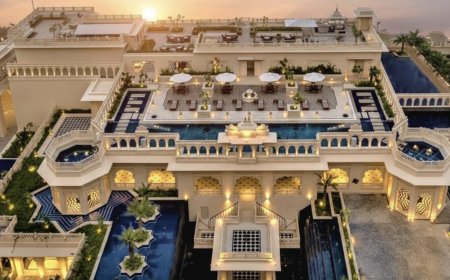
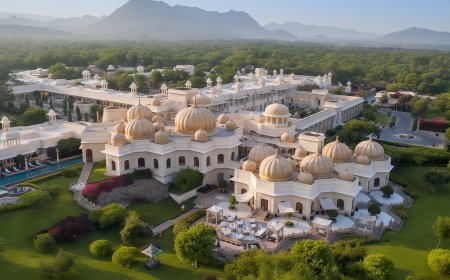
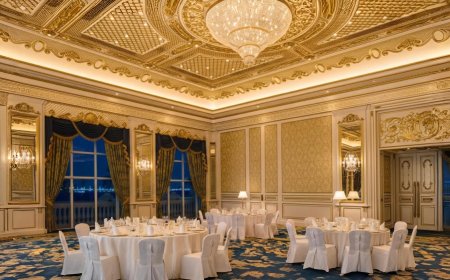
• Architectural drama: The North Indian heritage venue — the Jaipur palace, the Rajasthani haveli, the Mughal garden — is built for visual impact at the first glance. The entrance, the facade, the courtyard — these are designed to produce a specific response of awe.
• The procession: The baraat — the groom's procession — is a North Indian wedding's most distinctively dramatic element. The horse, the dhol, the dancing relatives, the fireworks, the crowd — it is theatre and celebration simultaneously, and it produces the specific energy of collective joy that is the North Indian wedding's greatest emotional gift.
The South Indian Aesthetic
The South Indian wedding aesthetic is rooted in the Dravidian temple tradition and the cultural traditions of the specific kingdoms — Vijayanagara, the Nayaks, the Wadiyars, the Travancore royal family — that shaped the region's architectural and artistic vocabulary.
What this produces in weddings:
• Refined abundance: South Indian weddings are not minimal — the flower garlands, the banana leaf feast, the specific richness of the silk saree — but the abundance is organised differently. It tends toward density of specific detail rather than breadth of visual impact.
• Natural and botanical palette: Green and gold, white and red, the specific colours of tropical flowers — the South Indian palette is rooted in the natural landscape in a way that the North Indian palette is not.
• Architectural intimacy: The South Indian heritage venue — the Kerala resort, the Mysore heritage hotel, the Tamil Nadu palace — tends toward a different scale from the North Indian palace. More intimate. More texturally detailed. More inviting of close attention rather than demanding of distant awe.
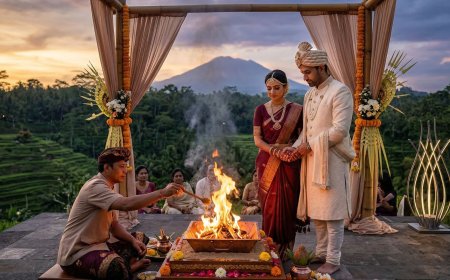
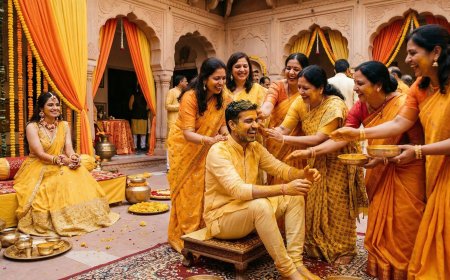
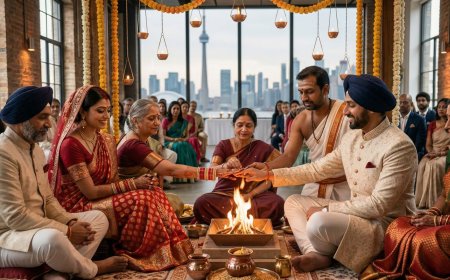
• The ritual depth: South Indian wedding ceremonies tend to be more ritually complex and more specifically regional in their ceremonial content than the standardised pan-Indian Hindu wedding format that North Indian ceremonies often follow. The Kannadiga Kashi Yatra, the Tamil Oonjal ceremony, the Kerala Nischayam — these are rituals with specific cultural weight that a generic Hindu wedding ceremony does not carry.
The Destination Comparison: Category by Category
Category 1 — Architectural Setting
North India — The Verdict: Unmatched for Grand Scale
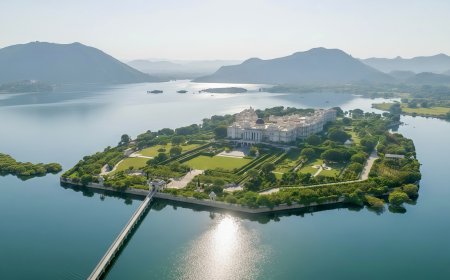
No South Indian destination matches the specific grandeur of the North Indian heritage venue at its best. The Rambagh Palace in Jaipur. The Samode Palace. The Neemrana Fort. These are buildings built for royalty, at a scale that announces itself immediately and completely, in a landscape whose dryness and clarity of light makes the architecture visible in a way that the lush South cannot match.
The North Indian heritage venue produces a specific quality of photograph — the couple against the palace facade, the ceremony under the haveli arch, the baraat through the palace gateway — that South Indian venues, for all their beauty, do not replicate.
South India — The Verdict: More Nuanced, More Varied
South India's architectural heritage is extraordinary — but it expresses itself differently. The Mysore Lalitha Mahal's neoclassical grandeur. The Kerala resort's integration with the backwater landscape. The Tamil Nadu palace's Dravidian architectural vocabulary. These are not lesser venues — they are different venues, expressing a different civilisational aesthetic that rewards the close attention that the dramatic North Indian palace does not always invite.
The specific distinction: North Indian heritage venues produce drama at first glance. South Indian heritage venues reveal themselves over time — their beauty is in the detail, the material, the specific quality of light on a specific surface at a specific time of day.
For NRI couples: If the wedding photographs are the primary reference point, North India generally produces more dramatically striking imagery. If the experience of the setting over three days is the primary reference point, South India's varied, nuanced landscape often produces a deeper satisfaction.
Category 2 — Weather and Season
North India — The Verdict: More Constrained Season, More Variable Risk
North India's wedding season — October through February — is constrained at both ends by the monsoon and the extreme heat. Within that window, the weather is generally excellent — but with specific risks:
• December and January cold: Genuinely cold nights — 4°C to 8°C in Rajasthan — require heating infrastructure and warm-weather guest preparation • January fog: The North Indian fog season affects travel significantly — flights delayed, road travel slowed, visibility at outdoor events reduced • October residual monsoon: Late October carries some residual rainfall risk, particularly in Rajasthan
South India — The Verdict: More Complex Season, But Moderate Climate
South India's climate is more varied and more complex than North India's — with multiple monsoon systems affecting different regions at different times. But within the complexity:
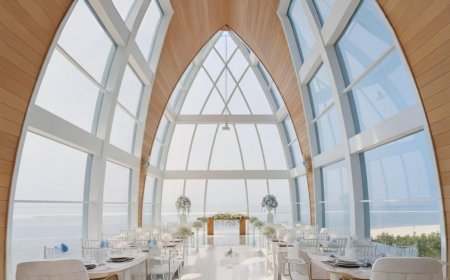
• Bengaluru's year-round moderation: Bengaluru's elevation produces a genuinely moderate climate that makes it the least weather-constrained major destination in India • Kerala's January-March window: Narrow but outstanding — the post-northeast-monsoon clarity and the specific quality of Kerala winter light make this period extraordinary • Mysore's moderate conditions: Mysore's elevation moderates both heat and rain — producing a more forgiving outdoor wedding climate than comparable North Indian cities
The specific distinction: North India's weather window is more clearly defined and more easily communicated to guests. South India's weather complexity requires more careful research but rewards it — the optimal South Indian wedding month in a specific city can produce conditions that North India's best months match but do not surpass.
Category 3 — The Food
This is the category where the North India versus South India comparison produces the most strongly held opinions — and the most significant disagreement within NRI families whose culinary identities are rooted in different regional traditions.
North India — The Verdict: The Wedding Food That Most Indians Recognise
The North Indian wedding menu — the dal makhani, the paneer preparations, the tandoori items, the biryani, the elaborate dessert spread — is the menu that most Indians, regardless of regional background, associate with a wedding feast. It is the food of maximum familiarity for the broadest guest profile.
Specific North Indian strengths:
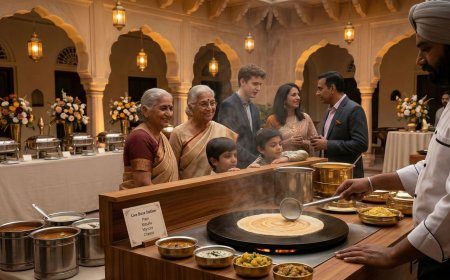
• The live counter culture: The North Indian wedding's live food counters — chaat stations, kebab grills, tandoor stations — are among the most guest-beloved elements of any Indian wedding celebration. The specific pleasure of hot food prepared to order in the wedding atmosphere is a North Indian wedding gift to the guest experience.
• The Rajasthani dal baati churma: At a Rajasthan destination wedding, the specific Rajasthani culinary tradition — the dal baati, the laal maas, the ker sangri — adds a regional specificity that is not available elsewhere.
• The scale of abundance: North Indian wedding catering tends toward maximum variety — multiple live counters, extensive buffet, multiple dessert options. The abundance itself is part of the hospitality statement.
South India — The Verdict: More Distinctive, More Regionally Specific
South Indian wedding food is among the most complex and most regionally varied culinary tradition in India — and a wedding that engages authentically with the specific regional culinary heritage of its South Indian destination produces a food experience that is genuinely distinctive.
Specific South Indian strengths:
• The sadya: A full Kerala or Tamil Nadu sadya — served on a banana leaf, in the specific sequence of preparations that the tradition requires — is one of the most culturally resonant and most culinarily complex dining experiences available at an Indian wedding.
• The seafood: South Indian coastal and backwater venues provide access to seafood at a quality and freshness that North Indian inland venues cannot match.
• The specific regional traditions: Chettinad cuisine. Coorgi pork preparations. Mangalorean fish curry. Andhra spice traditions. South India's culinary regionalism is a destination wedding asset that the more standardised North Indian wedding menu does not offer.
The NRI guest consideration: NRI guests from North Indian backgrounds — which represents a significant proportion of the NRI community — may find South Indian food less familiar and, initially, less comfortable than North Indian wedding food. This is a guest experience consideration that should factor into the decision without determining it.
Category 4 — The Music and Entertainment
North India — The Verdict: The Highest Energy, The Most Participatory
The North Indian wedding's musical tradition — the dhol, the shehnai, the Bollywood playlist that every sangeet eventually reaches, the baraat's procession music — is the most participatory and most universally familiar in the Indian wedding landscape.
The specific North Indian entertainment strengths:
• The dhol: The specific energy that the dhol produces — in a baraat, at a sangeet, at any moment in the programme where the tempo needs to rise — is unmatched by any South Indian equivalent. The dhol is the most reliable crowd-energising instrument in the Indian wedding toolkit. • The Bollywood connection: North Indian wedding entertainment is most naturally aligned with the Bollywood music that dominates the NRI musical landscape regardless of regional background. • The folk performance tradition: Rajasthani folk music and dance — the kalbelia, the fire dance, the puppet show — adds a specifically regional entertainment dimension that produces the particular delight of an encounter with something genuinely unfamiliar.
South India — The Verdict: More Culturally Deep, Less Immediately Participatory
South Indian wedding music is rooted in the Carnatic classical tradition — which is among the world's most sophisticated musical systems and among the least immediately accessible to audiences without exposure to it.
The specific South Indian entertainment strengths:
• The depth of the classical tradition: A live Carnatic performance by a genuinely accomplished musician — in the context of a Mysore or Kerala wedding — is an experience that is more culturally significant and more lastingly impressive than most North Indian wedding entertainment. For guests who engage with it, it produces a different quality of memory.
• The Bharatanatyam performance: Classical dance at a South Indian wedding is not entertainment as distraction — it is art as offering. The specific quality of a Bharatanatyam performance in a heritage South Indian setting produces a response that the most spectacular Bollywood dance performance does not.
• The nadaswaram and percussion: The nadaswaram — the South Indian ceremonial oboe — and its accompanying percussion are among the most ceremonially powerful musical combinations in Indian tradition. Their sound, in a South Indian temple or heritage venue, is the sound of the sacred made audible.
The NRI guest consideration: South Indian classical music and dance are most appreciated by guests with exposure to that tradition. For mixed NRI guest profiles — North Indian and South Indian backgrounds combined — the South Indian classical programme may produce uneven engagement across the guest group.
Category 5 — The Logistics
North India — The Verdict: Better Connected, More Developed Ecosystem
North India's destination wedding locations — Jaipur, Agra, Udaipur — are among India's best-connected tourist destinations. Jaipur International Airport has direct international connections. The road from Delhi to Jaipur is one of India's best national highways. The destination wedding vendor ecosystem is among the most developed in India.
Specific North Indian logistical advantages:
• International connectivity: NRI guests can fly directly to Jaipur — or to Delhi with a short onward journey — more easily than to most South Indian destinations
• Vendor ecosystem depth: Jaipur's destination wedding vendor market is the most developed in India — with the largest concentration of experienced palace wedding planners, heritage venue decorators, and destination wedding photographers
• Accommodation variety: The range of accommodation in Jaipur — from the ultra-luxury palace hotels to quality mid-range options — accommodates the full guest profile more easily than most South Indian destinations
South India — The Verdict: More Varied Connectivity, Developing Ecosystem
South India's destination wedding logistics vary significantly by destination.
Mysore: Accessible via Bengaluru — one of India's most connected airports — but requires an additional three-hour road transfer. No direct flights to Mysore for most NRI guests.
Kerala: Kochi International Airport is well-connected internationally — with direct flights from the Gulf and one-stop connections from the UK and USA. The Alappuzha and Kumarakom backwater destinations require an additional road transfer.
Andaman: As detailed in the previous guide — significant travel complexity with multiple connection requirements.
Vendor ecosystem: South India's destination wedding vendor ecosystem is less developed than Jaipur's — particularly for non-metropolitan locations like Mysore and the Kerala backwaters. This is improving, but the depth of specialist vendor availability that Jaipur provides is not yet matched.
Category 6 — The Budget
The fundamental comparison:
At equivalent quality levels, North and South Indian destination weddings cost roughly similarly — with destination-specific variations that make direct comparison difficult.
Where North India tends to cost more:
• Peak season venue pricing: December and January in Jaipur — peak wedding season — commands premium pricing that South Indian equivalents do not always match
• Vendor premium for heritage palace venues: The most prestigious Jaipur palace venues — Rambagh, Samode — command pricing that reflects their exceptional positioning
Where South India tends to cost more:
• Andaman remoteness premium: The Andaman Islands add thirty to forty percent to every budget element through remoteness logistics
• Catering supply chain in remote South Indian destinations: Fresh produce supply chains to Kerala backwater resorts and Andaman venues add cost that is not present at North Indian venues with better mainland connectivity
The general principle:
Both destination categories can be executed across a wide budget range — from ₹25 lakhs for an intimate heritage wedding to ₹2 crores for a full palace programme. The budget is more determined by the specific venue choice and guest count than by the North-South geography.
The Guest Profile Question: Who Is Attending Your Wedding?
This is, for NRI couples, often the most practically determinative factor in the North-South decision — and the one that is most consistently underweighted relative to the couple's own aesthetic preferences.
The Predominantly North Indian Guest Profile
If the majority of the family and guests have North Indian backgrounds — Punjabi, Gujarati, Rajasthani, UP, Delhi — then:
• The North Indian heritage venue is the natural cultural home — the architecture, the food, the music, the ceremony format are all deeply familiar
• The South Indian destination creates a displacement — guests are in a beautiful setting that is culturally unfamiliar, with food they may find less comfortable, music they may engage with less fully
• The displacement is not necessarily negative — the experience of cultural discovery can be part of the destination wedding's gift — but it should be planned for rather than assumed to be universally welcomed
The Predominantly South Indian Guest Profile
If the majority of the family and guests have South Indian backgrounds — Karnataka, Kerala, Tamil Nadu, Andhra Pradesh, Telangana — then:
• The South Indian destination is the cultural home — the ceremony traditions, the food, the music are all expressions of the guests' own heritage
• The North Indian destination creates a cultural novelty — which many South Indian families genuinely enjoy, but which should be accompanied by careful menu planning that includes South Indian food options alongside the Rajasthani feast
The Mixed NRI Profile — The Most Common Scenario
For NRI couples whose guest list includes both North and South Indian family members — or whose own backgrounds cross the North-South divide — the decision is genuinely open, and the factors that should tip it are:
• The couple's own heritage: Where do the couple's own cultural roots lie? A South Indian couple marrying in Jaipur is choosing visual grandeur over cultural rootedness. A North Indian couple marrying in Kerala is choosing a different kind of beauty over the familiar one. • The families' dominant preference: Which family's preference, in the context of this specific couple's family dynamics, carries more weight? • The type of experience the couple wants to create: Grandeur and drama, or intimacy and cultural depth?
The Photography Question
For many NRI couples, the wedding photographs are among the most important outputs of the entire wedding — images that will be shared across continents, displayed in homes across four countries, and looked at for decades.
The North Indian photographic advantage:
• Architectural drama: The Jaipur palace facade, the haveli arch, the Rajasthani landscape — these produce images of immediate, unmistakable grandeur
• Colour richness: The North Indian colour palette photographs with a specific richness and saturation
• The baraat: No wedding moment photographs with the specific energy and visual drama of a baraat in full flight through a palace gateway
• The desert landscape: The Rajasthani landscape — the sand, the dunes, the desert light — adds a visual vocabulary that is specific and compelling
The South Indian photographic advantage:
• Natural light quality: The quality of light in Kerala and Mysore — particularly the water-reflected light of the backwaters and the filtered light of the sal forest edge — produces images of a different but equally powerful quality
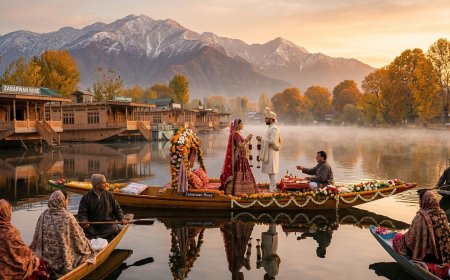
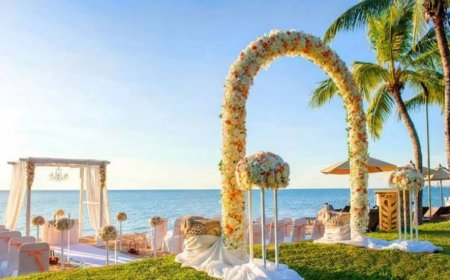
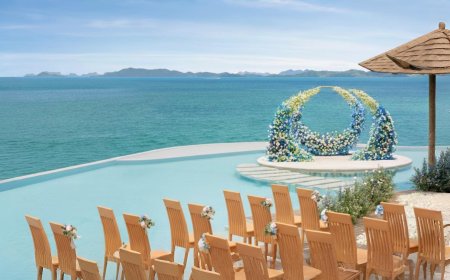
• Water settings: The couple on a kettuvallam at sunset, or on a Havelock beach at golden hour, or on the Mysore palace terrace with the city below — these images have a specific quality of romance and natural beauty
• Cultural authenticity: South Indian wedding photography captures specific cultural elements — the nadaswaram musician, the banana leaf feast, the Bharatanatyam performance — that are genuinely distinctive in the global NRI wedding photography landscape
The Ceremony Question
For couples whose ceremony traditions are specifically North Indian:
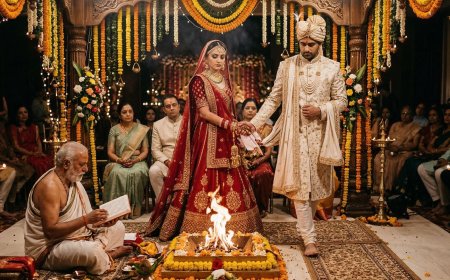
The North Indian destination is the natural home for the ceremony — where the pandit understands the specific regional traditions, where the ceremony infrastructure is designed for the North Indian format, and where the surrounding culture supports the ceremony's cultural vocabulary.
For couples whose ceremony traditions are specifically South Indian:
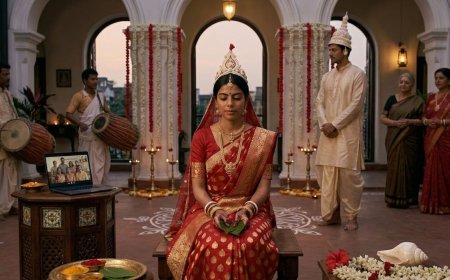
The South Indian destination is the ceremony's natural home — where the specific Karnataka or Kerala or Tamil Nadu traditions can be performed in full, with the appropriate cultural context, by pandits and officiants who know the specific regional traditions from within.
For interfaith or inter-regional couples:
The destination choice can be made on grounds other than ceremonial appropriateness — because neither destination is the natural home of the ceremony in the way that a regionally specific ceremony has a natural home.
Common Mistakes NRI Couples Make in This Decision
Choosing on Photographs Alone
Instagram and Pinterest have made Jaipur the default NRI wedding destination — not because it is universally the right choice, but because the photographs from Jaipur palace weddings are among the most widely shared in the NRI wedding photography landscape. Couples who choose Jaipur because the photographs are extraordinary may be making the right choice for the right reasons — or the right choice for the wrong reasons.
Correction: Assess the destination against the full comparison framework — ceremony appropriateness, guest profile, budget reality, logistics — not against the photograph alone.
Ignoring the Guest Profile
A predominantly South Indian family choosing Jaipur because the couple prefers the aesthetic — and then discovering that the elderly Tamil Brahmin grandparents find nothing to eat in the Rajasthani feast menu and feel culturally displaced throughout — is a planning failure that the guest profile analysis would have prevented.
Correction: Build the guest profile analysis into the destination decision. If the guest profile creates a significant mismatch with the destination's cultural default, plan specifically for it — with menu additions, with cultural programme explanation, with the specific hospitality choices that make culturally unfamiliar guests feel welcomed.
Not Considering the Couple's Own Cultural Heritage
Some NRI couples choose a destination that is visually appealing but culturally disconnected from their own heritage — the Kerala couple whose roots are in Trivandrum choosing a Jaipur palace wedding because the photographs are more dramatic. This is a legitimate choice — but it should be a conscious one, not a default.
Correction: Before the destination decision is made, have the explicit conversation about cultural rootedness. Is the wedding a celebration of the couple's specific heritage — or a destination event that uses India as a backdrop? Both are valid. Neither should be the default without acknowledgment.
Treating the Comparison as a Competition
The North India versus South India destination comparison is not a competition with a winner and a loser. Both offer extraordinary wedding experiences. Both have produced weddings that the couples and guests involved remember for the rest of their lives. The comparison is a tool for arriving at the right decision for this specific couple — not a ranking of destinations.
Correction: Approach the comparison as a decision-making framework rather than a verdict-seeking exercise. The goal is alignment between the couple's vision and the destination's offering — not the identification of an objectively superior option.
The Decision Framework: How to Choose
Choose North India If:
• Visual grandeur and architectural drama are the primary aesthetic priorities
• The guest profile is predominantly North Indian or the family's cultural allegiance is to the North Indian wedding tradition
• Larger guest counts — 200 plus — are planned and the scale of North Indian palace venues is an asset
• International guest connectivity is a priority — Jaipur's airport connections make it more accessible for NRI guests from multiple international locations
• The baraat is a non-negotiable element of the wedding programme
• The wedding photographs are a primary planning priority and the North Indian heritage backdrop is the specific visual desired
Choose South India If:
• Cultural authenticity and regional specificity are the primary priorities — particularly for couples with South Indian heritage
• Intimate scale — 50 to 150 guests — is preferred and the South Indian destination's more intimate venues are an asset
• The natural landscape — the backwaters, the forest, the coastal tropical environment — is a more compelling setting than the architectural heritage
• Classical cultural programming — Carnatic music, Bharatanatyam, the Kannadiga or Kerala ceremony in its full regional specificity — is important to the couple
• A multi-day immersive programme — particularly the Kerala backwater buyout or the Mysore cultural immersion — is the desired wedding experience format
When the Decision Is Genuinely Open:
Some NRI couples, after the full comparison, find that the decision remains genuinely open — that both options serve their vision equally well and that the tipping factor is not immediately obvious.
The final tipping factors to consider:
• Which destination does the couple feel more personally connected to? Not aesthetically — emotionally. Where does the marriage feel more rooted?
• Which destination will the family remember most positively — not in the moment of the wedding, but in the years after, when the memory of having been somewhere extraordinary is what persists?
• Which decision will the couple be most satisfied with when they look at the photographs in twenty years — not the most impressive photographs, but the most true ones?
The answer to these questions is usually clear — if the couple gives themselves the honest space to hear it.
Two Visions of the Same Country
India contains multitudes.
The pink sandstone of Rajasthan and the green backwater of Kerala. The Mughal garden and the Dravidian temple. The dhol and the nadaswaram. The dal baati and the sadya. The baraat and the Kashi Yatra. The same civilisation, expressing itself in different regional vocabularies — each complete, each internally coherent, each offering a genuinely extraordinary context for the beginning of a marriage.
The NRI couple that has grown up at the intersection of cultures — that has learned to hold multiple identities simultaneously, to find home in more than one place, to see the world through more than one aesthetic lens — is particularly well-positioned to appreciate what both traditions offer.
The North Indian destination wedding says: we are celebrating with the full grandeur that India is capable of, in a setting that announces the importance of this occasion without apology, in the architectural vocabulary of a civilisation that understood that beauty is not a luxury.
The South Indian destination wedding says: we are celebrating with the full cultural depth that India carries, in a setting that reveals its beauty gradually and rewards close attention, in the specific traditions of a heritage that has cultivated refinement and ceremony and the integration of the sacred and the beautiful for longer than most of the world can remember.
Both are true. Both are India. Both can be the right wedding for the right couple.
The decision is not about which India is better. It is about which India is yours.
Choose accordingly. Plan it well. And then — wherever you have chosen — let it be the beginning you were always going to have.
India is ready for both.
Published by NRIWedding.com — The Premium Global Platform for Non-Resident Indians Planning Indian Weddings From Abroad.
What's Your Reaction?
 Like
0
Like
0
 Dislike
0
Dislike
0
 Love
0
Love
0
 Funny
0
Funny
0
 Angry
0
Angry
0
 Sad
0
Sad
0
 Wow
0
Wow
0