















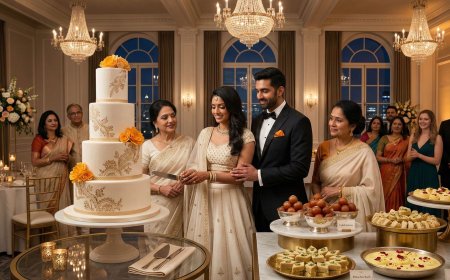

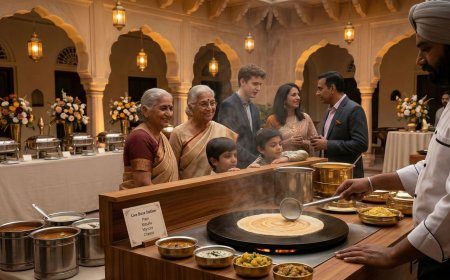


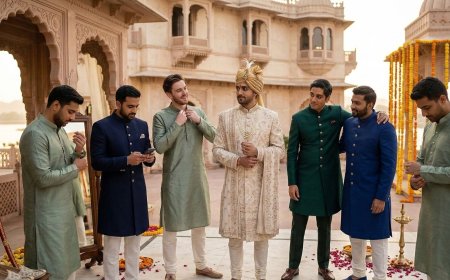
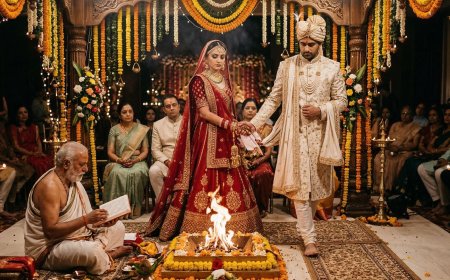








































5 Celebrity Weddings That Tweaked Traditions For All The Right Reasons — The Complete NRI Wedding Planning Guide
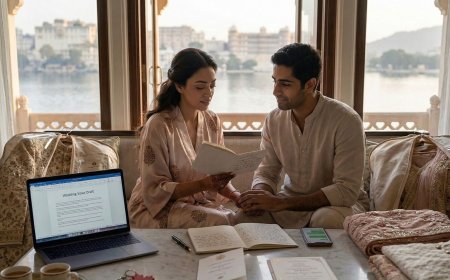
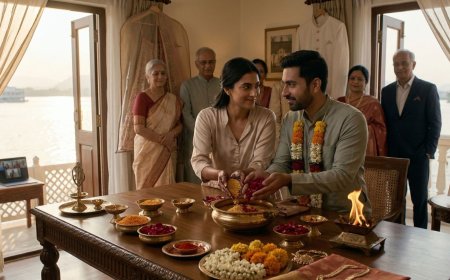
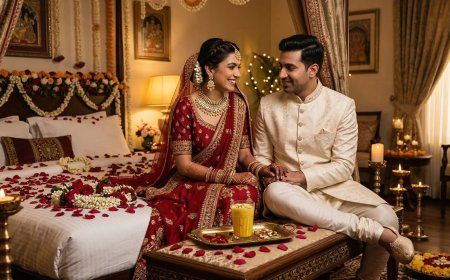
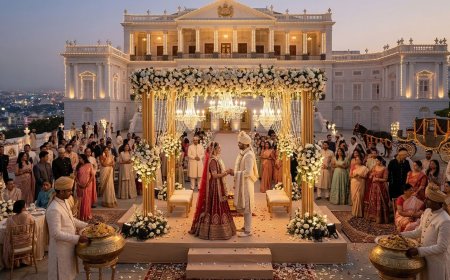
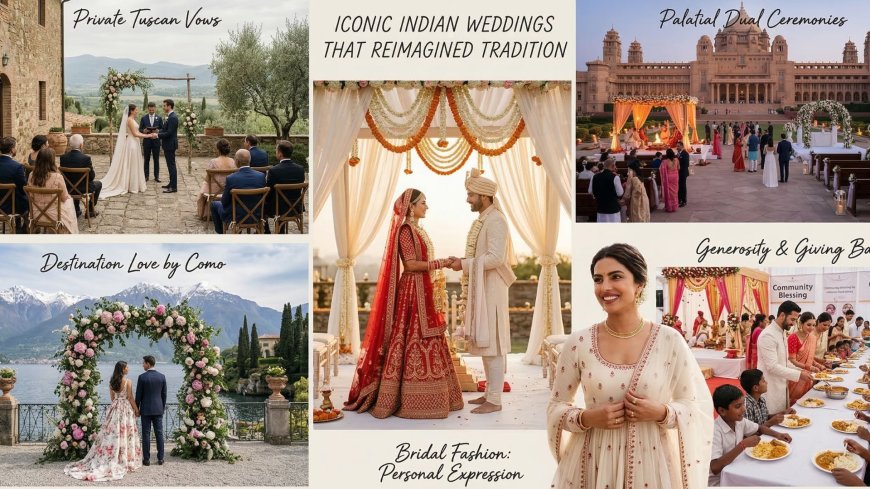
There is a particular kind of pressure that arrives somewhere in the middle of Indian wedding planning — the voice that says: this is how it is done. The mandap must look a certain way. The bride must wear a certain colour. Deviation is not merely unconventional, it is not done. And yet the tradition has always been tweaked. When Virat Kohli and Anushka Sharma married fifty guests in a Tuscan villa and told no one until it was over, they gave every couple who wanted an intimate wedding the most powerful permission possible. When Priyanka Chopra and Nick Jonas held two complete ceremonies — neither subordinate to the other — they showed what the intercultural wedding looks like when it is done with full commitment to both sides. When Deepika and Ranveer chose Lake Como because it meant something to them, when Sonam Kapoor wore an Anarkali because it was genuinely hers, when the Ambani-Piramal wedding fed fifty thousand children before the guests arrived — each couple was doing the same thing: engaging with the tradition honestly, adapting it thoughtfully, and making a wedding that was more meaningful precisely because of the choices they made. This guide examines all five weddings and draws the specific lessons each one offers for the NRI couple planning their own.

5 Celebrity Weddings That Tweaked Traditions For All The Right Reasons — The Complete NRI Wedding Planning Guide
There is a particular kind of pressure that arrives, uninvited, somewhere in the middle of Indian wedding planning. It arrives usually during a family conversation, or a vendor meeting, or a late-night scroll through photographs of other people's weddings, and it sounds something like this: this is how it is done. The mandap must look a certain way. The ceremonies must follow a certain sequence. The bride must wear a certain colour. The rituals must be observed in a certain form. Deviation from the established template is not merely unconventional — it is, in the specific language of Indian wedding culture, not done.
This pressure is not malicious. It comes from love, from the genuine wish of families to give their children the wedding that the tradition has always provided, from the accumulated weight of thousands of years of ritual practice that has been refined and passed forward because it works, because it means something, because it connects the present to something much older and much larger than any individual couple's preferences.
And yet. The tradition has always been tweaked. Every generation of Indian couples, including the celebrity couples who do it most visibly and most photographed, has made choices about which elements of the traditional Indian wedding to honour fully, which to adapt thoughtfully, and which to set aside entirely. The difference between the celebrity wedding and the civilian wedding is not that celebrities change things and civilians do not. It is that when celebrities change things, everyone is watching — and the changes they make, when they are made for the right reasons, become the permission that other couples need to make similar choices for themselves.
The five weddings in this guide changed things. Each of them tweaked a specific tradition — sometimes gently, sometimes boldly — in a way that was rooted not in disregard for the tradition but in the couple's honest expression of who they are and what their marriage meant to them. Each tweak produced something more specific, more personal, and more genuinely theirs than a faithful reproduction of the template would have produced. And each of them, for the NRI couple navigating the same question of how to honour tradition while making the wedding genuinely their own, offers a specific lesson.
Virat Kohli and Anushka Sharma: The Wedding Nobody Knew Was Happening
The Tweak: Radical Privacy in the Age of Maximum Exposure
On the eleventh of December 2017, Virat Kohli and Anushka Sharma got married at the Borgo Finocchieto estate in Tuscany, Italy, in a ceremony attended by fewer than fifty people. No press. No photographers beyond their own. No social media presence during the event itself. The two most recognisable faces in Indian celebrity culture — a man who cannot walk through an airport without being photographed and a woman whose face has been on every major Indian advertising campaign of the past decade — got married in complete, absolute, deliberately constructed privacy.
The announcement came afterward. A set of photographs released simultaneously on both their social media accounts, carefully selected, warm and specific and clearly the work of people who had thought carefully about what they wanted to share and what they wanted to keep. The caption Anushka wrote was simple: today we got married with our families and friends in an intimate ceremony. We feel very blessed to start this journey of love, care, compassion and togetherness.
In an era in which the Indian celebrity wedding had evolved toward maximum spectacle — multi-day events with hundreds of guests, live social media coverage, exclusive deals with entertainment magazines, drone footage of the baraat — this was a radical act. Not because privacy is inherently radical, but because choosing it at the level of visibility that Kohli and Sharma occupied required a specific, conscious decision to resist every external pressure toward the performance of the occasion.
Why It Matters for the NRI Couple
The Kohli-Sharma wedding is the permission slip for the intimate wedding. For NRI couples who face the specific pressure of the large Indian wedding — the expectation of the two-hundred-guest list, the three-day event, the statement venue — the choice of Virat Kohli and Anushka Sharma to marry in a Tuscan villa with fifty people is the most visible possible evidence that the intimate wedding is not a compromise. It is a choice. A choice that the most famous couple in India made deliberately, for reasons that had everything to do with what the wedding meant to them and nothing to do with what it would look like to other people.
The NRI couple who wants a small, intimate, private wedding — who wants their closest people in a beautiful space, without the logistics and the expense and the social performance of the large Indian wedding — has the Kohli-Sharma precedent as their most potent response to the family conversation about why the guest list is not larger. If it was right for them, the conversation begins, it might be right for us too.
The specific lesson is this: the wedding is not for the guests. It is for the couple. The guest list is an expression of who the couple is and what the wedding means to them, not an obligation to be fulfilled by counting the categories of relatives who must be included. Kohli and Sharma understood this. The wedding that resulted was, by every account of those who attended it, extraordinary precisely because of its intimacy.
Priyanka Chopra and Nick Jonas: The Wedding That Honoured Two Traditions Fully
The Tweak: Two Complete Ceremonies, Neither Subordinate to the Other
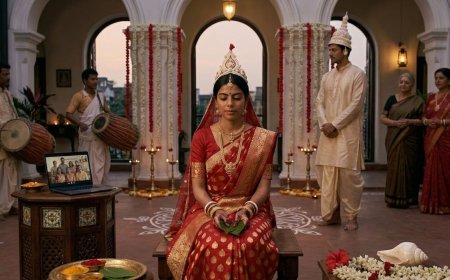
When Priyanka Chopra and Nick Jonas married in December 2018 at the Umaid Bhawan Palace in Jodhpur, they made a choice that sounds simple but is, in practice, genuinely complex: they had two complete wedding ceremonies. A Christian ceremony, conducted by Nick's father, a pastor, with the full ritual sequence of the Western Christian wedding. And a traditional Hindu ceremony, conducted with the full ritual sequence of the Indian wedding — the mehendi, the sangeet, the pheras, the complete vocabulary of the tradition that Priyanka grew up in.
The choice to have two ceremonies is not unusual for intercultural couples. What was unusual — and what made the Chopra-Jonas wedding a specific, influential event rather than simply a celebrity spectacle — was the completeness and the equality of both ceremonies. Neither was the "real" wedding with the other as the cultural concession. Neither was the main event with the other as the supporting act. Both were full, complete, ritually serious ceremonies, each conducted in its own tradition with its own specific meaning, and the couple moved between them not as people performing their cultural obligations but as people who genuinely belonged to both.
The visual record of the wedding shows this clearly. The photographs from the Christian ceremony show Priyanka in a custom Ralph Lauren gown of extraordinary complexity — a dress that took 1,826 hours to make, embroidered with personal details from both their lives. The photographs from the Hindu ceremony show her in deep red bridal wear with the full vocabulary of the traditional Indian bride. In both sets of photographs, she looks completely herself.
Why It Matters for the NRI Couple
The intercultural Indian wedding is one of the most specific challenges in the NRI wedding landscape, and the Chopra-Jonas model offers the most thoughtful possible response to it. The common solutions to the intercultural wedding are reductive: have one ceremony and compromise on the other, have a fusion ceremony that satisfies no one completely, or subordinate one partner's tradition to the other's. The Chopra-Jonas solution is additive: have both, fully, without compromise on either.
For NRI couples navigating intercultural weddings — Indian and Western, Hindu and Christian, North Indian and South Indian, any combination of traditions that do not have an established hybrid form — the specific lesson is that the attempt to create a fusion that honours both traditions simultaneously often honours neither. The two complete ceremonies model is more demanding logistically and more expensive in time and money, but it produces something that the fusion cannot: the genuine experience of both traditions, fully realised, for the couple and for both families.
The NRI couple whose wedding involves two distinct cultural traditions deserves to be in both of them completely rather than in a diluted version of each. Priyanka and Nick showed what that looks like when it is done with full commitment to both sides.
Deepika Padukone and Ranveer Singh: The Wedding That Made the Destination Personal
The Tweak: Choosing Meaning Over Convention in the Venue Decision
Deepika Padukone and Ranveer Singh married in November 2018 at Villa del Balbianello on Lake Como in Italy — a choice that was both conventionally luxurious, as celebrity wedding venues go, and deeply personal in a way that the coverage at the time did not always capture.
The couple had spoken publicly about their relationship with Italy — the country where they had spent significant time together, where the landscape and the light and the specific quality of the place had become part of their shared story as a couple before the wedding. Lake Como was not chosen because it was the most prestigious venue available or because it photographed well — though it is and it does. It was chosen because it meant something to them specifically. The venue was an expression of the couple's history, not a statement to the outside world.
The wedding itself was small — fewer than forty guests at each of the two ceremonies, the Konkani and the Sindhi, conducted on successive days. Two ceremonies again, each specific to the families involved, each conducted with the full ritual seriousness of its tradition. The intimacy of the guest list at Villa del Balbianello meant that the spectacular setting — the lake, the gardens, the light — was experienced by the people who meant the most to the couple, not distributed across hundreds of guests for whom the setting would have been beautiful but impersonal.
The photographs that Deepika and Ranveer released afterward became, almost immediately, some of the most referenced wedding images in contemporary Indian culture — not because the setting was extraordinary, though it was, but because the couple in the photographs looked genuinely, completely, uncomplicatedly happy in a way that celebrity wedding photographs do not always achieve.
Why It Matters for the NRI Couple
The NRI couple has a specific relationship to the destination wedding question that domestic Indian couples do not have. Living abroad, often in countries of great beauty, often with meaningful places — the city where they met, the country where they built their life together, the specific landscape that has become part of their shared story — the NRI couple has the option of choosing a venue that means something to them personally rather than a venue that communicates status or satisfies family expectation.
The Padukone-Singh wedding is the permission slip for the personally meaningful venue. The Lake Como choice was not arbitrary luxury. It was a specific expression of who they are as a couple and where their story had been built. The NRI couple who wants to marry in the Scottish highlands because that is where they fell in love, or in Lisbon because that is the city that shaped their years together, or in a small heritage property in Kerala because one of them grew up nearby and the other fell in love with it on their first visit — that couple has the Padukone-Singh precedent as their model. The venue that means something to the couple will always be more beautiful in the photographs than the venue that merely looks impressive.
Sonam Kapoor and Anand Ahuja: The Wedding That Dressed Itself Differently
The Tweak: Fashion as Personal Expression Within the Bridal Tradition
Sonam Kapoor's wedding to Anand Ahuja in May 2018 was, among other things, a masterclass in using the bridal fashion choices of an Indian wedding as genuine personal expression rather than as compliance with a template.
The specific choice that distinguished the Kapoor-Ahuja wedding in the bridal fashion conversation was the Anarkali. Sonam Kapoor, one of the most photographed women in India and the daughter of a family whose aesthetic identity is among the most established in Indian film culture, chose to wear an Anuradha Vakil ivory and red Anarkali for her wedding ceremony rather than the conventional heavily embellished lehenga that the Indian bridal template prescribed. The Anarkali — a long, flared tunic silhouette with deep roots in Mughal aesthetic history — is a garment with genuine historical significance in Indian fashion, but it is not the conventional bridal choice. It is not what the template prescribes.
The choice was deliberate and articulate. The Anarkali is a garment that Sonam Kapoor had worn and championed throughout her career as a fashion statement — a silhouette she genuinely loves, that suits her specific aesthetic, that connects her to a history of Indian fashion that she has always drawn from. Wearing it at her wedding was not a departure from tradition but a deepening of it — a choice that said: the tradition I am drawing from is specifically this tradition, the Mughal-influenced North Indian fashion history that the Anarkali represents, and I am wearing it because it is genuinely mine.
Anand Ahuja, for his part, wore a Raghavendra Rathore bandhgala in ivory — a choice that complemented the Anarkali's silhouette and aesthetic in a way that suggested the couple had thought about how they would look together rather than independently. The visual coherence of the couple's fashion at an Indian wedding is not always the primary consideration in the individual fashion choices; at the Kapoor-Ahuja wedding it clearly was.
Why It Matters for the NRI Couple
The bridal fashion pressure at Indian weddings is specific and significant. The expectation of the heavily embellished lehenga, the specific colour palette of the bridal tradition, the visual language of what an Indian bride is supposed to look like — these expectations are real and they are communicated with varying degrees of subtlety by family, by vendors, and by the ambient visual culture of Indian wedding media.
The Sonam Kapoor precedent is important not because NRI brides should all wear Anarkalis — they should not, unless the Anarkali is genuinely theirs in the way it was genuinely hers — but because it demonstrates that the bridal fashion choice at an Indian wedding can be a genuine act of personal expression rather than a compliance with a template, and that such expression, when it is rooted in real knowledge of and connection to the tradition being drawn from, produces something more beautiful than the template it departs from.
The NRI bride who loves Chanderi cotton more than embellished silk, who feels more herself in a saree than a lehenga, who wants to wear her grandmother's jewellery rather than a new set — that bride has Sonam Kapoor's example as her permission to trust her own aesthetic rather than the template's prescription. The bridal fashion that is genuinely yours will always be more beautiful in the photographs than the bridal fashion that is merely correct.
Isha Ambani and Anand Piramal: The Wedding That Remembered Its Community
The Tweak: Using the Scale of the Occasion for Genuine Giving
The Isha Ambani and Anand Piramal wedding in December 2018 was, by any measure, one of the largest and most elaborate Indian weddings in recent memory. The scale was extraordinary: the pre-wedding celebrations in Udaipur, the ceremony in Mumbai, the guest list that included heads of state and global business leaders alongside the couple's family and friends. This was a wedding at a level of resource deployment that is, for the overwhelming majority of couples reading this guide, completely removed from their own planning reality.
And yet the specific tweak that the Ambani-Piramal wedding made is one that scales to any wedding budget: before the ceremony, Isha Ambani and Anand Piramal hosted a wedding celebration for more than fifty thousand underprivileged children across India, providing them with a meal, gifts, and the specific experience of being included in the joy of the occasion. The wedding that had access to the most extraordinary resources in Indian private life chose to direct a portion of those resources toward the community — toward people who would otherwise have had no connection to the event — before the celebration for the invited guests began.
The gesture was not incidental. It was reported as a deliberate choice by the couple, rooted in a belief that a wedding of this scale carried with it a responsibility toward the broader community. The celebration was real and the giving was real, and the scale of both was matched.
Why It Matters for the NRI Couple
The community dimension of the Indian wedding is an ancient and genuinely important one. The traditional Indian wedding was not merely a private family event — it was a community event, one in which the broader neighbourhood, the village, the community of which the family was a part, was fed and included and made to feel the joy of the occasion. The wedding feast, in its original form, was for everyone who came to the door. The tradition of giving at the occasion of a wedding — of directing a portion of the wedding's abundance toward those who have less — is as old as the institution itself.
For the NRI couple, the community giving dimension of the wedding is an opportunity that is frequently missed, and the Ambani-Piramal example — scaled, obviously, to the appropriate level for the individual couple — is a reminder of what is possible. The NRI couple who directs a portion of their wedding budget toward a community organisation in the city where the wedding is taking place, who involves their guests in a giving initiative as part of the wedding program, who makes the community giving a genuine and visible part of the occasion rather than a private transaction — that couple is honouring one of the oldest and most beautiful dimensions of the Indian wedding tradition. The scale is not the point. The intention is.
The Lessons, Assembled
Five weddings. Five tweaks. Each of them rooted not in disregard for tradition but in the couple's honest, specific engagement with what the tradition meant to them and what their wedding needed to express about who they are.
Kohli and Sharma said: privacy is not a compromise, it is a choice. The intimate wedding is a complete wedding. Chopra and Jonas said: two traditions can coexist fully, without either being subordinated to the other. Padukone and Singh said: the venue that means something to you will always be more beautiful than the venue that merely impresses. Kapoor and Ahuja said: bridal fashion rooted in genuine personal aesthetic is more beautiful than bridal fashion that is merely correct. Ambani and Piramal said: the wedding that gives to the community honours the oldest dimension of the Indian wedding tradition.
For the NRI couple navigating the specific complexity of planning an Indian wedding from abroad — the distance, the family expectations, the cross-cultural negotiations, the question of which traditions to observe and which to adapt — these five weddings are not merely celebrity news. They are a set of specific, well-documented examples of Indian couples who engaged with the tradition thoughtfully, made choices that were genuinely their own, and produced weddings that were more meaningful precisely because of the choices they made.
The tradition is not a template. It is a living thing. Every generation that engages with it honestly, adapts it thoughtfully, and passes it forward is doing exactly what the tradition requires of them.
Make the wedding yours. The tradition will survive it. It always has.
Published by NRIWedding.com — The Premium Global Platform for Non-Resident Indians Planning Indian Weddings From Abroad.
What's Your Reaction?
 Like
0
Like
0
 Dislike
0
Dislike
0
 Love
0
Love
0
 Funny
0
Funny
0
 Angry
0
Angry
0
 Sad
0
Sad
0
 Wow
0
Wow
0