
















































Every Event Deserves an Outfit: The NRI Couple's Complete Guide to Planning Your Entire Wedding Weekend Wardrobe
The welcome dinner with no outfit planned. The getting-ready photographs nobody thought to dress for. The post-wedding lunch where the last outfit in the suitcase had to do. NRI wedding wardrobe gaps are specific, preventable, and discovered at the worst possible time. This guide gives couples a complete system for planning a coherent, intentional wardrobe across every event of the wedding weekend — from the complete event inventory and aesthetic framework to event-by-event outfit guidance, bride and groom coordination principles, photographer input strategy, budget allocation, and the packing plan that gets every outfit to the right place at the right time.


Outfit Planning for Multiple Events: Coordinating Your Entire Wedding Wardrobe
The NRI couple's complete guide to planning a coherent, intentional wardrobe across every event of the wedding weekend — without the last-minute gaps, the budget overruns, or the outfit that arrived for the wrong occasion
The Spreadsheet Had Twelve Rows. The Wedding Had Fourteen Events.
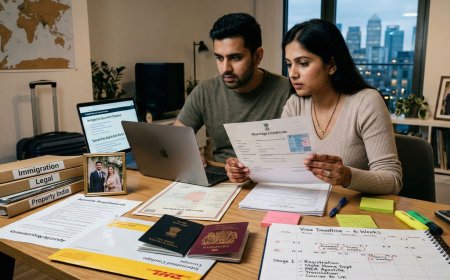
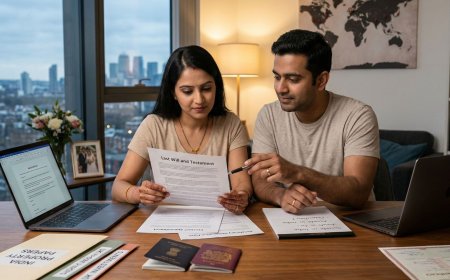
The discovery happened on the Tuesday before the wedding. The bride was going through the final logistics — confirming vendors, checking timelines, reviewing the packing list — when she counted the events on the wedding programme and counted the outfits she had planned and realised that the two numbers did not match.
The mehendi had an outfit. The haldi had an outfit. The sangeet had an outfit — the one that had taken four months to source and that she had been looking forward to most. The wedding ceremony had the lehenga. The reception had the reception lehenga.
What did not have an outfit: the welcome dinner on the Thursday evening that had been added to the programme in month six, the baraat she had somehow not mentally categorised as an event requiring a distinct outfit, the wedding morning getting-ready photographs that her photographer had specifically briefed her to plan a beautiful outfit for, and the post-wedding lunch on the Sunday that her mother-in-law had casually mentioned would be attended by forty people.
This is not a planning failure that happens to disorganised brides. It happens to organised ones — the brides with the spreadsheets and the schedules and the confirmed vendors — because the wedding wardrobe planning conversation is typically structured around the primary events and the primary outfits, and the secondary events accumulate quietly in the background until the Tuesday before the wedding when the count is taken.
The gap between the outfit plan and the actual number of events requiring an outfit is one of the most consistent and most preventable planning failures in the NRI wedding process. It is prevented by one thing: a complete event inventory conducted at the beginning of the wardrobe planning process rather than at the end.
The Foundation: Why Wardrobe Planning Is a System, Not a Shopping List
The most common approach to NRI wedding wardrobe planning — buying the most important outfits first and filling in the gaps as the planning progresses — produces the situation described above. It is a shopping list approach to what is fundamentally a systems problem.
A systems approach to wedding wardrobe planning starts with a complete picture of the requirements before any purchase is made. It treats the wardrobe as an interconnected set of decisions rather than a series of independent outfit choices. And it applies a coherent visual and aesthetic logic across the entire wardrobe so that the outfits across the full wedding weekend tell a consistent story rather than representing the accumulated decisions of twelve months of shopping without an overarching plan.
The difference in outcome is significant. A wardrobe planned as a system produces a couple who moves through their wedding weekend looking consistently considered — whose outfits across each event are clearly related to each other in palette, in aesthetic register, and in cultural intention. A wardrobe assembled as a shopping list produces something more variable — extraordinary in some moments, adequate in others, with gaps filled by whatever was available at the time the gap was discovered.
Step One: The Complete Event Inventory
Before a single outfit is purchased, before a single designer appointment is made, conduct a complete inventory of every event in the wedding programme that requires a distinct outfit.
This inventory must be more comprehensive than most couples initially assume. The primary wedding events — mehendi, haldi, sangeet, wedding ceremony, reception — are obvious. The secondary events require active identification.
The Events Most Often Missed
The welcome dinner or pre-wedding gathering. Most NRI weddings include a dinner or gathering on the evening before the formal wedding events begin — a chance for out-of-town guests to meet, for the families to come together informally, for the wedding weekend to begin before the official programme starts. This event almost universally requires an outfit — typically semi-formal to formal Indian — and almost universally goes unplanned until late in the wardrobe process.
The getting-ready sequence. The getting-ready photographs — increasingly central to the modern Indian wedding photography narrative — take place before the main event and are documented extensively. The bride's getting-ready outfit is typically a beautiful robe or a specific getting-ready look that is distinct from the event outfit itself. The groom's getting-ready sequence similarly benefits from an intentional, photogenic outfit. These are not major purchases but they are specific requirements that are easy to overlook.
The baraat. The groom's arrival procession is one of the most photographed moments of the wedding day, and the groom's outfit for the baraat — which may be the same as the ceremony outfit or may be a specific baraat outfit in some family traditions — requires explicit planning rather than assumed resolution.
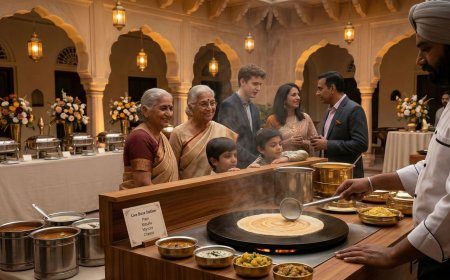
Post-wedding events. The day after the main wedding typically involves at least one gathering — a brunch, a lunch, a small family gathering — at which the couple will be seen and photographed. A beautiful, comfortable post-wedding outfit that is appropriate to the occasion and to the physical reality of a body that has been wearing elaborate traditional clothing for two or three consecutive days is a specific requirement worth planning for rather than hoping the last outfit in the suitcase will cover.
The vidaai or farewell. Depending on the family traditions being observed, the bride may require a specific outfit for the vidaai ceremony — some family traditions specify particular garments or colors for this moment.
The groom's change within the wedding day. Many NRI grooms wear one outfit for the ceremony and change into a distinct reception outfit. Both require planning. The transition between them requires a changing arrangement and a timeline allocation that the overall event schedule must account for.
The bride's second or third look. Many NRI brides plan outfit changes within the wedding day — a reception lehenga that is distinct from the ceremony lehenga, or a midnight change into something more comfortable for the later dancing hours. These changes require outfits, require changing time, and require a coordinator who can manage the transition.
Building the Complete Event List
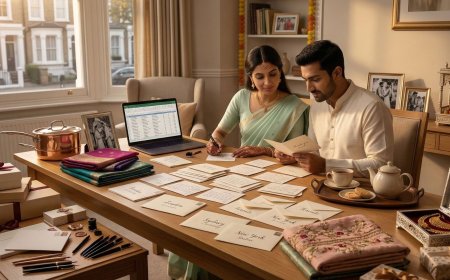
Create a document that lists every event chronologically from the first guest arrival to the last post-wedding gathering. Against each event, record: the event's formality level, the approximate duration, the expected guest count and composition, whether photographs will be taken and by whom, and the outfit requirements for both bride and groom.
This document is the foundation of the entire wardrobe planning process. Every purchase decision made subsequently should reference it rather than operating independently.
Step Two: The Aesthetic Framework
Before outfits are selected, an aesthetic framework for the entire wardrobe gives every subsequent decision a reference point — a test against which potential purchases can be assessed not just for individual beauty but for how they function within the overall wardrobe story.
The Colour Story
The most visible element of wardrobe coherence across a multi-event wedding weekend is colour. A colour story — a palette of two to four colours that anchor the couple's wardrobe across the full event sequence — creates visual continuity that registers in photographs even when the individual outfits are completely distinct.
The colour story does not require matching or even directly coordinating outfits at every event. It requires that the outfits across the full event sequence share a recognisable relationship — that they look like they were planned by the same people with the same aesthetic intention, even when they were purchased from different designers in different cities.
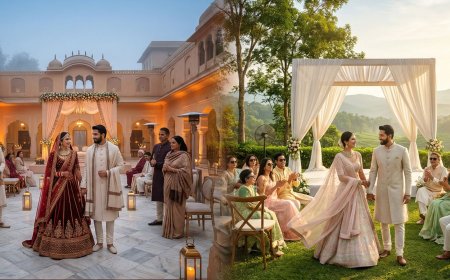
A practical colour story for an NRI couple: the bride moves through the wedding weekend in warm jewel tones — from terracotta and gold at the mehendi, through deep coral at the sangeet, to a deep red and gold ceremony lehenga, and a wine-and-silver reception lehenga. The specific colours change at each event, but the warm, jewel-toned palette remains consistent, and the photographs across the full weekend have a coherent visual warmth that tells a single aesthetic story.
The groom's colour story is developed in explicit relationship to the bride's — not matching, but coordinating. If the bride moves through warm jewel tones, the groom moves through the complementary range — ivory and gold for the ceremony, deep green or navy for the reception — creating visual partnership in every joint photograph without visual competition.
The Cultural Register Progression
A well-planned wedding wardrobe has a cultural register that progresses across the event sequence — typically moving from the most relaxed and informal at the pre-wedding events toward the most ceremonially elaborate at the main ceremony, and then moderating slightly at the reception.
This progression is not just aesthetically logical — it creates a narrative quality to the wedding photographs across the weekend. The mehendi photographs have an informal freshness. The sangeet photographs have a festive energy. The ceremony photographs have a ceremonial weight. The reception photographs have an elegant sophistication. Each event's visual register is appropriate to its character and distinct from the others, creating a visual progression that makes the full weekend's photographs more interesting than if every event were dressed at the same level of elaboration.
The practical implication: do not wear your most elaborate outfit to the mehendi because you found a beautiful piece at the right price. The most elaborate outfit belongs at the event with the highest ceremonial register — typically the main wedding ceremony — and the wardrobe should graduate toward that peak rather than front-loading the elaboration.
The Repetition Question
Can outfits be repeated across events? The cultural answer, from the traditional Indian wedding perspective, is generally no — each event is distinct and the bride's appearance at each should be distinct. The practical answer, for a four-day wedding weekend with eight events, is that complete non-repetition requires a wardrobe of extraordinary scale that many couples cannot practically or financially sustain.
The resolution: distinguish between the primary photographed events — the ones that will be extensively documented and that will form the core of the wedding photography record — and the secondary events where the photographic documentation is lighter and the outfit expectations are lower. Primary events require distinct outfits. Secondary events can potentially see tasteful repetition of well-chosen pieces without the same cultural and photographic consequences.
Step Three: The Outfit-by-Event Planning Guide
With the complete event list and the aesthetic framework established, each event can be planned with specific outfit guidance.
The Pre-Wedding Events
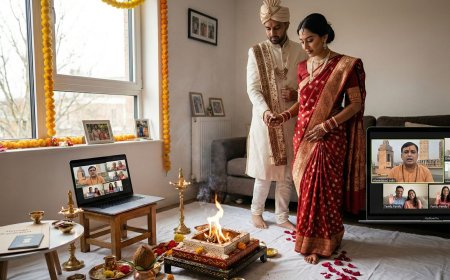
Welcome Dinner or Gathering
The welcome dinner is typically the first event at which the couple is seen by the majority of their guests — including guests who have traveled internationally and for whom this is the first significant impression of the wedding weekend. The outfit for this event should be beautiful, appropriate to the semi-formal register of the occasion, and specifically distinct from the following events so that the wedding weekend has the visual variety it deserves.
For the bride: a well-chosen salwar suit or a contemporary Indo-Western outfit that is specifically not the lehenga she is saving for the ceremony. Something that says beautiful, intentional, and specifically dressed for this occasion without depleting the visual impact of the primary events that follow.
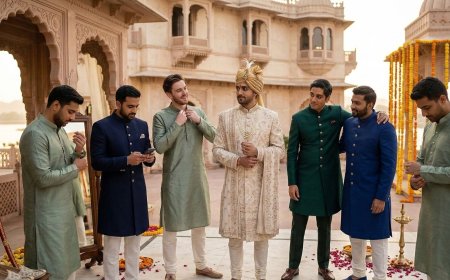
For the groom: a well-fitted kurta pyjama in a fabric and colour that reads as festive without the full formal weight of the ceremony sherwani. The bandhgala jacket option often works particularly well here — the Indo-Western register of the bandhgala suits the slightly hybrid character of a welcome dinner that is Indian in spirit but contemporary in execution.
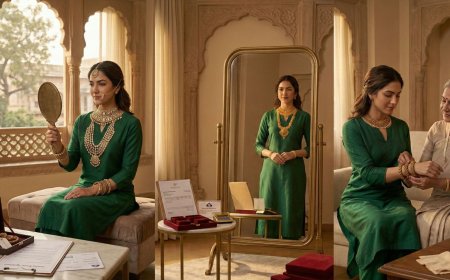
The Getting-Ready Look
The getting-ready photographs are increasingly among the most beautiful and most emotionally resonant images in the modern wedding photography narrative — the bride in the quiet of the morning before the ceremony, the specific intimacy of being dressed and prepared for the most important event of the day.
For the bride: a beautiful silk or embroidered robe or a coordinated co-ord set in a colour that complements the wedding colour story. Some brides choose personalised robes with their name or initials. Others choose a beautiful piece of Indian ethnic wear — a comfortable silk kurta or a lightweight salwar — that is specifically chosen for this moment's photographs.
For the groom: similarly, a getting-ready look that is distinct from the sherwani but related to it in aesthetic register. A fitted, collarless cotton kurta in a colour from the wedding palette, or a simple silk kurta in cream or ivory, creates a beautiful, personal getting-ready photograph that transitions naturally into the more elaborate ceremony look.
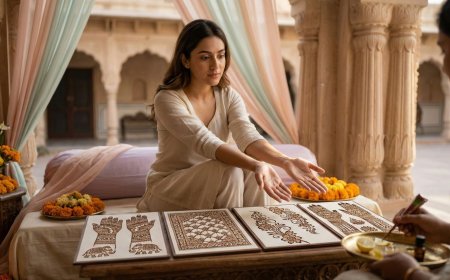
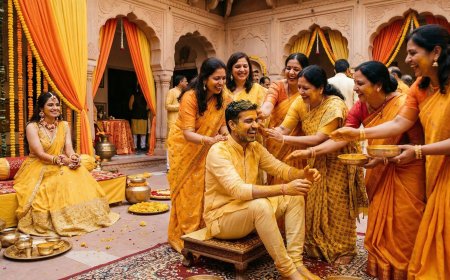
The Mehendi
The mehendi is a daytime event, typically outdoors or semi-outdoors, with a relaxed and festive atmosphere. The outfit register is the most informal of the primary wedding events — comfortable enough to sit for extended periods while the mehendi is applied, practical enough for an outdoor afternoon, festive enough to be photographed throughout.
For the bride: the mehendi outfit is the opportunity for the most playful and colourful choice in the wedding wardrobe. A bright, flower-printed cotton salwar or a beautifully embroidered anarkali in yellow, orange, or coral — colors that photograph beautifully in daylight and that create visual warmth in the outdoor mehendi photographs. Avoid outfits with heavy embellishment or dark colors that photograph poorly in daytime outdoor conditions.
For the groom: a cotton or cotton-silk kurta pyjama in a bright or earthy tone that complements the bride's mehendi outfit without matching it. The mehendi is the event where the groom's outfit can be most playful — the aesthetic register is relaxed enough to accommodate a print, a bold color, or an embroidery that would be too casual for the ceremony.
The coordination principle at the mehendi: the bride and groom should be visually connected through color without being identical. A bride in yellow and orange who stands next to a groom in terracotta or mustard creates a warm, harmonious visual partnership that reads as planned and intentional in photographs.
The Haldi
The haldi outfit is uniquely the outfit that will be destroyed by the ceremony it accompanies. The turmeric and water of the haldi ceremony will permanently stain whatever is worn — which means the haldi outfit should be beautiful enough to photograph well but purchased with full acceptance that it will not be worn again.
The most photogenic haldi outfit combination for the bride: a simple white or cream cotton salwar or kurta that will turn a beautiful warm golden yellow under the turmeric application — the color transformation is photographically extraordinary, and the contrast between the pristine white at the beginning and the golden-stained version at the end tells a visual story that more elaborate haldi outfits cannot replicate.
For the groom: similarly, a simple white cotton kurta pyjama that accepts the turmeric transformation gracefully.
The aesthetic logic of the haldi outfit: its beauty is in its simplicity and in its transformation, not in its elaboration. The most expensive haldi outfit is not the most beautiful one — it is the most regrettable one.
The Sangeet
The sangeet is the most energetic event of the wedding weekend — a celebration defined by performance, music, dancing, and the highest-energy social interaction of the entire programme. The outfit register is festive and slightly fashion-forward — this is the event where both bride and groom can lean most comfortably toward contemporary Indian fashion rather than traditional ceremonial dress.
For the bride: the sangeet outfit is typically the second most elaborate in the bridal wardrobe, and it is the one where the most fashion-forward choices work most naturally. A sharara, a heavily embellished contemporary lehenga in a non-traditional color, or a beautifully constructed anarkali in a deep jewel tone all work well for the sangeet. The outfit must be chosen specifically for its suitability for dancing — a very heavy lehenga skirt or a very structured garment will be uncomfortable across a three or four hour dancing event.
For the groom: the bandhgala jacket over churidar or tailored trousers is the sangeet look that bridges the traditional and contemporary registers most successfully. A statement fabric — brocade, velvet, textured silk — in a jewel tone creates a look that photographs well in the party lighting of the sangeet without the full ceremonial weight of the sherwani.
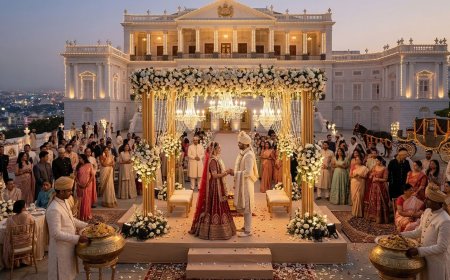
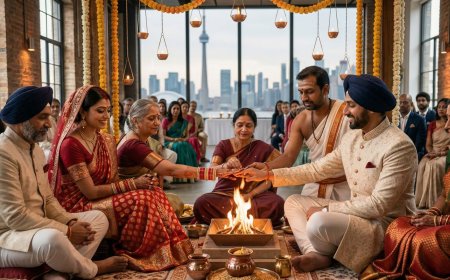
The Wedding Ceremony
The ceremony is the event for which the most significant wardrobe investment should be concentrated — the primary photographed event, the most ceremonially charged occasion, the one whose outfits will be most extensively documented and most long remembered.
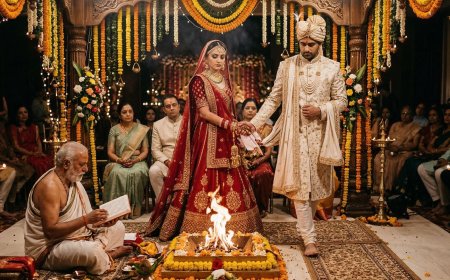
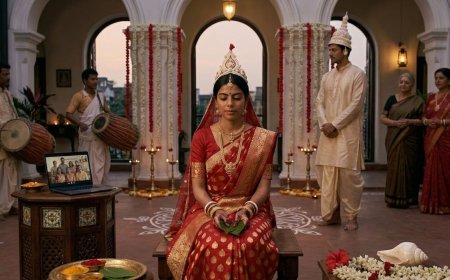
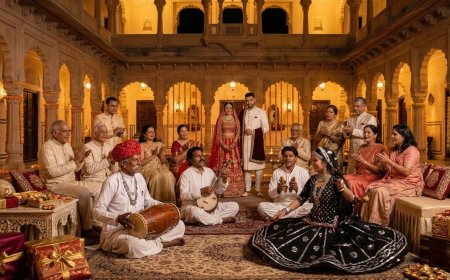
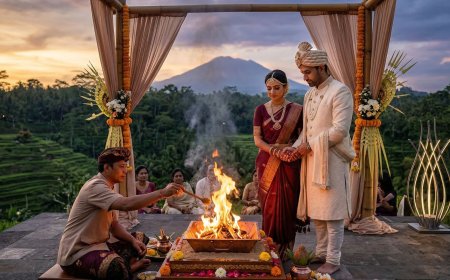
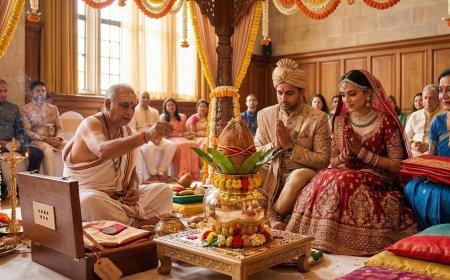
For the bride: the principal bridal lehenga, the complete jewelry set, the traditional hair and makeup — everything at its maximum. The ceremony outfit should be the most elaborate, the most culturally specific, and the most personally meaningful outfit in the entire wardrobe.
For the groom: the sherwani, the turban, the complete accessory set — all at their most formal and most ceremonially appropriate. The groom's ceremony look should be visually proportional to the bride's — sufficiently elaborate to read as a matched pair in the photographs, sufficiently distinct to be identifiable as the groom rather than a groomsman.
The Reception
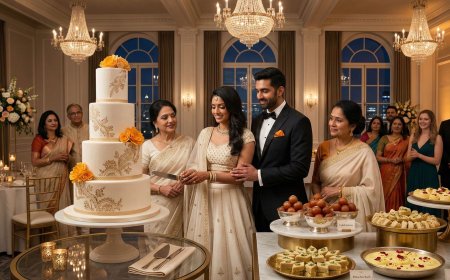
The reception outfit is the opportunity for a different register from the ceremony — typically more fashion-forward, often more contemporary in its interpretation of Indian bridal wear, and specifically chosen to provide visual variety in the photographs across the full day.
For the bride: a second lehenga or a contemporary alternative in a color that provides contrast with the ceremony outfit while remaining within the overall color story. A bride who wore deep red at the ceremony might choose deep teal or midnight blue or wine at the reception. The reception outfit should be beautiful enough for the extensive photography of a long formal event while being practical enough to dance in across several hours.
For the groom: a reception bandhgala or sherwani in a color that coordinates with the bride's reception look and that is distinct enough from the ceremony sherwani to read as a genuine outfit change in photographs.
The Post-Wedding Events
The events of the day after the wedding — the morning brunch, the family lunch, the post-wedding gatherings — require outfits that are beautiful and appropriate without the full elaboration of the wedding weekend's primary events.
For the bride: a well-chosen salwar suit or a simpler saree in a color from the wedding palette — something that photographs well and reads as intentionally dressed without requiring the full getting-ready production of the primary events.
For the groom: a comfortable but beautiful kurta in a coordinating color — the contemporary cotton-silk kurta pyjama that reads as thoughtfully casual rather than formally elaborate.
Step Four: The Coordination Framework
The outfits for bride and groom across the full event sequence should be planned together rather than independently — each event's visual partnership reviewed as a pair rather than assessed individually.
The Joint Review Process
At each event in the planning sequence, photograph the planned outfits together — even if this requires photographing the actual garments together on a flat surface rather than on bodies — and assess the visual relationship. Do they read as a matched pair without matching? Does the color relationship work? Is the embellishment register proportional? Does one outfit visually dominate in a way that creates imbalance?
This joint review process catches the most common coordination failure: the bride and groom who have each made beautiful individual outfit choices that do not work together as a visual pair because they were planned independently without reference to each other.
The Photographer's Input
Your wedding photographer has specific expertise in how outfit combinations read in photographs — how specific color relationships translate in the specific lighting of the venue, which fabric textures create visual contrast in a helpful way and which create confusion, which embellishment levels create the visual hierarchy that makes the bride or groom the primary focus of a photograph.
Share your outfit plan with your photographer at least two months before the wedding and specifically ask for their input on the color and embellishment relationships at each event. A photographer who knows what you will be wearing can make specific lighting and positioning decisions that serve the outfits well. A photographer who encounters your outfits for the first time on the wedding day cannot make these adjustments retroactively.
Step Five: The Practical Logistics
The Timeline
The outfit planning timeline for an NRI couple must be established early enough to accommodate the lead times of every category of purchase:
Custom and semi-custom designer pieces require four to six months of lead time. These must be initiated first — before any other outfit category — because they have the longest production time and the most significant consequences if the timeline slips.
Ready-to-wear outfits from established designers or boutiques require a minimum of two to three months to allow for sourcing, fitting, and alteration. Many ready-to-wear pieces require modifications that take time.
Custom tailored pieces from skilled independent tailors can be produced in four to eight weeks but require the brief to be complete and the fabric to be sourced before the tailoring begins.
Accessories — jewelry, hair accessories, clutches — require separate timeline management from outfits and should not be left to the final India visit, because the right accessory for a specific outfit may require sourcing from a specific city or artisan that is not available on demand.
The Budget Allocation
The outfit budget should be allocated across the full event sequence rather than concentrated in the primary events. A common budget failure pattern: spending the majority of the outfit budget on the ceremony and reception lehengas and then discovering that the welcome dinner and sangeet outfits require more than the remaining budget can accommodate.
A reasonable allocation framework: forty percent of the outfit budget for the ceremony and reception primary outfits combined, thirty percent for the sangeet and mehendi outfits, fifteen percent for the secondary events including welcome dinner and post-wedding, and fifteen percent held in reserve for the inevitable purchases that were not anticipated at the beginning of the process.
The Packing and Transport Plan
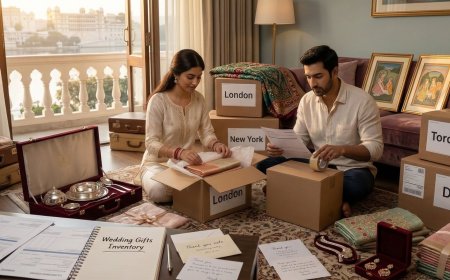
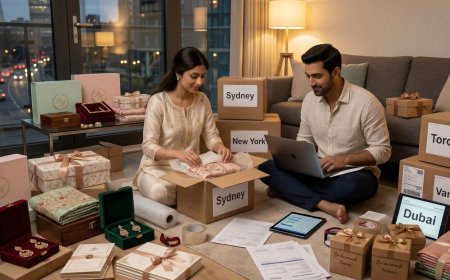
The complete wardrobe — the outfits for all fourteen events, the accessories for each, the getting-ready looks, the emergency replacements — must be transported to the wedding destination and organised for access in the correct sequence. A packing plan that lists each outfit against its event, the accessories required for each, and the specific bag or container in which each outfit is packed eliminates the specific anxiety of unpacking at the destination and discovering that the sangeet blouse is in the same bag as the ceremony lehenga, which is in the checked bag that is still at the airline's lost luggage desk.
The Story Your Wardrobe Tells
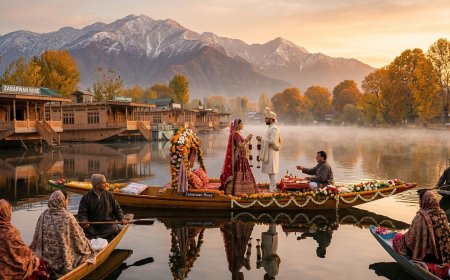
A wedding weekend is not a single event. It is a sequence of events, each distinct in character and register, that together constitute the celebration — and the visual record of that celebration in photographs.
The couple whose wardrobe has been planned as a system rather than assembled as a shopping list move through this sequence with a specific quality of visual coherence. Each event's photographs have their own register and character. The full weekend's photographs have a consistent palette and aesthetic that makes them feel like a complete story rather than a collection of separate occasions.
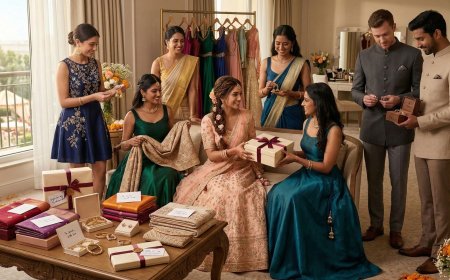
The welcome dinner photographs have a warmth and a relaxed beauty that establishes the weekend. The mehendi photographs have daylight vibrancy and colour. The sangeet photographs have a festive, fashion-forward energy. The ceremony photographs have a ceremonial weight that carries the full cultural significance of the occasion. The reception photographs have an elegant sophistication that provides the wedding's closing chapter.
Each of these chapters was planned — the color, the register, the partnership of two people who thought about how they would appear together at every moment of the most significant weekend of their lives.
That is what a wardrobe planned as a system produces. Not just beautiful outfits. A beautiful story.
NRIWedding.com — Expert guidance for Indian weddings planned across borders.
What's Your Reaction?
 Like
0
Like
0
 Dislike
0
Dislike
0
 Love
0
Love
0
 Funny
0
Funny
0
 Angry
0
Angry
0
 Sad
0
Sad
0
 Wow
0
Wow
0