























































Put the Phone Down: The NRI Couple's Complete Guide to Managing Social Media at Your Indian Wedding
When guests post your first look before the photographer captures it, something irreplaceable is lost. NRI couples planning Indian weddings need a deliberate social media strategy — one that protects key moments, enables genuine guest sharing, and preserves the quality of attention that makes a wedding meaningful. This guide delivers a practical zone-based framework covering every wedding event, unplugged ceremony communication, wedding hashtag strategy, and the honest conversation about what social media costs when it is left completely unmanaged on your wedding day.

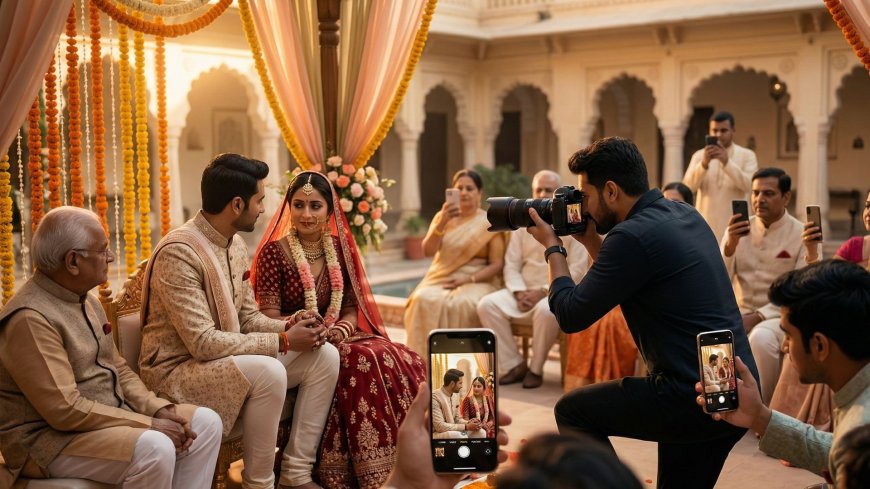
Instagram vs. Professional Photos: Managing Social Media During Your Wedding
The NRI couple's honest guide to navigating the tension between sharing your wedding in real time and protecting the moments that deserve to be experienced first — and photographed properly
Somebody Posted the First Look Before the Photographer Got the Shot
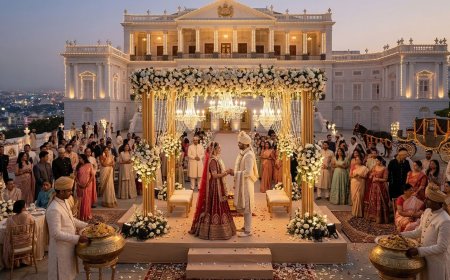
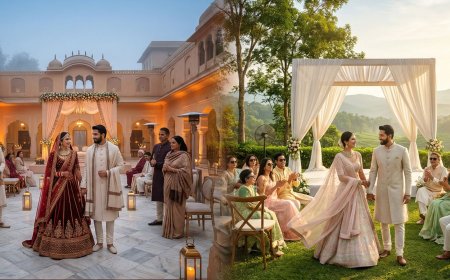
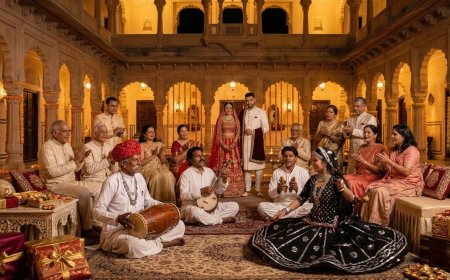
The moment had been planned for months. The bride would walk around the corner of the haveli courtyard. The groom would be standing with his back to her. She would tap his shoulder. He would turn. The photographer was positioned perfectly — the light was right, the angle was right, the anticipation in the frame was already visible.
What the photographer did not anticipate was the cousin with the iPhone who had followed the bride around the corner and posted a video to Instagram Stories before the groom had finished turning around.
The professional photograph exists. It is beautiful. The light did what it was supposed to do, and the expression on the groom's face when he saw his bride for the first time is everything they hoped it would be.
But the moment — the private, contained, emotionally complete moment — had already been made public before it finished happening. Guests who were not present had already seen it. The groom's mother, watching from across the courtyard, had her phone out because she had already received the notification. The first look, which was designed to be a singular private experience shared with the people physically present, had become content before it became memory.
This is the central tension of social media at modern weddings. It is not a technology problem. It is an attention problem — and for NRI couples whose weddings draw guests from across the world, whose families are deeply connected through WhatsApp groups and Instagram accounts, and whose celebrations generate extraordinary visual content, it is a tension worth thinking through deliberately before the wedding day rather than managing reactively during it.
The Landscape Has Changed and There Is No Going Back
Ten years ago, wedding social media management was a straightforward conversation. Request that guests refrain from posting during the ceremony. Remind people that the professional photographs would be shared after. Accept that some images would appear online regardless and move on.
The landscape is fundamentally different now. The average Indian wedding guest arrives with a device that shoots better photographs than professional cameras did fifteen years ago. Instagram Stories, WhatsApp Status updates, and real-time sharing have made immediate posting feel as natural as conversation. Influencer culture has made documenting experiences feel like participation rather than distraction. And the visual quality of what guests produce on their phones — particularly at the kind of beautifully lit, professionally decorated Indian weddings that NRI couples plan — is often genuinely impressive.
The professional photographs are still incomparably better. The composition, the timing, the equipment, the editing — the gap between professional wedding photography and the best iPhone photograph taken by a guest remains real and significant. But that gap is narrower than it has ever been, and the immediacy of phone photography creates a social dynamic that professional photography, which arrives months later, cannot compete with in the short term.
Managing this dynamic is not about controlling what guests do with their phones. It is about making deliberate choices — about which moments need protection, which moments can be shared freely, and how to communicate your preferences in a way that guests understand and respect without feeling managed.
What Is Actually at Stake
Before building a social media strategy for your wedding, clarity on what you are actually trying to protect and what you are trying to enable.
What Gets Lost Without Management
The professional photographs lose their reveal moment. When guests post extensively during the wedding — particularly during the ceremony and key moments — the professional photographs, when they arrive months later, document a day that the audience has already seen. The first look at the bridal portrait, the ceremony wide shot, the reception venue reveal — these images carry less impact when the viewer has already seen seven phone versions of the same moment from different angles.
Certain moments are simply better unexperienced through a screen. The vidaai is the most obvious example — a moment of profound emotional weight that is diminished when the people meant to be present for it are watching it through a phone screen or, worse, facing the wrong direction to get a better angle for their Stories. The ceremony itself, the exchange of garlands, the first moments after the pheras — these deserve the full presence of the people in the room, not their half-attention divided between the moment and the documentation of the moment.
Privacy is reduced in ways that cannot be undone. NRI couples often have family members who are not on social media, who have chosen not to make their images publicly available, or who come from cultural or professional contexts where appearing in widely shared wedding photographs creates complications. Once an image is posted, the control over who sees it and in what context is gone.
What Social Media Actually Offers
Real-time connection with family who could not attend. For NRI weddings that draw international guests, there are always family members who were unable to travel — elderly relatives, those with health constraints, those for whom the cost or logistics of international travel was prohibitive. Real-time sharing from guests at the wedding gives these absent family members a way to experience the celebration as it happens. This is genuinely valuable and worth enabling rather than suppressing.
Guest engagement and collective documentation. The combined photography of three hundred guests produces a documentary record of your wedding that no professional team can fully replicate — the candid conversations, the group selfies, the behind-the-scenes moments from angles no hired photographer was covering. This collective archive, gathered in a shared hashtag or a group album, supplements your professional photography with a human, informal perspective that has its own value.
A wedding hashtag that actually works. A well-chosen, actively used wedding hashtag creates a browsable archive of guest content that the couple can access and curate after the wedding. This works best when it is communicated clearly to guests before and during the wedding, used consistently, and reviewed post-wedding rather than monitored in real time.
The Unplugged Ceremony: The Case For and Against
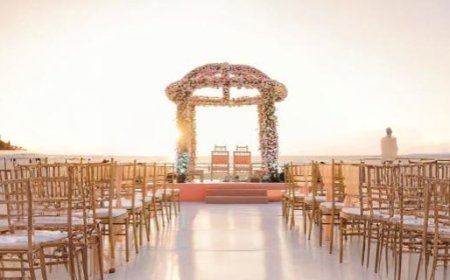
The unplugged ceremony — a request that guests put away their devices during the ceremony specifically — has become a standard element of wedding planning in many Western markets and is increasingly common at Indian weddings with internationally minded couples.
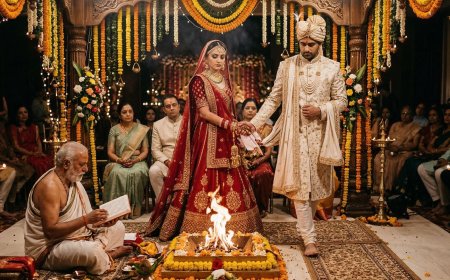
The case for it is straightforward. The ceremony is the most emotionally significant portion of the wedding. The saat pheras, the kanyadaan, the exchange of garlands — these rituals carry weight that is best honored by full presence rather than documented attention. An unplugged ceremony gives your photographer unobstructed access to key moments — no arms reaching into the aisle, no phone screens blocking sightlines, no flash from a guest's device washing out the natural lighting your photographer has positioned around. And it gives your guests the experience of being genuinely present for something significant rather than viewing it through a four-inch screen.
The case against is cultural and practical. At Indian weddings, photographing ceremonies has always been a participatory act — uncles with camcorders, aunties with point-and-shoot cameras, cousins documenting for relatives at home. Asking guests to abstain entirely can feel alien to this tradition and may be received as unwelcoming or controlling, particularly by older relatives for whom photographing the ceremonies is a form of engagement and care.
The middle path that most couples find workable is not a binary choice but a tiered approach — certain moments designated as phone-free, others left open for guest photography and sharing. This requires communication rather than a blanket policy, but it respects both the need to protect key moments and the cultural reality of Indian wedding guest behavior.
Building Your Social Media Strategy: The Four-Zone Framework
Rather than a single policy applied uniformly across your entire wedding, a zone-based approach allows you to be specific about what needs protection and what can be shared freely — and communicates this to guests in a way that is clear and reasonable rather than restrictive.
Zone One: Private and Protected Moments
These are the moments during which you would prefer no guest photography or immediate posting. They should be communicated explicitly — through your wedding invitation materials, your wedding website, a card at the ceremony entrance, and a brief verbal announcement before the ceremony begins.
Typical Zone One moments include the first look between the couple, the ceremony itself from the start of the procession through the conclusion of the pheras, the vidaai, and any other ritual your family considers particularly sacred. The bride and groom's getting ready sequence is also worth including here — the bridal morning photographs that your photographer is carefully documenting in controlled lighting should not be competed with by a dozen guests with phones.
Zone Two: Shareable But Unposted Until the Couple Posts
These are moments that guests can photograph for personal use but that the couple asks not be posted publicly until after the couple has shared their own version — typically the first official wedding photograph release. This zone covers the grand entrance, the venue reveal, the couple's first dance or garland exchange moment, and other visually significant moments that will form the core of the professional photography narrative.
This request is harder to enforce than Zone One but worth making explicitly. Many guests, when asked thoughtfully, will hold a post for twenty-four hours out of genuine respect for the couple's preference.
Zone Three: Share Freely With the Hashtag
Everything else — the mehendi fun, the sangeet performances, the reception dancing, the candid guest interactions, the food, the decor details — is fair game for immediate sharing with your wedding hashtag. This is where guest photography adds genuine value, creates the collective documentary record of the celebration, and allows real-time connection with family members who are not present.
Actively encouraging Zone Three sharing — with hashtag signage at the venue, a reminder in your wedding program, and a mention from the MC during the reception — creates the engaged, energetic social media presence that generates the content you will want to browse after the wedding.
Zone Four: The Inner Circle
Some couples designate a small group of trusted family members — typically one or two close relatives with good photography instincts — as approved real-time sharers who can post from the ceremony and other protected zones directly to family WhatsApp groups for absent relatives. This creates a private, contained version of real-time sharing that serves the genuine purpose of connecting absent family without making protected moments publicly available.
The At a Glance Guide: Social Media Decisions by Wedding Event
| Wedding Event | Recommended Zone | Guest Photography | Immediate Public Posting | Wedding Hashtag |
|---|---|---|---|---|
| Bridal getting ready | Zone One | Restricted — photographer access priority | Not recommended | Not until couple posts |
| Groom getting ready | Zone One | Restricted — photographer access priority | Not recommended | Not until couple posts |
| Mehendi ceremony | Zone Three | Encouraged | Yes | Yes — actively encourage |
| Haldi ceremony | Zone Three | Encouraged | Yes | Yes — actively encourage |
| Sangeet performances | Zone Three | Encouraged | Yes | Yes — high engagement moment |
| Baraat procession | Zone Three | Encouraged | Yes | Yes — visually strong content |
| First look | Zone One | No guest photography | No | No |
| Ceremony — procession | Zone One | No guest photography | No | No |
| Ceremony — pheras and rituals | Zone One | No guest photography | No | No |
| Garland exchange | Zone One/Two | Photographer priority | Hold until couple posts | After couple posts |
| Vidaai | Zone One | No guest photography | No | No |
| Reception entrance | Zone Two | Permitted, photographer priority | Hold 24 hours | After couple posts |
| Reception dinner and dancing | Zone Three | Encouraged | Yes | Yes — prime content window |
| Couple portraits | Zone One | No guest photography | No | After professional release |
The Unplugged Ceremony Sign: Making the Request Without Alienating Guests
The way a no-phones request is communicated determines whether guests receive it as a reasonable expression of the couple's preferences or as an imposition that makes them feel unwelcome.
The most effective unplugged ceremony communications share three characteristics. They are warm rather than instructional — they invite guests into the experience of being present rather than policing their behavior. They explain the why — not just "please put your phones away" but "we want you to be fully here with us for this" — which transforms a restriction into an invitation. And they provide an alternative — directing guests to the hashtag for everything outside the ceremony, giving them a clear channel for their energy and enthusiasm rather than simply removing an outlet.
A card at the ceremony entrance that reads something like: "We have asked our photographer to capture every moment of our ceremony so that you do not have to. Please be fully present with us for the next hour — your attention is the greatest gift you can give us today. The hashtag for everything else is below" will be received more generously than a sign that lists what guests are not permitted to do.
A brief, warm announcement from the officiant at the start of the ceremony reinforces this. Most guests, when reminded genuinely and warmly, comply willingly. The challenge is the guests who do not think the request applies to them — which is why the wedding coordinator or a designated family member positioned at the ceremony entrance can gently reiterate the request in person if needed.
The Wedding Hashtag: Creating One That Actually Works
A wedding hashtag is only useful if it is used consistently. These are the characteristics of hashtags that work versus ones that do not.
It needs to be unique. Searching your hashtag after the wedding should return only your wedding content — not content from a hundred other events that used the same combination of words. Check the hashtag across Instagram, Twitter, and relevant platforms before committing to it. A couple's name plus the year plus a wedding reference word is usually specific enough: #RahulAndPriyaWedding2025 or #SinghMatrimony2025 works better than #PriyaWeds which returns years of unrelated content.
It needs to be short enough to remember and type without error. Longer hashtags get mistyped. If guests need to check the hashtag card every time they post, some will simply not bother.
It needs to be communicated everywhere. Wedding website, invitation inserts, hashtag signs at the venue, mention from the MC, printed on menu cards. The more touchpoints guests encounter the hashtag, the more consistently they will use it.
Managing the Post-Wedding Social Media Moment
The week after the wedding, the social media dynamics shift from management to curation. Guests post their images in the days following the celebration. The wedding hashtag fills with content from multiple perspectives and multiple events. Your own social media presence — whatever you choose to share officially — sets the visual tone for how your wedding is documented in the public record.
For NRI couples, the question of when and how to share your own wedding images is worth considering deliberately. The professional photographs will not be available for months. What is available immediately is the content your photographer shares as sneak peeks, the images taken on your own phone, and the guest content gathered through your hashtag.
Many couples choose to share one or two personally selected images in the immediate post-wedding period — a behind-the-scenes moment, an informal photograph with immediate family — while waiting for professional images before making the full public announcement. Others prefer to hold all sharing until professional images are available, using the gap to set the visual standard for how their wedding is presented publicly.
Neither approach is universally right. The right approach is the one that reflects your own relationship with social media, your privacy preferences, and how much the visual narrative of your wedding matters to you as a couple.
The Presence That Photographs Cannot Capture
There is a version of your wedding that exists only in the direct, unmediated experience of the people who were physically present. Not the photographs. Not the videos. Not the Instagram Stories. The actual experience of being in a room where something significant was happening — the sound, the smell, the weight of emotion in the air, the sense of gathered love that only fully exists when people are genuinely present for it rather than partially present and partially elsewhere.
This version of your wedding cannot be captured. It can only be experienced. And every guest who is looking at a screen instead of looking at the room is experiencing slightly less of it.
Your social media strategy is, at its most fundamental level, a decision about how much of this unmediated experience you want your guests — and yourself — to have. It is not about controlling behavior or managing optics. It is about protecting the thing that makes a wedding a wedding rather than a content opportunity: the quality of attention that people bring when they are fully, completely, unreservedly there.
The photographs will arrive months from now. The professional film will follow. The hashtag will be full of beautiful guest content that you will spend happy hours browsing.
But the moment — the actual moment, with the people you love in the room, looking at you with their whole attention — is happening only once. It is worth designing your approach around preserving as much of it as possible.
NRIWedding.com — Expert guidance for Indian weddings planned across borders.
What's Your Reaction?
 Like
0
Like
0
 Dislike
0
Dislike
0
 Love
0
Love
0
 Funny
0
Funny
0
 Angry
0
Angry
0
 Sad
0
Sad
0
 Wow
0
Wow
0