













































































Renting vs. Buying Wedding Props and Decor: The Smart NRI Guide to Making the Right Call
Planning an Indian wedding from abroad transforms every decor decision into a logistical challenge. Should you rent that stunning mandap or purchase those brass urli pots? This guide cuts through the confusion for NRI couples, breaking down the real costs, cross-border logistics, and emotional factors behind renting versus buying wedding props and decor. From large statement pieces and lighting to heritage heirlooms and personal styling accents, discover a clear decision-making framework built specifically for couples in the USA, UK, Canada, UAE, and Australia planning authentic Indian weddings without the overwhelm.


Renting vs. Buying Wedding Props and Decor Items: The Smart NRI Guide to Making the Right Call
A no-fluff breakdown for couples planning Indian weddings across borders, budgets, and time zones
The Conversation Nobody Has Until It Is Too Late
You found the perfect brass urli pots. The kind with the hand-hammered detailing, wide enough to float marigolds and rose petals across the rim. They look exactly like the ones you saved from that Delhi wedding Instagram reel eight months ago. The vendor ships internationally. The price is reasonable. And for a brief, glorious moment, you think: I should just buy these.
Then reality lands.
You are in Toronto. Your wedding is in Jaipur. You will use these urlis for two days across three ceremonies. After the wedding, they will either travel back to Canada in your already-overweight suitcase, sit in your mother-in-law's storage room, or be gifted to a relative who did not particularly want them.
This is the moment every NRI couple reaches — and most of them make the decision on impulse rather than strategy.
Renting versus buying wedding props and decor is one of the most financially and logistically consequential decisions in your entire planning process. Get it right, and you save money, reduce stress, and end up with a cleaner, sharper aesthetic. Get it wrong, and you are paying for things twice, arguing over customs declarations, or wondering why your haldi setup looks mismatched.
This guide is the one you needed before you started adding things to your cart.
Why This Decision Is More Complex for NRI Couples
For couples planning and living in the same city as their wedding, the math is simpler. Storage is accessible. Returns are local. Vendor relationships are easy to manage in person.
NRI couples face a completely different equation.
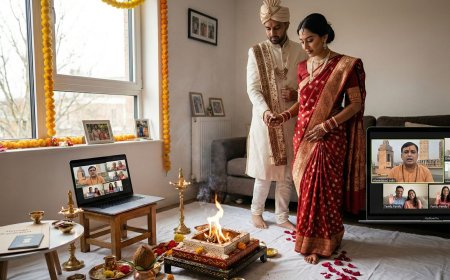
You are planning across time zones, often relying on family members to coordinate on the ground, managing vendors through video calls and screenshots, and making decisions about physical objects you may never touch until the week of the wedding itself. Every item you choose to buy carries a logistical tail — it needs to arrive somewhere, be stored somewhere, be set up by someone, and then go somewhere after the celebration is over.
Rental decisions, meanwhile, hinge on vendor trust, contract clarity, and the ability to inspect quality without being present.
Neither path is inherently right. The correct answer depends on a matrix of factors: how many events you are hosting, where the wedding is taking place, how often you plan to use certain items again, your storage situation post-wedding, and critically — what your aesthetic actually demands.
The Case for Renting: When It Is the Smarter Move
Large Statement Pieces
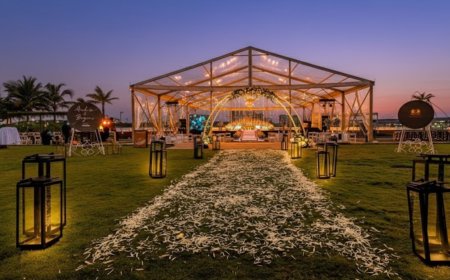
Mandap structures. Giant floral arches. Elaborate backdrop frames. Crystal chandelier installations. Throne-style seating. These items are visually spectacular and logistically nightmarish to own.
A mandap, for example, is not something you will use again. It needs to be assembled, styled, and dismantled by people who know what they are doing. Rental companies that specialize in wedding mandaps have in-house teams who handle exactly this — delivery, installation, breakdown, and collection. You pay for the use of the piece and the expertise around it. That is an efficient transaction.
Buying a mandap, on the other hand, means you own a large, complex structure that requires storage, maintenance, and transport — none of which make sense for a couple living in Melbourne or Chicago.
Lighting and Technical Equipment
Fairy lights in bulk can seem affordable to purchase. LED uplighting, candle warmers, and lantern arrangements often do too. But lighting is one area where rental almost always wins.
Professional lighting rental companies offer installation, technical support on the day, and removal. They also bring inventory that is maintained and consistent — you are not dealing with broken bulbs, tangled wires, or fire safety violations from equipment that has not been properly tested.
For NRI couples especially, handing lighting responsibility to a rental vendor with a clear scope of work is one of the most effective ways to reduce day-of chaos.
Furniture You Will Use Once
Vintage charpoys for a haldi setup. Low seating cushions for a mehendi. Ornate chairs for a reception. Gold chiavari chairs. Antique-style bar counters. These items look beautiful in photographs and serve almost no purpose in your life after the wedding ends.
If you are not running a wedding styling business, owning event furniture is an expensive hobby. Rental gives you access to high-quality, professional-grade pieces at a fraction of the ownership cost — and someone else handles delivery, setup, and pickup.
When the Wedding Is in India and You Live Abroad
This is the most important scenario for NRI couples to consider. If your wedding is taking place in India — whether in a family hometown or a destination city — and you are flying in from abroad, buying decor items creates an almost impossible logistics chain.
Where do purchased items ship to? Who receives them? Who stores them until the event? Who sets them up? Who manages what happens to them after? Unless you have highly reliable family support on the ground and a clear plan for post-wedding disposal, buying for an India-based wedding when you are abroad is a recipe for beautiful objects becoming expensive problems.
In this scenario, working with a rental vendor or a full-service decor company in India — someone who owns their inventory, manages installation, and clears out after — is not just convenient. It is the only sensible approach.
The Case for Buying: When Ownership Actually Makes Sense
Items You Will Use Across Multiple Events
If you are hosting a mehendi, haldi, sangeet, and wedding ceremony — potentially across two or three days — certain items can be deployed across multiple setups. Decorative trays, diya sets, small brass figurines, flower vases, table runners, and fabric yardage often appear in different forms across different events.
If you are buying items that will work across four ceremonies rather than one, the cost-per-use calculation shifts meaningfully. You are not paying for a single use. You are amortizing the cost across your entire wedding weekend.
Keepsakes and Heritage Pieces
Some decor is not purely functional. It is emotional.
The silver kalash your grandmother used at her wedding. The specific style of diyas that your family has always lit during ceremonies. A set of handwoven silk fabric pieces that carry cultural meaning beyond their visual role at a reception.
These are items worth owning. They are not decor in the commercial sense — they are heirlooms in the making. No rental agreement can replicate that.
NRI couples often feel acutely the distance between their daily lives abroad and their cultural roots. Purchasing certain items that carry heritage significance — and keeping them — is a meaningful act. These belong in the buying column without hesitation.
Small Styling Details That Travel Well
Small, lightweight, easily packable items are often worth buying rather than renting — particularly if they add a personal touch that generic rental inventory cannot replicate.
Personalized name cards. Specific color-coordinated ribbon and twine. Unique photo frames for a memory table. Hand-painted signs. Niche decorative accents that your rental vendor simply does not stock.
These items travel well in checked luggage, cost relatively little, and allow you to inject genuine personality into a setup that might otherwise feel like every other wedding at that venue. Buy these, use them, and then either keep them, gift them, or donate them.
Items for Your Home After the Wedding
This is an underused filter that NRI couples should apply more deliberately.
Would you actually use this in your home after the wedding? Not hypothetically. Actually.
A beautifully crafted set of brass candleholders. A hand-embroidered table runner. A set of ceramic platters with traditional motifs. A carved wooden serving board. These are items that cross from event decor into home decor without difficulty. If you genuinely see yourself using something in your living space — or gifting it to family — the purchase has a life beyond the wedding day and that changes the value calculation entirely.
The Hidden Costs Nobody Talks About
The Real Cost of Buying
Most couples calculate the sticker price and stop there. They do not factor in:
- International shipping fees, which can double the cost of smaller items
- Customs duties on goods entering India, which apply to items purchased abroad and shipped in
- Storage at the wedding location before and after the event
- The emotional labour of coordinating delivery, tracking packages, and managing vendors who are not on the same time zone
- The cost of disposal — donating, selling, or transporting items home after the wedding
When you add these figures together, buying often costs significantly more than the price tag suggested.
The Real Cost of Renting
Rental is not automatically cheap either. Hidden costs here include:
- Damage deposits that tie up cash until post-wedding inspection
- Premium pricing for last-minute availability
- Limited customization — you work with what the vendor stocks, not what you envisioned
- Replacement fees if anything is damaged during setup or breakdown
- The risk of receiving items in worse condition than the sample you approved
Always read rental contracts carefully. Damage clauses, cancellation terms, and delivery windows need to be clearly defined before you sign anything. This is doubly important when you are managing vendors remotely.
A Framework for Making the Decision
Rather than defaulting to gut feel or peer pressure from well-meaning family members, apply this filter to every decor item on your list.
Step one: Determine use frequency. Will this item appear at one event or multiple events across your wedding weekend? One use is almost always a rental. Multiple uses shifts the calculation toward buying.
Step two: Assess size and logistics. Can you move, store, and transport this item without significant friction? If the answer involves international shipping, customs, or coordinating three different people in two countries, reconsider buying.
Step three: Calculate the true cost. Add shipping, customs, storage, and disposal to the purchase price. Compare that total to what a rental would cost. The rental number is often more competitive than it initially appears.
Step four: Ask if it has a life after the wedding. Will you use this in your home, gift it to someone meaningful, or repurpose it in a way that has real value? If yes, buying makes sense. If it will sit in a box for years, rental is cleaner.
Step five: Consider the emotional weight. Is this item about aesthetics or about meaning? Heritage pieces, family heirlooms, and items that carry sentimental significance beyond their visual function are worth owning regardless of logistics.
What Indian Wedding Decor Rental Vendors Actually Offer Now
The rental market in India has evolved significantly. Major wedding markets in cities like Mumbai, Delhi, Jaipur, Bengaluru, and Hyderabad now have specialist prop rental companies with sophisticated online catalogues, virtual consultations, and full-service delivery and installation packages.
Many NRI couples are unaware of how professional this market has become. You can now:
- Browse catalogued inventory with high-resolution photographs and pricing
- Request virtual walkthroughs of available pieces
- Book installation teams alongside the rental itself
- Arrange for complete breakdown and collection without any involvement from your family
- Access premium pieces — antique furniture, bespoke floral frameworks, architectural elements — that would cost a fortune to purchase and far more to maintain
The key is finding vendors with verifiable client reviews, clear contracts, and the operational capacity to deliver on your specific dates. Your wedding planner or coordinator in India should have established relationships with reliable prop rental companies — this is one of the most important questions to ask during your planner selection process.
Practical Decor Categories: Rent or Buy at a Glance
Almost always rent: Mandap structures, large floral installations, lighting and electrical equipment, furniture for guest seating, throne chairs, backdrop frames, large decorative urns or vessels, draping fabric in bulk, stage setups.
Consider buying: Personalized stationery and signage, small brass or copper accent pieces that double as home decor, items being used across four or more events, heritage or heirloom pieces, lightweight styling accessories that pack easily.
Evaluate case by case: Floral centrepieces (fresh florals are always rented through a florist; high-quality artificial arrangements may be worth buying if reused), candle holders, lanterns, cushions and poufs for lounge areas, table runners and linen, charger plates and tableware.
A Note on Working With a Decor Stylist
If budget allows, this is where NRI couples get the most leverage.
A professional wedding decor stylist or decorator in India who manages both rental coordination and purchased item sourcing removes the most cognitively demanding part of the process from your plate. They know which rental vendors are reliable, which items are worth purchasing locally, and how to mix both categories seamlessly into a cohesive aesthetic.
They also absorb the logistics — the vendor calls, the delivery coordination, the day-of setup supervision — so that you arrive at your own wedding ready to celebrate rather than manage a production.
For couples planning Indian weddings from abroad, delegating decor logistics to a trusted professional is not an extravagance. It is risk management.
The Bottom Line
There is no universal right answer between renting and buying wedding decor. The correct answer is the one that accounts for your specific location, budget, logistics, and what you actually plan to do with items after the celebration is over.
What is clear is this: the NRI couples who navigate this decision well are the ones who approach it deliberately. They are not swept up by beautiful Instagram finds that seem affordable in isolation. They are not defaulting to buying because it feels more personal, or renting because it feels safer. They are making clear-eyed choices based on real costs, real logistics, and genuine emotional value.
Your wedding aesthetic deserves thought. So does the infrastructure behind it.
When you treat decor decisions with the same strategic clarity you would apply to any significant cross-border investment — and when you build a reliable team on the ground who can execute your vision without you needing to be physically present for every detail — you arrive at your wedding day with something rarer and more valuable than any prop or decoration.
You arrive calm, clear, and genuinely present for the most important celebration of your life.
That is worth planning for.
NRIWedding.com — Expert guidance for Indian weddings planned across borders.
What's Your Reaction?
 Like
0
Like
0
 Dislike
0
Dislike
0
 Love
0
Love
0
 Funny
0
Funny
0
 Angry
0
Angry
0
 Sad
0
Sad
0
 Wow
0
Wow
0