
















































Gujarati Wedding Ceremonies — What to Expect: The Complete NRI Guide to Rituals, Garba and Traditions
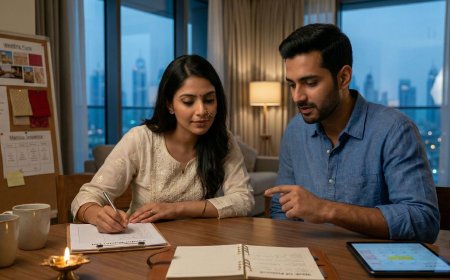
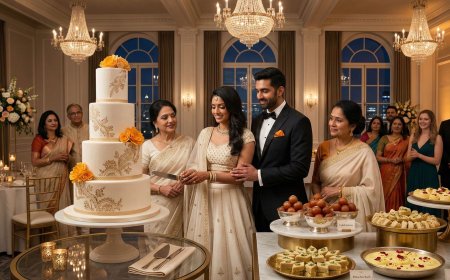
The Gujarati wedding is simultaneously one of the most joyfully celebratory and most ritually rich of all Indian regional wedding traditions — a ceremony of genuine religious depth expressed through the specific devotional energy of the garba, the dandiya raas, and a sequence of ceremonies that spans multiple days and reflects the Gujarati community's particular Vaishnava understanding that joy is devotion and devotion is joy. This complete guide gives NRI couples and families everything they need to plan and participate in a Gujarati wedding with genuine knowledge — covering every ceremony from Sagai and Griha Shanti through Pithi, Mandap Mahurat and Mehndi to the Garba and Dandiya Raas night, the Vara Ghoda procession, Ponkhana, Jai Mala, Hast Melap, Kanyadaan, Vivah Homa, Mangalfera, Saptapadi, Sindoor, Mangalsutra, Aashirvaad, Vidai and Grihapravesh, with a complete ceremonies summary table, the Gujarati aesthetic framework covering bandhani, Patola silk and jewellery traditions, the Gujarati thali's integral role, the garba music direction decision, the community participation question, dandiya logistics, the Gujarati pandit requirement, and the five common mistakes that reduce the Gujarati wedding's specific devotional energy to a party format.

Gujarati Wedding Ceremonies: What to Expect
The Wedding That Danced Before It Prayed
There is a quality to the Gujarati wedding that distinguishes it from every other Indian regional wedding tradition — and it is not subtle. It announces itself immediately, in the specific energy of the gathering, in the way the music begins before the guests have finished arriving, in the particular quality of participation that the Gujarati wedding demands from everyone present rather than offering to those who choose it.
The Gujarati wedding does not ask whether you want to dance. It assumes that you do — and it creates the conditions in which the assumption becomes true even for the people who arrived certain that they would be observers rather than participants. The aunties who have attended forty Gujarati weddings and know exactly which songs are coming next. The cousins who flew in from New Jersey with their dandiya sticks packed in checked luggage because this specific preparation is non-negotiable. The non-Gujarati guests, the non-Indian guests, the guests who have never held a dandiya stick in their lives — by the second song they are in the circle, following the person in front of them, doing something that approximates the correct movement and laughing at the approximation.
This quality — the specific quality of joyful, total participation that the Gujarati wedding generates — is not accidental. It is the expression of something deeply embedded in the Gujarati cultural tradition, in the specific understanding of celebration that the community has developed over centuries, in the specific connection between the divine and the festive that the garba tradition embodies.
But the Gujarati wedding is not only dance. Beneath the garba and the dandiya and the specific festive energy that most people associate with the Gujarati wedding, there is a ceremony of genuine religious depth and specific cultural richness — rituals whose meanings are as sophisticated as any in the Indian wedding tradition, whose specific forms reflect the Gujarati community's particular cultural history and its particular relationship to the divine.
This guide covers both — the celebration and the ceremony, the garba and the rituals, the specific joyful energy and the specific religious depth of the complete Gujarati wedding tradition.
The Foundation: Understanding the Gujarati Wedding's Character
The Vaishnava Influence
The Gujarati Hindu wedding tradition is deeply shaped by the Vaishnava devotional tradition — specifically by the Pushti Marg tradition established by Vallabhacharya in the sixteenth century, and by the broader influence of the Bhakti movement that transformed Gujarati religious culture through the same period. The specific emphasis on joyful devotion — on love and celebration as the highest expressions of the religious impulse — that characterises the Pushti Marg tradition is inseparable from the specific character of the Gujarati wedding's celebratory dimension.
The garba — the circular dance performed in honour of the goddess — is not merely a cultural tradition. It is a devotional act, rooted in the specific understanding that joyful movement in honour of the divine is itself a form of worship. The Gujarati wedding's specific quality of celebration is, at its deepest level, a specific theology of the relationship between the human and the divine — one in which joy is not the reward for devotion but the form that devotion takes.
The Community Character
The Gujarati wedding is a community event in a specific sense that goes beyond the general truth that Indian weddings involve extended families. The specific Gujarati community's tradition of mutual support and collective celebration — rooted in the community's historical experience as a trading diaspora, often far from home — has produced a wedding culture in which the community's participation is not optional but integral.
The garba circle is the specific expression of this community character — the form in which individual celebration becomes collective celebration, in which the boundary between performer and audience dissolves, in which the community's presence and participation is the ceremony rather than the backdrop to it.
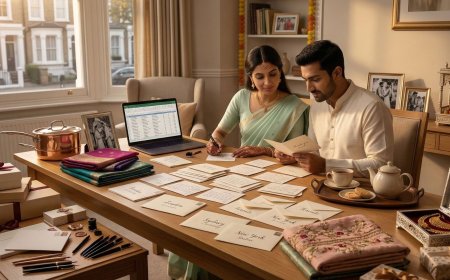
For NRI Gujarati families, this community character creates specific planning considerations. The garba is not a performance that a hired troupe delivers to an audience. It is a participation that the community creates together. Planning a garba that delivers the specific energy of a genuine community garba requires the actual community — the people who know the songs, who know the formations, who carry the specific energy in their bodies from having participated in garbas since childhood.
The Complete Gujarati Wedding Programme
The Pre-Wedding Ceremonies
Sagai — The Formal Engagement:
The Sagai — the formal engagement ceremony — is the official announcement of the marriage between the two families. The ceremony involves the exchange of rings between the bride and groom, the exchange of gifts between the families, and the formal agreement on the wedding date and its auspicious timing.
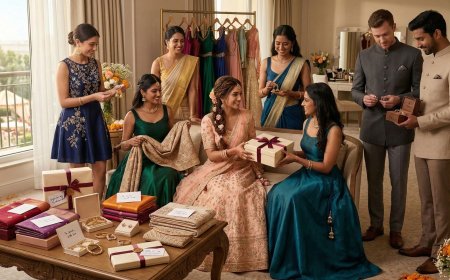
The Sagai in the contemporary NRI context is often conducted as a combined celebration — the ring exchange, the gift exchange, and a small gathering of the immediate families — rather than the more elaborate form it takes in traditional Gujarati community practice. Its essential function — the formal announcement of the marriage — is preserved regardless of the scale of the celebration.
Griha Shanti:
The Griha Shanti — the home purification ceremony — is conducted at both the bride's and groom's homes before the wedding. The ceremony involves specific prayers and rituals that purify the home and invoke divine blessing for the wedding that is about to take place. The Griha Shanti establishes the home as a sacred space for the wedding events — transforming the domestic environment into a ceremonial one through specific ritual acts.
For NRI families whose wedding events are conducted at venues rather than at family homes, the Griha Shanti's spirit is often honoured through a simplified ceremony at the venue before the events begin — a brief puja that establishes the sacred character of the space.
Pithi — The Turmeric Ceremony:
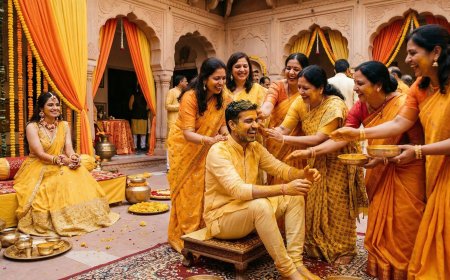
The Pithi — the Gujarati turmeric ceremony — is conducted separately for the bride and groom at their respective homes, typically on the day before the wedding. The application of a paste of turmeric, sandalwood, and other auspicious ingredients to the bride and groom by the women of the family is the specific Gujarati form of the purification and preparation ritual that appears across the Indian wedding tradition in various regional forms.
The Pithi's specific character in the Gujarati tradition — the specific paste used, the specific songs sung during its application, the specific gathering of the women — is one of the ceremonies that most rewards the presence of older family members who know the tradition's specific forms. The Pithi conducted with the right songs and the right participants has a warmth and a specific intimacy that is among the most emotionally resonant pre-wedding experiences.
Mandap Mahurat — The Mandap Installation:
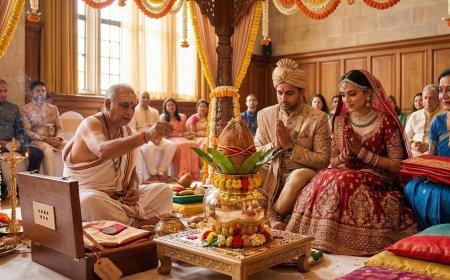
The Mandap Mahurat is the ceremony in which the mandap — the ceremonial canopy under which the wedding ceremony will be conducted — is installed and consecrated. The ceremony involves specific prayers and rituals that establish the mandap as a sacred space, invoke the divine presence in the ceremony space, and begin the formal preparation of the wedding venue.
The Mandap Mahurat is conducted by the pandit with the participation of the family's senior members — the heads of the household — and marks the formal beginning of the wedding's ceremonial programme.
Mehndi:
The mehndi ceremony — the application of henna to the bride's hands and feet — takes its Gujarati form with the specific songs and the specific gathering that the tradition prescribes. The mehndi in the Gujarati tradition is an occasion of considerable festivity — the women of both families gathered together, the specific mehndi songs, the food and the celebration that surround the application.
For NRI Gujarati families, the mehndi is often the event at which the two families first gather informally — before the formality of the ceremony days — and the specific quality of the mehndi gathering as a moment of family meeting and family warming is worth planning for deliberately rather than leaving to chance.
The Garba Night — The Ceremony's Heart
What the Garba Actually Is:
The garba is, in the most complete understanding, a devotional dance performed in honour of the goddess — specifically Amba or Durga in the Gujarati tradition — that has its origins in the specific devotional practices of Gujarat's temple culture. The circular movement of the garba — dancers moving around a central lamp or image of the goddess — enacts the eternal movement of creation around the divine centre.
The specific connection between the garba and the wedding tradition lies in the understanding that the bride, in the period immediately before her wedding, is treated as an embodiment of the goddess — as Shakti, the divine feminine — and the garba danced in her honour is simultaneously a celebration of the wedding and an act of devotion to the divine feminine that the bride temporarily embodies.
The Garba Programme:
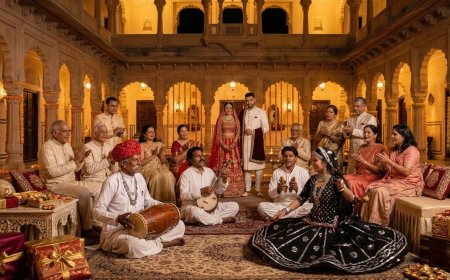
The garba night — typically the evening before the wedding — is a several-hour event that moves through a specific programme of songs and dances. The traditional garba songs — the specific compositions in Gujarati that have been sung at garbas for generations — are the core of the programme, though contemporary garba nights typically include film songs and fusion numbers alongside the traditional repertoire.
The traditional garba formations — the specific circular movements, the specific hand gestures, the specific footwork patterns that the songs prescribe — are the specific knowledge that separates the garba as a genuine cultural practice from the garba as a party activity. Families where older members know the traditional formations and can lead the gathering into them produce garbas with a completely different character from events where the traditional forms have been replaced entirely by film song choreography.
The Dandiya Raas:
The Dandiya Raas — the stick dance that typically follows the garba — is the second major dance form of the Gujarati wedding celebration. The dandiya's specific character — the paired movement, the striking of the sticks, the specific formations — is both more physically demanding and more interactive than the garba, requiring the dancers to coordinate with their partners and with the circle around them.
The specific dandiya songs — the compositions for which the specific stick rhythms were designed — create a different energy from the garba songs, building toward the specific climactic intensity that the best dandiyas achieve in their final songs. The NRI Gujarati wedding's dandiya that ends with the specific traditional songs sung at full energy, with the full circle moving in coordination, is achieving something that is genuinely extraordinary to witness and genuinely extraordinary to participate in.
The NRI Planning Considerations for the Garba:
The garba's specific energy depends on the specific community. Hiring a professional garba group to perform for an audience produces an entirely different event from a garba in which the community participates collectively. The NRI planning for the garba should centre on how to create the conditions for the community's participation — the right music, the right space, the right invitation to join — rather than on the production values of the performance.
The music direction is critical. A live singer with live musicians who know the traditional garba songs and can adjust the energy and the tempo in response to the gathering creates a garba with a completely different quality from a DJ playing a playlist. For families where the traditional songs matter — where the garba is an expression of genuine devotional culture rather than a party format — the investment in live traditional music is the highest-return investment in the garba's success.
The Wedding Day Ceremonies
Vara Ghoda — The Groom's Procession:
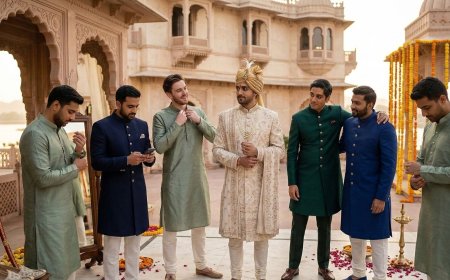
The Vara Ghoda — the groom's procession to the wedding venue — is the specific Gujarati form of the baraat tradition. The groom arrives on horseback — the vara ghoda, the groom's horse — accompanied by the dancing of the assembled family and the specific music of the Gujarati wedding procession.
The specific character of the Gujarati Vara Ghoda — the groom's specific attire, the specific music, the specific dancing of the family around the horse — is a procession of genuine visual splendour and genuine communal energy. For NRI Gujarati families planning destination weddings at venues in Rajasthan or Gujarat or Maharashtra, the Vara Ghoda is one of the elements that most rewards the investment of traditional sourcing — a genuinely decorated horse, genuinely traditional music, and the specific community participation that the procession requires.
Ponkhana — The Welcoming of the Groom:
The Ponkhana is the specific Gujarati ceremony in which the bride's family formally welcomes the groom to the wedding venue. The groom is welcomed with specific ritual hospitality — the Madhuparka, a mixture of honey and yogurt — and specific prayers. The bride's mother performs the welcoming rituals, including the waving of the aarti before the groom and the Kansar — the specific welcoming mark — on his forehead.
The Ponkhana marks the formal arrival of the groom in the ceremonial space — the specific transition from the procession to the ceremony — and its rituals establish the hospitality and the welcome that the bride's family is extending to the person who is about to become their son-in-law.
Jai Mala — The Exchange of Garlands:
The Jai Mala — the exchange of flower garlands between the bride and groom — is the Gujarati equivalent of the Var Mala. The specific Gujarati form of the Jai Mala includes the characteristic lifting and evading dynamic that appears across the North and West Indian garland exchange tradition — the groom's side lifting him to prevent the bride from garlanding him, the bride's side doing the same, the playful competition that precedes the eventual mutual garlanding.
The Jai Mala is one of the most photographically vivid and most joyfully energetic moments of the Gujarati wedding — the specific combination of the playful competition and the genuine emotional significance of the mutual garlanding creates a moment of singular character.
Hast Melap — The Joining of Hands:
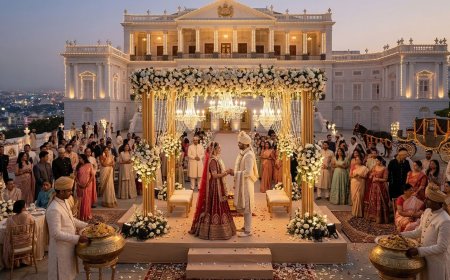
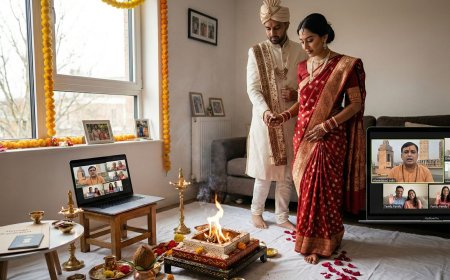
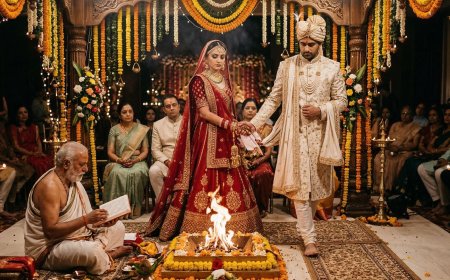
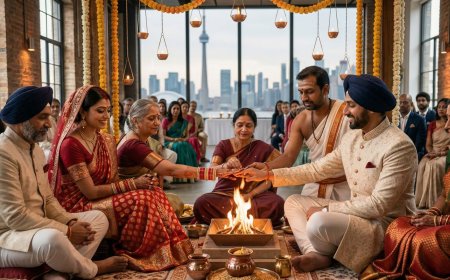
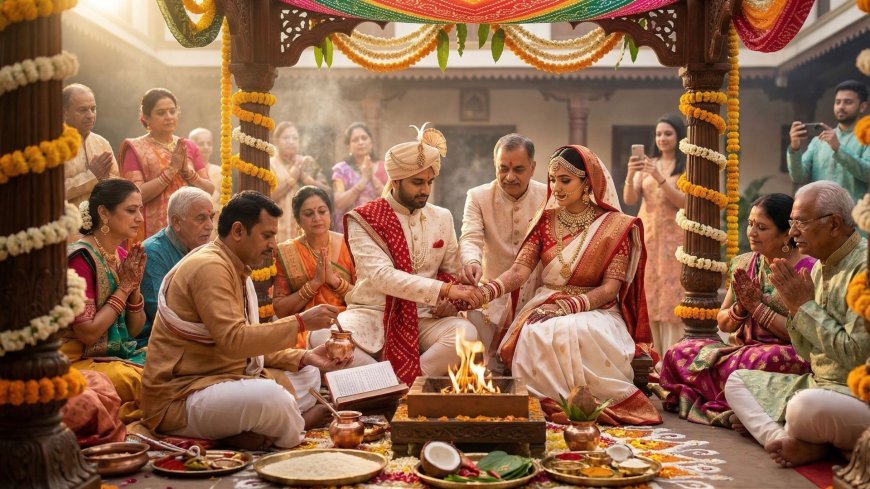
The Hast Melap — the joining of the hands of the bride and groom — is the central ritual of the Gujarati Hindu wedding ceremony. The bride's right hand is placed in the groom's right hand by the bride's father, while the pandit recites specific mantras. A sacred thread is wound around the joined hands, binding them together in the specific symbol of the union being contracted.
The Hast Melap is the Gujarati equivalent of the Kanyadaan — the specific ritual of the family's gift of the daughter to the groom, the specific gesture that constitutes the marriage in the eyes of the tradition. The specific Gujarati form of this ritual — the threading of the sacred cord around the joined hands — is one of the most visually distinctive elements of the Gujarati wedding ceremony and one of the most photographically powerful.
Kanyadaan:
The Kanyadaan in the Gujarati tradition follows the Hast Melap — the father pours water over the joined hands of the bride and groom, the specific gesture of the gift that constitutes the formal Kanyadaan. The pandit recites the specific mantras of the Gujarati tradition during the water pouring.
Vivah Homa — The Sacred Fire:
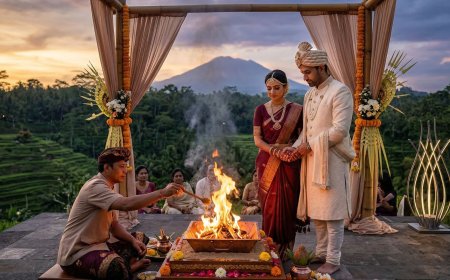
The Vivah Homa — the lighting of the sacred fire that will witness the wedding ceremony — is conducted with the specific ritual materials and the specific mantras of the Gujarati tradition. The fire is Agni, the divine witness, and the offerings made to it during the ceremony are understood as the divine ratification of the vows being made.
Saptapadi — The Seven Steps:
The Saptapadi in the Gujarati tradition has its own specific form — the seven steps taken around the sacred fire, with the specific mantras and the specific spatial movement of the Gujarati ceremony. In some Gujarati communities, the seven steps are taken differently from the North Indian form — the specific direction, the specific movement, the specific mantras — reflecting the regional tradition's specific interpretation of the shared Vedic ritual.
Mangalfera — The Four Circumambulations:
The Mangalfera — the four circumambulations of the sacred fire — is a specific element of the Gujarati wedding ceremony that has no direct equivalent in many other Indian regional traditions. The bride and groom circumambulate the sacred fire four times — each circumambulation representing a specific vow and a specific intention — with the specific mantras of the Gujarati tradition.
The four circumambulations of the Mangalfera are understood to represent the four aims of human life — Dharma, Artha, Kama, and Moksha — the four dimensions of a complete human existence that the marriage is committing to pursue together.
Sindoor and Mangalsutra:
The application of sindoor to the bride's hair parting and the tying of the mangalsutra around her neck follow the specific Gujarati forms of these pan-Hindu rituals. The Gujarati mangalsutra's specific design — the specific pattern of the black and gold beads, the specific pendant — is distinct from the mangalsutras of other regional traditions and reflects the specific aesthetic vocabulary of the Gujarati community.
The Post-Wedding Ceremonies
Aashirvaad — The Blessing:
The Aashirvaad — the blessing of the couple by the assembled family and elders — closes the wedding ceremony in the Gujarati tradition as in the broader Hindu tradition. The specific Gujarati form of the blessing involves the couple prostrating before the elders and receiving their specific blessings for the marriage.
Vidai — The Bride's Farewell:
The Vidai — the bride's departure from her family home — is one of the most emotionally intense moments of the Gujarati wedding programme. The specific rituals of the Vidai — the bride's final rituals in her natal home, the throwing of rice over her head as she departs, the specific prayers and the specific tears — mark the transition that the wedding has effected with the emotional honesty that the Vidai tradition has always insisted upon.
For NRI Gujarati families, the Vidai often carries additional emotional weight beyond the domestic transition it traditionally marks — the specific resonance of the diaspora's experience of departure and distance adding layers of meaning to the ritual's already intense emotional character.
Grihapravesh — The Entry Into the Home:
The Grihapravesh — the bride's ceremonial entry into the groom's family home — mirrors the Vidai's emotional intensity with the specific joy of arrival. The bride enters the home by stepping into a vessel of red liquid and leaving her auspicious footprints on the threshold — the Lakshmi padams that mark her arrival as the arrival of prosperity and auspiciousness.
The Key Gujarati Wedding Elements: A Summary Table
| Ceremony | When | Who Participates | Significance | NRI Planning Note |
|---|---|---|---|---|
| Sagai | Months before | Immediate families, couple | Formal engagement announcement | Can be conducted in country of residence |
| Griha Shanti | Days before | Family heads, pandit | Home purification and divine blessing | Can be adapted for venue settings |
| Pithi | Day before | Women of the family | Turmeric purification of bride/groom | Requires family members who know the songs |
| Mandap Mahurat | Wedding eve or morning | Family heads, pandit | Consecration of ceremony space | Must coordinate with venue setup |
| Mehndi | Day before | Women of both families | Henna application, family gathering | Plan for integration of both families |
| Garba | Wedding eve | Full community | Devotional dance in bride's honour | Live music strongly recommended |
| Dandiya Raas | Wedding eve | Full community | Stick dance celebration | Dandiya sticks for guests recommended |
| Vara Ghoda | Wedding morning | Groom, groom's family | Groom's procession | Horse and traditional music arrangement |
| Ponkhana | Wedding morning | Bride's mother, groom | Formal welcome of groom | Madhuparka materials required |
| Jai Mala | Wedding ceremony | Bride and groom | Mutual garland exchange — choice | Most photographed pre-ceremony moment |
| Hast Melap | Wedding ceremony | Bride, groom, bride's father, pandit | Joining of hands — central ritual | Sacred thread required |
| Kanyadaan | Wedding ceremony | Bride's father, couple, pandit | Father's gift of daughter | Modification conversation with pandit |
| Vivah Homa | Wedding ceremony | Couple, pandit | Sacred fire witness | Venue fire permission required |
| Mangalfera | Wedding ceremony | Couple, pandit | Four circumambulations | Specific to Gujarati tradition |
| Saptapadi | Wedding ceremony | Couple, pandit | Seven steps — legal constitution | English explanation strongly recommended |
| Sindoor and Mangalsutra | Wedding ceremony | Groom, bride | Visible markers of married state | Community-specific design |
| Aashirvaad | Ceremony close | Elders, full family | Family blessing of the couple | Most emotionally resonant moment |
| Vidai | Post-ceremony | Bride's family | Bride's farewell | Plan photographs and time allocation |
| Grihapravesh | Post-ceremony | Groom's family | Bride's welcome into new home | Lakshmi padams materials required |
The Gujarati Aesthetic: What Makes It Distinctive
The Colours
The Gujarati wedding's colour palette is among the most vibrant and most distinctive of all Indian regional wedding aesthetics. The specific preference for jewel tones — deep reds, royal blues, rich greens, vibrant oranges and yellows — reflects the Gujarati textile tradition's specific mastery of colour, expressed in the bandhani and patola weaving traditions that are among the most technically accomplished in the world.
The bandhani — the tie-dye fabric of Gujarat's weaving tradition — is the specific textile that most fully expresses the Gujarati wedding aesthetic. The bride's bandhani saree or ghagra, the groom's bandhani stole, the specific patterns of the resist-dyed fabric — these are elements that connect the wedding's visual aesthetic to a living craft tradition of great beauty and great cultural depth.
The Patola Silk
The Patola silk — the double ikat woven silk of Patan in North Gujarat — is among the most technically demanding and most culturally significant of all Indian textiles. A genuine Patola saree — woven by the Salvi families of Patan who have maintained the tradition across generations — is a garment of extraordinary beauty and extraordinary value, and its presence at a Gujarati wedding as the bride's ceremony saree or as a gifted saree is the specific expression of the highest level of textile investment.
For NRI Gujarati brides considering a Patola saree for the wedding, the investment in visiting Patan and the Salvi weavers during the India visit — to understand what a genuine Patola is and to see the specific weaving process — is a worthwhile investment in understanding what the garment represents beyond its appearance.
The Jewellery
The Gujarati bridal jewellery tradition has its own specific vocabulary — the specific forms of the haar, the nath, the maang tikka, the bajubandh — that reflect the Gujarati community's particular aesthetic history. The polki and kundan jewellery traditions that are central to the Gujarati bridal set carry the specific aesthetic of the Rajput-influenced jewellery traditions of western India.
The specific piece that is most distinctively Gujarati — and most worth specific attention in the jewellery planning — is the nath, the nose ring, whose Gujarati form is among the most elaborate of all the Indian nose ring traditions. The large circular nath — supported by a chain attached to the hair — is both a specific item of beauty and a specific cultural marker of the Gujarati bridal tradition.
The Gujarati Wedding Food: The Integral Role of the Thali
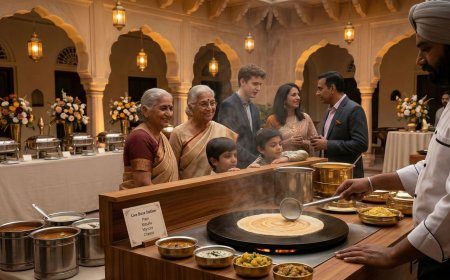
The Gujarati wedding is, among all Indian regional wedding traditions, the one in which food is most completely integrated with the ceremony's character and identity. The Gujarati thali — the specific elaborate meal that is the centrepiece of the wedding hospitality — is not merely catering. It is an expression of the community's specific values of generosity, abundance, and the specific quality of hospitality that the Gujarati tradition understands as sacred.
The specific dishes of the Gujarati wedding thali — the dal baati, the shrikhand, the undhiyu, the various farsan, the specific sweet preparations — each carry their specific cultural significance and their specific connection to the festive calendar of the Gujarati tradition. The wedding food that is planned with genuine engagement with the specific dishes of the tradition rather than with a generic Indian wedding menu produces an experience that is culturally specific and culturally generous in a way that the generic approach cannot match.
For NRI Gujarati weddings conducted in India, the food planning should centre on finding a caterer with genuine Gujarati thali expertise — not a generic Indian wedding caterer who offers Gujarati options, but a caterer whose specific competence is the Gujarati thali in its complete and authentic form.
Working With the Pandit: The Gujarati Ceremony's Specific Requirements
The Tradition-Specific Knowledge
The pandit for a Gujarati Hindu wedding must know the specific Gujarati ritual tradition — the specific mantras, the specific sequence, the specific materials, and the specific forms of the ceremonies that distinguish the Gujarati tradition from other Hindu regional traditions. A pandit who knows North Indian Hindu ceremonies does not necessarily know the Mangalfera's specific form or the specific Gujarati Hast Melap ritual.
For NRI Gujarati couples planning weddings in destination locations — Rajasthan, Goa, Kerala — where Gujarati community pandits may not be locally available, the option of bringing a pandit from the Gujarati community in India or from the NRI community is worth serious consideration. The ceremony conducted by a pandit who genuinely knows the Gujarati tradition produces an authenticity that the ceremony conducted by a pandit who is approximating the tradition cannot match.
The NRI Logistics: Planning a Gujarati Wedding From Abroad
The Community Question
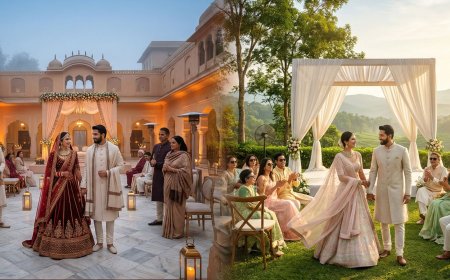
The Gujarati wedding's dependence on genuine community participation — particularly for the garba — creates a specific NRI logistics challenge. The garba that produces the specific energy of a genuine community garba requires the community's actual presence. For NRI Gujarati families whose community is concentrated in a specific city in the UK, Canada, or the USA, this may mean planning the wedding in a location accessible to the community rather than in a destination that the photographs would prefer.
The honest assessment: a garba in Leicester or in Toronto or in Chicago — where the Gujarati community is present and will genuinely participate — may produce a more authentically Gujarati wedding experience than a garba at a beautiful Rajasthan venue where the community has had to travel and is smaller and less energetically concentrated.
The Dandiya Sticks
The practical logistics of the dandiya are worth specific planning attention. Dandiya sticks — the decorated wooden sticks used in the Dandiya Raas — should be provided for every guest. The quality of the sticks matters: the lightweight plastic sticks that are sometimes provided as a budget option create a different sound and a different feeling from properly weighted traditional dandiya sticks. Source quality dandiya sticks in the appropriate quantity well in advance and have them available at the venue before the garba begins.
The Music Direction
The garba's music direction is the single most important planning decision for the garba night. The options are live traditional Gujarati garba singers with live musicians, a DJ with a curated Gujarati garba playlist, or some combination. For families where the garba is understood as a genuine devotional and cultural practice rather than as entertainment, the investment in live traditional musicians is justified by the specific quality of experience it produces.
If live traditional music is not feasible, the DJ playlist should be curated with specific knowledge of the traditional garba songs and their sequence — not simply a collection of popular Gujarati film songs but a programme that builds the garba's energy in the specific way that the traditional programme does.
Common Mistakes NRI Couples Make With Gujarati Wedding Planning
The first mistake is treating the garba as a party element rather than as a ceremony. The garba is a devotional practice that happens to be joyfully celebratory — not a party format that happens to use Gujarati music. Planning it with the same logic used for a DJ reception produces an event that has the surface form of a garba without the specific energy that makes a genuine garba extraordinary. The community participation, the traditional music, the traditional formations — these are the elements that produce the genuine article.
The second mistake is not investing in the Pithi's traditional form. The Pithi conducted with recorded music and without the women who know the specific songs is a ritual that has been aesthetically reproduced rather than genuinely performed. Finding the family members who know the Pithi songs and ensuring their presence is among the most impactful pre-wedding planning investments for the ceremonies' authentic character.
The third mistake is booking a non-Gujarati pandit without confirming specific Gujarati ceremony knowledge. The Mangalfera, the specific form of the Hast Melap, the specific Gujarati Kanyadaan — these require specific knowledge that a generic pandit may not have. Confirm the pandit's specific Gujarati ceremony experience before engaging them.
The fourth mistake is under-planning the Vara Ghoda. The groom's procession on horseback is one of the most visually spectacular and most culturally specific elements of the Gujarati wedding — and its success depends on the quality of the horse, the quality of the music, and the genuine participation of the family in the dancing around the procession. Planning it as a logistics item rather than as a ceremony produces the diminished version.
The fifth mistake is not providing dandiya sticks for all guests. The dandiya that has sticks for some guests and not others produces the specific awkward dynamic of a divided participation — some guests dancing with sticks, others standing and watching, the circle broken by the asymmetry of the provision. Provide sticks for everyone. The cost is minimal. The impact on the event's energy is significant.
The Wedding That Is Also a Prayer
The Gujarati wedding is, in its fullest expression, a ceremony of genuine religious depth that happens to be one of the most joyfully celebratory occasions in the entire Indian wedding tradition. The garba that is danced in the bride's honour is a devotional act. The Mangalfera's four circumambulations are a commitment to the four aims of a complete human life. The specific quality of festivity that the Gujarati wedding generates is not secular celebration — it is the specific Vaishnava understanding that joy is devotion and devotion is joy, expressed through the specific forms that the Gujarati community has developed and refined across centuries.
The NRI Gujarati couple who approaches their wedding with genuine engagement with both dimensions — the ceremony's religious depth and the celebration's devotional energy — produces a wedding that is more fully Gujarati than one that prioritises either at the expense of the other.
The grandmother who attends forty Gujarati weddings across her life knows both. She knows the specific songs for the Pithi and the specific form of the Hast Melap and the specific moment in the Saptapadi when the pandit will ask for the specific ritual response. She also knows every traditional garba song and the specific formations and the specific energy that the best garbas achieve.
The knowledge she carries is the tradition carried whole. The NRI Gujarati wedding that inherits this knowledge — through the family's elders, through the community's accumulated wisdom, through the specific preparation that genuine engagement with the tradition requires — carries it whole across whatever distance separates the family from the Gujarat where the tradition was formed.
The garba circle closes. The dandiya sticks strike. The fire witnesses the vows.
The wedding dances and prays simultaneously.
This is what the Gujarati wedding is.
Published by NRIWedding.com — The Premium Global Platform for Non-Resident Indians Planning Indian Weddings From Abroad.
What's Your Reaction?
 Like
0
Like
0
 Dislike
0
Dislike
0
 Love
0
Love
0
 Funny
0
Funny
0
 Angry
0
Angry
0
 Sad
0
Sad
0
 Wow
0
Wow
0