













































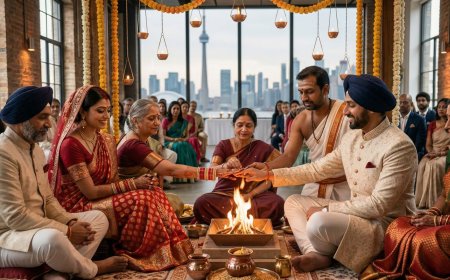



Destination Weddings in Telangana: The Nizam's Heritage, Palaces and Pearls — The Complete NRI Wedding Guide to Hyderabad
Planning a destination wedding in Hyderabad, Telangana from abroad? This complete NRI guide covers everything the globally-located Indian couple needs — from the Falaknuma Palace's Taj-managed thirty-two-room hilltop heritage and its critical twenty-two-month planning timeline to the Chowmahalla Palace's Nizam trust ceremonial courtyards, Taj Krishna and Taj Banjara's Hussain Sagar lakefront receptions, ITC Kohenur's large-format luxury, and Golkonda Fort's golden hour pre-wedding shoot. Learn how to engage a traditional dum biryani master independent of the hotel kitchen, commission Hyderabadi pearl and Bidri metalwork jewellery from Laad Bazaar craftsmen, incorporate the Dakhni Urdu ghazal tradition into the mehendi programme, design the Charminar sunrise guest experience, source Pochampally ikat textiles for the mandap, and understand the mehman-nawazi hospitality tradition that distinguishes a genuinely Hyderabadi wedding from a generic ballroom event. Understand Rajiv Gandhi International Airport's direct Gulf and international connectivity, Telugu and Hyderabadi Muslim ceremony traditions, Chowmahalla trust coordination requirements, ASI monument regulations at Golkonda, NRI payment frameworks, and the five specific planning mistakes that reduce the Nizam's living cultural tradition to decorative approximation. This is the complete, expert, non-generic guidance that a Hyderabad destination wedding demands.

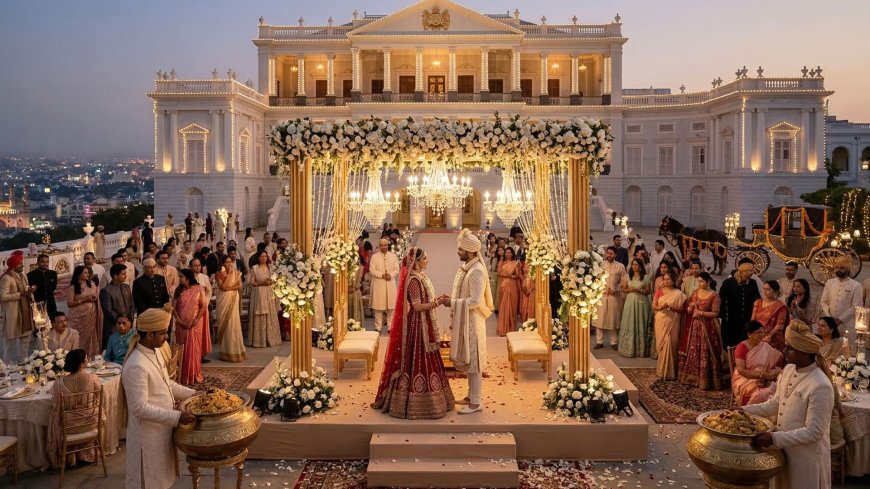
Destination Weddings in Telangana — The Nizam's Heritage, Palaces and Pearls: The Complete NRI Wedding Guide to Hyderabad
The message was sent at three-forty-seven in the afternoon on a Thursday, Hyderabad time, which meant Zara was reading it at ten-seventeen in the morning in London, between two meetings, on the Jubilee Line somewhere between Waterloo and Canary Wharf.
Her mother had not sent a venue link. She had sent a paragraph. Her mother, who was a retired professor of history at Osmania University and who had spent thirty-five years teaching the political and cultural history of the Deccan sultanates, did not send venue links. She sent context.
The paragraph said:
I want you to understand something before you decide on a venue. The Nizams of Hyderabad ruled the largest princely state in British India for two hundred and twenty-four years. At the peak of their power, the seventh Nizam, Mir Osman Ali Khan, was the wealthiest private individual on earth — wealthier than the King of England, wealthier than any American industrialist, holder of a collection of pearls that has never been equalled and may never be equalled again. The culture they created — the architecture, the cuisine, the jewellery, the music, the specific quality of Hyderabadi hospitality that the word mehman-nawazi only partially describes — is not a theme that can be applied to a wedding. It is a living tradition. It is the tradition of this city. Your wedding is in this city. I am asking you to understand what that means before you choose a ballroom.
Zara read this paragraph on the Jubilee Line, standing, holding the overhead rail with one hand and her phone with the other, while the carriage moved through the dark under the Thames.
She read it again.
Then she forwarded it to her fiancé Aryan in Toronto with the message: My mother has opinions about the venue.
He replied in eleven minutes: Your mother is always right about everything. What is she saying specifically?
Zara typed: She is saying that Hyderabad is not a backdrop. She is saying it is a tradition. She is saying that choosing a ballroom in Hyderabad is like choosing a frame and throwing away the painting.
A pause.
Then Aryan: She should write the venue brief.
Zara looked at the paragraph again. The Nizams. The pearls. The mehman-nawazi. The tradition of this city.
She typed back: She basically has.
What neither of them had yet resolved — what the paragraph had established as the philosophical foundation without answering as the operational framework — was the specific, practical, logistical, regulatory, vendor-ecosystem, seasonal, contractual complexity of planning a Hyderabad destination wedding from London and Toronto simultaneously, for a guest list that spanned the United Kingdom, Canada, the Gulf, and the Indian diaspora's specific, Hyderabadi, Telangana-rooted family network. The tradition was clear. The planning was not. The painting was extraordinary. The frame was still to be built.
The building of the frame — specific, non-generic, Hyderabad-specific, NRI-applicable — is what this guide exists to do.
This guide is for that couple — the ones whose mother has already established what the wedding must be, and who need to understand, completely and with the precision the tradition deserves, how to make it happen from seven thousand kilometres away.
Why Hyderabad Is Not Simply Another City Wedding Destination
The Indian destination wedding conversation about city weddings has three primary references: Mumbai for glamour and historical institutional weight, Delhi for scale and the north Indian wedding's maximum expression, Bengaluru for practicality and the NRI couple's logistical sanity. Hyderabad appears in this conversation less frequently than its extraordinary wedding proposition warrants, and its underrepresentation is the result of a specific misunderstanding — the assumption that a city wedding is a city wedding, that the framework that applies to Delhi or Mumbai applies to Hyderabad, that the distinction between them is primarily aesthetic.
This assumption is wrong, and it is wrong in ways that matter enormously for the NRI couple who chooses Hyderabad with genuine understanding of what it offers.
Hyderabad is not simply a city with heritage hotels. It is a city that was, for two hundred and twenty-four years, the capital of a princely state whose cultural production — in architecture, cuisine, jewellery, music, textile, and the specific, formalised, extraordinarily refined tradition of hospitality that the Nizam's court developed and that has been transmitted through the city's families and institutions across the generations since — constitutes the most complete and most intact royal court cultural tradition available at any Indian city wedding destination.
The Mughal tradition of Delhi is magnificent but distant — the Mughals are seven generations removed from any living Hyderabadi family's personal cultural memory. The Mysuru Wodeyar tradition is intimate and available but geographically contained within a single city. The Jaipur and Udaipur traditions of Rajasthan are powerful but have been substantially mediated by the tourist and wedding industry's transformation of their physical settings.
The Nizam's tradition in Hyderabad is different in a specific and significant way: it is still alive in the social fabric of the city, transmitted through the old families of Hyderabad — the Paigah nobility, the Hyderabadi Muslim aristocracy, the Deccan Brahmin families who served the court, the trading communities whose prosperity was built under Nizam patronage — whose knowledge of how to do things in the Hyderabadi way is not historical knowledge but practical knowledge, the knowledge of people who were raised in a tradition and who carry it in their hands.
The biryani that a Hyderabadi dum biryani master produces is not a recipe from a book. It is a technique transmitted through apprenticeship. The Hyderabadi pearl jewellery that the Laad Bazaar craftsmen make is not a reproduction of a historical style. It is the continuation of a craft that has been practiced in this city since the Golconda diamond trade made it the jewellery capital of the known world. The mehman-nawazi — the Hyderabadi tradition of hospitality, the specific way of receiving and feeding and attending to a guest that the Nizam's court formalised and that the city's social culture has maintained — is not a hospitality industry service standard. It is a cultural practice, and the wedding that accesses it rather than approximating it is a wedding of a different quality than anything a hospitality brand can deliver.
The Historical Context — What the NRI Couple Must Understand
Zara's mother's paragraph is the beginning of this section, not its entirety. The NRI couple planning a Hyderabad wedding deserves the historical context that makes the city's wedding proposition legible — not as an academic exercise but as the practical foundation for every aesthetic, culinary, musical, and venue decision that follows.
The Asaf Jahi dynasty — the Nizams of Hyderabad — ruled from 1724 to 1948, when the Indian state's military operation ended the princely state's independent existence. In that period, they built a city of extraordinary cultural sophistication: the Charminar, completed in 1591 by the Golconda sultan Muhammad Quli Qutb Shah; the Falaknuma Palace, the Italian-baroque and Tudor-gothic marvel built in 1893 and completed as the Nizam's guest house; the Chowmahalla Palace complex, the official seat of the Asaf Jahi dynasty, built over the eighteenth and nineteenth centuries as the ceremonial centre of the Nizam's court; the Nizam's Museum in Purani Haveli, which contains the personal collections of the sixth and seventh Nizams including the largest collection of antique clocks in Asia.
The seventh Nizam, Mir Osman Ali Khan, ruled from 1911 to 1948 and was, at the time of Indian independence, the wealthiest private individual on earth. His wealth was legendary — the Jacob Diamond, one of the largest diamonds ever found, was used as a paperweight; his pearl collection, estimated at four hundred million dollars in contemporary valuation, has never been equalled. The tradition he presided over was not simply wealth but culture — the Dakhni Urdu literary tradition, the Hyderabadi school of painting, the Bidri metalwork, the Himroo and Mashru weaving traditions of the old city, the Paigah tomb garden architecture.
For the NRI couple, this context is not background information. It is the brief. Every element of the Hyderabad wedding — the venue selection, the catering, the music, the jewellery, the textile choices, the invitation design, the gifting — has a Hyderabadi version that is specific, historically grounded, and of extraordinary quality. Accessing that version rather than the generic Indian wedding version is the goal that the planning must serve.
The Venue Landscape — Hyderabad's Extraordinary Range
The Falaknuma Palace — The Taj's Crown Jewel
The Falaknuma Palace is the most celebrated wedding venue in Hyderabad and one of the most celebrated in India — a fact that is well-established and that this guide acknowledges before moving to the specific considerations that the NRI couple must understand before booking it.
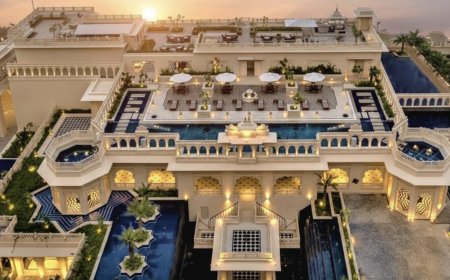
The palace, perched on a hill in the old city with a panoramic view over Hyderabad, was built in 1893 by the Paigah noble Vicar-ul-Umra and subsequently acquired by the sixth Nizam, Mahbub Ali Khan, who used it as the royal guest house for visiting dignitaries of the highest order. The Nizam of Hyderabad's guest house — the property reserved for heads of state, for the Viceroy, for the most significant visitors to the most opulent court in India — is now managed by the Taj Hotels as a luxury heritage hotel, with thirty-two rooms and suites, the formal dining rooms of the state apartments, the stables, the Jade Pool, and the event infrastructure that has allowed the Taj to develop it into the most institutionally significant wedding venue in Telangana.
The Falaknuma's wedding proposition is the proposition of the most historically significant guest house in India. The couple married here is not married at a heritage hotel. They are married at the property that received the Viceroy of India and the Nizam of Hyderabad's most distinguished guests — and the weight of that specific, non-reproducible historical significance is the thing that the Falaknuma offers that no other venue, however beautiful, however well-managed, can approximate.
The operational considerations that the NRI couple must understand before booking the Falaknuma are equally specific. The room inventory is thirty-two — which means that the wedding couple who needs on-site accommodation for more than sixty to sixty-four guests must arrange overflow accommodation elsewhere in Hyderabad. The palace's narrow hilltop access road creates vehicle management requirements for large guest arrivals. The Falaknuma's peak season dates — December through February — are in the highest demand of any wedding venue in Hyderabad, and the planning timeline for these dates begins at twenty to twenty-four months.
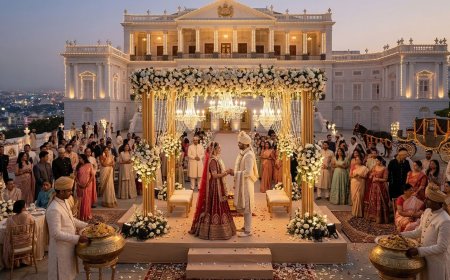
The buggy arrival — the Falaknuma's horse-drawn carriage service that meets guests at the palace gate and carries them up the final stretch of the hilltop driveway — is not a theatrical gesture. It is the continuation of the arrival protocol that the palace used for its most distinguished guests, and its inclusion in the wedding programme is the specific, non-verbal communication that the occasion is being treated with the seriousness the palace demands.
The Chowmahalla Palace
The Chowmahalla Palace complex — the official seat of the Asaf Jahi dynasty, the ceremonial centre of the Nizam's court for two centuries, now managed by the Nizam's family trust as a heritage museum and event venue — is the Hyderabad wedding venue that offers the most specifically, institutionally significant ceremonial setting in the city.
The Chowmahalla is not a hotel. It does not have guest rooms. It is a palace complex of four courtyards — the Khilwat Mubarak, the Tahniyat Mahal, the Mahtab Mahal, the Afzal Mahal — that has been opened for event use through the Nizam's trust, and the events held here are held in the actual ceremonial spaces of the actual court of the Nizams. This is not a heritage-themed venue. This is the throne room of the dynasty whose tradition the wedding is being asked to embody.
The event use of Chowmahalla requires coordination with the Nizam's trust administration that is more involved than a standard venue booking — it is a relationship with an institution rather than a commercial transaction, and the coordinator who has an existing relationship with the trust's event management is providing something that cannot be replicated by any amount of charm or money applied cold. The couple who secures Chowmahalla for their wedding functions — the mehendi in the southern courtyard, the reception in the Khilwat Mahal's forecourt, the ceremonial arrival through the palace gate — is using the most historically authenticated ceremonial setting available at any Indian city wedding destination.
The Taj Krishna and Taj Banjara
The Taj Hotels' second and third Hyderabad properties — the Taj Krishna and the Taj Banjara — constitute the middle tier of the Hyderabad luxury wedding market, offering the Taj group's institutional service standards and event management sophistication in contemporary luxury hotel settings that provide larger event capacities and more flexible programme structures than the Falaknuma's heritage constraints allow.
The Taj Krishna, on Road No. 1 in Banjara Hills, is the city's most established five-star wedding hotel — the property where Hyderabad's significant events have been held for decades, whose event team has the deepest institutional knowledge of the Hyderabadi wedding programme's specific requirements, and whose catering operation is among the most sophisticated in the city for the specific demands of the Hyderabadi feast.
The Taj Banjara, set on the Hussain Sagar lakefront, offers the water view that is unavailable at the Krishna — the ceremonial function with the lake behind it, the Hussain Sagar's specific, evening-illuminated quality, the Buddha statue visible on the island in the middle of the lake creating a backdrop that is specifically, only-in-Hyderabad in its combination of the Islamic city and the Buddhist monument and the colonial-era reservoir.
The ITC Kohenur and The Park Hyderabad
The ITC Kohenur — named for the Kohinoor diamond whose last Indian royal owner was the Nizam of Hyderabad before it became part of the British Crown Jewels — is the newest and most lavishly equipped of Hyderabad's five-star wedding hotels, with the largest ballroom capacity in the city and the ITC group's specific, Indian luxury aesthetic that applies to everything from the architectural references in the interior design to the curated regional menu programmes that ITC hotels have developed across their portfolio.
The Park Hyderabad, in the Somajiguda commercial district, offers a more contemporary, design-forward aesthetic than the heritage-referencing properties, and is the right choice for the NRI couple whose wedding vision is the contemporary luxury aesthetic rather than the heritage institutional reference.
The Golkonda Fort
The Golkonda Fort — the Qutb Shahi dynasty's fortified citadel on the western edge of Hyderabad, the diamond-trading capital of the medieval world, the fortress whose acoustic system allowed a hand-clap at the main gate to be heard at the summit — is the most dramatic architectural landmark available for event programming in the Hyderabad destination wedding landscape.
Like the Falaknuma and the Chowmahalla, Golkonda's event use is governed by the ASI's protected monument framework, and the private wedding ceremony within the fort's walls is not straightforwardly available. What is available — through specific permissions, through the light-and-sound show infrastructure that the ASI has installed, through the event use that has been permitted for public cultural programmes — is the fort as backdrop and context for the wedding's photographic and programme elements. The pre-wedding shoot within Golkonda's ruins, the evening programme designed in relationship to the fort's illumination, the wedding welcome note that orients guests to the diamond-trading history of the site they are standing in — these are the uses of the Golkonda that the ASI framework allows and that the Hyderabad wedding coordinator with monument event experience knows how to access.
The Hyderabadi Wedding Tradition — What Mehman-Nawazi Actually Means
Zara's mother used the word mehman-nawazi, and this guide owes it a proper treatment because the NRI couple who does not understand what it means will plan a Hyderabad wedding that has the city's address without the city's soul.
Mehman-nawazi is the Urdu compound of mehman — guest — and nawazi — the act of caring for, honouring, attending to. It is the tradition of hospitality that the Nizam's court formalised over two centuries of receiving guests of the highest order, and it is the specific quality of Hyderabadi hospitality that distinguishes the city's wedding culture from every other Indian city's wedding culture.
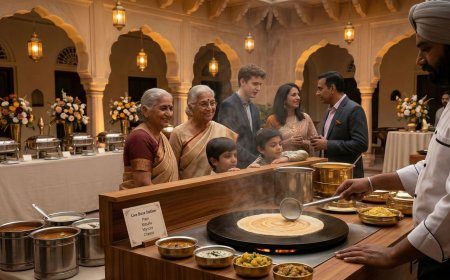
In practical terms, mehman-nawazi at a Hyderabadi wedding means: the guest is attended to from the moment of arrival. The guest does not wait for their plate — the plate comes to them. The guest does not ask for anything — the need is anticipated before it is expressed. The guest does not leave without having been fed three more times than they intended to eat, because the host's honour is measured by the guest's satisfaction rather than by the host's restraint. The Hyderabadi dum biryani — sealed in the degh, the flavours developed through three to four hours of slow cooking, opened at the table with the steam and the fragrance arriving simultaneously — is not simply a dish. It is the physical expression of this tradition, the proof that someone has spent three to four hours attending to the guest's meal before the guest has arrived.
The NRI couple who engages a Hyderabadi dum biryani master for the wedding feast — not a hotel kitchen's production-line biryani but a traditional preparation by a person who has spent years mastering the technique — is making the single most culturally significant catering decision available at any Indian wedding. The biryani will be remembered. It will be discussed. It will be compared, by every Hyderabadi guest, to every biryani they have ever eaten, and if it is right, the comparison will settle in the couple's favour for the rest of their lives.
The Hyderabadi Pearl Wedding
The Hyderabad pearl tradition deserves its own section in this guide because it constitutes a gifting, jewellery, and aesthetic opportunity that is specific to this city and that the NRI couple — particularly the NRI couple whose family has roots in Hyderabad's pearl-trading culture — can use to create a wedding aesthetic and a gifting programme of extraordinary distinction.
Hyderabad's pearl industry is historically rooted in the Golconda diamond trade's ancillary market — the Nizam's jewellery collection established the pearl as the quintessential Hyderabadi gemstone, and the Laad Bazaar around the Charminar has been the center of India's pearl trading and craft market for centuries. The Hyderabadi pearl — specifically the basra pearl and the Hyderabadi freshwater pearl, processed and strung in the specific knotted and layered styles of the Hyderabadi jewellery tradition — is a design language of extraordinary elegance and specifically Hyderabadi provenance.
The couple who commissions the wedding jewellery from Laad Bazaar craftsmen — the bridal necklace in the Hyderabadi seven-strand style, the matching haar for the immediate female family, the pearl cufflinks for the groom — is wearing the city's most distinctive art form. The couple who gifts Hyderabadi pearl sets to the wedding party is giving something that cannot be bought anywhere else with the same authenticity and the same cultural weight. The decorator who incorporates Hyderabadi pearl motifs into the mandap design and the table centrepieces is using the most specifically Hyderabadi visual language available in the entire Indian design tradition.
The Deccan Cultural Programme — What the Wedding Week Can Include
The Hyderabad wedding week has a cultural programme available to it that is the richest, most historically specific, most experientially diverse of any city wedding in this guide series. The NRI couple whose guest programme goes beyond the city tour to the specific, curated, tradition-specific experiences that Hyderabad uniquely offers will give their international guests something genuinely extraordinary.
The Laad Bazaar experience — a guided walk through the pearl and bangle market around the Charminar, with a master craftsman demonstrating the lacquer bangle technique and the pearl stringing tradition — is the most specifically Hyderabadi cultural experience available as a guest programme element, and the couple who arranges it with a craft specialist guide rather than a generic city tour operator will give their guests an experience of rare intimacy and genuine cultural depth.
The Charminar sunrise visit — before the bazaars open, before the tourist traffic arrives, in the specific, pre-dawn, call-to-prayer quality of the old city that has been waking in the same way for four hundred and thirty years — is the guest programme element that every Hyderabadi resident will tell you is the most beautiful experience the city offers, and that the guests who rise early enough to have it will carry for the rest of their lives.
The Bidri metalwork workshop — the Bidar-district craft of inlaying silver into a blackened zinc-copper alloy, practiced in Hyderabad for centuries under Nizam patronage, producing the specific, silver-on-black geometric and floral designs of one of India's most distinctive decorative art forms — is the craft tradition most directly rooted in the Deccan court culture, and the guest who spends an hour in a Bidri workshop understanding the technique and the history is having an experience that no other Indian city's wedding guest programme can offer.
The Hyderabadi classical music tradition — the specific, Dakhni Urdu ghazal form, the Hyderabadi khayal tradition, the music of the Nizam's court that was developed over generations of patronage and that survives in the practice of Hyderabadi classical musicians whose lineages go back to the court musicians themselves — is the most specifically, historically authenticated musical tradition available for any Indian wedding programme. The ghazal recital at the mehendi, performed by a Hyderabadi classical vocalist whose training comes from the court music tradition, is not a cultural entertainment option. It is the continuation of a four-hundred-year tradition, and its presence at the wedding connects the celebration to something of genuine historical depth.
NRI-Specific Logistics — Planning Hyderabad From Abroad
The Rajiv Gandhi International Airport Gateway
Hyderabad's Rajiv Gandhi International Airport — one of India's best-managed and most modern airports, located thirty-two kilometres south of the city at Shamshabad — is connected to the international NRI centres with a directness that makes it among the most accessible Indian wedding destinations for the global diaspora.
Direct international flights operate from Dubai, Abu Dhabi, Muscat, Doha, Riyadh, Jeddah, Singapore, Kuala Lumpur, and London, with connecting services from Toronto, Sydney, and other primary NRI hubs through Gulf and Southeast Asian connections. For the Telugu and Hyderabadi Muslim diaspora specifically — whose global distribution is heavily concentrated in the Gulf, in the United States, in the United Kingdom, and in Australia — Hyderabad's direct connectivity to the Gulf region makes it among the most practically accessible Indian wedding destinations of any in this guide series.
The airport to city centre journey — to Banjara Hills, to the Taj Krishna, to the Taj Banjara on Hussain Sagar — is approximately forty-five minutes to one hour on the Outer Ring Road, a controlled-access highway that eliminates the urban traffic variable for the first two-thirds of the journey. To the Falaknuma Palace in the old city, the journey extends to sixty to seventy-five minutes, with the final stretch through the denser traffic of the southern old city requiring the same planning buffer that any old city traffic demands.
Managing the Hyderabad Wedding From Abroad
The Hyderabad wedding coordinator market has developed over the last decade in direct response to the growing NRI couple market — the Telugu diaspora in the United States particularly, the largest Telugu-speaking diaspora community outside India, whose Hyderabad weddings represent a significant and growing segment of the city's premium event business. The senior coordinators in this market have specific, accumulated experience of NRI client management — the time zone protocols, the video call rhythms, the remote vendor vetting processes, the family dynamics of the Hyderabadi joint family system navigated from a distance — that makes the planning process from London and Toronto more operationally supported than at less developed destination markets.
The specific coordinator qualification that matters most at Hyderabad is the relationship with the traditional craft and culinary vendors — the dum biryani master, the Laad Bazaar jeweller, the Bidri workshop, the classical music lineage — that distinguishes the Hyderabadi cultural tradition from the generic five-star hotel wedding. This is not a relationship that can be forged through an online search. It is the relationship that comes from years of operating in a specific city with a specific cultural tradition, and the coordinator who has it is providing something of genuine, non-substitutable value.
The NRI Wedding Planning Master Reference Table
| Planning Parameter | Hyderabad-Specific Detail | NRI Action Required | Recommended Timeline |
|---|---|---|---|
| Venue Categories | Falaknuma Palace Taj (32 rooms, 60–120 guests), Chowmahalla Palace event use (Nizam trust coordination), Taj Krishna and Taj Banjara (150–400 guests), ITC Kohenur (200–500 guests), The Park Hyderabad (100–300 guests) | Select venue by guest count, heritage intent, and institutional significance; Falaknuma requires 20–24 months planning; Chowmahalla requires trust relationship through coordinator | 18–24 months before wedding |
| Falaknuma Palace Specific | Taj-managed heritage palace; 32 rooms; hilltop access road; buggy arrival protocol; most competed wedding dates in Hyderabad; 20–24 month planning timeline | Begin Falaknuma conversation at 22 months for December–January peak dates; confirm room inventory against guest accommodation requirements; plan overflow hotel for larger guest counts | 20–24 months before wedding |
| Chowmahalla Palace | Nizam's trust-managed ceremonial palace; not a hotel; event use through trust administration; most historically significant ceremonial setting in Hyderabad | Engage coordinator with established Nizam trust relationship; event use for specific functions rather than full wedding programme; confirm trust's current event use policy | 14–16 months before wedding |
| Best Wedding Season | October to February primary; November to January peak; avoid April to June (summer heat 40–45°C); July to September monsoon affects outdoor programming | Book peak November–January dates 18–20 months ahead; confirm venue's outdoor function infrastructure for October shoulder season; build indoor contingency for all outdoor elements | 18–20 months for peak dates |
| Rajiv Gandhi Airport Gateway | Shamshabad airport 32 km from city; direct international from Dubai, Abu Dhabi, Muscat, Doha, Riyadh, Singapore, KL, London; Outer Ring Road 45–60 minutes to Banjara Hills | Communicate direct flight options to Gulf, Singapore, and UK guests; coordinate airport pickup convoy for peak arrival days; Falaknuma old city routing adds 15–20 minutes | 8–10 months before wedding |
| Hyderabadi Dum Biryani | Traditional dum preparation by lineage masters not hotel kitchen; degh-sealed slow cooking technique; Hyderabadi biryani vs Kolkata biryani distinction essential for guest briefing | Engage traditional dum biryani master independent of hotel catering; confirm master's lineage and technique; conduct tasting minimum 6 months before wedding | 10–12 months before wedding |
| Pearl and Jewellery | Laad Bazaar pearl craft tradition; Hyderabadi seven-strand necklace style; basra and freshwater pearl processing; Bidri metalwork for gifting | Commission bridal and family jewellery from Laad Bazaar craftsmen minimum 8 months before wedding; source Bidri metalwork gifts from traditional workshops; arrange Laad Bazaar guided visit as guest programme | 10–12 months before wedding |
| Mehman-Nawazi Protocol | Hyderabadi hospitality tradition requires anticipatory rather than reactive service; guest attendance from arrival; feast as honour expression | Brief all event staff on mehman-nawazi service standard; confirm caterer understands Hyderabadi feast presentation protocol; design programme to allow unhurried guest experience | 6–8 months before wedding |
| Charminar and Old City | Charminar ASI protected; old city Laad Bazaar, Mecca Masjid, Salar Jung Museum accessible; sunrise visit before bazaar opening most atmospheric | Arrange Charminar sunrise guest visit as Day 2 programme element; engage old city specialist guide; brief guests on old city conduct and photography protocols | 6–8 months before wedding |
| Golkonda Fort Context | ASI protected Qutb Shahi fortress; light and sound show available; pre-wedding shoot with ASI photography permit; most dramatic landmark photography in Hyderabad | Obtain ASI photography permit for pre-wedding Golkonda shoot; schedule shoot for golden hour light on fort walls; brief photographer on Golkonda's specific stone and light conditions | 6–8 months before wedding |
| Cultural Programme | Hyderabadi ghazal recital, Dakhni Urdu literary tradition, Bidri workshop visit, Laad Bazaar craft experience, Salar Jung Museum programme | Design cultural programme as wedding week element: Laad Bazaar Day 2, Charminar sunrise Day 3, Bidri workshop Day 2 afternoon, ghazal recital at mehendi | 8–10 months before wedding |
| Vendor Ecosystem | Hyderabad wedding vendor market well-developed for NRI clients; Telugu diaspora demand has professionalised coordinator market; traditional craft vendors require coordinator relationship | Engage senior coordinator with NRI client experience and traditional craft vendor relationships specifically; verify biryani master, jeweller, and music lineage credentials | 12–14 months before wedding |
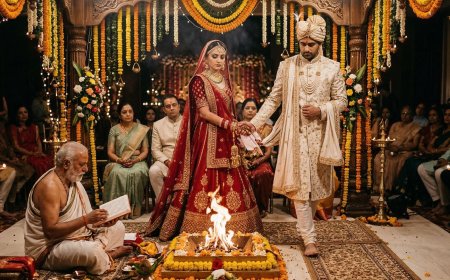
| Telugu and Hyderabadi Muslim Traditions | Telugu Hindu ceremony, Hyderabadi Muslim nikah tradition, Dakhni cultural synthesis; both traditions have specific Hyderabadi ceremonial forms | Confirm ceremony tradition and engage appropriate officiant; incorporate tradition-specific ceremonial elements; brief decorator on tradition's specific aesthetic language | 10–12 months before wedding |
| Legal and Payments | Indian Contract Act 1872; Consumer Protection Act 2019; FEMA 1999; Chowmahalla event use governed by Nizam trust rather than commercial hospitality framework | Use NRO/NRE account; Chowmahalla coordination is institutional relationship not commercial contract — confirm terms carefully; require full scope and cancellation clauses in all hotel and vendor contracts | Before first vendor payment |
| Communication Protocol | IST gap: UK +4.5 hrs, US East +9.5 hrs, Australia East −5.5 hrs; Hyderabad vendor market digitally sophisticated particularly for Telugu diaspora NRI clients | Schedule weekly coordinator call; Hyderabad vendors experienced with NRI client communication; maintain shared planning document; coordinate family members in Hyderabad as ground support | From first vendor engagement |
Common Mistakes NRI Couples Make With Hyderabad Destination Weddings
The first and most consequential mistake is booking the Falaknuma Palace without understanding its accommodation constraint and its planning timeline, and discovering — at twelve months before the wedding — that the peak season dates are unavailable and the room inventory cannot accommodate the guest count. The Falaknuma's thirty-two rooms and its position as the most celebrated wedding venue in Hyderabad mean that its December and January dates are committed two years in advance in many years, and the couple who begins the Falaknuma conversation at fourteen months will encounter a full calendar rather than a booking opportunity. The Falaknuma planning timeline is twenty to twenty-four months, and this is not a conservative estimate — it is the specific operational reality of the most demanded wedding property in Telangana. The couple who wants the Falaknuma must begin the conversation first, before any other wedding planning decision is made.
The second mistake is commissioning the dum biryani from the hotel kitchen rather than engaging a traditional biryani master. The hotel kitchen's dum biryani — produced at scale, managed by a catering operation designed for consistency and volume rather than for the specific, technique-dependent, time-intensive quality of the traditional preparation — is not the Hyderabadi dum biryani. It is a competent approximation, and every Hyderabadi guest at the wedding will know the difference the moment the degh is opened. The traditional dum biryani master is the single most important culinary engagement the Hyderabad wedding makes, and the couple who finds the right master — whose technique is genuine, whose lineage is documented, whose preparation has been tasted and confirmed — and who engages them at ten to twelve months before the wedding is making the most culturally significant food decision available at any Indian wedding destination.
The third mistake is using the Hyderabadi heritage aesthetic as decoration rather than as substance. The wedding that hangs Nizam-themed prints on the banquet hall walls, that uses pearl-pattern tablecloths, that plays a Bollywood playlist with an occasional ghazal inserted as a cultural gesture — this wedding has taken the aesthetic of a tradition and used it without the tradition. The Hyderabadi cultural tradition is available in its actual form: the actual dum biryani master, the actual Laad Bazaar craftsman, the actual classical ghazal vocalist from the court music lineage, the actual Chowmahalla courtyard as the ceremony space. Accessing the actual tradition rather than its decorative approximation is not more expensive. It is more intentional, and the difference in the guest experience is the difference between a beautiful party and an occasion of genuine cultural depth.
The fourth mistake is failing to engage the Charminar and old city experience as a wedding programme element rather than an optional individual tour. The Hyderabadi old city — the Charminar, the Laad Bazaar, the Mecca Masjid, the Salar Jung Museum's extraordinary Nizam collection, the narrow lanes of the Gulzar Houz market — is the most specifically, historically rich guest programme available at any Indian city wedding, and the couple who leaves it to individual guest curiosity rather than designing it as a guided, curated, wedding-week programme element is leaving the most extraordinary element of their destination unused. The Charminar sunrise group visit, guided by an old city specialist who can contextualise what guests are seeing, is the programme element that guests from London and Toronto and Dubai will discuss for years after the wedding. It must be designed, coordinated, and included as a non-optional element of the wedding week.
The fifth mistake is neglecting the Telangana and Telugu cultural dimension of the wedding in favour of a generic North Indian or pan-Indian wedding format. Hyderabad is simultaneously the capital of Telangana and the historical capital of the Dakhni — the Deccan syncretic culture that merged the Telugu, Marathi, Kannada, and Urdu traditions under the Nizam's patronage. The wedding that ignores this synthesis — that uses a Punjabi DJ playlist, a generic North Indian menu beyond the biryani, and a decorative aesthetic with no relationship to the Deccan tradition — is holding a wedding in one of the most culturally specific cities in India without acknowledging that specificity. The Kuchipudi performance at the reception, the Dakhni Urdu ghazal at the mehendi, the Kalamkazi textile of the Andhra craft tradition in the mandap draping, the Hyderabadi double ka meetha and the Qubani ka meetha at the dessert service — these are the cultural acknowledgements that give the Hyderabad wedding its specific, only-in-this-city character.
The Aesthetic Language of a Hyderabad Wedding
The visual vocabulary of a Hyderabad wedding is built from the most specifically, most historically rich material culture of any Indian city's wedding tradition — the Nizam's court aesthetic, with its synthesis of Mughal, Dakhni, Persian, and European influences, producing a visual language of extraordinary sophistication and extraordinary specificity.
The colour palette of the Hyderabad wedding tradition is jewel-tone and metallic: the deep teal of the Hyderabadi enamel work, the warm gold of the Nizam's court metalwork, the specific burgundy-red of the ikat textiles of the Pochampally weaving tradition, the ivory-and-gold of the Himroo fabric that was woven in the Nizam's workshops and that represents the synthesis of silk and cotton in the specific, warm, slightly textured weave that is the Hyderabadi textile's signature.
The Pochampally ikat — the double-ikat textile woven in the villages of the Nalgonda district near Hyderabad, the most technically complex weaving tradition in Telangana, whose geometric patterns are created by the resist-dyeing of both warp and weft threads before weaving — is the most specifically Hyderabadi textile available for the wedding's material vocabulary. The mandap dressed in Pochampally ikat, the table runners in the geometric patterns of the Nalgonda weaving tradition, the gifting in Pochampally textile packaging — this is the aesthetic language that belongs to this place and to no other.
The Hussain Sagar lake — the colonial-era reservoir at the heart of Hyderabad, the body of water that the Taj Banjara overlooks, the surface across which the city's evening skyline reflects — is the natural element that gives the Hyderabad wedding its most cinematic backdrop. The function held at a Hussain Sagar property at dusk, with the lake going gold and then silver and then the city lights appearing in its surface, and the Buddha statue visible on the island in the middle distance — this is the specifically, only-in-Hyderabad visual moment that no interior, however elaborately decorated, can substitute for.
The Golkonda Fort at golden hour — the rough-hewn granite of the Qutb Shahi battlements catching the low afternoon light, the city visible below in the haze, the specific weight of five centuries of diamond-trading and military history present in every stone — is the pre-wedding shoot backdrop that the Hyderabad wedding's visual narrative demands.
Resolution
The wedding was held across two days — the nikah on a Friday evening at the Chowmahalla Palace, in the Khilwat Mahal's forecourt, and the reception on the Saturday evening at the Falaknuma, arriving by buggy from the palace gate as the light went from gold to amber over the old city below.
Zara's mother had organised the biryani master. She had made the call herself, to a man whose family had been making dum biryani in Hyderabad for three generations, whose father had cooked for the Paigah nobility, and whose deghs were sealed at two in the afternoon for an eight o'clock service that opened at the table with the steam and the fragrance arriving in the specific, simultaneous manner that three generations of technique produce and that no hotel kitchen can approximate.
Aryan had organised the ghazal. A vocalist whose lineage went back to the court musicians of the sixth Nizam — whose ustadji had taught the specific Dakhni Urdu melodic form that the Nizam's court patronised, who sang in a register that the old Persian and Urdu traditions of the Deccan had refined over four hundred years — performed at the mehendi on the Thursday evening, in the garden of the family house in Banjara Hills, for sixty guests who were sitting close enough to hear the breath in the music.
Zara's mother sat at the front. She had been to many weddings in Hyderabad. She had a standard that was the standard of a woman who had spent thirty-five years teaching the history of the culture whose tradition this wedding was attempting to honour.
After the ghazal, in the quiet that follows classical music in the way that no other quiet quite does, she found Zara at the edge of the garden.
She did not say that the wedding was beautiful. She did not say that the biryani was the best she had eaten or that the Falaknuma was extraordinary or that the Chowmahalla was exactly as it should have been, although all of these things were true.
She said: "You chose correctly."
Zara looked at the garden. The guests were still quiet from the music. The biryani's fragrance was still in the air. The lights of Banjara Hills were visible over the garden wall, and beyond them, somewhere in the old city, the Charminar was standing in the dark as it had been standing for four hundred and thirty years, indifferent to the occasion and present within it simultaneously, the way that the permanent things are always present within the temporary things without requiring acknowledgement.
"The painting," Zara said.
Her mother looked at her.
"You said we should not choose the frame and throw away the painting," Zara said. "We tried to keep the painting."
Her mother was quiet for a moment.
"You did," she said. "You kept the painting."
She looked at the garden, at the guests, at the Banjara Hills lights.
"Hyderabad is generous," she said. "To the people who understand what it is."
Begin the Falaknuma conversation at twenty-two months if December or January is the target — not eighteen, not sixteen, twenty-two. Commission the dum biryani master independently of the hotel catering. Arrange the Charminar sunrise visit as a non-optional programme element. Source the bridal jewellery from Laad Bazaar. Include the ghazal at the mehendi. Use the Pochampally ikat for the mandap.
Hyderabad gives you the most complete, most historically grounded, most living royal court wedding tradition available at any Indian city destination. The Nizam's culture is not a theme. It is a practice, maintained in the city's craft workshops and music lineages and culinary traditions and family hospitality protocols across the generations since the dynasty ended.
Plan with enough intention to access the practice rather than the theme. Let the mehman-nawazi govern the programme's spirit rather than the hotel's service manual.
The biryani will be opened at the table. The fragrance will arrive before the lid does.
That is the whole tradition, in one moment.
Do not let the hotel kitchen make it.
Published by NRIWedding.com — The Premium Global Platform for Non-Resident Indians Planning Indian Weddings From Abroad.
What's Your Reaction?
 Like
0
Like
0
 Dislike
0
Dislike
0
 Love
0
Love
0
 Funny
0
Funny
0
 Angry
0
Angry
0
 Sad
0
Sad
0
 Wow
0
Wow
0