










































Plus-Size Bridal Shopping in India — Best Designers and Boutiques: The Complete NRI Bride's Guide
For plus-size NRI brides, bridal shopping in India carries a specific set of challenges that go beyond the standard logistical complexity of shopping from abroad — from showrooms where samples do not extend to their size, consultants who frame the conversation around concealment rather than celebration, and boutiques that claim size inclusivity without the construction expertise to deliver it. This complete guide covers everything plus-size NRI brides need to know about bridal shopping in India — the honest assessment of the Indian bridal industry's size inclusivity progress, the genuine indicators of a plus-size friendly boutique versus the red flags to recognise, specific designer and boutique recommendations across Delhi, Mumbai, Bengaluru and Jaipur, the silhouette and construction considerations by garment type, the fitting process demands including the toile requirement, the emotional dimension of plus-size bridal shopping and how to manage it, the budget framework including legitimate versus unjustified upcharges, and the complete remote shopping protocol for NRI brides managing the process from abroad.

Plus-Size Bridal Shopping in India: Best Designers and Boutiques
The Appointment That Should Not Have Happened That Way
She had done everything right.
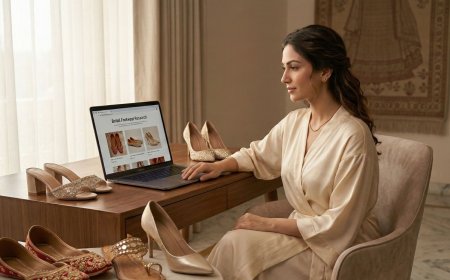
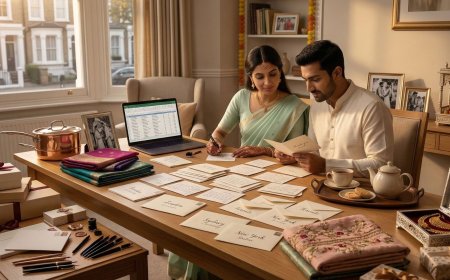
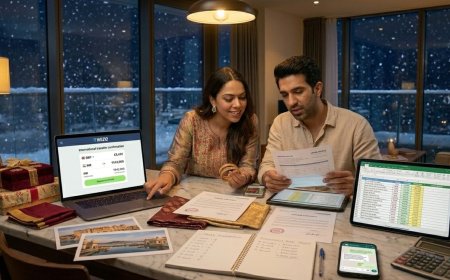
The research had been thorough — three months of Instagram saved posts, Pinterest boards organised by colour and silhouette, a spreadsheet of Delhi boutiques with notes on their size ranges and their reputations for working with different body types. The India visit was planned specifically around the bridal shopping — five days in Delhi, appointments at four boutiques, enough time between appointments for honest reflection before the next one.
The first appointment went well. The consultant was attentive, the samples were closer to her size than she had expected, and the conversation about what she wanted felt productive and specific. She left with a shortlist of three designs and a genuine sense that the process was going to work.
The second boutique was different.
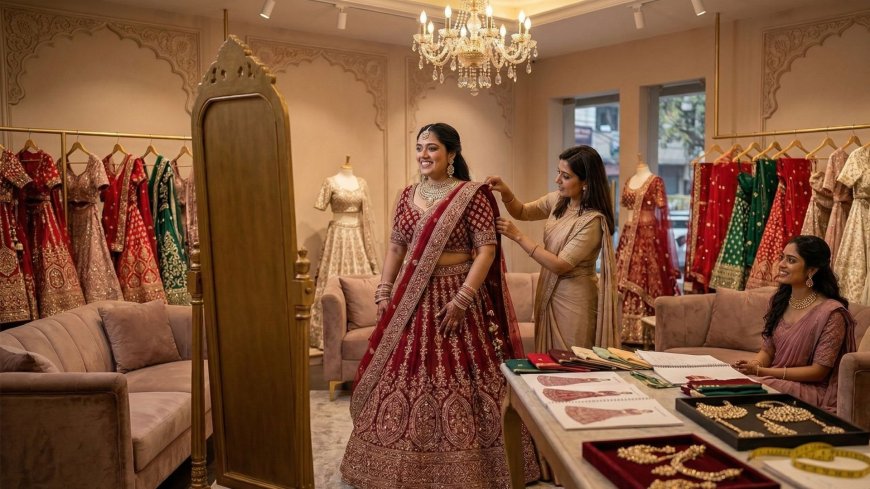
Not dramatically. Not with any single moment that could be pointed to as the failure. But the consultant's eyes moved past her when she described what she was looking for. The samples brought to her were all smaller than her size — not by accident but by the implicit logic of a showroom whose physical sample range did not extend to her measurements. When she asked about larger sizes, she was told that yes, of course, anything could be made in any size, but the sample she was looking at — the one she had specifically requested because she had seen it on the boutique's Instagram — was only available in the sample size and could not be tried on.
She could look at it. She could not try it on. She could imagine how it might feel on her body — constructed in her size, adjusted for her proportions — but she could not experience it. She could trust that the boutique's construction would translate the design correctly to her measurements, or she could move on to the next appointment.
This is the specific experience that too many plus-size NRI brides have in Indian bridal boutiques. Not always hostility. Not always obvious exclusion. But the specific, cumulative experience of a shopping process that was not designed with her body in mind — that treats her size as a custom request rather than as a standard offering, that requires her to imagine rather than experience, and that places the entire burden of translation from sample to reality on her trust in the boutique rather than on the boutique's demonstrated competence with her size.
This guide exists to change that experience — to give plus-size NRI brides the specific knowledge of which designers and boutiques genuinely work with a range of sizes, what to look for in the showroom, what to ask in the consultation, how to manage the fitting process, and how to arrive at a wedding day outfit that was designed for her body rather than adapted from a design that was not.
The Core Reality: The Indian Bridal Fashion Industry and Size Inclusivity
The Honest Assessment
The Indian bridal fashion industry has made meaningful progress on size inclusivity over the past decade — more progress than is sometimes acknowledged, and less progress than is sometimes claimed.
The progress is real. Several major designers and boutiques now offer genuine size ranges — not just the theoretical offer to make anything in any size, but actual samples in extended sizes, consultants trained to work with different body types, and construction expertise that produces correctly fitting garments across a range of measurements. The NRI bride who did her bridal shopping in 2015 and the one doing it in the current market are in meaningfully different environments.
The limitations are also real. The majority of Indian bridal boutiques — even highly reputable ones — still operate with a sample range that is concentrated in smaller sizes, with a size range that is effectively limited to those sizes in practice even if the theoretical offer is unlimited. The consultant who says "yes, we can make it in any size" is often telling the truth about the boutique's technical capability and saying nothing about whether the boutique has the specific expertise to make it in a larger size correctly — which is a different question.
For plus-size NRI brides, the difference between a boutique that can technically make a larger size and one that genuinely excels at doing so is the difference between a wedding outfit that fits and photographs beautifully and one that was adjusted rather than designed.
What "Plus-Size" Actually Means in the Indian Bridal Context
The terminology around body size in the Indian bridal context is neither consistent nor standardised — which creates specific confusion for NRI brides who are accustomed to the sizing conventions of the UK, USA, or Canada.
Indian bridal sizing typically operates on a measurement basis rather than a standard size number basis — which is, in principle, more inclusive, since a garment constructed to specific measurements should fit regardless of what Western size number those measurements correspond to. In practice, the sample ranges in most boutiques effectively concentrate around the measurements that correspond to a UK size 8 to 14 range, with the extended range beginning where the samples end and custom construction takes over.
For the purposes of this guide, plus-size refers to brides whose measurements fall outside the typical sample range of most Indian boutiques — broadly corresponding to a UK size 16 and above, or an Indian size equivalent where the standard sample sizes do not accommodate the bride's measurements without significant alteration. The specific threshold varies by boutique, and part of the research process is understanding where each boutique's standard sample range ends and their custom extended range begins.
What to Look for in a Plus-Size Friendly Indian Bridal Boutique
The Genuine Indicators of Size Inclusivity
The difference between a boutique that claims size inclusivity and one that delivers it is visible — once the bride knows what to look for.
Samples in extended sizes: The most reliable indicator of genuine size inclusivity is the presence of samples in extended sizes that can actually be tried on. A boutique whose samples extend to a UK 18 or 20 is making a specific investment in the plus-size bride — an investment in fabric, in construction time, and in showroom space that represents a deliberate business commitment rather than a theoretical offer. Ask specifically, before the appointment, whether samples in the bride's approximate size range are available to try on — not just to look at.
A portfolio of plus-size bridal work: Any boutique that genuinely works with plus-size brides will have a portfolio of completed work on plus-size clients — photographs of actual brides in their outfits, taken at their weddings or in their final fittings, that demonstrate the boutique's ability to construct a correctly fitting and beautifully photographing garment at the bride's size. Ask to see this portfolio specifically — not the general portfolio, but the work on brides of similar build. A boutique that cannot produce this portfolio has not done this work at scale.
A consultant who discusses fit rather than size: The consultant who begins the plus-size bridal conversation by discussing measurements and fit — the specific construction adjustments that produce a correctly fitting garment on the bride's specific body — is a consultant operating from genuine expertise. The consultant who begins by discussing "how we can flatter your figure" — a phrase that carries an implicit judgment about what needs to be hidden or corrected — is operating from a different framework. The bride's body does not need to be flattered or corrected. It needs to be clothed correctly in a garment that fits and moves and photographs as she intends.
Specific construction knowledge: A boutique with genuine plus-size expertise will be able to discuss specific construction adjustments without being asked — the boning or internal structure adjustments that ensure a blouse sits correctly at a larger bust, the skirt construction modifications that distribute volume correctly at a larger hip, the dupatta draping adjustments that work for different body proportions. This knowledge is not common. Its presence in the consultation conversation is a reliable indicator of genuine expertise.
The Red Flags to Recognise
The "we can make it in any size" response without specifics: The phrase "we can make it in any size" is technically true of most boutiques and informationally empty as a response. The follow-up questions that distinguish genuine capability from theoretical willingness are: have you made this specific design in this size range before, can I see an example of that work, and what specific construction adjustments does your team make for this size range?
Bringing only small samples to the consultation: The consultant who brings only samples significantly smaller than the bride's size to the consultation — without explanation or apology — is working in a showroom that has not prepared for the plus-size consultation. This is not necessarily a reason to leave the boutique, but it is a signal to ask directly whether samples in her size range exist and whether they can be brought to the fitting room.
Discussion of what to hide rather than what to celebrate: Any consultant who frames the bridal outfit discussion around concealing, minimising, or hiding elements of the bride's body is approaching the consultation from a framework that does not serve the bride. The bridal outfit conversation should be about what the bride wants to look like — the silhouette she has chosen, the elements of her look she wants emphasised, the overall aesthetic she is targeting — not about what her body requires to be made acceptable.
Significant upcharges without justification: Some boutiques add significant upcharges for larger sizes — beyond the additional fabric cost that genuinely does increase with size. An upcharge that reflects the actual cost of additional fabric is legitimate. An upcharge that represents a premium for the boutique's willingness to make a garment in the bride's size — without a corresponding premium in service, expertise, or construction quality — is worth questioning.
The Designers and Boutiques: Who Actually Serves Plus-Size Brides Well
The Design Houses With Established Plus-Size Credentials
Anita Dongre: Among the most consistently size-inclusive of the major Indian bridal designers, Anita Dongre's bridal and wedding wear lines are available in extended sizes through her flagship stores and her online presence. Her aesthetic — which favours a romantic, slightly bohemian interpretation of Indian bridal tradition with significant use of natural fabrics, floral embroidery, and lighter silhouettes — translates particularly well to plus-size construction, as the fluid fabrics and organic embellishment work effectively across a range of body types. Her stores in Delhi, Mumbai, and Bengaluru are specifically worth visiting, and the consultation experience at her boutiques is among the most professionally managed for plus-size brides in the major Indian bridal market.
Ritu Kumar: One of India's most established fashion houses, Ritu Kumar's bridal and occasion wear line has a long history of working across a genuine size range — a reflection of the brand's broad demographic reach and its decades of experience in the Indian fashion market. The brand's aesthetic — rooted in Indian textile heritage, with a particular emphasis on hand-block printing, natural dyes, and traditional weaving techniques — produces garments that sit in the culturally sophisticated, heritage-aware register that many NRI brides are seeking. The Ritu Kumar experience in the context of plus-size bridal is generally positive, with consultants who are accustomed to working across a range of sizes and construction teams that have the relevant experience.
Frontier Raas (Delhi): Frontier Raas occupies a specific position in the Delhi bridal market as a multi-designer boutique with a particularly well-organised plus-size offering. The boutique carries a curated selection of designers across multiple price points, and the consultation experience is structured specifically to accommodate brides who need extended sizes — with samples in larger sizes available for a meaningful number of the designs on display, and consultants with specific training in plus-size bridal construction. For NRI brides visiting Delhi for bridal shopping, Frontier Raas is consistently among the most recommended starting points for the plus-size bridal journey.
Kalki Fashion: Kalki Fashion has built a specific reputation for size inclusivity that extends to the online shopping context — relevant for NRI brides who are managing elements of their bridal shopping remotely. Their range extends to larger sizes, their online presence includes photographs of garments on models of different sizes, and their customer service for NRI brides — including the measurement consultation process for remote orders — is among the more developed in the Indian bridal market. The aesthetic is broadly traditional with contemporary elements, accessible across the range of NRI bridal aesthetics rather than specific to one cultural tradition.
Panache Haute Couture (Delhi): Panache is among the Delhi boutiques most frequently recommended by plus-size brides who have had positive India bridal shopping experiences. The boutique's specific strength is its construction expertise — the technical knowledge of how to adjust the structural elements of a heavily embroidered bridal lehenga for a plus-size body, specifically the boning, the internal structure, and the waistband construction that determine whether a lehenga sits correctly at a larger waist and hip. The consultation experience at Panache is widely described as respectful and technically informed — the consultants discuss fit and construction rather than concealment, and the portfolio of completed plus-size bridal work is available to view.
Rimple and Harpreet Narula: Among the couture-level designers with a genuine commitment to extended sizing, Rimple and Harpreet Narula produce heavily embellished, luxury-positioned bridal wear at the upper end of the Indian bridal market. Their commitment to custom construction means that the size range is genuinely flexible — the designs are constructed to specific measurements rather than adapted from a standard size — and the construction quality at this level means that the adaptation to a plus-size body is handled with the technical expertise that couture construction provides. For plus-size NRI brides with a high bridal outfit budget and a preference for heavily embellished traditional aesthetic, this design house is worth the consultation.
Sabyasachi (with specific guidance): Sabyasachi Mukherjee's position as the most internationally prominent Indian bridal designer means that his name appears in almost every NRI bridal shopping conversation — and his work is genuinely extraordinary in its craft, its textile knowledge, and its visual impact. The honest guidance for plus-size brides considering Sabyasachi is this: the brand does work across a range of sizes, the construction quality is exceptional, and the experience of wearing a Sabyasachi bridal outfit is difficult to replicate. However, the showroom experience — particularly at the flagship Kolkata and Delhi locations — can be variable for plus-size brides, and the consultation quality depends significantly on the specific consultant assigned. Research the specific boutique location, ask explicitly about the plus-size consultation experience before booking the appointment, and if possible seek the recommendation of a plus-size bride who has had a positive experience at that specific location.
The City-by-City Guide
Delhi: Delhi is the largest and most diverse Indian bridal market and the city with the widest range of plus-size friendly options. The boutiques and markets of South Delhi — the Crescent Mall area in Defence Colony, the Santushti Complex, and the individual flagship stores in the Khan Market corridor — concentrate the premium bridal boutique experience. Chandni Chowk in Old Delhi remains the most comprehensive market for fabric and semi-custom construction at accessible price points, with the specific advantage that custom construction from fabric — rather than adaptation from a standard sample — is inherently more accommodating of plus-size bodies.
Mumbai: Mumbai's bridal market is concentrated in the Bandra corridor and the South Mumbai boutique district, with a strong contemporary and fusion aesthetic that tends to produce bridal wear with more design flexibility than the more tradition-bound Delhi market. The Mumbai bridal scene's openness to non-standard aesthetics extends, in several boutiques, to a more genuinely inclusive approach to body diversity. The specific boutiques worth researching in Mumbai for plus-size brides include the multi-designer spaces in Bandra West and the independent designers whose work appears on social media with a visible commitment to showing their designs on different body types.
Bengaluru: Bengaluru's bridal market has grown significantly alongside the city's overall fashion industry development, and the tech-connected, internationally oriented character of the city's consumer base has produced a bridal retail landscape that is more open to size inclusivity conversations than some other major centres. The boutiques of Indiranagar and the premium shopping areas of Koramangala are the primary starting points for Bengaluru bridal shopping, and the South Indian bridal tradition's specific garments — the Kanjivaram silk saree, the pattu lehenga — are available from boutiques with the construction expertise to produce them correctly across a range of sizes.
Jaipur: Jaipur's position as a premium destination wedding city means that its bridal market is oriented toward the destination wedding client — which often means the NRI client. The boutiques concentrated in the old city area and in the premium shopping areas near the major hotels have significant experience with the NRI bridal customer's specific needs, and the custom construction tradition of Rajasthani bridal wear — where garments are typically made to measure rather than adapted from standard sizes — is inherently more accommodating of plus-size bodies than ready-made or lightly customised alternatives.
The Silhouette and Design Guide for Plus-Size Brides
The Honest Framework
The honest framework for discussing lehenga silhouettes and designs for plus-size brides begins with the rejection of the "flattering" discourse — the specific framing that positions certain silhouettes as appropriate for plus-size bodies and others as not, based on the premise that the goal of bridal dressing is to make the body appear as small or as standard as possible.
The genuine framework is simpler and more useful: Every silhouette works on plus-size bodies when it is correctly constructed for that body. The question is not which silhouette flatters — the question is which silhouette the bride wants to wear, and whether the boutique has the construction expertise to execute it correctly at her size.
That said, practical information about how different construction approaches work at different sizes is genuinely useful — not as a prescription for what plus-size brides should wear, but as technical information that helps brides understand what to ask for and what to assess in the fitting.
The Construction Considerations by Silhouette
The A-line or flared lehenga skirt: The A-line silhouette — which begins to flare from the waist — is among the most widely available and most technically accessible silhouettes across a range of sizes. The flared construction distributes volume evenly from the waist down, and the standard construction of a full-circle or multiple-kali lehenga skirt can be adjusted to any waist and hip measurement without structural compromise. For plus-size brides, the number of kalis — the individual panels of fabric that create the skirt's circumference and flare — may need to be increased to achieve the same visual effect as a smaller size, and this is a standard construction adjustment that any competent boutique should be able to make.
The mermaid or fitted lehenga skirt: The fitted lehenga — which fits closely through the hip and thighs before flaring at the knee or below — requires more precise construction at plus sizes than the A-line silhouette, because the fit through the thigh and hip must be assessed and adjusted with greater precision. This is achievable, but it requires a boutique with genuine fitted garment expertise across sizes — the mermaid silhouette is one of the silhouettes most likely to reveal inadequate plus-size construction in the way it fits at the hip and thigh.
The blouse construction: The blouse is the most technically complex element of the lehenga for plus-size brides, and the element where the boutique's plus-size construction expertise is most critically tested. The specific structural adjustments that a plus-size blouse requires — the boning or internal structure modifications for a larger bust, the back width adjustment, the correct dart placement for a different bust cup proportion, the armhole adjustment for a larger upper arm — are technical knowledge that must be present in the construction team.
Ask the boutique specifically: what adjustments does your team make to the blouse construction for a plus-size bride? A boutique that can answer this question with technical specificity is demonstrating the knowledge that produces a correctly fitting blouse. A boutique that responds with reassurances that they can make it in any size without discussing the specific adjustments is demonstrating the absence of that knowledge.
The dupatta: The dupatta weight and draping convention for plus-size brides requires consideration — a very heavy dupatta creates significant additional weight on already heavy bridal attire. Many plus-size brides prefer a lighter dupatta fabric or a pre-pinned dupatta arrangement that distributes the weight differently from the traditional free-draping style. Discuss dupatta weight and draping options specifically in the consultation.
The Fitting Process: What Plus-Size Brides Should Expect and Demand
The Measurement Session
The measurement session for a plus-size bridal outfit requires more measurements than the standard set — and more precision in each of them.
Beyond the standard bust, waist, and hip measurements, the plus-size bridal measurement session should include the under-bust measurement for blouse construction, the high hip measurement, the thigh circumference for fitted skirts, the upper arm circumference for any fitted sleeve, the shoulder to bust apex measurement for correct dart placement, the back width measurement, and the specific waist point at which the skirt waistband will sit.
These measurements should be taken by a specialist, not by a general assistant. The bride should be standing in the correct posture, wearing the correct undergarment, and the measurements should be recorded in writing and confirmed before leaving the boutique.
The Toile or Trial Garment
For plus-size bridal outfits — where the construction adjustments from the standard pattern are significant — the toile or trial garment is not a luxury. It is the difference between a fitting process that identifies and resolves construction problems before the expensive fabric is cut, and one that discovers them in the final garment when resolution is more difficult.
Request the toile explicitly. A boutique with genuine plus-size construction expertise will understand why this request is being made and will agree to it. A boutique that pushes back against the toile request for a plus-size commission is a boutique whose confidence in their plus-size construction is not matched by their willingness to demonstrate it.
The Fitting Assessment
The fitting assessment for the plus-size bridal outfit follows the same systematic approach as for any size — front, back, side, movement — with specific additional attention to the elements most likely to require adjustment at plus sizes.
The blouse front should lie smoothly without horizontal pulling lines across the bust that indicate insufficient ease. The dart should point toward the bust apex — if it pulls to one side, the dart placement requires repositioning. The armhole should allow raising the arms fully without pulling the blouse body upward. The back should close without strain and lie smoothly. The skirt should sit at the agreed waist point without rolling or slipping. The hem should be assessed while wearing the wedding day footwear.
Document every fitting in photographs — front, back, both sides — and confirm every agreed adjustment in writing. For plus-size bridal commissions where the construction adjustments are significant, a second fitting after the primary adjustments have been made is not excessive — it is the standard that produces a correctly fitting final garment.
Managing the Emotional Dimension of Plus-Size Bridal Shopping
The Honest Acknowledgment
Plus-size bridal shopping in India carries an emotional weight that thin-privilege bridal shopping does not. The experience of being in a showroom where the samples do not fit, where the consultant's language implies that the body requires concealment, where the process of imagining the outcome rather than experiencing it is the only option — this is a specific emotional experience that accumulates across multiple appointments and takes a specific toll on the bride's relationship to the shopping process and to the wedding outfit itself.
This toll is real and it deserves acknowledgment — not as a reason for the bride to manage her expectations downward, but as a reason for the bride to be strategic about which boutiques she visits, to leave appointments that are not serving her, and to prioritise her own experience as a customer and as a person.
The plus-size bride deserves the same quality of bridal shopping experience as any other bride. Not a modified version of that experience, not an experience with apologies built into it, but the full experience — the excitement of trying on beautiful garments, the genuine engagement of a consultant who understands what she is looking for, the confidence of a construction team that knows how to make the outfit she wants at the size she is.
The Practical Emotional Management
Book appointments at boutiques that have been specifically researched for plus-size inclusivity — using the criteria and the specific boutique information this guide provides — rather than at a general list of reputable boutiques where the size range is unknown.
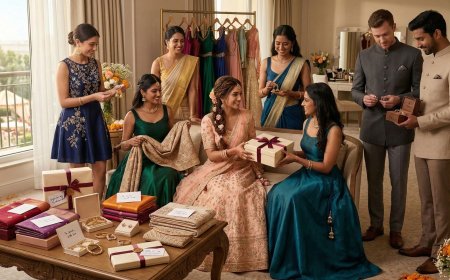
Take a trusted person to appointments — someone whose role is specifically to support the bride's experience rather than to provide opinions about the outfits. The distinction between support and opinion is important: the person who comes to provide opinions about what looks good may inadvertently replicate the consultant's "flattering" discourse. The person who comes to support the bride's experience is there to celebrate what the bride responds to and to leave when the appointment is not working.
Leave appointments that are not serving the bride. The boutique that does not have samples in her size range, whose consultant is using language the bride finds uncomfortable, or whose portfolio does not demonstrate plus-size construction competence is a boutique whose time and the bride's time are both better spent elsewhere. There are boutiques that will provide the right experience. The time spent at the wrong one is time not spent finding them.
The Budget Consideration
The honest budget conversation for plus-size bridal shopping in India covers three specific financial realities.
The first is that additional fabric — which larger sizes genuinely require — adds to the garment's cost. This is a legitimate upcharge that reflects a real cost and should be expected rather than resented.
The second is that construction expertise — the specific knowledge of how to adjust a pattern and construction for a plus-size body — is worth paying for. The boutique with genuine plus-size construction expertise may charge a premium that reflects the value of that expertise, and this premium is worth assessing in relation to the value of a correctly fitting and beautifully constructed garment.
The third is that some boutiques charge a premium for plus-size construction that is not justified by additional fabric or expertise — that represents, in effect, a surcharge for the bride's body size. This premium is not legitimate, and identifying it requires comparing the boutique's upcharge against the actual additional fabric cost and the actual additional construction complexity of the specific garment.
The budget for plus-size bridal shopping should include a realistic allowance for the legitimate additional costs — additional fabric, construction expertise, additional fittings — without acceptance of unjustified upcharges that represent discrimination rather than cost recovery.
The NRI Logistics for Plus-Size Bridal Shopping
The Remote Shopping Challenge
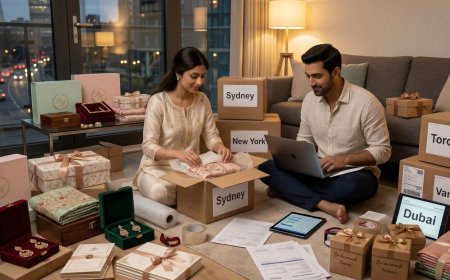
For NRI plus-size brides who cannot make a dedicated India shopping visit or whose India visit is compressed, the remote shopping challenge is more acute than for standard-size brides — because the ability to try on samples is even more important at plus sizes than at smaller sizes, and the remote order process for a plus-size garment requires more precise measurements and more explicit construction discussion.
The remote shopping protocol for plus-size brides:
Video consultation before any order commitment — not as a formality but as a genuine assessment of the boutique's plus-size knowledge. The consultant who can discuss specific construction adjustments, who has experience with plus-size NRI brides, and who can share a portfolio of completed plus-size work in the video consultation is demonstrating the competence that a remote order requires the bride to trust.
Professional measurements taken in the country of residence — by a tailor or seamstress with experience of Indian garment sizing conventions — using a specific measurement template provided by the boutique. The measurements should include every measurement on the template, not a selection of the ones the bride is comfortable sharing.
A toile or trial garment shipped to the country of residence before the final fabric is cut — for high-investment plus-size commissions where the construction adjustments are significant, the additional cost and time of a shipped toile is justified by the assurance it provides that the final garment will fit correctly.
A clearly agreed alteration protocol for when the garment arrives — which local tailor will assess the garment, what alterations are within the scope of local resolution, and under what circumstances the boutique is responsible for remote alteration support.
The Wedding Outfit That Was Made for Her
The plus-size NRI bride who arrives at her wedding day in a bridal outfit that was genuinely made for her body — that fits correctly at every point, that moves the way she intended, that photographs with the visual impact she planned, and that she put on that morning with the specific confidence of someone who knows the garment was designed for her rather than adapted from one that was not — has had a bridal shopping experience that she deserved from the beginning.
The industry is moving toward her. Slowly, incompletely, with significant variation between boutiques and between cities — but moving. The designers and boutiques that have made the genuine commitment to size inclusivity are producing work of real quality for plus-size brides, and the community of plus-size NRI brides who share their experiences — on Instagram, in diaspora community forums, in the specific NRI wedding planning conversations that happen in WhatsApp groups and Facebook communities — is growing the collective knowledge that makes the right boutiques findable and the wrong ones avoidable.
The research this guide provides is the starting point. The specific boutique recommendations, the red flags to recognise, the questions to ask in the consultation, the construction adjustments to demand in the fitting — these are the tools that convert the bridal shopping process from an experience of exclusion and imagination into one of genuine participation and celebration.
The plus-size NRI bride deserves to be celebrated in the bridal showroom with exactly the same enthusiasm, exactly the same quality of consultation, and exactly the same quality of construction as every other bride. She deserves an outfit that was made for her — not adapted, not compromised, not apologised for.
Made for her. In her size. On her body. For the most significant ceremonial day of her life.
That outfit exists. This guide is how she finds it.
Published by NRIWedding.com — The Premium Global Platform for Non-Resident Indians Planning Indian Weddings From Abroad.
What's Your Reaction?
 Like
0
Like
0
 Dislike
0
Dislike
0
 Love
0
Love
0
 Funny
0
Funny
0
 Angry
0
Angry
0
 Sad
0
Sad
0
 Wow
0
Wow
0