





































































Court Marriage in India for NRIs: The Complete Step-by-Step Process Guide Nobody Else Has Written
For NRI couples planning a court marriage in India, the process is more involved than most anticipate — with residency requirements, apostilled documentation, embassy No Objection Certificates, a mandatory 30-day notice period, and a post-registration apostille process before the marriage is recognised abroad. This complete step-by-step guide covers everything NRIs need to know: the Special Marriage Act framework, eligibility requirements, district selection, the full documentation checklist for OCI card holders and foreign nationals, the notice filing and ceremony process, obtaining and apostilling the certificate, and the country-specific recognition steps for the UK, USA, Canada, Australia, and UAE. The most thorough court marriage guide written specifically for NRI couples worldwide.


The Civil Ceremony That Most NRIs Underestimate
It goes by several names.
Court marriage. Civil marriage. Registry marriage. The simple wedding. Whatever the terminology in your family's vocabulary, the concept is the same: a legally binding marriage conducted through the Indian civil registration system rather than through a religious ceremony.
For most NRI couples, the term court marriage surfaces in one of three contexts.
The first is the interfaith context — two people from different religious backgrounds who cannot marry under any single religious personal law and who need the secular framework of the Special Marriage Act to register their union legally.
The second is the practical context — a couple who has had, or intends to have, a large traditional wedding ceremony but who wants to ensure the legal registration is complete, correctly documented, and administratively clean before the celebration takes place.
The third is the simplified context — a couple who, for reasons of preference, practicality, or circumstance, wants to get legally married in India without the scale and complexity of a traditional wedding. The ceremony at the Marriage Officer's office as the primary event rather than as an administrative step alongside a larger celebration.
In all three contexts, the process is the same. The Special Marriage Act, 1954. The Marriage Officer. The 30-day notice. The ceremony. The certificate.
What changes is the weight the couple places on the process — whether it is the legal foundation beneath a celebration, the legal alternative to a ceremony they are not having, or the ceremony itself.
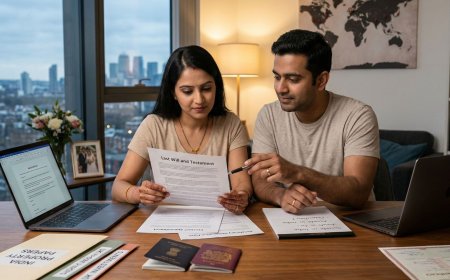
For NRI couples, court marriage under the Special Marriage Act has specific procedural requirements that differ from what a purely domestic Indian couple would navigate. The documentation involves OCI cards, foreign passports, apostilled affidavits, and in some cases embassy No Objection Certificates. The 30-day notice requirement has specific implications for NRI visit planning. The post-registration process — apostille and international recognition — adds steps that a domestically based couple does not face.
This article is the complete process guide to court marriage in India for NRIs. It covers every step from the decision to proceed through the Special Marriage Act, through the documentation preparation, the notice filing, the 30-day waiting period, the ceremony, the certificate, and the post-registration steps required for the marriage to be recognised in the NRI's country of residence.
If you are an NRI couple considering or planning a court marriage in India — for any of the three reasons above, or for reasons entirely your own — this is the guide that walks you through every step.
Understanding the Special Marriage Act: The Foundation
Court marriage in India for NRIs is conducted under the Special Marriage Act, 1954. Understanding this legislation — what it is, what it provides, and why it is the applicable framework for NRI court marriages — is the foundation of everything that follows.
What the Special Marriage Act Is
The Special Marriage Act is India's secular marriage legislation. It was enacted to provide a legal framework for marriage that is entirely independent of religion — available to any two people, regardless of their faith, caste, or nationality, who wish to marry in India through a civil process.
Unlike the Hindu Marriage Act, the Christian Marriage Act, or Muslim personal law — all of which apply exclusively to members of specific religious communities — the Special Marriage Act applies universally. It does not require either party to be Hindu, Muslim, Christian, or any other religion. It does not require any religious ceremony or ritual. It requires only that both parties meet the eligibility requirements, follow the prescribed procedure, and appear before the Marriage Officer to make their declarations.
This universality makes it the appropriate — and in many cases the only viable — framework for NRI court marriages, because NRI couples often involve parties of different backgrounds, parties who are foreign nationals, OCI card holders, or people who simply prefer a civil ceremony.
Why NRI Couples Use the Special Marriage Act
NRI couples use the Special Marriage Act for several specific reasons.
Interfaith couples: Where the two parties belong to different religious communities, no single religious personal law can accommodate the marriage. The Special Marriage Act provides the secular alternative.
OCI card holders and foreign nationals: The Special Marriage Act is explicitly designed to accommodate marriages involving foreign nationals. Its procedures and its documentation framework have specific provisions for parties who are not Indian citizens.
Couples who want a clean civil registration: Some NRI couples — even those who belong to the same religious community and could theoretically marry under the relevant personal law — prefer the Special Marriage Act because its registration is more straightforwardly recognised internationally, because its certificate is issued under a clearly secular and codified framework, and because the process is well-defined and predictable.
Couples having the legal marriage separately from the religious ceremony: Many NRI couples conduct their legal court marriage months before or after their religious ceremony, keeping the legal and cultural events entirely separate. The Special Marriage Act is the framework for the legal event.
Eligibility Requirements
Before beginning any procedural steps, confirm that both parties meet the eligibility requirements for marriage under the Special Marriage Act.
Age Requirements
The male party must be at least 21 years of age at the time of marriage. The female party must be at least 18 years of age at the time of marriage. These ages must be the ages at the time of the marriage ceremony — not at the time of filing the notice.
Marital Status
Neither party must have a living spouse at the time of the marriage. If either party has been previously married, the previous marriage must have been legally terminated — either by divorce or by the death of the former spouse — before the new marriage can proceed under the Special Marriage Act.
For OCI card holders who were previously married and divorced in another country, the foreign divorce decree needs to be documented and in some cases specifically recognised for Indian legal purposes. This documentation requirement is addressed in the documentation section below.
Mental Capacity
Both parties must be of sound mind and capable of giving valid, informed consent to the marriage at the time of the ceremony.
Prohibited Relationships
The parties must not be within the degrees of prohibited relationship as specified in the First Schedule of the Special Marriage Act — broadly, close blood relatives. The prohibition does not apply if the custom or usage governing one of the parties permits such a relationship — a provision that accommodates certain regional customs within India.
The Jurisdiction Question: Where to File
The first procedural decision for NRI couples planning a court marriage in India is where — in which district — to file the Notice of Intended Marriage.
The Residency Requirement
The Special Marriage Act requires that the Notice of Intended Marriage be filed with the Marriage Officer of the district in which at least one of the parties has resided for a period of not less than 30 days immediately preceding the date of notice.
This residency requirement determines where the notice can be filed and therefore where the marriage ceremony will take place — the marriage is solemnised at the Marriage Officer's office in the district where the notice was filed.
For NRI couples, the practical implication is that at least one party must establish 30 days of residence in a specific district before the notice can be filed there. The marriage ceremony cannot happen in a different district from where the notice was filed.
Choosing the Right District
For NRI couples, the choice of district is typically determined by one or more of the following factors:
Family location: Many NRI couples choose to file in the district where their family home is located — where one or both sets of parents live. This allows the court marriage to be integrated with the family context and makes it practical for family members to attend the ceremony.
Wedding city: For couples who are having a traditional wedding celebration in a specific city, filing the notice in that city's district allows the court marriage to be conducted in the same location as the celebration — simplifying logistics.
Convenience of the 30-day stay: For NRI couples whose India visit is being planned specifically around the court marriage, the district where staying for 30 days is most convenient and most comfortable is a practical determinant.
The 30-Day Residency: Practical Arrangements
Establishing 30 days of residence in a district does not require any formal registration or government notification. It requires physical presence in the district — staying there continuously or substantially for the 30-day period.
For NRI couples, this typically means:
Staying at a family home in the district — the most common and most practical arrangement. Staying in a hotel, serviced apartment, or rented accommodation in the district. Staying with family or friends who are resident in the district.
The evidence of residence that the Marriage Officer may require — to confirm that the 30-day residency requirement has been met — can include hotel bookings showing a 30-day stay, a declaration from a local resident confirming the party's residence, a family member's affidavit of residence, or other evidence acceptable to the specific Marriage Officer.
Confirm the acceptable forms of residency evidence with the specific Marriage Officer's office in your chosen district before relying on any particular form of evidence.
The Documentation: What You Need to Prepare
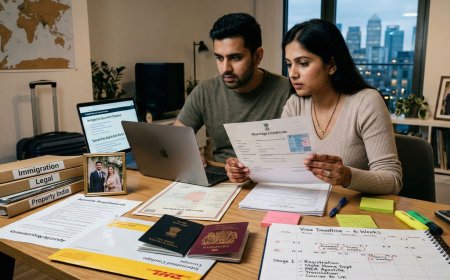
The documentation for a court marriage in India involves both standard documents and NRI-specific documents. Preparation should begin at least three to four months before the intended notice filing date.
Standard Documents Required for Both Parties
Proof of Date of Birth: Documents that establish that both parties meet the minimum age requirements. Acceptable documents include: passport, birth certificate, matriculation certificate, or similar government-issued document showing date of birth. The passport — which every NRI carries — is typically sufficient. Some Marriage Officers accept only birth certificates as proof of date of birth. Confirm the specific requirement with the Marriage Officer's office in your chosen district.
Proof of Residence: Evidence that at least one party has been resident in the district for 30 days before the notice filing date. As discussed above, the specific acceptable forms of evidence vary by Marriage Officer.
Passport-Size Photographs: Both parties, typically four to six photographs each. The photographs should be recent — taken within the preceding three to six months. Standard passport-size specifications apply — colour, white or light background, full face, no glasses.
Affidavit of Single Status: A sworn affidavit by each party declaring that they are not currently married to any other person, that they are of sound mind, that they are not within the prohibited degrees of relationship, and that they meet all the eligibility requirements for marriage under the Special Marriage Act.
For OCI card holders and foreign nationals, this affidavit is typically executed before a notary in the country of residence and then apostilled — authenticated for international use — before being brought to India. The format of the affidavit may be specified by the Marriage Officer. Confirm the required format before having the affidavit prepared.
Divorce Decree or Death Certificate (if previously married): If either party has been previously married, documentation of the legal termination of that marriage is required. For OCI card holders whose previous marriage and divorce occurred outside India, the foreign divorce decree must be apostilled. In some districts, the Marriage Officer may additionally require the foreign divorce decree to be recognised by an Indian court before accepting it — a process called a declaratory judgment. Confirm whether court recognition is required in your specific district.
OCI Card Holder Specific Documents
Foreign Passport: The OCI card holder's foreign passport is their primary identity document for all purposes in the court marriage process. The Indian passport — if one still exists, or the cancelled Indian passport — is not presented as a primary identity document.
OCI Card: The physical OCI booklet, presented alongside the foreign passport. The name and date of birth on the OCI card must exactly match the foreign passport. Any discrepancy — even a minor spelling variation — must be resolved before the documentation process begins. OCI card discrepancy resolution can take several weeks through the Indian Mission abroad and must be factored into the planning timeline.
No Objection Certificate from Embassy: Many Marriage Officers — and the Special Marriage Act procedures in many districts — require OCI card holders to present a No Objection Certificate (NOC) from the embassy or high commission of their country of citizenship in India.
The NOC confirms that the individual is a citizen of the issuing country, that there is no legal impediment to the marriage under the laws of that country, and that the country has no objection to the individual marrying in India.
The requirement for an NOC varies by district and by Marriage Officer. Some officers require it routinely. Others do not require it at all. Confirm the requirement with the specific Marriage Officer's office in your chosen district well before the notice filing date. If required, begin the NOC application process immediately — the process typically takes four to six weeks through the relevant embassy.
For UK Citizens: The British High Commission in India issues marriage certificates of no impediment — also called certificates of freedom to marry — which serve the function of the NOC. These can be obtained from the British High Commission in New Delhi or the Deputy High Commissions in other cities.
For US Citizens: The US Embassy and Consulates in India do not routinely issue NOCs for marriages under the Special Marriage Act. US citizens may instead provide a sworn affidavit of single status — notarised at the US Embassy or Consulate — which some Marriage Officers accept in lieu of an NOC. Confirm what is acceptable with the specific Marriage Officer.
For Canadian Citizens: The High Commission of Canada in India does not issue NOCs as a routine service. The same affidavit approach as described for US citizens is typically used. Confirm with the specific Marriage Officer.
For Australian Citizens: The Australian High Commission in India issues declarations of freedom to marry for Australian citizens, which serve the function of the NOC.
Witness Documents
Three witnesses are required for the marriage ceremony under the Special Marriage Act. Witnesses must be present at the ceremony and must sign the Marriage Certificate Book.
Each witness must provide:
- Identity proof — Aadhar card, passport, or OCI card
- Address proof
- Passport-size photograph
Witnesses must be adults — at least 18 years of age. They cannot be the parties getting married. There is no restriction on witnesses being family members of either party.
For NRI couples whose social circle in India consists primarily of family members, having three willing, available, and documented witnesses present on the ceremony date is a practical planning requirement.
Step-by-Step Process: Filing the Notice
With documentation prepared and the 30-day residence period completed, the notice filing can proceed.
Identifying the Marriage Officer
The Marriage Officer for the relevant district is typically the Sub-Divisional Magistrate (SDM) or an officer specifically designated as the Marriage Officer for the district. The location of the Marriage Officer's office and the office hours vary by district.
Research the specific Marriage Officer for your chosen district before the 30-day residence period begins — not on the day you intend to file. Confirm: the address of the Marriage Officer's office, the days and hours on which notices are accepted, the documentation checklist specific to that office, and the fee for filing the notice.
The Notice Filing Appointment
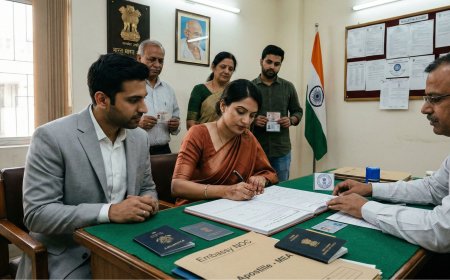
Attend the Marriage Officer's office with your complete documentation. The notice is filed in Form I under the Special Marriage Act — a prescribed form that both parties must sign.
The Marriage Officer or their staff will review the documentation. If the documentation is complete and acceptable, the notice will be registered, and the 30-day notice period will begin from the date of registration.
If any documentation is incomplete or unacceptable — a missing document, an inconsistency in identity documents, an unacceptable form of residence evidence — the notice will not be registered. This resets the timeline. Bring complete documentation on the first visit.
The 30-Day Notice Period
Following the registration of the notice, it is publicly displayed at the Marriage Officer's office for 30 days. The notice is published in the prescribed manner — typically affixed to the notice board of the Marriage Officer's office — during which period any person may file a written objection to the marriage.
Objections must be based on one of the specific grounds recognised by the Special Marriage Act — a claim that the proposed marriage violates the eligibility requirements, such as a claim that one of the parties is already married. Objections without legal basis, or objections based purely on personal or family disagreement with the marriage, are not valid legal objections.
In practice, objections are rare and typically unsuccessful when the eligibility requirements are clearly met. For NRI couples, the 30-day notice period is typically uneventful — a waiting period during which the couple can return to their country of residence before returning for the ceremony, or can remain in India if the logistics allow.
If an Objection Is Filed
If an objection is filed, the Marriage Officer investigates. If the objection is found to be without merit — as is typically the case — the Marriage Officer dismisses the objection and the marriage proceeds after the 30-day period.
If the objection is found to have merit — if there is a genuine legal impediment to the marriage — the Marriage Officer refuses to solemnise the marriage. The parties may appeal this decision to the District Court.
Step-by-Step Process: The Ceremony
After the 30-day notice period has elapsed without a valid unresolved objection, the marriage can be solemnised.
Scheduling the Ceremony
Contact the Marriage Officer's office to schedule the ceremony date. Ceremonies are typically conducted on working days during office hours. The Marriage Officer's calendar may have waiting times — particularly in busy districts — so schedule the ceremony date as soon as the 30-day period is approaching completion.
Attending the Ceremony
Both parties and all three witnesses must be present at the Marriage Officer's office on the appointed date with all required documentation.
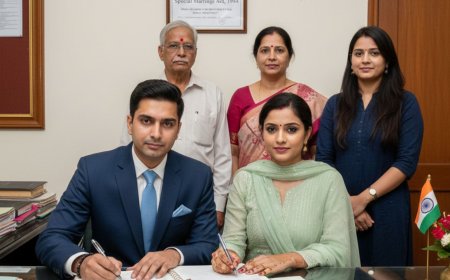
Dress for the occasion as you choose — there is no dress requirement for a civil ceremony under the Special Marriage Act. Some couples attend in formal traditional dress, treating the ceremony as the primary wedding event. Others attend more simply, treating it as a legal administrative step. The choice is entirely yours.
The Declaration
The ceremony consists of each party making a declaration in the form prescribed by the Special Marriage Act:
Each party declares: "I, [name], take thee, [name], to be my lawful wife/husband."
The declaration is made in the presence of the Marriage Officer and the three witnesses. It is the legally operative act of the marriage — the moment at which the marriage is legally constituted.
The Marriage Officer then certifies the marriage and enters it in the Marriage Certificate Book.
Signing the Marriage Certificate Book
Both parties and all three witnesses sign the Marriage Certificate Book in the presence of the Marriage Officer. The Marriage Officer signs and seals the entry.
Obtaining the Certificate
The marriage certificate is issued at the time of the ceremony or within a short period thereafter — practices vary by district. In some districts the certificate is issued immediately. In others it may take a few days.
Request the marriage certificate and obtain the number of certified copies you need — at least five to eight. The certificate is the primary legal document of the marriage and you will use it for multiple purposes in the months that follow.
Post-Ceremony: The Apostille and International Recognition
For NRI couples, the court marriage ceremony and the receipt of the Indian marriage certificate is not the end of the process. The marriage certificate needs to be authenticated for international use through the apostille process, and then used to satisfy the recognition requirements of the NRI's country of residence.
The MEA Apostille
The Ministry of External Affairs (MEA) is the designated authority in India for issuing apostilles under the Hague Convention. An apostille authenticates the Indian marriage certificate for use in countries that are signatories to the Hague Convention — including the UK, USA, Canada, and Australia.
The apostille process involves submitting the original marriage certificate — or certified copies — to the MEA authentication office, along with the applicable fee. The MEA offices that accept apostille applications are located in major cities — Delhi, Mumbai, Chennai, Kolkata, and Hyderabad. Applications can also be made through authorised agents.
Processing time for MEA apostille is typically four to six weeks for standard processing. Express processing is available at higher cost with shorter turnaround.
Begin the apostille process as soon as the marriage certificate is in your hands. Do not wait until you are back in your country of residence — the process is operationally simpler to initiate in India, and beginning it before you return avoids the need to manage it entirely from abroad.
Country-Specific Recognition
After the apostille, the marriage certificate is used to establish the recognition of the marriage in the NRI's country of residence. The specific requirements for each country are covered in detail in the OCI Card Holders Getting Married in India guide and the Getting Married in India vs. Home Country guide elsewhere in this series.
UAE-Specific Attestation
For NRI couples based in the UAE, the apostille alone is not sufficient for UAE recognition. The full attestation chain — MEA apostille, Indian Embassy attestation in the UAE, and MOFAIC attestation — is required. Begin this process immediately upon return to the UAE with the apostilled certificates. The full attestation chain takes four to six weeks when managed consecutively.
Common Mistakes NRI Couples Make With Court Marriage
Starting the Documentation Process Too Late
The documentation for a court marriage in India — particularly the apostilled affidavits, the embassy NOC, and any court recognition of foreign divorce decrees — requires months of advance preparation. Couples who begin this process four to six weeks before the intended notice filing date frequently discover that they cannot complete the documentation in time, forcing a postponement.
Begin documentation preparation at least three to four months before the intended notice filing date.
Not Confirming District-Specific Requirements
The documentation requirements for court marriage under the Special Marriage Act vary between districts and between individual Marriage Officers. A checklist prepared from general guidance may be missing something required in the specific district. Always confirm the specific requirements — in writing, if possible — with the Marriage Officer's office in your chosen district before preparing your documentation.
Assuming One Party Can Handle Everything
Both parties must be present at the notice filing and at the ceremony. Neither the notice filing nor the ceremony can be completed with only one party present, through a power of attorney, or through a representative. Both parties must physically attend both events. For NRI couples where both parties are based abroad, this means coordinating two international trips — the notice filing trip and the ceremony trip — into the planning schedule.
Not Having Three Prepared and Available Witnesses
Three witnesses must be present at the ceremony with their own documentation. For NRI couples whose social network in India is primarily family, having three willing, available, and documented witnesses on the ceremony date requires specific planning — not a last-minute arrangement.
Not Obtaining Enough Certified Copies of the Certificate
The marriage certificate will be used for multiple purposes — the MEA apostille, the country-of-residence recognition process, name changes, immigration applications, bank account updates. Obtaining only one or two certified copies at the time of the ceremony creates supply constraints when multiple processes require the certificate simultaneously. Obtain at least five to eight certified copies.
Departing India Before Beginning the Apostille Process
The apostille is most easily initiated in India — where the MEA offices are located and where the process is most directly manageable. Couples who receive their marriage certificate and immediately depart India must manage the apostille entirely from abroad — either by mail, through an authorised agent, or through a subsequent India trip. Beginning the apostille before departure is strongly advisable.
The Court Marriage as the Primary Wedding
For some NRI couples, the court marriage is not an administrative step alongside a larger celebration — it is the wedding. The ceremony at the Marriage Officer's office, attended by close family and witnesses, is the primary event.
This is a completely valid choice, and one that an increasing number of NRI couples are making — for reasons of personal preference, financial practicality, family simplicity, or the particular clarity of a ceremony that is exactly what it is, without the elaborate infrastructure that a traditional Indian wedding requires.
For couples approaching the court marriage as their primary wedding event, a few additional considerations apply.
The atmosphere of the ceremony: The Marriage Officer's office is a government office. The ceremony is a formal legal proceeding. The atmosphere is formal, efficient, and administrative rather than warmly celebratory. If you are approaching this as your primary wedding event, you may want to create some additional ceremony around the legal proceeding — arriving in meaningful dress, having close family present, planning a small celebration dinner after the ceremony. The legal proceeding itself is brief — perhaps fifteen to twenty minutes — but the occasion can be made meaningful with the right frame.
Photographs: Arrange for photographs of the ceremony — both within and outside the Marriage Officer's office. The certificate signing, the declaration, the moment of being pronounced married — these are the photographic records of your wedding and deserve to be captured properly.
Family presence: The three witnesses must attend. Beyond the witnesses, there is typically no restriction on additional family members or friends attending the ceremony at the Marriage Officer's office, subject to the capacity of the office. Confirm with the Marriage Officer's office whether additional attendees are permitted.
Post-ceremony celebration: Many couples who have a court marriage as their primary event celebrate with a dinner or small gathering for family and close friends immediately after the ceremony. This transforms a legal proceeding into a complete wedding event — the formal ceremony followed by a warm, personal celebration.
The Court Marriage Alongside a Traditional Wedding
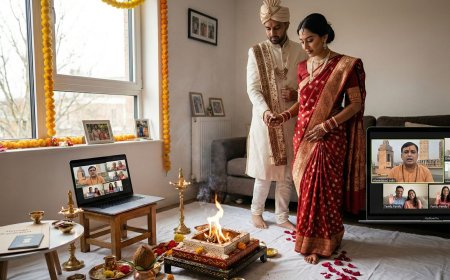
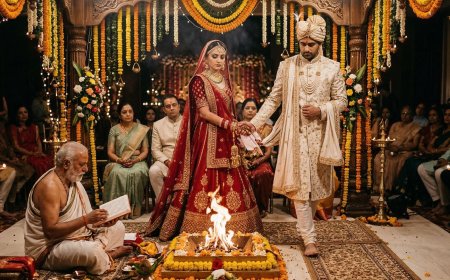
For NRI couples who are having a traditional wedding celebration — a multi-function Indian wedding with all its associated ceremonies — the court marriage is the legal registration that makes the traditional ceremony legally effective.
In this context, the court marriage typically happens in one of two ways:
Before the traditional wedding: The court marriage is conducted during a planning visit to India — months before the traditional wedding date. The legal marriage is complete well before the celebration. The traditional wedding is a cultural and religious ceremony rather than the legal act of marriage. This approach has the advantage of separating the legal and the celebratory completely — the legal process is handled with calm attention in the planning period, and the wedding week is entirely about the celebration.
During the wedding week: The court marriage is scheduled as one of the events of the wedding week — typically before the religious ceremony, so that the couple is legally married before the religious rituals take place. This integrates the legal and the celebratory into the same period, which some families prefer. It requires careful scheduling to ensure that the 30-day notice period has elapsed before the wedding week begins.
Either approach is valid. The choice depends on the couple's personal preference and the practical logistics of their India visits.
Your Court Marriage Planning Timeline
Four to Five Months Before Intended Notice Filing:
- Confirm the applicable district and Marriage Officer
- Contact the Marriage Officer's office to confirm documentation requirements
- Begin NOC application if required — allow four to six weeks minimum
- Prepare affidavits of single status in the required format
- Apostille affidavits in the country of residence
- Apostille any foreign divorce decrees if applicable
- Check OCI card and passport for name consistency — resolve any discrepancies immediately
Two to Three Months Before:
- Confirm all documentation is complete and consistent
- Confirm the 30-day residence arrangements — family home, hotel, or other accommodation
- Brief witnesses on their required attendance and documentation
- Book travel for the notice filing trip — one party to arrive 30 days before the intended notice filing date, or both parties if both will be establishing residence
At the 30-Day Residence Start:
- Begin the 30-day residency period in the chosen district
- Confirm all documentation is with you
At the Notice Filing:
- Both parties attend the Marriage Officer's office with complete documentation
- File the Notice of Intended Marriage
- Confirm the 30-day notice period start date and end date
- Schedule the ceremony date at or after the end of the notice period
During the 30-Day Notice Period:
- Both parties may return to their country of residence if logistically appropriate
- Monitor for any objections through a local contact if parties have returned abroad
At the Ceremony:
- Both parties and all three witnesses present with complete documentation
- Declaration made in the presence of the Marriage Officer
- Marriage Certificate Book signed by both parties, all witnesses, and the Marriage Officer
- Obtain marriage certificate and all certified copies
Immediately Post-Ceremony:
- Begin MEA apostille process before departing India if possible
- Retain original certificate and all certified copies securely
Post-Return to Country of Residence:
- Complete MEA apostille if not begun in India
- Complete country-specific recognition process
- Use apostilled certificate for name changes, immigration applications, and other administrative purposes
The Civil Ceremony That Builds the Legal Foundation
The court marriage in India — conducted under the Special Marriage Act at the Marriage Officer's office — is a legal proceeding of genuine simplicity and genuine importance. It is the civil act that creates the legal reality of your marriage. Whatever ceremony surrounds it, whatever celebration follows it, whatever traditions it sits alongside or instead of — the court marriage is the act upon which the legal status of your union depends.
For NRI couples, getting it right requires advance planning, careful documentation, a clear understanding of the procedural requirements, and the willingness to navigate a government process in India from a distance.
None of this is insurmountable. Thousands of NRI couples complete this process every year. The process is well-defined, the requirements are knowable, and the outcome — a legally registered marriage with a certificate that can be apostilled and recognised internationally — is exactly what it needs to be.
Plan early. Prepare thoroughly. Appear with complete documentation. And allow the simplicity of the civil ceremony — two people, three witnesses, a declaration, a signature, a certificate — to be what it is: the legal beginning of everything you are building together.
It is enough.
It is, in many ways, the most essential thing.
What's Your Reaction?
 Like
0
Like
0
 Dislike
0
Dislike
0
 Love
0
Love
0
 Funny
0
Funny
0
 Angry
0
Angry
0
 Sad
0
Sad
0
 Wow
0
Wow
0