




















































The Marathi Biye: The NRI Couple's Complete Guide to Marathi Wedding Traditions, Rituals, and Customs
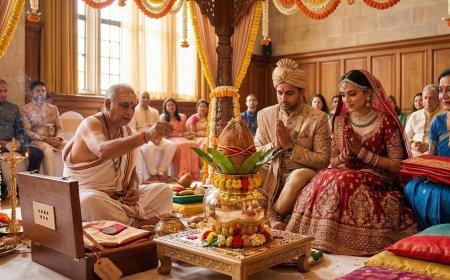
The Marathi Hindu wedding — with its Sakhar Puda engagement, the Antarpat's precise Muhurta moment, the Gauri Puja, the Var Puja, the Saptapadi around the sacred fire, the two-vati Mangalsutra, and the nine-yard Nauvari saree in Paithani silk — is one of India's most ritually precise and culturally distinctive wedding traditions. For NRI Marathi couples who carry this heritage at a distance and want to inhabit it completely, this guide delivers a thorough explanation of every ceremony and custom, the Muhurta's operational significance for planning, Purohit sourcing guidance, the Nauvari decision, the specific Maharashtrian culinary tradition of the wedding feast, and the cultural values that give every Marathi wedding element its specific meaning and form.

Marathi Wedding Traditions: A Comprehensive Guide
The NRI couple's complete guide to understanding, planning, and genuinely inhabiting the specific ritual world of the Marathi Hindu wedding — from the Sakhar Puda to the Saptapadi, and everything the tradition asks of those who enter it with full understanding
The Wedding That Knew Exactly What It Was
There is a specific quality to the Marathi wedding that distinguishes it from every other Indian regional wedding tradition — a quality that is difficult to name precisely but that is immediately apparent to anyone who has attended one.
It is not the scale that defines it. Marathi weddings can be large or intimate. It is not the visual opulence — though a well-appointed Marathi wedding can be extraordinarily beautiful in the specific way of Maharashtrian craft and aesthetic tradition. What defines the Marathi wedding is its specific quality of cultural self-knowledge — the sense that every element of the ceremony and celebration belongs to a tradition that knows exactly what it is and why it does what it does.
The specific green of the bride's saree chosen for specific ceremonial significance. The Antarpat that separates the bride and groom until the precise auspicious moment of Muhurta. The Saptapadi taken around the fire in the specific form that Maharashtrian ritual tradition has maintained across generations. The Mangalsutra whose specific form — the two-vati design of black beads and gold — is specifically Maharashtrian and no other. The specific sound of the Shehnai that marks each ceremony moment. The abundant use of turmeric and coconut that runs through every ceremony like a thread of specific Maharashtrian cultural identity.
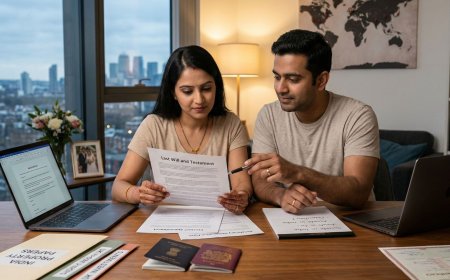
For NRI Marathi couples who carry this tradition at the distance that the NRI life creates — who know it is theirs but know it imperfectly, who want to do it justice but are not always certain what justice requires — this guide provides the complete understanding that full inhabitation of the tradition demands.
The Marathi Wedding in Its Cultural Context
The Marathi Hindu wedding tradition is rooted in the specific cultural and religious heritage of Maharashtra — a heritage that encompasses the Bhakti devotional tradition of saints like Tukaram and Dnyaneshwar, the specific Varkari religious culture centered on the Vitthal temple at Pandharpur, the martial and administrative heritage of the Maratha empire, and the rich craft traditions that have made Maharashtra one of India's most culturally productive regions.
The Marathi wedding ceremony draws from the Rigvedic tradition in its core ritual structure — the Saptapadi, the sacred fire, the specific mantras of the marriage ceremony are Vedic in their origin — but these universal Vedic elements are expressed through specifically Maharashtrian cultural forms: the specific objects used, the specific songs sung, the specific aesthetic conventions that make a Marathi wedding immediately recognizable as distinct from a Punjabi or Bengali or Tamil wedding even when the Vedic ritual structure underneath is shared.
Understanding this relationship between universal Vedic structure and specific Maharashtrian expression is the key to understanding what is essential to the Marathi wedding — what cannot be removed without changing the ceremony's fundamental character — and what is regional convention that has more flexibility.
The Engagement: Sakhar Puda
The formal beginning of the Marathi wedding sequence is the Sakhar Puda — the sugar ceremony that constitutes the engagement in the Marathi tradition.
The Sakhar Puda — literally "sugar packet" or "wrapped sugar" — is the ceremony in which the bride's family formally presents the groom with sugar wrapped in a cloth or in a specific traditional wrapping, and the groom's family reciprocates. The exchange of sugar is the exchange of sweetness — the specific Marathi convention that the beginning of the wedding relationship is marked by the literal sweetness of the gift rather than the more common exchange of rings that contemporary Indian engagements often use.
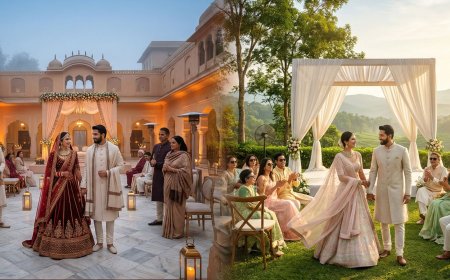
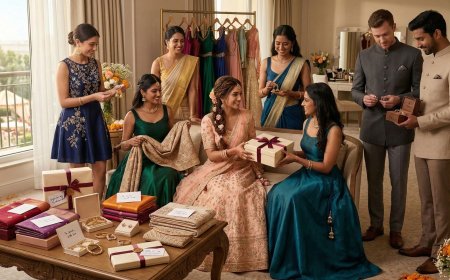
The Sakhar Puda is typically a smaller, family-only gathering — the immediate families of both bride and groom, conducted at the bride's family home or at a family gathering space, with prayers, the exchange of the sugar gifts, and the specific ritual elements that mark the occasion as the formal beginning of the wedding sequence.
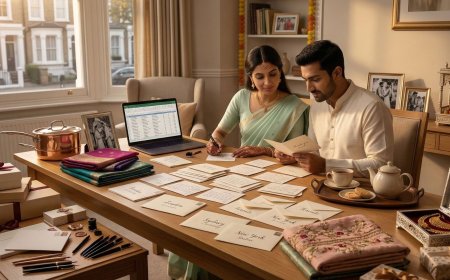
For NRI families, the Sakhar Puda is often the event most easily conducted during an India visit — its intimate scale and relatively simple ritual requirements make it manageable within the compressed timeline of an NRI family's India trip.
The Sakhar Puda is accompanied by the exchange of horoscopes — the Janam Patrika — and the formal confirmation of the auspicious Muhurta for the wedding ceremony, which requires the family's astrologer or Joshi to match the horoscopes and identify the auspicious dates and times within which the ceremony must be conducted.
The Muhurta: The Auspicious Timing That Governs Everything
The Muhurta — the auspicious moment determined by astrological calculation — governs the Marathi wedding ceremony in a more specific and more operationally significant way than in many other Indian regional traditions. The Muhurta is not simply a recommended time for the ceremony. It is the precise window within which the most important ceremony elements must be completed — particularly the Antarpat ceremony and the moment of the Vivah Lagna, the auspicious moment of the marriage itself.
The Muhurta is typically calculated by the family's Joshi — the family astrologer who knows both horoscopes and who identifies the specific auspicious time based on the couple's birth charts, the day, the month, and the specific planetary positions that make certain moments more auspicious than others.
The operational significance for planning: the ceremony timeline must be designed around the Muhurta rather than around venue or logistical convenience. The ceremony may need to begin at an early morning hour — sometimes before sunrise — if the Muhurta falls at this time. The ceremony must be at a specific ritual stage when the Muhurta arrives. The logistics of four hundred guests, a decorated venue, and a fully prepared ceremony must be orchestrated to ensure that the ceremony is at exactly the right point when the auspicious moment arrives.
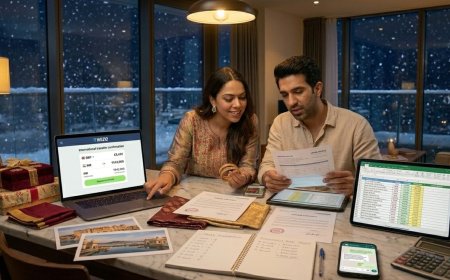
For NRI families planning a Marathi wedding, the Muhurta calculation must happen early in the planning process — before the ceremony timing is communicated to any vendor — because every timing decision subsequently depends on it.
The Pre-Wedding Rituals
Haldi — The Turmeric Ceremony
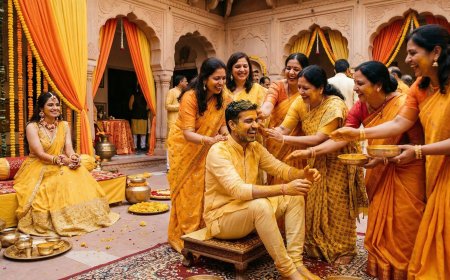
The Haldi in the Marathi tradition follows the general structure common to many Hindu wedding traditions — the application of turmeric paste to the bride and groom by family members — but with specific Marathi characteristics.
Turmeric carries specific cultural and religious significance in Maharashtrian tradition beyond its common pan-Indian presence. The specific use of turmeric in Marathi ceremonies — its application at multiple points in the wedding sequence, its presence in the ritual offerings, its specific association with the goddess Gauri who is the presiding deity of many Marathi wedding elements — gives the haldi ceremony a deeper cultural resonance than a simple skin-care ritual.
The Haldi in the Marathi tradition is often combined with specific prayers to Gauri and with the specific songs — the Ovi — that are the traditional women's folk songs of Maharashtra. These songs, composed and transmitted within the women's oral tradition across generations, carry the wedding's emotional content in ways that the formal ceremony does not. For NRI families who want to preserve the specific cultural richness of the Marathi Haldi, the Ovi songs are the element that most repays specific attention and specific effort to include.
Kelvan — The Pre-Wedding Feast
The Kelvan is the pre-wedding feast hosted by the bride's family for the extended family and community — the formal invitation to the wedding that is expressed through hospitality rather than through a printed card. The Kelvan is the occasion at which the wedding is socially announced through the act of feeding the community, and it carries the specific Marathi values of communal hospitality and the social announcement of significant family events through the medium of food.
The Kelvan menu reflects the specific Maharashtrian culinary tradition — the Puran Poli that is present at virtually every significant Maharashtrian occasion, the Amti dal, the Koshimbir salad, the specific Maharashtrian sweets that mark the occasion as auspicious. For NRI families who want to honor the Kelvan tradition, sourcing a caterer who is genuinely skilled in traditional Maharashtrian cuisine — rather than a generic caterer who will produce a generic Indian menu — is the most important single catering decision of the pre-wedding sequence.
Seemant Puja — The Boundary Prayer
The Seemant Puja is the ritual that marks the boundary between the pre-wedding period and the wedding itself — a prayer ceremony conducted at the boundary of the wedding venue that formally consecrates the space and invites divine blessing on the ceremonies about to be conducted within it.
The Seemant Puja is conducted by the family Purohit and involves specific ritual elements — the creation of the sacred boundary, the prayers to the specific deities whose presence is being invited, and the formal opening of the ceremony space for the wedding rituals.
The Wedding Day: The Complete Ceremony Sequence
Ganesh Puja — The Opening Prayer
Every significant undertaking in the Marathi tradition — and in Maharashtrian cultural life more broadly — begins with a prayer to Ganesh, the remover of obstacles and the lord of new beginnings. The Marathi wedding ceremony begins with the Ganesh Puja conducted by the Purohit, invoking Ganesh's blessing on the ceremony and asking for the removal of any obstacles to its auspicious completion.
The Ganesh Puja at the beginning of the wedding ceremony is not a formality — it is a genuine act of religious devotion that sets the spiritual register for everything that follows. The Purohit's chanting of the Ganesh mantras, the specific offerings made to the Ganesh image or idol that is the focal point of the puja, and the family's collective participation in this opening prayer creates the ceremonial atmosphere within which the wedding rituals can be conducted with their full significance intact.
Gauri Puja — The Worship of the Goddess
The Gauri Puja — the worship of Gauri, the divine feminine in her benevolent form, closely associated with the goddess Parvati — is one of the most specifically Marathi elements of the wedding ceremony sequence. Gauri is the presiding deity of the Marathi wedding, the divine feminine whose blessing is sought for the bride's new life and whose presence is invoked through specific ritual worship.
The bride participates in the Gauri Puja in a specific ritual role — she is identified with Gauri in the ceremony's symbolic framework, and the worship of Gauri is simultaneously the worship of the bride as the embodiment of the divine feminine at this specific moment of her life. This identification of the bride with the goddess — present in many Hindu regional wedding traditions but particularly explicit in the Marathi tradition — gives the ceremony's treatment of the bride a specific spiritual dimension.
The Antarpat — The Sacred Curtain
The Antarpat is the ceremony element that is most specifically and most immediately Marathi — the ceremony that, more than any other element, marks the wedding as a Marathi wedding to anyone who knows the tradition.
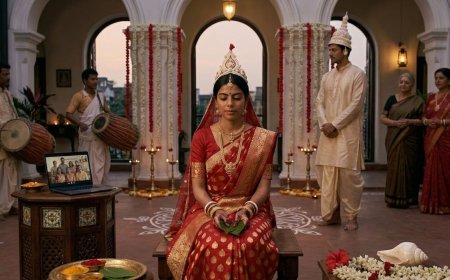
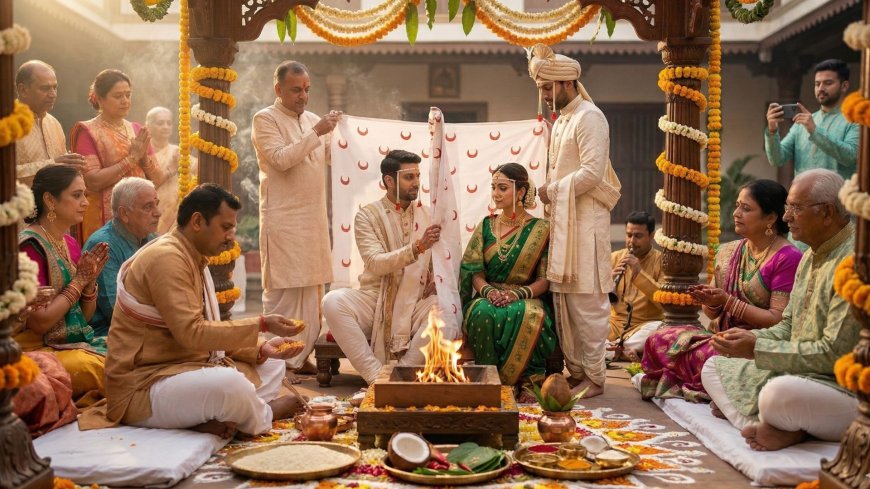
The Antarpat is a white or decorated cloth held between the bride and groom by family members, separating them from each other's sight for a period before the ceremony's auspicious moment. The bride and groom are seated on either side of the Antarpat — unable to see each other, present in the same ceremony space but separated by the cloth — while the Purohit conducts the preliminary rituals.
The Antarpat is removed at the precise Muhurta moment — the auspicious instant identified by the astrologer — and the bride and groom see each other for the first time in the ceremony context. This moment of reveal — the cloth dropping, the couple's first gaze — is accompanied by the shower of Akshata — the blessed rice mixed with turmeric — thrown over the couple by the assembled family, and by the Shehnai whose music marks the auspicious moment.
The timing of the Antarpat's removal is the moment in the Marathi ceremony that all the Muhurta calculation is organized around. Everything in the ceremony must be at the right stage when the auspicious moment arrives for the cloth to be removed. The Purohit manages this timing with the precision that the tradition requires.
Var Puja — The Worship of the Groom
After the Antarpat is removed, the bride's parents perform the Var Puja — the ritual worship of the groom as the divine masculine, identified in this ceremony context with the divine figure of Vishnu. The groom's feet are washed, the Purohit conducts the specific puja rituals, and the groom receives the specific honors that this ceremony bestows.
The Var Puja is the Marathi wedding's specific form of the guest of honor ritual — the groom received into the bride's family's home as the divine guest whose arrival is the most auspicious event the family can experience.
Kanyadan — The Gift of the Daughter
The Kanyadan is the central ritual of the Hindu wedding ceremony across regional traditions, but in the Marathi context it has specific characteristics that distinguish it from its equivalents in other traditions.
The bride's father places his daughter's hand in the groom's hand, with the family's Purohit conducting the specific Sanskrit mantras of this most solemn ceremony moment. The ritual of giving and receiving — the father's gift of his daughter, the groom's acceptance of that gift — is constituted in the specific Sanskrit verses and the specific ritual actions that the Purohit directs.
The Kanyadan in the Marathi tradition involves the specific convention of the bride's parents sitting at a lower level than the groom during this ritual — a convention that expresses the specific cultural value of the gift being given and the specific honor being accorded to the receiver.
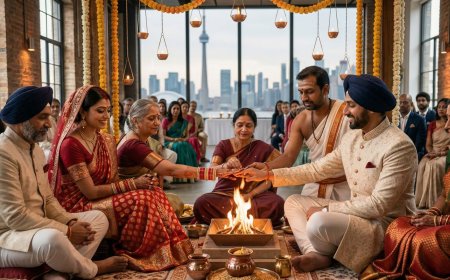
Vivah Homa — The Sacred Fire Ceremony
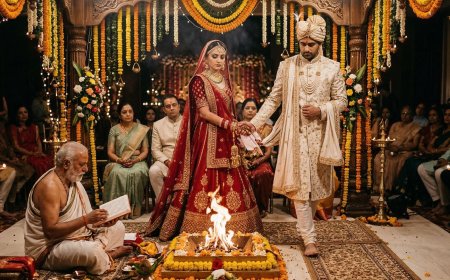
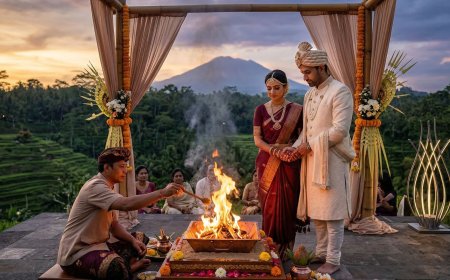
The Vivah Homa — the sacred fire ceremony that is the Vedic heart of the Hindu marriage — is conducted in the Marathi tradition with the specific characteristics of Maharashtrian ritual practice. The sacred fire is lit according to the specific Vedic protocol of the ceremony, and the couple performs the ritual offerings to the fire — the Ahuti — that constitute their joint act of devotion to the divine witness of their marriage.
The specific mantras chanted during the Vivah Homa are in Sanskrit, and their content describes the spiritual and practical commitments the couple is making — to each other, to the divine, and to the family and community whose witness and blessing the ceremony invokes.
Saptapadi — The Seven Steps
The Saptapadi — the seven steps that are the universal Vedic marriage ritual — is the ceremony moment at which the marriage is spiritually constituted in the Hindu tradition. The Marathi Saptapadi follows the standard Vedic structure — the couple takes seven steps together around the sacred fire, each step accompanied by a specific vow — but within the specific Maharashtrian ritual context.
The seven vows of the Saptapadi — the commitments to food and sustenance, to strength and health, to prosperity, to happiness, to progeny, to long life, and to eternal friendship — are the specific promises that the Marathi wedding ceremony asks of the couple, expressed in Sanskrit and explained in Marathi by the Purohit for the assembled family's understanding.
The final step of the Saptapadi — the seventh — is the step after which the marriage is complete. The specific ritual actions that mark the completion of the seven steps, the Purohit's pronouncement of the marriage's formal constitution, and the family's collective celebration of this moment are the ceremony's highest-stakes moments from a ritual standpoint.
Mangalsutra — The Marathi Form
The Mangalsutra applied in a Marathi wedding has a specific form that is different from those of other Hindu regional traditions. The Marathi Mangalsutra is the two-vati design — two small gold cups attached to a string of black beads — and its specific form is so associated with the Marathi tradition that its wearing is an immediately recognizable marker of Marathi married identity.
The application of the Mangalsutra — the groom placing the Mangalsutra around the bride's neck — is accompanied by the specific Marathi convention of the thread being blessed by the Purohit and the assembled family before its application, and by the specific prayers that are part of this ceremony moment.
Sindoor and Kunku
The application of sindoor to the bride's hair parting — common across most Hindu regional wedding traditions — is present in the Marathi ceremony in the specific form of Kunku application, which has its own ceremonial significance in the Maharashtrian context. The Kunku mark on the forehead — the red mark that is the visible sign of the married Marathi woman — is applied after the sindoor and is the most visible daily marker of the married identity within the Marathi cultural context.
The Nauvari Saree: The Marathi Bridal Tradition
The Nauvari saree — the nine-yard drape that is the traditional Marathi women's garment — is one of the most distinctive elements of the Marathi bridal aesthetic and one of the most discussed elements of the Marathi wedding for NRI brides who are deciding between the traditional Nauvari and a contemporary six-yard saree or lehenga.
The Nauvari is not simply a different length of saree. It is a different garment — draped in a specific way that creates a structured lower garment resembling a dhoti, that allows for the free movement that the traditional lives of Maharashtrian women required, and that produces a silhouette of extraordinary dignity and visual power that the six-yard saree does not replicate.
The specific green Nauvari — the Paithani silk in the deep green that is associated with the Marathi bridal tradition — is the ceremonial bridal garment that most completely expresses the Marathi cultural aesthetic. The Paithani silk, woven in Paithan in Aurangabad district, is one of Maharashtra's great textile traditions — a handloom silk with a distinctive zari border and the specific peacock motif that appears across Maharashtrian decorative art.
For NRI brides considering the Nauvari for their wedding, the practical considerations addressed in the general saree draping guide apply with additional specificity: the nine-yard saree must be specifically sourced, the draping is complex enough to require a specialist, and the specific form of the Nauvari should be trialed well before the wedding day.
The Music: Shehnai, Ovi, and the Sound of the Marathi Wedding
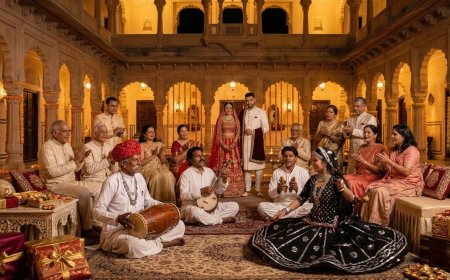
The Shehnai — the Indian oboe whose specific tone is inseparable from the ceremonial occasions of much of North and Western India — is the traditional music of the Marathi wedding ceremony. Its presence at the ceremony's significant moments — the Antarpat removal, the Saptapadi, the application of the Mangalsutra — marks these moments with a specific sonic signature that the family will carry as an auditory memory of the ceremony for the rest of their lives.
The Ovi — the traditional Marathi women's folk songs that are sung at every significant occasion in the Marathi life cycle — are the second great musical tradition of the Marathi wedding. Sung by the women of the family in the specific oral tradition that has maintained them across generations, the Ovi songs express the wedding's emotional content in Marathi, addressing the specific emotions of the occasion — the bride's departure, the family's joy and grief, the specific prayers for the couple's happiness — in the specific poetic form of the Marathi folk tradition.
For NRI families who want to preserve this tradition, the Ovi songs are the element that most rewards specific attention — identifying the older women in the family who know them, creating occasions for their singing within the wedding programme, and potentially recording them as a form of cultural preservation that benefits the family beyond the wedding itself.
The Food: The Marathi Wedding Feast
The Marathi wedding feast — the Jevana — is one of the most specifically Maharashtrian cultural expressions available in the wedding context. The traditional Marathi wedding menu is a specific culinary vocabulary that reflects Maharashtra's agricultural identity, its specific ingredient palette, and the particular culinary aesthetic that values the specific flavors of the Maharashtrian tradition over the richer, heavier profiles of North Indian wedding cuisine.
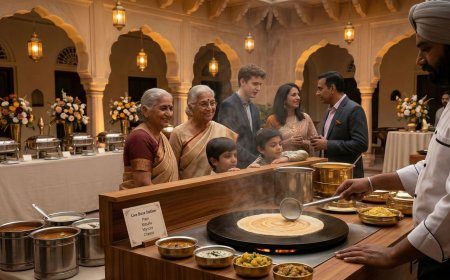
The Puran Poli — the sweet flatbread stuffed with a filling of chana dal, jaggery, and cardamom — is the most essential single item of the Marathi wedding menu. Its presence at the wedding meal is not optional — the Puran Poli is the Marathi wedding's culinary centerpiece in a way that no other single item is. A Marathi wedding without Puran Poli is not entirely a Marathi wedding.
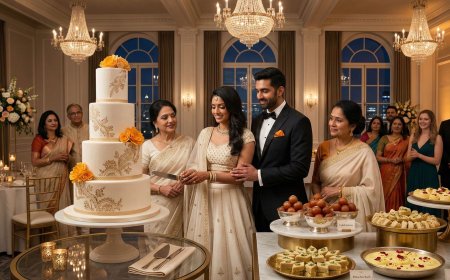
The broader Marathi wedding menu includes: the Amti dal with its specific tamarind-jaggery-coconut profile that is immediately recognizable as Maharashtrian; the Koshimbir fresh salads with their specific mustard seed tempering; the specific Maharashtrian vegetable preparations — Bharli Vangi, Alu chi Bhaji — that are distinct from their equivalents in other regional traditions; the Shrikhand that is Maharashtra's specific yogurt dessert; and the Modak — the sweet dumpling sacred to Ganesh — that appears at the beginning of every auspicious Maharashtrian occasion.
For NRI families planning the wedding meal, the caterer selection must prioritize genuine Maharashtrian culinary expertise. A caterer who can produce an authentic Puran Poli — with the specific texture of the Poli and the specific flavor balance of the filling — is demonstrating the kind of regional culinary knowledge that distinguishes a genuine Marathi wedding feast from a generic Indian wedding meal.
Planning the Marathi Wedding as an NRI: The Specific Challenges
The Purohit
The Marathi wedding ceremony requires a Purohit who is trained in the specific Maharashtrian ritual tradition. The specific mantras, the specific ritual sequence, and the specific form of each ceremony element in the Marathi tradition require specialist knowledge that is different from the North Indian Brahmin ceremony tradition.
For NRI families planning a wedding in Maharashtra, the Purohit search should be conducted through the family's specific community network — the families who have recently conducted Marathi weddings within the family's Brahmin community will be able to recommend Purohits whose knowledge is specifically Maharashtrian.
For NRI families planning a wedding outside Maharashtra, finding a Purohit with genuine Marathi ceremony knowledge may require either flying one from Maharashtra or engaging the Marathi community in the wedding location to identify a Purohit with the necessary knowledge.
The Muhurta Integration
The Muhurta's operational significance for the ceremony timeline — described earlier in this guide — requires that the Muhurta calculation is communicated to every ceremony vendor at the earliest possible stage of planning. The venue's ceremony timeline, the photographer's shooting plan, the catering service timing, and the MC's event management all must be organized around the Muhurta rather than around logistical convenience.
NRI families who are accustomed to event planning in which the timeline is determined by practical considerations rather than astrological ones sometimes resist the Muhurta's authority over the ceremony timing. The practical guidance: the Muhurta is not negotiable in the Marathi tradition, and the planning that works around it produces a ceremony that is genuinely and completely Marathi. The planning that works around logistical convenience and accommodates the Muhurta where possible produces a ceremony that is functionally similar but spiritually incomplete in the specific way that matters to the tradition's practitioners.
The Nauvari Decision
For NRI brides who want to wear the Nauvari, the logistics must be planned with specific care. A nine-yard Paithani saree for the ceremony, sourced from a reputable Paithani weaver in Paithan or from an established Maharashtrian textile retailer, with a specialist Nauvari draper confirmed for the wedding morning, and with the full Nauvari look trialed in advance — this preparation produces a bridal look of extraordinary cultural authenticity and visual power.
For NRI brides who choose a contemporary six-yard saree or lehenga for the ceremony, the cultural significance of the Nauvari can be honored through a change into Nauvari for specific photographs or for specific ceremony moments, rather than requiring the full nine-yard drape for the entire day.
The Specific Dignity of the Marathi Wedding
There is a word in Marathi — Maryada — that translates as dignity, propriety, or the maintenance of appropriate boundaries and forms. It is a value that runs through Maharashtrian culture and that is specifically visible in the Marathi wedding: the specific restraint of the aesthetic, the precision of the ritual, the sense that the ceremony knows exactly what it is and what it requires and does not need to be more elaborate or more showy to be complete.
This specific dignity is not austerity. The Marathi wedding can be abundantly beautiful — the Paithani silks, the specific Maharashtrian jewelry tradition, the Shehnai music, the abundant feast — all express a specific cultural richness that is fully present and fully enjoyed. It is a dignity of form rather than a restraint of expression.
For NRI couples who carry this tradition at a distance and who are bringing it home for their wedding, understanding the Maryada — the specific form of the Marathi wedding and what that form is expressing — is what allows the wedding to be inhabited with genuine understanding rather than performed with approximate compliance.
Know the tradition. Honor its specific form. Let the Antarpat fall at the Muhurta moment.
And then let the Purohit begin.
NRIWedding.com — Expert guidance for Indian weddings planned across borders.
What's Your Reaction?
 Like
0
Like
0
 Dislike
0
Dislike
0
 Love
0
Love
0
 Funny
0
Funny
0
 Angry
0
Angry
0
 Sad
0
Sad
0
 Wow
0
Wow
0