




















































Destination Weddings in Maharashtra: Mumbai, Alibaug and the Hills — What NRI Couples Need to Know: The Complete NRI Planning Guide
Planning a destination wedding in Maharashtra from abroad? This complete NRI guide covers everything the globally-located Indian couple needs — from Alibaug's luxury farm stays and the Gateway of India ferry crossing to Konkan coast heritage bungalow buyouts, Murud-Janjira fort sightline ceremonies, Nashik vineyard harvest weddings at Sula and York Winery, Lonavala and Sahyadri ghat estate properties, Mahabaleshwar's colonial strawberry hill station, and the multi-destination week that combines Mumbai's Taj Mahal Palace with the Konkan coast in a single extraordinary programme. Learn how to manage the chartered ferry transfer protocol, Maharashtra Coastal Zone Management Authority CRZ regulations for Alibaug beach ceremonies, Nashik vineyard harvest booking timelines, Mumbai vendor market accessibility without destination premiums, Warli art and Konkani Malvani cultural integration, and the specific planning decisions that transform the forty-five-minute harbour crossing into the wedding week's defining first act. Understand ferry weather contingency planning, multi-destination week logistics, NRI payment frameworks, and the five specific mistakes that turn Maharashtra's extraordinary geographic proposition into avoidable crisis. This is the complete, expert, non-generic guidance that a Maharashtra destination wedding demands.


Destination Weddings in Maharashtra — Mumbai, Alibaug and the Hills: What NRI Couples Need to Know: The Complete NRI Planning Guide
The ferry was forty-five minutes.
That was the fact that changed everything for Shreya and Mihail — not the Alibaug photographs, not the venue shortlist, not the three months of research that had produced a spreadsheet with fifty-one rows and the specific, accumulating exhaustion of a planning process that had become more complicated than the event it was meant to produce. It was a single sentence in a message from Shreya's school friend Tanvi, who had attended a wedding in Alibaug the previous February and who had described it in the specific, undistilled way of someone who is reporting an experience rather than constructing a recommendation:
You get on a ferry at the Gateway of India and forty-five minutes later you are somewhere completely different.
Shreya read this at seven-nineteen in the morning in Stockholm, sitting at the kitchen table with her coffee and her laptop and the spreadsheet that had been open for sixteen consecutive days without a single entry being moved to the confirmed column. Mihail was in the shower. Outside the window Stockholm was doing what Stockholm does in January — the sky a specific, pewter grey, the water of the Riddarfjärden below flat and dark, the city quiet in the manner of a place that has made its peace with the absence of light.
She read the sentence again.
Forty-five minutes later you are somewhere completely different.
She opened a new browser tab. Typed: Alibaug ferry from Mumbai.
What she found was this. The Gateway of India to Mandwa ferry — twenty-two kilometres of open water across the Mumbai Harbour, operated by several private operators, running multiple sailings per day, connecting the colonial grandeur of Apollo Bunder to the Konkan coast's fishing village and mango orchard and fort-ruin landscape on the other side of the harbour. Forty to forty-five minutes on a fast catamaran. The journey a transition — not simply physical but experiential, the crossing of a boundary between the city's specific, maximum, relentless energy and the coast's specific, unhurried, agricultural, ancient alternative.
Alibaug on the other side: the Konkan District, the coconut palms, the mango orchards, the Portuguese and Maratha forts visible from the sea, the black-sand beaches of the Konkan coast, the specific, warm, laterite-stone architecture of the Konkan's farm bungalows, and — growing in the last decade into something significant — a community of luxury farm stays and heritage properties that had discovered that the forty-five-minute crossing from Mumbai's Gateway of India was one of the most extraordinary logistical assets any destination wedding location in India possessed.
She called Mihail in from the shower.
He stood in the kitchen doorway, dripping slightly, reading over her shoulder.
"The ferry is forty-five minutes," she said.
"From the Gateway of India," he said.
"Yes."
"To a Konkan coast."
"Yes."
"With mango orchards."
"And forts. Portugese and Maratha forts. And black sand beaches. And the farm bungalow tradition."
He was quiet for a moment.
"Our families are in Mumbai," he said.
"Yes."
"The guests fly into Mumbai."
"Yes."
"And then they get on a ferry at one of the most famous landmarks in India and forty-five minutes later they are on the Konkan coast."
"Yes."
He looked at the Stockholm window. The pewter sky. The dark water.
"Book the reconnaissance trip," he said.
What neither of them understood yet — what the forty-five minutes had clarified in terms of desire without answering in terms of specifics — was that Maharashtra is not a binary choice between the ferry to Alibaug and the decision to stay in Mumbai. It is a state of extraordinary internal variety whose wedding destination proposition spans the most glamorous city wedding market in India, the most logistically extraordinary coastal destination, the most historically resonant hill station tradition, the most specifically Maharashtrian cultural landscape of the Konkan villages and the Sahyadri ghats, and the specific, underexplored category of the vineyard wedding in the Nashik wine country. Understanding this variety — choosing which Maharashtra before choosing which venue — is the foundational planning act that the ferry sentence does not cover.
This guide is for that couple — the ones for whom the ferry has already done its work, and who need to understand, completely and without assumption, the full scope of what Maharashtra offers the NRI couple planning a wedding from abroad.
Why Maharashtra Requires a Destination Selection Conversation
Maharashtra is the state whose wedding destination conversation is most distorted by the dominance of a single city. Mumbai is so large, so famous, so comprehensively the center of the Indian cultural and financial imagination, that the wedding planning conversation about Maharashtra defaults to it almost without examination — the Taj Mahal Palace or the Four Seasons AER or the Taj Lands End, the options covered in the Mumbai guide that forms the companion article to this one in the series.
Mumbai is the right answer for a specific category of NRI couple, and the Mumbai guide makes that case completely. This guide is about the Maharashtra that exists outside Mumbai — and the extraordinary fact that it is not necessary to travel far outside Mumbai to reach it.
Alibaug is forty-five minutes by ferry. The Karjat hill country is ninety minutes by road. Lonavala and Khandala are two hours by road. Nashik is three hours. Mahabaleshwar is four hours. Aurangabad and the Ajanta-Ellora cave complexes are five hours or a short flight. The Konkan coast villages south of Alibaug — Kashid, Murud, Diveagar, Harihareshwar — are two to four hours by road from Mumbai across the Konkan backroads.
None of these destinations are remote. All of them are within a day's drive or a ferry ride from one of India's primary international airports. All of them offer a fundamentally different wedding experience from the city wedding, and several of them offer a wedding experience that is available nowhere else in India.
The Six Distinct Destination Characters of Maharashtra
Alibaug and the Konkan Coast — The Ferry Destination
Alibaug is the proposition that the forty-five-minute ferry makes possible, and it is a proposition of genuine, non-derivative, specifically Maharashtrian character that no amount of resort development has managed to make generic.
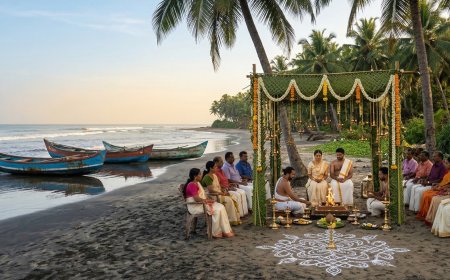
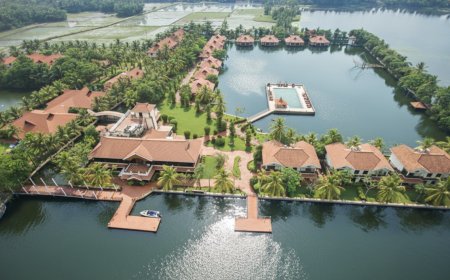
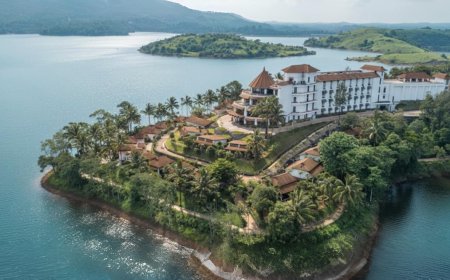
The Konkan coast — the stretch of Arabian Sea coastline between Mumbai Harbour and Goa, between the Western Ghats' western escarpment and the sea — is the specific, laterite-stone, mango-and-coconut, fort-ruin, fishing-village, Maratha-and-Portuguese cultural landscape of Maharashtra's coast, and Alibaug is its most accessible point from Mumbai. The Alibaug of the wedding market is not primarily the town itself — the town is a modest, busy Konkan market town — but the farm stay and heritage bungalow country in the twenty kilometres south and east of the town, where the laterite-stone farmhouses of the Konkan agricultural tradition sit in mango orchards and coconut groves with the kind of unhurried, working-landscape beauty that Mararikulam in Kerala has and that destination wedding marketing consistently undervalues.
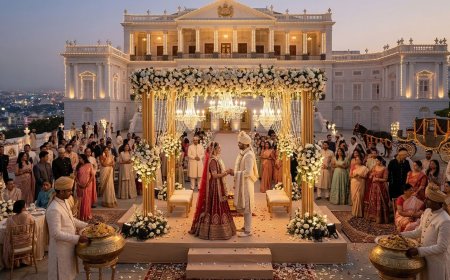
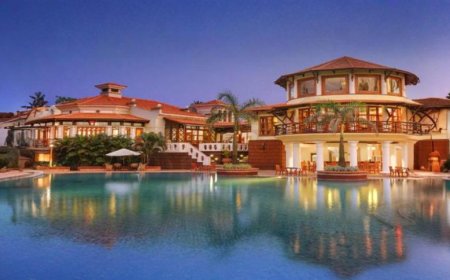
The Alibaug wedding venue category is anchored by two property types. The first is the luxury farm stay — the large-acreage properties that have been developed over the last fifteen years by Mumbai's professional and creative class who discovered the Alibaug coast as a weekend destination and who have invested in properties that reflect both the Konkan's vernacular architectural tradition and the contemporary luxury expectations of their Mumbai clientele. These properties — typically set on two to ten acres of mango orchard and coconut grove, with laterite-stone construction, swimming pools, and event infrastructure developed for the wedding market — offer the most operationally developed Alibaug wedding experience, with event teams that understand the specific logistics of the ferry-accessible coastal destination.
The second property type is the heritage bungalow buyout — the older Konkan farmhouse, the Saraswat Brahmin summer home, the colonial-era coastal bungalow that has been in a family for three or four generations and that has been opened to events as an extension of a family's hosting tradition rather than as a commercial hospitality venture. These properties offer the most specifically, authentically Konkan wedding experience — the old laterite walls, the mangoes heavy in the orchard in April and May, the specific smell of a Konkan farmhouse in the monsoon's aftermath — and they require the most independent event management.
The Alibaug wedding's defining logistical asset is the ferry, and it must be managed as a coordinated operation rather than left to individual guest arrangement. The Gateway of India departure point, the advance booking requirements, the luggage management for guests who are bringing wedding attire and personal belongings for a three-day stay, the Mandwa landing and the road transfer from Mandwa jetty to the property — all of this constitutes a guest arrival experience that, when managed well, becomes the first memorable event of the wedding week, and when managed poorly, becomes the first logistical problem of the wedding programme.
The water taxi alternative — the faster, smaller vessels that operate from the Mumbai wharves and from the Taj Mahal Palace's private landing — reduces the crossing to twenty-five to thirty minutes and eliminates the public ferry's queue and luggage management complexity, at a cost that is substantially higher but that is worth evaluating for the smaller, more intimate Alibaug wedding whose guest count makes individual water taxi bookings operationally feasible.
The Konkan Fort and Village Weddings
The Alibaug district's Portuguese and Maratha fort heritage — Kolaba Fort, Janjira Fort, Suvarnadurg, Murud-Janjira, Gheria — constitutes a historical landscape that is available nowhere else in India in quite this combination: the Maratha naval fortifications, built by Chhatrapati Shivaji Maharaj's navy in the seventeenth century to defend the Konkan coast against Portuguese and European naval power, sitting in the sea and on the headlands of the Arabian Sea coast with a specific, salt-worn, historically loaded grandeur.
These forts are ASI-protected monuments and are not available for private event hire. What they offer the Alibaug wedding, as Mahabalipuram's Shore Temple offers the wedding there, is presence — the most powerful kind of historical backdrop, available without ceremony fees or venue hire, simply by choosing a wedding property that is positioned in relationship to it.
The Murud-Janjira Fort — the only fort on the Indian mainland that was never conquered, sitting on a small island off the Murud coast approximately one hundred and fifteen kilometres south of Mumbai — is the most dramatically positioned of the Konkan forts, visible from the Murud beachfront properties in the specific, sea-surrounded, sea-surrounded manner of a structure that has been asserting its impregnability since 1567. The wedding held at a Murud beach property, with the Janjira Fort visible across the water, is making a visual statement of extraordinary historical resonance.
Mumbai — The City Wedding
The Mumbai destination wedding is covered comprehensively in the dedicated Mumbai guide in this series — the Taj Mahal Palace, the Four Seasons AER, the Taj Lands End, the Oberoi, the St Regis, the JW Marriott Juhu. This guide acknowledges that section briefly as the necessary complement to the Maharashtra picture: the city that forty-five minutes of ferry separates from the Konkan coast is also the city of the most glamorous, most historically loaded, most internationally accessible urban wedding market in India.
The Maharashtra wedding conversation that treats Mumbai and Alibaug as mutually exclusive is missing the most specifically Maharashtrian wedding proposition available: the wedding week that uses both. The Thursday evening arrival dinner at the Taj Mahal Palace, the Friday ferry to Alibaug, the Saturday ceremony on the Konkan coast, the Sunday return ferry to Mumbai — this is a wedding week that uses Maharashtra's geography as its structure, that gives the guest the experience of Mumbai's Gateway and the Konkan's farm bungalow within the same event, that could only happen here, in this specific state, with this specific forty-five-minute crossing.
Lonavala, Khandala, and the Sahyadri Ghats
The Sahyadri — the Western Ghats as they pass through Maharashtra, the great escarpment that separates the Konkan coast from the Deccan Plateau, the range whose passes the Maratha Empire used as the strategic terrain of its resistance to the Mughal and the British — are two hours from Mumbai on the Mumbai-Pune Expressway, and the hill station towns of Lonavala and Khandala that sit on the ghats' western edge have been receiving Mumbai's weekend escape traffic since the railway reached them in the nineteenth century.
The Lonavala wedding market is the closest large-format outdoor wedding destination to Mumbai — close enough that vendors from Mumbai can service events there without overnight stays, close enough that guests who do not wish to stay at the venue can commute from Mumbai on the day, large enough in its resort and estate infrastructure to accommodate the large-format NRI wedding whose guest count makes the more intimate Alibaug properties impractical.
The Sahyadri landscape in the monsoon — the waterfalls running off every basalt cliff, the valleys filled with cloud, the specific, intense, tropical-green quality of the ghats in full rainfall — is the most dramatically beautiful season for the landscape and the most operationally impractical for outdoor events. The post-monsoon Sahyadri from October through January, when the waterfalls are still flowing but the rain has stopped and the air has the specific clarity of a landscape that has been thoroughly washed, is the primary wedding season.
The Aamby Valley and the Imagica-adjacent resort developments on the Pune side of the ghats have brought large-format wedding infrastructure to the Sahyadri landscape, and the couple whose guest count requires five hundred guests with on-site accommodation will find the Lonavala-Khandala-Karjat corridor the most practical large-format outdoor destination within two hours of Mumbai.
Nashik — The Vineyard Wedding
Nashik is the proposition that most NRI couples do not know exists, and whose existence changes the Maharashtra wedding conversation in a specific and significant way.
India's wine country is in Nashik, and the Nashik wine country's vineyard landscape — the Sula Vineyards, the York Winery, the KRSMA Estate, the Vallonne Vineyards, the Soma Vine Village — is the Indian wedding destination that most directly references the international vineyard wedding aesthetic that many NRI couples know from Europe, South Africa, and Australia. The vineyard in harvest season, the terraced rows of vines, the winery building in the late afternoon light, the specific, warm, agricultural beauty of a working vineyard at dusk — this is an aesthetic that the Indian destination wedding market has barely begun to explore, and Nashik is where it exists.
The Sula Vineyards, the largest and most developed of the Nashik wine estates, offers event infrastructure, accommodation in the SulaFest resort complex, and the specific, wine-country aesthetic of a property that has been designed with the vineyard as its central visual element. The couple whose wedding references the international vineyard tradition — whose aesthetic palette is the terracotta and the vine green and the barrel wood and the specific amber of a Nashik sunset over the rows — will find at Nashik a setting that is specifically, genuinely theirs and that no other Indian destination can replicate.
Nashik has the additional, non-aesthetic significance of being one of the four cities that hosts the Kumbh Mela, which means that its relationship with sacred geography — the Godavari River's origins, the temple traditions of the city's older quarters — is layered under the wine country's contemporary agricultural identity in a manner that gives the destination a cultural depth that the vineyard photographs alone do not suggest.
Mahabaleshwar and Panchgani — The Strawberry Hill Station
Mahabaleshwar — the hill station at 1,372 metres on the Sahyadri escarpment, the former summer capital of the Bombay Presidency, the strawberry-growing plateau whose Victorian-era hotels and colonial bungalows and panoramic valley viewpoints constitute the most specifically, historically intact hill station aesthetic in Maharashtra — is the wedding destination for the couple whose vision is the colonial hill station without Shimla's distance or Mussoorie's altitude.
The Mahabaleshwar wedding landscape is anchored by the heritage hotel properties on the plateau — the Le Méridien Mahabaleshwar, the Evershine Keys, the Brightland Resort, and the boutique colonial bungalow properties in the older parts of the hill station — and by the farm stay properties in the strawberry-growing villages between Mahabaleshwar and Panchgani whose agricultural character has the specific, non-resort beauty of a working landscape at altitude.
The strawberry season — November through April — is the Mahabaleshwar window, the period when the strawberry farms are producing and the specific, cool, hill-station quality of the Sahyadri plateau is at its most pleasant. The monsoon from June through September is one of the heaviest in Maharashtra, with Mahabaleshwar receiving approximately six thousand millimetres annually — among the highest recorded rainfall in India — and is definitively not a wedding season.
The Seasonal Framework — Maharashtra's Calendar Across Destinations
The October through February window is the primary wedding season across all Maharashtra destinations, with specific variations by destination character. Alibaug and the Konkan coast offer an extended season from October through May — the summer months of March through May are hot but manageable for the coastal breeze-moderated Konkan, and the mango orchard in April and May has its own specific, fruit-heavy beauty. Lonavala and the Sahyadri ghats are at their best from October through January. Nashik's harvest season from August through October offers the specific vineyard aesthetic at its most active, with the post-harvest period through February remaining the most comfortable for large outdoor events. Mahabaleshwar follows the standard hill station calendar: October through May, with the monsoon June through September as a complete outdoor event prohibition.
The Mumbai component of the Maharashtra wedding — if the week-combining strategy is used — follows the October through February primary window established in the Mumbai guide.
NRI-Specific Logistics — Planning Maharashtra From Abroad
The Chhatrapati Shivaji Maharaj International Airport Gateway
Mumbai's CSIA — one of the busiest airports in Asia, with direct international connections from London, Frankfurt, Singapore, Dubai, Abu Dhabi, Doha, Kuala Lumpur, Bangkok, and North American hubs — is the Maharashtra gateway, and for the NRI couple planning a Konkan coast or Sahyadri wedding, it is the most logistically convenient gateway city of any destination state in this guide series.
Every NRI guest arrives in the city from which the wedding's most distinctive element begins. The guest who lands at CSIA, is transferred to a South Mumbai hotel, walks to the Gateway of India the following morning, and boards a ferry to Mandwa has had an arrival experience that begins with one of India's most historically significant architectural landmarks and ends on the Konkan coast — and the total time from the Gateway of India to the Alibaug property is under two hours door to door.
This is not an incidental logistical convenience. It is the defining characteristic of the Alibaug wedding's NRI proposition, and it must be designed and managed rather than left to individual guest navigation.
The Ferry Management Protocol
The Gateway of India to Mandwa ferry is the Alibaug wedding's first programme element and its most distinctive logistical challenge. The protocol for managing the ferry transfer of a wedding party of sixty to one hundred and fifty guests must be designed as a coordinated operation from the planning stage.
The key decisions are: which ferry operator, which sailing time, whether to charter a dedicated vessel or purchase blocks of seats on scheduled sailings, how to manage luggage for guests who are staying three to four nights at the property, how to handle the Mandwa jetty arrival and the road transfer from Mandwa to the property, and what the contingency is for weather-related ferry suspension — because the Mumbai Harbour ferry service is suspended in rough weather, and the monsoon and its shoulder seasons can produce sea conditions that ground the service for twelve to twenty-four hours.
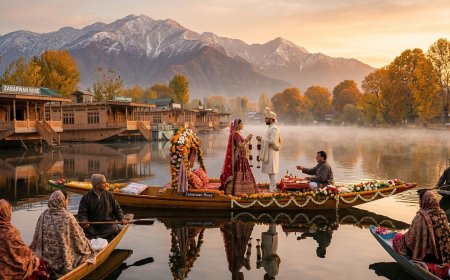
The chartered vessel is the correct approach for the wedding party of sixty or more guests, for the same reasons that the chartered Andaman ferry is the correct approach: it transforms the transit into a programme element, it eliminates the queue and seat-allocation management of a shared sailing, it allows the couple to design the crossing experience — the welcome drink on board, the Gateway of India departure ritual, the first view of the Konkan coast as the vessel approaches Mandwa — as the wedding week's opening event rather than its opening logistical challenge.
The Vendor Ecosystem — Mumbai's Depth at the Konkan's Doorstep
The Alibaug wedding vendor ecosystem has the same relationship to the Mumbai vendor market that the Gurugram wedding has to the Delhi-NCR market: it draws from one of the deepest and most sophisticated wedding vendor pools in India, without the geographic barrier that distances other destination weddings from their nearest major vendor hub.
Mumbai vendors service Alibaug events as a matter of operational routine. The decorator whose truck takes the ferry in the early morning with the floral installation — the Mandwa-bound service carries vehicles, which means that vendor logistics between Mumbai and Alibaug are fundamentally different from the logistics of any destination that requires a mountain road or a domestic flight. The caterer who drives from Mumbai to Alibaug via the Coastal Road and the NH 66 Konkan Highway arrives in under two hours. The photographer who crosses on the morning ferry and returns on the evening sailing has lost, at most, ninety minutes of Mumbai billable time.
This proximity means that the Alibaug wedding couple has access to the full quality depth of Mumbai's wedding vendor market — its photographers, its cinematographers, its decorator studios, its celebrity and entertainment roster — without the travel premiums and the logistical complications that separate most destination wedding couples from the best vendors in the nearest major city.
The NRI Wedding Planning Master Reference Table
| Planning Parameter | Maharashtra-Specific Detail | NRI Action Required | Recommended Timeline |
|---|---|---|---|
| Destination Selection | Six distinct characters: Alibaug and Konkan coast, Konkan fort and village, Mumbai city, Lonavala and Sahyadri ghats, Nashik vineyard, Mahabaleshwar hill station | Select destination character before venue shortlisting; consider multi-destination week combining Mumbai and Alibaug | First planning decision — before all others |
| Alibaug Ferry Management | Gateway of India to Mandwa: 40–45 minutes catamaran; water taxi: 25–30 minutes; vehicle ferry available for vendor logistics; suspended in rough weather | Charter dedicated vessel for 60+ guest party; design ferry crossing as programme element; confirm weather contingency route via road for suspended ferry days | 12–14 months before wedding |
| Alibaug Venue Categories | Luxury farm stays (40–120 guests), heritage bungalow buyouts (20–60 guests), large resort properties (100–250 guests) on Konkan corridor | Confirm property's ferry logistics experience; walk estate grounds at ceremony hour on reconnaissance; confirm vendor vehicle access via ferry or road | 14–16 months before wedding |
| Mumbai Gateway | CSIA direct international from London, Dubai, Singapore, Frankfurt, KL, North American hubs; CSIA to Gateway of India 45–60 minutes | Route all international guests via CSIA to Mumbai hotel; design Gateway of India ferry departure as Day 2 programme launch; confirm hotel proximity to Gateway | 8–10 months before wedding |
| Multi-Destination Week | Mumbai Day 1 arrival dinner plus Taj Mahal Palace or equivalent; Day 2 ferry to Alibaug; Day 3–4 ceremony and reception on Konkan coast; Day 5 return ferry | Design week as geographic progression; book Mumbai hotel and Alibaug property simultaneously; coordinate ferry charter for Day 2 group transfer | 14–16 months before wedding |
| Best Wedding Season | October to February primary across all characters; Konkan coast October to May extended; Nashik harvest August to October; avoid June to September monsoon | Match season to destination character; Nashik harvest window requires August–October booking 16+ months ahead; Mahabaleshwar monsoon most intense in India — absolute exclusion | 16–18 months for peak dates |
| Nashik Vineyard Venues | Sula Vineyards primary property; York Winery, Vallonne, Soma Vine Village; harvest August–October; post-harvest October–February primary wedding window | Confirm vineyard's event infrastructure and accommodation capacity; assess vine row sightlines from ceremony space on reconnaissance visit; brief photographer on vineyard golden hour | 14–16 months before wedding |
| Lonavala and Sahyadri | 90–120 minutes Mumbai by road; large resort and estate infrastructure; best October–January; monsoon dramatic but outdoor impractical | Confirm property's large-format capacity; Mumbai vendors service Lonavala without overnight stay — no travel premium; build monsoon contingency for shoulder dates | 12–14 months before wedding |
| Mahabaleshwar | 3.5–4 hours from Mumbai; strawberry season November–April; Le Méridien, Evershine Keys, boutique colonial bungalows; 6,000mm annual rainfall — absolute monsoon exclusion | Confirm property's colonial heritage character vs generic resort; strawberry farm pre-wedding shoot in season; road access assessment for large guest convoys | 14–16 months before wedding |
| Konkan Fort Context | Murud-Janjira, Kolaba Fort, Suvarnadurg — ASI protected, not available for private hire; sightline assessment from venue property essential | Assess fort sightline from venue ceremony space on reconnaissance visit; design programme to use fort presence without transgressing ASI restrictions | Built into venue selection |
| Vendor Ecosystem | Mumbai primary vendor hub for all Maharashtra destinations; Alibaug accessible by ferry for vendor logistics; no travel premiums for Mumbai-to-Alibaug vendor movement | Full Mumbai vendor depth accessible without scenic destination premiums; require Alibaug-specific experience from coordinator; confirm ferry logistics for vendor equipment transport | 10–12 months before wedding |
| Konkani Cultural Integration | Malvani cuisine, Konkani fish curry and rice, Ganpati tradition, Lavani folk dance, Warli art tradition, Konkan festival calendar | Commission Malvani feast for one function; engage Lavani ensemble for sangeet evening; source Warli art motif for invitation design and decor | 8–10 months before wedding |
| Photography Conditions | Alibaug mango orchard morning light exceptional 7–9 AM; Murud-Janjira fort from sea at golden hour; Nashik vineyard sunset light; Lonavala post-monsoon waterfall shoots | Brief photographer on destination-specific light conditions; schedule Murud fort sea shoot; Nashik vine row golden hour; Alibaug orchard dawn shoot | 6–8 months before wedding |
| Legal and Payments | Indian Contract Act 1872; Consumer Protection Act 2019; FEMA 1999; Maharashtra Coastal Zone Management Authority CRZ regulations for Alibaug beach ceremonies | Use NRO/NRE account; confirm CRZ compliance for any Alibaug beach event; require full scope and cancellation clauses in all vendor contracts | Before first vendor payment |
| Communication Protocol | IST gap: UK +4.5 hrs, US East +9.5 hrs, Australia East −5.5 hrs; Mumbai vendor market digitally sophisticated; Alibaug cellular connectivity adequate at main properties | Schedule weekly coordinator call; test Alibaug property connectivity on reconnaissance visit; establish backup communication plan for remote farm stay wedding days | From first vendor engagement |
Common Mistakes NRI Couples Make With Maharashtra Destination Weddings
The first mistake is treating the ferry as a self-organising guest transfer rather than a coordinated programme element. The Gateway of India to Mandwa ferry crossing is the most operationally distinctive feature of the Alibaug wedding and the most frequently mismanaged one, because couples who have never organised a group ferry transfer across a harbour underestimate the coordination requirements — the advanced booking for the sailing, the luggage management at the Apollo Bunder jetty, the boarding sequence for a large group, the Mandwa disembarkation logistics, and the road convoy from Mandwa to the property — and leave it to individual guest arrangement on the assumption that guests can manage their own ferry tickets. The guest who misses the group sailing, who cannot find the jetty, who arrives at the property two hours after the welcome programme has begun, is not having the experience the wedding promised them. The ferry transfer must be managed as a coordinated operation with a dedicated wedding team member at the Gateway of India on the embarkation day, confirmed vehicle transfers waiting at Mandwa, and a communication system that tracks the location of every guest throughout the crossing.
The second mistake is failing to assess the ferry weather contingency and design a road alternative into the programme from the beginning. The Mumbai Harbour ferry service is operated by private companies whose decision to suspend sailings in rough weather is made independently and often with short notice. The Arabian Sea from June through September produces sea conditions that regularly ground the service for extended periods, but even outside the monsoon season, pre-monsoon weather in April and May and the occasional weather system in November and December can produce a suspension that affects the wedding party's ability to cross to Alibaug on the planned day. The road alternative — Mumbai to Alibaug via Pen and the Alibag Ferry Road, approximately three to four hours depending on traffic — must be built into the programme as a confirmed contingency rather than discovered as an improvisation. The coordinator must have confirmed vehicle arrangements for the road alternative, and the programme timing must have sufficient buffer to absorb the additional journey time without disrupting the first Alibaug function.
The third mistake is choosing Nashik for the vineyard aesthetic without visiting the vineyard at the specific hour and season that produces the aesthetic. The Nashik vineyard in harvest season — the vines heavy with the specific, sun-warm, dusted grape of the September and October harvest, the vineyard workers moving through the rows in the early morning — is the aesthetic that the reconnaissance visit must confirm. The Nashik vineyard in January, post-harvest, with bare pruned vines in ordered rows and the specific, agricultural dormancy of a fruit crop between productive cycles, is a different aesthetic entirely — beautiful in its own spare way, but not the harvest vineyard that the international vineyard wedding references. The couple who targets the harvest season at Nashik must book at sixteen months, must confirm the vineyard's event calendar against its agricultural calendar, and must understand that the harvest timing varies by variety and by year in ways that require the estate manager's specific knowledge rather than a fixed booking date.
The fourth mistake is neglecting the Warli and Konkani cultural dimension of an Alibaug wedding in favour of the generic Mumbai wedding aesthetic that the proximity to the city tends to produce. The Konkan coast is the specific territory of the Konkan Maratha and the Konkan Saraswat Brahmin and the Konkani-speaking fishing community whose culture — the Malvani cuisine, the Konkan festival calendar, the Warli tribal art tradition of the Sahyadri-Konkan border, the Lavani folk music tradition — constitutes one of the most distinctive regional cultural landscapes in Maharashtra. The Alibaug wedding that is indistinguishable from a Mumbai wedding except for its outdoor setting has failed to engage with the place it is held. The Malvani fish curry at one function, the Warli art motif in the invitation design, the Lavani ensemble at the sangeet — these are the cultural acknowledgements that root the wedding in its specific Konkan geography and that give the international guest an experience they cannot have at any Mumbai hotel.
The fifth mistake is underestimating the CRZ regulatory framework for any Alibaug beach ceremony and assuming that the property's beach access constitutes permission for a wedding function on the beach. The Maharashtra Coastal Zone Management Authority's implementation of the CRZ Notification, 2019, applies to the Alibaug coast as it applies to the Kovalam and Mararikulam coasts in Kerala — with restrictions on temporary structures within the defined distance from the high tide line, sound level limitations, and the specific provisions that govern event use of beach areas that are not within the private resort's delineated property boundary. The farm stay property whose beach access is a right of way rather than a private beach does not have the authority to grant permission for a wedding ceremony on that beach, and the couple who plans the ceremony at the waterline without confirming the CRZ compliance will discover the limitation at the wrong moment. The coordinator with Alibaug event experience will know exactly which properties have private beach sections within CRZ-compliant boundaries and which do not.
The Aesthetic Language of a Maharashtra Wedding
The visual vocabulary of a Maharashtra wedding shifts as dramatically with its destination character as Karnataka's does, and the unified aesthetic principle across all Maharashtra wedding locations is the same: the destination's own material culture is the starting point, and the wedding's design language must be derived from it rather than imported over it.
The Alibaug and Konkan coast aesthetic is the aesthetic of laterite stone and coconut palm and mango wood and terracotta and the specific, warm ochre of the Konkan landscape's dominant earth tone. The laterite stone of the farm bungalow walls — the specific, porous, warm-toned stone that the Konkan's ferruginous soil produces and that constitutes the architectural signature of the entire coastal strip from Mumbai to Goa — is the texture that defines the Alibaug wedding's visual register, and the decorator who works with it — who uses it as the mandap's base material, who lights it with brass diyas that catch the stone's texture in the evening — is doing something that no imported marble or synthetic fabric can replicate.
The Warli art tradition — the tribal graphic art of the Sahyadri-Konkan border communities, with its characteristic white-on-ochre geometric human figures, its circular village compositions, its specific vocabulary of the hunt and the harvest and the celebration — is the most distinctive visual tradition of the Maharashtra coast, and its use in the invitation design, the welcome signage, and the décor ground patterns connects the wedding to a visual tradition of genuine antiquity and extraordinary beauty.
The Nashik vineyard aesthetic references the international wine country visual language — the terracotta and the vine green and the barrel wood and the specific, warm amber of a Maharashtra sunset over the rows — but its most specifically Maharashtra dimension is the Godavari Valley's agricultural tradition: the black cotton soil, the basalt rock, the specific, rich, dark quality of Nashik's earth that makes it different from the lighter soils of any European wine country and that gives the Nashik vineyard its specific visual character.
The Mahabaleshwar colonial hill station aesthetic is the aesthetic of the British Bombay Presidency's summer retreat — the wooden bungalow, the veranda with the valley view, the silver oak avenue, the specific, slightly faded, weathered quality of a hill station that has been receiving Mumbai's elite for a hundred and fifty years and that has the patina of all that accumulated occasion on every surface.
Resolution
The ferry left at nine-fifteen on a Saturday morning in November, from the Gateway of India jetty, under the basalt arch of the colonial monument that has been watching the harbour since 1924 and that does not distinguish between the morning ferry's occasion and any other morning's departure.
Shreya was standing at the bow. The Mumbai skyline was behind the ferry now, receding — the towers of the Back Bay reclamation, the Colaba promontory, the Taj Mahal Palace dome catching the morning light in the specific, amber, century-old way that it does when the sun is at that angle. In front of the ferry, twenty-two kilometres of open harbour water, and beyond that the Konkan coast, invisible at this distance.
Mihail came to stand beside her.
The wedding party was on the deck behind them — sixty-three people from Stockholm, from London, from Dubai, from Sydney, from Mumbai, from Pune, from various nodes of the Indian diaspora that had been moving outward from the subcontinent for decades and that were now moving back, toward a ferry, toward a Konkan coast, toward a mango orchard and a laterite-stone farmhouse and a ceremony that had been planned across two years and two countries and one very specific sentence about a crossing.
"Look at them," Mihail said.
She turned. The guests were at the railing, watching the Mumbai skyline recede. Some of them had their phones out. Some of them were just watching. Mihail's mother — who had never been to India before, who had arrived from Stockholm two days earlier and who had been maintaining a careful, slightly overwhelmed composure since the airport — was standing with Shreya's mother at the port railing, and the two of them were talking to each other in the specific, animated way of people who have discovered an unexpected subject of mutual interest, which was, Shreya could see from the angle of their conversation, the departing skyline.
"They are having their own experience," Mihail said.
"Yes," she said.
"This is what Tanvi meant," he said. "About forty-five minutes later being somewhere completely different."
"Yes."
"We are still in the middle of it. Between the two places."
She looked at the water. The harbour. The city behind. The coast ahead, still invisible.
"This is the wedding," she said. "This is already the wedding."
He looked at her.
"Yes," he said. "I think it is."
The ferry went on across the harbour. The Mumbai skyline became smaller and then was the skyline and then was the horizon. The Konkan coast appeared — first as a green line above the water, then as individual coconut palms, then as the Mandwa jetty and the red laterite hills behind it and the mango orchards beginning at the road's edge.
Forty-five minutes later they were somewhere completely different.
It was exactly what had been promised.
Charter the ferry and design the crossing — it is the wedding's first programme element, not its first logistics problem. Confirm the CRZ compliance for any beach ceremony before the venue is booked. Visit the vineyard at harvest season if Nashik is the choice. Include the Malvani feast and the Warli motif. Assess the Konkan fort sightline from the venue ceremony space on the reconnaissance visit.
Maharashtra gives you the most logistically extraordinary destination wedding proposition in India — the city with the famous landmark at its waterfront and the Konkan coast forty-five minutes away by ferry, the vineyard three hours from the airport, the colonial hill station four hours from the same airport, all within the same state, all drawing from the same deep vendor market.
Plan it with the precision the crossing deserves. Design the ferry as the opening act. Let Maharashtra be the structure of the week rather than the backdrop of the ceremony.
The harbour will do the rest.
Published by NRIWedding.com — The Premium Global Platform for Non-Resident Indians Planning Indian Weddings From Abroad.
What's Your Reaction?
 Like
0
Like
0
 Dislike
0
Dislike
0
 Love
0
Love
0
 Funny
0
Funny
0
 Angry
0
Angry
0
 Sad
0
Sad
0
 Wow
0
Wow
0