


















































Magicians and Entertainers for Cocktail Hour — The Complete NRI Wedding Planning Guide
The wedding planner's single consistent observation across eleven years and more than two hundred weddings was not about the ceremony or the reception or the sangeet — it was about the cocktail hour, the one element that almost nobody planned for, that arrived reliably at every wedding as a space the programme had created and then declined to fill, producing the specific experience of guests who knew each other speaking to each other, guests who did not standing near food stations looking at their phones, and an overall quality of a waiting room with better catering. The cocktail hour entertainment does not entertain the guests — it connects them. This complete guide gives NRI couples the full framework for planning cocktail hour entertainment that serves the hour's two specific functions of transition and social mixing — covering why the close-up magician is the cocktail hour entertainment form that most specifically serves both functions including the shared surprise that bridges linguistic and cultural barriers, the grandmother from Chennai and the colleague from Amsterdam having the same reaction to the same card trick with identical inflection, what to look for in a close-up magician including technical excellence, social skills, cultural awareness and wedding-specific experience, the logistics of performer numbers relative to guest count with the coverage calculation, the full alternative entertainer guide including caricaturists, mentalists, roving musicians with instrument selection, living statues contextualised for Indian wedding aesthetics, interactive food and beverage experiences including cocktail mixing demonstrations and live chaat stations, and strolling performers, the entertainment stack combinations for sixty to one hundred guests, one hundred to two hundred guests and over two hundred guests with combined cost ranges, the budget framework with approximate ranges by performer type and city, the sourcing process including entertainment agencies, wedding planner referrals, direct discovery and the audition for high-value bookings, and the five common mistakes including not planning the cocktail hour at all and booking spectacle over social mixing.

Magicians and Entertainers for Cocktail Hour: The Complete NRI Wedding Guide
The Hour That Nobody Planned For
It had been the wedding planner's single consistent observation across eleven years and more than two hundred weddings.
Not the ceremony — couples planned the ceremony with extraordinary care, sometimes to the level of individual minutes and specific phrases and the precise angle of the floral arch relative to the mandap. Not the reception — the DJ, the band, the food stations, the lighting design, the table layouts received months of attention and significant portions of the budget. Not the sangeet, not the mehndi, not the baraat — all of these had their champions among the couples she worked with, the specific elements that particular couples cared about deeply and planned with genuine thoroughness.
The cocktail hour was the element that almost nobody planned for.
It arrived — reliably, at every wedding, in the gap between the ceremony ending and the reception beginning — as a space that the programme had created and then declined to fill. The guests poured out of the ceremony space into the cocktail area, drinks were handed to them by waiting staff, and then the next forty-five minutes to an hour happened in whatever way they happened to happen, which was usually: the people who knew each other spoke to each other, the people who did not know each other stood near the food stations and looked at their phones, and the overall experience of the cocktail hour was that it was a waiting room with better catering.
The couples who noticed this — who arrived at the cocktail hour as guests at someone else's wedding and experienced the specific quality of an unplanned hour — sometimes mentioned it to the wedding planner when their own planning began. She had heard versions of the same observation many times.
"We went to a wedding last year where the cocktail hour just — nobody knew what to do with themselves."
"The drinks were great but it felt like we were just waiting."
"There was this awkward period before dinner where nothing was really happening."
The wedding planner's response was always the same.
"That is the cocktail hour without entertainment. Would you like to plan yours differently?"
The answer, almost always, was yes — followed by the discovery that planning the cocktail hour differently was both simpler and more impactful than most couples expected. The right entertainment for the cocktail hour does not require a large budget or a complex production. It requires the specific understanding of what the cocktail hour is for and what entertainment form serves that function.
This guide is that understanding — complete, practical, and specifically calibrated for the NRI wedding's diverse cocktail hour guest list.
What the Cocktail Hour Is Actually For
The Transition Function
The cocktail hour serves a specific function in the wedding's programme architecture that is separate from its entertainment function — and understanding it is the foundation for understanding what entertainment serves it best.
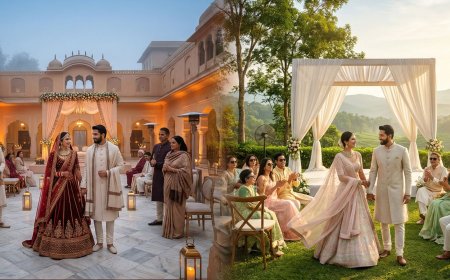
The cocktail hour is a transition — the movement of guests from the ceremonial register of the wedding (the formal, the sacred, the witnessed) to the celebratory register of the reception (the social, the festive, the participatory). This transition cannot happen instantly. The guest who has just witnessed a ceremony of genuine emotional weight cannot be immediately seated at a reception table and asked to begin the celebratory dinner. They need the specific decompression space that the cocktail hour provides.
The cocktail hour is where the wedding's emotional register shifts. The entertainment that serves this function is the entertainment that supports the shift — that creates an atmosphere of warm social engagement without the formality of the ceremony or the full commitment of the reception's programme.
The Social Mixing Function
The cocktail hour is also — and this is its most consistently underserved function at NRI weddings — the primary opportunity for social mixing between guests who do not know each other.
The ceremony places guests in assigned seats, organised by their relationship to the couple, which means that the bride's family and the groom's family and the international guests are in physically separate sections of the ceremony space. The reception places guests at assigned tables, organised again by relationship, which means that the mixing is limited to table-level rather than event-level.
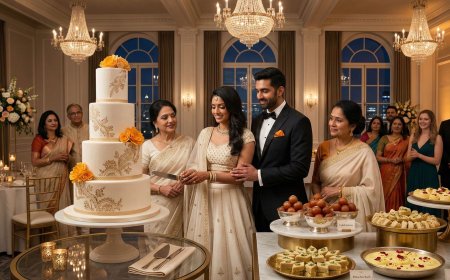
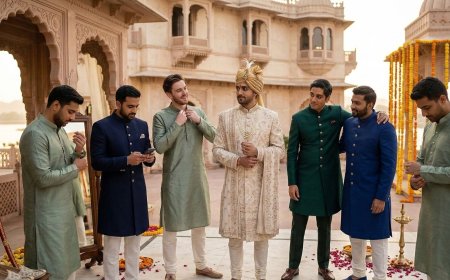
The cocktail hour is the one moment in the wedding programme when all guests are in the same space without assigned positions — when the bride's aunt from Chennai and the groom's colleague from Amsterdam are equally likely to be at the same canapé station, reaching for the same pani puri, and discovering each other.
The entertainment that serves the social mixing function is the entertainment that creates natural conversation openings between strangers — that gives people who do not know each other a shared experience to respond to, a shared surprise to react to, a shared question to discuss. This is the entertainment function that the magician and the close-up entertainer serve better than any other cocktail hour entertainment form.
The Close-Up Magician: Why It Works
The Specific Magic of Proximity
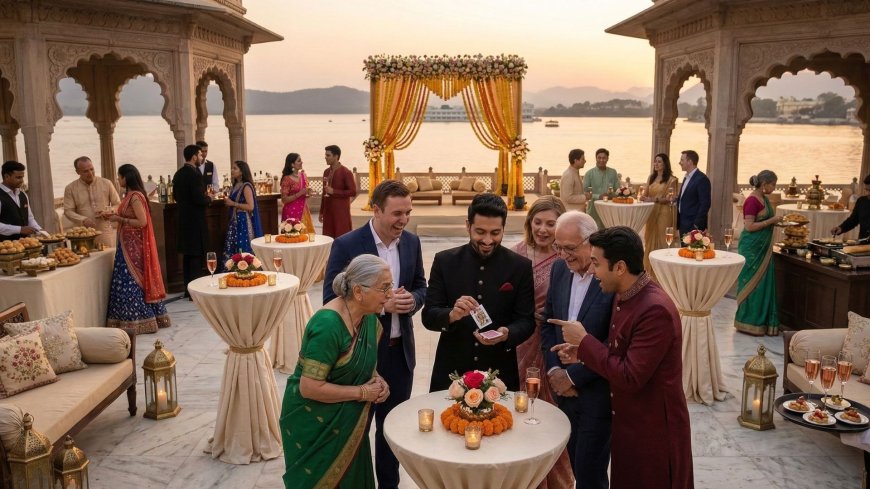
The close-up magician — the performer who works within arm's reach of the audience, with a deck of cards or a coin or an everyday object that transforms through their hands — is the cocktail hour entertainment form that most specifically and most reliably serves both the transition function and the social mixing function.
Why it works:
The close-up magic performance is not a spectator experience — it is an intimate encounter. The magician who approaches a group of three guests who do not know each other and performs a three-minute routine with a deck of cards has done something specific to that group: they have given them a shared experience, a shared reaction, and a shared subsequent conversation. The "how did they do that?" question is one of the most reliable conversation starters in social history — it requires no cultural prior knowledge, no shared language beyond basic comprehension, and no social courage to ask.
The magic performance also relieves the social pressure of the unstructured cocktail hour. The guest who does not know anyone and is not sure how to begin a conversation is the guest for whom the arriving magician is a specific relief — someone has come to them, has created a structure for the next three minutes, and has produced a shared experience with the strangers standing nearby that becomes the basis for the conversation that follows.
Why it works specifically for the NRI wedding:
The NRI wedding cocktail hour contains, in the same space, guests who share no language, no cultural background, no prior relationship, and sometimes no common social frame of reference. The close-up magic performance is the one entertainment form that works across all of these barriers — because the experience of being surprised, delighted, and briefly baffled by something that appears impossible is universal in a way that linguistic and cultural entertainment is not.
The grandmother from Chennai and the colleague from Amsterdam, watching the same card trick simultaneously, are having the same experience and reacting to it in the same way. The shared reaction — the widened eyes, the involuntary laugh, the "how did he do that?" expressed in Tamil and in English with identical inflection — is the specific bridge that the cocktail hour's social mixing function requires.
What to Look for in a Close-Up Magician
The close-up magician market for Indian weddings ranges from the genuinely skilled professional whose performance is polished, culturally aware, and specifically calibrated for the wedding context to the semi-professional whose card tricks are technically competent but whose social skills — the ability to read a group, to calibrate the performance to the audience, to manage the multi-generational and multicultural room — are inadequate for the NRI cocktail hour.
The performance skills:
Technical excellence in close-up magic — the sleight of hand, the misdirection, the construction of the routine — is necessary but not sufficient. The technical magician who cannot engage a group conversationally, who cannot adapt when a trick goes wrong, who cannot manage the specific social dynamics of a mixed group of strangers, is not the right performer for the cocktail hour regardless of the technical quality of their work.
The social skills:
The close-up magician's most important quality is the ability to approach a stranger — or a small group of strangers — and create an immediate, warm, low-pressure social encounter. This is a specific social skill that has nothing to do with magic technique and everything to do with personality, warmth, and the specific confidence that allows a performer to walk into a group of people having a private conversation and become welcome rather than intrusive.
The cultural awareness:
The close-up magician at an NRI wedding should be specifically briefed on the cultural composition of the guest list and should have the specific awareness — ideally from prior experience — of how to calibrate their approach for different groups. The approach to the group of elderly Indian aunts requires different energy, different pacing, and different content than the approach to the group of international young professionals. The magician who makes this calibration naturally, without being directed, is the magician whose performance will serve the full breadth of the guest list.
The evidence of wedding experience:
The cocktail hour at a wedding is not the same performance context as a corporate event, a private party, or a stage show. The wedding context — the emotional register, the diverse audience, the social function of the entertainment — requires specific experience. Ask for references from weddings specifically, not from other event types. Ask specifically about NRI weddings or weddings with diverse international guest lists if this is relevant to your context.
The Logistics of Close-Up Magic
The number of performers:
A single close-up magician can serve a cocktail hour of approximately sixty to eighty guests effectively — circulating through the space, spending three to five minutes with each group, covering the full guest list in the course of the hour. For larger cocktail hours — one hundred and fifty or more guests — two close-up magicians working simultaneously is the appropriate staffing.
The calculation: a three-to-five-minute performance per group, groups of three to five guests, sixty guests — approximately fifteen to twenty groups, at three to five minutes each, is sixty to one hundred minutes of performance time for a single magician. For a sixty-minute cocktail hour with sixty guests, a single magician working efficiently can cover the full guest list once. For larger guest counts, the mathematics require either a second performer or acceptance that some guests will not receive a personal performance.
The briefing:
The close-up magician should be briefed before the cocktail hour on the specific composition of the guest list — the languages spoken, the approximate age distribution, the presence of elderly guests who may be more or less comfortable with a stranger approaching them, any guests with specific considerations the magician should be aware of. The well-briefed magician performs better than the un-briefed one not because the briefing improves their magic but because it allows them to calibrate their social approach to the specific room they are entering.
The working style:
The close-up magician should work the room systematically — covering the full cocktail area rather than concentrating on the most accessible or most receptive groups. The groups that are easiest to approach — the young professionals, the guests who are already animated and social — will have a good cocktail hour without the magician's help. The groups that need the performance most — the isolated guest who does not know anyone, the elderly family member sitting at the edge of the space, the international guests who are uncertain how to participate — are the groups the magician should specifically prioritise.
Other Cocktail Hour Entertainer Options
The Caricaturist
The caricaturist — the artist who produces a rapid, exaggerated portrait of the guest in five to eight minutes — is the close-up entertainment form whose output is a physical artifact rather than an experience. The guest who receives their caricature has something to carry, to show their tablemates, to take home, to frame — and the caricature's exaggerated features produce the specific, low-stakes laughter at oneself that is one of social interaction's most reliable lubricants.
Why it works for the NRI cocktail hour:
The caricature, like the magic trick, requires no linguistic or cultural prior knowledge. The experience of watching a skilled artist produce a recognisable likeness in minutes is universally compelling. The resulting portrait — which the subject and the artist discuss as it is being produced — creates a sustained, one-on-one conversation between the artist and the guest that is more extended than the magic performance and produces a more specific personal connection.
The caricature also serves a specific documentary function — a collection of caricatures from the wedding guests is a distinctive and personal record of the occasion that standard photography does not capture.
The limitation:
The caricaturist serves guests one at a time — the queue that forms at a popular caricaturist's station is simultaneously a sign of success and a constraint on coverage. For a cocktail hour of one hundred and fifty guests, the caricaturist can produce approximately ten to fifteen portraits in an hour — serving ten to fifteen guests personally while the others watch the process. The caricaturist is most effective when combined with another entertainment form that serves the guests who are not in the queue.
The Mentalist
The mentalist — the performer who creates the impression of mind reading, prediction, and psychological influence through a combination of cold reading, suggestion, and specifically constructed routines — is a cocktail hour entertainment option whose sophistication and whose wow factor exceed the close-up magician's while requiring a slightly different social dynamic.
The distinction from close-up magic:
Close-up magic produces wonder — the "how did they do that?" The mentalism performance produces a specific, slightly unsettling wonder — the "they couldn't actually have known that." The two responses are different emotional registers, and the mentalism performance leaves a more lasting impression than the card trick while also requiring a more careful calibration for the audience.
The NRI wedding consideration:
Mentalism's impression of psychological insight and prediction can occasionally produce discomfort in guests for whom the performance's implied supernatural register has cultural or religious resonance that the performer did not intend. The well-briefed mentalist who frames their performance clearly as psychological entertainment and manages the cultural sensitivity of their framing is the mentalist who works for the diverse NRI wedding audience. The un-briefed mentalist who performs without this awareness occasionally produces an unintended response that the cocktail hour is not the right context for resolving.
The Roving Musician
The roving musician — a solo instrumentalist who moves through the cocktail space playing, pausing at specific groups, creating ambient musical moments that are personal rather than broadcast — is the entertainment form that most directly serves the cocktail hour's atmospheric function rather than its social mixing function.
The instruments that work:
The sitar or sarangi for the NRI wedding with a specifically Indian atmospheric intention — the sound of these instruments in a cocktail space with guests in traditional Indian wedding attire creates a specific cultural atmosphere that is immediately resonant and immediately distinctive. The violin or cello for the more Western-influenced aesthetic — their specific warmth in a cocktail space is the atmosphere of European fine dining translated to the wedding context. The guitar for the more informal cocktail hour — its accessibility and its warm sound working across cultural contexts.
The roving musician's specific strength:
The roving musician creates atmosphere without demanding attention — guests can engage with the music at whatever level they choose, from the guest who stops to listen for a sustained period to the guest who hears the music as pleasant background while focused on their conversation. This non-demanding quality is the roving musician's specific advantage in the cocktail hour — it serves the social space without interrupting it.
The Living Statues and Visual Performers
Living statues — performers who maintain complete stillness in elaborately themed costumes until the audience's attention or touch produces a specific, startling reaction — are a visual entertainment form whose specific quality is the creation of shared surprise across a group. The guest who touches the living statue's hand and produces the performer's sudden movement shares the startled reaction with everyone nearby — creating the same social bonding moment that the magic trick creates but through visual spectacle rather than sleight of hand.
The NRI wedding contextualisation:
The living statue's costume and character should be calibrated to the wedding's aesthetic and cultural context. A living statue in traditional Indian classical costume — a Bharatanatyam dancer frozen in mudra, a figure in traditional Rajasthani dress — is contextually resonant in a way that a generic Western living statue is not. The visual entertainment form that uses the wedding's own cultural aesthetic as its context serves the occasion more specifically than the form that imports an aesthetic unrelated to the celebration.
The Interactive Food and Beverage Experiences
Food and beverage as entertainment — beyond the standard canapé service — is the cocktail hour activity that most consistently serves the social mixing function without the structure of a formal game and without requiring any guest to perform or participate in a way that feels exposing.
The cocktail mixing demonstration:
A skilled bartender who demonstrates the making of specific cocktails — explaining the ingredients, the technique, the cultural or historical context of the drink — while guests watch and participate creates a sustained social gathering around the bar station. The guests who are watching the demonstration are standing together, reacting together, tasting the same drink simultaneously, and have a specific conversation starter — "what do you think of the cardamom?" — that the standard bar service does not provide.
The chaat and live food stations:
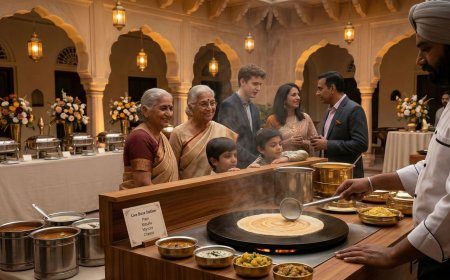
As discussed in the entertainment guide, the live food station — the pani puri assembled to order, the dosa made fresh — is simultaneously food service and entertainment. The NRI cocktail hour that includes a live chaat station creates the specific social gathering of guests watching the preparation, asking questions about the ingredients, discovering the food for the first time or rediscovering it with specific pleasure.
For international guests, the live chaat station is the cocktail hour's most accessible cultural bridge — the invitation to a food experience that is entirely new, delivered with warmth and explanation, that requires no cultural prior knowledge to enjoy.
The cocktail pairing with Indian flavours:
A specifically designed cocktail menu — drinks that incorporate Indian flavours and ingredients — with brief tasting notes explaining the inspiration creates the specific cocktail hour experience that is both distinctive and culturally resonant. The cocktail made with kokum, with tamarind, with rose water, with cardamom — each of these creates a conversation about the ingredient and its cultural context that the standard bar menu does not generate.
The Strolling Performers
Strolling performers — acrobats, jugglers, fire performers for outdoor cocktail hours, aerial performers in appropriate venues — are the entertainment form whose visual spectacle is broadest and whose cultural specificity is least.
The appropriate use:
Strolling acrobats or jugglers at a large cocktail hour — particularly an outdoor cocktail hour at a destination wedding venue where the physical space allows the performance to be visible from a distance — create the ambient spectacle that makes the space feel festive and populated even in the early part of the hour when the guest count is still building.
The limitation:
The strolling spectacle is the cocktail hour entertainment form that least directly serves the social mixing function — it produces collective viewing rather than the intimate shared experience that produces conversation between strangers. It is most effective when combined with close-up entertainment rather than as the sole entertainment provision.
The Entertainment Stack: Combining Forms
The Principle of Complementary Entertainments
The most effective cocktail hour entertainment programmes for large NRI weddings combine multiple entertainment forms that serve different functions simultaneously — creating the layered experience that serves the full range of guests across the full duration of the hour.
The recommended combinations:
For a cocktail hour of sixty to one hundred guests:
One close-up magician working the full space plus one roving musician creating the atmospheric layer. The magician serves the social mixing function; the musician serves the transitional atmosphere. Combined cost approximately twenty-five to fifty thousand rupees depending on the performers' experience and the location.
For a cocktail hour of one hundred to two hundred guests:
Two close-up magicians plus one caricaturist plus a roving musician. The two magicians cover the full guest count for personal performance; the caricaturist creates a destination within the cocktail space that guests gravitate toward and queue for; the musician creates the atmospheric layer. Combined cost approximately fifty to one hundred thousand rupees.
For a large cocktail hour of more than two hundred guests:
Two close-up magicians plus one mentalist for a central performance moment midway through the hour plus live food stations plus a roving musician. The magicians and mentalist serve the social mixing function through personal performance; the live food stations create natural social gathering points; the musician creates the atmosphere. The central mentalist performance — a brief, five-to-seven-minute performance for the full assembled cocktail hour space — creates a shared moment in the middle of the hour that brings the dispersed guest groups together briefly before returning to the individual circulation of the other entertainers.
The Budget Framework
What Entertainment Costs
The budget for cocktail hour entertainment is one of the most variable line items in the wedding's entertainment budget — partly because the range of options spans from the informal to the highly produced and partly because the market for wedding entertainment varies significantly by city, by season, and by the specific performer's experience and demand.
The approximate ranges for major Indian cities:
Close-up magician: fifteen to fifty thousand rupees per hour for an experienced professional, depending on the city and the performer's reputation. Delhi and Mumbai at the higher end; smaller cities at the lower end.
Caricaturist: ten to thirty thousand rupees per hour, with the same city variation.
Roving musician: ten to twenty-five thousand rupees per hour for a professional musician with wedding experience.
Mentalist: twenty to sixty thousand rupees per hour for an experienced professional.
Living statue performer: eight to twenty thousand rupees per hour.
The return on investment calculation:
The cocktail hour entertainment budget should be assessed against the alternative — the unplanned cocktail hour whose specific qualities were described by the wedding planner at the beginning of this guide. The close-up magician at thirty thousand rupees for a one-hundred-guest cocktail hour represents three hundred rupees per guest for an hour of specific, personalised entertainment that transforms the social dynamic of the entire hour. Against the alternative of guests standing with drinks looking at their phones, the return on this investment is significant and immediate.
Sourcing the Right Performers
The Search Process
Entertainment agencies:
The entertainment agencies that specialise in wedding entertainment — distinct from the talent agencies that manage celebrity performers — are the most reliable source for close-up magicians, caricaturists, and other cocktail hour entertainers with wedding-specific experience. They manage the booking, the contracts, and the logistics, and they have existing relationships with performers whose wedding performance quality they can vouch for.
Wedding planner referrals:
The wedding planner who has managed multiple NRI weddings will have a specific shortlist of cocktail hour entertainers whose performance they have witnessed and whose quality they can speak to from experience. This referral comes with the specific knowledge of the performer's behaviour on the day — their punctuality, their professionalism, their ability to manage the wedding context — that a portfolio video does not provide.
Direct performer discovery:
Instagram and YouTube are the primary discovery platforms for close-up magicians and other visual entertainers — the platforms where performers build portfolios of performance footage that allows the couple to assess the quality of the work before booking. The portfolio video is a necessary but not sufficient assessment — the live performance of close-up entertainment is a different experience from the edited video, and the social skills that the cocktail hour requires are not visible in the performance reel.
The audition:
For high-value bookings — a close-up magician for a wedding of two hundred or more guests — a brief in-person or video call meeting where the performer does a short demonstration is worth arranging before the contract is signed. The five-minute demonstration reveals the social quality of the performer's work — the warmth, the calibration, the naturalness of the encounter — that the portfolio video and the initial conversation cannot fully convey.
Common Mistakes NRI Couples Make With Cocktail Hour Entertainment
The first mistake is not planning the cocktail hour entertainment at all — treating it as the gap between the ceremony and the reception that will manage itself with drinks and canapés. The unplanned cocktail hour is the waiting room with better catering. The planned cocktail hour is the specific social occasion that warms the room for the reception that follows and produces the cross-family, cross-cultural connections that the rest of the evening builds on.
The second mistake is booking entertainment that serves spectacle over social mixing. The fire juggler who performs in the centre of the cocktail space produces a moment of visual spectacle and then returns to their waiting position, leaving the guests who watched together with no continuation of the shared experience. The close-up magician who performs within arm's reach of three specific people produces a shared experience that continues as a conversation after the performance ends. The social mixing function requires intimate entertainment, not spectacular entertainment.
The third mistake is under-staffing the entertainment for the guest count. The single close-up magician at a two-hundred-guest cocktail hour covers perhaps sixty guests personally and leaves one hundred and forty guests without a personal performance. The entertainment that was intended to serve the full guest list serves a third of it. Calculate the guest count, calculate the coverage, and staff accordingly.
The fourth mistake is not briefing the entertainers on the guest list's composition. The close-up magician who does not know that a significant proportion of the guests do not speak English, who does not know that the elderly guests may be more comfortable with a gentler approach, who does not know that there are international guests who are encountering an Indian wedding for the first time — this magician is performing without the specific knowledge that would allow them to calibrate their approach optimally. Brief every entertainer on the guest list's composition before the cocktail hour begins.
The fifth mistake is booking cocktail hour entertainment and not telling the guests it exists. The close-up magician working one corner of the cocktail space while the guests in the other corner look at their phones is not serving the function the booking was intended to serve. The MC, the programme notes, or the wedding coordinator should specifically communicate to guests that entertainment is available and circulating — an announcement at the beginning of the cocktail hour that the magician is working the room is sufficient to redirect attention and ensure that the entertainment reaches the guests who need it most.
The Hour That Changes the Evening
The wedding planner had said it so many times, across so many cocktail hours, that she no longer thought of it as a recommendation — she thought of it as an observation so reliably confirmed by experience that it had achieved the status of fact.
The cocktail hour entertainment does not entertain the guests. It connects them.
The connection that happens in the cocktail hour — between the bride's family and the groom's family, between the Indian guests and the international ones, between the grandmother from Chennai and the colleague from Amsterdam who are both watching the same card trick with the same expression of baffled delight — is the connection that the reception's seating plan and the sangeet's game programme and the ceremony's shared witness all begin to build.
The cocktail hour is where it actually starts. Not when the guests sit down together, not when they dance together, not when they watch the performances together — but when two strangers reach for the same pani puri and a magician appears between them and produces something neither of them can explain, and they turn to each other and say, in Tamil and in English with identical inflection: how did he do that?
Plan the cocktail hour.
Book the entertainer who works within arm's reach.
Brief them on the room they are entering.
And let the hour do what it does when it is designed to do it — bring two families, two cultures, and two hundred people who do not all know each other into the specific social warmth that the rest of the evening will build on.
The reception that follows a well-planned cocktail hour is a different reception from the one that follows an unplanned one.
The difference is the hour.
Published by NRIWedding.com — The Premium Global Platform for Non-Resident Indians Planning Indian Weddings From Abroad.
What's Your Reaction?
 Like
0
Like
0
 Dislike
0
Dislike
0
 Love
0
Love
0
 Funny
0
Funny
0
 Angry
0
Angry
0
 Sad
0
Sad
0
 Wow
0
Wow
0