















































Would You Put A Smile Ban During Your Wedding Ceremony? — The Complete NRI Wedding Planning Guide
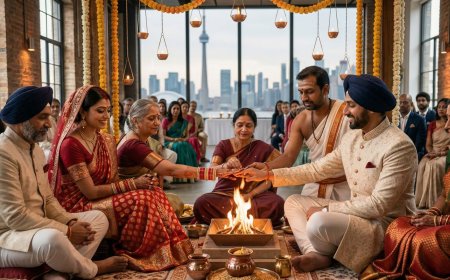
Nadia saw the photograph on a Wednesday afternoon in the middle of a tedious video call. A wedding image from a Congolese ceremony — the bride and groom in elaborate traditional clothing, surrounded by their community, neither of them smiling. Not the blankness of someone caught between expressions. Something deliberate and specific. They looked, in fact, more genuinely present in their ceremony than most of the beaming couples Nadia had seen in the rivers of wedding content that flowed through her feeds. She showed the photograph to her fiancé Arun when he came home. He looked at it for a long time. Then he said: I have never looked that present at anything in my life. In Congolese wedding tradition, smiling during the ceremony is understood as a sign that the couple does not fully appreciate the gravity of what they are committing to. The wedding is among the most serious moments in a human life. It deserves a serious face. This guide explores what that tradition is actually saying, what the Indian ritual tradition asks of the couple's face, the NRI wedding's specific relationship with the photograph, and how the wisdom of the serious face can inform the way any couple approaches the most important thirty minutes of their wedding day.

Would You Put A Smile Ban During Your Wedding Ceremony? — The Complete NRI Wedding Planning Guide
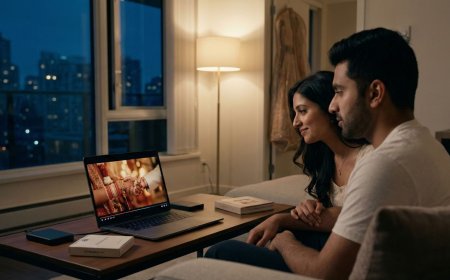
Nadia saw the photograph on a Wednesday afternoon in the middle of a particularly tedious video call, the kind where you have your camera on and your attention elsewhere. She was scrolling through a travel account she followed on Instagram when the image appeared — a wedding photograph, but not one she had ever seen anything quite like before. The bride and groom were seated at what appeared to be a formal ceremony, dressed in elaborate traditional clothing, surrounded by family and what looked like a significant gathering of community members. The setting was vivid and colourful and clearly the occasion of something important.
Neither of them was smiling.
Not in the way that people sometimes fail to smile in photographs — not the caught-between-expressions blankness of someone who blinked at the wrong moment, not the self-conscious non-smile of someone who does not like the way they look in photographs. This was something different. Their expressions were composed, deliberate, and specific. They were not unhappy. They were serious. They were present. They looked, in fact, more genuinely present in the ceremony they were participating in than most of the beaming couples Nadia had seen in the rivers of wedding content that flowed through her feeds.
She stopped scrolling. She looked at the photograph for a long time.
The caption explained that the image was from a Congolese wedding, where the tradition requires the bride and groom to maintain composed, serious expressions throughout the entire ceremony and reception. Smiling, in this tradition, is understood as an indication that the couple does not fully appreciate the gravity of what they are committing to. The wedding is among the most serious moments in a human life. It deserves a serious face.
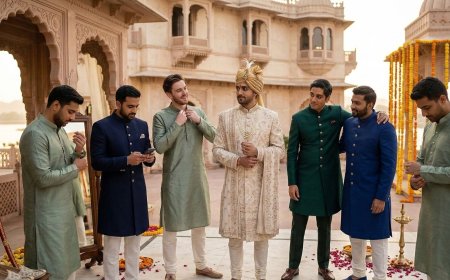
Nadia put her phone down. She had been engaged for four months. Her wedding was fourteen months away. She had attended eleven Indian weddings in the past three years — family events, friends' events, the big productions and the small ones — and she had smiled in all the photographs from all of them, reflexively, automatically, in the way that people at weddings in the culture she had grown up in always smile, because smiling is what you do when someone points a camera at you at a celebration.
She was now thinking, for the first time, about whether the smile was the right response to what a wedding actually was. Whether the reflexive joy-performance that modern wedding photography required was fully adequate to the weight of the occasion. Whether there was something in the Congolese tradition's insistence on seriousness that her own tradition's insistence on visible happiness was, if she was being honest, partly suppressing.
Her fiancé Arun came home from work two hours later. She showed him the photograph. He looked at it for a long time too. Then he said: I have never looked that present at anything in my life.
This is the conversation that photograph started. This guide follows that conversation to its full conclusion.
This guide is for every couple who has ever looked at a wedding photograph and wondered whether the smile tells the whole story — for Nadia and Arun and every couple who deserves the complete, honest exploration of what the serious face at the wedding ceremony actually means, and what it might mean for their own.
The Smiling Wedding: How We Got Here and What It Costs
The expectation of visible, photogenic happiness at a wedding ceremony is so thoroughly embedded in contemporary wedding culture — particularly in the Indian and NRI wedding context, where the photography budget is substantial and the photographs are among the most shared and most scrutinised images a family will produce — that it is worth pausing to ask how it got there and what it costs.
The history of wedding photography is instructive. In the earliest formal wedding photographs — daguerreotypes and wet plate photographs from the mid-nineteenth century — subjects rarely smiled, and not only because the long exposure times required stillness. The convention of the unsmiling formal portrait was the dominant visual grammar of the period, rooted in the understanding that a formal occasion required a formal expression. The smile in a formal portrait was considered undignified — appropriate to informal moments, to candid captures, to images that were not meant to represent the subject at their most significant.
The shift toward the smiling wedding photograph is a twentieth century development, accelerating sharply in the latter half of the century as wedding photography moved from formal portraiture toward the documentary and candid style that now dominates. The contemporary wedding photographer's brief is almost universally oriented toward the capture of joy — the beaming bride, the tearfully grinning groom, the laughing guests, the radiant couple. The wedding album that does not contain hundreds of images of visible happiness is considered, in most contemporary contexts, a failed album.
This orientation is not wrong. Joy is genuine and real at weddings, and the camera's ability to capture it is one of the great gifts of the medium. But the orientation toward the capture of visible happiness has produced, as its shadow, a specific performance pressure that most couples feel but rarely name. The pressure to look happy at your wedding — not to be happy, which is natural and authentic, but to look happy, to produce the correct facial expression at the correct moment for the camera's benefit — is a real and often unacknowledged dimension of the contemporary wedding experience.
For NRI couples, the performance pressure is amplified by the specific character of the Indian wedding photography market, which operates at a high level of production sophistication and which has developed a visual language that is recognisable and broadly consistent: the dramatic wide shot, the emotional family moment, the couple portrait in golden light, and throughout all of it the smiling, radiantly happy couple performing their happiness for the camera and for the social media audiences that the photographs will eventually reach.
None of this is dishonest. The happiness is real. The performance of it, however, can create a specific kind of distance from the ceremony itself — the experience of being a participant in your own wedding being partially displaced by the experience of being a subject in your own wedding's visual documentation.
What the Congolese Tradition Is Actually Saying
The Congolese wedding tradition of maintaining composed, serious expressions throughout the ceremony is not, as it might first appear to the outside observer, a custom rooted in sadness or reluctance or any negative emotional state. It is rooted in a specific understanding of what the wedding ceremony is and what it therefore demands of the couple.
The wedding, in the Congolese traditional understanding, is one of the most consequential moments in a human life. It is the public declaration of a permanent commitment, made in the presence of the community, before whatever spiritual authority the tradition recognises. It is not a party. It is not a content creation opportunity. It is not a performance of happiness for the benefit of an audience. It is a serious act, undertaken by serious people, in a serious moment — and the couple's bearing should reflect that seriousness.
The smile, within this cultural logic, is not forbidden because happiness is inappropriate. It is moderated because the smile, in its most reflexive and automatic form, is a social gesture — a communication to others that one is at ease, approachable, enjoying the occasion. The wedding ceremony is not primarily a social occasion. It is a ritual one. The couple's attention, during the ceremony, should be directed inward and toward each other, toward the meaning of what is happening, rather than outward toward the social management of how they appear to the assembled guests.
There is a Buddhist concept that is relevant here, though the Congolese tradition did not originate in Buddhist thought: the concept of presence. The fully present person is not performing for an audience, is not monitoring how they appear, is not managing their external expression. They are simply and completely in the moment they are in. The composed face of the Congolese bride and groom is, in this reading, not an absence of feeling but an evidence of complete presence — the face of people who are entirely inside what is happening rather than simultaneously managing their participation in it.
This distinction — between being in the ceremony and performing in the ceremony — is one that the contemporary wedding photography complex makes increasingly difficult to maintain. And it is the distinction that the Congolese tradition protects, by removing the social pressure to smile.
The Indian Tradition: What Our Rituals Actually Ask of the Couple's Face
The Indian wedding tradition has its own, considerably more complex relationship with the couple's emotional expression during the ceremony, and it is worth examining that relationship specifically before considering any modification to it.
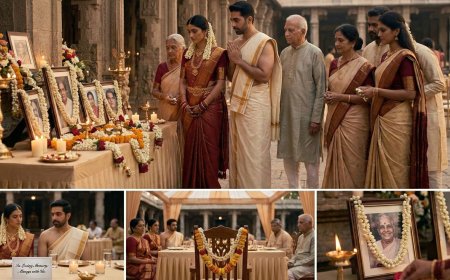
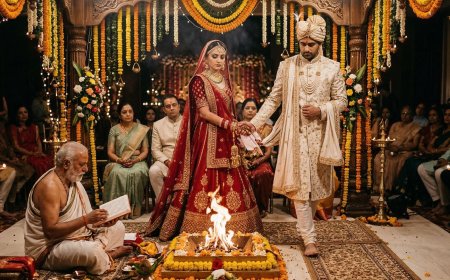
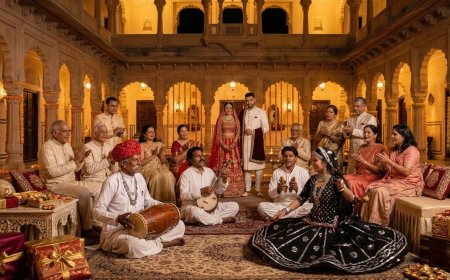
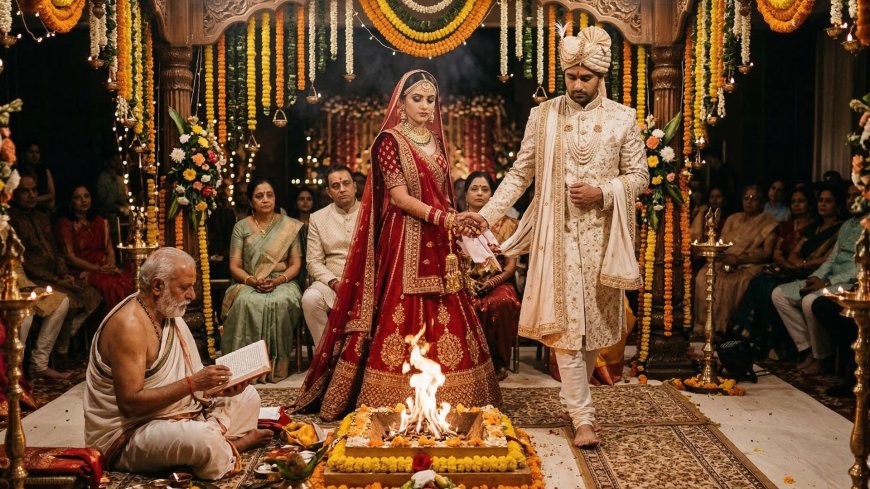
The Hindu wedding ceremony — the pheras, the Saptapadi, the Mangalsutra ceremony — is not a ritual that was designed for visible, photogenic happiness. It is a ritual that was designed for concentrated, devotional attention. The pheras are not a moment to be smiled through — they are the central binding ritual of the Hindu marriage, each circle around the sacred fire representing one of the seven vows being taken, each step a deliberate act of commitment. The correct response to the pheras, within the tradition's own internal logic, is not joy-performance but something more like reverence.
The moments of genuine, unscripted emotional expression that occur within the Indian wedding — the bride's tears at the vidai, the groom's expression when he first sees his bride, the parents' faces during the Kanyadan — are among the most photographed and most valued images precisely because they are not performed. They are real. They break through the social management of expression that the occasion otherwise requires and produce something that the camera captures as authentic because it is authentic.
The tension in the contemporary Indian wedding photography brief is that it asks for the genuine emotional moments and for the smiling performance simultaneously — for authenticity and for correctness, for the tears of the vidai and the radiant smile of the reception portrait. The couple that is trying to deliver both simultaneously is the couple that is partially outside their own wedding for its duration.
The Indian tradition, examined carefully, does not actually require the smiling performance. What it requires is presence, attention, and the specific quality of reverence that the rituals themselves ask for. The smile that appears spontaneously during the pheras because something genuinely funny or genuinely moving has occurred is appropriate and real. The smile produced for the camera's benefit at a moment when the ritual asks for something else is a performance that the tradition does not require and may not serve.
The NRI Wedding and the Photograph Problem
For NRI couples specifically, the relationship between the wedding ceremony and its photographic documentation carries additional dimensions that are worth naming directly.
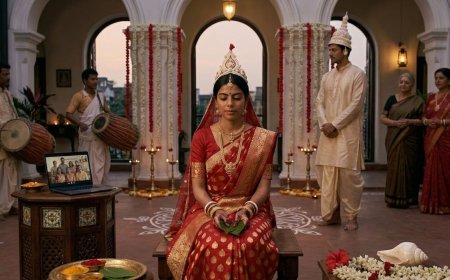
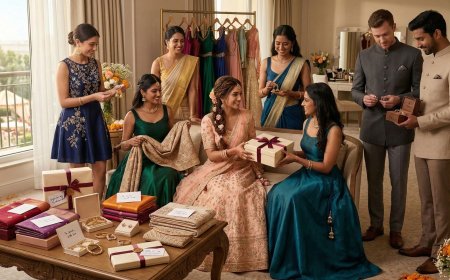
The NRI wedding is photographed more extensively than almost any other type of wedding, for reasons that are structural rather than vain. The guests who have flown from Toronto and London and Dubai to attend the wedding in Jaipur or Mumbai will not be at the next family event — they are dispersed across the world, and the photographs from this wedding may be the only visual record of this gathering of the family for years or decades. The parents in India who could not attend every function need the photographs to feel present in the parts they missed. The couple themselves, living abroad, will have the photographs as the primary material of memory for an event that took place in a country they may not return to for months.
This makes the photographs genuinely important in a way that goes beyond the conventional importance of wedding photography. But it also creates a specific incentive structure that pushes the NRI couple toward optimising for the photograph rather than for the experience — toward the smiling portrait rather than the genuine moment, toward the posed ceremony rather than the lived one.
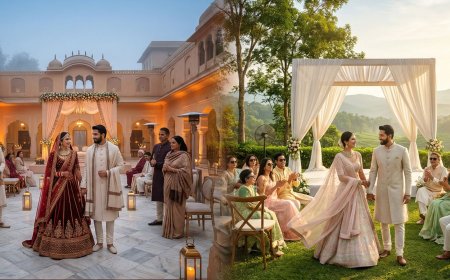
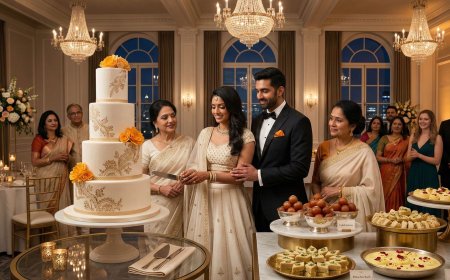
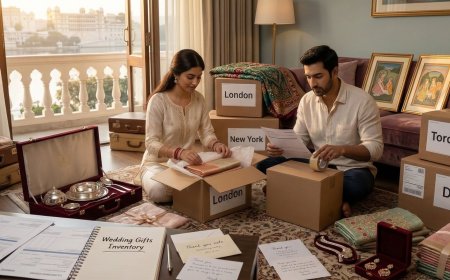
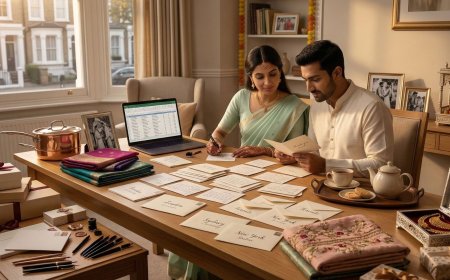
The NRI couple who has spent two years planning a wedding from London, who has spent a significant portion of their income on the event, who has managed the vendors and the family and the logistics across twelve time zones — that couple deserves to actually be at their wedding. To be in the pheras rather than watching themselves be in the pheras. To feel the weight of the Saptapadi rather than managing how they appear while feeling it.
The most valuable thing the Congolese tradition offers the NRI couple is not the specific instruction to stop smiling. It is the reminder that the ceremony is for the couple, not for the camera. The photograph is the record of the ceremony. It is not the ceremony itself.
Five Ways the Serious Face Tradition Can Inform the Modern NRI Wedding
Separating the Ceremony from the Photography Session
The most practical application of the Congolese tradition's wisdom is the separation of the formal photography session from the ceremony itself. The posed couple portraits, the family group photographs, the styled images that will anchor the wedding album — these can all be done before the ceremony begins or after it ends, in a dedicated photography session where the couple is genuinely available for image-making because the ritual is not simultaneously asking for their attention.
During the ceremony itself, the photographer's role becomes documentary rather than directive — capturing what actually happens rather than orchestrating what should appear to happen. This approach requires a specific briefing of the wedding photographer, who must understand that the ceremony is not a photography opportunity but an event being documented. Not all photographers are comfortable with this distinction. The ones who are tend to produce the most extraordinary images.
The Honest Pre-Ceremony Conversation
One of the most useful things any couple can do before their wedding ceremony is have the honest conversation about what they actually want to feel during it. Not how they want to look. What they want to feel. Whether they want to be laughing through the pheras or fully present in them. Whether the performative happiness of the contemporary wedding is what they are after, or whether something quieter and more internal is what the occasion actually calls for in them.
This conversation, which most couples never have because the visual template of the wedding is so established that it seems to answer the question in advance, is the conversation that the Congolese tradition forces by its existence. The tradition says: here is a different answer to the question of what your face should be doing during your wedding ceremony. Does this answer fit you better than the one you were given by default?
For some couples, the answer will be no. The joy is genuine and immediate and naturally expressed on the face, and the smiling wedding photographs are the authentic record of a genuinely joyful experience. For these couples, the Congolese tradition is simply an interesting piece of cultural information.
For other couples — the ones who find, in the Congolese bride and groom's composed, present faces, something that resonates more deeply than the beaming wedding portrait — the answer may be more complicated.
Designing Ceremony Spaces That Support Presence
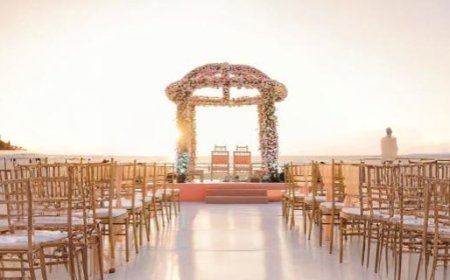
The physical design of the wedding ceremony space has a significant effect on whether the couple in it feels like participants in a ritual or performers in a production. The ceremony space that is designed primarily for photographic impact — the maximally decorated mandap, the theatrical lighting, the backdrop that is optimised for the camera rather than for the human beings standing in front of it — communicates to the couple that they are in a stage set rather than a sacred space.
The ceremony space that is designed for the experience of the people in it — where the acoustics allow the priest's voice to be heard clearly, where the scale of the mandap is proportionate to the intimacy of the ritual, where the flowers and the light are beautiful in the way that things are beautiful when you are standing among them rather than photographing them from a distance — produces a different quality of presence in the couple.
NRI couples who are designing their ceremony space from abroad, working with decorators through references and photographs, often default toward the dramatic and the photogenic because those are the images that read well on a screen. The question worth asking is: what does this space feel like to be inside? That question, asked honestly, produces different briefing for the decorator and different choices for the couple.
The Unplugged Ceremony
The unplugged ceremony — the wedding ceremony at which guests are asked to put away their phones and cameras and be present as witnesses rather than as documentarians — is a growing practice in both Western and Indian wedding contexts, and it has direct relevance to the conversation this article has been developing.
The couple that is being photographed not only by the professional photographer but by two hundred guests simultaneously, all holding phones at various angles, is a couple performing in a panopticon. The couple that has asked their guests to be present — to witness the ceremony rather than document it, to look at what is happening rather than at the screen in front of their face — is a couple surrounded by actual witnesses rather than an audience.
The unplugged ceremony is a practical application of the Congolese tradition's wisdom. It does not require the couple to stop smiling. It asks the community to stop photographing and start being present. The quality of witness that results — the two hundred pairs of eyes actually watching the pheras rather than watching their phone screens — is qualitatively different and is felt by the couple in the ceremony.
Protecting the Vidai
The vidai is the Indian wedding moment that is most consistently protected from the performance pressure — the moment when the bride's genuine grief at leaving her family is so powerful and so real that no amount of photographic direction can replace it with a performance. The vidai is, in a sense, the Indian wedding's Congolese moment: the moment when the serious face is not a cultural requirement but an emotional inevitability.
The protection of the vidai from photographic staging — the agreement with the photographer that this moment will be documented without direction, without posing, without the managed emotion that the camera sometimes encourages — is a specific instruction worth giving. The vidai photographs that are most extraordinary are always the unmanaged ones. The grief and the love and the specific quality of that departure, captured by a camera that is present but not directing, produce images that no amount of smiling portrait photography can match for emotional truth.
Common Mistakes NRI Couples Make With the Ceremony-Photography Balance
The first mistake is briefing the photographer entirely on the images rather than on the experience. The photographer brief that consists entirely of reference images — the mandap shot from this wedding, the couple portrait from that one — tells the photographer what to produce but not what to protect. A complete brief also tells the photographer what not to interrupt, which moments to document without directing, and what the couple actually wants to feel during the ceremony rather than simply what they want the photographs to look like.
The second mistake is allowing the photography schedule to determine the ceremony schedule. The wedding timeline that is built around the golden hour for couple portraits, that delays the ceremony start to accommodate the photographer's preferred light, that interrupts the post-ceremony family rituals for a photography session — this is a timeline that has placed the documentation of the wedding above the wedding itself. Build the ceremony timeline around the ceremony's own requirements. Fit the photography into that timeline rather than the reverse.
The third mistake is not protecting the intimate ritual moments from the wide-angle coverage. The Kanyadan, the Mangalsutra ceremony, the specific moments of the pheras where the ritual meaning is most concentrated — these are moments that deserve to be experienced by the couple before they are documented by the photographer. A brief conversation with the photographer about which moments are most sacred and how closely they should be approached during those moments is a conversation that most couples do not have and that most photographers would welcome.
The fourth mistake is not discussing the unplugged ceremony option with the family before the wedding. The request for an unplugged ceremony can feel, to older family members who want to photograph their grandchild's wedding on their phone, like a prohibition rather than an invitation to be more present. The conversation that explains the reasoning — that the professional photographer is documenting everything, that the guest photographs will be shared after the event, that the request is for presence rather than passivity — is a conversation that usually goes well when it happens in advance and badly when it is announced on the day.
The fifth mistake is not leaving any time in the wedding day that is genuinely unscheduled and unphotographed. The NRI wedding that is documented from the pre-dawn preparations to the final departure has no moment in which the couple is simply married, simply together, simply in the experience without either managing it or having it documented. Build in fifteen to twenty minutes somewhere in the day — after the ceremony, before the reception — that belongs to the couple alone. No photographer. No family. No logistics. Just the two of them in the specific quality of the silence that follows a ceremony.
Nadia did not ban smiling at her wedding. She did not, in the end, impose the Congolese tradition on a ceremony that was not from that tradition and that was not designed to carry that specific instruction.
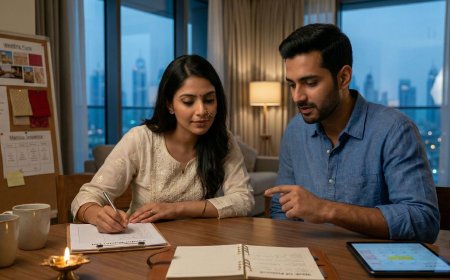
What she did was have the conversation with Arun that the photograph had started. They talked about what they actually wanted to feel during the pheras — whether the performed happiness of the camera-ready wedding was what the occasion called for, or whether something quieter and more internal was what they were actually after. They briefed their photographer with a specific instruction: during the pheras themselves, document without directing. Come close if the moment calls for it, stay back if it does not. Do not ask us to smile.
They had an unplugged ceremony. They asked their guests, in a warm note on the programme, to put away their phones for the thirty minutes of the pheras and to be present as witnesses. Two hundred people put their phones away. The quality of attention in the room during the pheras was something that Nadia described afterward as the thing she remembered most about the entire wedding. Not the décor. Not the photographs. The feeling of being watched by two hundred people who were actually watching.
The photographs from the pheras are not smiling portraits. They are something better than that. They are two people, genuinely inside the most important moment of their lives, with two hundred witnesses around them who were actually there.
You do not have to ban smiling at your wedding. You do have to ask yourself what your face should be doing while you take the seven steps. Ask it honestly. The tradition can hold whatever answer you arrive at.
Published by NRIWedding.com — The Premium Global Platform for Non-Resident Indians Planning Indian Weddings From Abroad.
What's Your Reaction?
 Like
0
Like
0
 Dislike
0
Dislike
0
 Love
0
Love
0
 Funny
0
Funny
0
 Angry
0
Angry
0
 Sad
0
Sad
0
 Wow
0
Wow
0