


































































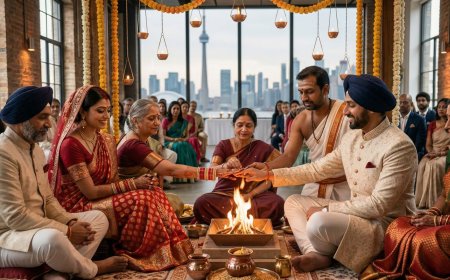



Palace Wedding vs. Beach Wedding in India: The Complete Comparison Guide for NRI Couples
The palace wedding and the beach wedding are the two most dominant formats in the Indian destination wedding imagination — and for NRI couples choosing between them, the decision goes far deeper than aesthetics. This complete comparison guide covers every significant dimension: the photography reality, the guest experience, the ceremony formats, the family dynamics, the operational complexity, the budget implications, the cultural statement each format makes, and the specific NRI considerations that make this choice particularly meaningful for couples planning from abroad. With detailed profiles of which couple each format genuinely suits, a honest head-to-head on every key dimension, and a framework for the hybrid two-location approach, this is the most thorough palace vs. beach wedding comparison guide written specifically for NRI couples worldwide.

The Two Visions That Define the Indian Destination Wedding
When NRI couples close their eyes and imagine their Indian wedding, two images appear more consistently than any other.
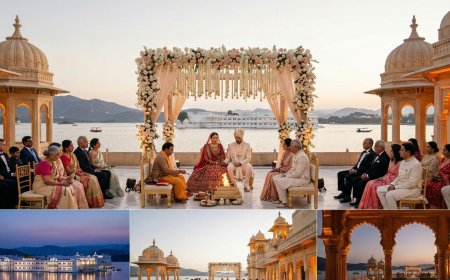
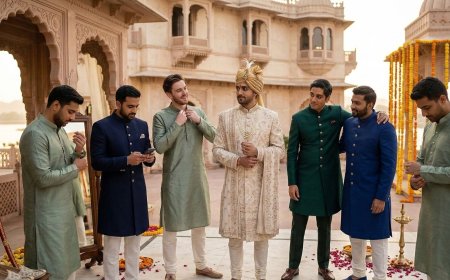
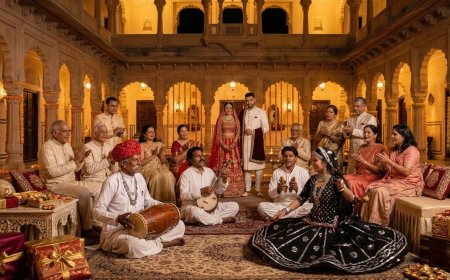
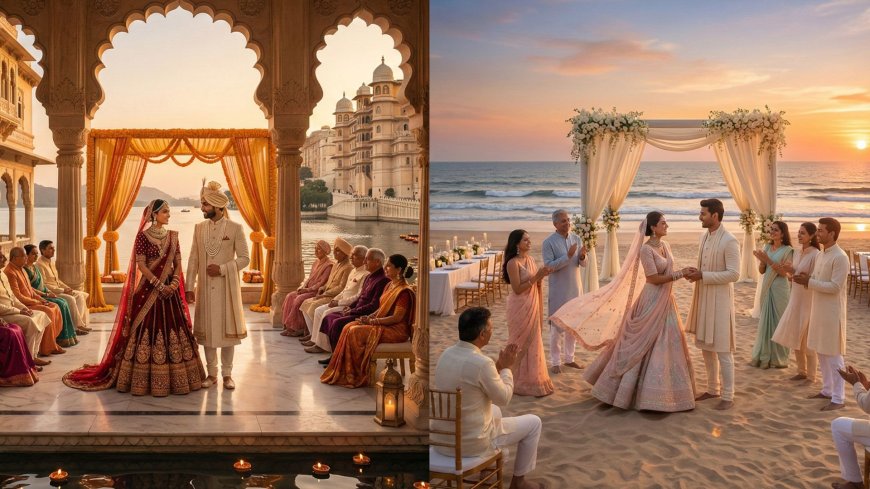
The first: a Rajasthani palace at sunset. The ornate sandstone archways glowing amber. The manicured gardens extending to a horizon of distant fortified walls. The ceremony space set under a jewelled canopy, the Aravalli hills rising in the background, the particular quality of desert light that makes everything look like it exists slightly outside of ordinary time. The couple descending a grand staircase into a courtyard of guests, the women in silk and gold, the men in achkan and safa, the fragrance of marigold and rose hanging in the warm evening air.
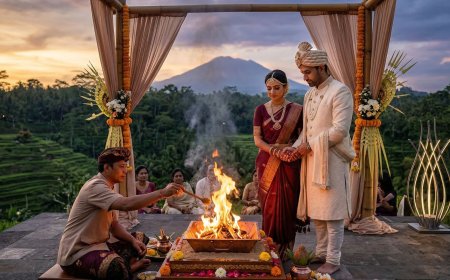
The second: a Goa beach at dusk. The Arabian Sea catching the last colour of the sun. The ceremony set on the sand or on a terrace above the water, the sound of the waves audible from every seat, the salt-and-coconut smell of the coastal air. The couple against a backdrop of orange and crimson sky, the horizon perfectly flat, the guests barefoot in the sand or at candlelit tables on a lawn above the beach, the evening progressing from ceremony to dinner to dancing as the stars appear above the water.
Both images are real. Both are achievable. Both are genuinely extraordinary.
And they are, in almost every practical dimension, opposites.
The palace wedding and the beach wedding represent the two most dominant formats in the Indian destination wedding imagination — and they attract different couples for different reasons, serve different values and different priorities, and produce genuinely different experiences for both the couple and their guests.
For NRI couples navigating this decision — often from abroad, often without the ability to easily visit both types of venue before deciding, and often under pressure from families and advisors who have strong opinions — a complete, honest comparison of these two formats is one of the most practically useful planning resources available.
This article provides that comparison. It covers every significant dimension — the aesthetic, the operational, the financial, the guest experience, the photography, the ceremony format possibilities, the family dynamics, the practical logistics, and the NRI-specific considerations — for both the palace wedding and the beach wedding in India, giving NRI couples the framework to make this foundational choice with full understanding of what each format genuinely delivers and what each genuinely costs.
The Palace Wedding: What It Actually Is
The Aesthetic Reality
The palace wedding in India — centred primarily on Rajasthan but also available in Mysuru, Hyderabad, and other former princely states — is defined by its relationship with historical architecture. The venues are genuine palaces, forts, havelis, or heritage properties whose beauty derives from the accumulated layers of centuries of Indian court culture.
The visual vocabulary of the palace wedding is the most immediately recognisable Indian wedding aesthetic in the global imagination: the carved sandstone columns, the painted ceilings, the marble pavilions, the ornate courtyards, the grand staircases, the formal gardens. This vocabulary carries enormous cultural weight — it references the Mughal and Rajput traditions of Indian courtly life, the aesthetic sophistication of Indian royal patronage, and the particular beauty that emerges when great wealth and great craft intersect over centuries.
For NRI couples, this aesthetic carries a specific resonance — it is the India that is most legible to international guests, the India that appears in the global imagination, the India that connects the modern NRI family to a historical tradition of extraordinary richness and depth.
The Physical Experience
The palace wedding is an immersive physical environment. The architecture surrounds the event — every space the guest encounters, from arrival to departure, is part of a continuous aesthetic experience that the historical building provides without requiring the wedding production to create it from scratch.
Arrival: Approaching a Rajasthani palace — whether by car through the main gate, or by boat across a lake to an island palace, or on elephant to a fort entrance — is an experience of theatrical grandeur that sets the tone for everything that follows. The arrival is already an event before the first programmed element of the wedding begins.
The spaces: Multiple architecturally distinctive spaces within the palace compound — the central courtyard for one function, the garden pavilion for another, the grand hall for a third, the rooftop terrace for the cocktail — each with its own character, its own atmosphere, its own photographic personality.
The historical presence: The palace is not simply a beautiful building. It is a building with a history — with the accumulated presence of the people who built it, lived in it, and shaped it across centuries. This historical presence is an intangible but real dimension of the palace wedding experience that no new construction can replicate.
The Beach Wedding: What It Actually Is
The Aesthetic Reality
The beach wedding in India — centred primarily on Goa but also available in Kerala, Andaman and Nicobar, and select coastal Maharashtra and Karnataka locations — is defined by its relationship with the natural environment. The setting is the coastline — the intersection of land and sea, of the constructed human world and the vast natural world of the ocean.
The visual vocabulary of the beach wedding is the antithesis of the palace vocabulary — open rather than enclosed, natural rather than constructed, horizontal rather than vertical, informal rather than ceremonial. The beach wedding aesthetic references the particular beauty of coastal light, the drama of the ocean, and the relaxed, free quality of life at the water's edge.
For NRI couples, this aesthetic carries its own resonance — the freedom of the beach, the universality of coastal beauty, and the specific quality of Goa's Portuguese-meets-Indian coastal culture are all elements that speak to couples who want their wedding to feel simultaneously Indian and internationally accessible.
The Physical Experience
The beach wedding is an experience defined by sensory immediacy — the smell of the sea, the sound of the waves, the feel of the breeze, the quality of natural light over water. These sensory elements are constant, pervasive, and impossible to replicate indoors or inland.
The natural drama: The beach wedding's defining visual events — the sunset over the Arabian Sea, the golden light on the water, the stars appearing as the sky darkens over the ocean — are natural phenomena that happen regardless of the wedding production. The setting does some of the most important work automatically.
The informal freedom: The beach wedding's physical environment encourages a different relationship between guests — the informality of the setting, the natural tendency to gather at the water's edge, the absence of the structured ceremony space's architectural hierarchy — produces a different quality of social interaction than the palace setting.
The scale: Beach weddings typically feel expansive — the ocean provides an effectively infinite backdrop, the coastal air and the open sky give the event a quality of openness that enclosed architectural spaces cannot match.
The Comparison: Every Dimension That Matters
Photography
Palace: Palace wedding photography is distinctive, culturally specific, and architecturally rich. The combination of historic architecture, warm stone surfaces, characterful interiors, and the play of natural light through historical windows produces photographs that are immediately recognisable and deeply rooted in Indian cultural identity. The visual depth of palace photography — the layering of architectural elements, the texture of ancient stone, the ornamental detail — is difficult to replicate in any other setting.
The palace photography advantage: Distinctive, culturally resonant, architecturally rich, consistently beautiful regardless of weather conditions because so much of the photography occurs within or adjacent to the architecture.
Beach: Beach wedding photography is defined by light — the extraordinary quality of coastal light at golden hour, the drama of sunset over water, the luminosity of the sea at different times of day. Beach photography has a specific emotional warmth — the openness of the setting, the natural informality of the environment, and the connection to the natural world produce photographs with a different kind of beauty from palace photography.
The beach photography advantage: The natural light is extraordinary at the right times of day. The sunset backdrop is universally beautiful and emotionally resonant. The informal, relaxed quality of beach photography produces a different but equally compelling visual record.
The weather dependency difference: Palace photography is largely independent of weather — the architecture is always there, the interior spaces provide consistent beauty regardless of cloud cover or rain. Beach photography is significantly more weather-dependent — a cloudy sunset is not the same as a golden one, and the beach's visual power is at its maximum during specific, unpredictable atmospheric conditions.
Photography verdict: Palace provides more consistent photographic quality. Beach provides more dramatic peaks when the light is perfect — and less reliable results when it is not.
Guest Experience
Palace: The palace wedding guest experience is primarily one of cultural immersion and aesthetic richness. Guests who have never been to a Rajasthani palace — particularly international guests experiencing Indian heritage for the first time — find the environment genuinely extraordinary. The multi-day palace wedding programme, with guests accommodated on the property and the wedding programme spanning the historic spaces, produces an immersive experience of Indian culture that no single event can replicate.
The palace guest experience advantage: Genuine cultural immersion, architectural grandeur, the sense of exclusivity that comes from inhabiting a historic palace, the depth of the India-experience that international guests carry away.
The palace guest experience limitation: The palace setting is formal and structured — it sets expectations of a certain formality and a certain grandeur that the wedding programme needs to meet. Guests who are not comfortable with the formality of the palace environment, or who are not interested in Indian cultural heritage, may find the setting more impressive than personally engaging.
Beach: The beach wedding guest experience is primarily one of relaxation, natural beauty, and the particular social ease that coastal settings produce. International guests who are accustomed to beach vacations and coastal celebrations find the beach wedding setting immediately comfortable and personally enjoyable — there is no cultural translation required, no unfamiliar architectural vocabulary to navigate.
The beach guest experience advantage: Universal accessibility — the beach is a positive environment for guests from any cultural background. The relaxed atmosphere encourages genuine socialising. The multi-day Goa beach wedding programme, with guests accommodated in a coastal resort and the wedding programme including beach time, water activities, and the specific pleasure of Goa, produces an experience that guests from cold climates particularly value.
The beach guest experience limitation: The beach wedding setting is less culturally specific than the palace. International guests who have come to India primarily to experience India — its cultural heritage, its historical richness, its specific civilisational depth — may find a beach wedding less immersive in the India-experience than a palace wedding would be.
Guest experience verdict: Palace delivers deeper cultural immersion for guests who are curious about Indian heritage. Beach delivers more immediately comfortable and universally accessible enjoyment for guests from any background.
The Ceremony
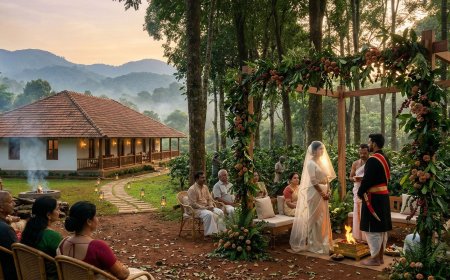
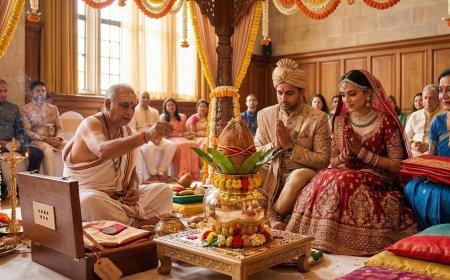
Palace: The palace ceremony is framed by historic architecture — the carved columns, the marble pavilions, the ornate courtyards — in ways that give the ritual immediate visual grandeur and cultural context. The Vedic ceremony fire in a palace courtyard, with the architecture rising around it and the desert sky overhead, is a ceremony setting of extraordinary power.
The palace ceremony advantage: The architecture provides a ceremony backdrop of inherent grandeur and cultural significance. The ceremony feels situated within Indian history and culture rather than simply staged within a beautiful space.
Beach: The beach ceremony is framed by the natural environment — the ocean, the sky, the coastal light — in ways that give the ritual a different kind of power: the openness, the vastness, the natural drama of the sea. The ceremony on the sand or on a terrace above the water, with the sound of the waves and the last colour of the sunset, is an experience of immediate natural beauty.
The beach ceremony advantage: The natural setting provides ceremony power that is universally understood and emotionally accessible. The sound of the sea, the feel of the coastal air, and the visual drama of the sunset are natural elements of extraordinary beauty that no constructed backdrop can replicate.
Ceremony verdict: Both are extraordinary. The palace ceremony is more culturally specific and architecturally grounded. The beach ceremony is more naturally dramatic and universally emotionally accessible.
The Family Dynamics
Palace: The palace wedding — particularly a Rajasthan destination palace wedding — typically requires guests to travel to the venue. This travel requirement is a significant logistical ask for Indian family members, particularly elderly relatives for whom long journeys are demanding.
For North Indian families — Delhi, Punjab, Rajasthan — the destination wedding in Rajasthan is relatively accessible and culturally familiar. For South Indian families, the Rajasthan destination may feel more distant and more culturally removed.
The palace wedding's family dynamics tend to reinforce traditional Indian wedding culture — the grandeur of the setting, the formality of the architecture, and the cultural weight of the Rajput heritage all align with the expectations of families whose frame of reference is the traditional large Indian wedding.
Beach: The Goa beach wedding also requires travel — and Goa, while accessible from all major Indian cities by air, is a specific travel commitment that not all Indian family members find equally easy.
For South Indian families — Karnataka, Kerala, Tamil Nadu — Goa is geographically closer and culturally more familiar than Rajasthan. For North Indian families, Goa may feel slightly more distant geographically but is culturally accessible as India's most internationally known leisure destination.
The beach wedding's family dynamics tend to be more relaxed than the palace wedding — the informality of the Goa setting, the beach resort atmosphere, and the holiday quality of the destination all contribute to a more relaxed family gathering than the formal grandeur of a Rajasthan palace.
Family dynamics verdict: The palace wedding aligns better with traditional Indian family expectations of grandeur and cultural significance. The beach wedding aligns better with families who value relaxation, accessibility, and the holiday quality of the wedding gathering.
The Operational Complexity
Palace: The palace wedding's operational complexity is primarily one of infrastructure variability — the historic building's systems, vendor access policies, weather contingency for outdoor spaces, and the management of events within the constraints of a heritage property all require professional oversight.
The palace operational advantage: A fully operated palace hotel — run by Taj, Oberoi, or similar groups — provides professional event management infrastructure that significantly reduces the operational risk for NRI couples planning from abroad.
The palace operational challenge: Heritage properties have infrastructure variability — generator capacity, kitchen facilities, bathroom provision — that purpose-built venues do not. The quality of verification before booking is critical.
Beach: The beach wedding's operational complexity is primarily one of weather dependency and vendor logistics. Outdoor beach events require robust rain and wind contingency planning. The beach ceremony's dependence on tidal patterns, permit requirements, and weather conditions adds operational variables that palace courtyard weddings do not have.
The beach operational advantage: Well-operated Goa beach resorts — particularly the established luxury properties — have managed hundreds of beach weddings and have developed the operational infrastructure and contingency planning to handle the weather variability of their setting.
The beach operational challenge: The outdoor nature of beach weddings means that weather is always a variable. A palace wedding can move all events indoors seamlessly without significant loss of beauty. A beach wedding that moves entirely indoors loses a significant proportion of what makes it distinctive.
Operational verdict: Both require professional planning and experienced vendors. The palace has more infrastructure variability. The beach has more weather variability. Both risks are manageable with the right professional support.
Budget Implications
Palace: The palace wedding budget is dominated by venue hire and accommodation costs at premium heritage hotels, combined with the production investment required to match the grandeur of the setting. The catering, the décor, and the entertainment all need to operate at a level commensurate with the palace setting — a modest wedding production in an extraordinary palace produces a jarring quality of mismatch.
Palace budget characteristics: High venue hire and accommodation costs at top-tier properties. Production investment required to match the setting. Vendor access fees at heritage properties. Premium catering expectations. Transportation costs for guests travelling to Rajasthan from multiple locations.
Beach: The beach wedding budget is dominated by resort accommodation costs and the specific infrastructure costs of outdoor coastal events — premium tents if required, weather contingency infrastructure, and the transportation logistics of the destination.
Beach budget characteristics: Resort accommodation costs at Goa's peak-season rates. Event infrastructure for outdoor functions. The transportation costs of bringing guests to Goa from multiple departure points. The possibility of significant date-based pricing variation — December-January peak season versus shoulder months.
Budget verdict: At comparable production quality levels, beach and palace weddings are broadly similar in total cost. The palace tends to spend more on venue hire and production. The beach tends to spend more on accommodation and infrastructure. Neither is consistently cheaper than the other at premium quality levels.
The Photography Light Comparison in Detail
This dimension deserves specific attention because it is consistently the most discussed difference between the two formats in the wedding photography community.
Palace light: The warm stone of Rajasthani architecture has a natural golden quality that photographers describe as self-illuminating — the sandstone absorbs and reflects light in ways that create warmth and depth in photographs without requiring additional lighting. The interior spaces of palace hotels — lit by a combination of natural light through historical windows and warm artificial lighting — produce a consistent, photogenic quality regardless of external weather.
Beach light: The coastal light of Goa — particularly the late afternoon and golden hour light over the Arabian Sea — is among the most beautiful natural photography light available anywhere in India. When the conditions are right — clear sky, low sun, the right angle of light on the water — beach wedding photography achieves a natural luminosity that is difficult to match in any other setting. When the conditions are less ideal — overcast sky, flat light, the wrong time of day — the beach loses a significant proportion of its photographic power.
The practical implication: Palace weddings are more photographically forgiving — the architecture provides consistent beauty regardless of weather. Beach weddings have a higher photographic ceiling — when the light is perfect, the results are extraordinary — but a lower floor when conditions are not optimal.
The NRI-Specific Considerations
The International Guest Frame of Reference
For NRI couples whose international guests are primarily from the UK, North America, or Australia, the frame of reference for each format is different and worth considering.
The palace wedding offers international guests something they cannot experience at home — a cultural environment that is entirely specific to India and to the Indian heritage tradition. British guests who have been on beach holidays in Spain and Portugal many times will never have experienced a Rajasthani palace. This novelty and cultural specificity is a significant part of what makes the palace wedding memorable for international guests.
The beach wedding offers international guests a format that is more immediately familiar — beach weddings are common in the UK, the US, Canada, and Australia — combined with the specific quality of Goa's coastal character that is genuinely different from what they know at home. The beach format is accessible and comfortable, but the India-specific experience is less concentrated than at a palace.
The Cultural Statement
The choice between palace and beach is, for many NRI couples, a statement about how they relate to their Indian cultural identity.
The palace wedding makes a specific statement: we are connected to the depth of Indian cultural heritage, we want our wedding to be rooted in the historical richness of Indian civilisation, and we want our guests to encounter that heritage directly. This statement resonates powerfully with couples who feel a strong connection to their Indian roots and who want the wedding to be an affirmation of that connection.
The beach wedding makes a different but equally legitimate statement: we want our wedding to be a joyful, accessible, beautiful celebration that brings together people we love in a setting that is gorgeous and fun and free. This statement resonates powerfully with couples who value the universal accessibility of the beach, the relaxed quality of the celebration, and the particular pleasure of bringing their international community to one of India's most enjoyable destinations.
Neither statement is more valid than the other. They are different expressions of different relationships with Indian identity and different priorities for what the wedding should be.
The Family Negotiation
For many NRI couples, the choice between palace and beach involves a negotiation with family expectations — and the two formats tend to trigger different family responses.
Palace weddings tend to align with traditional Indian family expectations of wedding grandeur — the destination palace setting is recognisable as a prestigious and appropriate wedding format within the Indian cultural frame. Families who measure weddings by their impressiveness are more likely to be enthusiastic about a palace wedding than a beach wedding.
Beach weddings tend to generate more mixed family responses — the informality of the beach, the holiday character of Goa, and the relaxed aesthetic of coastal celebrations can feel less serious to families whose frame of reference is the traditional grand Indian wedding. This is not universal — many Indian families love the beach wedding format — but it is a real dynamic that some NRI couples need to navigate.
Matching Formats to Couple Profiles
The Palace Wedding Is Most Genuinely Right For:
Couples with strong cultural rootedness who want their wedding to be an expression of connection to Indian heritage rather than a celebration in an Indian-adjacent setting.
Couples whose international guests are primarily curious about Indian culture and for whom the wedding is partly an introduction to India's historical and aesthetic richness.
Couples who value photography above all else and want a consistently beautiful photographic record regardless of weather conditions.
Couples with North Indian family backgrounds for whom the Rajasthani cultural vocabulary is part of their own heritage rather than an exotic destination.
Couples planning larger events — the palace infrastructure can accommodate larger guest counts more naturally than most beach venues.
Couples who want the wedding to feel culturally specific and historically grounded — like an event that could only have happened in this particular place and culture.
The Beach Wedding Is Most Genuinely Right For:
Couples who value relaxation and joy above grandeur and formality — who want the wedding to feel like a celebration rather than a performance.
Couples whose international guests are primarily seeking enjoyment rather than cultural immersion — guests who will love Goa for its beaches, its food, its sunsets, and its particular holiday quality.
Couples with South Indian or Goan family backgrounds for whom the coastal setting has personal and cultural resonance.
Couples planning intimate to moderate events where the quality of connection between guests matters more than the scale of the production.
Couples who want the natural environment to do significant work in creating the atmosphere rather than requiring an elaborate production to generate the setting's power.
Couples who value the multi-day destination holiday quality of the beach wedding and who want their guests to experience genuine rest and joy alongside the formal wedding events.
The Hybrid Possibility: Can You Have Both?
For NRI couples who feel genuinely pulled toward both formats, it is worth considering whether a hybrid approach — elements of both in a single multi-city or multi-location wedding programme — is a viable option.
The Most Common Hybrid Format
Legal and family ceremony at a palace venue — the religious ceremony, the family traditions, the cultural rituals — followed by a celebration event at a beach venue for a younger, more international guest group.
This format is increasingly common among NRI couples who want the cultural depth of the palace for the ceremonially significant events and the relaxed joy of the beach for the celebratory events.
The practical challenge: A two-location wedding programme — palace ceremony in Rajasthan, beach reception in Goa — involves two sets of vendor contracts, two sets of accommodation bookings, and the logistical management of a guest group moving between two locations. For NRI couples with the budget and the planning resource to manage this complexity, it is a genuinely excellent format. For couples who cannot invest in that level of operational complexity, it can become a planning burden that reduces rather than enhances the experience.
The Single-Location Hybrid
Some venues offer a hybrid within a single property — coastal heritage properties, palace hotels near the sea, or resort developments that combine heritage architecture with coastal access.
These single-location hybrids are rare in India — the geography of the palace tradition (inland Rajasthan) and the beach tradition (coastal Karnataka, Goa, Kerala) does not naturally produce single locations that fully express both — but some interesting hybrid properties exist in coastal Karnataka and in Kerala's heritage hotel market.
The Decision: A Final Framework
When all the dimensions are considered and the head-to-head comparison is complete, the choice between palace and beach comes down to three essential questions.
What do you want your guests to feel? Awe, cultural immersion, historical grandeur — palace. Joy, relaxation, natural beauty, the holiday quality of a gathering at the water — beach.
What do you want your photographs to say? This happened in India, in the depth of Indian culture and heritage — palace. This was beautiful, open, natural, and full of light — beach.
What does the wedding mean to you? A connection to the historical richness of Indian civilisation, a rooting in the culture you came from — palace. A joyful gathering of the people you love in one of the world's most beautiful coastal settings — beach.
Both answers are right. The right answer is the one that is genuinely yours.
Conclusion: Two Perfect Weddings, Two Different Perfections
The palace wedding and the beach wedding are both, in their own ways, perfect.
The palace wedding is the most architecturally magnificent, the most culturally immersive, the most historically grounded wedding experience available in India. It connects the couple and their guests to something that has endured for centuries — a tradition of beauty, craft, and courtly culture that produced some of the most extraordinary buildings in the world.
The beach wedding is the most naturally beautiful, the most joyfully accessible, the most sensory and immediate wedding experience available in India. It connects the couple and their guests to the natural world — the sea, the light, the sound of the waves, the specific beauty of the Indian coastline at its finest.
They are not competing for the same couple. They are the right choice for different couples — for different values, different priorities, different relationships with Indian cultural identity, and different visions of what the most important day of the wedding is meant to be.
Know what you want. Choose accordingly. And trust that the format you choose, approached with the right planning and the right professional support, will produce something genuinely extraordinary.
Because both of them can.
What's Your Reaction?
 Like
0
Like
0
 Dislike
0
Dislike
0
 Love
0
Love
0
 Funny
0
Funny
0
 Angry
0
Angry
0
 Sad
0
Sad
0
 Wow
0
Wow
0