























































How is a Malayalam Christian Wedding Different From a Konkan One? — The NRI Wedding Cultural Guide
Keerthy Suresh got married in white and got us thinking. Ananya attended a Syrian Christian wedding in February and a Mangalorean Catholic wedding in April — two months apart, two coastal Christian communities, two ceremonies so different in ritual, music, food, and atmosphere that the drive home from the second one produced a question she could not fully answer. This guide gives NRI couples, partners marrying into either community, and curious guests the complete framework — covering the two-thousand-year Syrian Christian heritage, the Portuguese Konkan Catholic origin, the ceremony differences, the Roce and Candle night, the kasavu versus the white gown, and two of India's most extraordinary wedding feasts.


How is a Malayalam Christian Wedding Different From a Konkan One?
Keerthy Suresh got married in white. Not the ivory-leaning-toward-gold that Indian bridal fashion has been slowly warming to, not the off-white that gives itself permission to be almost-traditional, but white — the specific, deliberate, unambiguous white of the Christian bridal tradition that has dressed brides on the Kerala coast for centuries. The photographs circulated in December with the particular velocity that celebrity weddings achieve, and what struck people was not the gown itself but the specific quality of the ceremony — the ancient Syrian Christian church in Kerala, the flowers, the gravity of the ritual, the sense of a tradition so old and so specific that it wore its own authority without effort.
For anyone who has attended both a Malayalam Christian wedding and a Konkan Catholic wedding — the coastal Catholic tradition of Goa, Mangalore, and the Konkan strip — the comparison is irresistible. Both are Christian. Both are coastal. Both carry the specific weight of communities that have been practising their faith for close to two thousand years in one case and four to five centuries in the other. Both produce weddings of extraordinary beauty and cultural specificity. And both are so different from each other — in ritual structure, in aesthetic language, in the relationship between faith and community, in the food, in the music, in the specific textures of the celebration — that attending one after the other feels less like attending two versions of the same thing and more like attending two completely distinct civilisations that happen to share a scripture.
Ananya had done exactly this. Her best friend from university — a Syrian Christian from Thrissur — had married in February. Her own cousin — a Mangalorean Catholic from a family that had been in the Konkan for four generations — had married in April. Two months apart. Two coastal Christian communities. Two weddings so different in their character that Ananya had spent the drive home from the April wedding trying to articulate to her husband what exactly made them feel so unlike each other, despite the cross, the vows, the white dress, and the church being present at both.
She could not fully articulate it that evening. But she knew the difference was real, and she knew it was specific, and she knew it went deeper than the surface details of food and music and dress. It went to the roots — to the history of how each community came to be Christian, to the cultural substrate that Christianity was layered over, and to the specific way that two thousand years of Syrian Christian practice and four hundred years of Portuguese Catholic practice have shaped the communities that practice them today.
This guide is for every NRI couple navigating a Malayalam Christian or Konkan Catholic wedding from abroad, every partner marrying into one of these communities without a map, and every curious guest who has sat in the pews of both and felt the depth of the difference without yet having the language to describe it.
The Historical Foundation: Two Very Different Paths to Christianity
Before a single ritual can be understood, the history must be understood — because the difference between a Malayalam Christian wedding and a Konkan Catholic wedding is not primarily a difference of custom. It is a difference of origin, and that difference of origin shapes everything that follows.
The Syrian Christian Heritage: Two Thousand Years on the Kerala Coast
The Syrian Christian community of Kerala — known variously as Nasranis, Saint Thomas Christians, or by their denominational names of Jacobite, Orthodox, Marthoma, and Catholic — traces its origins to the arrival of the Apostle Thomas on the Kerala coast in 52 CE. This claim is disputed by historians and accepted as living truth by the community itself, and the distinction between historical fact and community identity matters less here than the practical reality: the Syrian Christian community of Kerala has been practising Christianity for so long that the faith has been completely absorbed into the fabric of a community that is, in its social structure, its food culture, its aesthetic language, and its family dynamics, as Kerala as any Hindu family in the same geography.
The Syrian Christians did not convert from Hinduism under pressure or persuasion. The tradition holds that they were converted by the apostle himself from among the Brahmin families of the Kerala coast, and whether or not this is historically verifiable, its cultural consequence is real: the Syrian Christian community carries the social codes, the ritual sensibility, and the aesthetic inheritance of Kerala's upper-caste Hindu tradition, filtered through two millennia of Christian practice. The wedding that emerges from this history is a ceremony that is unmistakably Christian in its theology and unmistakably Keralite in its aesthetics, its food, its music, and its social grammar.
The Konkan Catholic Heritage: The Portuguese Encounter
The Konkan Catholic community — concentrated in Goa, Mangalore, Udupi, and the coastal strip between them — has a fundamentally different origin story. These are communities that converted to Catholicism primarily during the period of Portuguese colonial presence in the sixteenth and seventeenth centuries, under a combination of missionary activity, social incentive, and in some cases coercive pressure. The conversion was more recent, more documented, and more directly connected to a specific European cultural tradition than the Syrian Christian origin narrative.
The Portuguese brought not only the faith but the entire aesthetic and cultural apparatus of Iberian Catholicism — the church architecture, the liturgical music, the wedding customs, the specific relationship between faith and festivity that characterises Catholic cultures from Lisbon to Goa. The Konkan Catholic wedding carries this inheritance in its bones: the Latin-influenced liturgy, the specific role of the parish community, the feast culture, the music that has roots in Portuguese folk tradition, and the specific social exuberance that marks celebrations in communities where the Portuguese influence runs deepest.
The substrate over which this Catholic layer was placed was the Tulu and Konkani-speaking culture of the coast — communities with their own pre-existing ritual sensibility, their own food culture, their own social structure — and the Konkan Catholic wedding is the product of this layering: Portuguese Catholic practice over coastal Karnataka and Goan cultural foundations, producing something that is neither purely European nor purely South Asian but specifically and completely Konkan.
The Wedding Ceremony: What Happens Inside the Church
The Malayalam Christian Ceremony: Ancient Liturgy, Profound Stillness
The Malayalam Christian wedding ceremony — particularly in the Orthodox and Jacobite traditions — is conducted in Syriac, the ancient liturgical language that connects the Kerala church to its apostolic origins and to the churches of the Middle East that share the same theological heritage. For a congregation that does not speak Syriac as a living language, the ceremony unfolds as a profound encounter with the sacred through sound rather than comprehension — the chanting of priests in an ancient tongue, the incense, the specific quality of the light in a Kerala church on a morning that begins early, the sense of a ritual that has been performed in essentially this form for centuries.
The Marthoma and CSI traditions conduct the ceremony in Malayalam, making it more immediately accessible but no less weighty. The liturgical structure — the reading of scripture, the exchange of vows, the blessing of the rings, the crowning ceremony that marks the couple as king and queen of their new household — follows the form of the ancient Syriac church with modifications that reflect the specific denominational history of each tradition.
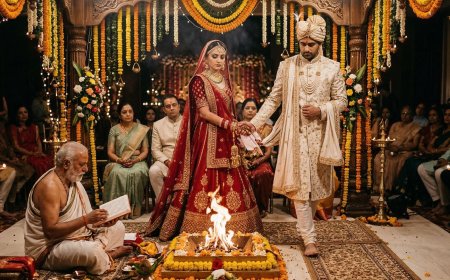
The crowning ceremony is particular to the Syrian Christian tradition and has no equivalent in the Konkan Catholic rite. The priest places crowns — or a ceremonial equivalent — on the heads of the bride and groom, a gesture that connects the Kerala church to the Eastern Christian tradition shared with the Greek Orthodox and Coptic churches. It is a moment of extraordinary visual and theological weight, and it is one of the specific elements that makes a Syrian Christian wedding ceremony unlike any other Christian ceremony in India.
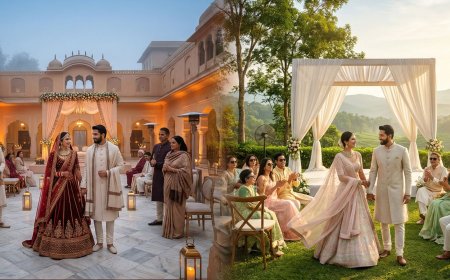
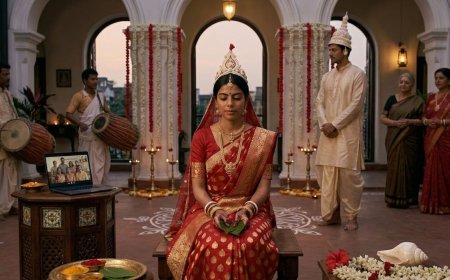
The dress code at a Malayalam Christian wedding reflects the community's Kerala identity as much as its Christian one. The bride in a traditional Syrian Christian wedding wears a kasavu saree — the cream silk with gold border that is the formal dress of Kerala women — rather than a white gown. Keerthy Suresh's white wedding was beautiful and celebrated, but it represents the more contemporary, globalised expression of the tradition. The older, more specifically Keralite expression is the kasavu, worn with specific gold jewellery — the Palakka mala, the Nagapadam necklace, the specific forms that Kerala's goldsmith tradition has produced over centuries.
The groom wears a mundu — the white Kerala dhoti — with a formal shirt or jubba, maintaining the specifically Keralite identity of the ceremony even within the Christian ritual frame. The visual language of a traditional Syrian Christian wedding is therefore distinctly, specifically Keralite — white and gold and cream, against the backdrop of a church that may be centuries old and whose architecture reflects the specific synthesis of Kerala temple architecture and Christian sacred space that the Syrian Christian church tradition produced.
The Konkan Catholic Ceremony: Latin Exuberance, Parish Community
The Konkan Catholic wedding ceremony is conducted in Konkani or Tulu, with elements of Latin in the older traditions and the full vernacular in the post-Vatican II practice. The atmosphere is distinctly different from the stillness of the Syrian Christian rite — the Konkan Catholic ceremony has the exuberance that characterises Catholic celebrations in communities where the Portuguese influence is still culturally present, where the church is the centre of social as well as religious life, and where the wedding is understood as a parish event as much as a family one.
The parish community's involvement is a specific feature of the Konkan Catholic wedding that distinguishes it from the more family-centred Syrian Christian celebration. The church choir — often trained to a high standard, with a repertoire that includes both traditional Konkani hymns and the Latin-influenced music that the Portuguese brought to the coast — participates in the ceremony in a way that makes the musical element central rather than incidental. The wedding is, in part, a musical performance, and the quality of the choir is a matter of parish pride.
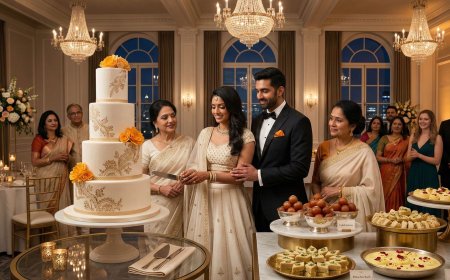
The bride in a Konkan Catholic wedding wears a white gown — this has been the established tradition for longer than in most Indian Christian communities, reflecting the direct Portuguese cultural influence — and the aesthetic is more immediately recognisable to international guests as a "Western" Christian wedding. But the specific details — the jewellery, the flowers, the post-ceremony customs — are entirely Konkan, entirely coastal, entirely specific to the community in ways that the white gown does not dilute.
The exchange of garlands — a Hindu-origin custom that has been absorbed into Konkan Catholic wedding practice — has no equivalent in the Syrian Christian ceremony, which maintains a cleaner boundary between Hindu and Christian ritual elements. This cultural permeability is a distinctive feature of the Konkan Catholic tradition, reflecting the specific history of a community that converted from Hindu and Tulu coastal traditions and that retained elements of the pre-conversion culture even as it adopted the faith and the aesthetics of Portuguese Catholicism.
The Pre-Wedding Rituals: Where the Differences Are Most Visible
Malayalam Christian Pre-Wedding Customs
The pre-wedding rituals of the Syrian Christian community reflect, more clearly than any other element of the wedding, the community's deep roots in Kerala Hindu tradition. The Seemantham — a ceremony for the expectant mother that has its roots in Hindu custom — has a Christian equivalent in some Syrian Christian communities. The Manjal Neerattu — the ritual bathing of the bride in turmeric water — is performed in many Syrian Christian families, connecting the community to the same turmeric tradition that runs through every Hindu wedding in Kerala.
The Pithambar — the formal presentation of the wedding saree to the bride by the groom's family — is a ceremony specific to the Syrian Christian tradition, with no equivalent in the Konkan Catholic practice. The saree presented is typically a Kanjivaram or a Benaras silk of quality commensurate with the family's means, and the ceremony is conducted with the formality of an exchange that is simultaneously a gift and a statement of welcome.
The engagement ceremony — the Nischayathartham in the Malayalam Christian tradition — is conducted in the church, with the priest presiding over the exchange of rings, giving it a specifically ecclesiastical character that distinguishes it from the more domestic engagement ceremonies of other communities. The church's involvement from the engagement onward reflects the central role of the parish in the social life of the Syrian Christian community.
Konkan Catholic Pre-Wedding Customs
The Konkan Catholic pre-wedding sequence includes several ceremonies that have no parallel in the Syrian Christian tradition and that reflect the specific cultural inheritance of the Konkan coast.
The Roce ceremony — performed on the day before the wedding in Goan and Mangalorean Catholic families — is perhaps the most distinctive pre-wedding ritual in the Konkan Catholic tradition. The bride and groom are separately anointed with coconut milk and coconut oil by family members and friends, in a ceremony that is simultaneously a blessing, a purification, and a celebration that can last for hours and that is typically accompanied by the specific music of the Konkan tradition — the Konkani mandos and dulpods that are the folk music of the community.
The coconut is the sacred element of the Roce, and its centrality connects the ceremony to the coastal identity of the Konkan community — the coconut palm is the defining tree of the Konkan landscape, and its milk and oil have been used in ritual contexts by the communities of this coast long before the Portuguese arrived. The Roce is the specific point where the pre-Christian ritual inheritance of the Konkan community surfaces most clearly within the Catholic wedding framework.
The Candle ceremony — conducted at the bride's home on the wedding eve, where candles are lit and songs are sung through the night — is another Konkan-specific tradition with no Malayalam Christian equivalent. The all-night singing that sometimes accompanies the Candle ceremony in traditional Goan families is a form of collective celebration whose roots are in the community's pre-conversion folk tradition and whose character is entirely festive — the wedding eve as a night of music and community rather than preparation and prayer.
The Wedding Feast: Two Coastal Cuisines, Two Completely Different Tables
If the ceremony is where the theological and historical differences between the two traditions are most visible, the feast is where the cultural differences are most delicious, and the feasts of a Malayalam Christian wedding and a Konkan Catholic wedding are as different as two coastal Indian tables can be.
The Syrian Christian Table
The Syrian Christian wedding feast is one of the great culinary experiences of South India — a table that reflects the specific food culture of a community that has been cooking on the Kerala coast for two millennia, with access to the spices, the coconut, the fish, and the rice that have defined Kerala cooking since before the apostle arrived.
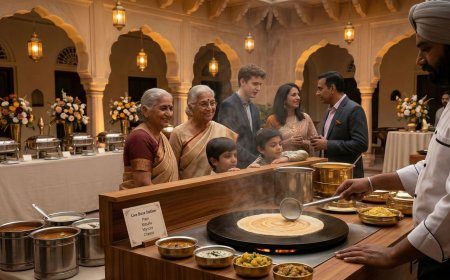
The feast is built around the Appam — the lacy, fermented rice crepe that is the specific bread of the Syrian Christian table — served with stewed beef, mutton curry, or the chicken ishtu that is the community's most beloved preparation. The beef is significant and specific: the Syrian Christian community's freedom to eat beef, in a cultural context where the surrounding Hindu majority does not, is a mark of the community's distinct identity, and the beef curry at a Syrian Christian wedding feast is not merely food. It is a cultural statement.
The Kappa — tapioca — with fish curry, the Karimeen pollichathu — pearl spot fish baked in banana leaf — and the specific pickles and chutneys of the Kerala Christian kitchen complete a table that is simultaneously simple in its ingredients and extraordinary in its depth of flavour. The coconut runs through every dish — the coconut milk, the coconut oil, the grated coconut — as it runs through all Kerala cooking, but the Syrian Christian hand with spice is specific and distinctive, the product of a community that has been trading and cooking with the spices of the Western Ghats since before recorded history.
The Konkan Catholic Table
The Konkan Catholic wedding feast is a different experience entirely — a table shaped by the Portuguese influence, the Goan and Mangalorean spice tradition, and the specific seafood culture of a coast where the fishing community and the farming community have been exchanging ingredients and techniques for centuries.
The Sorpotel — the Portuguese-origin pork curry that has become the defining dish of the Goan Catholic feast — is the first thing that distinguishes the Konkan Catholic table from any other Indian wedding feast. Cooked with vinegar, with the specific Goan spice blend that combines the Portuguese preference for acidic cooking with the coastal Indian love of heat, the Sorpotel has a flavour that is completely unlike anything on the Syrian Christian table. It is a dish that could not exist without the Portuguese, and its presence at every significant Konkan Catholic celebration is a specific reminder of the community's history.
The Sannas — the soft, steamed rice cakes fermented with coconut toddy — are the Konkan equivalent of the Syrian Christian Appam: the specific bread of the tradition, served alongside the Sorpotel and the Chicken Cafreal — a green-marinated grilled preparation whose roots are in the Mozambican culinary influence that arrived on the Konkan coast through the Portuguese trade network. The Bebinca — the layered coconut and egg dessert that is the most celebrated of Goan sweets — concludes a feast that is, in its combination of ingredients and influences, a complete record of the Konkan's history on a plate.
The Konkan Catholic feast is more exuberant in its serving style than the Syrian Christian one — louder, longer, with the music continuing through the meal and the dancing beginning before the plates are cleared. The feast is part of the celebration in a way that is slightly different from the Syrian Christian experience, where the meal is more self-contained, more a conclusion than a continuation of the ceremony's spirit.
The Music: The Sound of Two Different Histories
The music of a Malayalam Christian wedding and a Konkan Catholic wedding is perhaps the most immediately distinctive difference between the two traditions, and the difference is audible from the moment you arrive at either celebration.
The Syrian Christian wedding carries the Margam Kali — the traditional Christian folk art form of Kerala, performed by women in a circle — as its specific musical heritage, alongside the ancient hymns of the Syriac liturgy. The Thiruvathira — the Kerala dance form — is sometimes performed at Syrian Christian celebrations, reflecting the community's deep rootedness in Kerala's Hindu-influenced performing arts tradition. The overall musical atmosphere is one of measured celebration, of joy expressed within a framework that honours the ceremony's gravity.
The Konkan Catholic wedding carries the Mando — the love song tradition of Goa, developed in the eighteenth and nineteenth centuries by the Christianised Goan elite and combining Portuguese musical forms with Konkani lyrical tradition — and the Dulpod, the faster, more rhythmically energetic counterpart to the Mando's melancholy sweetness. These songs are sung at weddings, at the Roce ceremony, at the Candle night, and they create a musical atmosphere that is entirely specific to the Konkan Catholic tradition — nostalgic, melodic, deeply communal, and unlike anything in the Syrian Christian musical vocabulary.
Common Questions NRI Couples Ask About Both Traditions
The first question is about dress code for guests. At a traditional Syrian Christian wedding, women guests wear sarees — silk preferred, with gold jewellery — and men wear formal Western dress or a mundu-shirt combination. At a Konkan Catholic wedding, the dress code is more varied and more accepting of Western formal wear for both men and women, reflecting the community's longer history of engagement with European aesthetic norms.
The second question is about whether non-Christian partners or guests need to participate in any specific ritual way. At both traditions, guests are welcome to observe and witness without participation in the specifically Christian ritual elements. The exchange of rings, the vows, the blessing — these are the couple's acts, and the congregation's role is witnessing. The feast and the pre-wedding celebrations are entirely open and require nothing of guests beyond their presence and their appetite.
The third question is about the timing and length of the ceremony. The Syrian Christian ceremony — particularly in the Orthodox and Jacobite traditions — can run to two or three hours, reflecting the fullness of the ancient liturgy. The Konkan Catholic ceremony is typically shorter, closer to sixty to ninety minutes, with the celebration's length concentrated in the reception and feast that follow.
What Ananya Finally Articulated
She found the words on a Sunday morning three weeks after the April wedding, reading about the history of Christianity in India over a cup of tea. The difference she had felt between the two weddings was the difference between two thousand years and four hundred years. Between a faith so old in a place that it had become the place, and a faith brought by ships that had been absorbed into a coast that was already ancient.
Both were beautiful. Both were specifically, irreducibly themselves. The Syrian Christian wedding carried the weight of the apostolic tradition and the Kerala landscape simultaneously, in a way that produced a ceremony of extraordinary stillness and depth. The Konkan Catholic wedding carried the exuberance of a coast that had been changed by the Portuguese and had changed what the Portuguese brought, producing a celebration of extraordinary warmth and communal joy.
She had not been attending two versions of the same thing. She had been attending two distinct civilisations that happened to share a scripture. She had been right, on the drive home, to feel the difference as something deep.
Understand the historical origin before the ritual can be fully read. Dress in the specific language of each community — kasavu for the Syrian Christian ceremony, formal and flexible for the Konkan Catholic one. Arrive early enough to hear the liturgy from the beginning. Stay for the feast, at both. Listen for the music that tells you whose history you are inside.
The Malayalam Christian wedding and the Konkan Catholic wedding are both Indian, both Christian, and both coastal. They are also completely, specifically, beautifully different — and the difference is the history of how India received the faith, in all its particular, irreducible complexity.
Published by NRIWedding.com — The Premium Global Platform for Non-Resident Indians Planning Indian Weddings From Abroad.
What's Your Reaction?
 Like
0
Like
0
 Dislike
0
Dislike
0
 Love
0
Love
0
 Funny
0
Funny
0
 Angry
0
Angry
0
 Sad
0
Sad
0
 Wow
0
Wow
0