













































































The Promise of the Invitation: The NRI Couple's Complete Guide to Hosting International Wedding Guests
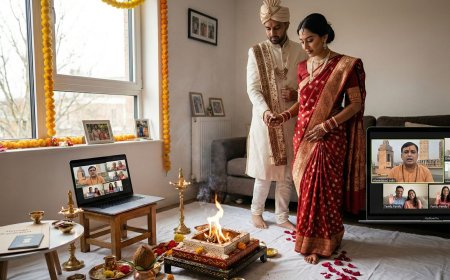
When an international guest accepts a wedding invitation — applies for a visa, books flights, arranges leave, navigates an unfamiliar country, and spends a sum of money that is genuinely meaningful — the couple who invited them has made a promise. This guide delivers a complete framework for fulfilling that promise covering the financial and time commitment that international guests are managing, pre-arrival information and visa facilitation responsibilities, the arrival welcome and first night experience, equal access to every event, dietary and health responsibilities, specific care for first-time India visitors, elderly guests, guests with young children, and non-Indian guests, the departure assistance, and the personal acknowledgment that completes the extraordinary act of presence that international attendance represents.


Hosting International Guests: Your Responsibilities as NRI Hosts
The NRI couple's complete guide to understanding and fulfilling the specific obligations — practical, cultural, emotional, and logistical — that come with inviting people from across the world to share the most significant event of your life
The Invitation Is a Promise
When a couple sends a wedding invitation to a guest who lives in another country — who will need to apply for a visa, book international flights, arrange accommodation, take leave from work, navigate an unfamiliar country, and spend a sum of money that is meaningful relative to their income — that invitation is not simply a piece of stationery. It is a promise.
The promise is not stated explicitly. It does not need to be. It is understood by both parties as the implicit content of the invitation itself: we want you here, we have thought about what it means for you to come here, and we will make sure that your experience of being here is worthy of the commitment you have made to be present.
The couples who understand this implicit promise — who plan their hospitality with the specific needs of their international guests as a design constraint rather than an afterthought — create weddings that international guests describe, sometimes for years afterward, as among the most extraordinary experiences of their lives. The couples who send the invitation and then focus exclusively on the couple's own experience of the wedding create events that international guests attend graciously and remember with a specific quality of mild disappointment that they would find difficult to articulate precisely.
The difference between these two outcomes is not budget. Some of the most impeccably hospitable NRI weddings have been produced at modest budgets. Some of the most lavishly produced have left international guests feeling logistically managed rather than genuinely welcomed.
The difference is the understanding that hosting international guests is a specific responsibility — one that requires specific knowledge, specific preparation, and specific ongoing attention — and the commitment to fulfill that responsibility with the same care given to every other element of the wedding.
This guide is the framework for that fulfillment.
Understanding What International Guests Are Actually Managing
The first responsibility of NRI hosts is understanding — genuinely, specifically, from the inside — what the international guest's experience of the invitation involves. Not from the couple's perspective, where the invitation is an expression of love and inclusion, but from the guest's perspective, where the invitation is also a set of logistical, financial, and cultural challenges to be navigated.
The Financial Reality
International travel to India for a wedding is expensive. The cost varies significantly by origin country, by how far in advance flights are booked, and by the accommodation and ground transportation choices made, but a conservative estimate for a guest traveling from the UK, North America, or Australia includes: international return flights of six hundred to fifteen hundred dollars or pounds depending on origin and timing, accommodation for five to seven nights at the wedding hotel at between eighty and three hundred dollars per night depending on the hotel category, and ground expenses including transportation, meals outside wedding events, shopping, and gratuities.
The total cost for a single guest attending an NRI wedding from the UK is typically between two thousand and five thousand pounds. From North America or Australia, somewhat more. This is not a casual expenditure for most people. For some of the couple's guests — the university friend who is early in their career, the family member whose financial situation is comfortable but not affluent — it represents a significant financial commitment made out of love and loyalty.
The NRI host who understands this financial reality makes specific decisions differently: about what is provided versus what guests are expected to cover independently, about the accommodation options made available across a range of price points, about the level of hospitality provided at wedding events, and about the specific acknowledgment of the guest's financial commitment that genuine gratitude produces.
The Time Commitment
A multi-day Indian wedding requires international guests to take five to ten days away from their normal lives — more if the travel distances are very long. For guests with demanding jobs, young children, or limited leave allowances, this time commitment is significant and has specific consequences: work that must be managed around the absence, childcare that must be arranged, professional obligations that must be covered.
The NRI host who understands this time commitment communicates the complete event schedule with sufficient advance notice to allow guests to plan their leave and arrange their responsibilities, provides a clear understanding of which events guests are expected to attend versus which are optional, and specifically minimizes the wasted time within the event sequence — the long waiting periods, the unclear scheduling, the events that start significantly later than communicated — that are particularly costly for guests who have used their limited available leave to be present.
The Cultural Unfamiliarity
The international guest at an NRI wedding is frequently managing a significant degree of cultural unfamiliarity — unfamiliar ceremonies, unfamiliar social conventions, unfamiliar food, unfamiliar language, and the specific disorientation of being in a social environment whose rules are not fully legible.
This unfamiliarity is not a problem to be solved by simplifying the wedding to make it more accessible. It is an experience that, with the right support, becomes one of the most enriching aspects of the international guest's attendance. The guest who arrives at the ceremony understanding what is about to happen, who has been given the cultural context to make the ceremony legible and meaningful, who feels specifically included rather than politely tolerated — this guest experiences the cultural unfamiliarity as revelation rather than confusion.
The NRI host's responsibility is to provide this support proactively — before the guest needs it, in a form that allows it to be absorbed gradually rather than in the disorienting rush of the moment — so that the cultural unfamiliarity becomes the doorway to the extraordinary rather than the barrier to it.
The Pre-Arrival Responsibilities
The Information Provision
The most important pre-arrival responsibility of the NRI host is providing guests with the specific information they need to prepare for and navigate the trip. This information has been covered in detail in the travel coordination and welcome booklet guides elsewhere in this series. The responsibility framework here is the principle rather than the logistics: every piece of information that a guest needs to arrive in India, reach the hotel, understand the event schedule, know what to wear, and navigate the wedding weekend should be in the guest's hands well before departure — not available in principle on a wedding website that has not been read, but actively communicated in a form and at a time that allows it to be absorbed and acted on.
The information provision is not complete when the information has been sent. It is complete when the guest has received, read, and understood it — a condition that requires follow-up, that requires the communication to be in accessible formats, and that requires someone to be available to answer the questions that the information raises.
The Visa Facilitation
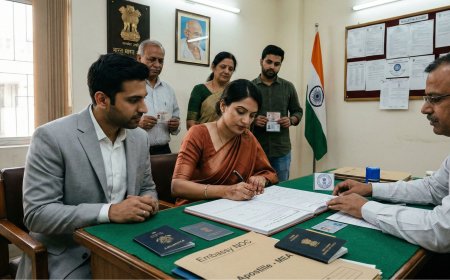
The visa process for India varies by passport nationality and can be genuinely confusing for guests who have not navigated it before. The NRI host's responsibility is not to obtain the visa on the guest's behalf — that is neither possible nor appropriate — but to provide specific, accurate guidance on the process for the guest's specific passport nationality, to flag the processing timeline that requires the application to be made well in advance, and to be available to answer questions that arise during the application process.
For guests whose visa applications are more complex — guests from countries without e-visa eligibility, guests with previous travel histories that may attract additional scrutiny, guests whose professional circumstances may require specific visa categories — providing an introduction to a reliable visa facilitation agent who can manage the complexity is a specific act of hospitality that removes a significant burden from the guest.
The NRI host who discovers three weeks before the wedding that a guest's visa application is delayed or denied has not fulfilled the pre-arrival visa responsibility — because the discovery three weeks before the wedding means the responsibility was not discharged three months before the wedding when the timely intervention could have made the difference.
The Accommodation and Travel Guidance
The accommodation guidance — the room block information, the booking deadlines, the secondary property options — must be communicated with sufficient advance notice to allow guests to make their accommodation decisions before the options they need are no longer available. The travel guidance — the flight routing information, the domestic connection requirements, the recommended arrival window — must be communicated before guests make their flight bookings, not after.
For guests who are making their first independent trip to India and who are uncertain about the travel planning, offering to answer specific questions — or connecting the guest with a travel agent who knows the India travel context — is a specific hospitality act that transforms a daunting planning process into a manageable one.
The Budget Transparency
The NRI host has a specific responsibility around financial transparency — giving guests a clear understanding of what expenses they will be expected to cover independently so that the total cost of attending the wedding can be accurately assessed before the commitment is made.
The expenses that guests are typically expected to cover: international flights, accommodation at the group hotel, travel insurance, visas, personal ground transportation for independent activities, shopping, and personal incidentals. The expenses that the couple typically covers: transportation between the hotel and all wedding events, the food and beverages at all wedding events, and specific hospitality additions — welcome bags, organized activities — that the couple has designed.
The boundary between couple-covered and guest-covered expenses should be communicated clearly enough that guests can budget accurately. The specific situation to avoid: the guest who arrives having budgeted only for flights and accommodation and discovers during the wedding that there are significant incidental expenses — tours, activities, group meals outside the wedding events — that were not anticipated.
The Arrival Responsibilities
The Welcome
The experience of arriving in a foreign country — however well-prepared the guest is — carries a specific quality of vulnerability that the NRI host's welcome can transform. The guest who is met at the airport by a name board and a friendly face who knows their name, helps them with their SIM card, confirms their transfer, and sends a message that they have arrived safely has had a fundamentally different arrival experience from the guest who navigates the arrival hall independently with a generic hotel transfer and no specific welcome.
The arrival welcome does not require the couple to be present at the airport for every guest arrival — the couple is managing an event of their own with its own demands. It requires a designated person whose specific responsibility is the arrival welcome: the cousin who has agreed to be at the airport during the primary arrival window, the professional arrival coordinator for weddings with large international guest contingents, or the on-ground hospitality team member who handles all arrivals with a warmth that reflects the couple's specific instructions about how they want their guests to be received.
The welcome message from the couple — a personal WhatsApp message to each international guest when their arrival is confirmed — is the specific touch that the arrival coordinator's professionalism cannot substitute for. The message that says "so happy you're here, see you tonight, the curry in the hotel restaurant is excellent" costs thirty seconds and produces a welcome that no logistics arrangement can replicate.
The First Night
The first night in the wedding city is the international guest's transition from traveler to wedding guest — the evening when they settle into the hotel, recover from travel, and begin to understand the specific place and event they have come for.
The NRI host who has placed a welcome bag in each guest's room — with local snacks, a bottle of water, the welcome booklet, a personal note, and a small gift that reflects the wedding city's specific character — has made the guest's first night in the hotel room a welcome rather than an arrival. The welcome bag does not need to be expensive to be meaningful. Its meaning comes from its specificity — from the evidence that the couple thought about what the guest would find when they opened their hotel room door and prepared something specific for that moment.
The informal gathering of international guests on the first evening — a casual dinner, a drink at the hotel bar, an organized but relaxed first gathering — is the social event that converts a collection of individually arrived guests into a community. It does not require production or formal organization. It requires a time, a location, and the couple's presence or the presence of a family member who can make the gathering feel specifically welcomed rather than self-organized.
The Event-Period Responsibilities
Equal Access to the Experience
The NRI host has a specific responsibility to ensure that international guests have equal access to the experience of every wedding event — not physically present but actually able to participate, to understand what is happening, to be included in the social fabric of the event rather than occupying its periphery.
The ceremony explainer that makes the Hindu or Sikh ceremony legible. The seating arrangement that places international guests at tables with family members who can answer questions and make them feel specifically welcomed rather than at a separate "international guests table" that is a polite form of segregation. The MC who narrates the ceremony for those who are encountering it for the first time. The coordinator who ensures that international guests with mobility limitations are positioned appropriately for the ceremony and are not left to navigate the logistics independently.
Each of these is a specific act of inclusion that requires specific planning rather than happening naturally — because the natural default of Indian wedding social organization is to concentrate family with family and community with community, leaving international guests in a cluster of their own that is comfortable but peripheral.
The Food and Dietary Responsibility
International guests at Indian weddings frequently have dietary requirements or preferences that are different from the wedding menu's defaults — vegetarians at a meat-heavy wedding, guests with specific allergies, guests whose digestive systems are managing the adjustment to Indian food, guests whose religious dietary laws intersect with the Indian wedding menu in specific ways.
The NRI host's responsibility is to know about these requirements before the wedding — through the RSVP process — and to ensure that the catering team has specific briefing for each guest with specific requirements. The guest who arrives at every event uncertain about which dishes are safe for them, who must ask repeatedly about ingredient content, who is served a vegetarian option that turns out to contain the specific allergen they have mentioned, has not been adequately hosted.
The responsibility for guests whose digestive systems are managing the adjustment to Indian food is a specific form of food responsibility: providing access to plainer, less spiced options at every event, having bottled water continuously available, and ensuring that the hospitality desk or coordinator has specific resources — oral rehydration salts, basic medication — available for guests who need them.
The Medication and Health Responsibility
The NRI host cannot be responsible for the health of adult guests who are managing their own medical situations. The NRI host is responsible for ensuring that guests who develop health situations during the wedding period have specific access to the medical resources they need.
This means: knowing the location of the nearest reputable medical facility to the primary guest hotel, having a doctor's contact number available through the hospitality desk, ensuring that the hotel has been specifically briefed on the couple's international guest cohort and is prepared to assist with medical situations, and having specific first-response resources — the first aid kit, the basic medications, the oral rehydration salts — available through a specific person rather than assumed to be available somewhere.
For guests who have communicated specific medical conditions in advance — conditions that may require specific management in India's climate, conditions whose medications may require refrigeration or specific storage, conditions that require medical supervision — the NRI host's responsibility is to have specifically prepared for those conditions rather than assuming the guest can manage them independently in an unfamiliar environment.
The Solo Guest Responsibility
The international guest who is traveling alone — who does not know many other guests, who is at the wedding as the sole representative of one specific relationship with the bride or groom — has a specific vulnerability in the social world of the Indian wedding that the NRI host has a specific responsibility to address.
The Indian wedding's social world is organized around community relationships that have developed over years — the family groups, the childhood friend clusters, the professional networks, the community associations. The solo international guest who arrives without their own established community within this social world can feel genuinely isolated even in the midst of four hundred people, unless the host has specifically designed for their inclusion.
The specific designs: the seating assignment that places the solo guest at a table with family members who have been briefed on the guest and asked to make them welcome. The family member or coordinator who specifically checks in with solo international guests at each event to ensure they are included and comfortable. The organized experience in the pre-wedding days that creates a community connection before the social intensity of the wedding itself begins.
The Specific Responsibilities by Guest Category
The First-Time India Visitor
The guest who has never been to India requires the most comprehensive pre-arrival preparation and the most proactive on-ground support. The responsibilities: the complete travel and health preparation guidance, the arrival welcome, the cultural context provision, the on-ground support for every logistical challenge they encounter.
The specific additional responsibility for first-time India visitors: the expectation-setting that prepares them for the specific qualities of India that are genuinely different from what they know — the scale, the sensory intensity, the specific operational logic — without being alarmist or creating anxiety about things that are, in fact, manageable with the right preparation.
The guest who has been honestly and warmly prepared for what India is — its specific extraordinary qualities and its specific challenging ones — arrives with the right expectations and has the right experience. The guest who arrives with the expectation that India will be an exotic version of their home country has the wrong experience regardless of how well the logistics are managed.
The Elderly Guest
The elderly international guest — the aunt who has flown from Canada at seventy-eight, the family friend who has attended every significant family event for forty years and whose attendance at this one required a specific medical conversation with their doctor — has made the most extraordinary commitment of any guest in the room and requires the most specific care.
The responsibilities: confirming that their accommodation is accessible to their mobility level, ensuring that their transportation to and from every event is specifically arranged rather than assumed, identifying in advance whether they need specific assistance at any event, ensuring that seating at all events is comfortable and accessible, and having someone specifically designated to check on their wellbeing at each event without making the checking-on feel like surveillance.
The elderly guest who has flown from Canada at seventy-eight deserves to feel that the family whose wedding they have come for is specifically glad they are there and specifically looking after them — not as a logistical category to be managed but as the specific beloved person who has been part of the family's story for decades.
The Guest With Young Children
The international guest attending with young children has managed a specific logistical challenge to be present — the children's travel, the jet lag management, the equipment, the anxiety of managing young children in an unfamiliar environment — and has specific needs during the wedding that the NRI host can either anticipate and provide for or leave to be managed independently.
The responsibilities: knowing in advance which guests are bringing children, ensuring that event venues have been assessed for child appropriateness, identifying whether any childcare provision is being offered or can be arranged, ensuring that dietary requirements for children are specifically communicated to caterers, and having a designated quiet space at events where children who are overwhelmed or tired can be managed without the parent missing the entire event.
The specific care for the guest with young children that makes the biggest difference: the family member who holds the baby for thirty minutes so the parent can eat a meal with both hands, the cousin who takes the toddler to see the flowers while the parent watches the ceremony, the coordinator who knows where the quiet room is and offers it at the moment the three-year-old's patience expires. These are not logistics. They are the specific human care that hosting is made of.
The Non-Indian Guest
The non-Indian guest — the British friend, the American colleague, the Australian university flatmate — who is attending an Indian wedding for the first time has the most significant cultural distance to bridge and the most to gain from the experience if the bridge is provided.
The responsibilities: the cultural context that makes the ceremonies legible, the dress code guidance that allows them to participate visually in the celebration, the social introduction that places them in the company of people who can answer their questions and make them welcome.
The specific additional responsibility for non-Indian guests: the proactive check-in during the wedding that asks how they are experiencing it, whether they have questions, whether there is anything that is confusing or uncomfortable. The non-Indian guest who is confused or uncomfortable frequently does not know who to ask — because asking feels like an imposition on people who are celebrating — and the proactive check-in removes the barrier to asking by making it explicitly invited.
The Post-Wedding Responsibilities
The Departure Assistance
The international guest's experience of the wedding does not end when the last event concludes. It ends when they have left India safely — their departure confirmed, their flights boarded, their journey home under way.
The departure responsibilities: ensuring that every international guest has confirmed departure transportation, knowing each guest's departure flight and having a contingency if a flight is significantly delayed, and the personal farewell — the WhatsApp message that says "safe travels, so glad you were there" — that closes the welcome that began with the arrival message.
The Acknowledgment
The international guest who has traveled a significant distance at significant cost and time to attend an NRI wedding has made an extraordinary gift of presence. The acknowledgment of this gift — specific, personal, genuine, not generic — is the last responsibility of the NRI host.
Not a form letter. Not a mass WhatsApp message. A specific acknowledgment of each international guest's specific attendance — a personal note, a phone call, a message that references something specific about the guest's presence at the wedding — that communicates that the couple noticed them, was glad they were there, and remembers something specific about their presence.
The acknowledgment that says "I saw you at the ceremony and the look on your face when the pheras began is one of the things I will remember about that day" is the acknowledgment that completes the promise of the invitation.
The Principle Beneath All the Practices
Everything in this guide — the visa facilitation, the arrival coordination, the cultural context, the dietary provision, the solo guest inclusion, the elderly guest care, the departure assistance, the personal acknowledgment — is the expression of a single principle:
The invitation is a promise. The promise is that coming here is worth what it costs. The promise is that you will be genuinely welcomed, genuinely cared for, genuinely included in the most significant event of our lives. The promise is that your presence matters to us specifically — not as a number in the guest count but as the specific person you are, in the specific relationship you have with us, at the specific moment in our lives that the wedding marks.
Fulfilling this promise does not require unlimited budget. It requires unlimited attention — specific attention to the specific needs of the specific people who have made the specific commitment to be present.
The couple who fulfills this promise does not merely host a wedding. They create an experience that their international guests carry home as one of the most extraordinary things that has ever happened to them — the specific memory of being in a place they had never been, surrounded by a culture they had never fully encountered, watching two people they love enter a life together, and feeling — specifically, not generally — that they were exactly where they were supposed to be.
That is what the promise of the invitation is worth. Make it.
NRIWedding.com — Expert guidance for Indian weddings planned across borders.
What's Your Reaction?
 Like
0
Like
0
 Dislike
0
Dislike
0
 Love
0
Love
0
 Funny
0
Funny
0
 Angry
0
Angry
0
 Sad
0
Sad
0
 Wow
0
Wow
0