





























































Post-Wedding Regrets: What Couples Wish They'd Done Differently
The wedding is over — and for many NRI couples, the quiet reflections that follow reveal things they wish they had done differently. This deeply honest guide distils the most common and most instructive post-wedding regrets from NRI couples who planned Indian weddings from abroad — from not being present at their own wedding and choosing the wrong photographer, to adding unwanted functions, mismanaging family dynamics, and caring too much about other people's approval. Essential reading for every NRI couple currently in the planning process who wants the benefit of collective hindsight before it is too late to use it.

The Conversation That Happens Six Months Later
Nobody talks about this part.
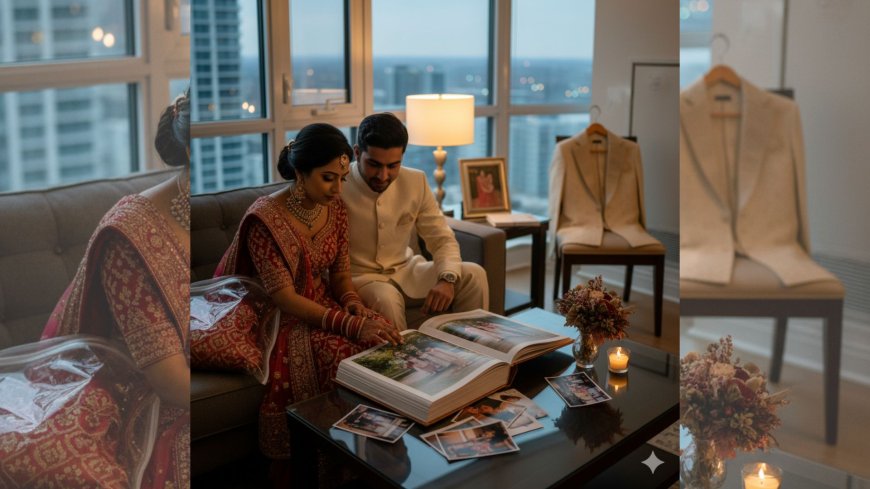
The wedding is over. The photographs have arrived — and they are beautiful, genuinely beautiful, and you have looked at them more times than you are prepared to admit. The thank you messages have been sent. The lehenga is in storage. The venue has hosted three other weddings since yours. Life has resumed its normal shape and the particular intensity of the eighteen months that preceded the wedding has faded into something that feels, from this distance, both very recent and very long ago.
And somewhere in the quiet of an ordinary evening — not dramatically, not in a moment of crisis, just quietly — a thought surfaces.
I wish we had done that differently.
It might be something small. The seating arrangement at the reception that caused the tension nobody mentioned but everyone felt. The function you agreed to add because it seemed easier than the conversation it would have taken to decline it, and that you spent resenting for the three weeks it took to plan. The photographer you chose because they were available and within budget and seemed fine, and whose work is technically competent in a way that makes you quietly sad every time you look at the album.
Or it might be something larger. The budget conversation you avoided having with your families until it was too late to have it properly, and that produced a financial pressure that sat underneath the whole planning period like a low hum. The vendor you knew was not quite right but booked anyway because you were exhausted and the decision needed to be made. The wedding week you spent managing logistics instead of inhabiting the experience — so busy being the coordinator that you were never fully the bride or the groom.
Post-wedding regrets are one of the most consistently reported experiences among NRI couples. Not dramatic regrets — not the kind that suggest the wedding was a failure or the marriage a mistake. Quiet ones. Specific ones. The particular ache of knowing, with the clarity that only hindsight provides, exactly what you would do differently.
This article is different from every other article on this platform.
It is not a planning guide. It is a reflection — a collection of the most common, most instructive, most honestly reported post-wedding regrets from NRI couples who planned Indian weddings from abroad, distilled into insights that couples currently in the planning process can actually use.
Because the most valuable planning advice does not come from experts telling you what to do. It comes from people who have already done it, looking back with clear eyes, telling you what they wish they had known.
The Core Reality: Why NRI Couples Are Particularly Vulnerable to Specific Regrets
Post-wedding regrets exist across all wedding types and all demographics. But NRI couples experience a specific pattern of regrets that is shaped by the particular conditions of planning an Indian wedding from abroad.
Distance Creates Decision Fatigue That Produces Compromises
Planning a wedding remotely means making a larger proportion of your decisions through screens — through video calls, portfolio reviews, virtual tours, and email exchanges — rather than through the embodied, sensory experience of being physically present. This distance-based decision-making is more cognitively demanding. It produces more fatigue. And fatigue produces compromises — decisions made to close the loop rather than to find the right answer.
The regrets that emerge from distance-based decision fatigue are often the quiet ones: the vendor who was chosen because the decision needed to be made, not because the choice was right. The detail that was approved on a screen that looked different in person. The moment during the wedding week when something felt off in a way that could have been caught during a physical walkthrough.
The Pressure to Perform for Two Audiences
NRI couples are often planning a wedding that needs to feel authentic to their Indian family and community while also feeling accessible and welcoming to their international friends and colleagues. This dual audience pressure produces specific regrets — usually in the direction of compromising one audience's experience for the other, or of producing a wedding that felt like it was performing for both audiences rather than genuinely expressing the couple.
The Emotional Load of the Planning Period
The sustained emotional intensity of planning a complex, cross-cultural, internationally distributed wedding over eighteen months is genuinely exhausting. And exhaustion, at the end of a long planning process, produces the specific regret of not having been present enough — not having experienced the joy of the planning period, the engagement, the pre-wedding functions — because the weight of the logistics had crowded out the ability to feel what was actually happening.
The Regrets: What NRI Couples Most Commonly Wish They Had Done Differently
Regret One: Not Being Present at Their Own Wedding
This is the most frequently reported and most deeply felt regret among NRI couples — and it is the one that most surprises people who have not yet been through the experience.
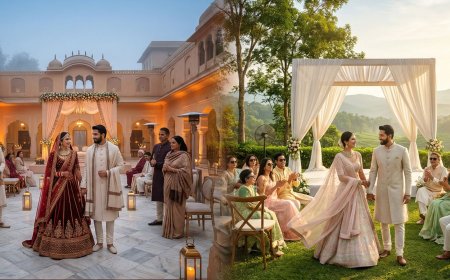
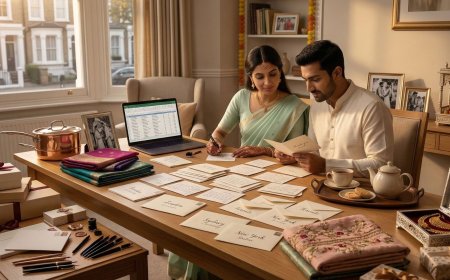
You planned for eighteen months. You made hundreds of decisions. You managed vendors across time zones, coordinated families across continents, and built the operational infrastructure for a multi-day, multi-function event of significant complexity. And then, when the wedding week finally arrived — when the thing you had been building for a year and a half was actually happening — you were still in planning mode.
Still checking on the caterer. Still following up with the décor team. Still managing the family group on WhatsApp. Still thinking three steps ahead instead of being fully inside the moment that was actually occurring.
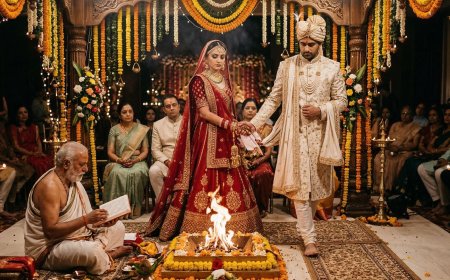
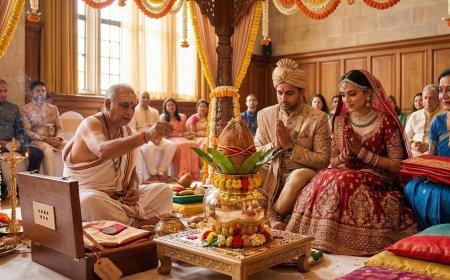
The ceremony you had imagined so many times — the pheras, the exchange of garlands, the moment your families came together — passed in a kind of managed blur. You were physically present. You were not emotionally present in the way you had expected, in the way the photographs suggest you were, in the way you desperately wish you had been.
This regret is not inevitable. The couples who avoid it are those who built a planning structure robust enough to function without their direct management on the wedding day — a planner trusted completely, a family coordinator briefed fully, a day-of protocol that removes every operational decision from the couple's plate. They made a conscious choice to release control at a specific point and to inhabit the experience rather than manage it.
Build the system well enough to trust it. Then trust it.
Regret Two: Choosing the Wrong Photographer
If post-wedding regrets had a hierarchy, the photography regret would sit near the top — because it is the only regret whose consequences are permanent.
The photographer regret takes several forms. Sometimes it is the regret of having chosen a photographer whose technical skill was adequate but whose capacity to capture emotional truth was limited — albums full of correctly exposed, properly composed images of a wedding that looked beautiful but felt, in the photographs, like someone else's beautiful wedding. Sometimes it is the regret of having over-budgeted for photography in terms of hours while under-investing in quality — twelve hours of coverage by a competent but uninspiring photographer when eight hours of coverage by an exceptional one would have produced something genuinely moving. Sometimes it is the regret of not having met the photographer in person before the wedding — of discovering at the actual event that the personality behind the camera created an atmosphere of tension rather than ease.
The photography regret is consistently the one NRI couples mention first when asked what they would change. And it is consistently the regret they describe with the most emotional weight — because every time they open the album, the regret is renewed.
Treat photography as the non-negotiable it is. Research exhaustively. Meet your photographer before booking — not just review their portfolio, but assess who they are and how they work. Prioritise exceptional work over long coverage hours. And never, under any circumstances, cut the photography budget to protect spending elsewhere.
Regret Three: Adding Functions They Did Not Actually Want
This regret is almost universal among NRI couples who planned weddings of more than three functions — and it is one of the most instructive because it is so entirely, completely avoidable.
The function was added because it seemed easier than the conversation required to decline it. A parent wanted it. An expectation existed. The planning was already underway and adding one more event felt like a smaller decision than it was.
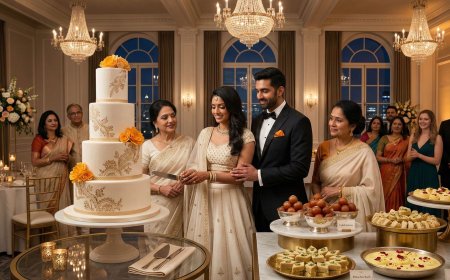
And then it had to be planned. Vendors had to be coordinated. A venue had to be confirmed. Catering had to be arranged. Décor had to be briefed. Family had to be coordinated. The budget had to stretch to accommodate it.
And on the day of the function itself — the day that had required weeks of planning from thousands of miles away — the couple was present in body and absent in spirit, going through the motions of a celebration they had never genuinely wanted, performing enthusiasm for a function whose only real purpose was to avoid a conversation they should have had months earlier.
The lesson is simple and hard: have the conversation. Every function you add to a wedding you are planning from abroad is a project. Before you add it, be certain it is a project you want to undertake — not one you are taking on to avoid the discomfort of saying no.
Regret Four: Not Protecting the Engagement Period
This regret is quieter than the others but deeply felt — the sense that the period of being engaged, which should have been one of the most joyful chapters of a relationship, was consumed by the planning process before it could be experienced as anything else.
NRI couples are advised — correctly — to begin planning immediately after engagement. The timelines are real. The venues book early. The vendors fill their calendars fast. Moving quickly is not a choice — it is a structural necessity.
But moving quickly on planning is different from allowing planning to consume the entirety of the engagement period. Couples who regret this describe an engagement that felt more like a project management exercise than a relationship milestone. Every conversation was about the wedding. Every evening together was a planning call. The ring was on the finger but the experience of being engaged — the particular happiness of that chapter, the anticipation, the intimacy of two people building toward something together — was drowned out by the noise of logistics.
The couples who avoid this regret are those who made an explicit, maintained commitment to protecting space that was not about the wedding. A weekly evening that was off-limits to planning conversations. A trip together that had nothing to do with India or vendors or family dynamics. The deliberate choice to be engaged people, not just wedding planners.
Regret Five: Not Managing Family Expectations Early Enough
The family dynamics regret is one of the most consistently reported and most emotionally complex post-wedding reflections among NRI couples.
It takes different forms. Sometimes it is the regret of not having the difficult conversation about the guest list early enough — allowing it to drift until it was twice the size intended, with people on it whose presence complicated the atmosphere of the day. Sometimes it is the regret of having allowed family members to take ownership of planning decisions they were not equipped to manage, producing outcomes that reflected the family member's vision rather than the couple's. Sometimes it is the regret of having fought battles over details that did not matter while losing the larger war over the wedding's overall character.
The common thread is delay. The conversations that needed to happen at month two did not happen until month ten — by which point positions had hardened, expectations had crystallised, and the space for genuine negotiation had shrunk to almost nothing.
The family dynamics of an NRI wedding are complex and they are not going to resolve themselves. The couples who navigate them most successfully are those who addressed them directly and early — who had the uncomfortable conversations before the planning made them inevitable, who established clear decision-making structures before the stakes of individual decisions became high, and who approached family involvement as a managed collaboration rather than a managed conflict.
Regret Six: Under-Investing in the Honeymoon
This regret appears less frequently than the others but with particular poignancy: the couple who spent eighteen months and significant financial and emotional capital building a wedding that lasted four days, and then collapsed into a honeymoon that was hastily planned, under-budgeted, and over too quickly.
For NRI couples, the honeymoon planning often genuinely does fall victim to the sustained intensity of the wedding planning process. It is always the next thing to organise — the thing that will get proper attention once the wedding decisions are settled. And then the wedding is three weeks away and the honeymoon has been given three evenings of research and a compromised budget because the wedding exceeded projections.
The honeymoon is the first chapter of the marriage. It deserves the same intentionality as the wedding. Plan it early. Budget for it separately, not from the wedding budget. Give it the time and attention it warrants.
Regret Seven: Not Getting the Legal Documentation Right
This is the regret with the most practical consequences — and the one that most frequently catches NRI couples off guard.
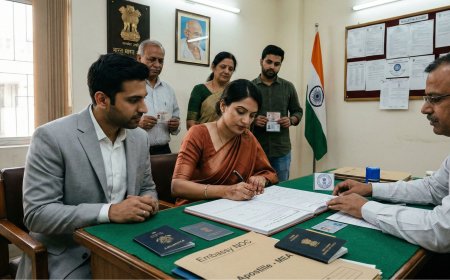
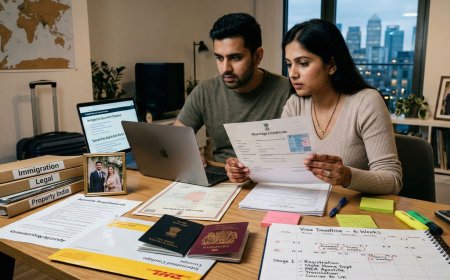
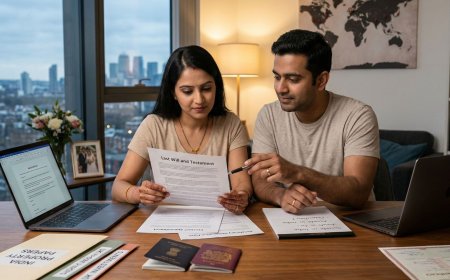
Marriage registration in India, and the subsequent process of having that registration recognised in the country of residence, involves a documentation process that is more complex than most couples anticipate. Apostilles, notarisations, consular processes, and timeline requirements vary by state in India and by country of residence abroad.
Couples who discover this complexity late — in the weeks before or after the wedding — find themselves in a time-pressured, logistically complex situation that is entirely avoidable with adequate advance planning.
The legal documentation regret is the one that most directly affects the post-wedding life — immigration status, name changes, spousal visa applications, financial account joint registrations. Do not leave this until the planning process is over.
Regret Eight: Caring Too Much About What Other People Thought
This regret arrives quietly, usually around the time the photographs are reviewed or the feedback from guests begins to circulate. The recognition that a significant number of the decisions made — the extra function, the larger guest list, the particular venue, the specific food menu — were made with someone else's approval as the primary criterion rather than the couple's own genuine preference.
The wedding that results from this pattern of decision-making is technically successful. It meets the expectations it was designed to meet. It receives the approval it was optimised for. And it belongs, in a profound way, to everyone who influenced those decisions rather than to the couple who hosted it.
The couples who avoid this regret are those who maintained a consistent practice of returning to their vision document — the articulation of what they genuinely wanted — and using it as a check against decisions that were drifting toward external approval rather than internal authenticity. They had the confidence to make unpopular choices when those choices were the right ones for the wedding they were building.
Your wedding is the only major event of your adult life that is, by design, entirely for you. Make it yours.
Regret Nine: The DIY Decision That Wasn't Worth It
In an attempt to manage costs or add personal touches, many NRI couples take on DIY elements of their wedding — designing their own invitations, managing their own vendor coordination for specific functions, handling their own décor sourcing. Some of these decisions work well. Some produce a regret that is equal parts financial and emotional.
The DIY regret typically involves underestimating the time, skill, and local knowledge required to execute the chosen task from abroad. The invitation design that looked straightforward and became a six-week project. The vendor coordination task that seemed manageable and produced three weeks of daily WhatsApp exchanges with a vendor in a different time zone. The décor elements sourced internationally and shipped at great expense that arrived damaged or looked different in the actual space than they had on screen.
The principle is not that DIY is wrong. It is that DIY for an NRI wedding from abroad carries hidden costs — in time, in cognitive load, in the opportunity cost of the attention it requires — that are not always visible when the decision is made. Apply the same cost-benefit analysis to DIY decisions that you apply to every other budget decision.
Regret Ten: Not Writing Anything Down
This is perhaps the smallest regret in the list and one of the most universal — the wish, in the immediate aftermath of the wedding, that someone had written down more.
Not the logistics. Not the vendor details. Those are documented. The other things. The speech someone gave at the sangeet that made everyone cry. The exact words of the blessing your grandmother offered at the roka. The private moment between you and your partner during the pheras when you looked at each other and both understood simultaneously that this was real and it was happening. The things that were said and felt in the intensity of the wedding week that exist now only in the imperfect, degrading medium of memory.
Commission a wedding journalist or ask a trusted person to document the words and the moments alongside the photographs. Journals written in the week of the wedding. Audio recordings of speeches and blessings. The act of writing down what happened while it is still fresh.
These are the archives that become more precious with each passing year — the ones that let you return not just to how the wedding looked but to how it felt.
The Pattern: What All the Regrets Have in Common
Looking across the full landscape of NRI post-wedding regrets, a consistent pattern emerges.
Almost none of the regrets are about spending too much or too little on any particular category. Almost none are about vendor quality in categories other than photography. Almost none are about the logistics of planning from abroad per se.
The regrets are almost universally about presence, authenticity, and courage.
Presence — the regret of not having been fully inside the experience when it was happening. Authenticity — the regret of having built a wedding for other people's approval rather than for genuine self-expression. Courage — the regret of not having had the difficult conversations early enough, of having avoided the discomfort of saying no or challenging an expectation or making an unpopular choice.
These are not planning failures. They are human ones. And unlike planning failures — which can be corrected with better systems and better information — they can only be addressed by a quality of intention that no guide can provide but every couple has access to.
Be present. Be authentic. Have the courage to build the wedding you actually want.
That instruction, more than any checklist or framework, is the distilled wisdom of everyone who has looked back on their NRI wedding and wished something had been different.
How to Use These Regrets as a Planning Tool
The value of understanding post-wedding regrets is not retrospective. It is prospective — a way of using the collective hindsight of couples who have already been through the experience to inform decisions that are still being made.
For each regret in this list, there is a corresponding planning action.
The presence regret points to the need for a trusted, empowered planner and a conscious decision to release operational control at a specific point before the wedding week. The photography regret points to the need for exhaustive research and the protection of the photography budget against competing pressures. The unwanted functions regret points to the need for honest, early conversations about the function list and the courage to decline what is not genuinely wanted. The engagement period regret points to the need for explicit boundaries around planning-free time. The family dynamics regret points to the need for early, direct conversations about decision authority and guest list parameters.
Every regret is a planning action in reverse. Read them as such.
The Wedding You Will Remember Is Not the One You Planned — It Is the One You Were Present For
The most beautiful thing about a wedding is also the most heartbreaking thing about planning one: you only get one.
There is no second run. There is no iteration. There is no opportunity to apply what you learned from the first one to a better-executed second one. There is only the wedding you are building, right now, in the eighteen months you have been given.
The couples who look back on their weddings without the weight of significant regret are not the ones who planned more perfectly. They are the ones who held their planning lightly enough to be inside the experience when it arrived. Who had the courage to build what they actually wanted instead of what they thought they should want. Who protected their relationship and their presence and their authenticity through a process that consistently applied pressure to all three.
The regrets in this article are offered not as warnings to generate anxiety but as gifts — the specific, honest, hard-won insights of people who have already walked this path and who want, with genuine generosity, to help you walk it better.
Use them. Let them shape the decisions you are still making. Let them give you the courage to have the conversations you have been avoiding.
And then let go of the planning — fully, deliberately, at the right moment — and be inside the wedding you spent so long building.
That is the one you will remember.
That is the one worth building.
What's Your Reaction?
 Like
0
Like
0
 Dislike
0
Dislike
0
 Love
0
Love
0
 Funny
0
Funny
0
 Angry
0
Angry
0
 Sad
0
Sad
0
 Wow
0
Wow
0