






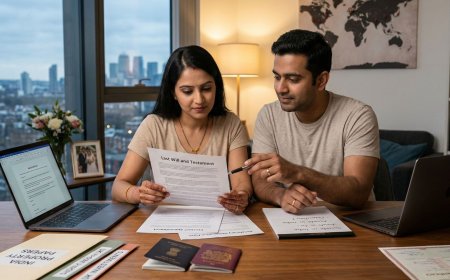



































































Background Verification for Inter-Country Marriages — The Complete NRI Guide
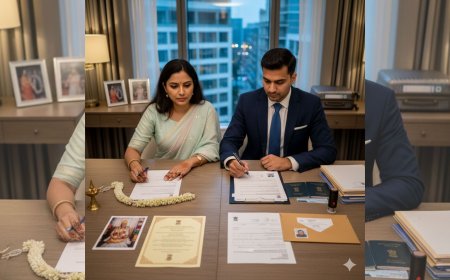
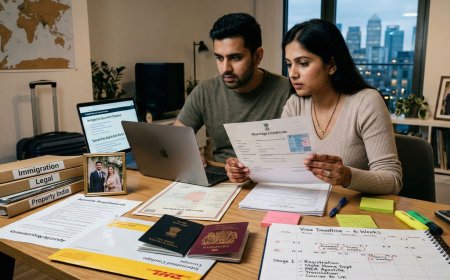
Inter-country marriages between NRI couples lack the informal community verification networks that traditional Indian marriages rely on — leaving couples to make life-defining commitments based largely on self-reported, unverified information. This complete guide covers everything NRI couples need to know about background verification before marriage — from identity and marital history checks to criminal records, professional credentials, financial background, and digital footprint review — including how verification is conducted across two jurisdictions, the legal and ethical boundaries, the mutual consent approach, and the common mistakes that leave NRI couples exposed to the most serious and preventable matrimonial risks.

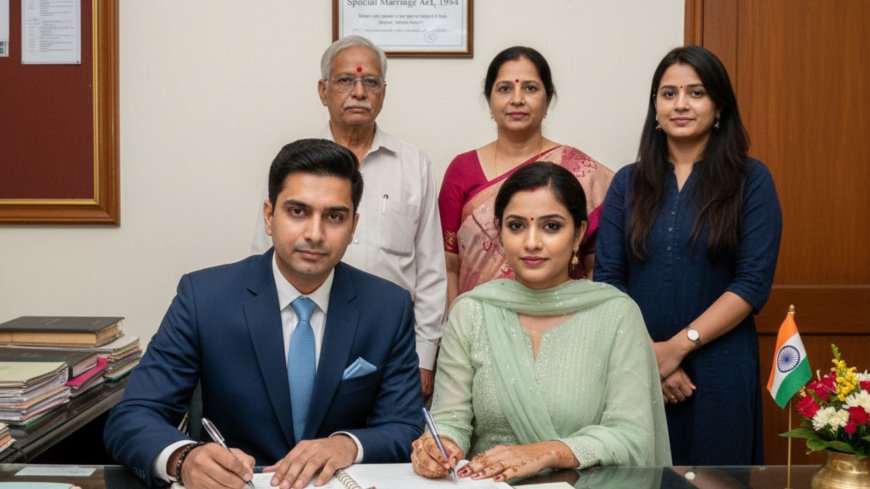
The Question Nobody Wants to Ask — But Everyone Should
It begins with a feeling.
Not a red flag. Not a specific incident. Not a dramatic revelation that announces itself clearly as a warning. Just a quiet, persistent feeling — the kind that surfaces at 2 AM when the excitement of the engagement has settled slightly and the reality of what is being committed to begins to take its full shape.
You have met this person. You believe you know them. You love them. You are planning a wedding that will bring two families together across two countries for a celebration that will be talked about for decades.
But you met them six months ago. Or through a matrimonial platform. Or through a family introduction where the reference chain — the aunt who knows the colleague who knows the family — is longer and less personally verified than you would have liked. Or you met them in person but you have spent most of your relationship communicating across time zones, building something real but necessarily incomplete because distance limits what you can know about another person's daily life.
And somewhere in the honest part of your mind — the part that your excitement and your hope and your genuine love have not entirely quieted — you are aware that you do not know everything. That the version of this person you have encountered is the version they have chosen to present. That the life they have described — the career, the family history, the previous relationships or the absence of them, the financial situation, the legal record — has been described by them, largely unverified by anyone else.
This is not cynicism. This is not a failure of love or trust or optimism. This is the honest reality of inter-country relationships — where the normal verification mechanisms of shared social networks, physical proximity, and community knowledge that have always provided informal background information about potential marriage partners are substantially absent.
In India, a marriage within a community typically occurs within a social ecosystem where both families have access to common contacts, shared reputation networks, and a community infrastructure that provides informal but meaningful verification of who someone is and how they have lived. The family knows the family. The community knows the history. The reputation travels through the network before the person arrives at the wedding.
NRI inter-country marriages often lack this infrastructure entirely. Two people — one in London, one in Bangalore; one in Toronto, one in Hyderabad; one in Dubai, one in Pune — are building a life-defining commitment across a gap that common social networks do not bridge, that family reputation systems do not span, and that physical proximity does not fill.
Background verification — professional, systematic, and conducted with appropriate sensitivity — is the modern equivalent of that community knowledge infrastructure. It is not a substitute for trust. It is the foundation on which informed trust can be built. It is the process that replaces "we know the family" with "we have independently verified what we need to know."
This guide makes that process completely clear.
It addresses what background verification for inter-country marriages actually involves, why NRI couples specifically need it more than they typically acknowledge, what categories of information are relevant and verifiable, how the process works, what the legal and ethical boundaries are, and how to navigate the deeply human dimension of a process that touches the most personal aspects of a person's life.
Because the question nobody wants to ask is often the question that matters most.
And asking it — carefully, respectfully, professionally — is one of the most genuinely caring things you can do for yourself, for your partner, and for the marriage you are building toward.
The Core Reality: Why Background Verification Matters for Inter-Country Marriages
The Verification Gap in Modern NRI Marriages
The traditional Indian marriage system — whatever its limitations in terms of individual autonomy and choice — contained robust informal verification mechanisms. Families investigated each other. Community members were consulted. References were sought and checked. The process was often intrusive and sometimes discriminatory — but it reliably surfaced information that was relevant to the marriage decision.
Modern NRI marriages — particularly those facilitated through matrimonial platforms, professional networks, or international social contexts — have largely abandoned these informal mechanisms without replacing them with equivalent alternatives. The result is a generation of couples making life-defining commitments on the basis of information that is substantially self-reported and substantially unverified.
The consequences of this verification gap are not theoretical. They are documented, recurring, and significant.
Marriages entered on the basis of false representations about prior marriages — the partner who was divorced and did not disclose it, or worse, who is still legally married. Marriages where significant criminal history was concealed — not necessarily violent history, but history relevant to the financial trust and legal security of a marriage. Marriages where professional credentials were fabricated — the medical degree that was not completed, the professional licence that was suspended. Marriages where financial position was misrepresented — not the normal optimism of presenting oneself well, but the systematic concealment of significant debt, bankruptcy, or financial fraud.
These situations are not rare. They are reported with sufficient frequency in NRI community networks, in family law practices serving NRI clients, and in the experience of NRI welfare organisations to constitute a real and manageable risk category — not a paranoid fear but a genuine consideration that informed couples are increasingly choosing to address proactively.
The Specific Vulnerability of Inter-Country Relationships
Inter-country relationships carry specific verification vulnerabilities that domestic relationships do not.
Geographical separation limits informal verification. You cannot meet the partner's colleagues, visit their workplace, observe their daily life, or encounter the network of people who know them casually. Every piece of information about their life in another country is filtered through their own account of it.
Cross-border information is harder to access. Criminal records, court proceedings, professional licences, and financial records are national systems. Accessing information across national borders requires specific knowledge, specific processes, and in some cases specific legal authority.
The timeline pressure of long-distance relationships compresses due diligence. Couples in long-distance relationships often feel pressure to make decisions quickly — because every visit ends with a departure and every departure raises the stakes of the commitment. This compression reduces the time available for the gradual, organic information gathering that in-person relationships enable.
Cultural and family pressure amplifies commitment momentum. In Indian families, once a relationship is acknowledged as serious, the social momentum toward marriage builds quickly. The engagement announcement activates family planning machinery that is difficult to pause for due diligence that feels, from the outside, like distrust.
The Strategic Framework: What Background Verification Actually Covers
Identity Verification
The foundational layer of any background verification. Confirming that the person is who they say they are — that the name, age, nationality, and biographical details they have provided are accurate.
What identity verification covers:
• Full legal name — including any previous names, name changes, or alternative spellings
• Date of birth — confirming age representations
• Nationality and citizenship status — particularly relevant for NRI partners whose immigration status affects the couple's joint future
• Current and historical addresses — confirming residential history as represented
• Identity document verification — passport, national identity documents
Why it matters for NRI couples:
Identity misrepresentation — including significant age misrepresentation, undisclosed name changes, and misrepresented nationality or immigration status — is more common in matrimonial contexts than most people assume. For NRI couples specifically, a partner's immigration status and visa history directly affect the couple's ability to build a life together in their chosen country.
Marital History Verification
This is the most critical verification category for inter-country marriages — and the one where misrepresentation carries the most severe legal consequences.
What marital history verification covers:
• Current marital status — is the person legally free to marry?
• Previous marriages — have all previous marriages been disclosed?
• Divorce decrees — are previous marriages legally dissolved, or are proceedings ongoing?
• Annulment records — have any marriages been annulled and is that history disclosed?
Why it matters for NRI couples:
Marriage to a person who is already legally married constitutes bigamy — a criminal offence in India under Section 494 of the Indian Penal Code and a legal nullity in virtually every country where NRI couples reside. The second marriage is void from inception — which means the NRI partner has no legal rights as a spouse, regardless of the ceremony, the celebrations, and the genuine belief that the marriage was valid.
Cases of undisclosed prior marriages are among the most common and most devastating forms of matrimonial fraud reported in NRI communities. They are also among the most preventable — a proper marital history check through official records in the relevant jurisdictions surfaces this information before the commitment is made.
Criminal Record Verification
What criminal record verification covers:
• Criminal history in India — through official police clearance certificates and court record searches
• Criminal history in the country of residence — through official channels in the relevant country
• Pending cases — criminal proceedings that have not yet resulted in conviction
• Civil court proceedings — particularly those related to fraud, harassment, or domestic violence
Why it matters for NRI couples:
Criminal history that is relevant to marriage safety — domestic violence records, fraud convictions, harassment orders — is exactly the category of information that a person motivated to conceal it will conceal. The absence of disclosed criminal history is not the same as the verified absence of criminal history.
For NRI couples, criminal history in a partner's country of residence also has direct immigration implications. A criminal record in the UK, USA, Canada, or Australia can affect visa applications, residency applications, and citizenship eligibility — which affects the couple's ability to build their life in their chosen country.
Important nuance:
Criminal record verification should be approached with proportionality. Minor historical offences that are genuinely irrelevant to the safety and integrity of a marriage are different from patterns of behaviour, serious convictions, or pending proceedings that carry direct relevance. The purpose of verification is not to disqualify people for irrelevant historical matters but to surface information that is genuinely relevant to the marriage decision.
Professional and Educational Credential Verification
What credential verification covers:
• Educational qualifications — degrees, professional certifications, and institutional affiliations as represented
• Professional licences — medical, legal, engineering, financial licences and their current status
• Employment history — verification of current employer, role, and approximate tenure as represented
• Professional reputation — any disciplinary proceedings, professional misconduct findings, or regulatory sanctions
Why it matters for NRI couples:
Professional and educational misrepresentation is remarkably common in matrimonial contexts — driven by the social premium that Indian families place on educational and professional achievement. The medical degree that was partially completed. The professional title that is inflated. The employer that is misrepresented.
For NRI couples where one partner's immigration status is tied to their professional credentials — a work visa, a skilled worker category, a professional licence — misrepresentation of those credentials has direct legal implications for the couple's joint immigration position.
Financial Background Verification
What financial background verification covers:
• Significant undisclosed debt — particularly debt that affects the couple's financial future
• Bankruptcy or insolvency proceedings — past or current
• Financial fraud history — civil or criminal proceedings related to financial misconduct
• Significant undisclosed financial obligations — child support, alimony from previous marriages, business liabilities
Why it matters for NRI couples:
Significant undisclosed financial liabilities can directly affect the couple's financial future — through joint liability, through claims on shared assets, or through the financial burden of obligations the partner concealed. For NRI couples combining assets across multiple countries, the implications of undisclosed financial history are amplified.
Financial background verification is not about knowing the partner's bank balance or assessing their earning capacity. It is about identifying significant hidden liabilities that the partner had an obligation to disclose — and chose not to.
Social Media and Digital Footprint Review
What digital verification covers:
• Consistency between online presence and represented identity and history
• Identification of undisclosed relationships — ongoing or recent — visible through social media
• Verification of represented social and professional affiliations
• Identification of significant inconsistencies between represented life and digital record
Why it matters for NRI couples:
Digital footprints are among the most accessible and most revealing sources of verification information available. A person's social media presence, LinkedIn profile, tagged photographs, and digital connections often contain information that directly contradicts or significantly supplements their self-representation.
Digital review is not surveillance. It is the review of information that is publicly available — information that the person has chosen to make accessible to anyone with internet access. Reviewing it before committing to a life with someone is not a violation of privacy. It is basic due diligence.
How Background Verification Is Actually Conducted
Professional Background Verification Agencies
Professional verification agencies — operating in both India and internationally — provide structured, documented background verification services for matrimonial and pre-employment contexts. These agencies have established processes for accessing official records, conducting reference checks, and producing documented verification reports.
What reputable agencies provide:
• Documented verification reports with source citations
• Access to official record databases — court records, police records, professional registries
• Cross-border verification capabilities for NRI contexts
• Confidential, professional handling of sensitive personal information
• Clear scope definition and engagement terms
How to select a reputable agency:
• Verify the agency's legal registration and operating licences
• Request sample reports to assess documentation quality
• Confirm their specific capability for cross-border NRI verification
• Check references from previous clients if available
• Confirm their data handling and confidentiality practices
• Ensure they operate within legal boundaries — they should not offer services that involve illegal surveillance or illegal data access
Typical cost for comprehensive matrimonial background verification:
• India-only verification: ₹15,000–₹50,000 depending on scope
• Cross-border NRI verification: ₹40,000–₹1.5 lakhs depending on countries involved and depth of verification
Self-Directed Verification Through Official Channels
For specific verification categories — particularly identity, marital history, and criminal records — official channels exist that individuals can access without engaging a professional agency.
Police Clearance Certificates: Both parties can obtain police clearance certificates from their respective countries of residence and from India. A police clearance certificate from India is obtained through the Passport Seva Kendra system. Police clearance certificates from UK, USA, Canada, and Australia are obtained through the relevant national police or government authority.
These certificates are designed for official use — for visa applications, for immigration processes — but they serve a meaningful verification function in matrimonial contexts as well.
Court Record Searches: Indian court records are increasingly accessible through the eCourts portal — ecourts.gov.in — which provides access to case status information for courts across India. Searching a partner's name through this portal provides information about any registered court proceedings involving them.
Professional Registry Verification: Professional licences — medical, legal, engineering, architectural — are registered with specific professional bodies whose registries are publicly accessible. Verifying that a claimed professional licence exists and is in good standing is straightforward through official registry searches.
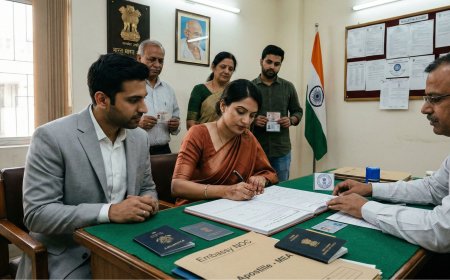
Marriage Registry Searches: Registered marriages in India are recorded in state-level registries. While comprehensive national-level marriage registry searches are not yet available through a single portal, state-level searches are possible through official channels — and for specific states where a partner has lived, these searches provide meaningful marital history information.
Reference Network Verification
The traditional community verification model — adapted for modern NRI contexts.
How it works:
Identify individuals — in the partner's professional network, their educational network, their residential community, or their family's social network — who know the partner through contexts other than the relationship itself. Speak to these individuals — not to gather gossip, but to verify specific factual representations and to assess the partner's general reputation among people who know them independently.
What makes reference network verification effective:
• Speaking to people who know the partner professionally — former colleagues, supervisors, professional contacts
• Speaking to people who know the partner socially — friends who knew them before the relationship, community members, former housemates
• Asking specific, factual questions — about the representations made, not about private matters
• Cross-referencing information from multiple independent sources
The limitation:
Reference network verification is only as good as the network available. For partners who have lived abroad for many years with limited India-based social network, or for relationships formed through channels with limited mutual contact, the network may be insufficient for meaningful verification.
The Legal and Ethical Framework
What Is Legal
• Reviewing publicly available information — social media profiles, professional registries, public court records
• Requesting official documents — police clearance certificates, professional licences
• Speaking to mutual contacts and references
• Engaging a professional agency that operates within legal boundaries — accessing official records through authorised channels
What Is Not Legal
• Accessing private communications — emails, messages, private social media accounts — without consent
• Employing surveillance methods — physical following, tracking devices, unauthorised recording
• Obtaining financial records without authorisation — bank statements, credit reports without legal authority
• Hacking or accessing any digital system without authorisation
• Any method that constitutes illegal data access or privacy violation under Indian law or the laws of the relevant country of residence
The Consent Approach
An increasingly common and genuinely recommended approach for NRI couples is mutual, consensual background verification — where both parties agree to the process and both parties participate in it.
This approach reframes verification from a surveillance activity to a mutual transparency exercise. Both parties provide the information required for verification. Both parties confirm their representations. Both parties acknowledge that the other is verifying what has been shared.
This approach has significant advantages. It removes the ethical complexity of covert investigation. It signals mutual respect and mutual transparency. It creates a foundation for the marriage built on verified honesty rather than assumed trust. And it identifies any reluctance to participate in mutual verification — which is itself meaningful information.
Common Mistakes NRI Couples Make Around Background Verification
Assuming Family Endorsement Is Sufficient Verification
A partner who has been introduced through family channels and endorsed by family members has been vouched for — but not independently verified. Family endorsements are based on family knowledge — which is limited to what the family has been told or has independently observed, and which is filtered through the family's own relationship with the partner's family.
Correction: Treat family endorsement as one data point — a meaningful one, but not a substitute for independent verification of specific facts.
Relying Entirely on Self-Reported Information
Everything a partner tells you about themselves is self-reported. This is not a basis for suspicion — most people are honest about most things. But for specific categories of information that carry significant consequences — marital history, criminal history, professional credentials — independent verification of self-reported information is basic due diligence.
Correction: For the specific high-stakes categories — marital history, criminal record, professional credentials — verify independently rather than relying on self-report alone.
Not Verifying in Both Countries
NRI partners have lives in two countries — India and their country of residence. Criminal records, court proceedings, and marital history exist in both jurisdictions. Verifying only in one country while leaving the other unexamined is incomplete verification.
Correction: Ensure that verification covers both the partner's Indian history and their history in their country of residence. Specifically request police clearance certificates from both jurisdictions.
Conducting Verification Covertly and Then Confronting With Results
Covert background verification — conducted without the partner's knowledge and then used as a basis for confrontation — is ethically complex and relationally damaging even when it surfaces genuine concerns. The manner of discovery becomes part of the conflict rather than the information itself.
Correction: Where possible, approach background verification as a mutual, transparent process. Where covert verification is undertaken — in specific circumstances where genuine safety concerns exist — how the results are handled requires careful consideration and potentially legal advice before any confrontation.
Using Verification Results Without Professional Guidance
Background verification can surface information that is ambiguous, incomplete, or contextually complex. A criminal proceeding that was dismissed. A divorce that is pending but not final. A professional licence that lapsed and was reinstated. Acting on verification results without understanding their full legal and factual context can produce incorrect conclusions.
Correction: When verification surfaces concerning information, consult a qualified lawyer before drawing conclusions or making decisions. Understand the full legal context of what the verification has found before acting on it.
The Emotional and Cultural Layer: Trust, Verification, and the Beginning of a Marriage
This is the most important section of this guide — and it deserves more than a procedural summary.
Background verification in a matrimonial context touches something deeply personal. It sits in the space between love and caution. Between trust and protection. Between the desire to give yourself fully to another person and the responsibility to protect yourself from the specific ways that trust can be exploited.
In Indian family culture — and NRI family culture carries this even more acutely — the suggestion of background verification can feel like an accusation. Like distrust made visible. Like a failure of the faith and generosity that love is supposed to embody. The family that suggests verification is the family that is not fully committed to the alliance. The partner who requests verification is the partner who does not fully trust.
This framing is understandable. And it is wrong.
Verification is not the absence of trust. It is the infrastructure of informed trust. The difference between trusting someone because you have chosen to despite knowing nothing, and trusting someone because you have verified what they have told you and found it to be true — is not a difference in the depth of the trust. It is a difference in its foundation.
The partner who welcomes verification — who says, of course, let us verify everything, I have nothing to hide and I would like to verify your representations too — is the partner who is building the marriage on the foundation of honesty. The partner who responds to the suggestion of verification with anger, with accusations of distrust, with pressure to proceed without it — that response itself is information worth having.
For NRI couples specifically — who are making life-defining commitments across distances that limit organic information gathering, in contexts where informal community verification is absent, often under time pressure that compresses due diligence — background verification is not paranoia. It is the modern equivalent of the community knowledge infrastructure that traditional marriages relied on and that inter-country marriages lack.
It is care. For yourself. For your partner. For the marriage you are building.
And it deserves to be treated with the same seriousness and the same thoughtfulness that every other significant decision about your future deserves.
Background Verification Checklist for NRI Couples
Before Engaging Any Verification Process
• Discuss the verification approach openly with your partner if pursuing mutual verification
• Define the scope of verification — which categories are relevant to your specific situation
• Identify the jurisdictions requiring verification — India and country of residence for both partners
• Research professional verification agency options if engaging professional services
• Consult a lawyer if any specific legal concerns have already been identified
Identity and Marital History Verification
• Verify full legal name and biographical details against official identity documents
• Request police clearance certificate from India — through Passport Seva Kendra
• Request police clearance certificate from country of residence
• Conduct court record search through eCourts portal for Indian proceedings
• Request official divorce decree documentation if previous marriage disclosed
• Verify current marital status through official marriage registry search if available
Professional and Financial Verification
• Verify educational qualifications through institutional confirmation
• Verify professional licences through official registry — current status and disciplinary history
• Verify current employment through direct employer confirmation
• Identify any significant undisclosed financial liabilities through available official channels
• Review publicly available financial information — business registrations, insolvency records
Digital and Reference Verification
• Review publicly available social media profiles for consistency with representations
• Conduct reference conversations with independent contacts — professional and social
• Cross-reference information from multiple independent sources
• Document any significant inconsistencies identified for further investigation
After Verification
• Review results with qualified legal adviser if concerning information surfaces
• Make decisions based on fully informed understanding of verified information
• If pursuing mutual verification — share results transparently with partner
• Document completion of verification process for personal records
The Question That Protects the Answer You Want
The question nobody wants to ask is: who is this person, really — and is everything they have told me true?
It feels like the wrong question for the beginning of a love story. It feels like distrust dressed up as due diligence. It feels, in the warmth of a new engagement and the excitement of a wedding being planned, like exactly the wrong energy to bring to exactly the right moment.
And yet.
The NRI couples who have discovered — after the wedding, after the visa application, after the first year of marriage — that their partner had a prior undisclosed marriage, or a criminal record, or fabricated professional credentials, or significant concealed financial liabilities — those couples would have given almost anything for someone to have asked that question before the commitment was made.
Background verification does not guarantee a perfect marriage. No process does. It does not verify character, or kindness, or the capacity for love, or any of the qualities that make a marriage real and good and lasting. Those things are known in other ways — through time, through difficulty, through the daily choice to show up for each other.
What background verification does is remove one specific category of risk from the beginning of that journey. The risk of beginning the journey with someone who has fundamentally misrepresented who they are.
That risk is real. It is manageable. And for NRI couples navigating inter-country marriages without the informal community verification infrastructure that traditional marriages relied on, managing it proactively is one of the most genuinely caring things you can do for the marriage you are hoping to build.
Ask the question. Verify the answer. Build the trust on the foundation of what you find.
The marriage that follows will be stronger for it.
Published by NRIWedding.com — The Premium Global Platform for Non-Resident Indians Planning Indian Weddings From Abroad.
What's Your Reaction?
 Like
0
Like
0
 Dislike
0
Dislike
0
 Love
0
Love
0
 Funny
0
Funny
0
 Angry
0
Angry
0
 Sad
0
Sad
0
 Wow
0
Wow
0