









































































Can You Return or Exchange Bridal Wear in Delhi? The Complete NRI Guide to Consumer Rights Before Buying
The NRI bride who discovers on day nine of the Delhi visit that the ceremony lehenga's embroidery is not what was specified has three options — and whether any of them work depends entirely on the documentation that was or was not created before the purchase was made. This complete guide covers the Delhi bridal market's return and exchange reality for NRI buyers — the Consumer Protection Act 2019's actual provisions, the non-conforming good claim versus the change-of-mind position, the written brief and the specific description receipt that create the protection before the problem, the WhatsApp paper trail that makes the documented claim possible, the market-specific practices from the designer boutiques to the bazaar markets, and the five common mistakes NRI brides make that turn the solvable dispute into the expensive lesson.


Can You Return or Exchange Bridal Wear in Delhi? — What NRIs Need to Know Before Buying
The realisation had arrived on day nine of the fourteen-day Delhi visit, at seven-forty in the evening, in the form of the WhatsApp message from her masi in Chandigarh who had attended the fitting of the ceremony lehenga at the GK-1 M-Block boutique that afternoon as the proxy for Priya, who had been in her hotel room in CP managing an urgent client call from Vancouver that had not been urgent when it was scheduled and had become urgent as the fitting appointment approached.
The message from her masi had four photographs and a voice note. The photographs showed the lehenga on the boutique's fitting mannequin from four angles — the front, the back, and both sides. The voice note had said, in the specific Punjabi-inflected Hindi that her masi used for the serious communications: The lehenga is beautiful. The colour is correct. The embroidery is everything you specified. There is one problem. The hem embroidery at the back is not the pattern that was in the brief. It is the alternate pattern from the boutique's design book. I showed the boutique owner the brief photograph. She says the embroiderer made the substitution because the thread for the specified pattern was not available and that she had not mentioned this because she assumed it would be acceptable. The hem embroidery is beautiful but it is not what you ordered. I am waiting for your call.
Priya had ended the client call. She had looked at the photographs for a long time. The hem embroidery was, as her masi had said, beautiful — a different pattern from the one she had specified, but genuinely beautiful. The question was not whether she liked it. She did. The question was whether she had the right to return the piece or to require the correct embroidery to be applied, and if she had that right, how she exercised it in a market whose consumer protection framework she did not understand and in a transaction that had been conducted on the basis of a verbal brief supplemented by the photographs in the design document rather than a written contract whose specific terms she could reference.
She had called her masi. She had said: What are our options? Her masi had said: I have asked the boutique owner. She says she will re-do the hem embroidery at no additional cost if you want the original pattern. She says it will take ten days. Your departure is in five days. I have also asked whether you can take the piece and have the embroidery corrected in Vancouver. She says yes, but the alteration void the original warranty. Her masi had paused. She had said: There is no written contract. There is the brief document you sent and the boutique owner's verbal agreement to follow it. The Consumer Protection Act applies but the enforcement is the practical question.
This article is for Priya — and for every NRI buyer who has made a significant purchase in the Delhi bridal market and who needs to understand, before the purchase is made rather than after the problem is discovered, what the return and exchange framework in India actually is and how to protect the purchase before the transaction rather than after the complication.
The Reality of Returns and Exchanges in the Delhi Bridal Market
The direct answer to the question in this article's title — can you return or exchange bridal wear in Delhi? — is: it depends, and the dependence is on factors that the buyer who understands the framework before the purchase can influence, and that the buyer who does not understand the framework discovers at the point of the problem.
The general reality of the Delhi bridal market's return and exchange practice is this: the standard practice in the Indian bridal retail market does not include the Western retail's standard return and exchange rights. The buyer who walks into the GK-1 M-Block boutique with the purchased lehenga one week after the purchase and requests the return on the grounds that they have changed their mind will not receive the refund in the majority of shops, regardless of the Consumer Protection Act's general provisions, because the Indian bridal retail market's standard practice has developed around the understanding that the custom-adjacent purchase — the lehenga that was tried, selected, and purchased with the full information available — is a final sale rather than a returnable purchase.
This does not mean that the NRI buyer is without rights or without recourse. It means that the rights the buyer has are different from the Western retail's standard return policy, and that the recourse available depends on the specific circumstances of the transaction and the specific nature of the problem.
The Legal Framework: The Consumer Protection Act and What It Actually Provides
The Consumer Protection Act 2019 — India's primary consumer rights legislation — provides the framework within which the Delhi bridal market's purchase disputes are resolved, and understanding what it actually provides is the knowledge that distinguishes the buyer who knows their rights from the buyer who assumes rights that the legislation does not provide.
What the Consumer Protection Act Provides
The Consumer Protection Act 2019 provides the consumer with the right to: the receipt of goods that conform to the description under which they were sold (the lehenga that was sold as the specific embroidery pattern must conform to that description or the buyer has the right to the remedy); the remedy for the defective goods (the good that is defective — the seam that fails, the embroidery that unravels, the structural failure that the normal wearing reveals) — the remedy being the repair, the replacement, or the refund at the consumer's choice; protection from the unfair trade practice (the seller who misrepresents the goods, who makes the false claim about the quality or the composition, who sells the inferior substitute for the specified product without the buyer's knowledge or consent); and the access to the consumer dispute redressal forum (the three-tier system of district, state, and national consumer commissions whose jurisdiction is determined by the transaction's value).
The Consumer Protection Act 2019's specific provisions that are relevant to Priya's situation: the boutique that substituted the alternate embroidery pattern without the buyer's knowledge or consent is the boutique that has delivered goods that do not conform to the description under which they were sold — the specific embroidery pattern that was agreed in the brief. This is the unfair trade practice provision and the non-conforming goods provision that the Consumer Protection Act's remedies address.
What the Consumer Protection Act Does Not Provide
The Consumer Protection Act does not provide: the right to return goods that conform to the description under which they were sold because the buyer has changed their mind; the right to the immediate cash refund in all circumstances (the Act provides the remedy of repair, replacement, or refund in that order of priority); or the guaranteed timeline for the dispute's resolution that matches the NRI buyer's departure date.
The practical implication: the NRI buyer who discovers the non-conforming good — the embroidery that is different from the brief, the fabric that is different from the described composition, the construction quality that fails within the reasonable wearing period — has the Consumer Protection Act's remedy available. The NRI buyer who simply prefers a different piece after the purchase has made the final sale's purchase without the return right that the change of mind does not provide.
The District Consumer Forum and the Timeline
The Consumer Protection Act's dispute resolution mechanism — the district consumer forum for the disputes below fifty lakh rupees — is the remedy whose timeline the NRI buyer who is in Delhi for fourteen days cannot practically use for the dispute that is discovered during the visit. The district forum's timeline from the complaint to the first hearing is weeks to months, not days. The NRI buyer whose departure is in five days cannot wait for the district forum's resolution.
The practical consumer protection mechanism for the NRI buyer during the visit is not the formal Consumer Protection Act forum — it is the specific, commercially-calibrated negotiation with the vendor whose awareness of the Consumer Protection Act's provisions and whose commercial interest in the satisfied customer together create the incentive to resolve the dispute before the NRI buyer leaves Delhi.
The Practical Framework: What Happens When Things Go Wrong
The Non-Conforming Good: The Strongest Position
The NRI buyer whose purchase has not conformed to the description — the lehenga whose embroidery is different from the specified brief, the saree whose stated silk content is incorrect, the gold whose hallmark does not match the stated karat — is in the strongest position of any buyer whose purchase has produced the dispute. The non-conforming good is the Consumer Protection Act's clearest case, and the vendor who knows this knows that the consumer's claim is the legitimate one.
The management of the non-conforming good dispute during the Delhi visit: the immediate identification of the non-conformity (the day of collection or the fitting, not the day before departure); the direct conversation with the vendor that states the specific non-conformity against the specific agreement; the documentation of the non-conformity (the photographs of the actual piece against the photographs of the agreed brief); and the specific request for the remedy — the correction of the non-conformity within the visit's remaining timeline, or the price adjustment that compensates for the non-conformity, or in the most serious cases, the replacement or the refund.
The vendor's response to the documented, specific, Consumer Protection Act-grounded non-conformity claim is typically the negotiated resolution rather than the flat refusal — because the vendor who is operating in the repeat business network of the South Delhi bridal community understands that the dispute that reaches the social media or the community's word-of-mouth is the dispute whose cost exceeds the remedy's cost.
The Quality Failure: The Mid-Range Position
The quality failure — the garment whose construction fails within the reasonable wearing period, the jewellery setting whose stones are dislodged in the normal wearing, the fabric whose color fades in the first wash — is the position that is stronger than the change-of-mind return but weaker than the non-conforming good claim. The quality failure is the defective good provision of the Consumer Protection Act, and the remedy is the repair, replacement, or refund.
The NRI buyer whose quality failure is discovered after the return to Vancouver or London has the Consumer Protection Act's remedy available in principle and the practical challenge of the geographic distance in reality. The quality failure discovered in Vancouver after the return from Delhi is the quality failure that the Consumer Protection Act's forum in Delhi's jurisdiction requires the buyer to pursue from Vancouver — the complaint filed with the district forum by email or through the representative, the hearing attended by the proxy, the remedy sought through the mechanism whose timeline the NRI buyer manages from the six-hour time zone difference.
The practical management: the documentation of the quality failure (the photographs, the date of purchase, the receipt, the communication with the vendor) creates the evidentiary record that the Consumer Protection Act's forum requires and that the vendor's social media and community exposure risk makes the out-of-court resolution preferable to.
The Change of Mind: The Weakest Position
The NRI buyer who wants to return the piece because the mind has changed — the lehenga that was selected and purchased and that now, in the hotel room's different light, seems like not quite the right choice — is the buyer whose position is the weakest in the Delhi bridal market's framework. The Indian bridal retail market's standard practice is the final sale for the conforming good, and the Consumer Protection Act does not provide the change-of-mind return that the Western retail's standard policy sometimes offers.
The options for the change-of-mind situation: the conversation with the vendor about the exchange — the vendor's willingness to exchange the piece for another piece of equivalent value is the commercial discretion whose exercise is the vendor's choice rather than the buyer's right; the resale through the Indian bridal second-hand market (the Instagram resale accounts, the specific platforms that have developed for the Indian bridal resale); or the acceptance of the purchase and the reorientation of the brief around the piece that has been purchased.
The Protection Framework: What to Do Before the Purchase to Protect the NRI Buyer
The most effective consumer protection for the NRI buyer in the Delhi bridal market is the protection that is built into the purchase before the transaction is completed — the specific, pre-purchase steps that create the documented record whose existence changes the vendor's incentive structure and whose content provides the evidence that any subsequent dispute requires.
The Written Brief
The written brief — the document that specifies the specific design, the specific fabric, the specific embroidery pattern, the specific making details — is the foundational protection document for the custom or semi-custom bridal purchase. The brief that is in writing, that has been acknowledged by the vendor (by email, by WhatsApp, by the signature on the printed document), and that is retained by both parties is the brief whose specific terms are the reference standard for the conforming or non-conforming assessment.
Priya's situation — the brief document that existed as the photographs and the design notes sent by WhatsApp to the vendor — was the brief that was partially documented. The acknowledgment of the brief by the vendor had been verbal rather than written. The dispute's resolution depended on the vendor's commercial interest in the satisfied customer rather than the legal certainty of the written agreement whose terms were unambiguous.
The written brief that the NRI buyer should create before the purchase: the one-page document that lists the specific garment specifications (the fabric, the embroidery pattern, the colour, the making details), the photographs that illustrate each specification, and the acknowledgment line that the vendor's signature or the WhatsApp reply (in the specific form that says I have read and agreed to the above) creates. This document is the consumer protection investment that takes fifteen minutes to create and that eliminates the majority of the dispute situations.
The Receipt with the Specific Description
The receipt for the bridal purchase should contain the specific description of the purchased item rather than the general category description. The receipt that says one lehenga Rs. 85,000 is the receipt that does not describe what was purchased. The receipt that says one custom lehenga in dark teal Katan silk with gold and cream phulkari-influenced zardozi embroidery at the specified pattern, embroidery density, and placement Rs. 85,000 is the receipt that describes what was purchased and whose specific description is the conforming-good assessment's reference.
The NRI buyer should ask for the specific description receipt at every significant bridal purchase. The vendor who refuses the specific description receipt is the vendor whose unwillingness to document the transaction's specifics is the signal that the transaction's terms are less well-defined than the purchase's significance warrants.
The Photograph Record
The photograph record — the systematic photographs of the piece at the point of purchase and at every subsequent stage of the alteration or the making process — is the evidentiary record whose existence makes the non-conformity claim straightforward and whose absence makes the claim dependent on the memory and the word-of-mouth.
The photograph protocol: at purchase, photograph the piece from the front, the back, and the specific embroidery details; at the fitting, photograph the fit on the body or the fitting mannequin from all angles; at the collection, photograph the final piece before it leaves the shop. The photographs, dated and stored with the receipt, are the complete evidentiary record that the Consumer Protection Act's forum requires and that the pre-forum negotiation with the vendor uses.
The WhatsApp Paper Trail
The WhatsApp communication between the NRI buyer and the Delhi vendor is the specific evidence trail whose systematic management converts the informal communication channel into the documented record. Every specific agreement about the design, the timeline, the price, and the delivery conditions should be confirmed in writing in the WhatsApp conversation — the message that says following our conversation, I confirm that the embroidery pattern is the design in photograph 3 of the brief, the delivery date is the fifteenth, and the price is eighty-five thousand including the dupatta is the message that creates the documented record.
The vendor's reply to the confirmation message — even the single-word acknowledgment, the thumbs up, the okay — is the documented acknowledgment that the specific terms have been communicated and received. The WhatsApp conversation that contains these confirmations is the paper trail that the dispute's resolution can reference.
The Specific NRI Complication: What Distance Does to the Consumer Rights
The NRI buyer's geographic distance from Delhi — the Vancouver or the London or the Sydney address that is the buyer's home and that is the address where the quality failure is discovered after the return — creates a specific complication in the consumer protection framework that the domestic buyer does not face.
The Consumer Protection Act's jurisdiction is India. The district forum that has jurisdiction over the Delhi vendor's transaction is the Delhi district forum. The NRI buyer whose quality failure is discovered in Vancouver after the return cannot walk into the Delhi district forum's office and file the complaint in person on the morning after the discovery. The NRI buyer files the complaint by email, engages the representative whose presence at the hearing substitutes for the NRI buyer's personal attendance, and manages the process from the time zone difference across the weeks and months that the district forum's timeline produces.
The practical implication of the distance complication: the pre-purchase protection framework — the written brief, the specific description receipt, the photograph record, the WhatsApp paper trail — is more important for the NRI buyer than for the domestic buyer precisely because the NRI buyer's recourse after the return to Vancouver is more complex and more expensive to exercise than the domestic buyer's recourse. The NRI buyer who has the complete protection documentation has the Consumer Protection Act's remedy available from Vancouver; the NRI buyer who has the oral agreement and the general receipt has the Consumer Protection Act's remedy available in principle and the geographic distance's practical obstacle in reality.
The Market-Specific Return and Exchange Practices
The return and exchange practices vary significantly across the Delhi bridal market's different market segments, and understanding the market-specific practice before the purchase is the knowledge that sets the correct expectation.
The Designer Boutiques: Mehrauli and Shahpur Jat
The designer boutiques at the top of the Delhi bridal market — the Sabyasachi, the Manish Malhotra, the established designer houses — have the most developed customer service framework of any segment of the market and the most clearly documented purchase agreements. The designer boutique purchase typically involves the formal agreement that specifies the design, the delivery date, and the quality standard, and whose breach entitles the buyer to the specific remedies that the agreement's terms provide.
The designer boutique's practical exchange practice: the designer house whose piece does not conform to the specified brief has the commercial incentive to resolve the dispute — the social media exposure risk and the luxury brand equity's protection together create the motivation for the resolution that the lower-market vendor's commercial calculation also produces but whose stakes are higher for the designer brand. The exchange or the correction at the designer boutique is more consistently available than at the market boutique, and the timeline for the resolution is more predictable.
The South Delhi Boutiques: GK-1, CP, South Extension
The South Delhi boutiques in the quality retail segment — the GK-1 M-Block boutiques, the CP boutiques, the South Extension adjacent shops — have the community reputation network whose enforcement mechanism makes the non-conformity claim's resolution commercially motivated. The South Delhi boutique whose NRI customer posts the specific, documented non-conformity complaint on the community's wedding planning groups is the boutique whose next NRI customer's recommendation is at risk — the commercial incentive that the community network creates.
The South Delhi boutique's practical exchange practice for the non-conforming good: the negotiated resolution whose outcome is typically the correction of the specific non-conformity (the re-doing of the embroidery, the replacement of the fabric element, the adjustment of the construction) rather than the cash refund. The correction timeline is the dispute whose NRI buyer's departure date creates the specific complication that the pre-departure resolution pressure resolves.
The Bazaar Markets: Lajpat Nagar, Chandni Chowk
The bazaar market — Lajpat Nagar, Chandni Chowk, the wholesale markets — is the segment where the return and exchange practice is the most limited and the most dependent on the vendor's commercial discretion rather than the consumer's documented right. The bazaar market purchase that is the final sale — the garment bought off the shelf, without the custom work, for the stated price — is the purchase whose return right is the vendor's discretion rather than the policy.
The bazaar market's specific NRI consideration: the purchases whose value justifies the written brief and the specific description receipt should receive these protections regardless of the market's general final-sale practice. The thirty-thousand-rupee Lajpat Nagar lehenga deserves the photograph record and the specific description receipt with the same emphasis as the eighty-five-thousand-rupee GK-1 boutique piece.
Common Mistakes NRI Brides Make With Returns and Exchanges
The first mistake is assuming that the Delhi bridal market operates on the Western retail's return and exchange standard. The Indian bridal market's standard practice is the final sale for the conforming good. The NRI buyer who assumes the standard return right exists and who purchases on that assumption will discover, when the change of mind or the minor dissatisfaction presents itself, that the right does not exist in the form that the assumption provided. The correct assumption before the purchase is the final sale assumption, with the protection framework creating the documented rights for the non-conforming good situation.
The second mistake is not creating the written brief for the custom or semi-custom purchase. The verbal brief — the design conversation that happens in the boutique, the photographs shown on the phone, the color agreed across the shop counter — is the brief whose terms are the buyer's recollection against the vendor's recollection in any subsequent dispute. The written brief whose acknowledgment by the vendor is documented is the brief whose terms are the objective reference that eliminates the recollection dispute.
The third mistake is accepting the general description receipt rather than the specific description receipt. The receipt that says one lehenga is the receipt that describes nothing. It is the receipt that documents only the transaction's value, not its terms. The specific description receipt is the evidence document that the non-conforming good claim requires and that the vendor who is asked for it at the time of the purchase will typically provide.
The fourth mistake is not inspecting the completed piece before leaving the shop. The completed piece — the finished lehenga collected from the boutique, the finished blouse collected from the tailor — should be inspected in the shop before it leaves, with the specific non-conformity check against the brief document and the photograph record. The non-conformity discovered in the shop, before the transaction is completed by the piece's removal, is the non-conformity that is resolved in the shop. The non-conformity discovered in the hotel room the evening of the collection, or in Vancouver after the return, is the non-conformity that the timeline and the geography have made more difficult to resolve.
The fifth mistake is not having the vendor's full contact details — the shop address, the WhatsApp number, the owner's personal contact — before leaving Delhi. The quality failure discovered in Vancouver that is pursued through the Consumer Protection Act's mechanism requires the specific identification of the vendor, and the vendor whose shop is the shop in the GK-1 M-Block lane without the specific name and address is the vendor who is difficult to identify for the formal complaint. The vendor's business card, the Google Maps saved location, and the WhatsApp contact number are the specific, five-minute documentation whose absence creates the practical obstacle that the formal complaint's identification requirement exposes.
The Complete Reference Table: Consumer Protection for the NRI Bridal Buyer in Delhi
| Situation | Legal Position | Practical Recourse | Protection Document | NRI Distance Complication | Best Outcome |
|---|---|---|---|---|---|
| Non-conforming good — discovered during visit | Strong; Consumer Protection Act applies | Direct negotiation with vendor; documented non-conformity | Written brief; photographs; WhatsApp confirmation | Manageable if discovered before departure | Correction within visit or price reduction |
| Non-conforming good — discovered after return | Strong in principle; distance complication | Consumer Protection Act complaint by email; representative engagement | Complete documentation package | Significant; requires representative | Out-of-court settlement; correction shipped |
| Quality defect — discovered during visit | Strong; Consumer Protection Act defective goods provision | Direct negotiation; repair or replacement request | Receipt; photographs at purchase | Manageable if discovered before departure | Repair or replacement before departure |
| Quality defect — discovered after return | Strong in principle; distance complication | Consumer Protection Act complaint; community network pressure | Complete documentation package | Significant; but resolution often negotiated | Out-of-court settlement |
| Change of mind — standard purchase | Weak; no standard return right | Vendor's commercial discretion; exchange offer | N/A — conforming good | N/A | Exchange at vendor's discretion; no guarantee |
| Change of mind — custom purchase | Very weak | Vendor's commercial discretion only | N/A | N/A | Resale through bridal second-hand market |
| Designer boutique dispute | Formal agreement; stronger framework | Formal agreement's specific remedies | Signed purchase agreement | Moderate; designer brand motivated to resolve | Correction or replacement per agreement |
| Bazaar market dispute | Standard Consumer Protection Act | Negotiation; community network; Consumer Protection Act | Specific description receipt; photographs | Significant; no community network pressure | Vendor's commercial discretion |
| Undeclared fabric substitution | Consumer Protection Act unfair trade practice | Direct claim; documented substitution | Silk Mark; hallmark; fabric test | Manageable with documentation | Price reduction or correction |
| Gold hallmark misrepresentation | Consumer Protection Act; potential criminal complaint | BIS complaint; Consumer Protection Act claim | Hallmark verification; assay certificate | Significant but serious case | Full remedy; potential criminal prosecution |
What Priya Decided
The five days before the departure had not been enough time for the re-embroidery. The boutique owner had said ten days. Priya had five. The calculation was not in favour of the wait.
The decision had been the price reduction — the boutique owner had offered, in the negotiation that her masi had conducted on Priya's behalf with the specific, this-is-the-documented-non-conformity framing that the WhatsApp brief provided as the reference, a twelve-percent reduction on the final payment as the compensation for the embroidery substitution. Priya had accepted the twelve percent. The twelve percent on the eighty-five-thousand-rupee piece was ten thousand two hundred rupees — the amount that would cover the Vancouver embroidery correction if the correct embroiderer could be found, or the amount that went toward the phulkari dupatta at Dilli Haat that had not been in the original budget.
The piece had arrived in Vancouver in the tissue paper and the garment bag that the boutique had packed it in, with the receipt that her masi had requested at the point of the negotiation's conclusion — the specific description receipt that included the embroidery substitution note and the price reduction adjustment, the document that was both the purchase record and the dispute resolution record in a single page.
She had not found a Vancouver embroiderer for the alternate pattern. The Vancouver Indian community's embroidery resources were the resources that the craft tradition of the Vancouver Indian population supported, which was the less comprehensive version of the Kotla Mubarakpur atelier. She had looked at the hem embroidery for a long time in the Vancouver apartment. She had decided that the alternate pattern was, as her masi had said, beautiful. Not the pattern she had specified. Beautiful in its own way.
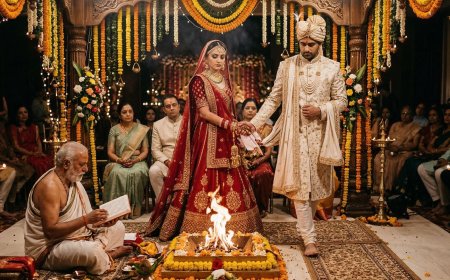
The ceremony photograph had the hem embroidery in the background, caught in the agni's light. Neither Priya nor anyone who saw the photograph could identify the embroidery as the alternate pattern rather than the specified one. The only person who looked at the photograph and understood the specific history it contained was her masi, who had been at the boutique on that day and who had negotiated the ten thousand two hundred rupees with the skill of someone who knew the Consumer Protection Act's provisions and the community network's enforcement mechanism and the specific boutique owner's commercial calculation.
Create the written brief before the custom or semi-custom purchase. Request the specific description receipt at every significant purchase. Photograph the piece at purchase, at fitting, and at collection. Confirm every agreed term in the WhatsApp paper trail. Inspect the completed piece in the shop before it leaves. Take the vendor's full contact details before leaving Delhi.
And if the embroidery substitution is beautiful and the departure is in five days and the re-embroidery is ten days away — negotiate the twelve percent, take the specific description receipt with the note, and understand that the Consumer Protection Act was not designed to make the ceremony lehenga perfect. It was designed to make the transaction honest. The honest transaction, with the documented brief and the photographed piece and the twelve-percent reduction for the substitution that was beautiful but was not specified, is the transaction that the law and the market together can support.
Published by NRIWedding.com — The Premium Global Platform for Non-Resident Indians Planning Indian Weddings From Abroad.
What's Your Reaction?
 Like
0
Like
0
 Dislike
0
Dislike
0
 Love
0
Love
0
 Funny
0
Funny
0
 Angry
0
Angry
0
 Sad
0
Sad
0
 Wow
0
Wow
0