































































Delhi Bridal Shopping with Your NRI Family: The Complete Guide to Managing Opinions, Budgets and Time
The NRI family Delhi bridal shopping trip is the most valuable and the most challenging element of the wedding wardrobe planning — because the family members whose market knowledge is irreplaceable are also the family members whose opinions are strongest, whose aesthetic vocabularies differ, and whose simultaneous input in the first boutique produces the specific dynamic that the tea stop after the first shop was required to address. This complete guide covers the pre-trip framework for the family shopping trip — the budget agreement, the role assignment, the veto conversation, and the one-voice rule — alongside the shopping day structure, the time allocation, the management of the mother versus mother-in-law aesthetic disagreement, the budget overrun pressure, the fatigue-driven compromise, and the five common mistakes that turn the most valuable shopping resource into the most exhausting shopping day.


Delhi Bridal Shopping with Your NRI Family — Managing Opinions, Budgets and Time
The seating arrangement in the car had told the whole story before the first shop was entered. There were five people in the Innova — Priya in the front seat with the driver, her mother beside her, her mother-in-law-to-be in the middle row, and her two aunts in the back. The shopping list was in Priya's phone. The budget was in Priya's head. The opinions were distributed across all four of the other occupants in proportions that the car's seating arrangement had not been able to contain and that the first shop would make fully legible.
Her mother's opinion was the opinion of the woman who knew the Delhi market from thirty years of navigating it and who had the specific, reliable knowledge of which shops in which markets were worth the time and which were the shops that the cousin's recommendation had made seem credible but that the experience did not support. Her mother's opinion was useful. Her mother's opinion was also delivered at the volume and the frequency of someone who considered the opinions of the other three passengers insufficiently informed to be given equal weight.
Her mother-in-law-to-be's opinion was the opinion of the woman from Pune who had a different aesthetic vocabulary from the Delhi vocabulary and whose understanding of what the bridal lehenga should look like was the understanding formed by thirty years of Pune weddings rather than thirty years of Delhi weddings. Her mother-in-law's opinion was genuine and considered and not always in the same direction as her mother's opinion.
The two aunts' opinions were the opinions of women who had strong feelings and who expressed them with the specific energy of people who understand themselves to be consultants rather than decision-makers but who are not entirely sure that the distinction is being respected.
Priya had said, before the first shop: I want everyone's opinions. I also want to make it clear that I am the one who is deciding. Her mother had said: Of course. Her mother-in-law had said: Of course. The two aunts had nodded with the specific energy of people who have heard this statement before and who have a complex relationship to its practical implications.
The first shop had been the lehenga boutique in GK-2 that her mother had identified from the coordinator's recommendation. They had been in the shop for fifty minutes. During those fifty minutes, Priya had tried two lehengas, her mother had expressed opinions about both at a volume that the boutique's other customers could hear, her mother-in-law had suggested a third lehenga that was in a colour that Priya had specifically said she did not want, one aunt had asked the shop owner questions about the embroidery that were more detailed than the embroidery warranted, and the other aunt had taken photographs of every piece in the display case and sent them to her daughter in London for a second opinion.
By the time they left the shop, Priya had not bought anything, the budget had been discussed in terms that the shop owner could hear and that Priya had not intended to be public, and the mood in the Innova on the way to the second shop had acquired the specific quality of the atmosphere that the shopping trip whose group dynamic has not been managed acquires in the first hour.
She had said to the driver: Stop for tea. The driver had stopped. They had had tea. Priya had said, over the tea, with the specific, warm firmness of someone who has understood what needs to be said and who has decided to say it: I am going to tell everyone their role for the rest of the day. And then we are going to have a very productive day.
This article is for Priya — and for every NRI bride who has organised the family shopping trip to Delhi and who needs the management framework before the first Innova is filled, not after the first shop has produced the specific dynamic that the tea stop was required to address.
Why the Family Shopping Trip Is Both Necessary and Difficult
The family Delhi bridal shopping trip is both necessary and difficult for reasons that are inseparable — it is necessary for the same reasons that it is difficult, and the difficulty is the price of the necessity rather than a problem that can be eliminated by the correct planning.
The necessity: the NRI bride who shops for the ceremony lehenga and the bridal jewellery and the complete multi-ceremony wardrobe in Delhi without the family members who know the Delhi market, who know the family's aesthetic vocabulary and the community's expectations, and who have the relationships with the vendors and the markets that the NRI bride living in London or Melbourne does not have, is the bride who is navigating an unfamiliar market without the guides that the market requires for the best outcome. The family members whose Delhi market knowledge is deep, whose vendor relationships are genuine, and whose understanding of what the ceremony requires from the bridal wardrobe is the understanding of the insider rather than the outsider — these family members are the most valuable asset the NRI bride has for the Delhi shopping trip.
The difficulty: the family members whose Delhi market knowledge is deep are also the family members who have opinions, who have aesthetic preferences that may differ from the bride's, who have budget assumptions that may not match the bride's, and who have the specific dynamic among themselves that the multi-person shopping group produces when the shopping's decisions are significant and the decision-making authority is not clearly established. The family members who are the most useful for the market knowledge are frequently the family members who are the most challenging for the group dynamic management.
The management challenge is not the elimination of the family members from the shopping trip — it is the creation of the structure that uses their knowledge without being dominated by their opinions, that gives them the role whose genuine contribution is valuable while clarifying the decision-making authority that the bride's role requires.
The Pre-Trip Framework: What Must Be Established Before the Innova Is Filled
The management of the family Delhi shopping trip begins not in the first shop but in the conversations that happen before the first Innova is arranged — the specific, explicit agreements about the roles, the budget, the decision-making, and the process that the shopping trip requires to function at the productive end of its potential rather than the chaotic end.
The Budget Conversation: The Private Agreement Before the Public Shopping
The budget for the bridal wardrobe — the specific, function-by-function allocation that the companion article in this series addresses in detail — must be agreed between the NRI bride and the relevant budget contributors before the Delhi shopping trip begins, and the agreement must be explicit rather than assumed.
The budget conversation's specific challenge in the NRI family context: the budget for the wedding wardrobe is frequently a multi-party budget — the bride's own contribution, the parents' contribution, the in-laws' contribution, the specific family traditions about who contributes what to the bridal wardrobe of the community. The multi-party budget whose contributions are not explicitly agreed before the shopping creates the specific, shop-floor dynamic that Priya's first boutique visit produced — the budget discussed at the vendor's volume within the budget discussion that the vendor hears and that the bride had not intended to make public.
The pre-trip budget conversation must establish: the total budget for the complete bridal wardrobe; the specific allocations across the ceremony, reception, sangeet, mehendi, and haldi functions; which family member is contributing to which category; and the decision rule for the expenditure above the allocation — who authorises the overspend, under what conditions, and with what process.
The budget agreement that is established before the trip and written down — even informally, in the WhatsApp message that records the discussion's conclusion — is the budget that prevents the shop-floor budget discussion. The bride who arrives at the boutique knowing that the ceremony lehenga allocation is eighty thousand rupees and that her parents have agreed this allocation does not need to discuss it in the boutique.
The Role Assignment: The Most Important Pre-Trip Conversation
The role assignment is the conversation that the tea stop in Priya's story was the retroactive version of — the conversation that establishes, before the first shop is entered, what each family member's role is and what the decision-making authority is. This conversation is uncomfortable for many NRI families because it makes explicit the authority structure that the shopping trip requires but that the family's emotional investment in the wedding makes uncomfortable to state directly.
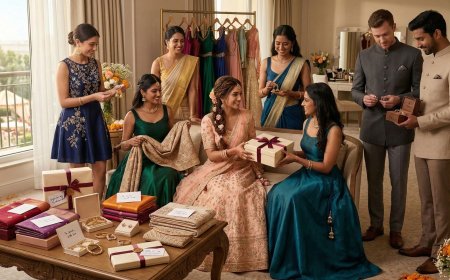
The roles that the family shopping trip requires: the decision-maker (the bride, always — the role whose authority is final for every purchase decision); the market guide (the family member or members whose Delhi market knowledge is the most current and the most relevant, whose role is to identify the correct markets and the correct shops and to manage the vendor relationships); the quality assessor (the family member whose knowledge of the specific craft categories — the silk, the gold, the embroidery — is the most reliable and whose role is to assess the quality of the pieces being considered); and the observer (the family members whose presence is welcomed and whose opinions are valued but whose role is not the decision-making or the market guidance or the quality assessment).
The explicit assignment of these roles — the specific conversation in which the bride says: Mum, I want you as the market guide; Masi, I want you as the quality assessor for the silk and the jewellery; Saas ji, I want your opinion on the aesthetic choices but the final decision is mine — is the conversation that creates the structure. It is also the conversation that the Indian family's relational dynamics make genuinely difficult to have, because the explicit statement of the authority structure implies a hierarchy that the family members may not be comfortable acknowledging.
The framing that makes the conversation possible: the bride who frames the role assignment as the invitation to contribute the specific knowledge that each person has — rather than the assertion of the authority that each person lacks — is the bride who has the conversation that the management framework requires without the relational damage that the authority assertion produces.
The Veto Agreement: The Single Most Important Rule
The single most important rule of the family Delhi shopping trip is the veto agreement — the explicit agreement that the bride has the final decision on every purchase and that no family member has the veto on the bride's choice. This agreement seems obvious and is frequently violated — not through malice but through the specific family dynamic of the Indian wedding, in which the family's investment in the wedding's social success produces the strong opinion whose expression becomes the implicit veto that the bride does not have the explicit framework to manage.
The veto agreement must be stated before the trip — not assumed, not hoped for, but stated. The bride who says, in the pre-trip conversation: I want everyone's input and I will genuinely consider it. The final decision on every purchase is mine and Karan's. If I choose something that you disagree with, I want to hear your concern once, clearly, and then I am going to decide, is the bride who has created the framework that the shopping trip requires.
The veto agreement does not eliminate the opinions. It gives the opinions their correct role — the informed input that the bride considers rather than the implicit override that the family dynamic sometimes produces.
The Shopping Day Structure: Managing Time, Energy, and the Group Dynamic
The family shopping day with the multi-person NRI group requires the specific structure that prevents the energy dissipation, the decision fatigue, and the interpersonal friction that the unstructured shopping day with five people and a shared budget produces.
The Time Allocation: The Hour Budget
The family shopping day has a finite energy budget that the time structure must respect. The group energy at ten in the morning is different from the group energy at four in the afternoon, and the shopping decisions that are made at four in the afternoon by a group that has been in markets since ten are the decisions that the morning's energy would have made differently.
The time allocation principle: the highest-priority purchase — the ceremony lehenga — gets the morning's best energy. The morning's first two to three hours are the ceremony lehenga hours. The afternoon's first two hours are the reception outfit and the jewellery hours. The afternoon's final hour is the accessories and the supporting purchases. The last forty-five minutes of the day are the consolidation — the confirmation that everything on the day's list has been addressed and the identification of the items that require the return visit.
The specific time allocation also manages the family's energy by building the rest periods into the structure rather than allowing the group dynamic to continue past the energy level that the good shopping decisions require. The forty-five-minute tea or lunch break in the middle of the day is not the indulgence that delays the shopping — it is the energy management that makes the afternoon's shopping productive rather than fatigued.
The Shop Sequence: The Correct Order
The shop sequence within the family shopping day must be planned before the day begins, and the planning must be communicated to the family members whose knowledge informs the sequence. The ad hoc shop sequence — the shops that the morning's discoveries and the family members' in-the-moment recommendations produce — is the shop sequence that responds to the market's abundance rather than the brief's specific requirements.
The correct shop sequence principles: the benchmark shops first (the shops that establish the quality and the price reference against which the subsequent shops are assessed); the priority purchase shops before the variety shops (the ceremony lehenga shop before the accessory shops, which prevents the accessory purchase's budget leakage from reducing the ceremony lehenga's allocation); and the emotionally demanding shops before the logistically demanding shops (the boutique consultation that requires the family's focused attention before the bazaar shopping that requires the physical energy).
The One-Voice Rule: The Vendor Communication Protocol
The vendor communication in the family shopping trip must follow the one-voice rule — the specific protocol that one person communicates with the vendor at any given time, and that the communication is the bride's communication (or the market guide's, when the bride has delegated the specific conversation).
The violation of the one-voice rule — the shop visit in which all five family members are simultaneously addressing the shop owner with different questions, different requirements, and different price expectations — is the shop visit that Priya's first boutique produced and that the tea stop was required to address. The shop owner who is receiving five simultaneous conversations cannot serve any of them well, and the shop visit whose communication is fragmented is the shop visit whose outcome is fragmented.
The one-voice rule requires the pre-trip agreement and the in-shop enforcement. The bride who says, before entering the shop: I will ask the questions and make the requests; please give me your input before we enter and after we leave— is the bride who has the one-voice rule's protection in the shop and the family members' genuine knowledge outside it.
Managing the Specific Family Dynamic Challenges
The Mother vs Mother-in-Law Aesthetic Disagreement
The most common family dynamic challenge in the NRI bridal shopping trip is the aesthetic disagreement between the bride's mother and the groom's mother — the two women whose different regional traditions, different community standards, and different understandings of what the bridal wardrobe should communicate produce the specific tension that the shop floor makes most visible.
The management of this specific challenge: the pre-trip conversation that explicitly acknowledges the two aesthetic vocabularies and establishes that the bride's aesthetic vocabulary is the primary reference — not the mother's and not the mother-in-law's, but the bride's — is the conversation that prevents the shop-floor aesthetic argument. The bride who has had this conversation before the trip is the bride who can, in the shop, say: I hear both perspectives; I have already decided which direction I am going — without the statement sounding like the dismissal of one family member's opinion in favour of the other.
The specific management technique for the in-shop aesthetic disagreement: the redirect to the decision-making framework. The bride who says, when the aesthetic disagreement surfaces: Mum, I understand your view; Saas ji, I understand your view; I am going to think about both as I try the next piece — is the bride who has acknowledged both opinions without adjudicating between them and who has preserved the decision-making authority by deferring the decision to the trying rather than the discussion.
The Budget Overrun Pressure
The budget overrun pressure — the family member whose enthusiasm for the piece beyond the budget is expressed as the implicit or explicit pressure to extend the allocation — is the management challenge that the pre-trip budget agreement was designed to prevent and that sometimes surfaces regardless of the pre-trip agreement.
The management of the budget overrun pressure: the explicit reference to the pre-trip agreement in the moment of the pressure. The bride who says: We agreed the ceremony lehenga allocation was eighty thousand; this piece is one lakh ten thousand; I need to stay within the agreement — is the bride who is using the pre-trip agreement as the management tool rather than the re-litigating of the budget decision in the shop.
The one exception: the piece that is genuinely extraordinary at the price above the allocation and that the bride genuinely wants. The management of this exception is the honest conversation — the bride who says: This is above the allocation; I want this; can we have the conversation about the allocation adjustment — rather than the avoidance of the budget discussion or the passive acceptance of the overrun without the conversation.
The Fatigue-Driven Decision
The fatigue-driven decision is the decision that the group's four-in-the-afternoon energy makes — the decision to buy the adequate piece whose quality is sufficient without the search for the correct piece whose quality the morning's energy would have continued to look for. The fatigue-driven decision is the most preventable of the shopping trip's adverse outcomes and the one that the structure prevents most directly.
The prevention: the ceremony lehenga shop in the morning, the rest period at midday, and the explicit decision rule that the ceremony lehenga is not bought at four in the afternoon. If the morning's ceremony lehenga shops have not produced the correct piece, the correct response is the return visit rather than the afternoon compromise.
The Out-of-Town Family Member: Managing the Chandigarh or Pune Contingent
The NRI wedding shopping trip to Delhi frequently includes the family members who are travelling to Delhi from other cities — the mother from Chandigarh, the mother-in-law from Pune, the aunt from Ahmedabad — whose contribution to the shopping trip is real and valued and whose specific additional management requirement is the management of the out-of-town visit alongside the shopping.
The out-of-town family member's shopping trip has two functions simultaneously: the shopping itself, and the family visit that the out-of-town travel has also enabled. The shopping that competes with the family visit for the available time is the shopping that the time pressure compromises. The management framework that separates the shopping days from the family visit days — the specific allocation of two or three days to the shopping and one day to the family gathering — is the framework that allows both functions to be fulfilled without the competition that the unstructured itinerary produces.
The out-of-town mother-in-law from Pune who has come to Delhi for the bridal shopping and who has brought the Pune community's aesthetic expectations with her is the most common version of this management challenge. The pre-trip conversation that acknowledges the Pune aesthetic while establishing the Delhi-based shopping's frame of reference is the conversation that prevents the aesthetic disagreement from becoming the shopping-day conflict.
Common Mistakes NRI Brides Make With the Family Shopping Trip
The first mistake is not having the role assignment conversation before the trip. The family shopping trip whose roles are undefined — whose authority structure is assumed rather than stated — is the shopping trip that the first shop's group dynamic will define in the worst possible way. The explicit role assignment is the uncomfortable conversation that prevents the more uncomfortable shop-floor moment.
The second mistake is including too many family members in the shopping group. The five-person Innova is already the management challenge that the article's opening illustrates. The seven-person group — the additional aunt, the grandmother whose mobility requires the additional consideration, the cousin whose opinions are offered with the confidence of the person who has recently married and who considers the recency a qualification — is the management challenge that the effective shopping trip's structure cannot accommodate. Two to three family members is the optimal shopping group size. Four is the maximum that the effective structure can manage. Five is the number that requires the tea stop after the first shop.
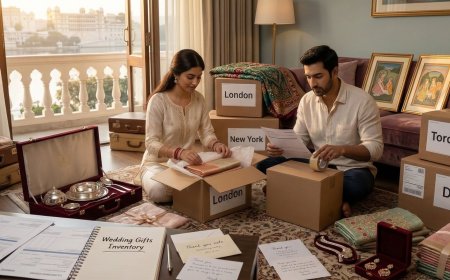
The third mistake is combining the shopping day with the family social occasion. The shopping day that is also the family lunch and the family temple visit and the family's extended gathering at the uncle's house in Noida is the shopping day that has four hours of shopping and six hours of the other functions. The shopping day is the shopping day. The family occasion is the family occasion. The itinerary that separates them is the itinerary that gives both their appropriate time.
The fourth mistake is not establishing the single decision-maker before the first shop. The shopping group without the clear decision-maker is the shopping group in which every member's opinion has the implicit weight of the decision-maker's opinion and in which the decisions are made by the group consensus whose process is the exhausting negotiation rather than the bride's informed choice. The single decision-maker is the bride. This must be stated before the first shop is entered.
The fifth mistake is allowing the vendor to engage with the family members' disagreement. The vendor who identifies the family dynamic disagreement — the mother who prefers the red and the bride who is looking at the teal — and who uses the disagreement to prolong the sales engagement or to manage the price negotiation from a position of the buyer's divided attention is the vendor who is using the family dynamic as the commercial opportunity. The one-voice rule and the pre-trip discussion that establishes the bride's decision-making authority are the protections against this specific vendor dynamic.
The Complete Reference Table: Family Shopping Trip Management
| Challenge | Pre-Trip Action | In-Trip Management | Recovery If It Goes Wrong |
|---|---|---|---|
| Budget disagreement | Written budget agreement before trip | Reference the pre-trip agreement in the shop | Tea stop; private conversation; re-establish the agreement |
| Aesthetic disagreement | Acknowledge both aesthetics; establish bride's reference | Redirect to the trying; defer to bride's decision | Private conversation with each family member; re-establish decision authority |
| Too many opinions simultaneously | Role assignment; one-voice rule briefing | Enforce one-voice rule at shop entry | Brief pause outside the shop; reassign the communication role |
| Veto violation | Explicit veto agreement before trip | Reference the agreement; state the decision | Private conversation; re-establish the authority |
| Fatigue-driven compromise | Morning priority scheduling; midday rest | Note the fatigue; defer ceremony decision to return visit | Return visit the following day with fewer family members |
| Budget overrun pressure | Pre-trip allocation agreement | Reference the agreement; request private discussion if exception applies | Private conversation about the exception; explicit decision |
| Two aesthetic vocabularies | Pre-trip conversation with both mothers | Acknowledge both; redirect to bride's brief | Private conversation with each; restate bride's reference |
| Vendor exploiting family dynamic | One-voice rule; brief vendor of communication structure | Direct the vendor to the one-voice contact; manage the discussion | Exit the shop; re-enter with the one-voice protocol in place |
| Out-of-town family member | Separate shopping and social days in itinerary | Maintain the shopping day's shopping focus | Acknowledge the social dimension; commit to the social day separately |
| Group size too large | Maximum three to four members; specific role assignment | Assign specific roles at each shop | Divide the group; some members wait outside or in the café |
| Time overrun in single shop | Time allocation per shop; exit time established | Enforce the exit time | Brief private assessment of the shop's priority; return visit decision |
| Decision fatigue | Morning priority; midday rest; afternoon lower-stakes | Recognise fatigue; defer high-stakes decisions | Rest; do not make the ceremony decision in the afternoon |
What Happened After the Tea
The tea had lasted twenty minutes. Priya had used the twenty minutes well.
She had said: Mum, you are the market guide. You know which shops to go to and which to avoid. I need you for that.Her mother had nodded with the specific dignity of someone who has been correctly identified. She had said: Masi, I need you for the silk and the embroidery quality assessment. You know more about that than anyone here. Her mother's sister had straightened in her chair. She had said: Saas ji, I want your opinion on the aesthetic choices but I need to tell you that the aesthetic I am building is different from the Pune aesthetic and that is intentional. I value your input and the decision is mine. Her mother-in-law had been quiet for a moment and had then said, with the specific grace of a woman who has been treated with honesty: I understand. I will tell you what I think and I will not repeat it.
She had said to the second aunt: Please stop sending photographs to your daughter in London. She is not coming to this wedding.
The second aunt had laughed. Everyone had laughed. The laughter had cleared something.
The second shop had been the GK-1 M-Block boutique whose owner had been briefed in the car on the way — the one-voice rule explained to the family before the Innova reached the kerb. Priya had done the talking. Her mother had steered them to the correct section. Her masi had assessed the silk quality on the third piece and confirmed, quietly, to Priya's ear, that it was the genuine Katan rather than the dupion that the first shop had shown in the same colour. Her mother-in-law had said, once, that she thought the darker version was more appropriate, and had not said it again.
The ceremony lehenga had been bought at the fourth piece they had tried. Priya had chosen it. Her mother had confirmed the market price. Her masi had confirmed the silk quality. Her mother-in-law had said it was beautiful, and had meant it.
The drive to the reception shop had been, in the Innova's specific atmosphere, the drive of the group that has found its working rhythm.
Establish the roles before the first shop is entered. State the budget agreement in writing before the trip begins. Brief the one-voice rule at each shop entry. Include the maximum of three to four family members. Separate the shopping day from the social occasion. Schedule the ceremony purchase for the morning.
And if the first shop has already produced the specific dynamic that the management framework was designed to prevent — stop for tea. Twenty minutes. State the roles, acknowledge the contributions, re-establish the decision-making authority. The tea stop that costs twenty minutes saves the rest of the day.
Published by NRIWedding.com — The Premium Global Platform for Non-Resident Indians Planning Indian Weddings From Abroad.
What's Your Reaction?
 Like
0
Like
0
 Dislike
0
Dislike
0
 Love
0
Love
0
 Funny
0
Funny
0
 Angry
0
Angry
0
 Sad
0
Sad
0
 Wow
0
Wow
0