






























































The Guest List That Had a Gap in It: The NRI Couple's Complete Guide to Dealing with Family Estrangement During Wedding Planning
The bride who had not spoken to her father in four years, and the three evenings in the first month of planning spent not on vendors or venues but on whether to contact him, what contact would mean, and what she needed from this occasion. Family estrangement during wedding planning is more common than the social silence around it suggests, and the pressures the wedding creates — the social optics, the milestone moment, the grief for the family that should have been — are the pressures most likely to distort the decision rather than clarify it. This guide delivers a complete framework covering the estrangement categories from absent parent to fractured extended family, the questions that clarify the contact decision, the Indian ceremony rituals that assume a complete family and how to adapt them honestly, the guest list management for people who know and people who do not, the grief that arrives at unexpected planning moments, the relief that is also real, the supporting partner's role without overstepping, and the post-wedding contact that the estrangement may provoke.


Dealing with Family Estrangement During Wedding Planning
The NRI couple's honest guide to planning a wedding when the family picture is incomplete — navigating the absent parent, the estranged sibling, the fractured relationship, and the specific grief of celebrating when some of the people who should be there are not
The Guest List That Had a Gap in It
The bride had not spoken to her father in four years.
The estrangement had not begun with a single event — these things rarely do. It had accumulated over years of specific failures of understanding, specific moments where the distance between what she needed from him and what he was capable of giving had become undeniable. The final rupture had been quiet rather than dramatic — a phone call that ended badly, a silence that extended, a decision on both sides to stop reaching across the gap.
She was not, when the wedding planning began, in a place of simple clarity about the estrangement. She was in the place that most people in estranged family relationships occupy — the place of ambivalence, of loss sitting alongside relief, of the question that returns at significant life moments: should I try again?
The wedding was a significant life moment.
The question returned.
She and her fiancé spent three evenings in the first month of planning on the question of her father — not the wedding's logistics, not the vendor list, not the venue. On whether to contact him. On what contact would mean. On what his presence at the wedding would be, and what his absence would be. On what she needed, specifically, from this occasion, and whether that need included him.
At the end of those conversations she had made a decision. This guide does not tell you what the decision was — because the decision is not the point. The point is that the decision was made thoughtfully, on her own terms, without the specific kind of external pressure that derails these decisions and produces regret.
This guide is for the couple navigating that conversation.
The Specific Landscape of Family Estrangement
What Estrangement Is
Family estrangement — the deliberate, sustained reduction or cessation of contact with a family member — is more common than the social silence around it suggests. Research consistently indicates that estrangement from at least one family member affects a significant proportion of families, with parent-adult child estrangement being among the most common forms.
The estrangement that arrives at the wedding planning table is rarely simple. It is typically the product of years of specific history — the abusive parent, the sibling whose behavior has caused concrete harm, the extended family member whose presence in the couple's life has been damaging rather than supportive. Or it is the product of accumulated distance — the family that has drifted rather than fractured, the relationship that has not been actively ended but that has not been sustained.
The NRI context adds specific dimensions to this landscape. The family relationships that exist across geographic distance — the parents in India, the siblings in different countries, the extended family whose contact is primarily through the specific occasions that the NRI calendar provides — are relationships whose estrangement has a specific quality. The distance that makes ongoing contact easy to avoid also makes the estrangement easier to sustain and harder to resolve. The occasion that brings people together — the wedding — is the occasion that makes the estrangement concrete and visible in ways that the ordinary distance conceals.
The Categories
The estrangements that arrive at the wedding planning table are not uniform, and the approach to each requires calibration to the specific situation.
The estranged parent:
The estranged parent is the most emotionally charged and socially visible category — because the parent is the person whose absence is most noticeable at the wedding, whose non-invitation requires explanation, and whose relationship to the occasion is most deeply embedded in the cultural scripts around what a wedding is.
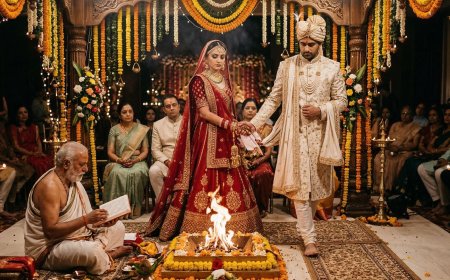
The Indian wedding's cultural script gives parents — particularly the bride's parents — a specific and prominent role. The kanyadaan, the giving away of the daughter, is a ceremony whose significance is inseparable from the father's participation. The mother's role in the preparations, in the rituals, in the specific moments of the day — these are the roles whose absence creates a visible gap in the ceremony that guests will notice and that the couple must navigate.
The estranged sibling:
The sibling estrangement is less culturally prominent but often more personally painful — because siblings are the relationships most expected to be uncomplicated, and the sibling whose absence is the couple's choice rather than their circumstance is the absence that requires the most explanation to the family who knows both.
The estranged sibling who is invited because not inviting them would cause more family disruption than inviting them is the guest whose presence the couple has not chosen but has accepted for reasons that are not about the sibling. The estranged sibling who is not invited — whose absence from the wedding is the couple's specific decision — is the decision that requires the couple to be clear about what they are choosing and why.
The fractured extended family:
The extended family whose internal fractures predate the couple's relationship — the family branches that are not on speaking terms, the specific family members whose history with each other makes their shared presence at the wedding a managed event rather than a natural one — is the landscape that many Indian weddings navigate even without individual estrangement. The specific NRI dimension: the extended family whose fractures have been sustained by geographic distance and whose wedding encounter is the first shared occasion in years.
The partner's estranged family:
The partner's estranged family is the estrangement the couple did not arrive at together — the family situation that one partner brings to the relationship, whose history the other partner knows secondhand, and whose wedding implications the couple must navigate together without equal knowledge of what is at stake.
The partner who has an estranged parent — and whose partner has two loving, present parents — is navigating not only the estrangement but the specific asymmetry of the wedding where one side of the family picture is full and the other has a gap that everyone can see.
The Decision: Contact or Not
The Pressures That Distort the Decision
The wedding creates specific pressures that distort the decision about whether to contact the estranged family member — pressures that the couple should recognize and resist.
The social pressure:
The wedding photograph that has a gap where a parent should be. The guests who will ask. The extended family members who will have opinions. The cultural expectation of the Indian wedding that the family is present and united. These social pressures push toward contact — toward the invitation extended not because the couple wants the family member present but because not inviting them creates social complexity the couple wants to avoid.
The decision made to manage social optics rather than to serve the couple's genuine needs is the decision most likely to produce regret.
The milestone pressure:
The wedding is a significant life event — the kind of occasion that the cultural narrative says should be attended by all the people who matter. The milestone pressure — the sense that this is the moment to repair, the sense that the estrangement should be set aside for the occasion — is a pressure that can produce contact that is not genuine repair but temporary suspension.
The temporary suspension of the estrangement for the wedding — the invitation extended in the hope that the occasion will heal the underlying rift — is the invitation most likely to produce the specific wedding day disruption of an unresolved relationship being performed as resolved.
The grief pressure:
The grief of the estrangement — the sadness of the missing parent, the loss of the family that should have been present — is real and valid. The grief that pushes toward contact — the hope that the contact will relieve the grief — is the grief that is not yet distinguishing between the person who caused the harm and the relationship the couple wishes they had.
The contact that is driven by grief for the relationship rather than by genuine desire for the specific person's presence is the contact most likely to confirm why the estrangement exists rather than to resolve it.
The Questions That Clarify the Decision
The couple navigating the contact decision can use specific questions to clarify what they actually want rather than what the pressures of the occasion are producing.
If they attended, what would their presence add to the day?
The honest answer to this question — not the answer the couple wishes were true but the answer the history of the relationship suggests — clarifies whether the presence would add warmth and meaning or would add management and anxiety.
If they attended and their behavior was consistent with past behavior, what would happen?
The estranged family member who has historically created disruption, whose behavior at family occasions has been unreliable, whose presence has required management that depletes rather than adds — this family member's attendance at the wedding is not a neutral addition. The honest assessment of the likely scenario, rather than the hoped-for scenario, is the assessment the decision requires.
What would contact look like at this stage?
The contact that is extended for the wedding — the invitation that is the first contact after years of estrangement — is a contact that is doing multiple things simultaneously. It is the re-opening of the relationship, the implicit statement that the wedding occasion is sufficient reason to set aside what has separated them, and the creation of a social situation that the relationship has not been prepared for. The contact that comes after genuine repair — after the separate, unhurried work of re-establishing the relationship — is a different kind of contact.
What does the partner need?
The partner whose own family is intact — whose parents are present, whose siblings are present — has a specific privilege in this conversation that they may not recognize. The partner who has not experienced estrangement may have instincts about what the right decision is that are shaped by the assumption that family relationships are repairable with sufficient goodwill. The estranged partner's specific knowledge of the specific relationship is the knowledge the decision requires. The partner should be a support and a sounding board, not a decision-maker.
Accepting the Decision
Once the decision is made — contact or not, invitation or not — the specific work is accepting the decision rather than continuing to relitigate it throughout the planning process.
The decision made is not the permanent decision about the estranged relationship. It is the decision about this occasion. The estranged parent who is not invited to the wedding may be someone the couple eventually reconnects with — or may not. The wedding decision does not determine the relationship's future. It determines this occasion.
The acceptance of the decision frees the planning to be about the wedding — about what the couple is building and celebrating — rather than about the estrangement.
The Ceremony: Designing for the Gap
The Rituals That Assume a Complete Family
The Indian wedding's ceremonial structure contains specific rituals whose conventional form assumes the presence of parents — both sets, present and participating. The kanyadaan. The milni, the formal meeting of the two families. The specific rituals whose significance is carried by the parent-child relationship.
When the estranged parent is absent — or when the family is incomplete for any reason — these rituals require specific redesign rather than the performance of a completeness that does not exist.
The kanyadaan:
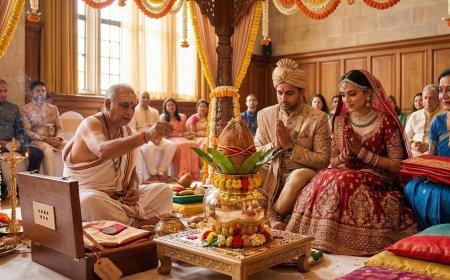
The kanyadaan — the giving of the daughter by the father — is the ritual most directly affected by the absent father. The conventional adaptation: the ritual performed by another male relative — an uncle, a brother, the maternal grandfather. This adaptation preserves the ritual's form while acknowledging that the specific person conventionally expected to perform it is absent.
The more radical adaptation: the ritual performed by the mother alone, or by both parents together when only one is present, with the Pandit's acknowledgment of the specific family situation. Some Pandits will adapt the ritual's language to reflect the actual family rather than the conventional form.
The most honest adaptation: a conversation with the Pandit about what the ritual means and what adaptation serves the couple's specific situation rather than the convention's expectation.
The milni:
The milni — the meeting of the two families — is a ritual whose form requires both families to be present and represented. The family that has a gap — the absent parent, the estranged sibling who is not present — has a milni whose representation is incomplete.
The honest approach: the milni performed by the family members who are present, with no pretense that the absent members are represented. The gap is real and the milni's form can reflect the reality rather than performing a wholeness that does not exist.
The Memorial Acknowledgment
Some couples choose to create a specific ceremonial acknowledgment of the absent family member — the parent who has died, the parent who is estranged, the family member whose absence is felt. The memorial table, the empty chair, the specific mention in the ceremony — these are the adaptations that acknowledge the gap rather than ignoring it.
The memorial acknowledgment for the estranged family member — as distinct from the deceased family member — requires specific calibration. The acknowledgment that honors what should have been — the parent-child relationship that the couple grieves even as they have chosen not to have the specific person present — is different from the acknowledgment that implies the person is simply absent rather than estranged.
The couple who wants to acknowledge the loss without acknowledging the specific person — who wants the ceremony to hold the grief without creating a public statement about the estrangement — can design a moment that is personal and internal rather than public and explanatory.
The Walk Down the Aisle
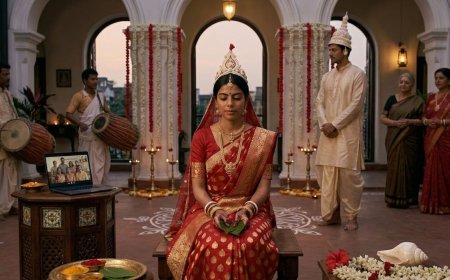
The walk down the aisle — or the equivalent entrance in the Indian ceremony — is the moment most visibly affected by the absent parent. The bride who walks alone, or with her mother, or with a sibling, or with a close friend, is making a specific and visible statement about the family she has.
The statement is not a diminishment. The walk that is made with the person or people who are genuinely present — who have genuinely been there — is a more honest walk than the one made with a family member whose presence has been arranged for the occasion rather than earned by the relationship.
The choreography of the entrance should reflect the actual family rather than the conventional one — and the couple who has made peace with their actual family, rather than grieving the conventional one, can design an entrance that is genuinely moving rather than merely correct.
The Guest List Management: The Practical Navigation
Who Knows What
The estrangement that is known to some guests and not others creates specific management challenges at the wedding — the guest who asks after the absent family member, the family member who offers unsolicited commentary on the absence, the guest who does not know and whose innocent question becomes awkward.
The couple should decide in advance: who knows the full situation, who knows a partial version, and who does not need to know at all. The wedding planner should know — so they can manage inquiries on the day. The key family members on both sides should know — so they are not surprised and do not become inadvertent sources of disruption. The broader guest list does not need a detailed explanation.
The explanation that is offered when asked — "we are not in contact" or "it is a complicated situation" — is a complete answer. It is honest, it is not an invitation to further inquiry, and it does not require the couple to perform either anger or false reconciliation.
The Guest Who Represents the Estranged Relationship
Sometimes the guest list includes family members who are close to the estranged person — the aunt who is the estranged parent's sibling, the cousin who maintains contact with the estranged party. The presence of these guests at the wedding when the estranged person is absent creates a specific dynamic that the couple should anticipate.
The guest who attends the wedding and who relays the occasion to the estranged family member — who becomes the connection between the wedding and the absent person — is doing something that the couple may or may not be comfortable with. The couple who has thought about this in advance can decide whether it is something they want to address or something they accept as the natural consequence of having a shared extended family.
The Family Member Who Advocates for the Estranged Person
The family member who uses the wedding planning period to advocate for the estranged party — who brings up the absent person's case, who argues for reconciliation on the occasion's behalf, who expresses their own discomfort with the estrangement through pressure on the couple — is the family dynamic that the couple should be prepared for and should have a clear response to.
The response: we have made our decision about this, and we are not going to revisit it in the wedding planning process. We understand this is difficult and we appreciate that you care about everyone involved. This is not the conversation we are having right now.
The clarity of the response — its warmth and its firmness — is the specific combination that closes the conversation without creating a new rupture.
The Emotional Landscape: What to Expect
The Grief That Arrives at Unexpected Moments
The estrangement grief — the grief for the family that should have been present, the parent-child relationship that should have been different, the sibling relationship that has been lost — arrives at specific moments in the wedding planning that the couple cannot always predict.
The moment of choosing the wedding outfit, when the absent mother should have been present. The tasting of the wedding menu, when the absent father's specific food preferences would have been part of the conversation. The morning of the wedding, when the person who should have been there first is not there at all.
These moments are not crises. They are the grief that is the accurate response to a genuine loss. The couple who has made space for this grief in the planning — who has not required the planning to be only joyful, who can hold the grief alongside the celebration without being overwhelmed by it — is the couple who arrives at the wedding day most fully themselves.
The Specific Day Complexity
The wedding day is the day when the estrangement grief is most acute — because the occasion is the one that most clearly marks the gap between the family the couple has and the family the occasion conventionally assumes.
The practical management: the couple should identify, in advance, the specific moments on the day when the grief is most likely to surface — the entrance, the ritual that would have involved the absent person, the moment during dinner when the family tables make the absence visible — and should have a specific plan for each. Not a plan to suppress the grief but a plan to hold it — the trusted person who is available at that specific moment, the private acknowledgment between the couple that the moment is hard, the permission to feel what is real without it derailing the day.
The Relief That Is Also Real
Alongside the grief — and this is the specific complexity of estrangement rather than bereavement — there is often relief. The relief that the absent person's behavior will not disrupt the day. The relief that the management the person's presence would have required is not required. The relief that the occasion belongs to the people who are actually there rather than being managed around the person who is not.
The relief is as real as the grief and deserves the same acknowledgment. The couple who can hold both — who does not require themselves to feel only grief about the absence or only relief — is the couple who is relating honestly to the specific complexity of the estranged family situation.
The Partner's Role: How to Support Without Overstepping
The Asymmetry of Knowledge
The partner who has not experienced the estrangement — who knows the situation secondhand, through the stories and the history that has been shared — does not have the same knowledge as the partner who has lived it. The decisions about contact, about the ceremony's design, about how the absence is handled on the day, belong primarily to the partner whose relationship the estrangement involves.
The supporting partner's role: to be present without directing, to listen without prescribing, to offer perspective when it is asked for rather than when it feels helpful to offer, and to support the decision once it is made rather than continuing to introduce doubt.
The specific failure mode of the well-meaning supporting partner: the partner who has resolved their own feelings about the estrangement before their partner has, who becomes impatient with the ambivalence, who advocates for a position — contact or no contact — based on their own emotional needs rather than their partner's.
The Supporting Partner's Own Feelings
The supporting partner has their own feelings about the estrangement — feelings that are legitimate and that deserve space, but that are secondary to the partner whose family situation is being navigated.
The supporting partner who has met the estranged family member — who has their own impression, their own assessment, their own emotional response to the situation — must hold these feelings carefully rather than allowing them to become the dominant voice in the couple's conversations about the decision.
The couple's conversations about the estranged family member should center the experience of the person whose family member it is. The supporting partner's feelings are part of the conversation — they are not irrelevant — but they are not the determining factor.
After the Wedding: The Estrangement That Continues
The Contact That Is Attempted After the Wedding
Some estranged family members — whose non-invitation to the wedding, or whose absence from it, has made the estrangement concrete in a new way — will attempt contact after the wedding. The message of congratulation that arrives from the person who was not there. The extended family member who reports that the estranged party is hurt or angry. The direct communication that the wedding has provoked.
The couple should decide in advance — not in the moment of receiving the contact — how they will respond to post-wedding contact from the estranged party. The decision made in advance is a decision made from clarity rather than from the emotional intensity of the moment.
The Long-Term Question
The wedding does not resolve the estrangement. It may clarify it — by making the estranged party's response to their non-inclusion concrete, by confirming the couple's assessment of the relationship, or by providing information that changes the couple's view of what repair might be possible.
The estrangement that the couple enters the wedding with is the estrangement they carry through the wedding and beyond it. The work of deciding what to do with it — whether to pursue repair, to maintain the current distance, or to formally close the relationship — is work that belongs to the marriage's ongoing life rather than to the wedding planning period.
The Wedding That Belongs to the People Who Are There
Every wedding has a gap somewhere — the grandparent who has died, the friend who could not travel, the family member whose circumstances prevented attendance. The wedding of the couple navigating estrangement has a gap that is more complicated than absence — it is the absence of a person who exists, who could in theory be present, and who is not present by decision.
The decision — whatever it is — is valid. The wedding that proceeds with the decision honored — that does not spend the day managing the disruption of a relationship that was not ready to be in the room — is the wedding that can be what it is.
The people who are there are the people who are there. The family that has assembled is the family that has assembled. The love in the room is the love that is in the room — specific, earned, present, and real.
It is enough to build a marriage on.
In fact, it is exactly enough.
NRIWedding.com — Expert guidance for Indian weddings planned across borders.
What's Your Reaction?
 Like
0
Like
0
 Dislike
0
Dislike
0
 Love
0
Love
0
 Funny
0
Funny
0
 Angry
0
Angry
0
 Sad
0
Sad
0
 Wow
0
Wow
0