

































































Sibling Rivalry During Wedding Planning: Keeping Peace at Your Indian Wedding — The Complete NRI Wedding Planning Guide
Soon after her engagement, a bride asked her three sisters—living in Vancouver, Bangalore, and Hyderabad—to be bridesmaids. When the dress color was chosen on a call the youngest sister missed, she replied with a simple thumbs-up emoji that quietly hid her disappointment. Over time she became distant, replying late and skipping calls. Eventually their mother explained the truth: she felt left out and less involved than the others. Weddings often surface hidden sibling emotions, especially when family members live in different cities or countries. This guide helps couples manage sibling dynamics, assign meaningful roles, communicate openly, and ensure every sibling feels included and valued throughout the wedding planning journey.

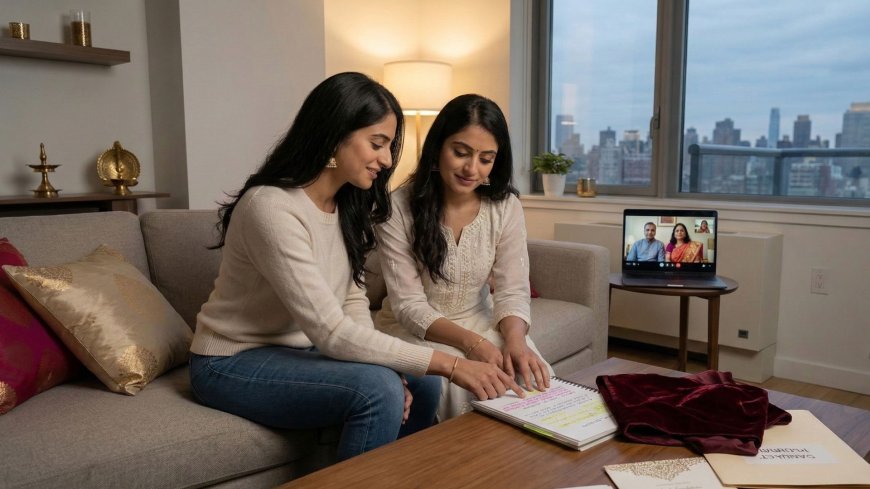
Sibling Rivalry During Wedding Planning: Keeping Peace
The Bridesmaid Who Stopped Answering Messages
The bride had three sisters.
The eldest was forty-one, lived in Vancouver, and had been married for twelve years. The middle sister was thirty-six, lived in Bangalore, and had been engaged twice and married once to the same person, which was its own story. The bride was thirty-two, lived in London, and was getting married in March. The youngest sister was twenty-eight, lived with their parents in Hyderabad, and was the one who had stopped answering messages.
It had started, as these things often do, with something that seemed small.
The bride had asked all three sisters to be bridesmaids in September, when the engagement was two weeks old. All three had said yes — the eldest warmly, the middle sister with the specific enthusiasm of someone who had planned two weddings of her own and had opinions, and the youngest with the particular brightness of the youngest sibling who had been waiting for the occasion her whole life.
In October, the bride had flown to London to begin the serious planning. The wedding planner had been hired. The venue had been shortlisted. The bridesmaid dress colour had been decided — a deep burgundy that the bride had chosen because it worked across all three sisters' complexions and that the eldest and middle sisters had approved via a WhatsApp video call that the youngest had not been available for.
The youngest sister had seen the colour on the family group.
She had not said she disliked it. She had sent a thumbs up emoji — the specific thumbs up emoji that the bride had immediately recognised as the thumbs up emoji that meant something other than thumbs up. She had then, over the course of the following three weeks, become progressively less available — the messages read but not responded to, the video calls missed, the responses when they came brief and uninflected in the way that required the bride to do the emotional work of interpreting them.
By December, the youngest sister was replying to planning messages in three to five days and was not initiating any messages of her own.
The bride called her mother.
Her mother said: "She feels left out. She's the only one still at home. She thought she would be more involved."
The bride felt the specific frustration of the person who has done nothing wrong and whose sibling is hurt anyway. She also felt, underneath the frustration, the specific guilt of the person who knows that the hurt, while not intended, was nonetheless real. The colour had been decided without the youngest sister present. The planning was happening in London. The middle sister in Bangalore, who had planned her own wedding, had become the de facto planning partner — the sister who was called first, whose opinion was most frequently solicited, whose involvement was most visible.
The youngest sister in Hyderabad, who had not planned a wedding, who was still at home with the parents, who had been imagining her big sister's wedding since she was twelve years old, was watching the planning happen without her.
The bridesmaid who stopped answering messages was not being difficult. She was doing the specific thing that hurt people do when they do not have the language for the hurt — she was withdrawing. She was protecting herself from the specific experience of being peripheral to the occasion she had expected to be central to.
This guide is for the couple navigating that dynamic — and the many other forms that sibling complexity takes during the wedding planning, from the sibling whose competitive instinct surfaces in the occasion's specific pressures, to the sibling whose unresolved history with the bride or groom finds the wedding as its expression, to the sibling whose genuine love for the couple is shaped by the specific pain of feeling less than central to the occasion.
Why Weddings Surface Sibling Complexity
The Wedding as the Family's Mirror
The Indian wedding is the occasion that assembles the family in its full configuration and holds it there, under the specific intensity of the occasion's emotional significance, for four consecutive days. In this configuration, everything the family is — its dynamics, its history, its unresolved questions, its specific loves and specific wounds — is present and visible and felt.
The sibling relationships that are managed, in ordinary life, by the specific mercy of distance and routine are the sibling relationships that the wedding brings into proximity without the mercy. The siblings who live in different cities and interact at festivals and family visits are the siblings who, during the wedding planning, are in daily contact about a high-stakes shared project — a project that has a defined hierarchy, defined roles, defined inclusions and exclusions, and a defined outcome that will be permanently recorded and that the family will discuss for years.
This is the specific condition that surfaces the complexity that was already there.
The Specific Triggers
The role allocation:
The wedding's roles — bridesmaid, groomsman, the person who does the specific ritual, the person who is asked to give the speech — are the first and most visible trigger of sibling complexity. The sibling who is allocated a role that feels less significant than another sibling's role has been given a specific message about their standing. Whether the message was intended or not is beside the point — the message was received.
The sibling who is not allocated a role at all — who is a guest at their own sibling's wedding in the way that any guest is a guest — is the sibling whose exclusion is the most acute.
The consultation pattern:
Who is called first when a decision needs to be made. Whose opinion is most frequently solicited. Whose aesthetic preferences shape the planning's choices. The sibling who is consulted consistently is the sibling who is involved. The sibling who hears about decisions after they have been made is the sibling who is peripheral — regardless of whether they were available to be consulted, regardless of whether the timing of the decision made the consultation difficult.
The geography:
The NRI wedding's specific geography — the couple abroad, the siblings distributed across India and other countries — creates a natural consultation hierarchy that follows convenience rather than intention. The sibling who is geographically closest to the planning's centre is the sibling who is most easily involved. The sibling who is geographically distant is the sibling who must be specifically, deliberately included rather than naturally included — and the specific deliberate inclusion is the thing that the busy planning process most easily fails to produce.
The unresolved history:
The sibling whose relationship with the bride or groom carries unresolved history — the sibling whose childhood position in the family hierarchy was painful, the sibling whose own romantic or life circumstances are complicated by the wedding's occasion, the sibling whose relationship with the parents is different from the marrying sibling's — is the sibling whose response to the wedding is shaped by more than the wedding. The wedding's specific triggers activate the history that was already present, and the history is what the couple is navigating when they think they are navigating the wedding.
The Sibling Profiles: Recognising the Dynamic
The Competitive Sibling
The sibling whose competitive instinct surfaces during the wedding planning is the sibling who is simultaneously celebratory and threatened — who loves the marrying sibling and who is activated by the occasion's specific focus on that sibling's happiness, achievement, and centrality.
The competitive sibling's behaviour during the planning: the subtle undermining of choices that the couple has made, the comparison to their own wedding or their own standards, the specific opinions offered as helpfulness that carry the texture of competition, the taking of a larger role than was assigned.
The response:
The competitive sibling needs genuine acknowledgment of their standing — the specific, sincere communication that their experience, their taste, their knowledge are valued. The bride who thanks the competitive sister for her input, who asks for her opinion in areas where the input is genuinely valued, and who is direct about the decisions that have been made and will not change is the bride who channels the competitive energy toward the planning rather than against it.
The Overlooked Sibling
The overlooked sibling — the youngest sister of the guide's opening — is the sibling whose hurt is the most straightforward and the most preventable. They expected to be involved. The involvement has not materialised at the level they expected. The hurt is real. The remedy is specific.
The response:
The specific, deliberate inclusion that the planning process failed to produce naturally. Not the general "we want you to be involved" but the specific "I am calling you because I want to make this decision with you." The colour decision was made without her — the next significant decision should be made with her, specifically, with the call made before the decision rather than after.
The inclusion does not need to be across every decision — it needs to be genuine where it exists. The overlooked sibling who is asked for their specific input on the two or three decisions that matter most to them is more included than the overlooked sibling who is copied on every message and asked for general input on nothing.
The Over-Involved Sibling
The over-involved sibling is the sibling whose investment in the wedding has expanded beyond the role they were given — who has become, by degrees, a co-planner rather than a bridesmaid, a decision-maker rather than an advisor, a presence in the vendor conversations and the planning meetings and the parent consultations whose involvement was never explicitly invited but was never explicitly declined.
The over-involved sibling is often the sibling who loves most fiercely — whose investment in the wedding is the expression of genuine care for the marrying sibling's happiness. It is also the sibling whose over-involvement produces the specific friction of the person who is doing too much of something they were not asked to do.
The response:
The direct, loving conversation that names the dynamic without blaming it. "I love how much you care about this, and I love having you involved. I want to be honest with you about where I need your involvement and where I need to make decisions without input — not because your input isn't valuable but because there are decisions I need to make myself." The over-involved sibling who is given the specific areas where their involvement is most wanted is the sibling who can channel the investment productively rather than spreading it across every available surface.
The Absent Sibling
The sibling who withdraws from the planning — whose absence is the expression of hurt, conflict, or the specific overwhelm of a sibling whose own life circumstances make the wedding's demands difficult — is the sibling whose absence is the planning's most charged dynamic.
The absent sibling who is not reached out to directly — who is allowed to continue the withdrawal without the conversation that names it — is the sibling who arrives at the wedding having not resolved the dynamic and whose presence at the wedding is the presence of the unresolved.
The response:
The direct, private conversation — not via the family group, not via the parents, not via the other siblings, but between the bride or groom and the absent sibling specifically. The conversation that names the observation without accusation: "I've noticed you've been less in touch, and I want to make sure we're okay. I don't want to get married without knowing that we're okay."
This conversation — simple, direct, loving — is the specific intervention that the absent sibling is waiting for. The absence is often the test: does the marrying sibling care enough to notice? The answer that the absent sibling needs is yes.
The Sibling Whose Own Life Is Complicated
The sibling whose withdrawal or difficulty during the wedding planning is not primarily about the wedding — the sibling who is going through a divorce, a health crisis, a financial difficulty, a professional collapse, a romantic loss — is the sibling whose complexity requires the most careful and the most compassionate response.
The wedding's specific triggers — the celebration of love, the assembly of the family, the occasion's implicit comparison between the marrying sibling's happiness and the struggling sibling's circumstances — can make the struggling sibling's position during the wedding planning genuinely painful in ways that the marrying couple cannot fully see.
The response:
The specific acknowledgment of the sibling's circumstances — the wedding planning conversation that includes, explicitly, "I know this is a difficult time for you, and I want to make sure the wedding is something you can be part of in a way that feels okay for where you are." The permission given to the struggling sibling to participate at the level that is sustainable for them rather than the level that the wedding's conventional expectations require.
The Practical Management: Specific Strategies for the Planning
The Role Design
The sibling roles at the Indian wedding are more various and more flexible than the Western wedding's bridesmaid and groomsman structure — and the flexibility is the specific opportunity for the inclusive role design that prevents the exclusion dynamic from arising.
The principle:
Every sibling who wants a role should have a meaningful one. The meaningful role is the role with a specific function, a specific responsibility, and a specific visibility at the wedding — not the role that was created to include the sibling and that carries no genuine function.
The specific roles available:
The ceremony roles — the sibling who performs a specific ritual, the sibling who does the reading, the sibling who is responsible for the specific ceremonial element that the tradition offers. The programme roles — the sibling who manages the sangeet's programme, the sibling who coordinates the mehndi, the sibling who is the MC for a specific event. The logistics roles — the sibling who is the family liaison for the venue, the sibling who coordinates the accommodation for the out-of-town guests, the sibling who manages the wedding day timeline for the family.
The roles should be assigned to the siblings' specific strengths and specific interests — the organised sibling manages the logistics, the performing sibling hosts the sangeet, the creative sibling designs the specific decoration element. The role that uses the sibling's actual capabilities is the role that produces genuine contribution rather than the performance of inclusion.
The Consultation Architecture
The sibling consultation architecture — the specific, deliberate structure for how siblings are included in decisions — is the planning tool that prevents the overlooked sibling dynamic from arising.
The principle:
Identify, early in the planning, which decisions each sibling cares most about and which decisions fall within their specific knowledge or interest. Assign the consultation role for each decision category to the sibling for whom it is most meaningful.
The eldest sister who has planned her own wedding and who has strong aesthetic opinions: consult her on the décor, the flowers, the overall visual aesthetic. The middle sister who lives in Bangalore and who knows the local vendor landscape: consult her on the Bangalore-based vendor options. The youngest sister who has been imagining the wedding for years and whose emotional investment is the most acute: consult her on the decisions that are most personal — the specific ritual elements, the family photograph plan, the specific moments that the family will feel most.
The deliberate consultation architecture ensures that each sibling is specifically included in the decisions that matter most to them — rather than generally included in everything or specifically excluded from the things that hurt most.
The Sibling Meeting
The early meeting with all siblings together — the conversation that establishes the roles, the consultation architecture, and the couple's vision for how the siblings will be involved — is the planning investment that prevents the majority of the sibling dynamics from arising.
The meeting's purpose:
To tell all siblings simultaneously, in the same room, what the couple's vision is, what role each sibling will have, and what the couple needs from each of them. The sibling who hears their role from the couple directly, in a meeting where they can ask questions and where the couple can respond, is in a different position from the sibling who hears their role in a WhatsApp message after the other siblings have already been told.
The meeting's format:
Warm, personal, specific. Not a briefing — a conversation. The couple should come prepared with the roles and the consultation assignments but should present them as the starting point for the conversation rather than the final decision. The sibling whose input is invited before the decision is finalised is the sibling who feels that their involvement is genuine rather than performative.
The Individual Sibling Conversations
The group meeting establishes the shared understanding. The individual conversations maintain it. Each sibling should receive, at intervals across the planning, the specific individual attention of the bride or groom — the conversation that is just the two of them, that is not about the planning's logistics but about the relationship.
The content:
The specific acknowledgment of the sibling's importance to the marrying person. The specific expression of what the sibling means to them and what the sibling's presence at the wedding means. The specific question about how the sibling is feeling about the wedding and the planning. And the specific listening to the answer — without the defensiveness that the answer might activate, without the immediate problem-solving that the answer might trigger, with the specific presence that the individual conversation is for.
The sibling who receives this conversation — who is seen and heard as a person rather than as a planning resource or a potential problem — is the sibling whose dynamic with the wedding is most likely to be positive.
The Groom's Sibling Dynamics
The sibling dynamics are not only the bride's to manage — the groom's siblings carry their own specific complexity and their own specific need for the deliberate inclusion that the bride's family planning naturally centres.
The Indian wedding's traditional structure gives the bride's family the primary planning role — the venue, the majority of the events, the ceremony itself. The groom's family, and the groom's siblings, are the family being welcomed into the bride's family's occasion. The groom's sibling who feels that the wedding is primarily the bride's family's occasion — who does not feel that their inclusion is genuine and deliberate — is the sibling whose distance during the planning is the groom's specific responsibility to address.
The groom who ensures that his siblings are genuinely included in the planning — who advocates for their roles, who makes the individual calls, who ensures that the planning's consultation architecture includes them — is the groom who arrives at the wedding with his sibling relationships intact.
The Wedding Week: Managing the Dynamics in Real Time
The Programme Design
The wedding week's programme should include specific moments that are each sibling's own — moments where the individual sibling's role is most visible, most meaningful, and most acknowledged.
The sangeet where the youngest sister's performance is the highlight. The mehndi where the eldest sister's specific contribution to the ritual is acknowledged. The ceremony where the middle sister's role is the most publicly significant. Each sibling's specific moment is the planning investment that makes the sibling feel genuinely part of the occasion rather than present at it.
The Day-Of Management
The wedding day's sibling dynamics are managed most effectively through the wedding coordinator who knows the family's dynamics and who can manage the physical and logistical dimensions of the occasion without the couple needing to do it.
The brief to the coordinator: the specific sibling roles, the specific moments where each sibling's visibility is most important, and the specific situations to watch for — the sibling whose feelings are most easily hurt, the sibling whose over-involvement needs the gentle redirection, the sibling whose withdrawal is the risk if they feel excluded from a key moment.
The Couple's Shared Awareness
The bride and groom should agree before the wedding week on the specific sibling dynamics they are managing and the specific interventions they will each take. The bride manages her own siblings' dynamics. The groom manages his. They support each other — the groom who notices that the bride's youngest sister is withdrawing during the sangeet and who tells the bride, who can make the specific intervention that is hers to make. The bride who notices that the groom's brother is feeling peripheral and who tells the groom, who can make the call that is his to make.
The shared awareness without the shared management — the couple who talks about the dynamics in the planning but who each manages the wedding week's dynamics alone — is the couple who carries the management burden individually rather than as partners.
After the Wedding: The Sibling Relationship's Continuity
The Acknowledgment
After the wedding — in the days and weeks that follow — each sibling deserves the specific, individual acknowledgment of what they contributed and what their presence meant. Not the general "thank you for everything" that is sent to everyone, but the specific "the moment when you did [the specific thing] was the moment I will remember forever, and I want you to know that."
The sibling who receives this acknowledgment is the sibling who knows that their contribution was seen — that the role they played, the effort they made, the presence they offered at the difficult moments was noticed and valued. The acknowledgment closes the planning period with the relationship's specific nourishment rather than its specific neglect.
The Dynamic That Preceded the Wedding
The sibling dynamic that the wedding surfaced — the rivalry, the withdrawal, the over-involvement, the unresolved history — is the dynamic that will be present after the wedding unless it is specifically addressed. The wedding is the occasion that made it visible. The marriage is the lifetime that continues after it.
The conversation that was needed but not had during the planning period — the conversation about the sibling's hurt, the conversation about the unresolved history, the conversation about the dynamic that the wedding activated — is the conversation that the post-wedding period is the time for. Not in the wedding week, not in the planning's intensity, but in the specific calm of the aftermath when the occasion has passed and the relationship is what remains.
Common Mistakes NRI Couples Make With Sibling Dynamics
The first mistake is making role decisions without consulting the siblings whose roles are being decided. The bridesmaid who learns her role and her dress colour from a WhatsApp message after the decision has been made is the bridesmaid whose exclusion from the decision is the first message about her standing in the planning. Consult before deciding. The consultation is the inclusion.
The second mistake is assuming that the sibling who is not complaining is fine. The sibling who stops answering messages is not fine. The sibling who sends the thumbs up emoji that means something other than thumbs up is not fine. The absence of complaint is not the presence of wellbeing in the sibling who manages their hurt through withdrawal rather than expression. Pay attention to the quality of the engagement rather than only the content of the messages.
The third mistake is managing the sibling dynamics through the parents or through other siblings rather than directly. The bride who asks her mother to talk to the youngest sister about the dress colour is the bride who has sent the youngest sister a message about her standing — you are not important enough for me to have this conversation with you directly. The direct conversation is the respect that the sibling relationship requires.
The fourth mistake is not managing the groom's sibling dynamics with the same deliberateness as the bride's. The planning's natural centre is the bride's family. The groom's siblings' inclusion must be specifically, deliberately produced — the roles, the consultation, the individual conversations — rather than assumed to be handled by the bride's family's natural inclusion of the groom's family in the planning.
The fifth mistake is not having the post-wedding acknowledgment conversation with each sibling individually. The wedding ends. The couple goes on honeymoon. The siblings return to their lives. The specific individual acknowledgment that closes the planning period with the relationship's nourishment rather than its neglect is the investment that most costs the least — a phone call, a specific message, a few minutes of genuine attention — and that most returns in the relationship's quality in the years that follow.
The Youngest Sister at the Wedding
The bride called her youngest sister on a Tuesday evening in December.
Not a WhatsApp message. Not a voice note. A call — the specific deliberateness of the call, which the youngest sister saw before she answered it and which was its own communication.
The bride did not begin with the planning. She began with: "I miss you. I feel like we haven't really talked since October and I don't like it."
The youngest sister was quiet for a moment.
Then she said: "I felt like you didn't need me."
The bride understood immediately and completely — the colour decided without her, the planning happening in London, the middle sister's involvement the most visible, the youngest sister in Hyderabad with their parents watching the planning from the outside and not knowing how to say that watching from the outside was the thing that hurt.
"I need you," the bride said. "I need you specifically. I need you to help me choose the mehndi design because you have the best eye. I need you to be the one who holds my hand during the ceremony because you're the one I'm most scared to cry in front of and somehow that makes it better. I need you to give the toast at the reception because you're the only one in this family who can be funny and kind at the same time."
None of these things had been planned. All of them were true.
The youngest sister laughed — the specific laugh of the person whose hurt has been accurately named and directly addressed.
By January she was the most involved sibling in the planning.
The bridesmaid who had stopped answering messages answered every message — sometimes before the bride had finished sending them, sometimes with the specific enthusiasm of the person who has been waiting to be invited and who, once invited genuinely, does not hold back.
She held the bride's hand during the ceremony.
She gave the toast.
It was funny and kind at the same time.
Call the sibling who has gone quiet.
Make the role specific and meaningful.
Consult before deciding.
Have the conversation directly.
And let the sibling who has been waiting to be invited — who has been imagining this wedding since they were twelve years old, who loves you in the specific way that only the sibling who has known you your whole life can love you — know that you need them.
Because you do.
And because the wedding is better when they know it.
Published by NRIWedding.com — The Premium Global Platform for Non-Resident Indians Planning Indian Weddings From Abroad.
What's Your Reaction?
 Like
0
Like
0
 Dislike
0
Dislike
0
 Love
0
Love
0
 Funny
0
Funny
0
 Angry
0
Angry
0
 Sad
0
Sad
0
 Wow
0
Wow
0