





































































The Season That Changes Everything: The NRI Couple's Complete Guide to Winter Weddings in North India
The wedding planner who recommended winter without hesitation — not because it was without its own specific demands but because, planned correctly, it produced the light that made the heritage property photographs extraordinary, the temperatures that allowed the outdoor reception to extend without the guest comfort becoming the primary concern, the floral abundance of the marigold at its richest and the rose at its most fragrant, and the vendor expertise sharpened by the season's peak frequency. The North Indian winter is the season that repays the planning most fully and that surprises the couple who does not plan for it most harshly. This guide delivers a complete framework covering the Rajasthan, Delhi, Agra and Punjab winter climates, the fog season's logistical and creative dimensions, the peak season booking timeline, the heating infrastructure from fire features to gas heaters, the guest cold briefing and attire guidance, the winter golden hour's compressed timing, the seasonal floral abundance and cold management, the winter menu and warming beverage programme, and the five common mistakes that the winter wedding requires couples to avoid.

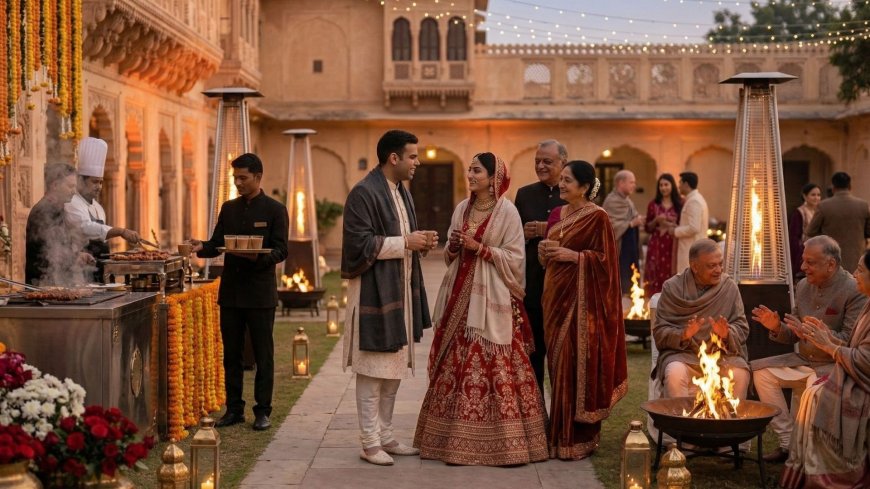
Winter Weddings in North India: The Complete Guide
The NRI couple's comprehensive guide to the season that produces India's most celebrated wedding conditions — the specific beauty of the North Indian winter, what it requires, and how to plan the occasion that uses the season rather than being surprised by it
The Season That Changes Everything
The wedding planner had a specific answer when couples asked her which season she recommended for North India.
She said: winter. Without hesitation.
She had been asked this question enough times to have thought carefully about the answer — to have weighed the monsoon's drama and its complications, the summer's heat and its specific demands, the shoulder seasons' compromise between the two. And she returned, consistently, to winter.
Not because winter was without its own specific demands. She was honest about those. The cold that arrived by eight in the evening and that required specific planning for the outdoor reception that extended past midnight. The fog that descended on Delhi and Agra from December through January and that produced the specific airport disruption that made international guest travel management more complex. The shortened daylight that compressed the golden hour into a narrower window than the couple who had been planning the outdoor ceremony had anticipated.
She recommended winter because of what it produced when it was planned for correctly: the light that the North Indian winter gives from November through February whose specific quality — clear, warm, directional, neither harsh nor diffuse — was the light that made the heritage property photographs extraordinary rather than merely beautiful. The temperature that allowed the outdoor reception to extend as far as the programme required without the guests' comfort being the planning's primary concern in the way it was in April. The floral abundance of the winter season — the marigold at its richest, the roses at their most abundant, the chrysanthemum and the dahlia in full and generous display. And the specific social energy of the Indian wedding season at its peak — the vendors whose expertise was sharpest from the frequency of their work, the venues whose staff were in the full exercise of their season's experience.
She recommended winter because, planned correctly, it was the season that produced the most of what the North Indian wedding could be.
This guide provides the planning that makes it correct.
The North Indian Winter: Understanding the Season
The Geography and the Climate
North India's winter — the period from late October through February — encompasses a geographic range whose climate variation is significant and whose planning implications differ accordingly.
The Rajasthan winter:
Rajasthan's winter is the North Indian winter at its most benign for wedding purposes. The days are warm — typically eighteen to twenty-five degrees Celsius through November and December — with clear skies and the specific quality of Rajasthani light that makes the heritage properties of Jaipur, Jodhpur, Udaipur, and Jaisalmer extraordinary in photographs. The nights are cool — dropping to eight to twelve degrees from December through January — requiring the specific planning for evening events that the outdoor wedding necessitates.
The Rajasthan winter is the season that the wedding industry has most thoroughly optimized for. The heritage property that is fully booked from November through February, the photographer whose finest portfolio images are from this season, the florist whose marigold arrangements are richest in the winter months — these are the specific advantages of the Rajasthan winter and the reason it is the most popular destination wedding season in India.
The Delhi winter:
Delhi's winter is the North Indian winter at its most complex. The city's specific geography — the Indo-Gangetic Plain's low-lying position, the specific combination of cold air and pollution that produces the dense fog and smog of December and January — creates the conditions that make the Delhi winter simultaneously beautiful and logistically demanding.
The clear December day in Delhi — before the fog season's peak — is among the most beautiful days available for the outdoor wedding in India: the specific quality of the post-monsoon air, the green of the parks and gardens, the warmth of the midday sun that allows the outdoor ceremony to be conducted in comfort. The foggy January morning in Delhi — whose visibility may reduce to fifty metres by early morning and whose airport disruption may delay or redirect international guests — is the Delhi winter's specific challenge.
The Delhi winter wedding requires specific contingency planning for fog — the airport monitoring, the guest communication protocol, the programme that is flexible enough to absorb the arrival delays that the fog season produces.
The Agra and surrounding region:
Agra — and the broader region whose heritage draws the NRI couple to the Taj Mahal backdrop — shares Delhi's fog patterns with an additional intensity. The Taj Mahal in the winter fog is among the most atmospheric images available in India's wedding landscape. The Taj Mahal invisible behind the fog is the specific disappointment of the couple whose outdoor photographs with the monument backdrop were the session's centrepiece.
The Agra wedding's November window — before the fog season's peak — gives the best probability of the clear-day Taj Mahal photographs. The January Agra wedding should include the contingency of the fog-covered monument and should be designed to be beautiful regardless of the monument's visibility.
The Punjab winter:
The Punjab winter — the season of the Amritsar wedding, the wedding in the landscape of the five rivers — is among the North Indian winter's most atmospheric settings. The winter wheat fields, the specific golden light that the Punjab winter produces, the Golden Temple's specific beauty in the winter season — these are the elements that make the Punjab winter wedding a distinctive and specific choice.
The Punjab winter is also the coldest of the North Indian winter options — the Amritsar winter night drops to four to six degrees Celsius in January, requiring the most specific planning for guest warmth and the most carefully designed venue infrastructure.
The Season's Timeline
October to mid-November — the early season:
The wedding season's opening. The temperatures are pleasant — warm days and mild evenings — and the monsoon's residual humidity has dissipated. The peak weekend availability is not yet fully booked. The vendors whose season has not yet reached its maximum pace are still accessible for the couple who is planning within this window. The specific advantage of the early season: the green that the monsoon has left, which produces a specific lushness in the outdoor settings that the deep winter does not have.
Mid-November through December — the peak season:
The North Indian wedding season at its most concentrated. The temperatures are ideal — warm days, cool evenings that are manageable with the specific planning for guest warmth. The heritage properties are at their most booked, the vendors at their most in demand, the prices at their highest. The specific advantage of the peak season: the vendor network is in full operation, the caterers are at their most practiced, the decorators are executing at the highest frequency. The specific challenge: availability. The wedding booked in this window at less than twelve months' notice may find that the specific venue or the specific photographer or the specific caterer is already committed.
January — the deep winter:
The North Indian winter at its most intense. The fog season in Delhi and the surrounding region is at its peak. The temperatures in the northern cities drop to their lowest. The specific advantage of January: the peak season's pressure has slightly reduced, creating marginally more availability than November and December. The specific challenge: the fog, the cold, and the planning that both require.
February — the season's close:
The temperature begins its rise. The fog season begins to lift. The availability that was compressed through November and December begins to open. The February wedding occupies the specific window between the deep winter's challenges and the pre-summer heat's approach. The specific advantage: the light remains clear and warm, the temperatures are manageable, and the availability is somewhat better than the peak season.
The Venues: What the Winter Wedding Requires
The Heritage Properties
The North Indian winter's most celebrated wedding venues are the heritage properties — the Rajasthani havelis and palaces, the Mughal gardens, the colonial-era properties whose architecture and landscape are most fully realized in the winter light.
The Rajasthan palace properties:
The palace hotels of Jaipur — the Rambagh Palace, the Samode Palace, the various properties that occupy the former residences of the Rajput nobility — are the venues whose winter bookings are confirmed twelve to eighteen months in advance for the peak dates. The couple who wants a specific Rajasthan palace property for a November through January date should be planning at minimum a year before the wedding.
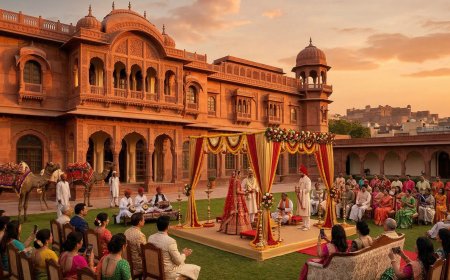
The palace property's specific advantage in winter: the courtyards and terraces whose outdoor use in summer is limited by the heat are fully available in winter, producing the specific configuration of the indoor-outdoor wedding that the Rajasthani palace is uniquely designed to accommodate.
The palace property's specific winter consideration: the cold that arrives after sunset in the courtyard and the terrace that has been absorbing the sun's warmth all day. The evening event on the palace terrace in January requires the specific infrastructure — the heating, the strategic use of fire features, the guest guidance to appropriate warm attire — that the summer terrace does not.
The heritage garden properties:
The Mughal garden properties — the properties in Agra, in Lucknow, in the broader Gangetic plain — whose formal gardens are the wedding's primary outdoor space require the specific management of the winter garden: the plants that are not at their summer peak, the grass that may not be fully green, the garden's winter character that is different from its summer character and that the décor must work with rather than against.
The winter garden's specific advantage: the absence of the insects and the heat that make the summer garden wedding's outdoor elements more demanding. The winter garden is the garden that is most comfortable to be in — the ceremony conducted in the garden without the summer's specific discomforts.
The Urban Properties
The Delhi properties:
Delhi's wedding properties — the farmhouses of South Delhi, the five-star hotel gardens, the designed event spaces — are at their most used in the winter season, whose clear days and cool evenings make the outdoor event more manageable than in any other season.
The Delhi property's specific winter planning: the fog contingency. The venue that has a strong indoor alternative for the outdoor event — the indoor space that can accommodate the programme if the outdoor event is not possible — is the venue that is most appropriate for the December and January Delhi wedding whose outdoor elements are vulnerable to the fog season.
The Agra properties:
The Agra wedding property's primary consideration is the distance from the Taj Mahal — the heritage site whose proximity defines the city's wedding landscape. The property that offers the Taj Mahal view from the ceremony or the reception space is the property at a premium in the winter season, when the view is most sought and most frequently obscured by fog.
The Guest Experience: Managing the Winter Cold
The Temperature Reality
The North Indian winter's temperature requires honest communication with the guests — particularly the international guests and the NRI guests from warmer climates whose experience of the cold may not include the specific quality of the North Indian winter night.
The North Indian winter cold is not the cold of a European winter. It is a dry cold — the desert cold of Rajasthan, or the plain cold of Delhi — that drops sharply after sunset and that reaches its lowest in the early morning hours. The guest who has been told "it will be cool in the evenings" and who arrives at the January Jaipur reception in the outfit appropriate for a cool evening has been given insufficient information.
The specific guidance the guests need: the temperature range by time of day, the specific advice for the evening event, the recommendation for layering the Indian formal attire with wraps and stoles, and the honest note that the midnight reception in the courtyard will be cold in a way that requires specific preparation rather than a light wrap.
The Heating Infrastructure
The outdoor evening event in the North Indian winter requires specific heating infrastructure — the infrastructure that the couple who has planned for the season includes and that the couple who has not planned for it discovers as an emergency on the wedding day.
The fire features:
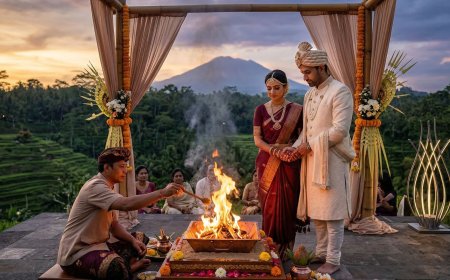
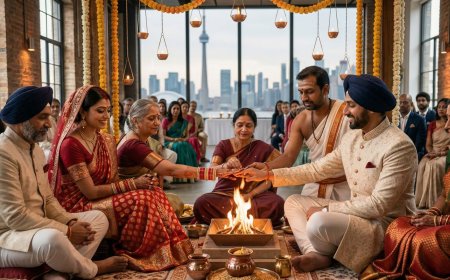
The outdoor fire pit, the fire feature that is both functional warmth and décor element, the torch lighting that provides heat alongside light — these are the specific heating provisions that the North Indian outdoor winter event should include. The fire features that are placed strategically throughout the outdoor event space — at the seating areas, at the dance floor's edges, at the points where guests are most likely to be stationary — provide warmth without requiring guests to cluster at a single heat source.
The gas heaters:
The patio heater — the tall, mushroom-topped gas heater — is the most efficient and most commonly used heating provision for the outdoor Indian winter wedding. The heater placement should be dense enough to provide consistent warmth across the outdoor space rather than isolated warm spots surrounded by cold areas.
The indoor alternative:
Every outdoor winter event should have a viable indoor alternative or retreat — the indoor space that can be moved to if the temperature drops below the range that the outdoor heating can manage, or that provides the warming space for guests who need a break from the cold. The indoor space that is part of the programme — the bar, the dessert station, the lounge — provides the warming retreat that the outdoor event needs without requiring the formal relocation of the entire programme.
The Attire Guidance for Guests
The dress code communication for the winter wedding should include specific, practical guidance for attire in the cold — not only the color and formality guidance that the dress code section typically provides, but the specific guidance for layering, for fabric choice, and for the footwear appropriate for the cold evening.
The specific guidance:
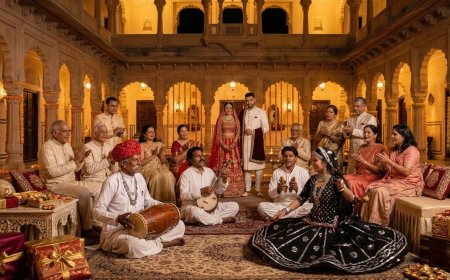
For women wearing sarees or lehengas — the pashmina wrap, the embroidered stole, the specific fabrics that retain warmth without compromising the outfit's appearance. The velvet and silk fabrics that are appropriate for the winter season. The footwear that is appropriate for the cold and for the surfaces of the outdoor venue.
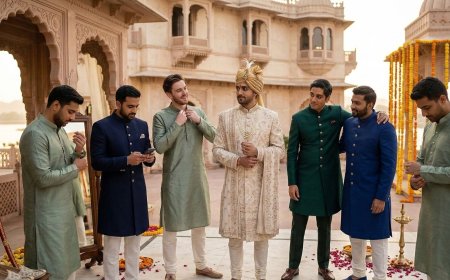
For men in sherwanis or suits — the Nehru jacket or bandhgala as the warming layer, the wool or wool-blend fabrics for the winter season, the specific attire choices that are both formal and warm.
For international guests who may not have Indian winter wear — the specific advice about purchasing or borrowing warm wraps, the note that the hotel concierge can assist with sourcing appropriate attire.
The Photography: Using the Winter Light
The Golden Hour in Winter
The North Indian winter's golden hour — the specific quality of light in the hour before sunset — is shorter than the summer's and earlier in the day. The golden hour that in July arrives at six-thirty arrives in December at four-thirty. The couple whose outdoor photograph session is planned around the golden hour must plan for its winter timing rather than its summer timing.
The winter golden hour's specific quality: the light is warmer, more directional, and lower in the sky than the summer equivalent. The directional quality of the winter low sun produces the specific shadow play that the high summer sun does not — the long shadows, the sidelit faces, the specific three-dimensionality of the image made in the winter's directional light.
The photograph session timing:
The outdoor photograph session for the winter North Indian wedding should be planned to use the golden hour — typically between three-thirty and five in the afternoon for the December and January wedding. The ceremony that ends in the early afternoon, followed by the photograph session in the golden hour's window, followed by the reception in the early evening, is the programme sequence that uses the winter light most effectively.
The Fog as a Creative Element
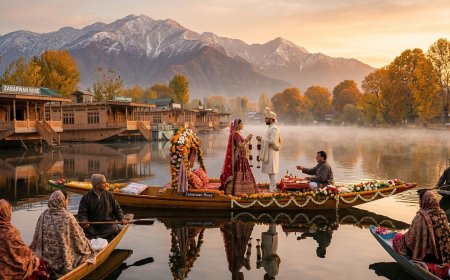
The fog that is the North Indian winter's logistical challenge is also, in the morning, a specific photographic resource. The fog-softened light of the Delhi or Agra winter morning — the diffuse, silver quality of the light through which the heritage architecture emerges — is the light that produces the specific atmospheric quality that the clear-sky photograph does not have.
The couple who has planned for the fog day — whose photographer is briefed on the fog's creative possibilities rather than only its challenges — is the couple who may find that the fog produces the most distinctive images of the wedding.
The early morning fog shoot — the couple photographed in the early morning at the heritage site or the garden before the wedding's programme begins — is the specific opportunity that the winter fog creates. The fog that disrupts the airport is the fog that, from a distance on an early morning with a specific photographer, produces the extraordinary image.
The Florals: The Winter's Abundance
The Flowers That Are Best in Winter
The North Indian winter is the season of the Indian flower market's greatest abundance — the marigold, the rose, the chrysanthemum, the dahlia, the tuberose are all at their peak in the winter months, producing the conditions that allow the North Indian wedding's floral tradition to be expressed at its most generous.
The marigold:
The marigold — the flower most deeply embedded in the Indian wedding's visual vocabulary — is richest in the winter season. The winter marigold's specific quality: the deeper orange, the fuller bloom, the specific warmth of the winter-grown flower that the summer's heat does not produce. The marigold garland, the marigold ceiling installation, the marigold entrance arch — these are the specific elements of the Indian wedding décor that are most fully realized in the winter's abundance.
The rose:
The winter rose — the rose grown in the cool temperatures that produce the tightest, most aromatic, most richly coloured bloom — is the rose at its best for the wedding's floral design. The variety available in the winter markets — from the deep reds and burgundies that are specific to the cold-grown rose to the soft pinks and whites that the winter produces in abundance — gives the florist a palette that is not available in the same quality in other seasons.
The seasonal arrangement:
The winter wedding's floral design should use the season's specific abundance rather than working against it. The florist who is designing for the January wedding and who proposes arrangements that use the specific flowers of the season — the dahlias and chrysanthemums alongside the roses and marigolds — is the florist who is working with the North Indian winter rather than around it.
The Cold's Impact on Florals
The North Indian winter's cold — beneficial for the flower's quality in the market — creates specific management challenges for the wedding's florals on the day.
The flowers that have been arranged in the warm interior space and then moved to the cold outdoor terrace for the evening event will respond to the temperature change — the specific wilting that the cold produces in tropical flowers like the tuberose, the condensation that the temperature differential creates on specific surfaces.
The florist who is experienced with winter weddings in North India — who knows which flowers hold in the cold and which do not, who designs the outdoor arrangements with the temperature's impact in mind — is the florist whose arrangements maintain their quality through the evening's cold rather than wilting by midnight.
The Catering: The Winter Menu
The Seasonal Advantage
The North Indian winter's cold creates the specific catering advantage of the occasion where the food's warmth is the guest experience's asset rather than its challenge. The summer wedding's catering challenge — the food that must be kept cool, the dishes that deteriorate in the heat — is not the winter wedding's challenge. The winter wedding's food can be served at the temperature it is best eaten at.
The winter menu's specific character:
The North Indian winter menu — the dal makhani that is richest in the cold, the dum biryani whose slow-cooked depth is most appreciated when the air is cool, the kebabs whose char is most welcome at the winter evening's outdoor station — is the menu that uses the season rather than working against it.
The chaat station, the live grill station, the hot soup service — these are the catering elements that the winter wedding can deploy as genuine guest comfort rather than ambient provision. The guest who is cold at the outdoor reception and who finds a live grill station with freshly made tandoori items has been given the specific hospitality of the hot food at the moment when hot food is most welcome.
The warming beverages:
The winter wedding's beverage programme should include the specific warming provisions that the summer wedding does not require — the masala chai service, the warm nimbu paani, the mulled drink options whose warming character is both practical and festive.
The Service Management in Cold
The catering service in the cold outdoor space requires specific management that the indoor service does not. The food that is served at a buffet station in the cold outdoor space drops to an inappropriate temperature more quickly than the food served indoors — requiring the specific provision of warming equipment under the service stations, the more frequent replenishment of the food to maintain temperature, and the service design that prioritizes the hot dishes' temperature management over the ambient presentation.
The Programme: Designing for the Winter Day
The Daylight Window
The North Indian winter's daylight — sunrise at approximately seven in the morning and sunset at approximately five-thirty in the afternoon — is shorter than the summer's and requires the programme to be designed with the daylight window in mind.
The outdoor ceremony whose programme assumes the six o'clock sunset of summer and that runs until the actual five-thirty sunset of December will find itself conducting the final ritual in the specific diminishing light that was not planned for. The outdoor ceremony timed for the winter day should end before five — allowing the photograph session to use the last of the golden hour and the programme to transition to the indoor or heated outdoor reception as the natural light fades.
The Two-Part Programme
The two-part programme — the afternoon ceremony and photographs followed by the evening reception — is the programme structure that most naturally uses the North Indian winter day. The afternoon provides the daylight for the ceremony and the photograph session. The evening reception, beginning after the photographs and the natural light, can extend into the night with the heating infrastructure and the programme that keeps the guests warm and engaged.
The Common Mistakes: What the Winter Wedding Requires That Couples Miss
The first mistake is underestimating the cold. The couple who plans the outdoor reception without specific heating provision, who communicates the dress code without the specific cold guidance, who does not include the indoor retreat space — this couple discovers the cold's impact on the guest experience at the reception rather than in the planning.
The second mistake is not accounting for the fog in the programme. The fog that disrupts international guest arrivals in December and January is the disruption that the programme should be designed to absorb — the ceremony that can start thirty minutes late without the day's remaining programme being compromised, the guest communication protocol that manages the fog delay rather than being surprised by it.
The third mistake is booking the peak season venue or vendor too late. The November through January booking window for the premium Rajasthan heritage properties closes at twelve to eighteen months before the date. The couple who begins planning ten months before the peak season wedding will find that the specific venue they want is not available.
The fourth mistake is designing the photograph session without the winter light's timing in mind. The golden hour that arrives at four-thirty rather than six-thirty compresses the outdoor photograph session into a window that the couple who has not planned for it will find insufficient.
The fifth mistake is not briefing international guests on the cold. The guest from London or Toronto whose experience of winter is the indoor-outdoor transition of the heated building knows a different cold than the outdoor Indian winter night at eight degrees Celsius. The briefing that is specific — that tells the guest what the temperature will be and what they will need — is the briefing that allows the guest to be comfortable rather than surprised.
The Season That Repays the Planning
The North Indian winter is the season that repays the planning most fully — the season where the specific preparation for its specific conditions produces the specific results that make it the wedding planner's consistent recommendation.
The couple who plans for the cold — who heats the outdoor space, who guides the guests, who designs the programme around the daylight window and the golden hour's winter timing — has a winter wedding whose conditions work for them.
The couple who does not plan for the cold has the same conditions working against them.
The difference is entirely in the planning.
The heritage property in January, with the ceremony in the afternoon light and the reception on the heated terrace under the stars and the marigold at its winter richest and the rose at its most fragrant and the fog lifting by ten in the morning to reveal the specific clarity of the winter sky — this is the wedding that the North Indian winter produces when it is planned for correctly.
Plan for it correctly.
NRIWedding.com — Expert guidance for Indian weddings planned across borders.
What's Your Reaction?
 Like
0
Like
0
 Dislike
0
Dislike
0
 Love
0
Love
0
 Funny
0
Funny
0
 Angry
0
Angry
0
 Sad
0
Sad
0
 Wow
0
Wow
0