
























































Cultural Differences Between Two Indian Families: Finding Common Ground at Your Indian Wedding — The Complete NRI Wedding Planning Guide
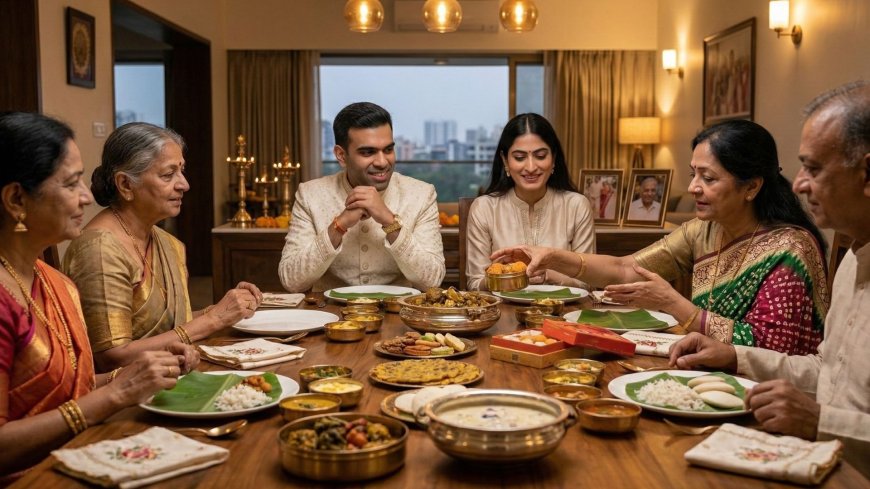
At the first joint family dinner in Ahmedabad, the groom’s family welcomed the bride’s family with a traditional Gujarati vegetarian feast prepared over two days. When the bride’s father asked, with honest curiosity, whether everything was vegetarian, it revealed a quiet cultural difference. For the groom’s family, a celebration meal was naturally vegetarian; for the bride’s family, meat had always been part of special occasions. The dinner was warm and successful, but it showed how two Indian families can share love and values while having very different traditions. This guide helps NRI couples navigate such differences—covering food choices, rituals, regional customs, vendor selection, and ways to respectfully blend traditions.

Cultural Differences Between Two Indian Families: Finding Common Ground
The Moment the Families Met the Menu
The first joint family dinner had been the groom's mother's idea.
She had suggested it at the engagement ceremony — not the engagement itself, which had been the bride's family's occasion in Chennai, conducted with the specific Tamil Brahmin rituals that the bride's family had observed for generations, with the filter coffee and the banana leaf and the specific configuration of relatives whose presence the ritual required. The groom's mother had attended the engagement as the guest, had watched the rituals with the genuine interest of someone encountering them for the first time, and had suggested, as the families were leaving, that they should all have dinner together soon — a proper dinner, a relaxed occasion, the two families getting to know each other without the ceremony's formal structure.
The bride's mother had agreed warmly. A date had been set. The groom's family would host in their home in Ahmedabad.
The dinner was a Tuesday evening in November.
The groom's mother had cooked for two days. The table had eight dishes — the specific Gujarati vegetarian feast whose abundance and whose care were the expression of the welcome that the groom's family wanted to extend. The dal dhokli, the undhiyu, the shrikhand, the thepla, the specific sweet that the groom's grandmother made for every occasion of significance.
The bride's father looked at the table and said, with genuine warmth and genuine bewilderment: "Everything is vegetarian?"
It was not a complaint. It was the honest response of the man who had eaten meat at every significant meal of his sixty-one years, whose tradition's relationship to food was entirely different from the tradition across the table, whose confusion was as genuine as the groom's mother's confusion when she understood the question.
The groom's mother said, with equal genuine warmth and equal genuine bewilderment: "Of course."
The dinner was delicious. The bride's father ate three helpings of the dal dhokli and asked for the recipe. The groom's mother was pleased. The evening was, by every measure that mattered, a success.
But the moment — the specific moment of the question and the answer, the vegetarian table and the non-vegetarian guest, the "of course" that was the expression of two entirely different assumptions about what food at a significant occasion meant — was the moment that the groom filed away as the first evidence of what the wedding planning was going to require.
Two Indian families. Both Hindu. Both educated, both urban, both with genuine love for their child and genuine welcome for the child's partner. Both entirely certain, in the specific way that the deeply rooted are certain, that their way of doing things was the way things were done.
Same country. Different worlds.
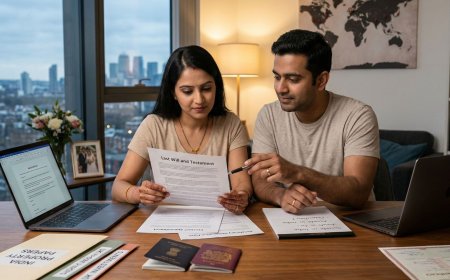
This guide is for the couple in the middle — the couple who loves both families and who is planning an occasion that must honour both traditions, navigate the specific differences between them, and produce a wedding that both families can be genuinely present for rather than politely enduring.
The Landscape: Why Two Indian Families Are Not the Same Family
The Myth of the Uniform Indian Wedding
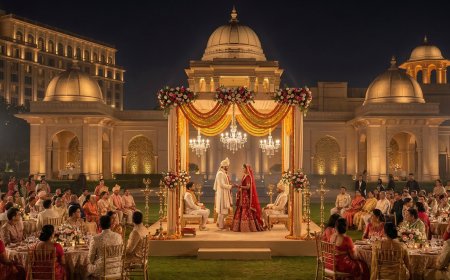
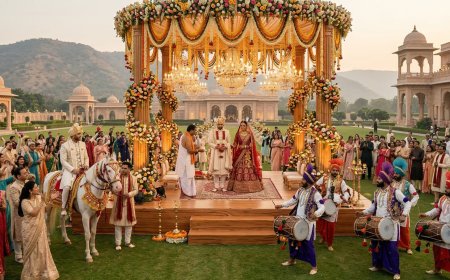
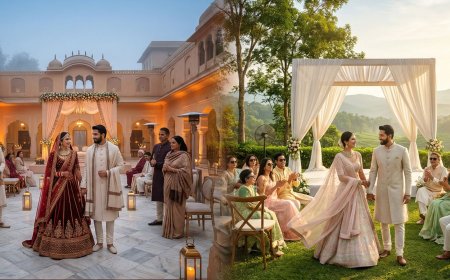
The Indian wedding, in its popular representation — the Bollywood version, the international magazine's feature, the generic description that the Western wedding industry uses when it adds "Indian" as an aesthetic category — is a single thing. The red lehenga. The mandap. The saptapadi. The dhol. The particular visual vocabulary that has become the shorthand for the Indian wedding across every medium.
This representation is the flattening of extraordinary diversity into a single image — and it is the specific source of the assumption that two Indian families, planning a wedding together, are planning the same occasion from the same tradition.
They are almost never planning the same occasion from the same tradition.
The Indian subcontinent's cultural diversity — the regional traditions, the caste and community practices, the linguistic and culinary and ritual differences that make a Tamil Brahmin wedding in Chennai and a Gujarati Patel wedding in Ahmedabad as different from each other as a Scottish Presbyterian wedding is from a Sicilian Catholic wedding — is the landscape that the two-family Indian wedding must navigate.
And the families navigating it often do not know, in advance, how different the landscape is going to be — because the assumption of the common Indian framework obscures the specific differences until the dinner table, the ritual requirement, the specific ceremonial expectation makes the difference visible.
The Axes of Difference
The cultural differences between two Indian families operate across multiple axes simultaneously — and understanding the specific axes that apply to the specific families involved is the foundation of the navigation.
The regional axis:
The regional differences between Indian families are the most immediately visible — the differences in language, food, clothing, music, and the specific social customs that the region has produced. The North-South divide is the most commonly discussed, but the differences within regions are as significant as the differences between them — the Bengali family and the Bihari family are both from the East but are from different worlds, the Maharashtrian family and the Gujarati family are neighbours whose wedding traditions share almost nothing.
The community and caste axis:
Within any region, the community and caste differences produce wedding traditions that are specific and that carry the weight of generations of practice. The Brahmin wedding's ritual requirements, the Patel community's specific customs, the Nair family's particular ceremonies — these are not regional differences but community differences that exist within the same city, sometimes within the same neighbourhood, and that produce occasions whose specific requirements are completely unfamiliar to the family from the neighbouring community.
The religious practice axis:
The degree of religious observance — the family for whom the religious rituals are the living centre of the wedding versus the family for whom the religious rituals are the respected tradition whose precise observance is less important than the occasion's warmth — is the axis that most affects the ceremony's specific design. The Pandit who performs the ceremony for the deeply observant family is the Pandit whose requirements about the ceremony's conduct, duration, and participants are non-negotiable. The family whose religious practice is less formal may find these requirements unfamiliar and constraining.
The urban-rural axis:
The family whose wedding tradition has been shaped by the urban professional environment — the family for whom the wedding is a four-hour evening reception at a five-star hotel — and the family whose tradition has been shaped by the village or the small city — the family for whom the wedding is a three-day community celebration with specific rituals at every stage — are families whose expectations about the wedding's scale, duration, and social function are genuinely different.
The economic axis:
The families whose economic circumstances are significantly different bring different assumptions about the wedding's appropriate scale, the appropriate expenditure, and the appropriate distribution of costs between the families. The economic difference is the axis that couples most often avoid discussing directly and that most often surfaces as conflict in the planning.
The NRI axis:
For the NRI couple, the additional axis is the difference between the family that is based abroad and the family that is based in India — the different relationship to tradition that the diaspora experience produces, the different understanding of what the wedding should be and who it is for, the specific tension between the NRI family's more Western influenced expectations and the India-based family's more traditional framework.
The Specific Differences: What They Look Like in Practice
The Food Question
The food at the Indian wedding is not only sustenance — it is the expression of the family's tradition, the community's identity, the specific hospitality that the family extends to its guests. The food difference between two Indian families is therefore not merely a catering decision — it is a question about whose tradition is being expressed and whose community is being fed.
The vegetarian-non-vegetarian difference:
The Gujarati Brahmin family whose tradition is strictly vegetarian and the Bengali family whose tradition includes fish at every celebration are not disagreeing about the menu — they are disagreeing about what food at a significant occasion means. The vegetarian family whose guests are served meat may experience this as the accommodation of the other family's tradition — the grace of the host. The non-vegetarian family whose guests are served only vegetarian food may experience the specific deprivation of the celebration that does not include the food that celebration means.
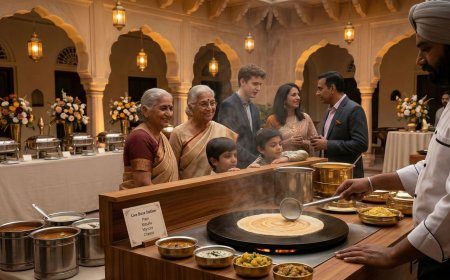
The solution is neither the wholly vegetarian menu that honours one family nor the non-vegetarian menu that honours the other — it is the genuinely dual menu that gives both families the food that their tradition requires, presented with equal care and equal visibility so that neither family's tradition is the accommodation and both families' traditions are the expression.
The regional cuisine difference:
The South Indian family accustomed to the idli and the sambar, the rice and the rasam, the specific culinary grammar of the South Indian feast, and the Punjabi family accustomed to the dal makhani and the naan and the specific abundance of the North Indian celebration, are families whose food cultures are as different as their languages. The wedding menu that attempts to serve both simultaneously requires a caterer whose capability spans both traditions — a requirement that should be assessed honestly rather than assumed.
The sweet traditions:
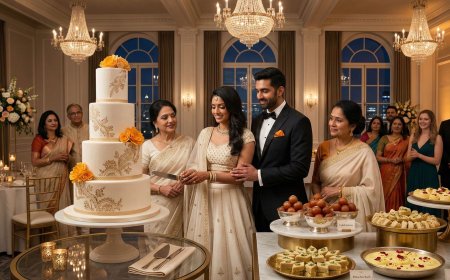
The mithai at the Indian wedding is the specific expression of the regional sweet tradition — the Bengali mishti doi, the Gujarati mohanthal, the Tamil payasam, the Maharashtrian modak. The sweet table that represents both families' traditions is the sweet table that communicates genuine respect for both — and the sweet table that represents only one family's tradition is the sweet table that has made a statement about whose occasion this is.
The Ritual Differences
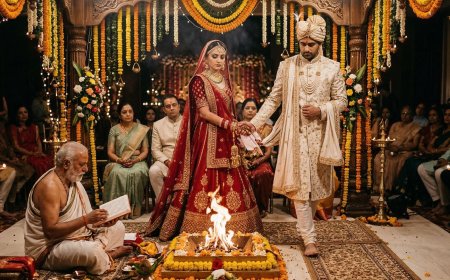
The ceremony's ritual structure is the axis on which the two families' cultural differences are most consequential — because the rituals are the substance of the occasion rather than its decoration, and the family whose rituals are not included has been given a specific message about the standing of their tradition.
The Pandit question:
The two families may have entirely different relationships with the Pandit — different regional traditions within Hinduism, different community-specific ritual practices, different language requirements for the mantras. The Tamil Pandit whose ceremony is in Sanskrit and Tamil and the Gujarati Pandit whose ceremony is in Sanskrit and Gujarati are both conducting Hindu ceremonies that share the fundamental structure but differ in the specific rituals, the specific mantras, and the specific ceremonial requirements.
The Pandit selection for the two-family wedding requires the honest conversation about which tradition's rituals will form the ceremony's primary structure and how the other tradition's specific elements will be incorporated. The ceremony that is conducted primarily in one tradition's framework with the other tradition's elements added at the edges is the ceremony that has made a hierarchy between the two traditions. The ceremony that genuinely integrates both requires the Pandit who is experienced in the integration — and the frank conversation between the couple, both sets of parents, and the Pandit about what the integration looks like in practice.
The ceremony duration:
The South Indian wedding's ceremony, with its specific rituals and its specific pace, may be significantly longer or shorter than the North Indian or Gujarati ceremony. The family whose ceremony tradition is longer may experience the shortened ceremony as a diminishment of the tradition's seriousness. The family whose ceremony tradition is shorter may experience the extended ceremony as a test of their endurance. The ceremony duration should be discussed and agreed before the Pandit is briefed rather than discovered on the day.
The specific ritual requirements:
Every regional and community tradition has specific ritual requirements — the specific number of rounds around the sacred fire, the specific rituals performed by the maternal uncle, the specific role of the women's ceremony that precedes the main ceremony, the specific post-ceremony ritual that the tradition requires. These specific requirements should be surfaced in the Pandit conversation and the family conversation before the planning is advanced — the ritual that one family considers essential and that the other family has never encountered is the ritual whose late discovery produces the specific conflict of the non-negotiable that was not known to be non-negotiable.
The Ceremony Aesthetic
The visual aesthetic of the two families' wedding traditions — the specific colours, the specific decorative elements, the specific configuration of the mandap and the ceremony space — is the axis where the cultural differences are most visible and most immediately felt.
The colour traditions:
The bride's family whose tradition is the red bridal dress and the groom's family whose tradition is a different colour — or whose tradition has different expectations about the wedding's overall colour palette — are families whose aesthetic difference is visible in every photograph. The negotiation of the wedding's colour story requires the honest conversation about which colours are the tradition's requirement and which are preference.
The mandap design:
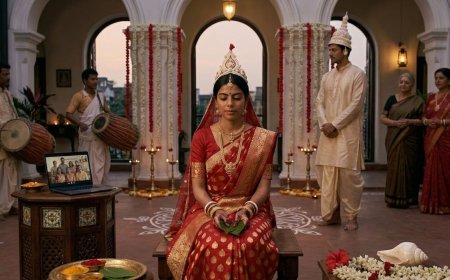
The mandap's design — its structure, its decoration, its symbolic elements — is specific to the regional and community tradition. The South Indian mandap and the North Indian mandap are physically different objects with different symbolic vocabularies. The mandap design for the two-tradition wedding is the opportunity for genuine integration — the mandap whose design draws on both traditions' visual languages — or the opportunity for the hierarchy of the mandap that is one tradition's structure decorated with the other tradition's elements.
The Social Customs
The guest interaction customs:
The social customs around how guests interact, how the family interacts with the guests, the specific protocols of the meal, the seating, the gift-giving — these customs are specific to the regional and community tradition and are the source of the specific misreading that the unfamiliar custom produces.
The Gujarati family's custom of the head-cover as the expression of respect and the South Indian family's unfamiliarity with this custom. The Bengali family's custom of the specific greeting and the Punjabi family's different greeting custom. The specific protocol of the gift's presentation and the specific protocol of the gift's acknowledgment — these are the customs that, when they differ between the two families, produce the specific social friction of the guest who does not know what is expected and who experiences their not-knowing as the exclusion from the tradition rather than as the unfamiliarity with a custom they were never taught.
The timeline customs:
The family whose tradition runs on the specific Indian Standard Time of the social occasion — the dinner that begins two hours after the time on the invitation — and the family whose tradition expects the occasion to begin closer to the stated time are families whose timeline expectation is a source of friction when the occasion's actual timing does not match either family's expectation clearly.
The Navigation: Finding the Common Ground
The Early Conversation Between the Families
The most effective single intervention in the navigation of two families' cultural differences is the early, explicit conversation between the families about their specific traditions and their specific expectations for the wedding.
The conversation's purpose:
Not to establish whose tradition takes precedence — this is the framing that produces the hierarchy that the navigation must avoid. The purpose is to surface the specific elements of each family's tradition that are most important to them, to understand what each family considers non-negotiable and what each family considers preference, and to identify the areas where genuine integration is possible and the areas where accommodation is required.
The conversation's format:
The joint family meeting — both sets of parents, the couple, and if possible a trusted elder from each family who knows the tradition's specific requirements — is the most effective format. The meeting should be framed as the sharing of traditions rather than the negotiation of competing claims — the Tamil family explaining what the specific ritual means and why it matters, the Gujarati family doing the same, both families listening with the genuine interest that respect requires.
The discovery questions:
What are the rituals that this wedding must include for your family to feel that the wedding honoured your tradition? What are the food requirements that your guests need in order to feel genuinely fed and genuinely welcomed? What are the aesthetic elements — the colours, the specific decorative symbols, the specific clothing requirements — that your tradition requires? What are the social customs that your guests will expect and that, if absent, will make them feel that the occasion was incomplete?
These questions, asked genuinely and answered honestly, produce the specific information that the planning requires — the non-negotiable ritual, the essential food requirement, the specific custom that the other family did not know about and that, now known, can be planned around.
The Integration Principle
The navigation of two families' cultural differences in the Indian wedding can follow one of three principles — and the couple should choose the principle explicitly rather than drifting into one by default.
The primary tradition with accommodation:
One family's tradition is the primary framework — the ceremony is conducted in that tradition's structure, the food is primarily that tradition's cuisine, the aesthetic is primarily that tradition's visual language — and the other family's tradition is accommodated within the primary framework. Elements of the secondary tradition are included where they can be integrated without disrupting the primary tradition's coherence.
This is the most common approach and the most logistically straightforward. It is also the approach that produces the specific experience of the family whose tradition is the accommodation — the family that is present at a wedding that is not quite theirs, that is the guest in the tradition rather than its co-host.
The genuine integration:
Both families' traditions are woven together into a ceremony, a programme, and an aesthetic that draws genuinely from both. The ceremony includes rituals from both traditions. The food represents both culinary cultures. The aesthetic integrates both visual languages. The programme gives both families their specific moments of cultural expression.
The genuine integration is the most complex to execute and requires the most capable vendors — the Pandit who knows both traditions, the caterer who can produce both cuisines to the same standard, the decorator whose vocabulary includes both aesthetic languages. It also produces the most genuinely original wedding — the occasion that is specifically this couple's and this family's rather than either family's tradition applied to the occasion.
The new tradition:
The couple chooses elements from both traditions based on personal meaning rather than traditional requirement — building a ceremony and an occasion that is not either family's traditional wedding but that is specifically their own. The new tradition approach requires the most negotiation with the families, whose expectation of traditional recognition must be addressed, and produces the occasion that most specifically reflects the couple.
The Vendor Selection
The vendors for the two-tradition Indian wedding require specific capabilities that the single-tradition wedding does not.
The Pandit:
The Pandit who is experienced in multi-regional ceremonies — who has conducted Tamil-Gujarati weddings, who knows the specific rituals of both traditions, who can integrate the elements of both without producing the ceremony that is one tradition's structure awkwardly interrupted by the other's elements — is the Pandit whose experience is the planning's most valuable asset. Ask specifically about the Pandit's experience with ceremonies that integrate multiple traditions. Ask for the specific examples. The Pandit whose experience is limited to a single tradition is the Pandit whose integration will be less fluent than the couple needs.
The caterer:
The caterer for the two-tradition wedding must be capable of producing both culinary traditions to the same standard — not the caterer who specialises in Gujarati cuisine and who offers a South Indian section as an afterthought, and not the caterer who specialises in South Indian cuisine and whose North Indian section is the concession rather than the expression. The caterer whose capability genuinely spans both traditions is the rarer find — and is worth the specific effort of the search.
The decorator:
The decorator who can integrate two visual traditions — whose vocabulary includes both the South Indian wedding's specific aesthetic and the North Indian or Gujarati wedding's specific aesthetic — is the decorator whose portfolio should show both rather than one with elements of the other added. Ask to see examples of the specific integration rather than examples of each tradition separately.
The Programme Design
The wedding programme — the sequence of events, the specific moments that each family's tradition gets — is the most powerful tool for the genuine integration of two families' cultural differences.
The principle of equal visibility:
Each family's tradition should have moments of equal visibility in the programme — the moments that are specifically their tradition's expression, that give the family's guests the specific experience of their tradition being honoured, that give the family itself the specific acknowledgment of their cultural identity.
The Tamil family's specific pre-wedding ritual. The Gujarati family's specific ceremony element. The South Indian music that plays at the specific moment of the South Indian tradition's significance. The Garba that the Gujarati family's guests recognise as their own. These moments of specific cultural expression — placed in the programme with deliberateness and with the genuine understanding of what they mean to the family whose tradition they come from — are the moments that make the wedding genuinely both families' occasion rather than one family's occasion with the other's elements added.
The cultural guide:
The wedding programme booklet — or the wedding website, or the QR code that links to the explanation — that explains each cultural element to the guests who are not from that tradition is the specific act of hospitality that the two-tradition wedding owes to both families' guests. The Tamil guest who does not know the meaning of the Garba. The Gujarati guest who has never seen the specific South Indian ritual. Both deserve the explanation that transforms the unfamiliar into the understood — that turns the guest's bewilderment at the other family's tradition into the genuine appreciation of it.
The Emotional Landscape: What the Couple Carries
The Position in the Middle
The couple whose families have different cultural traditions carries the specific weight of the person in the middle — the person who loves both, who is from both, who is responsible for the occasion that must honour both, and who must navigate the specific moments when both families' genuine love for their tradition produces the genuine conflict of two non-negotiables that cannot both be fully met.
The permission to feel it:
The couple in the middle of two cultural traditions deserves the specific acknowledgment that this is genuinely difficult — that the negotiation of two families' cultural expectations is not simply the logistical challenge of the complex wedding but the emotional challenge of being the bridge between two worlds that do not share a common framework.
The couple who gives themselves the permission to feel the difficulty — to acknowledge that the navigation is demanding, that the position in the middle is sometimes lonely, that the love for both families does not automatically produce the solution for every conflict — is the couple who can navigate the planning with honesty rather than with the performance of an ease they do not feel.
The shared tradition the marriage creates:
The marriage of two people from different Indian cultural traditions is the beginning of a new tradition — the specific cultural blend that the couple creates together, that their family will carry forward, that is specifically theirs rather than either family's inheritance. The wedding that honours both traditions is the wedding that acknowledges this beginning — that the marriage is not the subordination of one tradition to the other but the creation of something new from both.
Common Mistakes NRI Couples Make With Cultural Differences
The first mistake is assuming that shared nationality or shared religion means shared tradition. Two Hindu families from different regions of India may share the broad framework of the Hindu wedding but differ in every specific detail of its practice. The assumption of the shared framework is the assumption that prevents the early conversation — the conversation that would have revealed the differences before they surfaced as conflicts in the planning.
The second mistake is choosing the primary tradition without the explicit conversation about why and without the explicit acknowledgment of what the secondary tradition is being asked to accommodate. The family whose tradition becomes the accommodation without the specific acknowledgment of what they are being asked to give — the explanation of why the couple has made this choice and the genuine expression of gratitude for the family's grace in accepting it — is the family that experiences the accommodation as exclusion rather than as the generous contribution it is.
The third mistake is not finding vendors whose capabilities genuinely span both traditions. The Pandit who knows only one tradition, the caterer who specialises in one cuisine and manages the other, the decorator whose vocabulary is one aesthetic with elements of the other added — these are the vendors who produce the wedding that is one tradition with the other's presence rather than the genuine integration of both.
The fourth mistake is not including the cultural guide for the guests who are unfamiliar with the other family's tradition. The guest who watches the rituals of the other family's tradition without understanding them is the guest who is present at the wedding without being part of it. The cultural guide — the explanation of what each ritual means and why it matters — is the hospitality that makes both families' guests genuinely welcome rather than politely confused.
The fifth mistake is not giving the couple themselves the acknowledgment of the specific difficulty of their position. The couple in the middle of two cultural traditions is doing the most demanding work of the planning — holding both families' expectations with love and with the honest navigation of the moments when those expectations conflict. This work deserves the couple's own acknowledgment of its weight and the specific support of each other rather than the assumption that love for both families is sufficient to make the navigation easy.
The Dinner Table, Revisited
The wedding was in April.
The menu had taken three months to plan. The caterer — found after six conversations with vendors who specialised in one cuisine and managed the other, and one conversation with the caterer who had been doing this for twenty years and whose confidence when the couple described the requirement was the confidence of experience rather than the confidence of optimism — had produced the menu that the couple had asked for.
The South Indian section: the sambar and the rasam, the coconut rice, the payasam that the bride's grandmother's recipe had been adapted for the scale of the wedding. The Gujarati section: the dal dhokli that the bride's father had asked about the recipe for in November, the undhiyu, the shrikhand, the thepla. Both sections presented with equal care, equal prominence, equal visibility in the buffet's arrangement so that neither was the main event and neither was the accommodation.
The bride's father ate three helpings of the dal dhokli again.
The groom's mother tried the payasam and said, with genuine pleasure and genuine surprise: "This is like our shrikhand but different."
The bride's grandmother, who had been watching the groom's grandmother across the table for the first hour of the dinner with the specific assessment of the woman who has not yet decided what she thinks, leaned across and asked: "What is that sweet you brought? The one in the small container?"
The groom's grandmother passed the container across the table.
They spent forty minutes talking about sweets.
The common ground was not the absence of difference. The two grandmothers were from different states, different communities, different culinary traditions, different generations of a different regional identity. They did not share a language comfortably. They did not share a tradition.
The common ground was the specific, genuine interest in the other's tradition that the occasion had made possible.The container passed across the table. The recipe question asked without ceremony. The forty minutes that followed.
Find the vendors who can hold both traditions.
Have the early conversation that surfaces the non-negotiables.
Design the programme so both families have their specific moments.
Give the guests the cultural guide that makes the unfamiliar understood.
And trust that the common ground exists — not in the absence of the differences, not in the flattening of the two traditions into a single occasion, but in the specific human interest that the occasion makes possible.
The interest in the container passed across the table.
The recipe question asked.
The forty minutes about sweets.
That is the common ground.
It is enough to build a family on.
Published by NRIWedding.com — The Premium Global Platform for Non-Resident Indians Planning Indian Weddings From Abroad.
What's Your Reaction?
 Like
0
Like
0
 Dislike
0
Dislike
0
 Love
0
Love
0
 Funny
0
Funny
0
 Angry
0
Angry
0
 Sad
0
Sad
0
 Wow
0
Wow
0