




















































Destination Weddings in Himachal Pradesh: Snow, Apple Orchards and Colonial Hill Stations — The Complete NRI Planning Guide
Planning a destination wedding in Himachal Pradesh from abroad? This complete NRI guide covers everything the globally-located Indian couple needs — from Shimla's Wildflower Hall and Oberoi Cecil colonial heritage to Manali's Solang Nala snow ceremonies, the Kullu Valley apple orchard harvest window, Dharamsala's Buddhist monastery dimension, Dalhousie and Kasauli's quiet colonial character, and Spiti Valley's high-altitude desert drama. Learn how to select between Himachal Pradesh's six distinct destination characters, manage the Chandigarh gateway and eight-hour Manali road convoy, navigate the critically time-sensitive apple orchard booking window, incorporate the traditional Himachali dham feast and Kullvi textile aesthetics, brief photographers on Pahari miniature design language and altitude light conditions, and build genuine weather and road-closure contingency into every mountain wedding programme. Understand altitude acclimatisation planning, distributed vendor ecosystem management across five towns, NRI payment frameworks, and the specific planning decisions that distinguish a Himachal Pradesh wedding that belongs to its place from one that merely occurs within it. This is the complete, expert, non-generic guidance that a Himachal Pradesh destination wedding demands.


Destination Weddings in Himachal Pradesh — Snow, Apple Orchards and Colonial Hill Stations: The Complete NRI Planning Guide
The photograph had been taken in October.
Meera could tell from the light — that specific, saturated, almost unbearably golden October light that the Kullu Valley produces when the apple harvest is at its peak and the trees are still heavy with fruit and the sky above the Beas River has the deep, clear blue of high altitude in the post-monsoon clarity. Her aunt had taken it on a phone camera, probably without stopping the car, probably through the window, and it had the slightly blurred, slightly tilted quality of a photograph that was not trying to be a photograph but had become one anyway by accident of being in the right place at the right second.
It showed an apple orchard. Not a managed, photogenic, agritourism apple orchard — a working one, the trees old and gnarled and heavy, the apples so dense on the branches that the branches were bent under the weight, the light coming through the canopy at an angle that turned every apple it touched into something that glowed from inside. Beyond the orchard, the valley fell away to the river and then rose again on the far side in a wall of forest and above the forest the snow peaks of the Kullu range sat in the specific, indifferent, permanent manner of mountains that have been there considerably longer than the concept of a wedding destination and will be there considerably longer still.
Her aunt had captioned it with a single word: Manali.
Meera was in her flat in Berlin at eleven-forty-five on a Wednesday night, which was the fourth consecutive night she had been awake past eleven looking at venue photographs with the specific, unproductive exhaustion of someone who has been searching for the right answer using the wrong vocabulary. The spreadsheet had thirty-nine rows. None of them were right. She knew they were not right in the way that you know something is not right before you know what right actually is — by the specific absence of the feeling you are looking for rather than by the presence of a specific problem.
She looked at the apple orchard photograph for a long time.
Then she looked at it again.
Then she sent it to her fiancé Aarav in Melbourne at eleven-fifty-three Berlin time, which was eight-fifty-three in the morning Melbourne time, which meant he was on his way to work, which meant he would read it on the train.
He called her at nine-fourteen Melbourne time, eleven-fourteen Berlin time.
He said, without introduction: "The apples."
"Yes," she said.
"And those mountains behind."
"Yes."
"That is Himachal Pradesh."
"Yes. Kullu Valley. Manali is further up. But the whole district — Kullu, Manali, Naggar, Kasol — it is all this. The orchard and the river and the mountains. And it is not only Manali. There is Shimla. There is Dalhousie. There is Spiti. There is Dharamsala. There is an entire — "
She paused. She was not sure what word she wanted.
"Landscape," Aarav said.
"Yes. An entire landscape. That has been receiving people for two hundred years and that has its own — "
"Logic," he said.
"Yes. Logic. The colonial logic and the Himalayan logic and the apple orchard logic and the Buddhist monastery logic. All in one state."
There was a quiet on the line that was the quiet of two people thinking simultaneously rather than the quiet of an empty conversation.
Then Aarav said: "How complicated is it."
Meera had been expecting this question. She had spent part of the night looking for the answer.
"More complicated than Kerala," she said. "Less complicated than the Andamans. Specifically complicated in ways that are specific to Himachal Pradesh — the altitude, the seasons, the road access, the vendor ecosystem that is distributed across four or five towns rather than concentrated in one city. But manageable. Genuinely manageable if you plan for what it actually is rather than for what you assume it to be."
"And worth it?" he said.
She looked at the apple orchard photograph again. The golden light. The heavy branches. The mountains behind.
"Look at the photograph," she said.
A pause.
"Yes," he said. "Worth it."
What neither of them understood yet — what the apple orchard photograph had decided emotionally without answering operationally — was that Himachal Pradesh is not a single destination but a state of extraordinary internal variety, and that planning a wedding in Himachal Pradesh begins not with a venue search but with a destination selection from within the state's own diverse geography. The choice between Shimla, Manali, Dharamsala, Dalhousie, Kasauli, Spiti, and the Kullu Valley is not the choice between aesthetic preferences. It is the choice between fundamentally different altitudes, fundamentally different seasons, fundamentally different road access profiles, fundamentally different vendor ecosystems, and fundamentally different wedding experiences. The couple who chooses Himachal Pradesh without choosing which Himachal Pradesh is not planning a wedding. They are planning a geography, and the geography requires a decision before the planning can begin.
This guide is for that couple — the ones for whom the apple orchard and the mountains have already done their work, and who now need to understand, completely and without assumption, the specific, internal geography of a state that contains more distinct wedding destination characters than any other in India.
Why Himachal Pradesh Is a Category of Its Own in the Indian Destination Wedding Conversation
The Indian destination wedding conversation about hill stations begins and frequently ends with Mussoorie — the most famous, the most photographed, the most accessible. The conversation about snow weddings gravitates to Gulmarg. The conversation about Buddhist culture reaches toward Ladakh. The conversation about colonial heritage returns to Shimla or Ooty or Coorg.
Himachal Pradesh renders all of these conversations partially redundant, because it contains, within a single state, the most diverse collection of distinct wedding destination characters available anywhere in India. It has the colonial hill station in Shimla and Kasauli and Dalhousie. It has the snow wedding in Manali and Solang Nala. It has the apple orchard wedding in Kullu and Naggar and the Kullu Valley floor. It has the Buddhist monastery wedding in Dharamsala and Spiti and Lahaul. It has the river valley wedding in Kasol and the Parvati Valley and along the Beas. It has the farmhouse vineyard wedding in the lower hills. And it has the specific, rare, extraordinarily beautiful category of the high-altitude desert wedding in Spiti Valley — the most remote, most dramatically arid, most otherworldly landscape available at any Indian wedding destination.
Each of these characters is a distinct wedding experience. Each requires a different planning approach. Each has different seasonal windows, different venue categories, different vendor ecosystems, and different logistical considerations. The guide that treats Himachal Pradesh as a single destination has not been to Himachal Pradesh in any meaningful sense.
For the NRI couple, Himachal Pradesh's internal variety is both its greatest offering and its greatest planning challenge. The greatest offering because it means that almost any wedding aesthetic vision — colonial heritage, snow ceremony, orchard romance, Buddhist cultural depth, riverside intimacy, desert drama — can be realised within this one state. The greatest challenge because selecting which Himachal Pradesh is the right Himachal Pradesh for a specific couple's vision, guest profile, and logistical constraints is a non-trivial decision that requires specific knowledge of each distinct destination character before the decision can be made intelligently.
The Six Distinct Destination Characters of Himachal Pradesh
Shimla — The Colonial Capital
Shimla is the most historically significant hill station in India — the summer capital of British India from 1864 through 1947, the place where the decisions that shaped the subcontinent were made in the specific, institutionalised comfort that an empire constructs for itself in hot climates. At 2,205 metres above sea level, its ridge-top location produces the specific, long-view geography of a town built to see distance — the valleys falling away on both sides, the higher ranges visible on clear days, the specific quality of Shimla's light that has been the subject of English-language writing since the first cantonment officers discovered it in the 1820s.
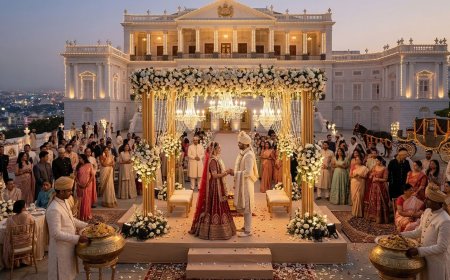
The wedding venue landscape in Shimla is anchored by the heritage properties that the British administration built and that have been operating, in some cases, for well over a century. Wildflower Hall — the former residence of Lord Kitchener, now managed by Oberoi and sitting at Chharabra above Shimla at 2,700 metres — is the most celebrated of these properties, offering the specific combination of Edwardian heritage architecture, Oberoi group service standards, and a mountain setting of extraordinary beauty. The Oberoi Cecil on The Ridge is the second landmark property — the Shimla institution, the hotel that has been at the centre of the town's social history for a hundred years.
The Shimla wedding is the wedding for the NRI couple whose vision is colonial heritage, whose aesthetic references the Edwardian rather than the contemporary, and whose guest profile is comfortable with the altitude and the winter cold. It is not the wedding for the couple who needs a large-format event — Shimla's heritage properties are intimate by design, and their capacities reflect architectures built for a different century's standards of hospitality. The couple who needs three hundred guests in comfort should look at Manali's resort properties or the Kullu Valley's larger estate venues before committing to Shimla.
Manali — The Snow and Adventure Capital
Manali, at 2,050 metres in the Kullu district, is the most internationally recognisable Himachal Pradesh destination — the endpoint of the Manali-Leh Highway, the base for Solang Nala skiing, the starting point for Rohtang Pass and the higher Lahaul and Spiti valleys. Its wedding proposition is built on two specific assets that no other Himachal destination can match simultaneously: the snow and the resort infrastructure.
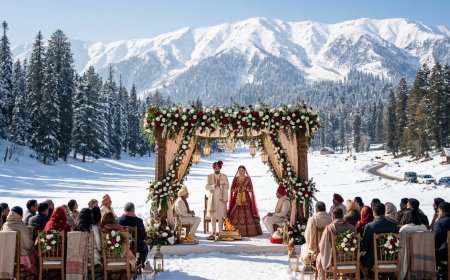
The Solang Nala snow wedding — the ceremony in the snow at the ski resort, with the Dhauladhar range rising above and the Beas Valley below — is the most visually dramatic winter wedding available in Himachal Pradesh, and it requires the most specific logistical preparation of any Himachal wedding format. The snow at Solang Nala begins reliably in December and continues through March, and the ceremony planning must account for the same parameters that the Gulmarg snow wedding requires: compacted ceremony platform, wind-engineered mandap structure, guest thermal provision, photography for snow light conditions, and the indoor alternative that is not an afterthought but a parallel production.
The Manali resort market is the deepest in Himachal Pradesh in terms of event infrastructure — the Span Resort and Spa on the Beas riverside, the various Apple Country Resort properties in the Kullu Valley, the boutique properties in Old Manali and Naggar — and offers more genuine large-format capacity than any other Himachal destination. The couple who needs a hundred and fifty to two hundred guests with accommodation on-site will find the solution more readily in the Manali-Kullu valley than anywhere else in the state.
The Kullu Valley and Apple Orchard Country
The photograph that Meera's aunt sent from the car window — the apple trees heavy in October, the valley below, the mountains above — is the Kullu Valley between Kullu town and Manali, the apple orchard heartland of Himachal Pradesh and the setting for the category of Himachal wedding that has the least established planning vocabulary and the most specific, unreproducible beauty.
The apple orchard wedding is available in a narrow seasonal window — the harvest season from late September through October, when the apples are on the trees and the light has the specific, golden, post-monsoon quality that the valley produces in this period. Outside of this window, the orchard aesthetic is unavailable — the trees are either pre-fruit or post-harvest and bare, and the specific, heavy, golden-lit visual quality of the orchard wedding is specific to these six weeks in a way that admits no seasonal substitution.
The estate and farmhouse properties that make the orchard wedding possible — the private apple estates in Naggar, the traditional Kullvi guesthouses in the valley villages, the boutique heritage properties around Naggar Castle — are not purpose-built wedding venues in the manner of resort hotels. They require independent vendor sourcing, bespoke event management, and the specific, first-principles planning approach that every boutique buyout destination requires. They produce, at their best, the most specifically, authentically Himachali wedding experience available in the state.
Naggar Castle — the sixteenth-century castle of the Kullu rulers, now maintained as a heritage property with accommodation — is the single most historically resonant venue in the Kullu Valley wedding landscape, and the pre-wedding shoot in its stone courtyards and on its terraces above the valley is among the most photographically extraordinary available at any Indian destination.
Dharamsala and McLeod Ganj — The Buddhist Dimension
Dharamsala, the administrative town below McLeod Ganj at approximately 1,457 metres, and McLeod Ganj above it — the seat of the Tibetan government-in-exile, the home of His Holiness the Dalai Lama, the most concentrated Tibetan Buddhist cultural landscape outside of Tibet — offer a wedding destination character that is entirely distinct from every other Himachal option.
The Dharamsala wedding is not the colonial heritage wedding or the snow wedding or the orchard wedding. It is the wedding whose cultural context is the Tibetan Buddhist tradition — the monasteries of McLeod Ganj, the specific visual language of Tibetan thangka painting and prayer flag and butter lamp, the sound of the monastery horns and the chanting, the specific quality of light at this altitude in the Dhauladhar foothills. For the NRI couple with a genuine connection to this tradition — the Buddhist ceremony, the interfaith wedding that incorporates Tibetan elements, the couple who has been in relationship with this specific cultural landscape — Dharamsala offers a depth of cultural context that no other Himachal destination can provide.
The Dharamsala venue market is smaller and less developed for large-format weddings than Shimla or Manali, and the couple planning a Dharamsala wedding must approach it with the boutique, independent-event-management mindset rather than the resort-hotel-package mindset. The Norbulingka Institute in the Kangra Valley below Dharamsala — a centre for Tibetan arts and crafts with accommodation and garden event space — is the most specifically, culturally rich venue available in the area, and the pre-wedding shoot among its Tibetan garden installations is among the most distinctive in any Indian wedding photography portfolio.
Dalhousie and Kasauli — The Quiet Colonial
Dalhousie and Kasauli are the less-frequented colonial hill stations — smaller, quieter, less commercially developed than Shimla, and in possession of a specific, unhurried quality that Shimla's fame and Manali's adventure tourism have somewhat diluted. Dalhousie, at 2,036 metres in the Chamba district, offers the colonial bungalow tradition in its most intact form — the Edwardian houses on the hillside, the church on the ridge, the view across the Ravi Valley to the Dhauladhar range — in a setting that has not been substantially changed by the decades of tourism that have transformed its more famous neighbours.
Kasauli, at 1,795 metres in the Solan district, is the closest of the Himachal hill stations to Chandigarh and Delhi, making it the most accessible for the large-format wedding with a significant number of guests driving up from the plains. Its colonial-era brewery — the Kasauli Brewery, established in 1820 and still operating, the oldest surviving brewery in Asia — is a venue of extraordinary historical character for the pre-wedding event, and the specific, unhurried quality of the town itself makes the multi-day wedding programme easier to pace than at the more tourist-dense destinations.
Spiti Valley — The High-Altitude Desert
Spiti Valley — the trans-Himalayan cold desert at altitudes between 3,000 and 4,500 metres, accessible from Shimla via the Kinnaur route or from Manali via the Rohtang Pass and Kunzum Pass — is not a mainstream wedding destination, and this guide does not present it as one. It is, however, the most dramatically, most specifically, most otherworldly landscape available in Himachal Pradesh, and for the very small number of NRI couples whose wedding vision is the extreme, the austere, the spiritually and geographically intense rather than the comfortable and the conventionally beautiful, Spiti offers something that no other Indian destination can approach.
The Key Monastery at 4,166 metres, the Tabo Monastery with its thousand-year-old frescoes, the Pin Valley's stark desert landscape — these are not wedding venues in any conventional sense. They are places of extraordinary presence, and the couple who plans a small, intimate ceremony in this landscape — twenty to thirty guests at the absolute maximum, managed as a high-altitude expedition as much as a wedding — will produce something that defies the category of destination wedding entirely.
The Seasonal Framework — Himachal's Complex Calendar
The seasonal planning framework for Himachal Pradesh is the most complex of any destination in this guide series, because the state's internal altitude variation — from Kasauli at 1,795 metres to Spiti at over 4,000 metres — means that each distinct destination character has its own distinct seasonal window, and the calendar that governs Shimla is not the calendar that governs Manali, which is not the calendar that governs Spiti.
The primary wedding season across most Himachal destinations is April through June and September through November. The summer window from April through June offers the rhododendrons and the spring warmth before the monsoon arrives in July. The post-monsoon autumn window from September through November offers the clear skies, the specific autumn light, the apple harvest in the Kullu Valley, and the approach of winter snow — the transitional beauty that is, for many couples, the most specifically Himachali aesthetic.
The winter window from December through February is the snow wedding season — available at Shimla with moderate snow, at Manali and Solang Nala with genuine deep snow, and subject to the road access constraints that mountain snow inevitably imposes. The Manali-Chandigarh road via Mandi and the Shimla-Chandigarh road are maintained through winter with greater reliability than the higher-altitude passes. The Rohtang Pass above Manali and the Kunzum Pass above Spiti close for the winter entirely.
The monsoon from July through mid-September brings heavy rainfall to the lower Himachal valleys and moderate rainfall to the higher altitudes, and is not recommended for outdoor wedding programming.
The apple orchard window — the six weeks from late September through October — is the most specifically constrained seasonal window in the Himachal calendar and requires the earliest booking timeline of any Himachal wedding format. The orchard estates that form the venue basis of the Kullu Valley apple wedding are in high demand during the harvest season for reasons that have nothing to do with weddings, and the couple targeting this specific window should begin venue conversations at sixteen to eighteen months.
NRI-Specific Logistics — Planning Himachal Pradesh From Abroad
The Gateway Cities and Access Routes
Himachal Pradesh is accessible from two primary gateway cities — Chandigarh and Delhi — by road, and from Kullu-Manali Airport and Shimla Airport by air, with the significant caveat that both Himachal airports have limited services and are subject to weather cancellations that make them unreliable as the primary gateway for large group arrivals.
The most reliable access route for the majority of Himachal destinations is Chandigarh, which is connected to Delhi by the NH 44 expressway in approximately three to three and a half hours and which has significantly better domestic flight connectivity than either Kullu or Shimla. Chandigarh to Shimla is approximately three hours by road. Chandigarh to Manali via Mandi is approximately eight to nine hours by road. Chandigarh to Dharamsala is approximately four to five hours.
The road journey is not a liability of the Himachal wedding. For the couple whose guests are game for it, the road journey from Chandigarh to Manali — through Bilaspur, Sundernagar, Mandi, and the Kullu Valley — is a programme element in its own right: the landscape revealing itself over eight hours, the river appearing and disappearing, the mountains growing taller and closer, the apple orchards beginning in the Kullu Valley, the air changing quality with every thousand metres of altitude. The convoy approach — a coordinated group of vehicles leaving Chandigarh together, stopping at Mandi for lunch, arriving at Manali in the evening — turns the journey into the beginning of the wedding week rather than the transit to it.
For NRI guests arriving on international flights, the connection is through Delhi — IGI Airport — from which the Chandigarh road is the most reliable onward route. The IGI to Chandigarh expressway journey is approximately five to six hours, which makes the total journey from IGI to a Manali resort approximately fourteen to fifteen hours from landing. This is a genuine commitment, and the couple must design the arrival day programme with this journey time as its primary constraint — the first wedding function cannot be on the arrival day for guests coming from IGI.
The Vendor Ecosystem Across Five Towns
The Himachal Pradesh wedding vendor ecosystem is the most geographically distributed of any destination in this guide series. Rather than a single vendor hub — Chennai for the Andaman events, Alleppey for Mararikulam, Dehradun for Mussoorie — the Himachal vendor market is distributed across Shimla, Manali, Dharamsala, Kullu, and Chandigarh, with each town offering specialists in the specific format that its destination character requires.
Shimla has a small but established heritage event vendor community, with coordinators and decorators whose experience is specific to the heritage hotel format and the colonial-era venue's specific operational requirements. Manali has a larger, more varied vendor community built around the resort and adventure tourism market, with event coordinators whose experience spans the full range of mountain wedding formats from the riverside function to the snow ceremony. Chandigarh, as the nearest major city, offers the deepest vendor market available to any Himachal destination — the photographers, the decorator studios, the sound engineers, the specialist caterers — and the three to nine hour road journey from Chandigarh to the wedding venue is a standard feature of Himachal vendor logistics rather than an exceptional circumstance.
The single most important vendor decision for a Himachal Pradesh wedding is the coordinator, and the coordinator's quality criterion is not their general portfolio depth but their specific, destination-character knowledge. The coordinator who has managed twenty Shimla heritage hotel weddings and zero Kullu Valley orchard weddings is not the right coordinator for the orchard wedding, regardless of their overall competence. The destination-specific knowledge — the vendor relationships in the specific town, the road access logistics for the specific route, the seasonal weather behaviour at the specific altitude — is the qualification that matters, and it must be tested explicitly rather than assumed from a general Himachal Pradesh competence claim.
The NRI Wedding Planning Master Reference Table
| Planning Parameter | Himachal Pradesh-Specific Detail | NRI Action Required | Recommended Timeline |
|---|---|---|---|
| Destination Selection | Six distinct characters: Shimla colonial, Manali snow and resort, Kullu Valley orchard, Dharamsala Buddhist, Dalhousie and Kasauli quiet colonial, Spiti high-altitude desert | Select specific destination character before venue shortlisting; each character has different altitude, season, access, and vendor requirements | First planning decision — before all others |
| Shimla Heritage Venues | Wildflower Hall Oberoi (2,700m, Lord Kitchener heritage), Oberoi Cecil (The Ridge, institutional Shimla), colonial bungalow buyouts | Confirm guest count capacity against heritage property limits; Wildflower Hall maximum 80–100 guests; book 18–20 months ahead for peak season | 18–20 months before wedding |
| Manali Resort Venues | Span Resort and Spa Beas riverside, Apple Country Resort properties, Old Manali boutique properties, Naggar Castle heritage | Manali offers largest event capacity in Himachal; confirm snow ceremony infrastructure if December–February date; walk Solang Nala ceremony site on reconnaissance visit | 14–18 months before wedding |
| Apple Orchard Window | Six-week harvest window late September to October only; Kullu Valley and Naggar estate properties; most constrained seasonal window in guide series | Begin orchard estate venue conversations at 16–18 months; confirm apple harvest timing with property; book immediately — orchard estates in high demand during harvest | 16–18 months before wedding |
| Best Wedding Season | April–June (spring, rhododendrons); September–November (post-monsoon clarity, orchard harvest, autumn light); December–February (snow season, road access constraint) | Match season to destination character: orchard requires October, snow requires December–February, colonial comfort optimal October–November | Season selection drives all other decisions |
| Road Access Assessment | Chandigarh primary gateway: Shimla 3 hrs, Manali 8–9 hrs, Dharamsala 4–5 hrs; Rohtang and Kunzum Passes close in winter; convoy approach for group transfers | Design arrival day programme around actual road journey times from Chandigarh; do not schedule first function on arrival day for Manali guests; plan convoy as programme element | 10–12 months before wedding |
| Gateway City | Chandigarh most reliable gateway for all Himachal destinations; Kullu-Manali Airport and Shimla Airport limited services, weather-dependent | Route all international guests via IGI to Chandigarh road; brief guests on total journey time; arrange Chandigarh assembly point for convoy to venue | 8–10 months before wedding |
| Altitude Management | Shimla 2,205m, Manali 2,050m, Wildflower Hall 2,700m, Solang Nala 2,480m, Spiti 3,000–4,500m; genuine acclimatisation required at all venues | Design Day 1 as arrival and acclimatisation; brief guests on altitude symptoms; have medical support available; pace programme generously for first 24 hours | Built into programme design |
| Snow Ceremony Requirements | Solang Nala and Manali December–February snow reliable; compacted ceremony platform, wind-engineered mandap, guest thermal provision required | Design full indoor alternative simultaneously; brief photographer on snow light; confirm mandap structural engineering for wind and snow load | 8–10 months before wedding |
| Vendor Ecosystem | Distributed across Shimla, Manali, Kullu, Dharamsala, Chandigarh; destination-specific knowledge more important than general competence | Require coordinator to demonstrate specific experience at chosen destination character, not general Himachal Pradesh experience; Chandigarh vendors for specialist photography and decor | 12–14 months before wedding |
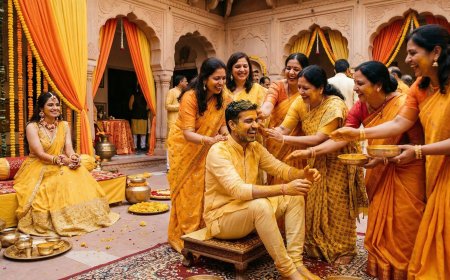
| Kullu Valley Cultural Integration | Kullu Dussehra festival tradition, Kullvi cap and shawl textile craft, local Nati folk dance, Pahari painting tradition, Himachali cuisine of dham feast | Incorporate Nati folk dance performance for evening programme; source Kullvi textiles for decor; commission Pahari miniature painting as wedding gift | 8–10 months before wedding |
| Dharamsala Buddhist Elements | Tibetan monastery visits, thangka painting as decor motif, prayer flag installation, butter lamp ceremony, Norbulingka Institute gardens | Arrange monastery visit as programme element; source Tibetan prayer flags and butter lamps for decor; brief guests on monastery conduct protocol | 6–8 months before wedding |
| Photography Conditions | October orchard light exceptional 9–11 AM; Naggar Castle ruins for pre-wedding shoot; Wildflower Hall cedar forest at golden hour; Solang Nala snow panorama | Brief photographer on Himachal's specific altitude light and season conditions; schedule Naggar Castle pre-wedding shoot; identify golden hour position at chosen venue | 6–8 months before wedding |
| Legal and Payments | Indian Contract Act 1872; Consumer Protection Act 2019; FEMA 1999; Himachal Pradesh revenue department permissions for large outdoor events on agricultural land | Use NRO/NRE account; confirm orchard estate land use permissions for events; require full scope and cancellation clauses in all contracts | Before first vendor payment |
| Communication Protocol | IST gap: UK +4.5 hrs, US East +9.5 hrs, Australia East −5.5 hrs; cellular connectivity variable in mountain valleys; Manali and Shimla adequate, higher altitudes limited | Test cellular connectivity on reconnaissance visit; establish offline communication protocol for mountain event days; schedule weekly coordinator call | From first vendor engagement |
Common Mistakes NRI Couples Make With Himachal Pradesh Destination Weddings
The first and most consequential mistake is choosing Himachal Pradesh without choosing which Himachal Pradesh — committing to the state without selecting the specific destination character, and then beginning the venue search without the foundational decision that determines which venues, which season, which vendors, and which planning framework apply. The couple who tells a coordinator "we want a Himachal Pradesh wedding" and begins looking at venues in Shimla, Manali, and Dharamsala simultaneously is not in the planning process yet. They are in the destination selection process, which is a prior and distinct step, and until it is resolved the planning cannot coherently begin. The destination character selection — colonial heritage, snow ceremony, orchard wedding, Buddhist dimension, quiet colonial, high-altitude desert — must be the first decision, made before any venue is visited or any vendor is contacted.
The second mistake is booking the apple orchard wedding window without understanding its absolute seasonal specificity and the booking timeline that specificity demands. The Kullu Valley apple harvest is a six-week event that happens in late September and October and that cannot be approximated by any other period. The estate properties that form the venue basis of the orchard wedding are in demand during this window for reasons unrelated to weddings — the harvest itself is the primary economic activity of these properties — and the couple who begins orchard estate conversations at eight months before the target October date will find that the properties with genuine orchard character, the small number of traditional Kullvi estates that have the specific combination of old trees and mountain views and heritage architecture, are already committed. Sixteen to eighteen months is the minimum conversation start time for a Kullu Valley October wedding.
The third mistake is underestimating the road journey from Chandigarh to Manali and programming the arrival day without accounting for the eight to nine hours that the journey requires. The couple who schedules a welcome dinner at seven in the evening on the arrival day for guests who are driving from Chandigarh after arriving on morning flights at Delhi is scheduling a dinner for people who will arrive, at best, exhausted and, at worst, still on the road. The arrival day at Manali must be a rest day — unscheduled, unhurried, allowing guests to arrive at whatever point the road delivers them and to recover before the programme begins. The first scheduled programme element must be on the morning of day two, after a full night's rest and the beginning of altitude acclimatisation.
The fourth mistake is neglecting the dham — the traditional Himachali feast — in favour of a generic North Indian wedding menu. The dham is the ceremonial feast of Himachal Pradesh, served at every significant occasion from births to weddings to religious festivals, prepared by the traditional bot community of hereditary cooks using recipes and techniques that have been transmitted through generations, and served on leaf plates in a specific sequence that reflects the state's diverse regional influences: the madra of kidney beans and yoghurt, the khatta of tamarind-soured vegetables, the mah dal, the sepu vadi, the mittha of rice with dry fruits. The Himachal Pradesh wedding that serves a standard North Indian buffet when it could be serving a dham prepared by a bot cook from the village is serving food that has no relationship to the place. The couple who includes one dham function — even one dinner, even one lunch — is making a cultural choice that roots the wedding in its specific geography.
The fifth mistake is treating the Himachal winter road access situation as a planning inconvenience rather than a programme design parameter. The mountain roads of Himachal Pradesh are managed year-round for the primary routes — the Chandigarh-Shimla road, the Chandigarh-Manali road via Mandi — but they are subject to closure after heavy snowfall, subject to landslide disruption in transitional periods, and subject to the specific, non-negotiable authority of mountain weather over human schedules that every Himalayan destination shares. The winter wedding couple must design the programme with genuine weather contingency — not just the indoor backup for the ceremony but the guest accommodation plan for the guests who cannot leave on the planned departure day because the road has been closed by snowfall. This planning is not pessimistic. It is the specific, honest preparation that mountain weddings require and that the couples who have done it correctly describe, when the snow does close the road on departure day, as the element that turned the inconvenience into one more day in the mountains.
The Aesthetic Language of a Himachal Pradesh Wedding
The visual vocabulary of a Himachal Pradesh wedding is not singular — it shifts with the destination character — but it is unified by the specific material culture of a mountain state that has been weaving, painting, building, and celebrating at altitude for centuries.
The Kullu shawl — the hand-woven woollen textile of the Kullu Valley, with its specific geometric border patterns in the earth tones and jewel colours of the Himalayan vegetable dye tradition — is the Himachal Pradesh textile, and its use in the wedding's decor language roots the celebration in its specific geography. The mandap dressed in Kullu shawl fabric, on an apple orchard terrace with the Beas Valley below and the snow peaks above, is the visual statement that no imported fabric can produce in this setting.
The Pahari miniature painting tradition — the specific, refined, Himalayan-school style developed at the courts of the Kullu, Kangra, Chamba, and Basohli hill kingdoms between the seventeenth and nineteenth centuries — offers a design motif of extraordinary elegance for the invitation design, the wedding stationery, and the gifting programme. The Pahari miniature's characteristic palette — the specific greens and blues and ochres and reds of the hill kingdom painting tradition — is the aesthetic register of Himachali courtly culture, and its incorporation into the contemporary wedding is the act of connecting the celebration to a tradition of extraordinary refinement that most NRI couples are unaware exists in the same state as the apple orchards and the ski resorts.
The deodar cedar — the specific Himalayan cedar that lines the upper slopes of the Kullu and Chamba valleys, that gives Shimla's Jakhu ridge its specific, resinous, high-altitude quality, that frames the approach to Wildflower Hall with an avenue of century-old trees — is the tree of Himachal Pradesh, and its presence at the wedding venue is the landscape element that roots the celebration in its specific place more powerfully than any decorator's installation. The couple who chooses the venue partly for the quality of its deodar cedars — their age, their height, the quality of the light they produce at golden hour — is making a design decision of the first order.
Resolution
They were married in the second week of October, on a Saturday morning when the apples were at their absolute peak and the light was exactly what the aunt's phone camera had caught through the car window in the photograph that had started everything.
The estate was in Naggar — not Naggar Castle itself, which was the venue for the sangeet the evening before, the stone courtyards lit with brass diyas and the valley invisible below in the dark — but a private apple estate three kilometres up the valley road, accessible by a track that the decorator's truck had navigated the previous day with some difficulty and considerable determination. The estate's owner — a family that had been growing apples in this valley for four generations — had cleared the grass beneath the oldest trees and levelled the ground and gone away for the weekend with the specific, generous discretion of people who understand what an occasion requires without needing to be asked.
The mandap was bamboo and Kullu shawl and marigolds, and it stood between two apple trees whose branches met above it in a canopy of fruit and October light.
Aarav's grandmother, who was eighty-three and had been born in a village in Himachal Pradesh that she had not returned to in fifty years, sat in the front row in a Kullu shawl that the coordinator had sourced from the weaver in the Kullu bazaar, and she held the fabric between her fingers throughout the ceremony with the specific attention of someone handling something they recognise.
After the ceremony, during the photographs, she walked to the nearest apple tree and stood beside it for a moment with her hand on its trunk. The bark was old and rough and the tree was heavy with fruit. The mountains above the valley were dusted with the first snow of the approaching winter, not deep yet, just enough to remind you that the season was turning.
Meera found her there.
The grandmother did not say anything for a moment. She was looking at the mountains.
Then she said, in Hindi: "I had forgotten that it looked like this."
Meera looked at the apples, the light, the mountains.
"Does it look the same?" she asked. "As when you were young?"
The grandmother considered this.
"The mountains look the same," she said. "The apples look the same. The light looks the same." She was quiet for a moment. "The people are different. But the place is the same."
She turned to Meera.
"That is why you come back," she said. "Not because the people are the same. Because the place is."
Choose which Himachal Pradesh before you choose a venue — the decision is foundational and every other planning choice depends on it. Begin orchard estate conversations at sixteen months if October is the target. Design the arrival day as a rest day for Manali guests — the road is eight hours and the altitude is real. Include the dham at one function. Source the Kullu shawl for the mandap. Walk the venue at ceremony hour on the reconnaissance visit — the apple tree light will tell you everything.
Himachal Pradesh contains more distinct wedding destination characters than any other state in India. The colonial and the alpine and the orchard and the Buddhist and the desert — all within one state, all asking to be chosen deliberately rather than by default.
Choose with intention. Plan with precision. Let the mountains be what they are.
They will give you a grandmother touching an apple tree in October light, fifty years after she left, and saying: the place is the same.
That is enough. That is more than enough.
Published by NRIWedding.com — The Premium Global Platform for Non-Resident Indians Planning Indian Weddings From Abroad.
What's Your Reaction?
 Like
0
Like
0
 Dislike
0
Dislike
0
 Love
0
Love
0
 Funny
0
Funny
0
 Angry
0
Angry
0
 Sad
0
Sad
0
 Wow
0
Wow
0