




















































Destination Wedding in Jim Corbett: A Jungle Tiger Reserve Wedding That Your Guests Will Never Forget — The Complete NRI Planning Guide
Planning a destination wedding in Jim Corbett National Park from abroad? This complete NRI guide covers everything the globally-located Indian couple needs — from boutique jungle lodge buyouts and river camp weddings to Uttarakhand Forest Department noise and lighting regulations, Ramnagar guest transportation logistics, Delhi vendor distance premiums, and the seasonal planning windows that make or break a tiger reserve wedding. Learn how to integrate wildlife safaris into your wedding programme, work within the forest's regulatory framework creatively, and manage a complex jungle destination event across time zones and continents. This is the specific, expert, non-generic guidance that a Jim Corbett destination wedding demands.

Destination Wedding in Jim Corbett, Uttarakhand — A Jungle Tiger Reserve Wedding That Your Guests Will Never Forget
Her mother had sent seventeen venue links in a single WhatsApp message at eleven-forty-three on a Wednesday night, Delhi time, which meant Shreya was reading them at six-thirteen in the morning in Toronto, standing in her kitchen in socks, waiting for the coffee to finish. The links were a familiar taxonomy by now — four Rajasthan palace hotels, two Goa beach resorts, one farmhouse in Chattarpur that had been suggested three separate times by three separate relatives as though repetition would eventually produce enthusiasm, and a Jaipur property described in the accompanying text as "very filmy, you will love it, Rohan Mehra stayed there."
Shreya opened them in order, with the patient attention of someone who has been doing this for six months and has learned to look past the photography and into the specifics: guest capacity, accommodation count, road access, the quality of the indoor backup space. She had a spreadsheet. The spreadsheet had seventeen tabs. The spreadsheet was the closest thing she had to a sense of control over a process that was being managed across three time zones, two countries, and the competing aesthetic convictions of four parents who agreed on almost nothing except that the wedding should be, in the words of her future father-in-law, "something people remember."
She almost missed the eighteenth link. It had been added at the bottom of the message with no description, no context, not even a sentence — just a URL, as though her mother had pasted it in as an afterthought and then gone to sleep before she could explain why. Shreya opened it on her phone while the coffee poured.
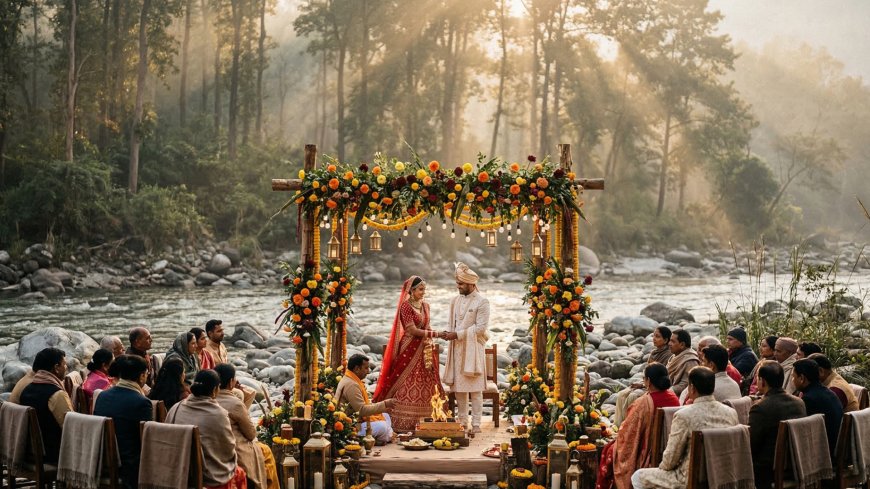
The website loaded slowly. The first photograph that appeared was not of a ballroom or a manicured lawn or a swimming pool. It was a river — wide, shallow, running over smooth pale stones, with dense forest on both banks and a wall of sal trees rising beyond. In the foreground, a string of diyas had been placed along a low stone ledge, and their light was doing something extraordinary in the blue hour before dawn, doubling itself in the water's surface. There were no people in the photograph. There was no wedding. There was just the river, the forest, the light, and the absolute, total silence that you could somehow feel through the screen.
Shreya put her coffee down.
She read the property name, looked it up, read it again. Jim Corbett National Park. Ramnagar, Uttarakhand. A jungle resort on the buffer zone of India's oldest and most storied tiger reserve, the forest where Jim Corbett himself had walked in the early twentieth century writing the books that would make him famous, the protected landscape where Bengal tigers still moved through the sal and rohini in the early morning, indifferent to the category of human need that had been organized around them.
She forwarded the link to Vikram in Mumbai with a single message: Look at this.
He called her four minutes later. "This is not a wedding venue," he said.
"I know," she said.
"This is a jungle."
"I know."
"Our families are going to lose their minds."
There was a pause. Shreya looked at the photograph of the river again — the diyas, the sal trees, the water going still and silver in the early light.
"Yes," she said. "But imagine if we did it anyway."
This guide is for that couple — the ones who looked at the jungle and said yes anyway, and who now need to understand, with full precision and complete honesty, what saying yes to Jim Corbett actually means.
Why Jim Corbett Is Unlike Any Other Indian Wedding Destination
The conversation about Indian destination weddings has a vocabulary that has become, through repetition, almost meaningless. Heritage. Luxury. Unique. Memorable. These words appear in the marketing material of every venue from a Jaisalmer fort to a Coorg coffee estate, and they have been smoothed by overuse into something that communicates nothing specific at all.
Jim Corbett is different in ways that the vocabulary of destination wedding marketing is genuinely not equipped to describe, because what makes it different is not a quality of architecture or cuisine or service but a quality of place — a wildness, a depth, a biological and historical reality that no amount of event design can replicate or replace, and that exists independently of any wedding that happens to be held within it.
Established in 1936 as Hailey National Park and renamed in 1957 to honour the hunter-turned-conservationist whose writing brought the Kumaon hills to international attention, Corbett is the oldest national park in India and one of the founding sites of Project Tiger, the conservation programme launched in 1973 that has been credited with saving the Bengal tiger from extinction. The park covers over five hundred square kilometres of forest, grassland, and riverine habitat in the Ramnagar division of Uttarakhand, and it supports one of the highest densities of Bengal tigers of any protected area in the world.
For the NRI couple, the significance of this context is not merely romantic. It is logistical, regulatory, and specific. A wedding held at a resort on the buffer zone of a tiger reserve operates under a set of conditions — wildlife proximity, noise restrictions, lighting regulations, forest department permissions, accommodation constraints — that have no equivalent at any other category of Indian destination wedding venue. Understanding these conditions before the venue is booked is not optional preparation. It is the foundational act of planning, and the couples who skip it discover its importance under circumstances that are considerably less comfortable than a planning conversation.
At the same time, what Jim Corbett offers in return for the complexity it requires is genuinely without parallel in the Indian wedding landscape. The sensation of waking in a forest before dawn and hearing the alarm call of a spotted deer moving through the undergrowth is not something that can be manufactured by any decorator or event designer. The sight of the Ramganga river at golden hour, the light coming through the sal canopy in the morning, the temperature drop that happens in the forest after sunset — these are not amenities. They are the place itself, offering the wedding a context so specific and so alive that guests will remember it not as a backdrop to the celebration but as a participant in it.
The Venue Landscape — What Jim Corbett's Buffer Zone Actually Offers
The Luxury Jungle Resorts
The wedding venue market around Corbett is concentrated in two primary zones: the area around Dhikuli and Marchula on the western and southern edges of the buffer zone, and the stretch along the Kosi River road approaching from Ramnagar. The properties in these zones range from internationally managed luxury resorts with full event infrastructure to smaller, owner-operated jungle lodges with ten to twenty rooms and an intimacy that the larger properties cannot replicate.
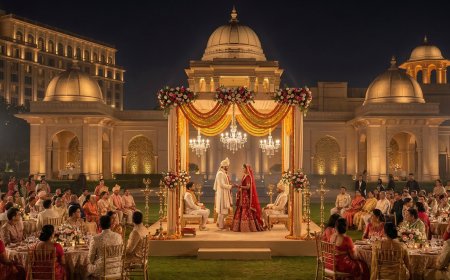
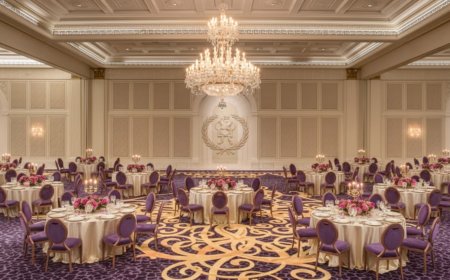
The largest of the luxury resorts in the Corbett buffer zone can accommodate wedding functions of three hundred to four hundred guests, with banquet infrastructure, dedicated event lawns, and in-house catering operations that have experience managing multi-day wedding programmes. These properties have done the regulatory work of obtaining the necessary forest department permissions for events, and their event teams understand the specific operational constraints of the location — the noise curfews, the lighting restrictions, the generator protocols — in a way that removes a significant burden from the couple's coordinator.
What these properties cannot offer, by definition, is the intimacy and the specific wildness of the smaller jungle lodge. The couple who books a four-hundred-person wedding at a large Corbett resort is having a wedding in a beautiful setting near a jungle. The couple who books a complete buyout of a twenty-room jungle property on the river is having a wedding inside the jungle's logic, governed by its rhythms, shaped by its specific and non-negotiable character.
The Boutique Lodge Buyout
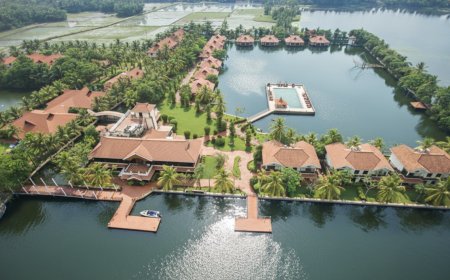
The boutique jungle lodge buyout is the most distinctively Corbett wedding experience available, and it is the option that requires the most planning sophistication to execute well from abroad. These properties — typically ten to twenty-five rooms, riverfront or deep forest settings, owner-managed with a small permanent staff — are not designed as wedding venues. They are designed as wildlife lodges, and their conversion to wedding use for a three to five day programme requires careful coordination between the couple's team and the property management.
The guest limit for a boutique buyout is determined by the accommodation capacity of the property, and for NRI couples whose family expectations around wedding guest counts are substantial, this constraint is the first and most important conversation to have. A twenty-room property can comfortably host forty to fifty guests in residence, with a further thirty to forty day guests for specific functions. The wedding that requires three hundred and fifty guests in attendance cannot be a boutique jungle lodge buyout. The wedding that can genuinely be designed around eighty to one hundred guests — immediate family, closest friends, the people whose presence means something specific — can be one of the most extraordinary events any of those people will ever attend.
River Camp Weddings
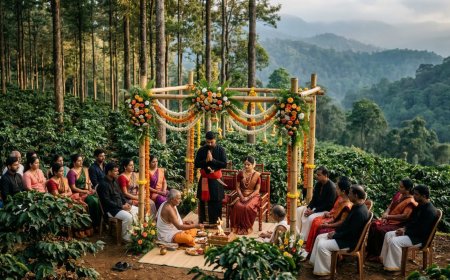
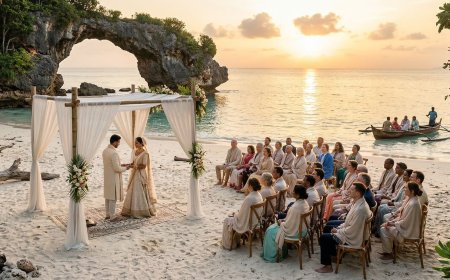
A third category, emerging in the last four years and growing significantly in interest among younger NRI couples, is the purpose-configured river camp wedding — a temporary luxury camp structure installed on the Ramganga or Kosi riverbank for the duration of the wedding programme, with tent accommodation, open-air ceremony structures, and the river itself as the primary architectural element. These camps require the most extensive permitting and the most operationally sophisticated vendors, but they produce an aesthetic and experiential result that is genuinely unlike anything else in the Indian destination wedding landscape.
The Regulatory Framework — What the Forest Means for Your Wedding
This section exists because it is the section most consistently absent from the online resources that NRI couples consult when researching Jim Corbett weddings, and its absence produces a specific category of planning crisis that is avoidable with the right information applied early enough.
The Jim Corbett National Park and its buffer zone are governed by the Wildlife Protection Act, 1972, and by the regulations of the Uttarakhand Forest Department. Wedding events at properties within or adjacent to the buffer zone are subject to oversight that covers noise levels, lighting specifications, the use of generators, the timing of outdoor functions, and in some cases the number of vehicles permitted on forest roads serving the property. The specific requirements vary by property location, by season, and by the nature of the event, and they must be researched in relation to the specific property being considered rather than assumed from general principles.
The noise restriction is the most operationally significant. The forest department's guidelines for properties within the buffer zone impose sound level limits that are considerably lower than the decibel levels produced by a standard Indian wedding band, a DJ setup, or a brass baraat. This does not mean that music is impossible at a Corbett wedding. It means that the music must be planned, structured, and amplified within the permitted parameters — which, in practice, means acoustic and semi-acoustic performances, curated sound design rather than amplified bands, and the creative decision that the natural soundscape of the forest is itself an element of the programme rather than a silence to be filled.
The couple who designs their Corbett wedding around the sound restriction, rather than against it, will produce something more memorable than the couple who fights it. The jungle at night has its own music — the cicadas, the river, the occasional distant alarm call — and a wedding that uses this soundscape rather than overriding it creates an atmosphere that no amount of production budget can manufacture at any other location.
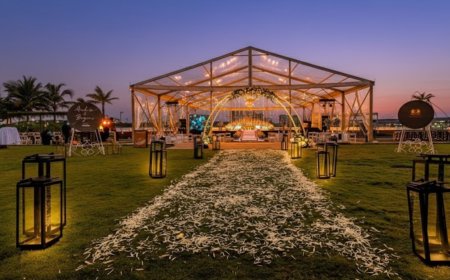
The lighting restriction is similarly significant. Bright artificial lighting that disoriects nocturnal wildlife is prohibited in the buffer zone, which means that the floodlit wedding lawn, the DJ lighting rig, and the dramatic uplighting that characterize the visual production of many Indian destination weddings must be replaced with approaches that are lower in intensity and warmer in colour temperature. In practice, the best Corbett wedding lighting uses candles, diyas, string lights at low lumen values, and lanterns — and the result is a visual quality that is softer, more intimate, and more genuinely beautiful than the production-heavy alternatives.
The Seasonal Planning Framework
November to February: The Primary Season
The winter months from November through February represent the peak season for Corbett weddings, and for reasons that go beyond simple weather preference. The forest in winter is at its most active for wildlife sightings — the grass is shorter after the monsoon growth has died back, visibility through the understorey is greater, and animals concentrate around water sources in the drier months. The temperature is cool and clear, ranging from eight to twenty-two degrees Celsius, with the cold arriving properly after sunset and requiring guests to be dressed for it. This temperature drop is not a liability — it is the thing that makes the bonfires, the shawls, the warmth of being gathered together in the forest feel meaningful rather than merely aesthetic.
The primary wedding season at Corbett aligns approximately with the primary season at most northern Indian destinations, which means that the best properties and the best vendors are in peak demand from mid-November through early February. Booking timelines of sixteen to twenty months for the most sought-after dates are not unreasonable, and the NRI couple who begins serious planning with twelve months to go should be prepared to find that their first-choice property is already committed on their preferred dates.
March to May: The Shoulder Season
March and April offer a viable alternative window. The forest is warm and dry, the light is excellent for photography, and the wildlife remains visible before the summer heat drives animals deeper into the shade. May is hot — temperatures reach thirty-five to thirty-eight degrees Celsius — and the outdoor ceremony programme must be designed around the cooler morning and evening hours rather than the midday heat.
The Monsoon and Its Prohibition
June through September brings the southwest monsoon to Uttarakhand with an intensity that renders both jungle access and outdoor event planning genuinely impractical. Many Corbett resorts reduce operations or close partially during the peak monsoon months, forest roads become difficult, and the river levels rise in ways that affect riverside property access. The monsoon is not a Corbett wedding season.
NRI-Specific Logistics — The Framework That the Distance Demands
The Three-Visit Protocol for Corbett
The reconnaissance visit for a Jim Corbett destination wedding must include a jungle safari, and this is not a frivolous suggestion. The couple who has walked the forest road at dawn, who has sat in the jeep in the early morning and watched the mist lift off the Ramganga, who has experienced the specific sensory reality of the Corbett landscape before they commit to it as the setting for their wedding, is making a fundamentally different decision than the couple who has chosen it from photographs. The jungle has a physical presence — smell, sound, temperature, the quality of its silence — that no amount of digital content can convey, and that presence will be the dominant experience of the wedding for every guest who attends. The couple must know it before they can plan it.
The follow-up visit, four to six months before the wedding, is the operational visit: decor reviews, catering tastings, ceremony layout walks, wildlife guide briefings, and the coordination meeting with the forest department liaison that every serious Corbett wedding coordinator will have on their vendor list. The arrival for the wedding itself should be five to seven days before the first function — not because Corbett logistics are slower than other destinations, but because the forest has a pace that the body needs time to adjust to, and the couple who arrives two days before the wedding and immediately begins managing final preparations will spend their wedding in a state of exhaustion rather than presence.
The Ramnagar Gateway — Understanding the Access Point
Ramnagar is the nearest town of significance to the Corbett resort zone, sitting at the park's southern edge and serving as the operational hub for supplies, vendor access, and guest arrivals. The nearest airport is Pantnagar, approximately eighty kilometres from Ramnagar, which operates limited services from Delhi. The majority of guests and vendors arrive either by road from Delhi — approximately two hundred and fifty kilometres, typically a five to six hour drive — or by train to Ramnagar station, which is served by several trains from Delhi and Kathgodam.
For the NRI couple, the guest arrival logistics are more complex at Corbett than at almost any other destination wedding location in India, because the last stretch of road — from Ramnagar into the resort zone — passes through the buffer zone on roads that are narrow, unmarked for the unfamiliar traveller, and entirely without the signage and infrastructure of a commercial resort corridor. Every guest must have a specific, detailed arrival brief, with pickup coordination from Ramnagar or a designated road transfer point, managed by the couple's ground team. The assumption that guests will find their own way is not merely optimistic at Corbett. It is a recipe for the specific anxiety of watching your wedding programme begin while a third of your guests are lost on a forest road somewhere between Ramnagar and the lodge.
Vendor Access and the Distance Premium
The specialist wedding vendor ecosystem for Corbett events is sourced from two primary locations: Ramnagar itself, which has a small but experienced community of event support vendors with specific Corbett experience, and Delhi, from which photographers, cinematographers, decorators, mehendi artists, and specialist caterers travel for Corbett events. The Delhi vendors represent the highest quality tier but also the highest cost tier, because the travel, accommodation, and per diem for a team of eight to twelve people spending four to five days at a Corbett property represents a significant addition to the base vendor rate.
The calculation the NRI couple must make is between the local vendor ecosystem — adequate in most categories, specifically experienced in Corbett conditions, significantly lower in total cost — and the Delhi vendor market — higher in quality ceiling, specifically capable of the contemporary aesthetic that many NRI couples want, significantly higher in total cost. The honest answer is that the best Corbett weddings typically use a hybrid: a Delhi-based lead photographer and cinematographer whose work the couple has specifically chosen, local or Ramnagar-based event support vendors for logistics and catering, and a coordinator who has Corbett-specific experience and relationships regardless of where they are headquartered.
The NRI Wedding Planning Master Reference Table
| Planning Parameter | Jim Corbett-Specific Detail | NRI Action Required | Recommended Timeline |
|---|---|---|---|
| Venue Categories | Luxury jungle resort (200–400 guests), boutique lodge buyout (40–100 guests), river camp (80–150 guests) | Finalize guest count before venue shortlisting; confirm forest department event permissions with venue | 14–18 months before wedding |
| Best Wedding Season | November to February (peak); March–April (shoulder); avoid June–September (monsoon) | Book peak season dates 16–20 months ahead; confirm wildlife safari availability for guests during stay | 16–20 months for peak dates |
| Regulatory Requirements | Wildlife Protection Act 1972; Uttarakhand Forest Department noise, lighting, and vehicle regulations | Assign regulatory compliance to coordinator with Forest Department experience; confirm property's event NOC status | 10–12 months before wedding |
| Noise Restrictions | Buffer zone sound limits lower than standard wedding band/DJ output; outdoor amplified music restricted after specific hours | Design music programme around acoustic and semi-acoustic performances; use natural soundscape as programme element | 8–10 months before wedding |
| Lighting Restrictions | Bright artificial lighting restricted to protect nocturnal wildlife; no floodlighting or DJ rigs in buffer zone | Plan decor around candles, diyas, low-lumen string lights, lanterns; brief decorator on Corbett lighting parameters | 6–8 months before wedding |
| Guest Transportation | Ramnagar is access hub; forest roads narrow and unmarked; no independent guest navigation recommended | Coordinate pickup from Ramnagar railway station or Delhi road convoy; provide every guest with detailed arrival brief | 6–8 months before wedding |
| Accommodation Limits | Boutique lodges: 10–25 rooms; luxury resorts: 60–120 rooms; overflow in Ramnagar town or Marchula | Block all accommodation at venue and overflow properties immediately after venue confirmation | 12–14 months before wedding |
| Primary Vendor Base | Local Ramnagar vendors for support categories; Delhi vendors for specialist photography, decor, mehendi | Use hybrid model: Delhi specialists for creative leads, local vendors for operational support; confirm Corbett experience | 10–12 months before wedding |
| Wildlife Safari Integration | Safari zones open October–June; Dhikala zone requires advance permit booking; jeep capacity 6 persons | Book guest safari slots as part of wedding programme; assign safari coordinator; brief guests on forest conduct protocol | 6–8 months before wedding |
| Catering Logistics | Large-scale catering requires supply run from Ramnagar daily; specialty ingredients from Delhi 1–2 days in advance | Conduct in-person tasting at follow-up visit; confirm cold storage capacity at property; plan menu around locally available produce | 6–8 months before wedding |
| Photography Conditions | Golden hour light in sal forest is exceptional; Ramganga riverbank shoots at dawn; tiger sighting not guaranteed but possible | Brief photographer on forest light and blue hour conditions; schedule pre-wedding river shoot at dawn; confirm drone permit with forest department | 6–8 months before wedding |
| Legal and Payments | Vendor contracts under Indian Contract Act 1872; NRI payments via FEMA 1999; forest camp structures may require additional municipal clearance | Use NRO/NRE account for INR payments; include full scope, milestones, and cancellation clauses; verify vendor's GST registration | Before first vendor payment |
| Bonfire and Outdoor Fire | Open fires subject to forest department approval in buffer zone; seasonal fire risk restrictions apply in dry months | Confirm bonfire permission with property before including in programme; have covered alternative for evening gathering | 6–8 months before wedding |
| Communication Protocol | India IST gap: UK +4.5 hrs, US East +9.5 hrs, Australia East −5.5 hrs; Corbett resorts may have limited connectivity | Test property Wi-Fi and cellular connectivity on reconnaissance visit; establish satellite or backup communication plan for critical wedding days | From first vendor engagement |
| Reconnaissance Visit | Must include a dawn jungle safari to experience Corbett conditions before committing | Book tiger reserve entry permit in advance; allocate minimum 3 nights for reconnaissance to properly assess property and surroundings | 12–14 months before wedding |
Common Mistakes NRI Couples Make With Jim Corbett Destination Weddings
The first mistake — and it is made with remarkable consistency — is treating the noise and lighting restrictions as problems to be negotiated around rather than creative parameters to be designed within. This mistake originates in the assumption that a Corbett wedding is a standard destination wedding that happens to be located near a forest, and that the forest's regulatory requirements are bureaucratic obstacles rather than the defining character of the location. Couples who spend energy trying to find workarounds — sound systems that technically fall within the limit but push against it, lighting rigs that are dimmed from their full output rather than replaced with appropriately scaled alternatives — produce weddings that feel constrained rather than curated. The couples who design their programme explicitly around the acoustic intimacy and the candlelit darkness that the restrictions require consistently produce weddings that their guests describe as the most beautiful they have ever attended.
The second mistake is underestimating the guest arrival complexity and leaving transportation to individual arrangement. Corbett's forest roads are not self-navigating for guests arriving from cities, and the combination of poor cellular connectivity, unmarked junctions, and the genuine possibility of encountering wildlife on the road between Ramnagar and the resort zone makes individual guest navigation both unreliable and, in some circumstances, genuinely inadvisable. The transportation plan for a Corbett wedding must be treated as a coordinated programme element, with designated pickup points, confirmed vehicle allocations, and a ground coordinator physically present at the Ramnagar collection point on every arrival day.
The third mistake is booking a venue without confirming the specific event permissions that the property holds. Not every Corbett buffer zone resort has obtained the full set of Uttarakhand Forest Department permissions required for multi-day wedding events, and the difference between a property that holds these permissions and one that does not is the difference between a wedding that proceeds as planned and one that faces last-minute regulatory complications of the most stressful variety. The NRI couple should require the venue to provide documentary evidence of event permissions as a condition of the venue contract, and should have this documentation reviewed by a local advocate familiar with the Wildlife Protection Act before the booking deposit is paid.
The fourth mistake is failing to integrate the wildlife experience into the wedding programme as a designed element. Most Corbett destination weddings include safaris as an optional activity — something guests can do if they want to, organized loosely for whoever is interested. The weddings that truly use Corbett as a location, rather than merely staging at it, design the safari as a programme centrepiece: a dawn game drive on the morning after the wedding night, guides briefed to contextualize the forest's history and ecology, the experience organized and anticipated rather than improvised. The guest who goes on a safari at a Corbett wedding as part of a designed, meaningful experience will remember it alongside the ceremony itself. The guest who joins a loosely organized jeep at seven in the morning because there was nothing else to do will remember it as a pleasant bonus.
The fifth mistake is choosing a large resort for the wrong reasons — specifically, the belief that a larger guest count produces a better wedding. The intimate physics of a Corbett wedding, the forest's indifference to scale, the way the wildlife and the landscape assert their presence most powerfully when the human gathering is small enough to be part of the forest rather than imposed upon it — all of these argue for a smaller, more curated guest list than the couple's initial instinct may suggest. The NRI couple who arrives at Corbett with eighty people who all genuinely wanted to be there will have a profoundly different experience than the couple who arrives with three hundred and fifty guests, the majority of whom are fulfilling social obligation rather than celebrating personal connection. This is true of every destination wedding. At Corbett, it is truer than anywhere else.
The Aesthetic Language of a Jim Corbett Wedding
The visual and sensory vocabulary of a Corbett wedding begins not with the decorator's mood board but with the forest itself, and the most coherent Corbett wedding aesthetics are the ones that have been designed in response to the specific, non-generic character of that landscape.
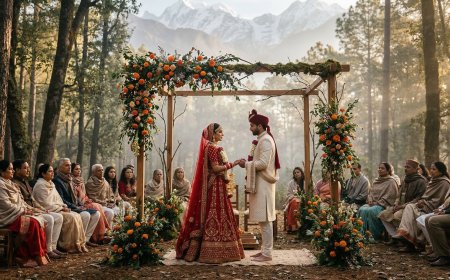
The colours of the Corbett forest are the colours of a living ecosystem: the grey-green of sal leaves, the pale gold of dry winter grass, the terracotta of the riverbank soil, the silver of the Ramganga in early morning. Against these colours, the warm tones of wedding ritual — the saffron of the mandap, the deep red of the bridal lehenga, the marigold of the flower arrangements — carry with a force that no ballroom or palace courtyard can produce, because the contrast is not between decoration and architecture but between human ceremony and wild nature.
The textures are those of the organic and the handmade: stone, bamboo, river reed, handwoven cotton, raw silk, terracotta. The decorator who brings polished chrome and synthetic florals to a Corbett wedding is working against the location. The decorator who uses locally foraged materials, natural dyes, and textures that belong to the landscape is working with something that will amplify everything they do.
The Kumaoni cultural tradition of Uttarakhand, in which Ramnagar sits, offers a rich and underused aesthetic resource for NRI couples who want the wedding to belong specifically to its geography. Aipan — the traditional Kumaoni folk art painted in red and white on thresholds and walls for auspicious occasions — offers a mandap design direction, an invitation motif, a decor language that is specific to this precise place in the world. The couple who incorporates Aipan into their wedding design is not making a generic "traditional Indian" aesthetic choice. They are making a choice that says, specifically: we were married here, in this forest, in this culture, and the wedding knows where it is.
Resolution
They were married in December, on a Sunday morning when the fog was sitting low on the Ramganga and the sal trees were standing in it like very patient witnesses.
Shreya had been awake since four-thirty. Not with nerves — she had passed through nerves somewhere around the third week of November and come out the other side into something calmer and more certain. She was awake because the forest was awake, because the sounds of it at four-thirty in the morning were so specific and so alive that she had stopped being able to treat them as background and had started listening to them as content. A barking deer somewhere across the river. The first bird, whose name she did not know, beginning its call in the darkness above the tree line. The river itself, which did not stop.
Vikram found her on the veranda at five-fifteen with two cups of tea. He had not been asleep either.
"Your mother is already up," he said.
"I know. I heard her telling someone on the phone that the venue was 'very jungly.'"
"It is very jungly."
"Yes."
They sat in the fog and drank their tea and listened to the forest getting louder as the light arrived, and neither of them said anything that needed to be said, because the forest was saying something better, and they both knew it.
The safari that the guests took in the afternoon, after the ceremony and the lunch, produced no tiger. It produced, instead, a herd of elephants crossing the Ramganga at the bend in the river below the lodge, the water white around their legs, the light coming sideways through the sal trees, and eighty people in twelve jeeps going completely and utterly silent in the way that only genuine wildness makes humans do.
Shreya's future mother-in-law, who had initially described the venue choice as "eccentric," caught Shreya's arm on the way back to the lodge and held it for a moment without speaking. Then she said: "I have never seen anything like this in my life."
Which was exactly what Shreya had hoped she would say, on that morning in Toronto when she was standing in her kitchen in socks, looking at a photograph of a river.
Choose the jungle that asks something of you. Finalize your guest list before your venue. Hire a coordinator who has stood in that forest before you have. Build your music and your lighting around what the forest permits, not against it. Go on the dawn safari as part of the wedding, not as an afterthought.
Jim Corbett will not perform for you. It will simply be itself — ancient, indifferent, and more beautiful than anything you could have designed. Your only task is to plan carefully enough that your wedding can stand beside it.
Published by NRIWedding.com — The Premium Global Platform for Non-Resident Indians Planning Indian Weddings From Abroad.
What's Your Reaction?
 Like
0
Like
0
 Dislike
0
Dislike
0
 Love
0
Love
0
 Funny
0
Funny
0
 Angry
0
Angry
0
 Sad
0
Sad
0
 Wow
0
Wow
0