

































































How Many India Trips Does It Really Take to Plan Your NRI Wedding?
One of the most practical questions every NRI couple faces is how many trips to India are genuinely needed to plan a wedding from abroad. This expert guide breaks down the complete visit framework — from the Foundation Trip at 12 to 14 months out, to the Confirmation Trip at five to seven months, through to the pre-wedding arrival. It covers what can be managed remotely, what requires physical presence, and how to extract maximum value from every trip. Built specifically for NRIs in the USA, UK, Canada, UAE, and Australia planning a destination wedding in India.

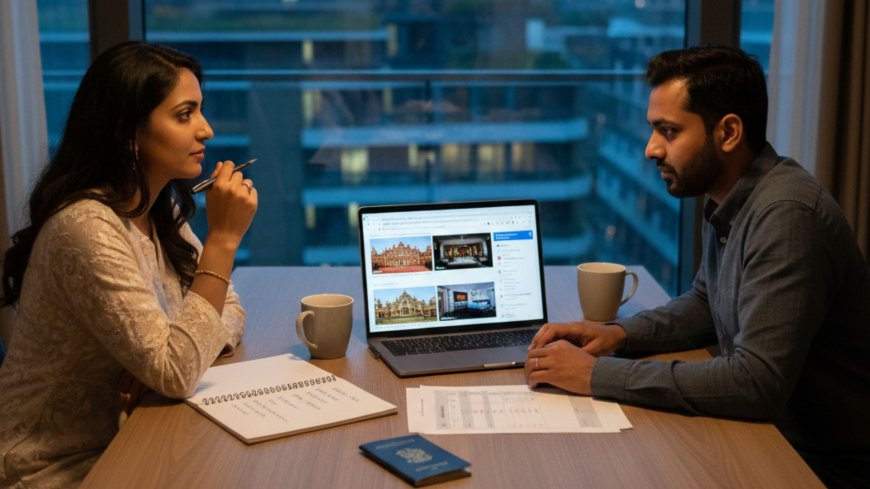
You are sitting in your apartment in Sydney or Seattle or Slough. It is late. Your laptop has seventeen browser tabs open — venues in Jaipur, photographers in Mumbai, a Pinterest board your mother sent that has nothing to do with what you actually want.
You have been engaged for six weeks. You have done a respectable amount of research. You have had two video calls with a wedding planner and one very long phone call with your father about the guest list.
And then, almost involuntarily, the question surfaces.
How many times do I actually need to go to India for this?
It is not a small question. It is, in many ways, the most operationally significant question of your entire planning process. Because every trip to India costs money — flights from London or Toronto or Dubai are not incidental expenses. Every trip costs vacation days — and most NRIs are working with a finite annual leave balance that has to cover not just planning visits but also the wedding week itself. Every trip carries an emotional weight — the re-entry into family dynamics, the pressure to make progress, the expectation that you will come back with decisions made.
Get the answer wrong in one direction — too few visits — and you arrive at your wedding week having never properly seen your venue, having met your key vendors only on screen, having made decisions at a distance that feel abstract until they are suddenly, irreversibly real.
Get it wrong in the other direction — too many unstructured visits — and you have burned vacation days, money, and relationship capital on trips that were poorly planned and produced fewer decisions than a well-run video call could have.
The answer, as with most things in NRI wedding planning, is not a number. It is a framework.
The right question is not how many times do I need to visit. It is what does each visit need to accomplish, and how do I ensure that every trip to India moves the planning forward in a way that remote coordination cannot replicate.
This article answers that question in full.
It will tell you what the typical NRI visit pattern looks like, what each visit should accomplish, how to extract maximum value from every trip, what you can genuinely handle remotely, and what absolutely requires your physical presence. By the end, you will have a clear, confident answer — not just a number, but a strategic map of how your visits to India should be structured to produce the wedding you are planning.
The Core Reality: Why This Question Is More Complex Than It Appears
Most generic wedding planning advice — the kind written for couples who live in the same city as their wedding — does not address this question at all. It assumes physical access is continuous. It assumes you can visit a venue on a Saturday afternoon, pop into a florist on your lunch break, or attend a final décor walkthrough the evening before the event.
You cannot. And the entire architecture of your planning process has to be built around that reality.
For NRI couples planning a destination wedding in India, the visit question sits at the intersection of several competing pressures that need to be understood before they can be managed.
The Vacation Day Constraint
Most employed NRIs in the UK, US, Canada, or Australia have between 15 and 25 days of annual leave. Wedding planning typically spans 12 to 18 months. The wedding week itself — including travel, recovery, and the multiple functions that precede the main ceremony — will consume at least 10 to 14 of those days in the final year. What remains for planning visits is genuinely limited.
This means every planning trip needs to function at a high level of efficiency. A poorly planned visit — one where you arrive without a clear agenda, spend three days managing family dynamics, see two venues, and return without a signed contract — is not just inefficient. It is a loss that cannot be fully recovered.
The Financial Reality
Return flights from London to Mumbai, or Toronto to Delhi, or Sydney to Hyderabad, range from expensive to very expensive depending on season and booking window. When you factor in accommodation, local transport, and the inevitable incidental costs of being in India with wedding planning on the agenda, each trip represents a real financial commitment.
This is not an argument for fewer visits. It is an argument for better-structured visits.
The Emotional Intensity
Every trip to India in the context of wedding planning is emotionally loaded. You are returning to family. You are navigating two sets of parents, potentially from different cities. You are making decisions that are simultaneously personal and collective, creative and logistical, exciting and exhausting. You may be managing a dynamic between families that has its own history and its own unspoken rules.
The NRI couples who use their India visits most effectively are those who arrive with clear agendas, defined decision authorities, and a planner who can manage the logistical layer while the couple manages the relational one.
The Strategic Framework: A Visit-by-Visit Blueprint for NRI Wedding Planning
Rather than thinking about a number, think about visits as phases. Each visit has a job. Each builds on the work done remotely between visits. Each produces specific, documented outputs that move the planning forward.
Here is the framework that experienced NRI couples and professional wedding planners consistently identify as the most effective structure.
Visit One: The Foundation Trip (12–14 Months Before the Wedding)
Primary Purpose: See, assess, decide on the venue. Begin vendor relationships.
This is your most important trip. The decisions made — or not made — during this visit shape everything downstream.
What this visit must accomplish:
Venue confirmation is the non-negotiable output of Visit One. Everything else in your planning — your date, your guest capacity, your catering structure, your décor scope, your vendor access — is downstream of the venue. Venue availability in premium Indian cities for peak season windows tightens 12 to 14 months in advance. Arriving at this visit without a shortlist already prepared through remote research is a planning failure before the plane has landed.
Come to this visit with three to five venues already researched virtually. Use the trip to see them in person, ask the questions that a video tour cannot answer — how does the space feel at the time of day your functions will run? What is the ambient noise situation? How does the flow work for a guest count your size? — and walk away with either a signed contract or a clear first and second choice with a decision timeline.
Beyond venue, this visit is for beginning vendor relationships, not finalising them. Meet with two to three photographers. Have an initial conversation with a décor house. Sit with your wedding planner in person if you have retained one remotely. The goal is to move from screen-based impressions to in-person assessments across your core vendor categories.
This visit is also your first real opportunity for in-person family alignment. Use it. Conversations about guest lists, family expectations, cultural protocols, and non-negotiables are more productive face-to-face than over video call. Set the collaborative tone while you are present to manage it in real time.
Duration: 7 to 10 days minimum. Less than this and you will not have time to absorb what you are seeing and make considered decisions.
What to prepare before arriving:
- Venue shortlist with virtual tours completed
- A written agenda for every day with specific goals
- A list of decisions you are empowered to make on this trip versus those requiring further family consultation
- Your wedding planner briefed and attending key meetings with you
Visit Two: The Confirmation Trip (5–7 Months Before the Wedding)
Primary Purpose: Finalise vendors. Confirm all major decisions. Outfit fittings.
By the time Visit Two arrives, the heavy structural decisions should already be made. The venue is booked. Your planner is retained. Your vision is documented. You have a working guest count and a confirmed function list.
This visit is about confirmation and detail, not discovery.
What this visit must accomplish:
Finalise your vendor contracts across all remaining categories — photography, décor, catering if not venue-inclusive, entertainment, hair and makeup. Do not leave this visit with open vendor decisions. The window between five months and the wedding shrinks faster than it feels like it will.
Bridal fashion is a critical component of this visit. If you are working with a custom designer — and most NRI brides are, for at least the primary wedding outfit — your first fitting and design finalisation needs to happen here. Custom pieces require four to six months from confirmed brief to completion. This visit is the latest responsible window for beginning that process.
Use this visit for a detailed walkthrough of each function with your planner. Not a creative conversation — a logistical one. What is the exact timing of each function? Who is responsible for what? What is the contingency if something goes wrong? Where are the decision points and who holds authority at each one?
This is also the visit to have the difficult family conversations you have been managing remotely. If there are unresolved tensions between families about the wedding vision, the guest list, or the function structure — address them now, in person, with the time and emotional space to reach genuine resolution.
Duration: 5 to 7 days. More focused than Visit One, but not rushed.
Visit Three: The Pre-Wedding Arrival (1–2 Weeks Before the Wedding)
Primary Purpose: Arrive. Settle. Final confirmations. Be present.
This is not a planning visit. By the time you arrive for Visit Three, planning should be complete.
What this visit is for: a final walkthrough of each venue with your planner, confirmation that every vendor is briefed and prepared, a final bridal fitting, and — critically — settling into the emotional experience of what you are about to celebrate.
The NRI couples who most fully enjoy their wedding week are those who arrived early enough to decompress before the events began, who had a planner capable of absorbing the final logistics, and who gave themselves explicit permission to be present rather than operational.
Arrive at least 7 to 10 days before your first function. The first few days will involve family, final confirmations, and the low-grade controlled chaos that precedes every Indian wedding. Give yourself enough runway that this period does not feel like a sprint from the moment you land.
Duration: 10 to 14 days, inclusive of wedding week.
The Optional Visit: The Reconnaissance Trip (Pre-Engagement or Very Early Post-Engagement)
Some NRI couples — particularly those who have been in a long-term relationship and have a sense that an engagement is approaching — use a family visit or holiday as an informal reconnaissance trip. Not a planning visit, but a visit where you begin developing a picture of the landscape: which venues feel right, which cities resonate, what the current market looks like.
This is not necessary. But for couples who have the opportunity, it compresses the work required in Visit One and allows that first formal planning trip to move faster toward decisions.
What You Can Genuinely Manage Remotely
Understanding what requires physical presence is equally important to understanding what does not. One of the most common inefficiencies in NRI wedding planning is assuming that certain decisions require a trip when they can be handled — properly, professionally — from abroad.
Vendor Research and Shortlisting
The entire research and shortlisting phase for every vendor category can be conducted remotely. Virtual tours, portfolio reviews, detailed video call consultations, reference checks with previous clients — all of this produces a well-informed shortlist that dramatically compresses the decision time you need during a physical visit.
Initial Planner Engagement
Retaining a wedding planner can be done entirely through remote communication. Initial conversations, reference verification, proposal review, and contract signing can all happen virtually. You do not need to be in India to make this decision.
Guest Communication and Management
Your entire guest communication infrastructure — save-the-dates, invitation design approvals, travel guidance documents, accommodation recommendations — can be managed from abroad.
Budget Management and Vendor Payment
Most professional vendors in Indian metro cities with NRI client experience have structures in place for international payments. Your planner can manage payment disbursements on your behalf. This does not require your physical presence.
Décor Briefing and Concept Approval
Initial décor concepts, mood boards, fabric and colour approvals, and design revisions can all be handled through video calls and shared visual documents. You will want to do a physical walkthrough at some point — but the conceptual work preceding it can happen entirely remotely.
What Absolutely Requires Your Physical Presence
Venue Selection
A venue tour on a screen and a venue tour in person are fundamentally different experiences. The way a space feels — its proportions, its acoustics, its light at different times of day, the experience of moving through it as a guest — cannot be fully assessed through video. Sign no venue contract without visiting in person.
Bridal Outfit Fittings
Custom bridal wear requires multiple in-person fittings. The first fitting — where the initial design is assessed on your actual body — cannot happen remotely. Plan your India visit timing around this.
Final Vendor Decisions for High-Stakes Categories
Photography and décor in particular benefit from in-person assessment. A photographer's portfolio tells you what they can produce. An in-person conversation tells you who they are and how they work under pressure. For categories where the human relationship matters as much as the technical output, meet in person before committing.
Family Alignment Conversations
The conversations that carry real emotional weight — about non-negotiables, about cultural protocol, about how families will work together during the wedding week — are more productive and more durable when they happen in person. Do not attempt to resolve significant family tensions over video call.
Common Mistakes NRIs Make Around Their India Visits
Arriving Without a Written Agenda
The single most expensive mistake NRI couples make with their India visits is arriving with a general sense of what they want to accomplish rather than a structured, day-by-day agenda with specific goals, scheduled meetings, and clear outputs.
A week in India without an agenda produces a week of conversations, a few venue viewings, family meals, and a return journey with very little actually decided. The same week with a structured agenda — pre-scheduled vendor meetings, specific decision targets for each day, a planner managing the logistics — can produce a venue contract, a shortlisted photographer, and a confirmed guest count.
Build your agenda before you book your flights. If the agenda is not clear enough to justify the trip, do more remote preparation first.
Using Family Visits as Planning Trips Without Preparation
Many NRI couples piggyback planning onto family visits — Diwali trips, Christmas visits, family occasions. This is not inherently a mistake. But it becomes one when the planning component is not properly prepared in advance.
A family visit with some planning attached produces family time and some planning. If your planning visits are structured as family visits with planning bolted on, your planning will always come second. Make an explicit decision: is this a family visit or a planning trip? If it is both, create a protected planning schedule within it and hold to it.
Not Briefing Your Planner Before Each Visit
Your planner should be doing significant preparatory work before you arrive. Vendor shortlists confirmed. Meetings scheduled. Venue availability verified. Questions prepared. A planner who is briefed thoroughly a month before your visit can compress three weeks of on-the-ground discovery into three days of structured decision-making.
Trying to Do Too Much in One Visit
The temptation, given the cost and vacation day expenditure of each trip, is to pack every visit with as many tasks as possible. This produces diminishing returns. Decision fatigue is real. The quality of decisions made on day eight of a packed India visit is meaningfully lower than those made on day two.
Build margin into each visit. Not laziness — margin. Time to absorb what you have seen. Time to have an unscheduled conversation with your partner about how things are feeling. Time for the decisions to settle before you commit to them.
The Emotional Reality of Going Back
Every trip to India during the wedding planning period carries an emotional dimension that has nothing to do with logistics.
You are returning, repeatedly, to the place your family comes from — or the place you come from. You are doing so in the context of one of the most significant cultural rites your family observes. You are navigating the gap between the life you have built abroad and the traditions you are returning to honour.
That gap can feel wide sometimes. It can surface questions about identity, about belonging, about how well you actually know the culture you are trying to celebrate. NRI couples often describe a specific kind of emotional fatigue after planning visits to India — not from the logistics, but from the constant code-switching between their daily international life and the deeply Indian context they step back into.
This is not a problem to solve. It is an experience to acknowledge.
Give yourself recovery time after each India visit. Not just physical recovery from jet lag, but emotional recovery from the intensity of what each visit involves. The couples who pace themselves across the planning period — who treat each visit as a chapter rather than a race — arrive at the wedding week significantly more present and significantly more at peace.
The NRI Visit Planning Checklist
Before Every India Visit:
- Written day-by-day agenda with specific decision outputs
- All vendor meetings pre-scheduled by your planner
- Relevant documents prepared and shared with your planner in advance
- Key family conversations identified and mentally prepared for
- Hotel or accommodation confirmed separately from family stay if focus requires it
During Visit One:
- See all shortlisted venues in person
- Sign venue contract or establish clear decision timeline
- Meet initial vendor shortlist across all major categories
- Have in-person family alignment conversations
- Begin bridal fashion preliminary research if timeline permits
During Visit Two:
- Finalise and sign all remaining vendor contracts
- Complete first bridal fitting and confirm design
- Detailed function-by-function walkthrough with planner
- Resolve any outstanding family decisions
- Final guest list confirmation
During Visit Three (Pre-Wedding):
- Final venue walkthrough with planner
- Final bridal fitting
- Confirm all vendor briefings are complete
- Arrive early enough to decompress before functions begin
- Hand logistics to your planner and be present for the experience
It Is Not About the Number
The question of how many times to visit India is, in the end, a question about intentionality.
Three well-structured, properly prepared visits will achieve more than five rushed, agenda-free trips. Two visits with a strong planner on the ground and rigorous remote preparation between them can produce a flawlessly planned wedding. The number matters less than the quality of thinking and preparation you bring to each one.
What every India visit in the context of NRI wedding planning requires is the same thing that every great planning decision requires: clarity about what you are trying to accomplish, structure that supports that goal, and the discipline to do the preparation that makes the visit count.
You are planning something extraordinary from a significant distance. The fact that you are asking this question — thinking about your visits strategically rather than reactively — already puts you ahead of most.
Plan the visit before you book the flight. Brief your planner before you land. Arrive with an agenda and leave with decisions made.
The rest will follow.
What's Your Reaction?
 Like
0
Like
0
 Dislike
0
Dislike
0
 Love
0
Love
0
 Funny
0
Funny
0
 Angry
0
Angry
0
 Sad
0
Sad
0
 Wow
0
Wow
0