


























































The NRI Venue Booking Reality Check: How Far in Advance Is Actually Far Enough?
Booking the right venue is the single most time-sensitive decision in any NRI wedding plan — and most couples move too slowly. This expert guide breaks down exactly how far in advance NRIs should book Indian wedding venues, category by category and city by city. From heritage palaces in Rajasthan requiring 18 to 22 months, to five-star hotel ballrooms in Mumbai and Delhi needing 12 to 16 months, this is the complete venue booking timeline for NRI couples planning a destination wedding in India from the USA, UK, Canada, UAE, and Australia.


You found the venue in a Instagram reel at 1am.
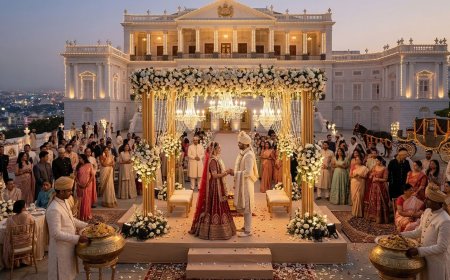
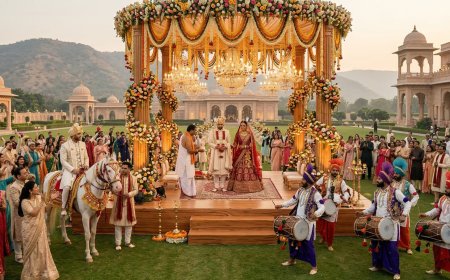
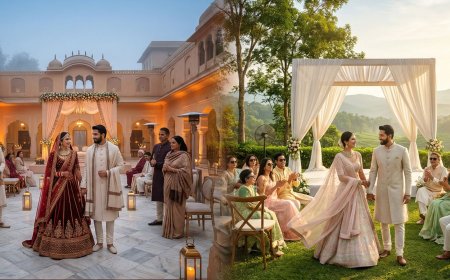
A sprawling heritage property in Rajasthan. Sandstone courtyards draped in evening light. Arched corridors that looked like they had been built specifically for the kind of wedding you had been quietly imagining for years. You screenshot it immediately, sent it to your partner, and fell asleep thinking about marigolds and marble and the look on your mother's face when she walked in.
Three days later, you emailed the property.
They wrote back within 24 hours. Professional, warm, and carrying the specific kind of sentence that rearranges your entire planning timeline in a single paragraph.
We are fully booked for the October through February season. Our next available weekend dates are 22 months from now.
Twenty-two months.
You had been engaged for eleven weeks.
This is not an unusual story. It is, in fact, one of the most common experiences that NRI couples encounter in the early stages of planning an Indian wedding from abroad. The venues that photograph beautifully, that carry the atmosphere you are looking for, that have the capacity and the infrastructure to host a multi-function Indian wedding at the standard you are envisioning — those venues are not waiting for you. They are being booked, right now, by couples who got engaged six months before you did and moved faster than you realised you needed to.
The question of how far in advance NRIs should book their Indian wedding venue is not a logistical technicality. It is the foundational timing question of the entire planning process. Get it right and everything downstream — your date, your vendors, your guest travel planning, your budget management — has a solid address to build on. Get it wrong and you are either scrambling for alternatives that were not your first choice, or you are pushing your wedding date back by a year to access the property you actually want.
This article gives you the complete, honest answer. Not a generic recommendation, but a real understanding of how the Indian wedding venue market works, why it operates the way it does, what the differences are between venue categories and cities, and exactly what the booking timeline looks like for NRI couples planning from abroad.
By the end of this, you will know not just when to book — but why that timing matters, what happens if you miss it, and how to move efficiently from engagement to venue confirmation even when you are coordinating from the other side of the world.
The Core Reality: Why the Indian Wedding Venue Market Works Differently
Before you can understand the right booking timeline, you need to understand the market you are operating in. The Indian wedding venue landscape — particularly in metro cities and premium destination locations — does not function the way most NRI couples initially expect it to.
Demand Is Structurally Concentrated
Indian weddings are not evenly distributed across the calendar year. They cluster — heavily, predictably — within specific windows determined by auspicious dates, weather patterns, and cultural tradition.
The primary wedding season runs from mid-October through mid-February. This window accounts for the overwhelming majority of high-end Indian weddings. Within it, specific dates — those identified as particularly auspicious by the Hindu calendar, or those falling on long weekends — carry demand that is exponentially higher than surrounding dates.
The secondary wedding season runs briefly in spring, approximately late April through early June before the monsoon arrives. This window is smaller and carries different atmospheric conditions that are not suitable for all venue types.
Outside these windows, demand drops sharply. If your wedding falls in a shoulder period, your booking timeline is less pressured. But most NRI couples — coordinating international travel for guests, managing their own leave schedules, and wanting favourable weather conditions — are targeting the primary season. And in the primary season, the best venues are operating at or near full capacity.
Supply at the Premium End Is Genuinely Limited
The venues that NRI couples typically want — heritage hotels and palaces, luxury resort properties, purpose-built wedding estates with multiple function spaces, five-star hotel ballrooms with outdoor ceremony capacity — represent a limited and essentially fixed supply.
No new heritage palace is being built. No additional five-star hotel can open in central Mumbai in the time between your engagement and your wedding. The supply of premium Indian wedding venues is constrained, and the demand against it increases every year as the NRI community grows and as Indian weddings become increasingly visible globally.
This supply-demand imbalance is the structural reason why booking timelines are as long as they are. It is not inefficiency in the market. It is arithmetic.
NRI Couples Are Competing With Locally-Based Couples Who Move Faster
Here is the dynamic that most NRI couples do not fully appreciate until they experience it directly: you are not only competing with other NRI couples for venue availability. You are competing with locally-based Indian families for whom venue booking is significantly easier.
A family based in Mumbai who has a child getting engaged can visit three venues the following weekend, sign a contract the week after, and secure their preferred date within a month of the engagement. They do not need to coordinate international travel windows, clear leave schedules, or manage a time zone gap in their communications.
NRI couples frequently lose preferred venues to locally-based families not because they were less motivated but because the structural frictions of distance created a gap between intention and action that a locally-based competitor did not have.
Understanding this is not a reason for panic. It is a reason for deliberate speed at the right moment.
The Strategic Framework: Venue Booking Timelines by Category
Not all venues operate on the same timeline. Understanding the booking landscape by venue category gives you a realistic picture of where your specific choice sits in the urgency spectrum.
Category One: Heritage Palaces and Destination Properties
Recommended Booking Window: 14 to 22 months in advance
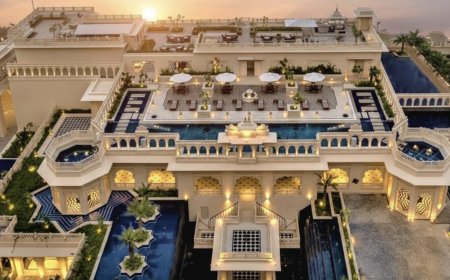
This category — the iconic Rajasthan palaces, the heritage havelis, the luxury hilltop properties — represents the extreme end of the booking timeline. Many of these properties have only one or two event spaces capable of hosting a full Indian wedding, which means they have a limited number of bookable weekends per season.
The most sought-after properties in this category — certain palace hotels in Udaipur, Jaipur, and Jodhpur, specific heritage resorts in Goa, hill station properties in Mussoorie or Coorg — routinely book out 18 months in advance for peak season dates. For the most desirable specific dates, 22 months is not uncommon.
If this category is on your list, you need to be in active communication with properties before your engagement ink is dry. Serious enquiries should begin within the first four weeks of getting engaged. Many properties will allow you to hold a date with a refundable deposit while your planning solidifies — use this mechanism.
For NRI couples, the remoteness of many destination properties adds an additional consideration: your first India visit, which should include a physical venue inspection, needs to happen quickly if you are targeting this category. You cannot sign a contract for a two-day heritage wedding without having walked the property.
Category Two: Five-Star Hotel Venues in Metro Cities
Recommended Booking Window: 12 to 16 months in advance
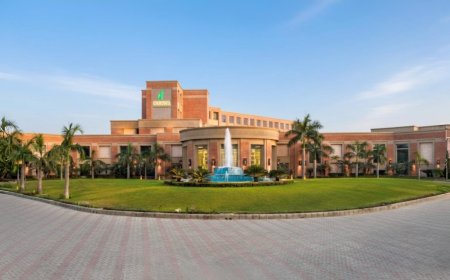
The premium hotel ballroom and banquet market in Mumbai, Delhi, Bangalore, Hyderabad, and Chennai is large but heavily contested. The specific properties that combine location, reputation, multi-function capacity, and accommodation infrastructure are a finite group, and they are perpetually in demand.
At 12 months out, you are working within a reasonable but not comfortable window. At 10 months, you are beginning to lose your preferred dates. At eight months, you may be working with whatever is available rather than what you want.
The practical implication for NRI couples: if you are targeting a five-star hotel venue in a metro city for a peak season date, your first India visit needs to be timed to allow a venue decision and deposit within three to four months of your engagement. This is earlier than most couples feel ready to move.
The good news: five-star hotel properties tend to have the most professional administrative infrastructure in the Indian wedding venue market. Contracts are standardised, international payment processes are established, and communication with overseas clients is generally more structured. This makes remote coordination of the pre-visit stages more reliable.
Category Three: Standalone Banquet Halls and Wedding Venues
Recommended Booking Window: 10 to 14 months in advance
This category — purpose-built wedding venues, large banquet halls, dedicated event spaces — is the broadest and most diverse segment of the Indian wedding venue market. Quality, infrastructure, and price range vary enormously within this category.
At the premium end of this segment, booking timelines approach those of five-star hotels. Venues with strong reputations, established vendor networks, and multiple function spaces in major cities will see peak season dates committed 12 to 14 months in advance.
At the mid-market end, eight to ten months provides a workable window — though your preferred specific dates may still be under pressure.
The risk in this category for NRI couples is quality variance. Without the brand assurance of a five-star hotel, assessing a standalone venue remotely is significantly harder. This makes the physical inspection visit even more essential, and makes the role of a local wedding planner or trusted family member with on-the-ground access more important.
Category Four: Farmhouses, Private Estates, and Exclusive-Use Properties
Recommended Booking Window: 10 to 18 months in advance
Private farmhouses and exclusive-use estate properties — particularly in the Delhi NCR region, on the outskirts of Mumbai, and in destination locations — have become increasingly popular for NRI weddings over the past decade. They offer privacy, exclusivity, and the ability to bring in your own vendor ecosystem without the restrictions that hotel properties often impose.
The booking timeline for this category varies more than any other. A genuinely premium private estate with a strong reputation for hosting large Indian weddings may book as far out as any palace property. A farmhouse that has only recently entered the wedding market may have more availability.
The due diligence requirement for this category is the highest. Contracts need to be scrutinised carefully — what is included, what are the vendor restrictions, what are the contingency arrangements, what is the payment and cancellation structure. Your planner's expertise is particularly valuable in navigating this category.
City-Specific Considerations for NRI Couples
Venue booking timelines are not uniform across India. The specific city you choose shapes the competitive landscape you are navigating.
Mumbai
Mumbai's premium venue market is among the most competitive in India. The combination of a large, affluent local wedding market, high NRI family concentration, and limited geography means that the best properties are perpetually oversubscribed. For peak season dates in Mumbai, 14 months should be considered the minimum comfortable booking window. Twelve months is workable but pressured. Ten months begins to significantly constrain your options.
Delhi and NCR
Delhi and the surrounding NCR region — Gurgaon, Noida, and the farmhouse belt — has a large and varied venue market. While the most sought-after properties still require 12 to 14 months, the sheer volume of available venues means that couples who begin at 10 to 11 months still have meaningful options. The NCR farmhouse market in particular tends to have more availability than comparable categories in Mumbai.
Bangalore and Hyderabad
Both cities have growing premium wedding venue markets that, while competitive, are not yet as constrained as Mumbai or Delhi for most property types. Ten to twelve months provides a comfortable window for most couples in these cities, with 12 to 14 months recommended for the most sought-after properties.
Rajasthan Destination Venues
As noted above, Rajasthan destination properties operate at the extreme end of the booking timeline. The combination of limited supply, very high global demand, and the intense concentration of demand on specific auspicious dates means that 18 months should be treated as the standard, not the ambitious end of the window.
Goa
Goa's venue market has its own seasonal logic shaped by the monsoon. The primary wedding window is October through March. Premium beachfront and resort properties in Goa with strong wedding infrastructure are heavily contested during this window and warrant a 12 to 16 month booking timeline for the best options.
The NRI-Specific Timeline: What This Looks Like in Practice
Understanding the abstract timeline is one thing. Understanding what it means practically for an NRI couple coordinating from abroad is another.
Here is what the venue booking process needs to look like for NRI couples targeting a peak season Indian wedding.
At Engagement (Month Zero)
Begin remote research immediately. Not casually browsing — structured research. Identify your target city and venue category. Build a shortlist of eight to ten properties based on virtual tours, website portfolios, and initial enquiries. This research can and should begin before your first India visit.
Send initial availability enquiries to your shortlisted venues within the first two to four weeks of engagement. Not booking requests — availability checks for your target season and approximate date range. This tells you immediately which properties are still viable and creates a relationship with venue coordinators before the formal booking process begins.
At One to Three Months Post-Engagement
Your first India visit should be timed to allow physical venue inspections within this window. For peak season targets, this is not comfortable — it is necessary. Couples who push their first India visit to the four to six month mark are routinely finding their preferred options are gone.
Use your first visit to see your shortlisted venues in person. Walk every property on your list. Do not skip properties because you are fairly confident about them from the virtual tour — in-person inspection consistently reveals things that screens do not.
Make a venue decision on this visit, or within two weeks of returning. The gap between leaving India and signing a contract is where venues get lost to other couples.
At Three to Four Months Post-Engagement
Venue contract signed, deposit paid, date confirmed. This is the output of a well-executed early planning phase. If you arrive at month four without a signed venue contract, you are already working in a compressed timeline.
With your venue confirmed, every other planning decision — vendors, guest planning, travel logistics — has a real address. This is when the rest of your planning can properly begin.
Common Mistakes NRIs Make Around Venue Booking
Waiting Until the First India Visit Is Perfectly Planned
The perfect India visit is the enemy of the timely venue booking. Many NRI couples delay initiating venue conversations because they feel they are not ready to have them — they have not finalised their vision, they have not confirmed their budget, they have not retained a planner.
Begin venue availability enquiries remotely before any of those things are perfectly in place. An availability enquiry does not commit you to anything. It tells you what is possible, keeps you in relationship with venue coordinators, and ensures that when you are ready to move you are moving with current information.
Treating All Venues as Equally Available
Not all venues are under the same booking pressure. A couple who is genuinely flexible about venue category and prepared to consider a wider range of properties has significantly more availability to work with than a couple who has narrowed their vision to three specific iconic properties.
Know which category you are targeting and calibrate your urgency accordingly. If heritage palaces are on your list, move fast. If you have genuine flexibility across venue types, you have more room.
Relying on Family to Manage Venue Enquiries
NRI couples frequently ask family members in India to make enquiries and manage early conversations with venue coordinators on their behalf. This is understandable and sometimes necessary. It also produces slower, less professional communication that can signal a lower commitment level to venue coordinators.
A professional wedding planner making enquiries on your behalf moves faster, communicates more effectively, and is taken more seriously by venue sales teams than a relative making informal enquiries. If you have retained a planner — and you should have by this point — they should be managing venue communications.
Not Reading Contracts Carefully for NRI-Specific Clauses
Venue contracts for Indian wedding properties vary significantly in their quality and fairness. Cancellation clauses, force majeure terms, vendor restriction policies, overtime charges, and payment schedules all need scrutiny. For NRI couples, the international payment terms and currency arrangements also need to be clearly established.
Do not sign a venue contract without either your planner or a legal professional reviewing it. The financial exposure of a venue contract is significant enough to warrant this level of diligence.
The Emotional Weight of the Venue Decision
For many NRI couples, the venue is not merely a location. It is the physical expression of the entire wedding vision. It is the backdrop against which one of the most significant chapters of your family's story will unfold. It carries weight that goes well beyond its function as a booking on a calendar.
This emotional significance can make the decision harder than it logically needs to be. Couples delay committing because no venue feels quite perfect enough. They hold out for a property that is not available, or agonise between options that are genuinely excellent, or feel that signing the contract makes something irreversibly real in a way that feels both exciting and frightening.
The venue decision deserves care and consideration. It does not deserve indefinite deferral.
The property that is 85 percent of your vision and available on your preferred date is almost certainly a better choice than the property that is 100 percent of your vision but unavailable. Because the venue is the container for the wedding — and a beautiful container, filled with the right people, the right atmosphere, and the right intention, will feel extraordinary on the day regardless of how perfectly it matched your original mental image.
Give yourself the time to choose well. Do not give yourself the time to lose the choice entirely.
Practical Venue Booking Checklist for NRI Couples
Immediately After Engagement:
- Define your target city and venue category
- Establish your approximate guest count and function list
- Set your target wedding season window
- Begin remote venue research and shortlisting
Within First Four Weeks:
- Send availability enquiries to eight to ten shortlisted venues
- Retain or begin seriously engaging a wedding planner
- Book your first India visit with venue inspections as the primary agenda
During First India Visit:
- Physically inspect all shortlisted venues
- Ask specific questions about: vendor restrictions, what is included, payment structure, date flexibility, accommodation capacity for guests
- Narrow to a first and second choice before leaving
Within Two Weeks of Returning:
- Make final venue decision
- Review contract terms carefully
- Pay holding deposit to secure date
At Three to Four Months Post-Engagement:
- Venue contract fully signed
- Date confirmed
- Begin all downstream vendor planning with confirmed venue details
The Venue Is the Foundation — Treat It Like One
Every other decision in your wedding planning process is downstream of your venue. Your date lives inside the venue's availability. Your vendor choices are shaped by the venue's restrictions and infrastructure. Your guest travel planning is built around the venue's location. Your budget is calibrated against the venue's pricing.
This is why the venue booking question is not a logistical detail. It is the foundational timing question of your entire planning experience.
The NRI couples who plan their Indian weddings with the most grace and the least stress are almost universally those who moved on the venue decision faster than felt comfortable at the time. They began enquiries before they felt fully ready. They committed before the planning picture was perfectly clear. They trusted that the downstream decisions would follow — and they did.
You do not need to have everything figured out before you begin venue conversations. You need a city, a season, a rough guest count, and the willingness to move.
The venue you want is available right now, to someone. Make sure that someone is you.
What's Your Reaction?
 Like
0
Like
0
 Dislike
0
Dislike
0
 Love
0
Love
0
 Funny
0
Funny
0
 Angry
0
Angry
0
 Sad
0
Sad
0
 Wow
0
Wow
0