

























































First Time in India: The NRI Couple's Complete Guide to Creating an India Travel Tips Booklet for International Wedding Guests
The country arrives all at once — the heat, the noise, the scale, the specific operational logic of a place that is genuinely unlike anything a first-time visitor has navigated before. The NRI couple whose wedding brings first-time visitors to India has a specific opportunity to fill the knowledge gap before it becomes an experience gap. This guide delivers a complete framework for creating an India travel tips booklet covering pre-departure medical and document preparation, airport arrival and the journey to the hotel, daily life guidance on water and food safety, money and payments, transportation, safety, cultural conventions, city-specific practical information, and a complete emergency reference section — everything a first-time visitor needs to move through India confidently and be fully present at the wedding.


India Travel Tips Booklet: What to Share with First-Time Visitors
The NRI couple's complete guide to creating the travel companion that transforms a first-time visitor's India experience from overwhelming to genuinely extraordinary — with the specific knowledge that experienced travelers take for granted and first-time visitors desperately need
The Country That Arrives All at Once
There is a specific quality to arriving in India for the first time that almost everyone who has done it describes in similar terms, regardless of where they came from or how much they had read or how many people had told them what to expect.
It arrives all at once. The heat, the noise, the scale, the smell, the color, the specific density of human activity that is unlike anything most Western cities produce even at their most crowded. The airport exit into the arrivals hall. The wall of faces. The taxi drivers. The specific disorientation of a sensory environment that is genuinely unlike any previous experience, encountered at the end of a twelve or sixteen or twenty-two hour journey in a state of physical exhaustion that makes every new piece of information feel more demanding than it would otherwise.
Most first-time visitors to India manage this arrival. They find their driver or their taxi, they reach their hotel, they sleep, and in the morning the country begins to reveal itself as the extraordinary place it is rather than the overwhelming one it briefly appeared to be.
But the period between the arrival and the morning — and the first few days of navigating a country whose specific operational logic is genuinely different from the one the visitor is accustomed to — is where the knowledge gap between experienced India travelers and first-time visitors is most consequential.
The NRI couple whose wedding brings first-time visitors to India has a specific opportunity — and a specific responsibility — to fill that knowledge gap before it becomes an experience gap. The India travel tips booklet is how that filling happens.
This guide gives NRI couples the complete framework for creating it.
What the Travel Tips Booklet Is and Is Not
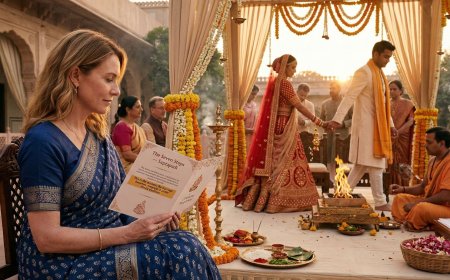
The India travel tips booklet is a standalone companion to the welcome booklet described elsewhere in this series — focused specifically on the practical India travel knowledge that first-time visitors need to navigate the country confidently, rather than the wedding-specific information that the welcome booklet covers.
It is not a travel guide. It does not cover the history, the culture, the must-see attractions, or the philosophical dimensions of India as a destination. Lonely Planet, Rough Guide, and a dozen other comprehensive India travel guides do this very well. The India travel tips booklet does not compete with them.
It is practical, specific, operational knowledge — the things that experienced India travelers know that first-time visitors do not, the things that are not covered in general travel guides because they are too specific to be interesting to most readers, and the things that make the difference between a first-time visitor who manages India confidently and one who spends the wedding weekend managing low-level anxiety about everything from whether the water is safe to drink to how much to tip the hotel driver.
The booklet should be short enough to be read completely — thirty to forty pages at A5 size is the practical maximum for a document that is genuinely read rather than referenced selectively. Every piece of information in it should be there because a first-time visitor genuinely needs it, not because it is interesting or because the writer knows it and wants to share it.
Section One: Before You Leave Home
The Documents to Carry
The specific documentation that every traveler to India should carry — not just have accessible on a phone, but have in physical paper form — is the first piece of practical guidance the booklet should provide.
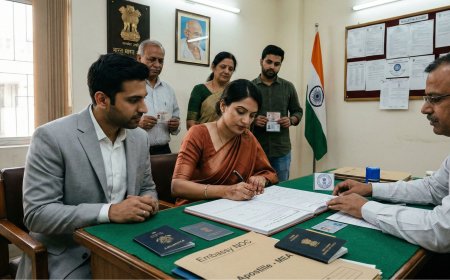
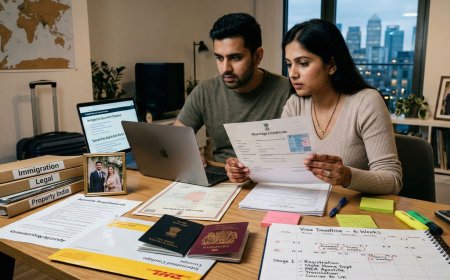
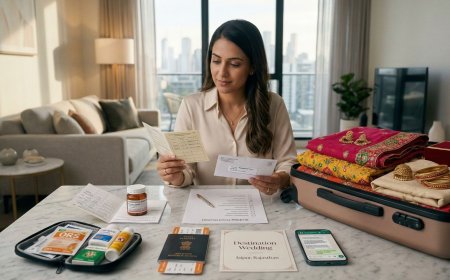
Every traveler should carry: a printed copy of their visa or e-visa approval, a printed copy of their passport photo page, a printed copy of their flight itinerary, a printed copy of their hotel booking confirmation, travel insurance documentation including the emergency contact number and the policy number, and emergency contact information including the couple's on-ground coordinator.
The reasons for physical paper copies rather than relying on phone storage: Indian immigration and customs officials sometimes request physical documentation, hotel check-in processes occasionally require printed booking confirmation, and the phone that runs out of battery or is lost during travel cannot provide the information stored on it. Physical copies weigh nothing and provide specific insurance against specific situations.
The Medical Preparation
The medical preparation for India travel is more involved than for travel to most other popular international destinations, and the specific requirements have lead times that first-time visitors frequently underestimate.
Vaccinations: The vaccinations recommended for India travel — which vary by destination within India, by the traveler's existing vaccination history, and by the specific activities planned — should be confirmed with a travel health clinic at least eight weeks before departure, because some vaccine courses require multiple doses administered over several weeks. The commonly recommended vaccines for India travel include hepatitis A, typhoid, and tetanus. Depending on the specific destination, malaria prophylaxis, hepatitis B, and rabies vaccines may also be recommended.
The specific guidance: visit a travel health clinic — not a general practice doctor, but a clinic specifically focused on travel medicine — as soon as the trip is confirmed, because the eight-week window is a minimum and earlier is better.
Malaria prophylaxis: Malaria risk varies significantly across India by region, by season, and by the specific environment of the destination. The wedding location determines whether malaria prophylaxis is recommended. If it is, the prophylaxis medication must typically be started before departure and continued after return, which means the prescription must be obtained and filled before travel begins.
The travel health kit: A specific list of items to pack in the travel health kit — not a generic first aid kit but the specific items most useful for India travel — is one of the most immediately useful elements of the pre-departure section.
The India travel health kit should include: oral rehydration salts, an antidiarrheal medication, a broad-spectrum antibiotic prescribed by a travel health clinic for use in specific situations, antihistamines, sun protection of SPF 50 or higher, insect repellent with DEET, a thermometer, a basic wound care kit, any prescription medications in sufficient quantity for the full trip plus a buffer, and a copy of all prescriptions.
Water and food safety briefing: The specific guidance on what is safe to drink and eat in India is worth addressing in the pre-departure section because it affects what guests pack — specifically, whether to bring water purification tablets, whether to bring specific food items they rely on, and what preparations to make for managing the digestive adjustments that India travel involves for most first-time visitors.
The core guidance: drink only bottled or filtered water, including for brushing teeth. Avoid ice in drinks outside high-end hotels that use filtered water for ice. Be thoughtful about raw vegetables, fruits that cannot be peeled, and food from street vendors if the digestive system is particularly sensitive. Accept that some digestive adjustment is almost universal and normal for first-time visitors to India, regardless of how careful they are.
The Technology Preparation
SIM card strategy: The options for mobile connectivity in India — international roaming versus a local Indian SIM card — with honest guidance on which is more reliable and more cost-effective for the specific duration of the trip.
For a trip of five days or more, a local Indian SIM card is almost always more cost-effective and more reliable than international roaming. The process of obtaining a local SIM at the arrival airport is straightforward — airport SIM counters are available at most major Indian airports — but requires specific documentation: a passport, a passport-format photograph, and a local address to register the SIM against, which can be the hotel's address.
The specific practical detail that prevents a specific problem: after the SIM is inserted, it typically requires a period of one to four hours for activation. Obtaining the SIM as one of the first actions upon arrival at the airport — before collecting luggage, if possible, or immediately after clearing customs — allows the activation period to complete during the journey to the hotel rather than after arrival.
Essential apps to download before departure: Google Maps with offline maps of the wedding city downloaded in advance, Ola and Uber for rideshare services, the PhonePe or Google Pay app for UPI payments where applicable for international visitors, and WhatsApp if not already installed. All should be downloaded and set up before departure, because app store downloads in India on limited mobile data are slower than downloads on home WiFi.
Power adapters: India uses Type C and Type D plug sockets with 230V electricity. Travelers from the US, Canada, and Japan using 110V devices need a voltage converter in addition to a plug adapter. Travelers from the UK and Australia typically need only a plug adapter. A universal travel adapter is the most practical solution.
Section Two: Arriving in India
The Airport Experience
The specific experience of arriving at a major Indian airport — what to expect, what happens in what order, and the specific situations that first-time visitors sometimes find confusing — is worth walking through in specific detail.
Immigration: Indian immigration for international visitors involves completing an arrival form — now integrated into the e-visa application for e-visa holders, but still required on paper for visa-on-arrival passengers — and presenting the passport, visa, and arrival documentation to the immigration officer. The queues at major Indian airports during peak travel periods can be long — thirty minutes to an hour is not unusual. Immigration officers may ask about the purpose of the visit and the planned length of stay. "Attending a wedding" is a complete and sufficient answer.
Customs: The customs process in India uses the green channel and red channel system — green for travelers who have nothing to declare, red for those with declarable items. The specific items that require declaration include large amounts of foreign currency above the threshold, commercial goods, and specific restricted items. The wedding-specific items — jewelry, wedding gifts, branded electronics — may attract customs attention if their value exceeds the duty-free threshold. Carrying receipts for valuable items simplifies this process.
The arrival hall: Arriving in the arrivals hall of a major Indian airport is one of the more disorienting experiences of India arrival for first-time visitors — the wall of people waiting, the noise, the specific density of the meet-and-greet area. Looking for a driver holding a name board is the standard procedure. If the driver is not immediately visible, moving to the side of the arrivals hall rather than standing in the flow of traffic creates space to search more effectively.
Pre-booked versus on-arrival transport: Pre-booked transport — arranged through the hotel or through the couple's coordinator — is strongly recommended for airport transfers in India. The alternatives — on-arrival taxi booking, unauthorized taxi touts who approach travelers in the arrivals hall — involve a level of negotiation and potential confusion that is specifically unwelcome at the end of a long international journey.
The Journey to the Hotel
The journey from the airport to the hotel in a major Indian city is frequently the first experience of Indian road traffic for first-time visitors — and Indian road traffic is one of the most immediately confronting aspects of India arrival for those encountering it for the first time.
The specific guidance: the driving style in Indian cities — the lane discipline, the use of the horn, the negotiation of complex intersections, the proximity of vehicles to each other — is genuinely different from driving conventions in the UK, North America, or Australia, and it reads as more chaotic and more dangerous than it actually is. The statistics on Indian road safety are not reassuring, but the specific experience of being in a vehicle in Indian city traffic is more alarming than the actual risk level of a journey in a reputable taxi or hotel car. Sitting back, not watching the road if the traffic anxiety is high, and trusting the driver is the practical approach.
The journey time from the airport to the hotel should be known in advance — many Indian cities have significant traffic congestion at certain times of day, and a journey that takes thirty minutes at ten in the morning may take ninety minutes at six in the evening. Knowing the expected journey time prevents the specific anxiety of a journey that feels like it is taking significantly longer than expected.
Section Three: Daily Life in India
Water and Food: The Detailed Guide
The water and food guidance that the pre-departure section introduces deserves expansion in the daily life section — specific enough to allow first-time visitors to make confident decisions without paralysing anxiety about every food and drink choice.
Water: Bottled water is safe and is available everywhere in India. The most common brands — Bisleri, Aquafina, Kinley — are reliable. Checking that the bottle seal is intact before drinking prevents the specific problem of refilled bottles. Tap water in India is not safe to drink for visitors whose digestive systems are not accustomed to the local bacterial profile — even if it has been treated, the specific bacteria present in Indian tap water are different from those in UK, Canadian, or Australian water systems and can cause digestive illness in visitors who drink it.
The specific situations where tap water contact is lower risk: showering, hand washing, and brushing teeth if the mouth is rinsed with bottled water. The specific situations where it is higher risk: drinking, making tea or coffee with tap water, consuming ice made from tap water.
Food at the hotel: High-end hotels in India typically use filtered water for cooking, ice-making, and food preparation, and the food safety standards are generally high. Eating at the hotel is the lowest-risk food option for first-time visitors who are particularly concerned about digestive illness.
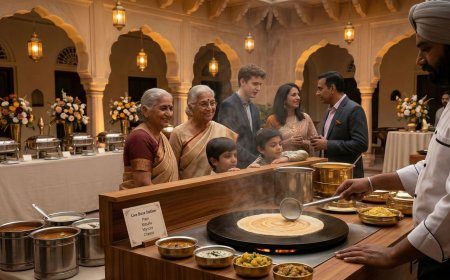
Food at wedding events: The wedding catering is typically produced by professional caterers using appropriate food safety standards. Eating enthusiastically at all wedding events is appropriate and encouraged.
Street food: The guidance on street food for first-time visitors requires nuance rather than a blanket prohibition. The street food of India is one of its great culinary glories and avoiding it entirely for the duration of a wedding trip is a genuine loss. The specific guidance: choose stalls with high turnover — the stall with a queue of local customers is producing fresh food continuously, which is safer than the stall with finished dishes sitting under a heat lamp; choose hot, freshly cooked food over cold items; avoid raw garnishes like fresh coriander and raw onion which have been in contact with water; and start with small quantities of street food to assess the digestive response before eating large amounts.
The digestive adjustment: The digestive adjustment that most first-time visitors to India experience — some version of digestive disruption in the first days of the trip — is not a sign that something has gone wrong. It is the body's response to a new bacterial environment and different food profiles, and it typically resolves within two to three days. The oral rehydration salts in the travel health kit are the most important treatment for the dehydration that digestive illness produces. Severe or prolonged symptoms should be assessed by a doctor.
Money and Payments
Cash: Indian rupees are the currency and cash is essential for many transactions — street vendors, small shops, auto-rickshaws, religious sites, tips. ATMs are widely available in major cities and most international debit cards work in Indian ATMs, though a small fee per transaction typically applies. The daily withdrawal limit at Indian ATMs is typically lower than at UK or North American ATMs.
The airport exchange: Currency exchange at the arrival airport provides convenience at a slightly less favorable rate than city ATMs. Exchanging a small amount — enough for the taxi and initial incidentals — at the airport and withdrawing larger amounts from city ATMs as needed is the most practical approach.
UPI and digital payments: India's digital payments infrastructure is extraordinary — the UPI system processes billions of transactions and is accepted at most formal retail, restaurant, and service contexts. International visitors can access UPI through certain international payment apps, but the setup requires specific steps that are worth researching before departure if the visitor wants to use it.
Tipping: Tipping is appreciated but not the mandatory social contract it is in some Western countries. The general guidance: ten percent at restaurants where a service charge is not already included, small tips to hotel staff who provide specific service, negotiated rates for drivers who provide excellent service. The wedding coordinator or hotel concierge can provide specific guidance on tipping conventions for the specific city.
Transportation
Ola and Uber: Both operate widely in major Indian cities and are the most transparent and convenient transportation option for first-time visitors. The app shows the fare before booking, the driver's name and vehicle are provided in advance, and the GPS tracking of the journey provides specific safety assurance. Setting up both apps before departure and ensuring the account is linked to an international payment method or a local SIM number is the preparation that allows immediate use on arrival.
Auto-rickshaws: The three-wheeled auto-rickshaw is ubiquitous in Indian cities and is one of the most specifically Indian transportation experiences available. In cities with meter-fitted autos, insisting on the meter eliminates fare negotiation. In cities where negotiation is the convention, the hotel concierge can advise on the appropriate fare for a specific journey to use as the negotiating reference.
The driving in India note: Driving a rental car in India is not recommended for first-time visitors. The road conventions, the signage, and the specific driving environment require experience that a first-time visitor does not have. Hiring a local driver through the hotel or through a reputable service is the practical alternative for guests who want flexibility of movement.
Safety and Situational Awareness
India is a country that can feel overwhelming to first-time visitors in its density and its noise, but that is significantly safer for tourists than its reputation in some Western media suggests. The specific guidance:
Petty theft: Pickpocketing in crowded areas — markets, tourist sites, busy transit areas — is the most common safety concern for visitors. Keeping valuables in an inner pocket or a bag worn in front of the body rather than on the back in crowded situations is the practical prevention.
Scams targeting tourists: Common scams in tourist areas of major Indian cities include overcharging for goods and services, unsolicited "guides" who lead tourists to specific shops and receive commissions, and taxi drivers who claim the hotel has closed or changed location to redirect passengers to a specific alternative. Knowing that these exist prevents them from being effective.
Women traveling alone: India's safety environment for women traveling alone is a topic that requires honest acknowledgment. The specific guidance for female guests traveling independently: use app-based rideshare services rather than street taxis, avoid walking alone in unfamiliar areas at night, share location with a trusted contact when moving independently, and trust the instinct that says a specific situation is not comfortable.
The hotel as base: The hotel is the safe reference point for all independent movement. The hotel's front desk can advise on the safety of specific destinations at specific times, can book trusted transportation, and can be called in the event of any situation that requires assistance.
Section Four: The Cultural Knowledge That Changes Everything
Understanding Indian Time
Indian event timing operates according to conventions that are different from the strict punctuality culture of the UK, North America, and Australia — and understanding this prevents the specific anxiety of arriving on time to an event where one is among the first guests for thirty minutes.
The general principle: Indian social events typically begin thirty minutes to an hour after the stated start time. The wedding events — the ceremony in particular — may be governed by the Muhurta, the auspicious timing determined by astrological calculation, which creates specific ceremony start times that are genuinely fixed. The pre-wedding social events — the welcome dinner, the sangeet — typically begin when guests have assembled, which is typically after the stated start time.
The practical guidance: arrive close to the stated time for ceremony events, where the timing is fixed by religious requirements. For social events, arriving twenty to thirty minutes after the stated time is typically appropriate without being late.
Respectful Behavior at Religious and Ceremony Spaces
The specific behaviors that demonstrate respect in Indian religious and ceremony contexts — and that allow international guests to participate in the ceremony with confidence rather than anxiety — are worth covering specifically.
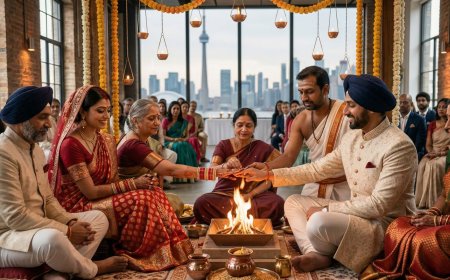
In the Gurdwara: Cover the head before entering. Remove shoes before entering the Darbar Sahib. Wash hands if requested. Bow toward the Guru Granth Sahib upon entering the Darbar Sahib — this is the standard Sikh practice and international guests who choose to participate in this gesture of respect are welcomed in doing so. Sit on the floor for the ceremony — chairs are available at the sides for those who cannot sit on the floor. Do not point the feet toward the Guru Granth Sahib. Receive the Karah Prasad with both hands cupped and eat it immediately.
At Hindu ceremony spaces: Remove shoes when entering the ceremony area, particularly when approaching the mandap or the sacred fire. Avoid turning your back to the sacred fire or to the ritual objects of the ceremony. If asked to participate in any ceremony element — scattering flower petals, participating in the Aarti — do so with genuine engagement rather than the hesitancy that sometimes produces an awkward half-participation.
Photography: The conventions around photography at Indian wedding ceremonies vary by family and by venue. The welcome booklet's ceremony-specific photography guidance takes precedence. The general principle: follow the lead of the official photographer, who will signal the moments when photography is welcome and the moments when respectful attention is more appropriate than camera raising.
The Indian Social Conventions That Are Worth Knowing
Greeting: The Namaste — hands pressed together, a small bow — is the universally appropriate greeting in any Indian cultural context. A handshake is also appropriate in business and mixed-formality contexts. Physical greetings between men and women vary by community and by individual — following the lead of the Indian person in the greeting rather than initiating is the practical guidance.
Accepting hospitality: Indian hospitality conventions involve the offering of food, drink, and assistance with a generosity that can feel overwhelming to first-time visitors who are accustomed to more restrained hospitality cultures. The specific guidance: accept food and drink when offered — declining can inadvertently communicate displeasure rather than the politeness it intends in Western contexts. If a dietary restriction or preference is relevant, explaining it specifically is better received than a general decline.
Removing shoes: Shoes are removed at the entrance to homes, temples, and many traditional spaces. Wearing easily removable footwear in contexts where shoe removal may be required is a practical consideration for guests who are moving between different types of spaces during the wedding period.
The concept of jugaad: The Indian concept of jugaad — the improvisational, make-it-work-with-what-you-have approach to solving problems — is worth understanding as a framework for the specific situations where things do not go as planned. In India, unexpected situations are typically resolved through creative improvisation rather than through the formal complaint and replacement process that Western guests may be accustomed to. Approaching unexpected situations with the same openness to improvisation that the local culture brings to them produces better outcomes and a more enjoyable experience.
Section Five: The Wedding City Specifically
What Is Worth Seeing
A brief, specific section on the most worthwhile experiences in the wedding city for guests who have a day or half-day before the wedding events begin or between events. Not a comprehensive tourist guide — that is available from standard travel guides — but the couple's specific recommendations: the specific market they love, the specific restaurant that is worth the visit, the specific early morning or evening experience that reveals something true about the city.
Personal recommendations from the couple — "we had the best chai of our lives at this specific stall in the old city" — create a connection between the guest's independent exploration and the couple's personal relationship with the place that a generic tourist recommendation cannot provide.
The Practical City Guide
The specific practical information about the wedding city that makes independent movement easier: the neighborhoods where the wedding events are concentrated and what else is nearby, the specific markets worth visiting if shopping is of interest, the specific food experiences worth prioritizing given the limited time, and the specific neighborhoods or situations that are worth being aware of for safety or logistical reasons.
For guests who will be independently exploring the city for a day or more, a brief map — hand-drawn or designed — that shows the relationship between the hotel, the wedding venues, and the key practical destinations is among the most immediately useful elements in the entire travel tips booklet.
Section Six: When Things Go Wrong
The Emergency Reference Page
A single, clearly formatted page that provides the specific contacts and reference information needed in any situation that requires outside assistance.
The contacts: India's emergency services numbers — police 100, ambulance 108, fire 101 — the nearest hospital to the primary guest hotel, the hotel's front desk and concierge, the couple's on-ground coordinator, and the guest's home country's embassy or consulate in the nearest major city.
The practical guidance for specific emergency situations:
Medical emergency: Go to the hotel first — the hotel concierge has established relationships with medical services and can facilitate faster and more appropriate response than an independent call to emergency services. For non-emergency medical needs, private hospitals in major Indian cities provide high-quality care at significantly lower cost than Western equivalents.
Lost passport: Contact the hotel immediately — they have experience with this situation — and contact the home country's embassy or consulate. A physical copy of the passport photo page, carried separately from the passport itself, significantly accelerates the emergency document process.
Lost phone: The hotel concierge can provide a replacement SIM card for a borrowed phone and can access the wedding coordinator's contact through their own systems. A physical copy of key contact information — carried in the wallet separate from the phone — provides backup communication capacity.
Theft: Report to the local police and obtain a First Information Report for insurance purposes. The hotel concierge can facilitate this process.
The Document That Earns Its Keep
The India travel tips booklet will be read once, referenced several times during the wedding trip, and then kept — in the same drawer as the passport and the travel insurance documents and the other artifacts of significant travel — for longer than most travel documents are kept.
It will be read on the plane. It will be consulted on the first morning when the digestive system is making itself known and the guest needs to know which of the items in the health kit to reach for. It will be referenced at the market when the guest cannot remember how much is a reasonable price for the specific item they are looking at. It will be found in the bottom of the bag at the ceremony and consulted quickly in the taxi for the reminder about the head covering requirement.
It will do the specific work of filling the knowledge gap between experienced India travelers and first-time visitors — quietly, practically, without drama — across every moment of the wedding trip when the information it contains makes a difference.
That work is the most practical expression of hospitality that the NRI couple can offer to the guests who have crossed the world to be with them. The preparation that says: we thought about what this trip would be like for you, specifically. We prepared for it. We put the knowledge you need in your hands before you needed it.
Make the booklet. Fill it with the specific knowledge that makes the difference. And trust that the guests who receive it will arrive at the wedding ready to be fully present rather than managing the knowledge gap that the booklet filled.
NRIWedding.com — Expert guidance for Indian weddings planned across borders.
What's Your Reaction?
 Like
0
Like
0
 Dislike
0
Dislike
0
 Love
0
Love
0
 Funny
0
Funny
0
 Angry
0
Angry
0
 Sad
0
Sad
0
 Wow
0
Wow
0