











































Before the Celebrations Begin: The NRI Couple's Complete Guide to Planning Local Experiences for Early-Arriving Wedding Guests
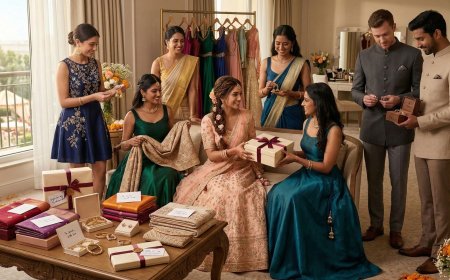
The days before the wedding events begin are not empty days — they are the introduction, the period in which international guests transition from travelers who have arrived somewhere to guests who are genuinely somewhere specific. This guide delivers a complete framework for designing pre-wedding local experiences covering the four planning questions, experience categories from heritage and craft to culinary and spiritual, guide selection criteria, the social architecture that coordinated experiences create, city-specific frameworks for Jaipur, Udaipur, Varanasi and Mumbai, the opt-in programme structure, budget considerations, and how personal recommendations from the couple transform a hospitality offering into a genuine act of sharing that connects guests to the place and to each other before the first celebration begins.


Guided Tours for Early-Arriving Guests: Planning Local Experiences
The NRI couple's complete guide to creating meaningful local experiences for guests who arrive before the wedding events begin — turning the days before the celebrations into part of the celebration itself
The Three Days Before the Wedding
The wedding was in Jaipur. The ceremony was on Saturday. The guests from London, from New York, from Toronto, from Sydney began arriving on Wednesday — because the flights worked better on Wednesday, because the experienced India travelers among them knew that arriving two days before a multi-day Indian wedding was the only sensible approach, and because some of them had heard enough about Jaipur to want to see it before they were absorbed into the wedding programme.
By Wednesday evening, the hotel lobby contained twenty-three international guests who had just arrived in India, many of them for the first time, all of them in varying states of jet lag and excitement and the specific wide-eyed quality of people who have just stepped out of their normal lives into something completely different.
They had no plan for Thursday. The first official wedding event was Friday evening. Thursday was an entire day in one of India's most extraordinary cities with no programme, no coordination, and no guidance beyond what they could find on their own.
Some of them managed beautifully — the experienced travelers who had already researched Jaipur and had specific destinations in mind. Others spent the day in the hotel, recovering from travel and uncertain of where to go or how to navigate the city independently. A few took taxis to the most obvious tourist sites, paid tourist prices, and had a perfectly adequate if undistinguished experience.
None of them had the experience that Jaipur was capable of providing. None of them had someone who knew the city, who knew what was worth seeing and what was overrated, who knew the market lane that wasn't in the guidebook and the rooftop restaurant with the view that made Jaipur's Pink City suddenly make sense.
That someone — and the specific experience they could have created — is what this guide helps NRI couples provide.
Why Early Guest Experiences Matter
The days before the wedding events begin are not empty days in the wedding experience. They are the introduction — the period during which international guests transition from travelers who have arrived somewhere to guests who have arrived somewhere specific, with a specific reason and a specific community around them.
The experience of these days shapes the emotional state guests bring to the wedding itself. Guests who have had a genuinely extraordinary experience in the wedding city in the days before the wedding arrive at the first event already connected — to the place, to each other through the shared experience, and to the specific cultural context of the wedding they are attending. Their presence at the wedding events is qualitatively different from the presence of guests who have spent the pre-wedding days recovering from travel in their hotel rooms.
There is also a specific community-building function to coordinated pre-wedding experiences. The wedding guest community — the combined networks of the bride's and groom's international friends and family, many of whom do not know each other — is assembled in the wedding city before the wedding events begin. The coordinated experience is the first occasion on which this community meets and begins to form the connections that make the wedding weekend feel like a genuine gathering rather than a parallel set of individual experiences taking place in the same venue.
The guest who met the bride's university friend on the Amber Fort tour on Thursday is the guest who has a specific person to sit beside at the sangeet on Friday evening. The community that forms around shared experiences before the wedding is the community that amplifies the joy of the wedding itself.
The Planning Framework: Four Questions Before the Programme
Before designing any specific experience programme, four questions that determine what is appropriate, what is achievable, and what will actually serve the guests who are offered it.
Question One: What Is the Guest Profile?
The experience programme that works for a group of twenty-five-year-old friends from the UK who are visiting India for the first time is different from the programme that works for a mixed group of extended family members whose ages span from twenty to seventy-five, some of whom have visited India many times and some of whom have not.
The age range, the mobility levels, the India experience range, and the specific interests of the guest cohort should shape every experience decision. An ambitious full-day itinerary through the old city's lanes is extraordinary for guests who are physically capable of it and terrifying for guests who are not. A cooking class is wonderful for guests who love food and tedious for guests who do not cook. A heritage property visit suits guests who are interested in history and bores guests who are not.
A brief survey sent to guests when they confirm attendance — asking about their India experience level, any mobility considerations, specific interests, and whether they would like to join a coordinated group experience — provides the information needed to design a programme that actually serves the people it is being designed for.
Question Two: What Is the Budget?
The experience programme exists on a spectrum from entirely hosted by the couple — the couple pays for all experiences for all guests — to entirely self-funded by guests, with the couple's contribution being the organization and the guidance rather than the financial subsidy.
Most NRI couples land somewhere between these poles: covering the cost of a coordinator or guide who makes the experiences accessible and organized, subsidizing specific highlights — a heritage dinner, a specific cultural experience — while allowing guests to cover their own costs for independent elements.
The budget decision should be made explicitly rather than allowed to grow organically, because the experience programme that starts as "let's organize a guide for interested guests" can become "let's host a full-day programme with a catered picnic lunch and private transport" without a specific budget decision being made at each escalation point.
Question Three: What Does the City Actually Offer?
The experience programme should be designed around what the specific wedding city genuinely does well — its specific cultural heritage, its specific craft traditions, its specific culinary identity, its specific architectural or natural landscape — rather than around a generic "things to do in India" template.
Jaipur offers its extraordinary heritage architecture, its specific craft traditions of block printing and gemstone cutting and blue pottery, its specific culinary identity, and its specific cultural context as the capital of Rajasthan. A Jaipur experience programme built around these specific offerings creates something genuinely extraordinary. A Jaipur experience programme that tries to replicate the generic India itinerary — a cooking class, a yoga session, a local market visit — misses what makes Jaipur specifically worth being in.
Varanasi offers a completely different set of experiences — its extraordinary spiritual geography, the Ganga aarti, the specific quality of witnessing one of the oldest continuously inhabited cities in the world in its daily life. A Varanasi experience programme that does not center on the Ganga and the ghats has missed the point of being in Varanasi.
Understanding what is specifically extraordinary about the wedding city — from the perspective of someone who knows it well rather than from a tourist board's overview — is the foundation of a genuinely valuable experience programme.
Question Four: What Is the Lead Time Available?
The best experiences in any Indian city — the private access to a heritage property after hours, the workshop with the master craftsperson whose work is known throughout the city, the cooking session in a local family's home, the early morning experience that requires specific coordination — require advance booking and sometimes personal relationships to access.
An experience programme planned eight to twelve months before the wedding can include options that are impossible to arrange with two weeks' notice. The planning timeline for the guest experience programme should begin alongside the planning of the wedding itself — not as a last-minute addition once the primary planning is complete.
The Experience Categories: What Each Provides
Heritage and Architecture Experiences
Every major Indian wedding city has a heritage architectural experience that is, at its best, genuinely world-class and that, at its worst, is a crowded tourist site with overpriced entry and inadequate context.
The difference between these two versions of the same experience is almost always the quality of the guide — the person who transforms a beautiful but opaque structure into a comprehensible, historically vivid, personally engaging encounter. A private guide who is genuinely expert in the specific heritage of the city — who has specific knowledge that goes beyond the standard tour script, who can read the specific building in front of the group and explain what it is showing them — creates an experience that guests carry home and describe for years.
For Rajasthan weddings: the fort and palace complexes of Jaipur, Jodhpur, and Udaipur are genuinely extraordinary when seen with the right guide. Amber Fort's specific history of the Kachwahas, the City Palace's layered additions across four centuries, Mehrangarh's extraordinary ramparts — each of these is a world-class heritage experience with the right companion.
For Delhi weddings: Humayun's Tomb, the Qutb Minar complex, Purana Qila, and Lodi Garden provide an architectural sequence that spans a thousand years of Delhi's history, and private guided visits to these sites produce a fundamentally different experience from the self-guided tourist visit.
For Varanasi, Hampi, Khajuraho, or other cities with specific archaeological or spiritual heritage: the specific expertise of a scholar-guide — someone with genuine academic or deep personal knowledge of the specific heritage rather than a standard licensed guide — is the element that makes the difference between a tourist experience and a transformative one.
Craft and Workshop Experiences
India's extraordinary craft traditions — the specific regional skills that have developed over centuries and that produce the textiles, the jewelry, the ceramics, the metalwork, and the woodwork that are among the most celebrated material products of human culture — are not simply tourist attractions. They are living traditions, practiced by living craftspeople, in workshops that in many cities are physically accessible and personally welcoming to interested visitors.
A morning in a block printing workshop in Jaipur — where the visitor works alongside the craftspeople using the same wooden blocks and natural dyes that have been used for centuries — creates a relationship with the craft that the purchase of a block-printed textile from a shop cannot produce. The craft experience is personal in a way that the craft product is not, and it creates a specific memory of the place and the tradition that lasts longer than the object itself.
The craft experiences worth considering by city:
Jaipur: Block printing, gemstone cutting and setting, blue pottery, lac bangles, miniature painting. Each of these crafts has workshops in Jaipur where genuine craftspeople work and where visitors can participate in or observe the practice.
Varanasi: Banarasi silk weaving — the extraordinary craft of the hand-woven brocade that has been produced in Varanasi for centuries — with a visit to a weaver's workshop in the weaving lanes of the city.
Hyderabad: Bidriware metalwork, pearl jewelry crafting, Kalamkari fabric painting.
Kolkata: Kantha embroidery workshops, terracotta craft of the nearby Bankura tradition.
Mumbai: Dharavi's craft workshops — where the city's most extraordinary craft cluster produces leather goods, textiles, and ceramics in a density and variety that surprises visitors who know Dharavi only from its reputation.
Culinary Experiences
Food is the most universally accessible cultural entry point available in any city, and the culinary experience — whether a cooking class, a food walk through a specific market, a meal in a specific setting — is the experience that most reliably creates both cultural engagement and social bonding within the guest group.
The culinary experiences worth considering span a range from the structured to the spontaneous:
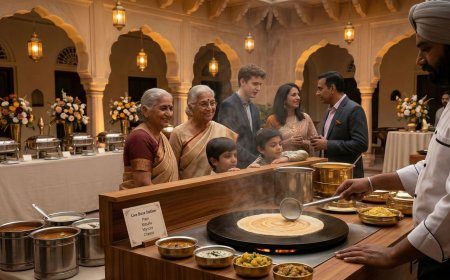
The cooking class: A hands-on cooking session with a skilled local cook — in a professional kitchen, in a home kitchen, or in a heritage property setting — creates a specific engagement with the local culinary tradition and produces the specific social bonding of cooking and eating together. The cooking class is particularly effective for mixed guest groups because it is accessible to participants of any age and any physical ability level, and it produces a specific shared output — the meal — that is the occasion's natural culmination.
The market food walk: A guided walk through a specific food market — the spice markets of Old Delhi, the street food lanes of Kolkata's New Market area, the dawn vegetable market of any city — with a guide who can explain what everything is, where it comes from, and how it is used creates a specific understanding of the culinary culture that a restaurant meal cannot provide.
The heritage dining experience: A meal at a heritage property — a haveli, a palace hotel, a garden setting with specific historical significance — where the setting is part of the experience rather than simply its backdrop. The heritage dinner as a pre-wedding group gathering is one of the most effective single experiences available to the NRI couple planning for early-arriving guests, because it combines cultural richness with the social function of a communal meal.
The chai walk: A walking experience centered on chai — the tea that is the social lubricant of Indian daily life — visiting the specific tea stalls of the city where the best versions of this most universal Indian experience are found. The chai walk is the most informally accessible culinary experience, requiring no cooking expertise and no formal structure, and the quality of its social output is disproportionate to its logistical complexity.
Spiritual and Contemplative Experiences
For guests who are interested in the spiritual dimensions of India — and for wedding cities that have specific spiritual significance — experiences that engage with India's extraordinary contemplative and devotional traditions can be among the most profoundly memorable available.
The Ganga Aarti at Varanasi or Haridwar — the evening fire ceremony at the river, conducted by priests in a specific choreography of flames and chanting that has been performed in the same form for centuries — is one of the most extraordinary public ceremonial experiences in the world. Witnessing it from a boat on the river, with a guide who can explain what is happening and why, creates an encounter with Indian spiritual life that no amount of reading or watching can replicate.
The early morning temple visit — to a specific temple at the time of the morning puja, before the tourist crowds arrive — creates an encounter with the living practice of Indian devotional life that the midday tourist visit to the same temple does not. The quality of light, the quality of sound, and the quality of presence in a temple at five in the morning are completely different from the same space at noon.
For guests attending Sikh weddings in cities with significant Sikh heritage — Amritsar in particular — the early morning visit to the Golden Temple, arriving before sunrise to witness the opening of the Guru Granth Sahib and the beginning of the day's kirtan, is one of the most spiritually significant experiences available in India regardless of the guest's religious background.
Nature and Landscape Experiences
For weddings in cities with specific natural landscape access — the desert landscape around Jaisalmer and Jodhpur, the backwaters of Kerala, the hill stations accessible from Bengaluru and Pune, the coastal landscape of Goa — nature-based experiences provide a specific quality of encounter with the physical environment that complements the cultural and heritage experiences.
A dawn camel safari into the dunes outside Jaisalmer — watching the sunrise over the Thar Desert from a camelback — is an experience that is specifically extraordinary in ways that no urban experience can replicate. The boat journey through the Kerala backwaters is similarly specific — the water, the palm-lined canals, the specific quality of light and sound of the backwater landscape — and creates a distinct experiential register from the temple visits and craft workshops.
Designing the Programme: The Practical Framework
The Opt-In Model
The most effective guest experience programme is opt-in rather than mandatory — organized and facilitated by the couple, available to all guests who want to participate, and specifically not creating an obligation for guests who prefer to rest or explore independently.
The opt-in model respects the diversity of the guest group — the guests who want every moment organized, the guests who prefer to manage their own time, and the guests who want some organized experiences and some independent time — without requiring the logistical complexity of designing a programme for every guest.
Communicating the opt-in programme early — in the wedding website, in the pre-wedding travel communication, and in the welcome booklet — allows guests to plan their travel and their pre-wedding days around the experiences that interest them.
The Tiered Programme Structure
A tiered programme structure — offering experiences at different levels of physical demand, cultural intensity, and logistical complexity — serves the full range of guest profiles without requiring every guest to participate at the same level.
Tier one: Accessible to all guests regardless of age or mobility — a guided cultural experience at a heritage property, a cooking demonstration, a heritage dinner. These experiences require no physical exertion and create genuine cultural engagement for all who participate.
Tier two: Moderate activity — a walking tour of a specific neighborhood, a market walk, a craft workshop. Accessible to most guests with reasonable mobility and appropriate footwear, creating more intimate contact with the city's daily life.
Tier three: More demanding — a full-day heritage itinerary, an early morning spiritual experience, a craft immersion that requires several hours of concentration. Appropriate for guests who have the physical capacity and the enthusiasm for a more intensive engagement.
The Guide Selection
The quality of the guide is the most important single variable in the quality of any organized experience. A mediocre experience with an extraordinary guide is almost always better than an extraordinary experience with a mediocre guide, because the guide's knowledge and personality is what transforms a set of things seen into an experience genuinely had.
The guide for international guests at an NRI wedding needs specific qualities: genuine and deep knowledge of the specific area and subject, excellent English communication, specific sensitivity to the cultural context of an international guest group that may be encountering India for the first time, and the personal warmth and humor that makes a long shared day enjoyable rather than merely informative.
Finding this guide requires recommendation rather than online search — the couples who have married in this city before, the wedding planner who has worked there extensively, the hotel concierge whose recommendations are based on actual guest feedback, are the most reliable sources. A guide who was genuinely extraordinary for another wedding group in the same city is more reliably extraordinary than an online five-star rating from anonymous reviewers.
Trial the guide before committing to a full programme — a brief orientation meeting or a short conversation that reveals their communication style and their knowledge depth is worth the time before booking them for multiple experiences with forty guests.
The Social Architecture of Pre-Wedding Experiences
The pre-wedding guest experience is not only about the experiences themselves. It is about the social architecture they create — the specific human connections that form during shared experiences and that shape the social world of the wedding itself.
The experience programme should be designed with this social architecture in mind. Experiences that naturally create conversation — the cooking class where participants work alongside each other, the food walk where sharing is the logic of the activity, the craft workshop where helping each other is necessary — create social bonds more effectively than experiences that are primarily observational.
The meal that concludes a day's experiences is often the most socially productive element of the programme — the formal or informal meal at which the day's shared experiences become the subject of conversation and the basis of the specific social ease that only shared experience can create. A dinner at the end of the first pre-wedding day — whether the couple hosts it or whether guests self-organize it — creates the social foundation for the wedding events that follow.
The City-Specific Frameworks
Jaipur
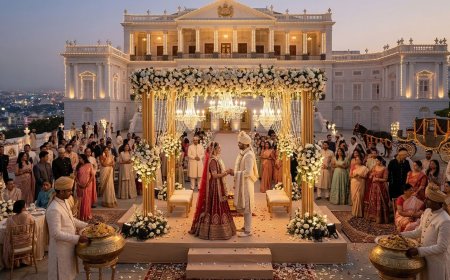
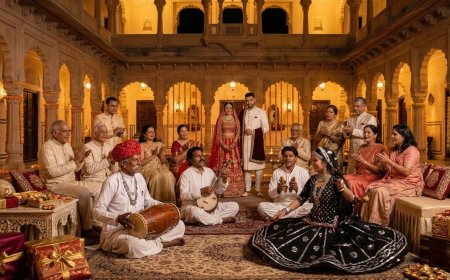
The pre-wedding day in Jaipur that serves international guests best begins early — before the heat and the crowds — with a visit to Amber Fort with a private guide who can provide the specific Kachhawa dynasty context that makes the fort comprehensible rather than simply overwhelming. The afternoon at the craft workshops of the old city — block printing, gemstone setting, or blue pottery depending on guest interest — creates the specific Jaipur encounter that mass tourism misses. The evening at a heritage haveli with a curated Rajasthani dinner and folk music performance is the social event that brings the day to its natural conclusion.
Udaipur
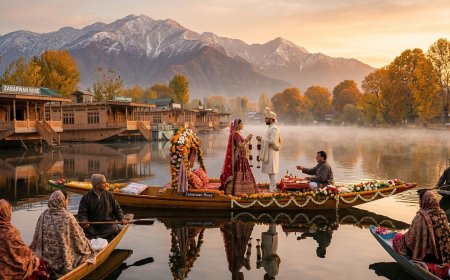
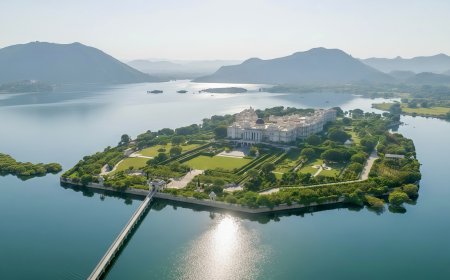
Udaipur's specific quality — its lake, its palaces, its extraordinary setting — is best experienced from the water. A boat journey on Lake Pichola in the late afternoon, when the light turns the white marble of the City Palace and the Lake Palace to gold, is the single most distinctively Udaipur experience available. A morning at Sajjangarh — the monsoon palace on the hill above the city — provides the specific panoramic context for understanding the city's geography. An evening at a haveli with a view of the lake creates the social occasion the day requires.
Varanasi
Varanasi requires a different approach from heritage cities — its extraordinary quality is not architectural but spiritual and human. The early morning boat journey on the Ganga — departing before dawn to witness the awakening of the ghats — is the most important single experience available in Varanasi and requires early rising that not all guests will manage on jet lag. The afternoon in the weaving lanes of the city — with a skilled guide who knows the specific workshops where genuine craft is practiced — creates the specific encounter with Varanasi's extraordinary material heritage. The evening Ganga Aarti witnessed from a boat is the day's natural culmination.
Mumbai
Mumbai's pre-wedding experience programme draws from the city's extraordinary architectural heritage — the Victorian Gothic and Art Deco buildings of South Mumbai that constitute one of the world's most extraordinary urban architectural sequences — its extraordinary culinary identity, and its specific social and cultural diversity.
A morning walking tour of South Mumbai's heritage architecture with a knowledgeable architectural historian, followed by lunch in one of the city's iconic Irani cafes, followed by an afternoon at Dharavi's craft workshops — this sequence reveals a Mumbai that most tourists never encounter and creates a specific understanding of the city that twenty-four hours in the hotel cannot provide.
The Couple's Role
The NRI couple designing a pre-wedding experience programme for their international guests is doing something specific and significant: they are sharing their relationship with a place that is part of their identity with the people whose presence at their wedding matters most to them.
The most effective element in any pre-wedding experience programme is the couple's personal recommendation — the specific places and experiences that carry personal meaning for them, that they know from their own relationship with the city or with India, that they are sharing not as hosts performing a hospitality function but as people genuinely wanting to share something they love.
The market stall where the groom bought the fabric for his first kurta. The chai stall outside the temple where the bride's grandmother used to take her as a child. The heritage property where the couple had their first India trip together. These specific, personal recommendations transform the experience programme from a hospitality offering into an act of genuine sharing — the most personal kind of welcome that a couple can extend to the people who have traveled to be with them.
Design the programme with care. Fill it with personal meaning. And trust that the guests who experience it will arrive at the wedding carrying something of the place and of the couple's relationship with it — ready to be fully present at the celebration it was all designed to lead toward.
NRIWedding.com — Expert guidance for Indian weddings planned across borders.
What's Your Reaction?
 Like
0
Like
0
 Dislike
0
Dislike
0
 Love
0
Love
0
 Funny
0
Funny
0
 Angry
0
Angry
0
 Sad
0
Sad
0
 Wow
0
Wow
0