





































































How to Explain Indian Wedding Customs to Non-Indian Guests — The Complete NRI Couple's Guide
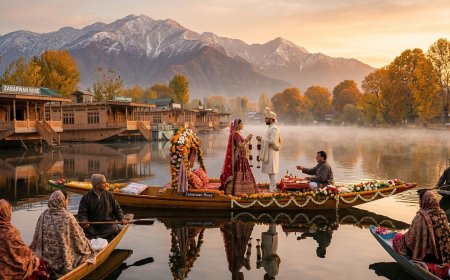
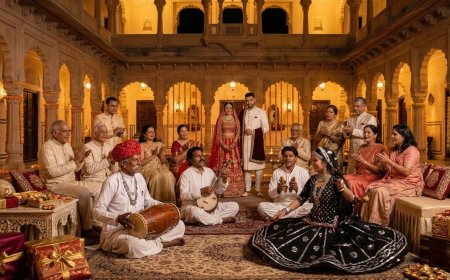
The non-Indian guest at an Indian wedding arrives with genuine goodwill and genuine curiosity — and experiences, without the right preparation, only the surface of a ceremony whose depth requires cultural knowledge to access. The sacred fire is beautiful without knowing it is Agni. The seven steps are moving without knowing they are the legal and spiritual constitution of the marriage. The ceremony is extraordinary without knowing what any of it means. This complete guide gives NRI couples the framework to transform every non-Indian guest from a polite observer into a genuine witness — covering the three things non-Indian guests actually need before, during and after the ceremony, the wedding website cultural information structure, the pre-wedding communication sequence, the ceremony programme framework including the language and tone that illuminates versus the tone that explains and diminishes, live commentary and designated explainer options, the specific dress code guidance that is actually actionable, food and dietary information for the reception, participation guidance for garba and baraat and mehndi, the question-welcoming culture, specific guidance for non-Indian children at the wedding, and the style guide for writing cultural explanations that share the tradition with genuine enthusiasm rather than apologetic description.


How to Explain Indian Wedding Customs to Non-Indian Guests
The Guest Who Tried Very Hard
He had done his research.
Three weeks before the wedding, the groom's colleague from the Edinburgh office — Scottish, thirty-four, had attended two weddings in his life both of which had lasted approximately four hours including the reception dinner — had searched online for "what happens at an Indian wedding" and had read two articles. He had learned that Indian weddings were colourful and that they involved a lot of food and that there was something called a baraat. He had bought a kurta from an online retailer after the invitation specified traditional Indian attire. The kurta arrived in the wrong size and he wore it anyway because there was no time to exchange it.
He arrived at the venue on the ceremony morning with genuine goodwill and complete confusion.
The ceremony had been going for forty minutes before he understood that what he was watching was the actual wedding ceremony rather than a preliminary activity. He did not know what the fire meant or why the couple was walking around it. He did not know what the man in the white dhoti was saying or why he was saying it so rapidly and in what sounded like several different languages simultaneously. He did not know when it was appropriate to make a sound and when silence was required. He did not know whether the specific moment when everyone threw flower petals at the couple was the moment the marriage became official or simply a moment when everyone threw flower petals.
He found it beautiful. He found it completely opaque. He spent the ceremony in the specific state of a person who is deeply moved by something he does not understand and is not certain whether his lack of understanding is diminishing the experience or whether the experience is powerful enough to transcend it.
At the reception, over the third course of a meal he had been eating with a spoon because he had not been provided cutlery and did not know where to ask for it, he told the bride that it had been the most extraordinary ceremony he had ever witnessed.
She asked him what his favourite moment had been.
He described the moment when the fire had been lit.
She told him that the fire had been lit forty minutes before the ceremony began, during the preliminary pujas, and that the moment he had identified as the lighting of the fire was the moment when the couple had completed the Saptapadi — the seven steps — and the marriage had become legally complete.
He was quiet for a moment.
"I wish I had known that," he said. "I would have paid different attention."
The Core Reality: What Non-Indian Guests Actually Experience
The Beautiful Opacity Problem
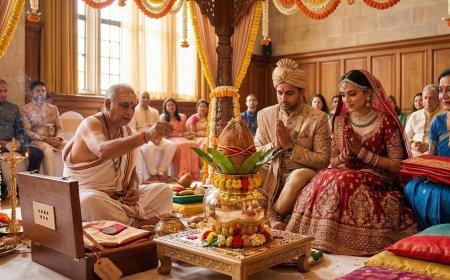
The Indian wedding ceremony — in any of its regional forms — is among the most visually extraordinary and most sensory-rich ceremonial experiences available anywhere in the world. The flowers, the fire, the specific quality of the chanting, the elaborate dress, the specific energy of the assembled community — these create an environment of genuine beauty and genuine power that affects every person present regardless of their cultural familiarity with what is happening.
But beauty and opacity can coexist. The non-Indian guest who is genuinely moved by what they are witnessing — who is present with goodwill and attention and genuine openness to the experience — is simultaneously receiving only a fraction of what the ceremony is offering, because they are experiencing the surface of something whose depth requires cultural knowledge to access.
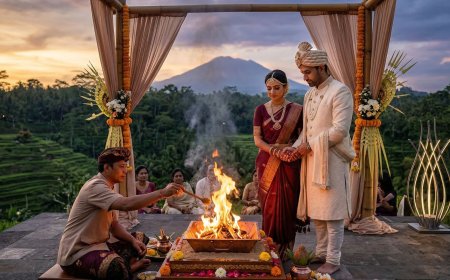
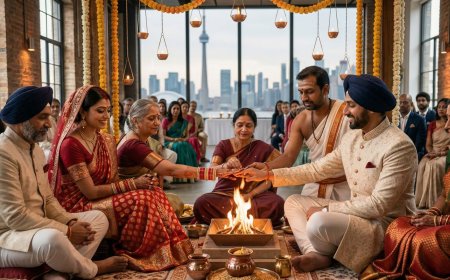
The sacred fire that they find beautiful is Agni — the divine witness, the specific deity who receives the vows and carries them to the cosmic realm. Without knowing this, the guest experiences a beautiful fire. With knowing it, they experience one of the most ancient and most profound ceremonial acts in human religious history.
The seven steps that they watch with respectful incomprehension are the Saptapadi — the moment at which the marriage is legally and spiritually complete, the seven commitments to food and strength and prosperity and happiness and progeny and longevity and eternal friendship that the couple is making in the presence of the divine witness. Without knowing this, the guest experiences a physical movement. With knowing it, they experience the ceremony's most significant moment with the specific attention it deserves.
The gap between what the non-Indian guest experiences and what the ceremony offers is not a gap of intelligence or sensitivity. It is a gap of cultural knowledge — and cultural knowledge can be provided.
What Non-Indian Guests Actually Need
Non-Indian guests at an Indian wedding need three things — not one, and not two, but all three — to move from polite attendance to genuine witnessing.
They need context before the ceremony — enough background knowledge to understand what they are about to experience, what kind of event it is, what its significance is in the tradition that is expressing it. This context does not need to be extensive. It needs to be sufficient. A page of information provided in advance that explains the ceremony's framework is more valuable than a complete academic account of Hindu religious tradition.
They need explanation during the ceremony — the specific identification of what is happening at each significant moment as it happens. The commentary that tells them that the cloth being removed is the Antarpat, that its removal marks the auspicious moment, that the showering of flower petals is the family's blessing — this in-the-moment explanation transforms the ceremony from a series of beautiful images into a narrative with meaning.
They need connection after the ceremony — the opportunity to ask questions, to have the specific things they noticed and did not understand explained, to locate their own experience of the ceremony within the tradition's meaning. The reception conversation, the family member who is specifically designated to answer questions, the table card that invites guests to share what they want to understand better — these are the specific connection mechanisms that complete the non-Indian guest's experience.
Before the Wedding: The Pre-Wedding Information
The Wedding Website as Cultural Introduction
The wedding website — which virtually every NRI international wedding now uses for logistics information — is the most effective channel for providing non-Indian guests with the cultural context they need before the ceremony.
A dedicated cultural information section on the wedding website serves multiple functions simultaneously. It provides the context that allows guests to understand what they are about to experience. It signals the couple's awareness of their guests' cultural position and their deliberate decision to make the experience accessible. It reduces the specific anxiety of the non-Indian guest who knows they are going to attend something unfamiliar and is uncertain about what to expect.
The cultural information section should cover:
A brief, honest description of what kind of event the wedding is — not a textbook explanation of Hindu religion but a specific description of this couple's wedding and what it will involve. The number of events and their general character — the joyful energy of the sangeet, the spiritual weight of the ceremony, the celebratory warmth of the reception — gives guests the emotional as well as the logistical map of what they are attending.
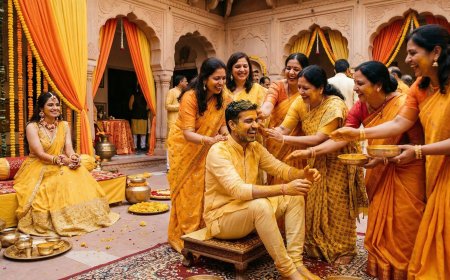
The specific ceremonies and what they involve — each event explained in one to three sentences that capture its essential character and significance without exhausting the reader. The mehendi is not merely a henna application — it is the gathering of the women of both families in an atmosphere of warmth and preparation. The baraat is not merely a procession — it is the groom's community's joyful declaration of the wedding's beginning.
The dress code — in specific, actionable terms rather than general descriptions. Not "traditional Indian attire encouraged" but the specific guidance: what Indian attire options exist for men, what Indian attire options exist for women, where to find them if the guest does not own them, and what Western formal wear is appropriate if the guest is uncomfortable in traditional attire.
The practical information that affects the guest's physical experience — that the ceremony may involve sitting on the floor and that cushions will be provided, that the ceremony will involve incense and fire and that guests with specific sensitivities should be aware, that shoes will be removed before entering the ceremony space and that the venue floor is clean.
The Pre-Wedding Communication Sequence
Beyond the wedding website, a specific pre-wedding communication to non-Indian guests — distinct from the general logistics communication sent to all guests — is among the most thoughtful and most practically useful things the couple can provide.
This communication does not need to be lengthy. It needs to be specific and warm — the specific tone of a friend saying "here is what you need to know to really experience this with us" rather than the formal tone of an information document.
The pre-wedding communication for non-Indian guests should include:
A brief personal note acknowledging that the wedding may be unfamiliar and expressing genuine enthusiasm about sharing it. A specific description of the ceremony's most important moment — the Saptapadi, the Nikah's Ijab and Qabul, the moment that constitutes the marriage — so that the guest knows to pay specific attention when it arrives. Two or three specific things the couple wants the guest to notice and appreciate — the particular beauty of the Antarpat ceremony, the specific significance of the garland exchange, the meaning of the fire's witness. An invitation to ask questions — before, during, and after.
The Ceremony Programme: The Most Important Tool
What the Ceremony Programme Does
The ceremony programme — the printed or digital guide that explains the ceremony's rituals in English as they unfold — is the single most valuable tool for the non-Indian guest's experience and the single most underused tool in NRI wedding planning.
A ceremony programme that is genuinely useful — that explains not just what is happening but what it means, that speaks to the guest in the specific register of someone sharing something meaningful rather than a museum placard describing an exhibit — transforms every non-Indian guest's experience of the ceremony from polite observation into genuine witnessing.
The colleague from Edinburgh who wanted to pay different attention would have paid different attention with a ceremony programme in his hand. The specific moment of the seven steps — the moment he had missed because he did not know it was coming — would have been the moment he was watching most carefully.
What a Genuinely Good Ceremony Programme Contains
The ceremony programme's value is entirely determined by its quality. A programme that lists ritual names without explanation is marginally useful. A programme that explains each ritual's meaning in language that is warm, specific, and genuinely illuminating is transformative.
The structure of a genuinely good ceremony programme:
A brief opening — one paragraph — that frames the ceremony in its tradition. Not a religious treatise but the honest statement of what this ceremony is: one of the oldest continuous ceremonial traditions in human culture, a ceremony whose core rituals have been performed at Indian weddings for thousands of years, a specific expression of the couple's specific cultural and religious heritage.
For each ritual: the name, the translation if the name is in a non-English language, a two to four sentence explanation of the ritual's meaning and significance, and a brief indication of what the guest will see and hear during it.
Specific callouts for the ceremony's most significant moments — the moments the guest should be watching most carefully, with a brief explanation of why. The removal of the Antarpat. The taking of the seven steps. The tying of the thali or the mangalsutra. The moment of the Ijab and Qabul. These are the moments that deserve specific attention, and the programme that flags them in advance ensures that the guest's attention is where it should be when they arrive.
A brief closing — one paragraph — that thanks the guest for their presence and expresses what it means to the couple to share this tradition with people they love.
The Language of the Programme
The language of the ceremony programme matters as much as its content. The most common failure of ceremony programmes is the language of the cultural introduction — the apologetic, explanatory, textbook register that positions the tradition as something requiring justification or special patience from the guest.
The ceremony programme that opens with "Indian wedding ceremonies can be long and may seem unfamiliar to Western guests" is doing something very different from the programme that opens with "You are about to witness one of the most ancient and most beautiful ceremonial traditions in human culture." Both are accurate. Only one creates the register in which the ceremony's meaning can be received.
Write the programme in the voice of someone who loves the tradition and wants to share it — the specific enthusiasm of a person who knows what each ritual means and is genuinely excited to explain it. This voice is the most effective vehicle for the cultural education the programme is providing, because it communicates not just information but the emotional and cultural relationship to the tradition that is the context within which the information makes full sense.
During the Ceremony: Real-Time Explanation Options
The Live Commentary Approach
Some NRI couples work with their pandit, officiant, or a designated family member to provide live English commentary during the ceremony — a brief explanation of each ritual before it is performed that allows every guest to understand what they are about to witness.
The live commentary approach requires a pandit or officiant who is comfortable with this format — who can deliver a brief, clear English explanation without disrupting the ceremony's ritual flow — and a ceremony timeline that allows for the additional time the commentary requires. Not every officiant is suited to this format, and the compatibility of the live commentary approach with the specific ceremony tradition should be discussed with the officiant well in advance.
When it works — when the officiant has the communication skills to make the English explanations genuinely illuminating rather than perfunctory — the live commentary ceremony is the most powerful form of cultural accessibility available. The guest who hears the explanation of the Saptapadi's meaning thirty seconds before the couple begins the seven steps is experiencing the ceremony in real time with the full cultural context intact.
The Designated Explainer
For ceremonies where live commentary from the officiant is not appropriate or not possible, designating a specific family member or friend as the non-Indian guests' guide is the next most effective approach.
The designated explainer — who sits with or near the non-Indian guests during the ceremony — provides quiet, continuous explanation of what is happening as it happens. This approach requires a person who genuinely knows the ceremony well enough to explain it accurately and in accessible language, who is comfortable with the specific interpersonal task of quiet commentary during a ceremony, and who can manage the balance between providing sufficient explanation and allowing the guests to simply experience what they are witnessing.
The designated explainer is also the natural resource for the questions that non-Indian guests want to ask but do not know the appropriate moment to ask — the person to whom the confused question can be directed without disrupting the ceremony or requiring the guest to approach the couple.
The Earpiece or App Option
Some contemporary NRI weddings — particularly those with large numbers of non-Indian guests or those conducted in venues with the technical infrastructure — have experimented with audio guide approaches: small earpieces through which a pre-recorded or live narration is delivered to guests who opt in, providing ceremony explanation without the physical presence of a designated explainer.
This approach is technically demanding — it requires audio equipment, content preparation, and operational management that most weddings cannot easily accommodate — but for couples with a large proportion of non-Indian guests for whom the cultural explanation is a primary planning priority, it is worth considering.
The Dress Code: The Specific Guidance Non-Indian Guests Need
Why Generic Dress Code Guidance Fails
"Traditional Indian attire encouraged" is the dress code instruction that appears on most NRI wedding invitations addressed to non-Indian guests — and it is the instruction that produces the most varied, most inconsistent, and most frequently incorrect outcomes of any wedding planning communication.
The problem is not the instruction's intent. The problem is that "traditional Indian attire" is not a specific enough category to be actionable for someone who has never worn it before. The non-Indian guest who receives this instruction and genuinely tries to comply faces a research challenge that most wedding invitations leave them entirely unprepared for.
The Specific Guidance That Works
The dress code communication for non-Indian guests should be specific enough to be actionable without being so prescriptive as to be intimidating.
For men:
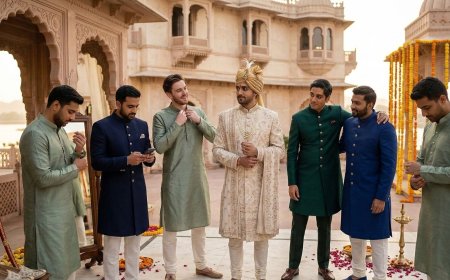
The kurta pyjama — a long tunic over matching trousers — is the most accessible and most appropriate Indian attire option for non-Indian male guests. The guidance should specify: the preferred colour family for the specific event (avoiding white for the ceremony, for example, which has specific associations in the Hindu tradition), the approximate price range for a quality kurta pyjama, and either a specific retailer recommendation or the category of retailer where it can be found.
The bandhgala jacket — the structured mandarin-collar jacket that is the core of the Indo-Western look — over formal trousers is a contemporary option that many non-Indian male guests find more comfortable than the full kurta pyjama, and its acceptability should be confirmed and communicated if it is genuinely welcome.
Western formal — a dark suit — should be confirmed as acceptable if it is, because some non-Indian guests will not be comfortable in Indian attire regardless of how accessible the guidance makes it, and knowing that a dark suit is acceptable is more useful than leaving the guest uncertain.
For women:
The saree is the most traditional option but the most technically demanding for women who have not worn one before. The guidance should be honest about this — if the couple genuinely wants non-Indian female guests to wear sarees, the guidance should include a recommendation for draping assistance and an honest assessment of the physical demands of the garment across a full day.
The salwar kameez — the three-piece outfit of tunic, trousers, and dupatta — is the most accessible Indian attire option for non-Indian women. The specific guidance should include: the preferred colour family, a retailer recommendation, and a note that the dupatta can be pre-pinned to avoid the management challenge of a loose dupatta for someone unfamiliar with the garment.
The anarkali — the floor-length kurta — is a contemporary option that many non-Indian women find visually appealing and physically accessible, and its specific recommendation as an option reduces the paralysis that a general "saree or salwar kameez" instruction can produce.
The Where-to-Buy Guidance
The most useful single addition to the dress code communication for non-Indian guests is specific retailer guidance — not a general category but actual stores or websites where Indian attire in the appropriate style and price range can be found in the guest's country of residence.
For guests in the UK, the specific areas of Leicester, East London, Wembley, and Birmingham where Indian clothing stores are concentrated. For guests in the USA, the specific areas of New Jersey, Queens in New York, and Devon Street in Chicago. For guests in Canada, the specific areas of Brampton and Mississauga near Toronto.
For guests in cities without large Indian communities, the online retailers that ship Indian attire internationally — with a specific recommendation for delivery timeline that ensures the garment arrives with enough time for any alterations needed.
At the Wedding: The Reception and Social Experience
Food and Dietary Information
The Indian wedding feast — in any of its regional forms — is among the most generous and most various dining experiences that most non-Indian guests will ever encounter. It is also, for guests unfamiliar with Indian cuisine, an experience that can be overwhelming without specific guidance.
The wedding website and the table information at the reception should include:
A brief guide to the dishes being served — their names, their main ingredients, and an honest indication of their spice level. The guidance on spice level is specifically important: the dish described as "medium" by the caterer may be significantly hotter than the non-Indian guest's tolerance, and knowing in advance which dishes are genuinely mild and which are genuinely spicy allows the guest to compose a plate they can enjoy.
The dietary information — which dishes are vegetarian, which are vegan, which contain specific allergens — presented in a format that is accessible to guests who are not familiar with Indian ingredients and their potential allergen content.
The eating logistics — whether cutlery will be available, whether the meal is served at the table or at a buffet, whether eating with the right hand is the traditional convention and whether the guest should feel free to use cutlery if they prefer.
The Participation Guidance
Many elements of the Indian wedding are participatory — the garba, the baraat dancing, the mehndi, the specific moments in the ceremony when the assembled guests are invited to shower the couple with flower petals or rice. Non-Indian guests who do not know they are expected to participate often remain seated when they should be dancing, or stand uncertainly at the edge of the circle when they should be in it.
The specific guidance on when participation is invited — and what participation looks like — dramatically increases the non-Indian guest's engagement with the wedding's most joyful elements.
The garba: explicitly invite non-Indian guests to join the circle. A brief instruction on the basic step — which can be delivered by the MC, included in the programme, or communicated by the designated explainer — removes the specific intimidation of not knowing how to begin. The garba circle is not an audition. It is a welcome.
The baraat: non-Indian guests who join the baraat dancing are not being inappropriate — they are being welcomed into the specific joyful energy of the tradition's most public celebration. The MC's explicit invitation to join the baraat, the distribution of flower petals for throwing, the specific encouragement to dance — these are the communications that convert the non-Indian guest from a watcher of the baraat into a participant in it.
The mehndi: many non-Indian guests would love to have mehndi applied but do not know whether they are welcome to ask or whether the mehndi is exclusively for Indian guests. The explicit communication — on the wedding website, in the event programme, from the host family — that non-Indian guests are warmly invited to participate in the mehndi produces the participation that the implicit invitation does not.
The Question-Welcoming Culture
The non-Indian guest's curiosity about what they are witnessing is a form of engagement with the tradition — a positive sign that the ceremony has created genuine interest rather than polite attendance. The NRI couple who creates a wedding culture in which questions are explicitly welcomed — not merely tolerated but actively invited — receives the guest's genuine engagement as the gift it is.
The specific mechanisms for welcoming questions: the designated explainer who is introduced to non-Indian guests at the beginning of the ceremony as the person to ask. The table card at the reception that invites guests to write questions they want answered. The couple themselves, who at the reception make a point of asking non-Indian guests what they experienced and what they want to understand better.
The quality of these conversations — the specific questions that non-Indian guests ask, the specific things they noticed and found beautiful or puzzling or moving — are among the most interesting conversations of any wedding reception. The non-Indian guest's fresh perspective on the tradition they have just witnessed often produces observations that the family members who have attended dozens of such weddings would not think to make.
The Children at the Wedding: A Special Case
Non-Indian children at an Indian wedding — the children of colleagues and friends who are attending with their parents — face a specific version of the cultural unfamiliarity that their parents face, amplified by the additional dimension of being small, easily overwhelmed, and dependent on adult guidance that may itself be uncertain.
The wedding that provides specific information for children — what they will see, what sounds they will hear, whether they will be able to move around, what the food will be like — is the wedding whose non-Indian child guests arrive prepared rather than overwhelmed.
The children's information can be provided through the parents — a brief note in the wedding communication suggesting how to prepare children for the experience — and through the wedding itself: a small welcome pack for child guests that includes a simple, illustrated guide to what is happening at the ceremony, some Indian sweets or snacks that children typically enjoy, and the specific communication that they are welcome and that the wedding is happy to have them there.
Writing the Cultural Explanation: A Style Guide
The Tone That Works
The cultural explanation that is most effective — in the ceremony programme, in the wedding website, in the pre-wedding communication — is written in the tone of an enthusiastic host sharing something they love with a guest they care about.
This tone has specific characteristics: it assumes curiosity rather than ignorance, it expresses genuine enthusiasm for the tradition rather than apologetic explanation, it uses concrete and specific language rather than abstract description, and it treats the non-Indian guest as a person capable of genuine understanding rather than as someone who needs the tradition simplified for their benefit.
The tone that does not work: the apologetic tone that positions the tradition as potentially overwhelming and asks for the guest's patience. The academic tone that explains the tradition as a cultural anthropologist would. The marketing tone that sells the tradition as an attractive experience rather than sharing it as a meaningful one.
The Specific Phrases That Illuminate
Some specific phrases and framings consistently produce better understanding in non-Indian guests than their alternatives.
Instead of: "The Saptapadi is the ritual of the seven steps around the fire."
Try: "The Saptapadi — the seven steps — is the moment when the couple walks around the sacred fire seven times, making a specific commitment at each step. This is the moment when the marriage becomes legally complete under Hindu law. Watch for it."
Instead of: "The Antarpat is a cloth that separates the bride and groom."
Try: "The Antarpat is a sacred cloth held between the bride and groom until the exact auspicious moment determined by the astrologer. When the cloth is removed — and you will know when it is, because everyone throws flower petals — the couple sees each other for the first time in the ceremony. This is the ceremony's most electrically charged moment."
Instead of: "Please dress in traditional Indian attire if possible."
Try: "We would love for you to wear something that celebrates the occasion — a kurta for men, a salwar kameez or saree for women. If you need guidance on where to find something, we have specific recommendations on the wedding website. And if Indian attire is not possible for you, a dark suit or a formal dress is absolutely welcome."
The specific phrase does more work than the general one. The concrete instruction is more useful than the vague guidance. The enthusiastic invitation is more effective than the polite suggestion.
The Guest Who Pays Different Attention
The colleague from Edinburgh left the wedding with something he had not expected to find — not just a beautiful memory of an extraordinary event but a specific, detailed, accurate understanding of what he had witnessed. He knew what the fire was. He knew what the seven steps meant. He knew that the moment he had almost missed was the moment the marriage became complete and that he had, in the end, been watching at exactly the right time.
He knew this because someone had thought to tell him. Because the ceremony programme had been in his hand with the Saptapadi section flagged. Because the designated explainer had been sitting nearby. Because the couple had built the specific information infrastructure that allowed a curious, well-meaning guest who had done his research and arrived in a slightly too-small kurta to leave with the experience that genuine witnessing produces.
The Indian wedding tradition is extraordinary. It is among the most ancient, most sophisticated, most ritually rich ceremonial traditions in human culture. It deserves witnesses who understand what they are witnessing — who can see the sacred fire as Agni, the seven steps as a covenant, the thali tying as the specific intimate act of one person marking another as their partner for life.
The non-Indian guest who is given the cultural knowledge to understand what they are seeing — before, during, and after — is not a guest who is having the tradition explained to them in a way that diminishes it. They are a guest who is being trusted with the tradition's full meaning.
The ceremony programme, the wedding website, the designated explainer, the warm invitation to participate, the specific dress code guidance, the genuine welcome of questions — all of these are the mechanisms by which the NRI couple extends the tradition beyond the community that carries it by birth to every person they have invited to witness it.
Every guest who understands what they witnessed is a person who carries a piece of the tradition forward.
Tell them what they are seeing. Trust them with the meaning. Watch them pay different attention.
Published by NRIWedding.com — The Premium Global Platform for Non-Resident Indians Planning Indian Weddings From Abroad.
What's Your Reaction?
 Like
0
Like
0
 Dislike
0
Dislike
0
 Love
0
Love
0
 Funny
0
Funny
0
 Angry
0
Angry
0
 Sad
0
Sad
0
 Wow
0
Wow
0