












































Why More NRIs Are Choosing Jalandhar for Destination Weddings Instead of Bali or Tuscany
For years the Punjabi diaspora imagined destination weddings in Bali, Tuscany, or Thailand. Yet a growing number of NRI couples from Canada, the UK, Australia, and the Gulf are choosing something different — Jalandhar. Not as a compromise, but as a deliberate return to the cultural roots of the Punjabi wedding tradition. This guide explores why diaspora families are increasingly planning multi-day destination weddings in Punjab, from the emotional significance of hosting ceremonies where their families come from to the practical advantages of guest attendance, authentic cuisine, and culturally meaningful rituals. Discover how Jalandhar has become one of the most important destination wedding hubs for the global Punjabi community and why the experience it offers cannot be recreated anywhere else in the world.


Jalandhar Destination Wedding for the Punjabi Diaspora — Why More NRIs Are Choosing Home
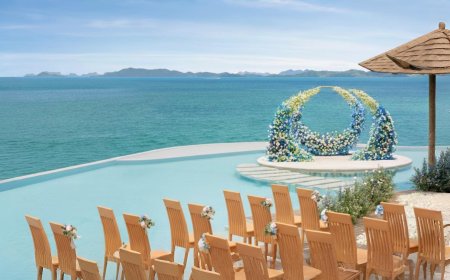
The message had come on a Sunday morning in Brampton, at the end of a weekend that Simranpreet had spent mostly on her phone, scrolling through wedding venues in Tuscany and Bali and one resort in Thailand whose infinity pool photographs she had saved four times across three different planning folders before deleting them all in the same hour.
Her mother called from Jalandhar. She said: I went to Navneet's daughter's wedding last night.
Simranpreet said: how was it.
Her mother said: it was at the Shalimar Garden. The whole family came from Toronto, from London, from Dubai. Three hundred people. Four days. The mehndi was on the rooftop with fairy lights and the phulkari backdrop your maasi made herself. The anand karaj was in the morning with the sun coming through the trees. At the langar there was dal that Navneet's mother made with her own hands, the way her own mother made it, the way nobody makes it anymore.
Simranpreet said nothing for a moment.
Her mother said: Navneet's daughter cried at the pheras. Not sad crying. The other kind.
The Tuscany folder sat open on Simranpreet's laptop. The infinity pool photographs were gone. She closed the tab.
This is not an unusual story among the Punjabi diaspora in 2025. It is, in its essential structure, the story that is repeating itself in Brampton living rooms and Birmingham kitchens and Melbourne apartments with increasing frequency — the NRI bride or groom who had assembled the international destination wedding mood board, who had the spreadsheets for Bali and the inquiry emails drafted for a Rajasthan palace, and who ended up choosing Jalandhar. Not as a compromise. Not as the affordable option. As the deliberate, considered, emotionally intelligent choice that a growing number of the global Punjabi diaspora is making, for reasons that are specific, articulable, and worth understanding in full.
This article is the full account of those reasons — the cultural, the logistical, the economic, and the deeply personal — and the framework for the NRI family that is weighing Jalandhar as a destination wedding location against the alternatives that the international wedding industry presents with considerably more marketing budget and considerably less of what Navneet's daughter had at the pheras.
The Return That Was Always Going to Happen
To understand why NRIs are choosing Jalandhar for destination weddings, it is necessary to first understand what Jalandhar is in the Punjabi diaspora's emotional geography — which is something different from, and significantly more complicated than, what it is on a map.
Jalandhar is a city in the Doaba region of Punjab, situated between the Beas and Sutlej rivers, with a population of approximately one million and the specific, layered character of a place that has been simultaneously left and loved for three generations. The Doaba region — whose name translates roughly to "land between two rivers" — has the highest per-capita NRI population of any comparable region in India. The gurdwaras of Brampton and Birmingham and Vancouver and Melbourne are full of families whose grandparents or great-grandparents came from the villages and small towns within the Jalandhar district. The wedding halls of those same cities have hosted three generations of Punjabi weddings conducted with varying degrees of proximity to the traditions whose home is in the city and the villages whose lanes the diaspora's elders can still walk from memory.
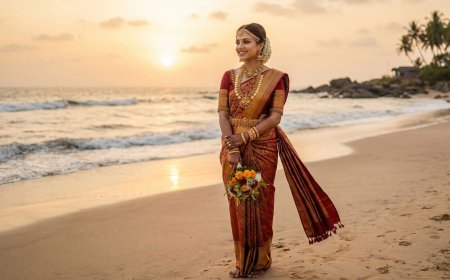
The Jalandhar destination wedding, understood in this context, is not a trend in the conventional sense. It is not the product of a marketing campaign or a travel industry initiative. It is the product of a generational reckoning that the Punjabi diaspora has been moving toward since the first generation settled abroad and began the long process of transmitting a culture to children who had inherited it without ever having lived inside it. The third and fourth generation of the diaspora — the ones getting married now — are the inheritors of a transmitted culture, and the destination wedding in Jalandhar is, for many of them, the first time they have inhabited that culture in its original context rather than its diaspora reproduction.
This is what Navneet's daughter was crying about at the pheras. Not the ceremony itself, which she had attended in various diaspora forms many times. The context. The morning light through actual Punjab trees. The dal made by the actual grandmother's actual hands in the actual way.
What the International Destination Wedding Cannot Provide
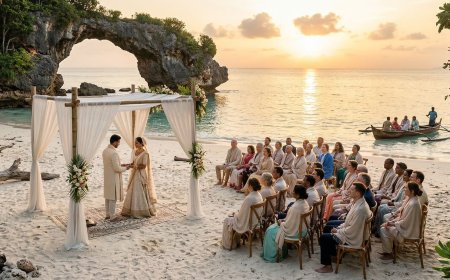
The international destination wedding industry — Bali, Tuscany, the Greek islands, the Thai resorts, the Rajasthan palaces — offers the NRI couple a set of things that are genuine and valuable: visual drama, novelty, a venue that photographs in ways that communicate luxury and sophistication to the social media audience whose attention the contemporary wedding is partly designed to attract, and a certain kind of romantic remove from the ordinary that the destination concept is built around.
What it cannot provide is the thing that the Jalandhar destination wedding provides, and this thing is difficult to name precisely but easy to recognise when it is present. It is the experience of a celebration that is made of actual cultural material rather than cultural simulation. It is the difference between a sangeet whose songs are the songs that the grandmother actually sang and a sangeet whose songs are the songs that a wedding entertainment coordinator has determined are the culturally appropriate songs for a Punjabi-themed event at a Thai resort. It is the difference between a langar whose food is made from recipes that are specific to a specific Punjabi family's specific culinary inheritance and a langar whose food is made by a catering company that offers "traditional Punjabi menu" as one of several ethnic menu options.
The international destination wedding can do many things. It cannot do specificity. It cannot do the particular. It cannot do the way that a specific place holds the memory of a specific people.
Jalandhar can.
And the Punjabi diaspora — specifically the generation of it that is getting married now — has, in growing numbers, decided that specificity is what they want from the wedding event whose importance in the culture they have inherited is not diminished by the distance from which they have inherited it.
The Economic Argument, Which Is More Interesting Than It First Appears
The economic comparison between a Jalandhar destination wedding and its international alternatives is, at first glance, the obvious argument and the one that feels almost too practical for a decision whose drivers are primarily emotional. But the economic reality of the Jalandhar destination wedding is more nuanced than the simple "it is cheaper" framing, and the nuance is worth understanding because it changes what the economic comparison actually means.
A premium Jalandhar destination wedding — one that uses a tier-one venue, a full wedding management team, a professional photography and videography team, premium catering across four days, and accommodation for a large guest list — costs, at current rates, somewhere between eighty lakhs and two crore rupees for the core event expenditure, depending on the guest count, the venue choice, and the specific services engaged. This is a significant sum in absolute terms. It is not a budget wedding. The families choosing Jalandhar for destination weddings in the premium segment are not choosing it because they cannot afford Tuscany.
The comparison that changes the economic calculation is not the comparison of absolute costs but the comparison of what each rupee or dollar purchases. A destination wedding in Tuscany for three hundred Punjabi guests requires international flights for those three hundred guests, most of whom are paying their own travel costs but whose attendance is contingent on the affordability and logistics of that travel. It requires accommodation in a region whose accommodation costs are determined by the Italian tourism market. It requires a catering operation that is producing Punjabi food in a context where Punjabi food is not the local cuisine, which means either a significant premium for specialist catering or a compromise on the food quality whose importance in the Punjabi wedding context is not small.
The Jalandhar destination wedding for three hundred Punjabi guests, most of whom have family in Jalandhar or in Punjab more broadly, requires international flights for the diaspora guests — which are necessary in either scenario — and domestic or short-haul travel for the Jalandhar-based guests, whose attendance is dramatically easier to secure. The accommodation costs are determined by the Indian hospitality market. The catering is Punjabi food made by people for whom Punjabi food is the native cuisine.
The net result is that the Jalandhar destination wedding, at the same absolute expenditure level as its international alternative, produces a larger, better-fed, more culturally coherent event whose quality of experience — measured not in the Instagram metrics of the venue photographs but in the actual experience of the people attending it — is consistently reported by the families who have made this choice as superior to what the international alternative would have produced at the same or greater cost.
The Guest List That Actually Comes
There is a practical consideration in the Jalandhar destination wedding calculation that the families who have navigated it identify consistently as one of the most significant advantages, and it is this: the people who matter most to a Punjabi wedding actually come.
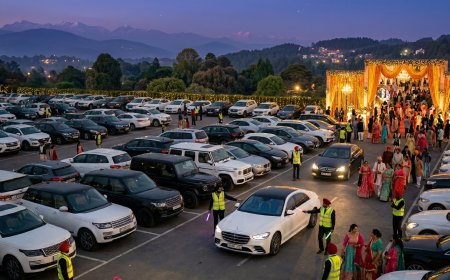
The international destination wedding has a structural problem that its marketing does not address and its beautiful venue photographs do not reveal. The guest list for a Punjabi wedding is not ten people. It is not thirty. It is, in the premium segment, three hundred to five hundred or more, and it includes grandparents who cannot board a twelve-hour flight to Thailand, relatives in Punjab who do not have international travel documents, elders whose presence at the wedding carries a specific ceremonial and social weight that the family cannot replace with a video call, and the extended family networks whose attendance at the wedding is the social event's meaning in the Punjabi cultural context.
The international destination wedding produces a curated, manageable, photographically elegant guest list. It does not produce the wedding. The wedding, in the Punjabi tradition, is the community event whose scale is inseparable from its meaning. The grandmother who sat in the front row at the anand karaj was not decorative. The great-uncle who performed the specific ritual role in the ceremony was not a production element. The neighbours who came for the langar and stayed for the evening were not extras. They were the wedding.
Jalandhar produces the wedding. The grandparents can attend because Jalandhar is reachable by car from the village. The Punjab-based family can attend because Jalandhar is in Punjab. The elders whose presence carries ceremonial weight can be present because the ceremony is in the place where their presence is natural rather than logistically extraordinary.
The families who have chosen Jalandhar for destination weddings report, with remarkable consistency, that the thing they most valued about the decision — more than the cost, more than the food, more than the venue — was that everyone came. Not the curated everyone of the destination wedding. The actual everyone. The grandmother who had never been on a plane and was not going to start at eighty-three. The uncle in Hoshiarpur who could not have managed Bangkok but could absolutely manage Jalandhar. The cousins from the village whose attendance at the wedding was the specific blessing whose presence the family had not known they needed until they had it.
The Venue Market: What Is Actually Available
The Jalandhar wedding venue market has evolved significantly in the period of increasing NRI wedding demand, and the current landscape is more sophisticated than the reputation of the city as a Tier-2 market would suggest to the NRI family approaching it from abroad for the first time.
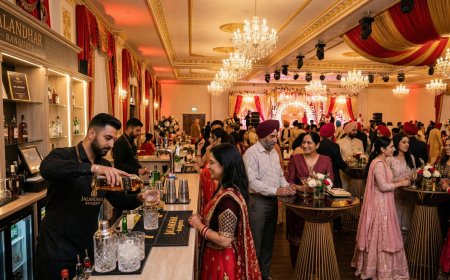
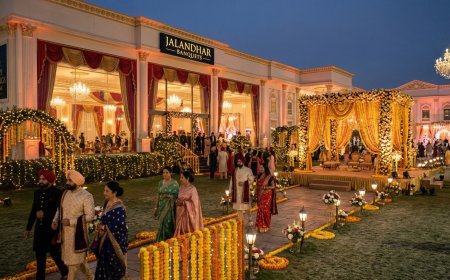
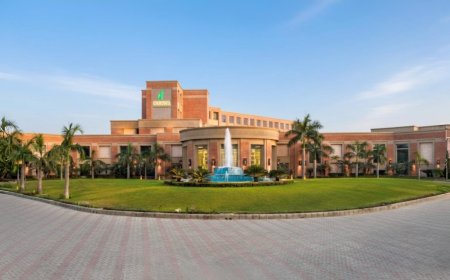
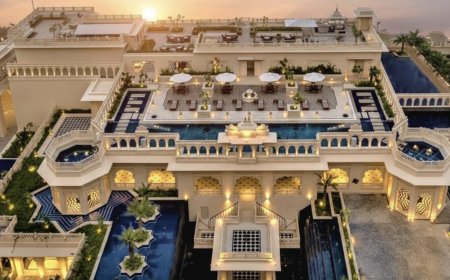
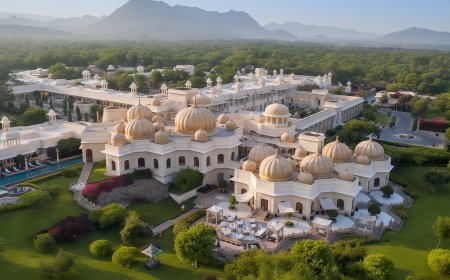
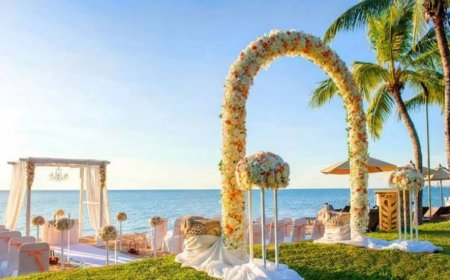
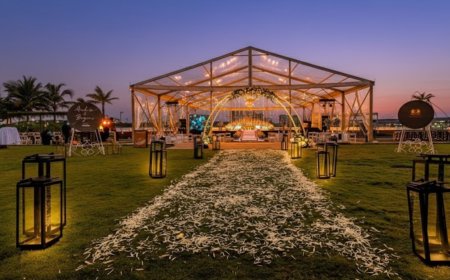
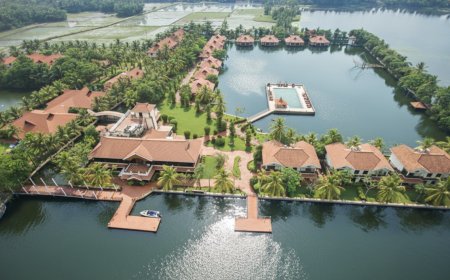
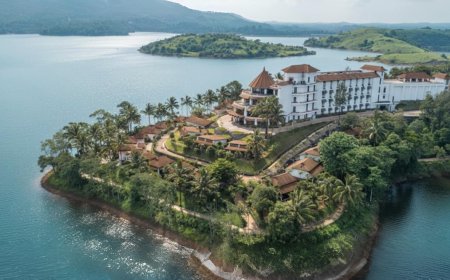
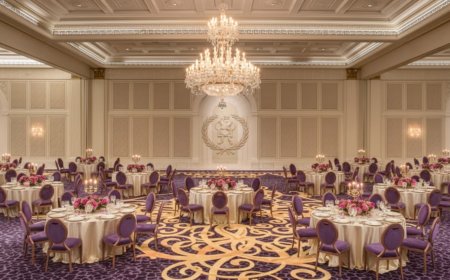
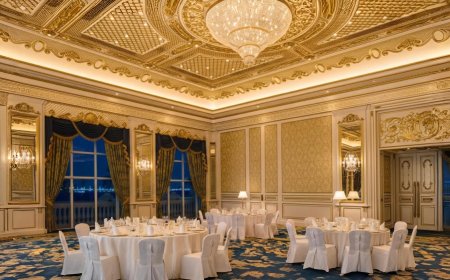
The tier-one venues in Jalandhar — the establishments whose combination of outdoor garden space, large air-conditioned banquet capacity, on-site accommodation, and service infrastructure meets the requirements of the premium destination wedding — are genuinely premium properties. The gardens are maintained to the standard that the premium wedding photography requires. The banquet halls accommodate five hundred guests in conditions that are appropriate for the event. The service management, at the established premier venues, is the product of years of managing exactly the kind of multi-day, multi-function, large-guest-count NRI wedding event that the destination bride from Brampton is planning.
The pricing for tier-one Jalandhar venues at peak season weekends begins at fifteen to twenty-five lakhs for the venue rental, exclusive of catering and all other services. This is the starting point for the premium destination wedding venue, and the family that approaches the Jalandhar market with the expectation that the India price point means the budget price point for this tier of venue is approaching the market with a misapprehension that the booking conversation will correct.
What the tier-one Jalandhar venue offers at this price point is, however, genuinely competitive with international alternatives on the quality of the physical experience — and dramatically more practical on every logistical dimension that the large-guest-count Punjabi wedding requires.
The critical knowledge for the NRI family approaching the Jalandhar venue market is the booking timeline, and it is more demanding than the international venue market. The tier-one venues require booking eighteen to twenty-four months in advance for peak season dates — the October through February window when the weather is appropriate, the diaspora return is at its peak, and the muhurat calendar concentrates demand into specific date clusters whose competition among NRI families is intense. The family that begins the Jalandhar venue search twelve months before the wedding date is beginning too late for the tier-one market in December and January. The family that begins at the moment of the engagement announcement is beginning at the right moment.
The Wedding Coordinator Question
The NRI family planning a Jalandhar destination wedding from Brampton or London is planning across a twelve-hour time difference, without the local knowledge that navigates a vendor market whose conventions are specific and whose quality variation is significant, and without the relationship network whose activation in the Jalandhar context determines access to the vendors whose quality is high enough for the destination wedding event.
The Jalandhar-based wedding coordinator is not an optional luxury in this context. It is the infrastructure that makes the remote planning possible. The coordinator whose practice is specifically built around the NRI destination wedding — whose vendor relationships are with the photographers, the decorators, the caterers, and the sound teams whose work is at the standard the destination wedding requires — is the person whose engagement at the beginning of the planning process determines whether the planning process is navigable.
The coordinator's role in the Jalandhar destination wedding context is specifically different from the coordinator's role in the domestic wedding context. The domestic wedding coordinator manages the event. The NRI destination wedding coordinator manages the event and manages the NRI family's relationship with the Jalandhar planning environment — the vendor market, the venue management, the family network whose involvement in the planning is important and whose involvement without management can become an additional complexity rather than a resource.
The specific questions whose answers the NRI family needs before engaging a Jalandhar-based wedding coordinator are: the coordinator's specific experience with NRI destination weddings of comparable scale, the specific vendors in each category — photography, decoration, catering, sound, accommodation — whose work the coordinator can reference from previous events, the coordinator's process for managing the planning across the time difference, and the coordinator's fee structure and contract terms whose review before engagement should be as thorough as the venue booking agreement review.
The Vendors Who Make It
| Vendor Category | What to Prioritise | Typical Price Range (Peak Season) | Lead Time Required | NRI-Specific Note |
|---|---|---|---|---|
| Wedding Venue (Tier 1) | Garden space, banquet capacity 500+, on-site accommodation | ₹15–25 lakhs (venue rental only) | 18–24 months | Book at engagement announcement. December–January weekends go first. |
| Wedding Coordinator | NRI-specific experience, vendor network depth, cross-timezone process | ₹3–8 lakhs (full service) | 15–20 months | Engage before venue booking. They negotiate the venue. |
| Photography & Video | NRI wedding portfolio, multi-day coverage experience | ₹4–10 lakhs | 12–18 months | Review actual NRI wedding work, not portfolio highlights only. |
| Catering | Jalandhar-native cuisine, multi-function capacity, langar experience | ₹1,200–2,500 per plate | 10–14 months | Taste test in person during site visit. Non-negotiable step. |
| Decoration & Florals | Phulkari backdrop capability, marigold sourcing, mandap design | ₹5–15 lakhs | 10–14 months | Confirm fresh flower sourcing for December-January season. |
| Music & Sound | Dhol team, live folk musicians, DJ for sangeet | ₹1.5–4 lakhs | 8–12 months | Separate bookings for ceremony music and evening entertainment. |
| Accommodation (Overflow) | Proximity to venue, group booking rates, airport transfer | Varies by property | 10–14 months | Negotiate group rate before confirming guest count to relatives. |
| Pandit / Granthi | Familiarity with NRI family traditions, English-language explanation capability | ₹25,000–75,000 | 8–12 months | Important for diaspora guests who may not understand the ceremony. |
| Makeup & Hair | Bridal Punjabi expertise, trial session availability | ₹40,000–1.2 lakhs (bridal) | 8–12 months | Trial session during site visit trip. Do not skip this. |
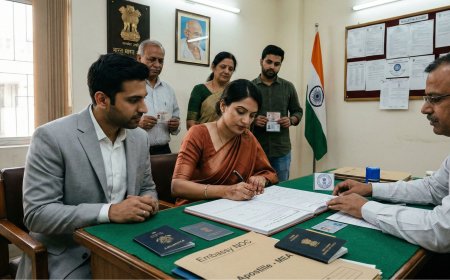
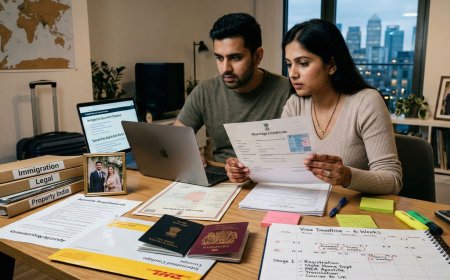
| Legal / Documentation | NRI marriage registration, Apostille services | ₹15,000–40,000 | Begin 6 months out | Jalandhar marriages must be registered. Apostille may be required for foreign recognition. |
The table above is the planning infrastructure of the Jalandhar destination wedding, and each line item has a lead time that is not negotiable in the peak season. The vendors whose work is at the standard the destination wedding requires are the vendors whose calendar fills in the same advance booking pattern as the venues — the families who understand the lead time requirement secure the vendor roster, and the families who begin too late find that the Jalandhar vendor market's best practitioners are, like the Shivalik Palace, already committed to someone who began earlier.
The Four Days
The Jalandhar destination wedding for the NRI family is not a single-day event. It is, characteristically, a four-to-five day programme whose structure is the structure of the Punjabi wedding tradition and whose days have specific names, specific functions, and specific emotional registers that the family planning it from abroad should understand in their particularity.
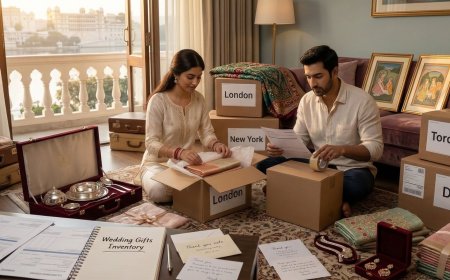
The first day is the welcome gathering — the arrival of the diaspora guests whose travel has converged on Jalandhar from multiple international points of origin, and whose first experience of the destination is managed by the family's hospitality in ways that establish the tone of the days that follow. This day is logistically complex for the NRI destination wedding because the arrival times, the airport pickups, the accommodation check-ins, and the first meal are all happening simultaneously across a guest list that is arriving from different time zones whose jet lag is a real condition rather than an inconvenience to be dismissed.
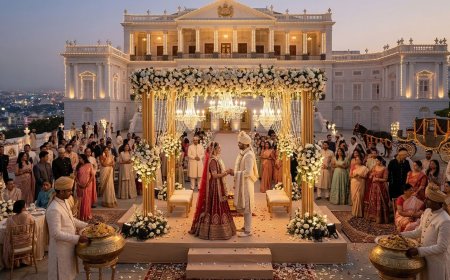
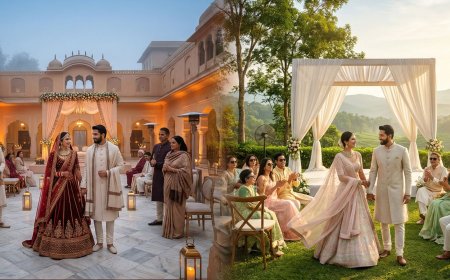
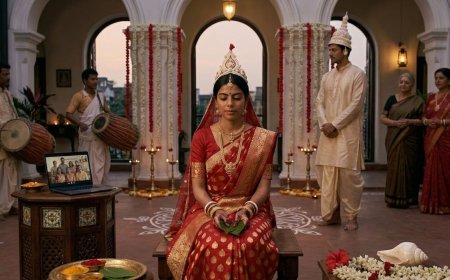
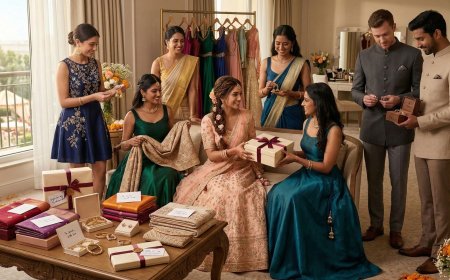
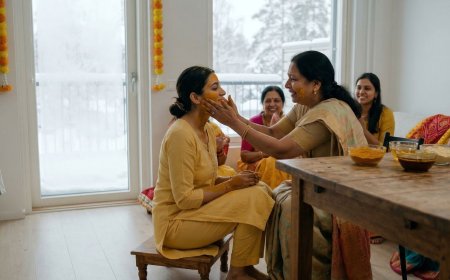
The second day is the mehndi and sangeet — the evening whose character is festive and whose success is determined by the music, the space, the mehndi artists, and the degree to which the family's women have rehearsed the sangeet performances that are the emotional centrepiece of this evening in the Punjabi tradition. The outdoor rooftop or garden space of the Jalandhar venue is the setting for this evening that the Bali resort could photograph more dramatically but could not make more specifically Punjabi. The songs that the women sing at the sangeet in Jalandhar are the songs in the language of the family's inheritance. This is not a small thing.
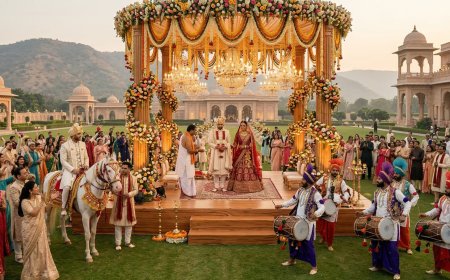
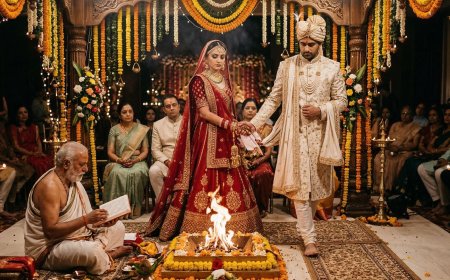
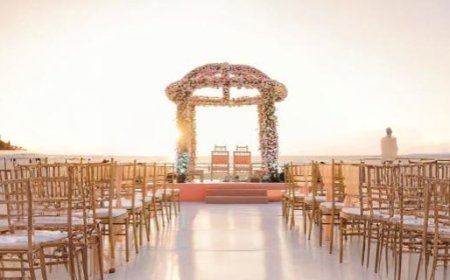
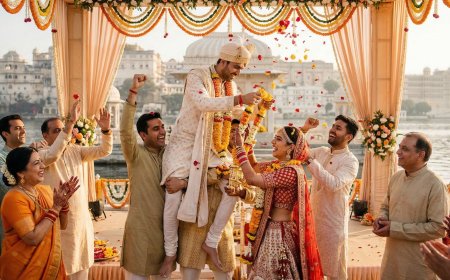
The third day is the anand karaj — the Sikh wedding ceremony whose morning timing, whose gurdwara setting or its equivalent, and whose specific sacred character is the centre around which everything else is arranged. The diaspora guests who have attended anand kaarajs in Brampton gurdwaras understand the ceremony's form. They have not, for the most part, attended it in Punjab, in the morning light, in the specific acoustic and atmospheric conditions of the place where the ceremony originates. The experience is reported consistently as different in a way that is difficult to articulate and easy to remember.
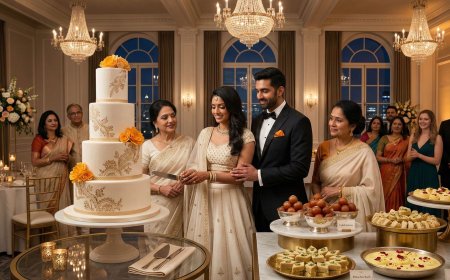
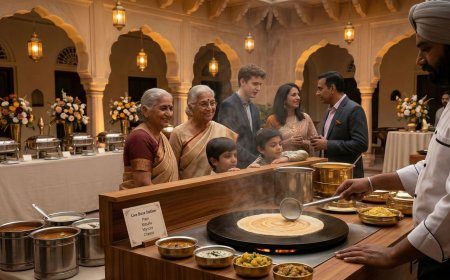
The fourth day is the reception — the large evening gathering whose scale, food, and entertainment are the social demonstration of the family's hospitality whose significance in the Punjabi cultural context is not reducible to the Instagram photographs it produces, though it produces those too. The langar that follows the reception is not catering. It is the specific cultural practice of communal feeding that the Jalandhar destination wedding can perform authentically in a way that the international destination wedding cannot replicate.
What the Families Who Have Done It Say
The families who have navigated the Jalandhar destination wedding — the NRI couples from Brampton, Birmingham, Melbourne, and Dubai who have chosen Jalandhar and managed the planning across time zones and vendor markets and family networks — report a consistent set of outcomes that the planning guides and the venue brochures do not fully capture.
They say: it was more complicated to plan than we expected, and it was more worth it than we expected.
They say: the vendors required more management than the international wedding planner who handles everything. And the wedding required less apologising for. We did not spend any of it explaining what a phera is. We did not spend any of it finding the dhol player's number at the last minute because the one the resort provided did not know Punjabi dhol.
They say: my grandmother danced. She has not danced at a wedding in twenty years. She danced because the music was the music she knew and the space was the space where that music makes sense and there was nobody at that wedding who needed to have the dancing explained to them.
They say: the food was the food. Not a version of the food. The food.
They say: when the photographs came back, the ones that we look at most are not the ones at the venue. They are the ones of my grandfather holding my husband's hand during the anand karaj, and my grandmother's face when she heard the shabad, and the children running through the garden at the langar who were cousins meeting each other for the first time. Those photographs are Jalandhar. They could not have been made anywhere else.
The Planning Framework for the NRI Family Choosing Jalandhar
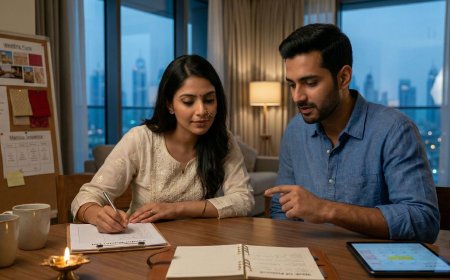
The NRI family that has decided — or is considering — the Jalandhar destination wedding needs a planning framework that accounts for the specific complexities of planning across a time difference, in a market whose conventions are different from the markets whose conventions the family knows, for an event whose cultural specificity is both its primary value and its primary planning challenge.
The framework has a sequence, and the sequence matters.
The venue search begins at the moment of engagement, not at the moment of settled planning. The tier-one venues whose December and January weekends are the target of the NRI destination wedding are booked eighteen to twenty-four months in advance. The family that waits for the planning to feel settled before beginning the venue search is the family that discovers what Simranpreet's neighbour discovered, and what Preetkaur discovered before her — that the venue whose photographs felt right is already committed to the family from Dubai who understood the timeline requirement.
The wedding coordinator is engaged before the venue is booked, not after. The coordinator's knowledge of the venue market — the specific venues whose facilities match the family's requirements, the specific managers whose responsiveness and flexibility are reliable, the specific pricing conventions whose navigation benefits from local knowledge — is the knowledge that the venue booking conversation requires. The family that engages the coordinator after the venue is booked has paid the coordinator to manage a decision that the coordinator's expertise could have improved.
The site visit happens before the deposit is transferred. No exceptions. The Jalandhar venue market's quality variation is real, and the WhatsApp photograph tour does not reveal it. The site visit — a physical presence in the space, in the season's actual conditions, with the specific assessment checklist that the booking decision requires — is the step whose skipping creates the risk of arriving at the destination to find a reality that the photographs had no incentive to show.
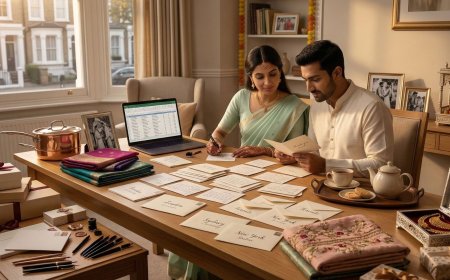
The guest list is confirmed before the vendor conversations are finalised. The catering quote that assumes four hundred guests is not the catering quote for three hundred guests. The accommodation block negotiated for two hundred travelling guests is not the accommodation block for one hundred and fifty. The guest list is not a planning detail. It is the planning foundation whose accuracy determines the accuracy of every other planning decision.
The legal requirements are researched before the ceremony date is fixed. The marriage registration requirements for an NRI wedding in India — whose compliance requires specific documentation, specific timelines, and in some cases Apostille services for recognition in the country of residence — are not a detail to be addressed after the wedding. They are a planning requirement whose neglect creates the specific, expensive, emotionally exhausting problem of an unmistakable wedding whose legal status in the country of residence requires remediation.
The Conversation That Keeps Happening
In the Punjabi diaspora's WhatsApp groups, in the conversations at the Brampton gurdwara and the Birmingham wedding hall and the Melbourne community centre, a particular conversation is repeating itself with increasing frequency. It is the conversation about the wedding that went to Bali and the wedding that went to Jalandhar, and what each of them was actually like.
The Bali wedding was beautiful. The photographs were extraordinary. The venue was impeccable. The food was fine. The grandmother did not come.
The Jalandhar wedding was complicated to plan. The venue was not as photogenic as the Bali venue. The logistics required attention and patience and more WhatsApp messages than anyone had anticipated. The grandmother came. The great-uncle performed his ceremonial role. The cousins from the village attended. The dal was made from the recipe that the family has been making for four generations. The dhol player knew every song. The anand karaj happened in the morning light in the place where anand kaarajs happen, and the shabad sounded the way it sounds in Punjab, and the bride cried the crying that is not sad.
The conversation has a conclusion, and it is not that Jalandhar is better than Bali in every dimension. It is that Jalandhar is better than Bali at the specific things that the Punjabi wedding is for. And the generation of the diaspora that is getting married now has, in growing numbers, decided that the specific things the Punjabi wedding is for are the things they want their wedding to be about.
This is why more NRIs are choosing home.
Not because home is cheaper, though the economics are compelling. Not because home is easier, because it is not. Not because home photographs better, because it does not, necessarily, by the metrics the international venue industry applies.
Because home is where the grandmother dances. Because home is where the dal tastes like itself. Because home is where the shabad sounds the way it is supposed to sound. Because home is where the wedding, in all its specific, irreducible, impossible-to-simulate Punjabi particularity, actually happens.
And because the family from Dubai understood this first, and booked the Shivalik Palace eighteen months in advance, and Simranpreet closed the Tuscany folder, and called her mother back.
She said: tell me about the venue where Navneet's daughter got married.
Her mother said: I'll send you the coordinator's number.
She said: do it now.
Published by NRIWedding.com — The Premium Global Platform for Non-Resident Indians Planning Indian Weddings From Abroad.
For venue recommendations, coordinator referrals, and the complete NRI Jalandhar wedding planning guide, visit nriwedding.com.
What's Your Reaction?
 Like
0
Like
0
 Dislike
0
Dislike
0
 Love
0
Love
0
 Funny
0
Funny
0
 Angry
0
Angry
0
 Sad
0
Sad
0
 Wow
0
Wow
0