




















































Jalandhar Banquet Halls That Allow Outside Alcohol — What Venues Really Mean When They Say “Corkage”: The Honest NRI Wedding Guide
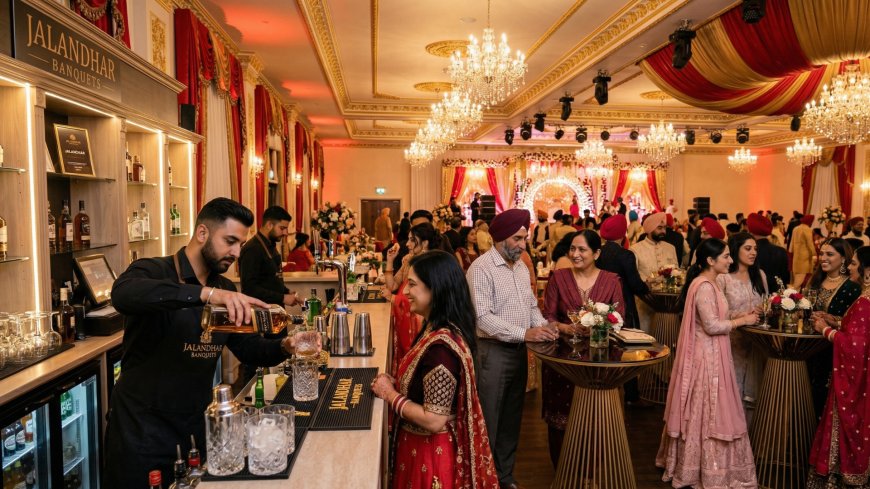
Standing in the car park of a Jalandhar marriage palace after a venue tour and hearing the familiar answer — “outside alcohol is allowed, sir, with a corkage charge” — often means the conversation about wedding bar costs has only just begun. This complete NRI guide explains how alcohol policies actually work across Jalandhar’s banquet hall market and why the simple yes-or-no question about outside alcohol rarely reveals the real conditions. Learn the four actual venue policy categories — genuine no-corkage venues, corkage-based outside alcohol policies, tied supplier venues, and informal accommodation arrangements — and how each affects the total wedding bar budget. Understand how Punjab excise permits influence what venues can legally allow, how corkage charges are structured per bottle, per case, or by value, why tied suppliers sometimes restrict brand choice, and how NRI families sourcing whisky from the UK duty-free market must calculate corkage against price advantages. Discover the five specific questions every family should ask before paying a booking advance, the cost calculation that determines whether outside alcohol is actually cheaper, and the common mistakes that cause NRI weddings to overspend on bar service at Jalandhar venues.

How Far in Advance Should You Book a Jalandhar Wedding Venue as an NRI? Timing Explained
The call had come on a Wednesday evening in Vancouver, at the end of a workday that had already been long, from her mother in Jalandhar who opened with the sentence that Preetkaur had been expecting and dreading in equal measure for approximately six weeks.
Her mother said: the Shivalik Palace has gone.
Preetkaur had been sitting at her kitchen counter with a glass of water and the specific tiredness of someone who has been managing a complex project across a twelve-and-a-half-hour time difference for three months. She said: what do you mean gone.
Her mother said: booked. Fully booked for the entire winter season. November, December, January, February. All gone. Someone booked it last month. A family from Dubai, I heard. They booked all four days in one conversation.
Preetkaur said: we only started looking last month.
Her mother said: I know.
The silence that followed lasted long enough to be a conversation of its own. Shivalik Palace had been the venue that Preetkaur's future mother-in-law had mentioned first, at the family lunch in Jalandhar the previous December when the engagement had been announced. It was the venue whose name had appeared in three separate conversations with three separate relatives as the self-evident choice for a wedding of this size and social standing in Jalandhar. It was the venue whose photographs Preetkaur had saved in a folder on her phone and whose outdoor garden space she had described to her fiancé Harjot on a FaceTime call from Vancouver as the one I want, the one that feels right. It had been available when she had checked the website in October. It was not available now, in November, because a family from Dubai who had understood something that Preetkaur had not yet understood had booked it while she was still in the preliminary stages of the conversation.
The thing they had understood was this: Jalandhar's premium wedding venues do not wait for the NRI who is planning carefully. They wait for no one. They are booked by the families who understand the city's wedding venue market — its specific scarcity, its specific demand patterns, its specific relationship to the NRI diaspora whose weddings drive the peak season's premium venue bookings — and who act on that understanding at the moment it is relevant rather than at the moment that careful, considered planning would suggest.
Preetkaur had opened her laptop. She had started a new document. At the top she had written: what do I need to know about booking Jalandhar wedding venues and when do I need to know it.
The answer had taken three weeks to assemble, through conversations with a Jalandhar-based wedding coordinator, with the banquet managers of four venues she subsequently visited, and with two NRI brides who had successfully navigated the Jalandhar venue market and one who had not. The answer was specific, it was counterintuitive in certain places, and it was the answer that the Shivalik Palace's unavailability had demonstrated was necessary.
This guide is that answer — the complete, specific, timing framework for the NRI family booking a Jalandhar wedding venue from abroad, written with the directness that the Shivalik Palace's loss makes appropriate.
Why Jalandhar's Wedding Venue Market Is Different From What NRIs Expect
The NRI who approaches the Jalandhar wedding venue market with the assumptions and the timeline that served them in booking a venue in their country of residence is the NRI who loses the Shivalik Palace to the family from Dubai. The Jalandhar wedding venue market operates on a set of conventions, a demand structure, and a booking timeline that is specific to this city and to the specific intersection of its domestic social culture and its large, wedding-active diaspora — and understanding these specifics is the foundational requirement for navigating it successfully.
Jalandhar is a Tier-2 city in Punjab whose wedding culture punches significantly above its size classification in terms of the ambition, the expenditure, and the social significance attached to the wedding event. The Punjabi wedding tradition — the multi-day celebration, the large guest count, the emphasis on the venue as a statement of the family's social position and hospitality — produces a demand for premium wedding venues that consistently outstrips the supply of genuinely premium spaces in the city.
The supply constraint is real and structural. Jalandhar does not have an unlimited number of wedding venues that combine the outdoor garden space, the large indoor banquet capacity, the accommodation for out-of-town guests, and the catering and service infrastructure that the premium Punjabi wedding requires. The venues that meet this specification number in the dozens rather than the hundreds, and within that set, the venues that are genuinely premier — whose reputation, maintenance, and service quality are consistently high — are a subset of perhaps fifteen to twenty establishments whose name recognition in the Jalandhar social context carries the specific weight that the families booking them are, in part, paying for.
The NRI Demand Layer
On top of the domestic demand for these venues — which is itself substantial and growing — sits the NRI demand layer that is specific to Jalandhar's large diaspora population. Jalandhar has one of the highest per-capita NRI populations of any Indian city, concentrated primarily in Canada, the United Kingdom, Australia, and the Gulf countries. This diaspora produces a wedding demand whose characteristics are different from the domestic demand in ways that affect the venue market directly.
The NRI wedding is typically larger than the comparable domestic wedding in terms of guest count, because the guest list combines the family's Jalandhar-based network with the diaspora contacts whose attendance requires coordination across international travel schedules. The NRI wedding is typically more concentrated in the peak wedding season months because the NRI bride and groom's availability for the wedding itself — the leave from the Canadian job, the school term in the UK, the work visa's permitted absence duration — is constrained to specific windows. And the NRI wedding is typically booked earlier than the domestic wedding because the international coordination that the NRI event requires — the travel bookings, the visa applications, the accommodation arrangements for the diaspora guests — cannot be managed without a confirmed venue date whose booking requires a confirmed venue.
These characteristics combine to make the NRI family one of the most motivated and earliest-acting buyers in the Jalandhar wedding venue market, and the competition among NRI families for the same premium venues in the same peak season windows is the competition that the family from Dubai won and Preetkaur's family lost.
The Booking Timeline: How Far in Advance Is Actually Required
The answer to the question in this guide's title — how far in advance should you book a Jalandhar wedding venue as an NRI — is not a single number because it depends on the specific venue tier, the specific season, and the specific date cluster within the season. But it has a floor, and the floor is eighteen months.
This number surprises most NRI families the first time they hear it, because eighteen months before the wedding date seems like an extreme advance booking for what is, in practical terms, a banquet hall rental. The surprise is the product of the assumption that the Jalandhar venue market works like the venue market in Vancouver or London or Dubai, where a premium wedding venue can typically be secured twelve months in advance without significant risk of unavailability. The Jalandhar market for premium venues in the peak season does not work like this, and the family that approaches it with the twelve-month timeline is the family that loses the venue to the family that understood the eighteen-month requirement.
The Tier-One Venue at Eighteen to Twenty-Four Months
The tier-one venues — the Shivalik Palace tier, the venues whose name carries social currency in the Jalandhar context and whose facilities are genuinely premium by the standards of the market — require booking eighteen to twenty-four months in advance for the peak season dates. This is not an exaggeration for effect. The banquet managers of the established premier venues in Jalandhar confirm, when asked directly, that their peak season calendars fill in this timeframe, primarily driven by the NRI family bookings that happen during the summer visits when the diaspora returns to Jalandhar and the wedding planning conversations that occur during those visits produce the venue booking decision.
The summer visit pattern is the specific mechanism that produces the eighteen-to-twenty-four-month advance booking for tier-one venues. The NRI family whose daughter is engaged in, say, January of 2024 and whose wedding is planned for December of 2025 visits Jalandhar in the summer of 2024 — eighteen months before the December wedding — and books the venue during that visit. The tier-one venues' December 2025 dates are effectively committed by the summer of 2024. The family that visits in the summer of 2025 and attempts to book December 2025 at a tier-one venue discovers what Preetkaur discovered: the dates are gone.
The Tier-Two Venue at Twelve to Eighteen Months
The tier-two venues — the solid, reputable establishments that offer good facilities and reliable service without the name recognition and social premium of the tier-one tier — are bookable at twelve to eighteen months in advance for peak season dates. This is the tier that most NRI families end up booking when the tier-one venues are unavailable, and it is a tier that contains genuinely good options whose quality is appropriate for the wedding event even if the name's social currency is different.
The tier-two venue booked at fourteen months with the right brief and the right management can produce a wedding event that is indistinguishable in experience from the tier-one venue booked at twenty months. The difference is not always in the execution — it is sometimes only in the name on the invitation card and the specific recognition that name produces in the Jalandhar social network's reading of the card.
The Tier-Three Venue at Six to Twelve Months
The tier-three venues — the functional, adequate establishments without the premium characteristics that the top two tiers offer — are available at shorter notice in most seasons. For the NRI family whose preferred venues in the higher tiers are unavailable and whose wedding date is fixed by constraints that the venue booking cannot adjust, the tier-three option is the fallback that the booking timeline's failure has produced. It is not where any family aims to land, but it is where the family that started planning too late sometimes lands.
The Peak Season Dates: Which Specific Windows Are the Most Contested
Within the peak wedding season of October through February, not all dates are equally contested. The specific date clusters that produce the most intense competition for premium venues are the muhurat clusters — the auspicious periods within the season that concentrate wedding demand into specific windows whose overlap with the available venue supply creates the acute scarcity that the advance booking requirement is designed to address.
The Diwali-Adjacent Window
The weeks immediately following Diwali — typically in late October or early November — are the first major date cluster of the wedding season and the window that books earliest because the combination of the festival energy and the season's opening produces the highest concentration of wedding demand of any equivalent period. The tier-one venue whose late October or early November weekend dates are the target must be booked in the earliest part of the advance booking window — the twenty-to-twenty-four-month mark — because these dates are the ones the most motivated families secure first.
The December and January Core
December and January are the heart of the Jalandhar wedding season — the months when the weather is coolest, the diaspora return is at its peak because of the Christmas-New Year leave cluster that Canadian, UK, and Australian NRI families can access most easily, and the social calendar is at its most wedding-dense. The premium venues' December and January weekends are the most contested dates of the entire calendar and the dates that require the full eighteen-to-twenty-four-month advance booking without qualification.
The specific dates within December and January that attract the most intense competition are the muhurat weekends — the auspicious dates determined by the Hindu calendar's panchang that concentrate demand further within the already-peak months. A muhuratwebsite or a consultation with a pandit in advance of the booking conversation allows the family to identify which specific dates in December and January are muhurat dates for the wedding year, and these dates should be the target of the earliest booking action.
The February Window
February's late position in the season and the school and work calendar constraints that the post-January period places on diaspora attendance make February a slightly less contested month than December and January at the tier-one level. An NRI family whose preference is February — whose fiancé's leave is in February, whose diaspora guests can travel in February — will find the tier-one venue market in this month marginally more accessible at the fifteen-to-eighteen-month mark than the December-January market at the same advance booking position.
What the Booking Process Actually Involves From Abroad
The Jalandhar wedding venue booking process for the NRI family managing it from Vancouver or London has specific characteristics that the domestic booking process does not have, and these characteristics must be understood before the process begins.
The Site Visit Requirement
Every tier-one and tier-two venue booking for an NRI wedding in Jalandhar should be preceded by a site visit — a physical inspection of the venue by either the bride and groom, their parents, or a trusted representative whose judgment the family relies on. The site visit is not optional because the venue's quality, condition, and actual configuration are not reliably represented by the photographs on the website or the images the banquet manager sends by WhatsApp.
Indian wedding venue photography is produced under the best possible conditions — the best light, the best angles, the carefully curated frame that excludes the maintenance issues, the outdated fixtures, and the spatial proportions that photographs systematically misrepresent. The NRI family that books a venue on the basis of the WhatsApp photograph portfolio is booking something whose reality they have not assessed and which may diverge from the photographs in ways that a site visit would have immediately revealed.
The site visit should be conducted during a Jalandhar trip that is specifically timed to include the venue inspection — either as a dedicated trip or as part of the summer visit whose timing the booking timeline requires. The site visit should include: the full walk of the venue including the areas that are not in the standard photography tour, the assessment of the outdoor space in the season's actual weather conditions rather than in the curated photograph's ideal conditions, the inspection of the accommodation if guests will be staying on-site, the assessment of the parking and approach road infrastructure, and the conversation with the banquet manager whose responsiveness and knowledge during the site visit is an indicator of the service quality the family will receive during the event.
The Booking Conversation: What to Discuss Before the Deposit
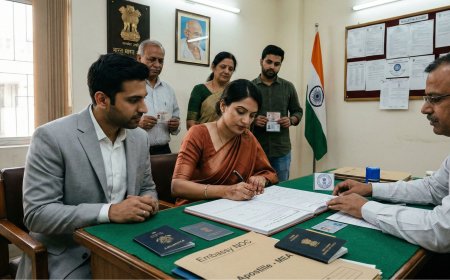
The booking conversation with the Jalandhar venue's banquet manager is a negotiation that the NRI family approaches from a position of geographic disadvantage — they cannot walk in and walk out in the way that the local family can, and the banquet manager knows this. The preparation for the booking conversation must be thorough enough to compensate for the geographic disadvantage.
The specific points that must be discussed and documented before the deposit is paid are: the specific dates being held and the period of the hold before the deposit converts the hold to a confirmed booking; the deposit amount and the payment schedule for the balance; the specific inclusions in the venue package — the furniture, the lighting, the service staff, the kitchen access for the caterer — and the specific exclusions that will be charged additionally; the venue's policy on external vendors including the caterer, the decorator, the sound system, and the photographer; the accommodation arrangement if the venue includes rooms; the cancellation and rescheduling policy with the specific financial consequences of each; and the force majeure provisions whose relevance the post-2020 event context has made non-theoretical.
Each of these points must be in a written document — the booking agreement — that is reviewed before the deposit is transferred and retained as the reference for all subsequent interactions with the venue. The Indian Contract Act, 1872 governs the enforceability of the booking agreement, and a written agreement whose terms are specific is enforceable in a way that a verbal agreement confirmed by a WhatsApp message is not.
The Deposit Transfer and the Banking Infrastructure
The deposit transfer from a Canadian or UK bank account to a Jalandhar venue's Indian bank account involves the international wire transfer infrastructure whose charges, delays, and exchange rate considerations the NRI family should understand before the transfer is initiated. The typical venue deposit for a premium Jalandhar wedding venue is between two and five lakhs rupees, which at current exchange rates represents a significant international wire transfer whose costs in terms of the sending bank's charges, the receiving bank's charges, and the exchange rate applied at the time of transfer should be minimised through the choice of transfer method.
The NRI family that transfers the deposit through the standard international wire transfer at the high-street bank rate is paying a premium on the transfer that the specialist international money transfer services — whose rates and charges are consistently more competitive — would not apply. The deposit transfer is not the moment to default to convenience. It is the moment to apply the same cost awareness that the venue negotiation required.
The Jalandhar Venue Tiers: A Reference Framework
Understanding the tier structure of the Jalandhar wedding venue market — what distinguishes a tier-one venue from a tier-two and what each tier offers at its price point — is the knowledge that allows the NRI family to calibrate their advance booking urgency correctly.
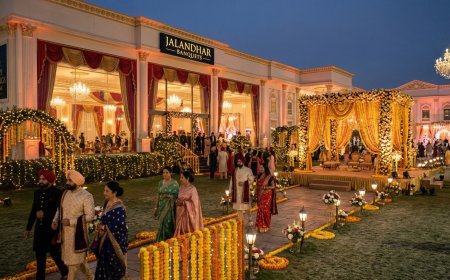
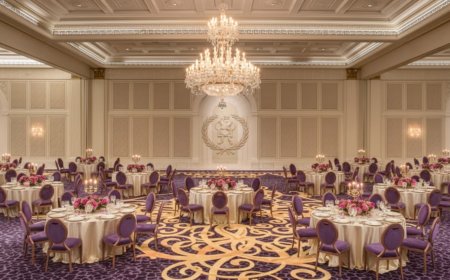
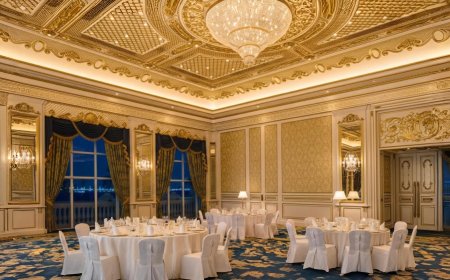
The tier-one venues in Jalandhar are characterised by: a recognised name with social currency in the Jalandhar context, a large outdoor garden space that accommodates the ceremonial functions whose outdoor setting is the visual centrepiece of the wedding's photographic record, a large air-conditioned indoor banquet hall whose capacity is adequate for a guest list of five hundred or above, an on-site accommodation component for out-of-town guests, a parking infrastructure adequate for the large guest count, and a catering and service management whose quality is consistent with the venue's positioning. The pricing for tier-one venues at peak season weekends typically begins at fifteen to twenty-five lakhs for the venue rental alone, exclusive of catering, decoration, and all other event services.
The tier-two venues offer a portion of the tier-one characteristics — typically the banquet hall capacity and the service management — without the outdoor garden space or the on-site accommodation or the name's social premium. The pricing for tier-two venues at peak season weekends typically begins at eight to fifteen lakhs for the venue rental.
The tier-three venues offer functional event space without the premium characteristics of the higher tiers. Their pricing at peak season weekends begins at three to eight lakhs.
Common Mistakes NRI Families Make When Booking Jalandhar Wedding Venues
The first mistake is starting the venue search after the engagement announcement rather than simultaneously with it. The engagement announcement and the venue search are not sequential events in the Jalandhar market — they are concurrent events whose simultaneity is required by the booking timeline. The family that announces the engagement, celebrates for three months, and then begins the venue search has lost the three months that the booking timeline cannot spare at the tier-one level.
The second mistake is delegating the venue selection entirely to Jalandhar-based relatives without a specific brief and a specific decision authority framework. The Jalandhar-based relative who is handling the venue search on behalf of the NRI family will make decisions based on their own social knowledge of the venue market, which may prioritise the venues whose name their social network recognises rather than the venues whose facilities the NRI wedding's specific requirements need. The brief must specify the requirements — the capacity, the outdoor space, the accommodation, the vendor policy, the budget range — and the relative's mandate must be to find the venue that meets the brief, not the venue that meets the community's expectation.
The third mistake is not visiting the venue before signing the booking agreement. The WhatsApp photograph tour is not a site visit. The video call with the banquet manager walking through the space on a phone camera is not a site visit. A site visit is a physical presence in the space, in the season's actual conditions, with the specific assessment checklist that the booking decision requires. The NRI family that signs the booking agreement without a site visit is committing a significant financial deposit to a space whose reality they have not personally assessed.
The fourth mistake is not negotiating the booking agreement's specific terms before the deposit is paid. The standard booking agreement offered by the Jalandhar venue is the agreement that protects the venue's interests, not the family's interests. The cancellation policy, the force majeure provision, the specific inclusions and exclusions, and the liability for damage or service failure are all terms that are negotiable before the deposit is paid and non-negotiable after. The family that pays the deposit without reviewing and negotiating the agreement has accepted the venue's terms, whatever those terms are.
The fifth mistake is treating the venue booking as the beginning of the planning rather than the foundation of it. The venue booking establishes the date, the location, and the capacity constraint around which every other planning decision — the guest list, the catering, the decoration, the accommodation for out-of-town guests — must be made. The family that books the venue without a confirmed guest count, a confirmed budget range, and a confirmed vendor policy understanding has booked a constraint around whose specific parameters they have not yet made the decisions that the constraint governs.
What Preetkaur Booked Instead
The Shivalik Palace was gone. The two other tier-one venues she had identified through her research were also fully booked for her December window when she inquired in November. The third, whose banquet manager she reached by phone on a Tuesday afternoon Vancouver time, had one December weekend available — a weekend whose muhurat status she verified with her mother's pandit within the hour — and she had held it with a verbal commitment that the banquet manager had given her the forty-eight hours to confirm with a deposit.
The family had convened by WhatsApp video call across Vancouver, Jalandhar, and Harjot's parents in Chandigarh that evening. The venue was not the Shivalik Palace. It was a venue whose name carried somewhat less automatic social recognition but whose facilities — she had asked for the complete photograph set, the capacity figures, the outdoor space dimensions, and the accommodation count during the Tuesday phone call — were genuinely good. Her future mother-in-law, who had been to an event there three years earlier, had said: the garden is actually better maintained than the Shivalik Palace's. I have seen both.
They had transferred the deposit on Thursday. The booking agreement had been reviewed by a Jalandhar-based advocate whose fee was three thousand rupees and whose review had produced two specific amendments to the cancellation clause that the banquet manager had accepted without significant resistance.
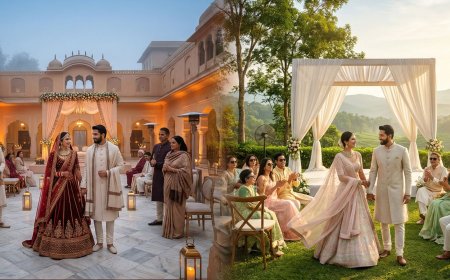
The wedding had been in December of the following year. The garden photographs, taken in the December afternoon light with the venue's outdoor marigold arrangements in the background, were the photographs that Preetkaur had saved as the reference for what a Jalandhar wedding venue's outdoor space should look like when the choice is made correctly under pressure rather than perfectly under ideal conditions.
Her mother had looked at the photographs after the wedding and said: it was the right venue.
Preetkaur had said: it was the available venue.
Her mother had said: sometimes those are the same thing.
Begin the venue search the week the engagement is announced, not the month after. Target the tier-one venues at eighteen to twenty-four months before the wedding date. Conduct a site visit before the deposit is transferred. Review and negotiate the booking agreement before it is signed. Establish a guest count and a vendor policy understanding before the venue search begins, not after it concludes.
And understand that the Jalandhar wedding venue market does not keep the best spaces available for the family that is planning carefully. It keeps them for the family that is planning early.
Early is the plan.
Published by NRIWedding.com — The Premium Global Platform for Non-Resident Indians Planning Indian Weddings From Abroad.
What's Your Reaction?
 Like
0
Like
0
 Dislike
0
Dislike
0
 Love
0
Love
0
 Funny
0
Funny
0
 Angry
0
Angry
0
 Sad
0
Sad
0
 Wow
0
Wow
0