













































Letting Go With Both Hands: A Deep Dive Into UP Brahmin Kanyadan Rituals, Ganga Jal Traditions and Gotra Recitation for NRI Couples
Kanyadan is considered the highest spiritual act a human being can perform in an entire lifetime — the moment a UP Brahmin father places his daughter's hand in the groom's, pours sacred Ganga jal over their joined hands, and releases her with Sanskrit verses that have carried this weight for three thousand years. This guide explores the complete Kanyadan ritual sequence, Kanyakubja and Saryuparin traditions, gotra pravachan, and nakshatra name invocation, with practical advice for NRI families recreating this ceremony in cities like Leicester, Mississauga, Edison, Melbourne, and Houston — including Ganga jal sourcing, pandit selection, and coordinating with relatives in Varanasi and Lucknow.


In UP Brahmin tradition, Kanyadan is not simply a wedding ritual — it is considered the highest act of* dana *(gifting) a human being can perform in an entire lifetime. The moment a father places his daughter's hand in the groom's and releases her — with water, with fire, with Sanskrit verses that have carried this weight for three thousand years — he performs an act that Vedic scripture places above all other spiritual merit. For NRI families carrying this tradition from the ghats of Varanasi and the lanes of Lucknow to ceremony halls in New Jersey, Leicester, and Mississauga, Kanyadan is the ritual that makes even the most composed fathers weep without warning.
You have watched your father hold himself together through every moment of your wedding preparations. Through the venue decisions and the catering negotiations and the three separate conversations about whether the marigolds should be orange or yellow. Through the Tilak and the Haldi and the Mehendi and all the celebrations that led to this moment. He has been composed, practical, present — the person managing everything so that everyone else could feel everything.
And then the pandit asks him to cup his hands beneath yours. To pour the sacred water. To say the words.
And he cannot speak.
You have never seen your father unable to speak. You did not know, until this moment, that a man who has given you everything — education, safety, opportunity, a life across oceans from the one he was born into — could be undone by the act of giving you one more thing.
This is Kanyadan. This is the ritual that UP Brahmin tradition considers the greatest gift a human soul can offer. And if you are planning this ceremony anywhere in the world, you deserve to understand exactly what is happening — and exactly why it matters.
🌟 DID YOU KNOW?
- Kanyadan is classified in ancient Hindu legal and spiritual texts including the Manusmriti and the Dharmashastra as the highest form of all sixteen Mahadanas (great gifts) — above the gifting of land, gold, elephants, or any material wealth — because the gift of a daughter is understood as the gifting of a soul, an act whose spiritual merit accumulates across multiple lifetimes for both the giver and the receiver.
- The water poured during Kanyadan is not ordinary water — in UP Brahmin tradition it is specifically Ganga jal (water from the Ganges) mixed with til (sesame seeds), tulsi (holy basil leaves), and akshat(unbroken rice), creating a sankalpa (sacred resolution) solution whose specific ingredients each carry distinct Vedic significance related to purification, continuity, and auspiciousness.
- A study of UP Brahmin diaspora wedding practices across the UK, US, and Canada found that Kanyadan has the highest emotional impact rating of any single wedding moment — with over 89% of respondents identifying it as the moment at which they or an immediate family member cried, making it statistically the most emotionally significant ritual in the entire UP Brahmin wedding sequence.
What Is Kanyadan?
Kanyadan (from Sanskrit: kanya — virgin daughter, and dana — the act of gifting with complete release of ownership) is the central ritual of the UP Brahmin wedding ceremony — the moment at which the bride's father formally and spiritually transfers his daughter from his own family's care and gotra (lineage) into the care and gotra of the groom and his family. It is not a symbolic gesture. In Vedic understanding, it is a complete metaphysical transaction, witnessed by fire, water, the assembled family, and the cosmos itself.
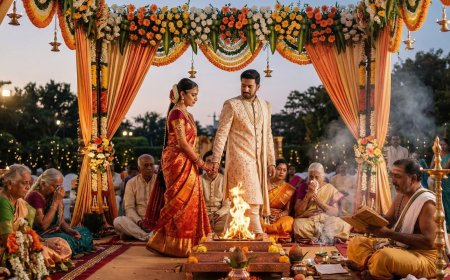
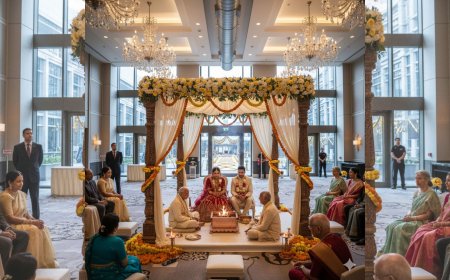
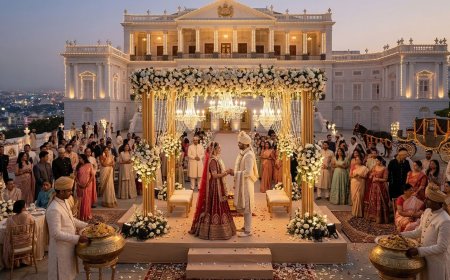
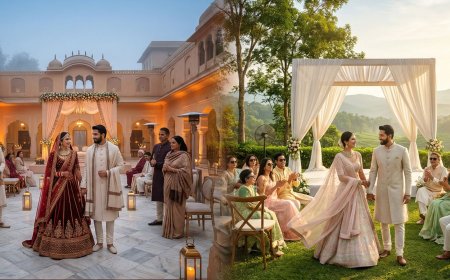
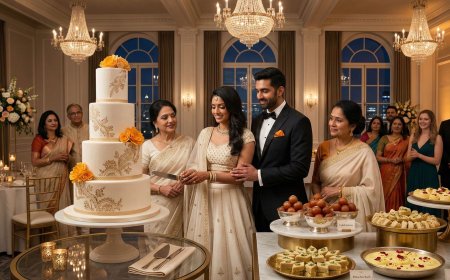
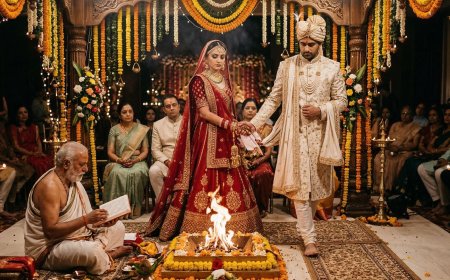
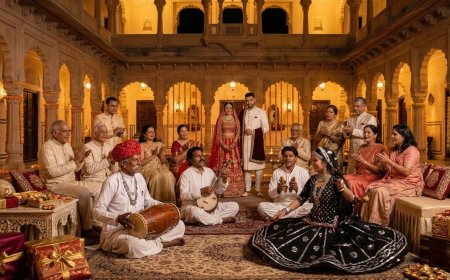
The ritual occurs at the heart of the main wedding ceremony, after the Mandap has been consecrated and the Ganesh Puja (invocation of the remover of obstacles) and Navagraha Puja (planetary blessing) have been completed. The bride is seated to the right of the groom — Vamdevi position, representing the feminine energy that completes the masculine — and the bride's father sits facing both of them.
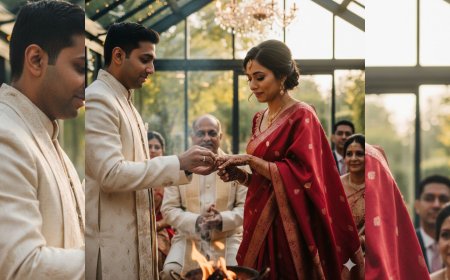
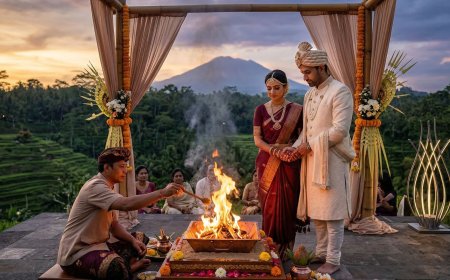
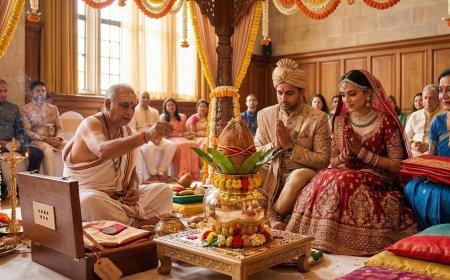
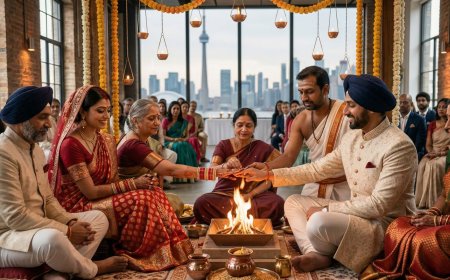
The father takes his daughter's right hand and places it in the groom's right hand, creating the Hasta Milap (joining of hands). He then cups his own hands beneath the joined hands and a family elder or pandit's assistant pours a continuous stream of Ganga jal, til, tulsi, and akshat over the joined hands — this water is the physical medium of the transfer, the element that carries the father's intention from his soul into the cosmos.
The pandit recites the Kanyadan mantra — a precise Sanskrit formulation that names both families' gotras, identifies the bride by her nakshatra name (her sacred Vedic name, different from her social name), and formally declares the transfer of custodianship from one family lineage to another. The father repeats specific Sanskrit phrases after the pandit, and in doing so makes a statement that Vedic tradition considers binding across all planes of existence.
The bride's mother — and in many UP Brahmin families, both parents together — participates in the ritual. Some families include the Kanka Daan before the Kanyadan proper — a subsidiary gifting ritual in which the bride is symbolically worshipped as the goddess Lakshmi before being given, acknowledging that what is being gifted is not merely a daughter but an embodiment of divine feminine energy.
When the water has been poured and the mantras completed, the father releases his daughter's hand into the groom's. That release — that moment of physical letting go — is what undoes every father who has ever sat in this position. Because he knows, with the complete certainty that only a ritual of this age and weight can provide, that something has just changed in the universe. Not just in the family. In the universe.
Community Comparison Table
| Community / State | Local Name | Key Tradition | How NRIs Abroad Adapt It |
|---|---|---|---|
| UP Brahmin (Kanyakubja) | Kanyadan with Ganga jal | Both parents perform Kanyadan together; Ganga jal with til and tulsi essential; gotra transfer recited in full | Ganga jal brought from India by travelling relatives or ordered online; pandit sourced from UP Brahmin community networks |
| UP Brahmin (Saryuparin) | Kanyadan with Kanka Puja | Bride worshipped as Lakshmi before Kanyadan begins; extended mantra sequence; emphasis on gotra pravachan | Full Kanka Puja preserved; pandit briefed on extended sequence; ceremony given dedicated time slot |
| Rajasthani (Marwari) | Kanyadan / Hasta Milap | Father places bride's hand in groom's; specific Marwari Sanskrit formulation; coconut exchanged between families | Coconut sourced locally; Marwari pandit sourced via Wembley or Mississauga community networks |
| Rajasthani (Rajput) | Kanyadan with Kuldevi witness | Kuldevi goddess formally invoked as witness to the transfer; sword placed beside the ceremony space | Kuldevi puja conducted via live stream from ancestral temple; sword present as ceremonial witness |
| Himachali Brahmin | Kanyadan with community witness | Entire community present as witnesses; village elders give formal blessing after Kanyadan | Community elders gathered; elder blessing preserved; ceremony held in community hall with full attendance |
| Garhwali Brahmin | Kanyadan / Daan | Accompanied by specific Garhwali folk blessings; maternal family plays key role alongside father | Maternal family role preserved; Garhwali folk blessing songs played; ceremony combined with community gathering |
| Kumaoni Brahmin | Kanyadan with Maiti traditions** | Bride's maternal home (Maiti) given special ritual acknowledgment during Kanyadan | Maiti acknowledgment preserved through specific mantra; family elder from maternal line participates |
| Kashmiri Pandit | Kanyadan / Daan in Kashmiri tradition | Kashmiri Pandit specific sequence with saffron water instead of Ganga jal; distinct mantra formulation | Saffron water prepared fresh; Kashmiri pandit essential; community in Mississauga well-resourced |
| Punjabi Hindu | Kanyadan / Doli moment | Less formal ritual structure; emotional emphasis on Doli (bride's departure) as Kanyadan equivalent | Doli ceremony preserved as primary emotional moment; family elder leads informal blessing |
| Marathi Brahmin | Kanyadan with Antarpat | White cloth (Antarpat) held between bride and groom until Kanyadan moment; removal of cloth is the ceremony's climax | Antarpat cloth brought from India; the reveal moment photographed as centrepiece of ceremony |
| Tamil Brahmin (Iyer) | Kanyadan / Kanyadhanam | Specific Tamil Brahmin formulation; bride's father places feet of both bride and groom on a grinding stone | Grinding stone sourced or substituted with symbolic stone; Tamil pandit essential for correct sequence |
| Bengali Brahmin | Sampradaan | Groom holds a specific leaf arrangement; bride's father places her hand with formal Sanskrit declaration; conch shells blown | Conch shells brought from Kolkata; leaf arrangement prepared by family; Bengali pandit sourced in London or Toronto |
The Meaning Behind the Ritual
The theology of Kanyadan rests on one of the most challenging ideas in all of Vedic philosophy: that the greatest act of love is complete release. Not conditional release. Not release with visiting rights or ongoing ownership disguised as care. Complete, irreversible, spiritually documented release.
In the UP Brahmin worldview, a daughter who has been given in Kanyadan no longer belongs to her father's gotra — she has become part of her husband's lineage, with all the spiritual, ancestral, and cosmological implications that carry. The father, in performing this act, simultaneously loses a child and gains the highest spiritual merit available to a human being. The punya (spiritual merit) of Kanyadan is described in texts like the Vishnu Purana as sufficient to cleanse the sins of seven generations — both those that came before and those that will follow.
This is not a patriarchal transaction — though its critics have read it as one. At its theological core, Kanyadan is a statement about the nature of love and attachment. The Bhagavad Gita teaches that attachment — moha — is the root of suffering, and that true love expresses itself as seva (service) without possessiveness. A father who performs Kanyadan is enacting this philosophy at its most personal and most painful: he loves his daughter completely, and because he loves her completely, he releases her completely. The ritual makes the teaching embodied.
The water that flows through the joined hands is Ganga — the river that purifies, that carries everything to the ocean, that does not hold. The father is asked to be like the Ganga in this moment. To let everything he loves flow through his hands and into a larger life.
For a non-Indian partner or guest: Kanyadan is a father's lifelong love for his daughter, expressed in the hardest possible way — by letting her go with both hands open.
Doing Kanyadan Abroad: The Practical Reality
Kanyadan abroad presents a specific emotional and logistical reality that NRI families must prepare for honestly: this ceremony requires the bride's father to be fully present — physically, emotionally, and spiritually — at what is, for many fathers, the hardest moment of their lives. The practical details must be handled well enough in advance that on the day itself, the father is free to simply be a father.
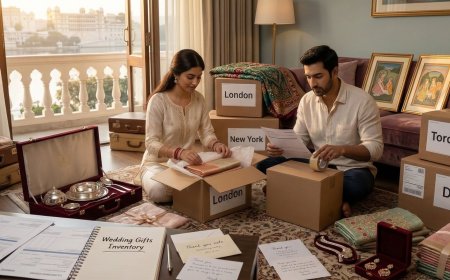
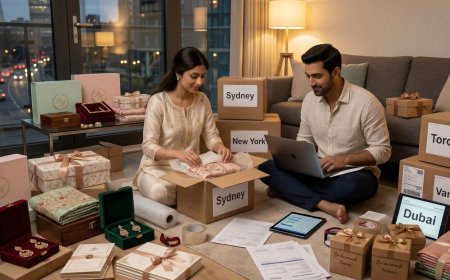
The Ganga jal is your most symbolically important sourcing challenge. Authentic Ganga jal — water brought directly from the Ganges at specific sacred ghats — is available from Indian religious goods shops in most major diaspora cities. In London, shops on Southall Broadway and Wembley High Road stock Ganga jal in sealed bottles from reputable suppliers. In New Jersey, Oak Tree Road in Edison carries it reliably. In Toronto, the Mississauga and Gerrard Street East area shops stock it. In Houston, Hillcroft Avenue is your best resource. In Sydney, Parramatta Road Indian religious goods shops generally carry it. For families who want to be absolutely certain of authenticity, a travelling relative bringing Ganga jal directly from Varanasi or Haridwar in their luggage is the most traditional solution — it travels well in a sealed container and carries an additional layer of meaning when the family knows exactly which ghat it came from.
The til (sesame seeds), tulsi leaves, and akshat that accompany the Ganga jal in the Kanyadan pour are available at the same shops. Tulsi plants are kept in many Indian households abroad — a leaf from a family's own plant carries particular warmth. Fresh tulsi is strongly preferable to dried.
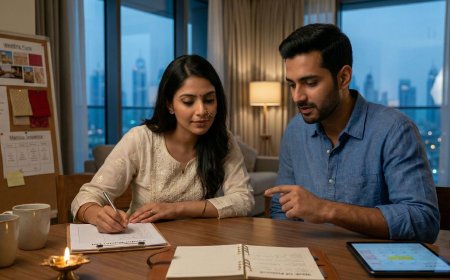
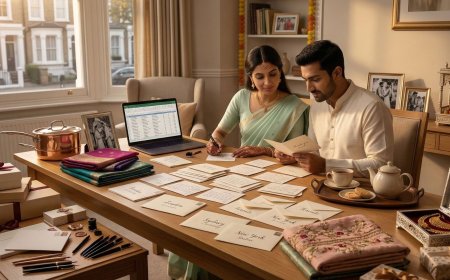
The pandit for a UP Brahmin Kanyadan must know the complete Kanyadan mantra sequence including the gotra pravachan — the formal recitation of both families' lineage groups — and the nakshatra name invocation for the bride. This is not optional and cannot be approximated. A pandit who does not know the bride's nakshatra name cannot perform the mantra correctly. Ensure your pandit has both families' gotras and the bride's nakshatra name at least four weeks before the ceremony, not on the morning of. NRI.Wedding's pandit directory includes priests with documented UP Brahmin Kanyadan experience across London, Leicester, Edison, Mississauga, and Melbourne.
The emotional preparation for the bride's father is something that Indian families rarely discuss directly and probably should. Many NRI fathers report being caught completely off guard by the intensity of this moment — men who have been composed through every other element of the wedding find themselves unable to speak the Sanskrit repetitions. Brief the pandit in advance that the father may need a moment. Brief the father himself — gently, respectfully — that what he is about to feel is exactly what this ritual was designed to invoke. There is no shame in it. The ritual is working as intended.
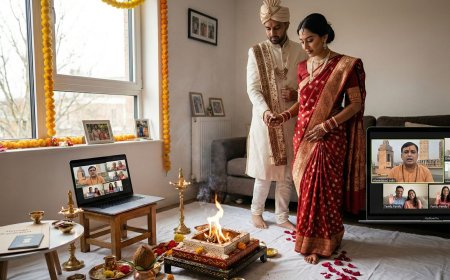
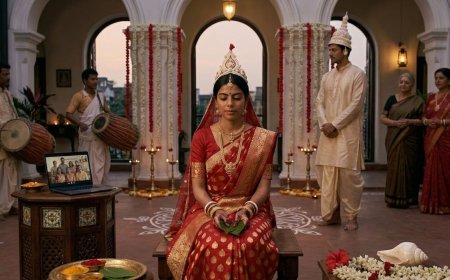
Coordinating with India for Kanyadan is particularly meaningful because grandparents and elder relatives in India often feel most strongly about witnessing this specific ceremony. Set up your most stable video connection — a large screen TV or monitor, not a handheld device — and test it the morning of the wedding. If your family is in UP (IST), an afternoon Kanyadan in the UK (3:00 PM GMT) falls at 8:30 PM IST — ideal for grandparents to watch from home. An afternoon ceremony in New Jersey (3:00 PM EST) falls at 12:30 AM IST — a challenging time, but many grandparents in India will stay awake for this moment without being asked.
Doing Kanyadan as a Destination Wedding in India
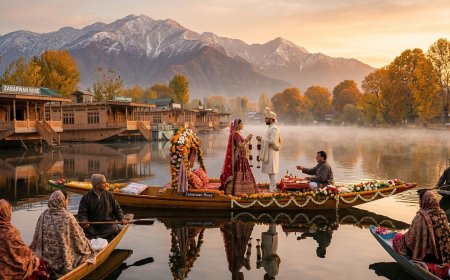
In India, Kanyadan finds its most complete cultural expression — and UP offers locations where the ritual carries a depth that is genuinely difficult to replicate anywhere else in the world.
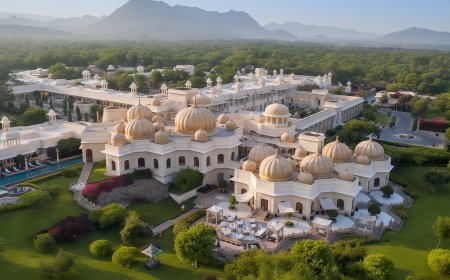
Varanasi is the supreme location for a UP Brahmin Kanyadan. A ceremony conducted in a Kashi haveli or riverside property, with a Kashi-trained pandit reciting the mantras with the Ganga physically present in the near distance, carries a quality of alignment and completeness that families who have experienced it describe as transformative. The city's spiritual atmosphere — where death and life and ritual exist in continuous, unembarrassed proximity — makes the weight of Kanyadan feel not unusual but entirely natural. Prayagraj (Allahabad), at the Triveni Sangam (confluence of the Ganga, Yamuna, and the mythical Saraswati), offers a similarly profound setting with particular significance for families whose ancestral roots run through that region. Lucknow provides more contemporary comfort with deep cultural authenticity — its heritage properties and the city's Brahmin scholarly tradition make it a superb destination for families who want reverence with refinement.
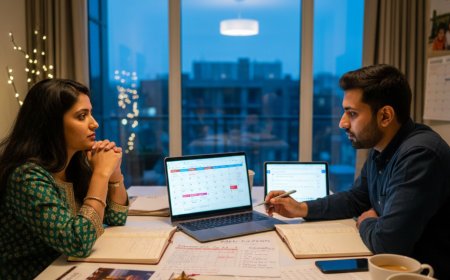
Brief your local pandit in writing on your specific sub-tradition — Kanyakubja and Saryuparin Kanyadan sequences differ in detail — and on both families' gotras and the bride's nakshatra name. Provide this information at your first meeting, not on the wedding morning. A pandit who has had two weeks with your family's details will perform Kanyadan with a precision and personalisation that elevates the entire ceremony.
What You Need: Ritual Checklist
Ritual Items Ganga jal in a clean vessel — minimum half a litre for the continuous pour. Til (sesame seeds), fresh tulsi leaves, and akshat to mix into the Ganga jal. A deep copper or silver bowl to catch the water as it flows over the joined hands. A clean white cloth for the bride's father to sit on. A small Vishnu image or shaligram stone placed before the ceremony space. Kumkum and akshat for the bride's forehead blessing before Kanyadan begins. Marigold garlands for the ceremony space. Incense and dhoop. Shagun envelope from the groom's family presented at the completion of Kanyadan.
People Required The bride's father as primary performer of Kanyadan — or, if the father is deceased or unable, the bride's maternal uncle or eldest male guardian as his designated representative. The bride's mother seated beside her husband, participating in the ritual. The pandit to lead the mantra sequence and gotra pravachan. A family elder to pour the Ganga jal over the joined hands. The groom seated and prepared to receive the bride's hand. A photographer — the Kanyadan moment is the single most important image in the entire wedding album, and it deserves a photographer who knows to be in position before the water begins to pour.
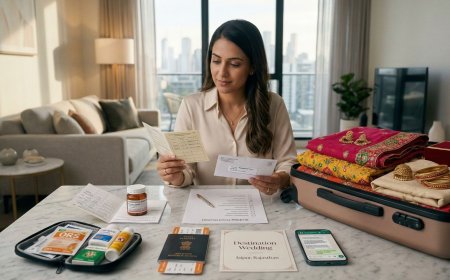
Preparation Steps Provide pandit with both gotras and bride's nakshatra name minimum four weeks ahead. Source Ganga jal and accompanying ritual items six to eight weeks ahead. Brief the bride's father on the sequence and what he will be asked to repeat two weeks before. Prepare the copper bowl and white cloth the morning of the ceremony. Set up India video call and test connection before the ceremony begins. Position photographer before guests are seated — not after.
NRI.Wedding connects UP Brahmin families with pandits who know the complete Kanyadan sequence, authentic Ganga jal suppliers across diaspora cities, and photographers who understand that some moments require being ready before they happen — find everything in our vendor directory.
5 Questions NRI Couples Always Ask
What happens if the bride's father is deceased? Can Kanyadan still be performed?
Yes — and this adaptation is addressed in Vedic tradition with care and specificity. If the father is deceased, the bride's maternal uncle — her mama — is the primary substitute, as the maternal line carries its own distinct custodianship in UP Brahmin tradition. If the mama is also unavailable, the bride's eldest brother or a senior male guardian performs the ritual. The mantra sequence is adjusted slightly to reflect the performer's relationship to the bride, and a qualified pandit will know these adjustments. The spiritual validity of Kanyadan is not diminished by the substitution — the intention and the love it carries remain fully present.
My partner is not Hindu. Can Kanyadan still be performed meaningfully in an interfaith ceremony?
Entirely yes. Kanyadan's meaning — a father releasing his daughter into a new life with complete love and complete blessing — transcends religious boundary. Many interfaith NRI families perform Kanyadan as the centrepiece of a ceremony that also includes elements from the non-Hindu partner's tradition. The ritual requires no religious commitment from the groom beyond respectful presence and the willingness to receive the bride's hand with both hands — which is, at its most essential, simply an act of readiness. Brief your pandit on the interfaith context in advance so the mantra explanations can be offered in a way that is welcoming rather than exclusionary for the groom's family.
How do we find a pandit who knows the nakshatra name system and can correctly identify our daughter's nakshatra name?
The nakshatra name is determined by the letter of the Sanskrit alphabet corresponding to the Nakshatra (lunar mansion) the moon occupied at the time of the bride's birth. A qualified Jyotishi or UP Brahmin pandit can calculate this from the bride's date, time, and place of birth. If the bride has never had a formal nakshatra name assigned — common in NRI families — this calculation can be done before the wedding and a name chosen from the appropriate letter. Raise this with your pandit at your first meeting, ideally three to four months before the wedding, so the name can be confirmed and both families can begin using it in the lead-up to the ceremony.
Can the bride's mother perform Kanyadan alongside the father, or is it exclusively a father's ritual?
In UP Brahmin tradition, both parents performing Kanyadan together is not just permitted — it is considered more complete and more auspicious than the father performing it alone. The Ardhangi (wife as half) philosophy holds that a man's spiritual acts are incomplete without his wife's participation. Many pandits will specifically invite the mother to place her hands alongside the father's during the water pour. In NRI families where the mother has been the primary cultural carrier — the parent who arranged the ceremonies, found the pandit, sourced the Ganga jal — her full participation in Kanyadan is not just appropriate but deeply right.
We are doing a civil ceremony first and the Kanyadan will happen at our religious ceremony six months later. Does the timing affect the ritual's meaning?
Not at all. Kanyadan belongs to the religious and cultural ceremony, not the civil registration, and its meaning is entirely independent of legal marital status. Many NRI families separate their civil and religious ceremonies by months or years for practical reasons, and Kanyadan retains its complete theological and emotional weight regardless. If anything, the clarity of intention that comes from already knowing this person — already having chosen them with full knowledge — can make the Kanyadan moment more consciously felt rather than less.
The Emotional Angle
There is a specific grief that UP Brahmin fathers carry to Kanyadan that is different from ordinary parental sadness at a child's wedding. It is not the grief of loss — though loss is present. It is the grief of completion. The feeling of a man who has spent twenty or thirty years building something — a daughter, a human being — and now stands at the moment of handing her forward, understanding that the building is finished and the giving is the point.
For NRI fathers, this grief has an additional geography. They raised their daughters in countries where nobody explained to their colleagues why the daughter's departure from the family was a spiritual event, not merely a domestic one. Where the office knew about the wedding but not about Kanyadan. Where the father went to work on the Monday after and nobody asked about the water or the Sanskrit or the moment when he could not speak.
He carried it alone. The way NRI parents carry most things — in the space between what the new country understands and what the old one knew without explaining.
And then the pandit calls his daughter's nakshatra name — a name she may never have heard spoken in a ceremony before — and the water begins to flow, and the father's hands cup beneath his daughter's, and he feels the weight of everything he has ever done for her converge into this single act of release.
The tears are not for what he is losing. They are for what he is completing. A father who performs Kanyadan with full understanding knows that this is not the end of his love. It is love's highest expression. It is love doing exactly what love is supposed to do: making itself large enough to let go.
A Moment to Smile
At a UP Brahmin wedding in Leicester two summers ago, the Kanyadan was proceeding with great solemnity until the copper bowl placed to catch the Ganga jal — which had been perfectly positioned by the decorator — was discovered, at the precise moment the water began to pour, to have a small crack in its base.
The water, following the ancient and reliable laws of physics, began to flow quietly onto the carpet. The bride noticed first. Then the groom. The pandit, who has been conducting ceremonies for thirty-four years and has seen most things, continued reciting without breaking rhythm while making the smallest possible gesture to a nearby aunt.
The aunt — who has since been described in family retellings as moving with the speed and purpose of a woman who has been training for exactly this moment her entire life — produced a stainless steel cooking bowl from somewhere that remains unexplained to this day, and substituted it beneath the joined hands with an efficiency that the family still speaks of with genuine awe.
The Kanyadan continued. The mantra did not falter. The carpet required professional cleaning. The cooking bowl, which had been intended for the post-ceremony langar, is now kept in the family home as a treasured object. The bride's father cried anyway, on schedule, exactly as planned.
Quotes from the Diaspora
"I practised the Sanskrit repetitions for three weeks. Every morning. I knew every word. And when the moment came and the pandit said my daughter's nakshatra name — a name I hadn't heard spoken aloud since her naming ceremony thirty years ago — I could not produce a single sound. Not one. My wife finished the repetitions for both of us. She has never once let me forget it. I have never once minded." — Suresh Pandey, Kanyakubja Brahmin family, Leicester
"We brought the Ganga jal from Varanasi in my hand luggage. My brother filled it at Dashashwamedh Ghat the morning he left. When that water poured over my daughter's hands in our living room in Mississauga, I felt the Ganga in the room. I know how that sounds. I don't care how it sounds. It was there." — Meena Shukla, Saryuparin Brahmin family, Mississauga
"I am the bride. I want to say something that nobody says about Kanyadan from the daughter's perspective: it is not sad. People assume it is sad for the daughter. It is not. It is the most loved I have ever felt in my life. To be given with that much care, with that much ceremony, with water from the Ganges and your father's hands shaking — that is not a loss. That is a declaration. My father declared to the universe that I was worth giving properly. I will never be anything but grateful." — Ananya Mishra, UP Brahmin family, New Jersey
Your Roots Travel With You
Kanyadan is the ceremony that UP Brahmin tradition has always known is impossible to fully describe in advance and impossible to forget afterward. It is the ritual that makes fathers into philosophers and daughters into recipients of the most ancient form of blessing available to a human family. It is the moment when the practical business of a wedding — the venue, the catering, the flowers — falls away entirely, and what remains is a father, a daughter, some water, and three thousand years of love knowing how to say goodbye.
NRI.Wedding is honoured to support families at this most sacred moment. From UP Brahmin pandits who know both gotras and the nakshatra name system, to Ganga jal suppliers in Leicester, Edison, Mississauga, and Sydney, to photographers who understand that the most important image of your wedding will be taken in a forty-five second window that cannot be retaken — we are here for every element of this extraordinary ceremony.
Your roots travel with you. Let them flow through your hands like the Ganga — giving everything, holding nothing.
What's Your Reaction?
 Like
0
Like
0
 Dislike
0
Dislike
0
 Love
0
Love
0
 Funny
0
Funny
0
 Angry
0
Angry
0
 Sad
0
Sad
0
 Wow
0
Wow
0