





























































Marriage, Meaning and the Shiva–Shakti Union: The Complete NRI Philosophical Guide to the Hindu Wedding
The Hindu wedding is not a cultural ceremony. It is a philosophical event — the enactment of one of the most sophisticated frameworks for understanding human union that any tradition has produced. This complete guide explores the Shiva–Shakti framework as the philosophical foundation of the Hindu marriage — from Devdutt Pattanaik's reading of the Ardhanarishvara and the Nataraja to the saptapadi as seven dimensions of the committed life, the agni as the principle of consciousness, and the grahasta ashrama as spiritual practice. For every NRI couple who has planned the ceremony with care and is now ready to understand what the ceremony is actually saying, this is the authoritative philosophical guide.


Marriage, Meaning and the Shiva–Shakti Union — A Philosophical Guide for the NRI Couple
The book arrived in her bag the way that the right books always arrive — not chosen so much as encountered, picked up from a friend's shelf in Bangalore during a visit that was ostensibly about the venue recce and was actually about the three conversations that happen on the margins of the official purpose. Her friend Deepika had pressed it into her hands on the last evening, saying: Read this before the wedding. Not for the rituals. For the understanding. The book was Devdutt Pattanaik's Shiva to Shankara, and Ishaan had carried it back to Amsterdam in her hand luggage, reading the first chapter on the flight over the Gulf and arriving at Schiphol with the particular alert exhaustion of someone who has encountered an idea that will not let them sleep until it has been fully followed.
She had been engaged to Vikram for eight months. The wedding was in four months. The planning — the venue in Coorg, the caterer, the photographer, the guest list that had been revised eleven times and had not yet stabilised — was substantially advanced. What was not advanced, she had been understanding in the weeks before the Bangalore visit, was the thing that Deepika's book was apparently about. The understanding of what they were actually doing. Not the ceremony — she understood the ceremony, had researched it, had spoken to the priest, had the sequence mapped in a document that she updated every Tuesday. The meaning of the ceremony. The philosophical framework within which the specific acts — the circumambulations, the fire, the seven steps — made sense not as cultural performance but as genuine statement about the nature of the thing she was entering.
Vikram, who was a software architect and who approached most problems with the systematic patience of someone who builds things for a living, had read the book when she handed it to him two days after her return. He had read it in two sittings and had come to her with a specific question: If the marriage is the union of Shiva and Shakti — the consciousness and the energy, the still and the dynamic — which one am I? Ishaan had said: That is exactly the question. And the answer is not what you think.
The conversation that followed lasted four hours and covered philosophy, mythology, the nature of consciousness, the structure of the ceremony, and the specific question of what it means to marry someone rather than simply to live with them. It was the best conversation they had had since the engagement, and it was the conversation that the book had made possible. It was also, Ishaan understood by the end of it, the conversation that the Hindu wedding ceremony had been designed to initiate — the philosophical encounter with the nature of the union that the ritual was celebrating.
This article is for Ishaan and Vikram — and for every NRI couple who has planned the wedding with care and intelligence and who is now ready to understand what the wedding is actually about.
Devdutt Pattanaik and the Project of Making Hindu Philosophy Accessible
Devdutt Pattanaik is the most widely read interpreter of Hindu mythology and philosophy writing in English today. His project — pursued across more than fifty books, hundreds of articles, and an extensive body of speaking and teaching — is the making accessible of the Hindu philosophical tradition to the educated contemporary reader who has the heritage but not the training, who grew up in the tradition but not in the texts, who wants to understand what the stories mean rather than simply to know what the stories are.
Pattanaik's specific contribution to the understanding of Hindu marriage is the sustained and serious engagement with the Shiva–Shakti framework as the philosophical foundation of the Hindu concept of union. Across his books — Shiva to Shankara, Goddess, 7 Secrets of Shiva, My Gita — he returns repeatedly to the question of what the divine marriage of Shiva and Shakti reveals about the nature of consciousness, the nature of energy, and the relationship between the two that constitutes existence itself. His reading of this mythology is not devotional in the sense of requiring the reader's prior religious commitment. It is philosophical — the use of mythological narrative as a vehicle for the articulation of ideas about the nature of reality that the Western philosophical tradition has addressed through different means.
For the NRI couple planning a Hindu wedding from Amsterdam or Vancouver or Sydney, Pattanaik's work provides something that the ceremony's Sanskrit mantras do not, in the context of the contemporary wedding, easily provide: the philosophical framework within which the ceremony's specific acts make sense as statements about the nature of the union being formed, rather than as ritual performances whose significance is taken on faith.
The Shiva–Shakti Framework: The Foundation
The Shiva–Shakti framework is one of the most fundamental conceptual structures in the Hindu philosophical tradition, and its implications for the understanding of marriage are both profound and specific. To understand why the Hindu tradition understands the ideal marriage as the union of Shiva and Shakti, it is necessary to understand what Shiva and Shakti represent in the tradition's own terms.
Shiva: The Principle of Consciousness
Shiva, in the philosophical reading that the tradition's most sophisticated interpreters have developed, is not primarily the destroyer of the Hindu trinity — the role that the popular representation assigns him. He is the principle of pure consciousness — the awareness that underlies and witnesses all of existence without being modified by it. Shiva is sat-chit-ananda in the impersonal form — being, consciousness, bliss as the ground of existence rather than as a quality that comes and goes. He is the witness who sees without seeing from a particular point of view, the awareness that is present to all experience without being exhausted by any of it.
The iconographic representation of Shiva that most directly expresses this philosophical dimension is the Shiva in samadhi — the meditating Shiva, seated in stillness on Mount Kailash, his eyes partially closed, the world going on around him while he remains in the state of absolute interiority. The river Ganga flows from his matted hair — the sacred river that the whole world depends on for its life, flowing from the stillness of the one who is not disturbed by the flowing. This is the Shiva of the philosophical tradition: the consciousness that is the source and the witness of everything, changed by nothing, dependent on nothing, complete in itself.
In Pattanaik's reading, Shiva represents the dimension of the human being — and of the human couple — that is the witness, the observer, the one who holds the space of pure awareness within which experience occurs. He is the stillness at the centre of the turning wheel, the silence within which the sound makes sense.
Shakti: The Principle of Energy
Shakti is the divine feminine principle — not the goddess in her particular forms (though those forms are expressions of her) but the underlying energy that constitutes and animates existence. If Shiva is the consciousness that witnesses, Shakti is the energy that manifests — the force that produces the diversity of the world, the creativity that generates form from the formless, the dynamic that makes the static aware of itself.
Shakti in the Shaiva tradition is not subordinate to Shiva. She is the condition of his awareness — the energy without which the consciousness has nothing to be conscious of, the activity without which the witness has nothing to witness. The tradition's most radical statement of this relationship is the Shakta philosophical claim that Shiva without Shakti is shava — a corpse. The consciousness without the energy is inert, unrealised, incomplete. The consciousness needs the energy not as a servant needs a master but as awareness needs content — fundamentally, necessarily, as the condition of its own fullness.
Pattanaik's reading of Shakti emphasises her quality of prakriti — the natural world, the material reality, the embodied existence that is the Shakti's domain. Shakti is the world that Shiva contemplates. She is not separate from him. She is the world that his consciousness inhabits and that his awareness makes meaningful.
The Union: Ardhanarishvara
The most direct visual expression of the Shiva–Shakti union in the Hindu iconographic tradition is the Ardhanarishvara — the half-man half-woman form that combines Shiva and Shakti in a single body, divided vertically: the right half Shiva, the left half the goddess Parvati. The Ardhanarishvara is not a hermaphrodite — it is not a biological statement. It is a philosophical statement: the assertion that the complete being is neither purely consciousness nor purely energy but the union of the two, that wholeness requires the integration of the still and the dynamic, the witness and the participant, the infinite and the finite.
The Ardhanarishvara is the Hindu tradition's answer to the question: what is the ideal state of the human being? Not the masculine alone. Not the feminine alone. The integrated union of the two principles that the masculine and the feminine symbolise — a union that is not the dominance of one over the other but the completion of each by the other.
The Ardhanarishvara is also, in Pattanaik's reading, the image of the ideal marriage — the union in which each partner contributes the principle that completes the other, in which the couple together constitutes a wholeness that neither possesses individually.
What the Marriage Is Actually Doing: The Philosophical Function of the Hindu Wedding
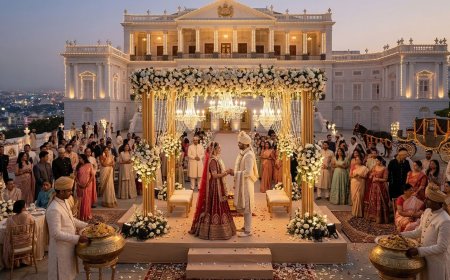
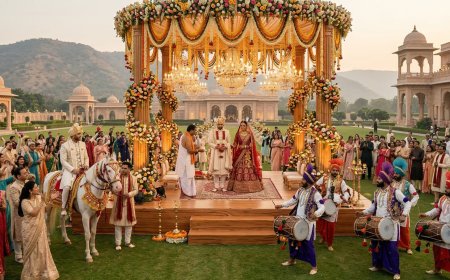
With the Shiva–Shakti framework in place, the specific ritual acts of the Hindu wedding ceremony become legible as philosophical statements rather than cultural performances. Each element of the ceremony is making a claim about the nature of the union being formed — a claim that the Sanskrit tradition has articulated with extraordinary precision and that the ceremony is designed to transmit, through the specific acts of the ritual, to the couple who performs them.
The Agni: The Third Presence
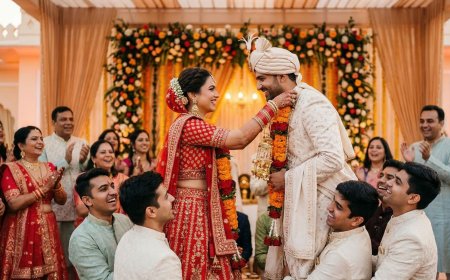
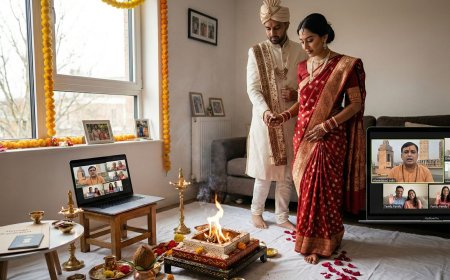
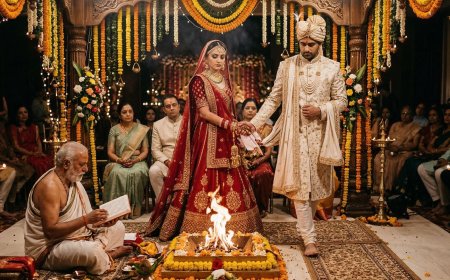
The central role of the sacred fire — the agni — in the Hindu wedding ceremony is one of the tradition's most significant statements about the nature of the marriage. The fire is not a backdrop to the ceremony. It is the third presence — the divine witness in whose presence the union is formed and whose witness makes the union sacred rather than merely contractual.
Agni in the Vedic tradition is the god of fire, of transformation, of the digestive principle that converts the raw into the cooked, the material into the energy, the offering into the substance that reaches the divine. Agni is the mediator between the human and the divine — the fire that transforms the offering, the tongue that carries the human intention to the divine presence. The marriage conducted in the presence of Agni is conducted in the presence of the transformative principle — the fire that will transform the two individuals into the couple, the witnesses and the potential of their union into its actuality.
In the Shiva–Shakti framework, the agni at the centre of the wedding mandap is the fire of consciousness — the Shiva principle made visible and present at the ceremony. The couple who circumambulates the agni is circumambulating the principle of consciousness that their union is in relationship to — not worship of an external deity but the acknowledgment of the dimension of pure awareness that the tradition identifies as the ground of the sacred.
The Saptapadi: Seven Steps, Seven Dimensions
The saptapadi — the seven steps taken by the couple together around the sacred fire, each step accompanied by a specific mantra and a specific intention — is the ceremonial heart of the Hindu wedding, the act that the tradition identifies as the moment at which the marriage is complete in the full legal, ritual, and sacred sense. The seven steps are not a formality. They are seven specific statements about the nature of the union being formed, seven dimensions of the relationship being established.
The traditional interpretations of the seven steps vary by community and by textual tradition, but the broad framework is consistent: the first step establishes the commitment to sustain each other materially — food, shelter, the physical foundation of the life together. The second establishes the commitment to physical strength and health — the care of the bodies that the union inhabits. The third establishes the commitment to wealth and prosperity. The fourth establishes the commitment to joy and the shared pursuit of happiness. The fifth establishes the commitment to children and to the continuation of the family. The sixth establishes the commitment to the seasons, to the natural world, to the ecological relationship in which the couple's life is embedded. And the seventh — the most significant, the step that completes the saptapadi — establishes the commitment to friendship, to the relationship of mutual respect and genuine companionship that the tradition identifies as the deepest and the most enduring foundation of the marriage.
In Pattanaik's reading, the saptapadi is the enactment of the couple's commitment to walk together through the full dimensionality of human life — not only the joyful and the prosperous but the physical and the ecological, not only the celebration but the friendship that sustains the union when the celebration is over. The seven steps are the couple's acknowledgment that the marriage will be asked to support all of these dimensions, and their commitment to walk together through each of them.
The Kanyadaan: The Gift and Its Philosophy
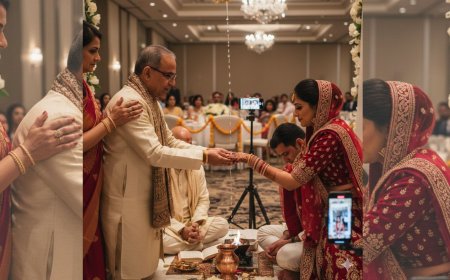
The kanyadaan — the gift of the daughter by her father to the groom — is one of the most ritually significant and philosophically complex elements of the Hindu wedding ceremony, and one of the most contested in the contemporary context. Pattanaik's reading of the kanyadaan goes deeper than both the traditional interpretation and the contemporary feminist critique, finding in the ritual a philosophical statement about the nature of the gift and the nature of the relationship.
The kanyadaan is, in the tradition's own understanding, the most significant gift a father can give — more significant than the gift of gold, of land, of any material object — because what is given is not a possession but a person, and the giving is not the transfer of ownership but the release of the protective relationship that the father has held over the daughter since her birth. The father who performs the kanyadaan is not giving away a piece of property. He is releasing, with the full solemnity of the ritual gesture, the specific relationship of guardianship and protection that has constituted his fatherhood — acknowledging that the daughter who has been under his care now moves into a different form of belonging, a belonging that she herself has chosen.
The philosophical complexity of the kanyadaan is the complexity of all gift-giving in the tradition — the question of what it means to give something that is not, in the deepest sense, yours to give. The daughter is not the father's possession, and the tradition knows this. The kanyadaan is the ritual acknowledgment of this knowledge — the father's gesture of releasing what he never owned but what he was entrusted to protect, the gesture of handing over the protection rather than the person.
The Shiva–Shakti Dynamic in the Marriage: What It Means for the Couple
The Shiva–Shakti framework, when applied to the specific relationship of the marriage rather than to the cosmic principle, produces a set of insights about the nature of the marital relationship that Pattanaik's reading makes available to the contemporary couple in a form that the Sanskrit texts do not, without interpretation, easily provide.
The Question of Which Is Which
Vikram's question — which one am I, the Shiva or the Shakti? — is the question that reveals the most common misunderstanding of the framework. The popular reading of the Shiva–Shakti dynamic maps the principles onto the gender binary: the man is Shiva, the woman is Shakti. The man is the consciousness, the still witness. The woman is the energy, the dynamic creative. The marriage is the union of these distinct roles.
Pattanaik's more sophisticated reading resists this mapping. Both dimensions — the consciousness and the energy, the still and the dynamic — are present in each person. The marriage is not the union of a Shiva person and a Shakti person. It is the relationship in which each person's Shiva and Shakti dimensions are in relationship with the other person's Shiva and Shakti dimensions — a four-way dynamic of extraordinary complexity that the simple gender mapping completely fails to capture.
Each person in the marriage is, at different times and in different contexts, the witness and the participant, the still centre and the dynamic energy, the one who holds the space and the one who fills it. The health of the marriage, in this reading, is the health of the dynamic — the ability of each partner to shift between these roles with the fluidity that the relationship requires, the ability to be the Shiva for the other when the other needs the witness and to be the Shakti when the other needs the energy.
Ishaan's answer to Vikram's question — the answer that the four-hour conversation arrived at — was: we are both. We are Shiva for each other when we need the witness. We are Shakti for each other when we need the energy. The marriage is the relationship in which these roles are in constant, living exchange.
The Stillness and the Movement: The Kailash and the World
The image that Pattanaik returns to most consistently in his reading of the Shiva–Shakti dynamic is the geography of the divine marriage: Shiva on Mount Kailash, in his stillness and his meditation, and Parvati — the Shakti in her most benign form — who comes to him, who insists on the relationship, who refuses the separation between consciousness and energy that Shiva's meditation represents.
The Parvati-Shiva love story in the Puranic tradition is not the story of a passive goddess waiting for the god's attention. It is the story of the energy insisting on its relationship to the consciousness — the Shakti refusing to allow the Shiva to remain in his cosmic isolation, the world refusing to allow the consciousness to forget that the world exists. Parvati's pursuit of Shiva — her tapas, her austerities, her persistence in winning his attention — is the energy's insistence on being seen by the consciousness that witnesses it.
In the marital context, this dynamic describes one of the most common and most significant tensions in the relationship: the partner who retreats into interiority — into work, into meditation, into the Kailash of their own inner world — and the partner who insists on connection, on the relationship's active maintenance, on the world's claim on the one who has retreated. Neither position is wrong in the tradition's reading. The retreat is as necessary as the insistence. The consciousness needs its stillness as surely as the energy needs its dynamism. The health of the marriage is the ability to negotiate between these needs — the Kailash and the world, the meditation and the involvement, the stillness and the movement — without losing either.
The Destruction and the Creation: The Dance of Nataraja
The cosmic dance of Nataraja — Shiva as the lord of the dance, dancing the universe into and out of existence — is another of Pattanaik's central images for the understanding of the Shiva–Shakti dynamic and its implications for the marriage.
The Nataraja is Shiva dancing — the consciousness in motion, the still witness become the dynamic creator and destroyer. The dance is the cosmos — the vibration that produces the world, the rhythm that sustains it, and the cessation that ends it. Around the dancing Shiva, the ring of fire — the Shakti's energy, the circle of the world that the dance produces and within which the dance takes place.
In the marital context, the Nataraja image describes the creative dimension of the union — the couple as the co-producers of the world that their relationship generates. The marriage does not simply join two existing worlds. It creates a third world — the world of the relationship, the world that exists only in the space between the two people and that is produced by their specific combination. The Nataraja image is the image of this creative act — the dance that the couple performs together, the rhythm they find and lose and find again, the ring of fire that the dance produces and within which the dance is sustained.
The Grahasta Ashrama: Marriage as Spiritual Practice
One of the most significant philosophical dimensions of the Hindu understanding of marriage — and one that Pattanaik engages with directly — is the concept of the grahasta ashrama, the householder stage of life that the marriage inaugurates. In the traditional Hindu framework of the four ashramas — the stages of life through which the ideal individual progresses — the grahasta ashrama is not a lesser or more worldly stage than the sannyasa of the renunciant. It is a distinct and equally legitimate path of spiritual development.
The grahasta's spiritual practice is the practice of the relationship — the daily, specific, demanding work of being in genuine relationship with another person, of meeting the other's needs while maintaining the integrity of one's own self, of navigating the inevitable conflicts and misunderstandings and failures of the long-term relationship with the patience and the generosity that the tradition identifies as genuine spiritual practice. The grahasta does not retreat from the world to find the divine. The grahasta finds the divine in the world — in the specific, embodied, demanding reality of the marriage and the family and the community that the marriage creates.
This is a significant philosophical claim, and it is one that the contemporary understanding of spirituality — which tends to privilege the individual's inner journey over the relational engagement — does not always make room for. Pattanaik's reading recovers this dimension of the Hindu tradition's understanding of marriage: the marriage not as the end of the spiritual life but as one of its most demanding and most fruitful forms.
The Mirror and the Other: The Philosophical Function of the Partner
The grahasta's spiritual practice is possible, in Pattanaik's reading, because the partner functions as the most direct mirror that the tradition provides for the self's genuine encounter with itself. The isolation of the renunciant is a mirror in one sense — the removal of external distraction reveals the interior. But the intimacy of the marriage is a mirror in a different and more demanding sense — the revelation of the self through the other's response, the encounter with the dimensions of the self that only the other's specific presence makes visible.
The partner who irritates is the mirror of the self's impatience. The partner who disappoints is the mirror of the self's attachment. The partner who surprises with an unexpected generosity is the mirror of the self's capacity to receive. The marriage in which both people are growing is the marriage in which both people are using the mirror — are willing to see what the partner's response reveals about themselves, rather than using the partner's response as evidence of the partner's deficiency.
This is the philosophical claim that the Hindu wedding ceremony is inaugurating when the couple stands before the agni and speaks the saptapadi — the commitment not simply to sustain each other materially and emotionally but to use the relationship as the spiritual mirror that the grahasta ashrama designates it to be.
The NRI Couple and the Philosophical Encounter
For the NRI couple planning the wedding from Amsterdam or Toronto or Melbourne, the philosophical framework that Pattanaik's work provides has a specific relevance that goes beyond the general value of understanding the ceremony's meaning. The NRI couple is, in many cases, approaching the Hindu wedding as an inherited tradition whose ritual form they are committed to but whose philosophical content they have not had the systematic opportunity to encounter. The Sanskrit mantras were not explained to them. The significance of the saptapadi was not taught in the British school or the Canadian university. The Shiva–Shakti framework was not the subject of the conversations at the Tamil diaspora temple or the Gujarati community centre where they grew up.
The result is a specific and common situation: the NRI couple who plans the wedding with genuine care and genuine respect for the tradition, who ensures that the ceremony is conducted correctly, who provides the priest and the fire and the seven steps — but who stands at the centre of the ceremony without the philosophical vocabulary to understand what they are saying to each other and to the divine witness and to the assembled community.
Pattanaik's work addresses this gap directly. His books are written for exactly this reader — the educated, English-speaking, globally-located person with Hindu heritage who wants the understanding, not the recitation. The NRI couple who reads Shiva to Shankara or 7 Secrets of Shiva or Goddess before the wedding is the couple who stands at the agni with the understanding of the agni — who knows what the fire represents, what the saptapadi is saying, what the kanyadaan is releasing, what the Ardhanarishvara image reveals about the nature of the union they are forming.
The Pre-Wedding Philosophical Conversation
The most valuable gift that Pattanaik's work can give the NRI couple is not the knowledge itself but the conversation that the knowledge initiates. The conversation that Ishaan and Vikram had for four hours — about consciousness and energy, about which principle each of them embodied in what contexts, about what it meant to be the Shiva for the other when the other needed the witness — was the conversation that the Hindu wedding ceremony had been designed to initiate from the beginning. The ceremony could not initiate it, because the ceremony's Sanskrit was not explained and the philosophical framework was not provided. The book initiated it in the ceremony's place.
The NRI couple who reads Pattanaik's relevant work in the months before the wedding and discusses it with each other — not the wedding planning, not the vendor list, but the philosophical substance of what the wedding is doing — is the couple who arrives at the ceremony with the fullest possible understanding of what they are about to say and to whom.
Common Misunderstandings About the Shiva–Shakti Framework in Marriage
The first misunderstanding is the gender mapping — the assignment of Shiva to the male partner and Shakti to the female as a fixed and permanent role allocation. Pattanaik's reading is clear that both principles are present in both partners, and that the health of the marriage is the fluidity of the exchange between the principles rather than the fixity of their assignment. The couple who reads the framework as the assignment of the still, witnessing role to the man and the dynamic, energetic role to the woman has imported a gender binary into the tradition that the tradition's own most sophisticated reading does not support.
The second misunderstanding is the hierarchy — the reading of the Shiva–Shakti relationship as one in which consciousness is superior to energy, in which the witness is more valuable than the participant, in which the still is better than the dynamic. The tradition's own statement — shava without Shakti — is the most direct rebuttal of this hierarchy. The consciousness without the energy is inert. Neither principle is complete without the other. The marriage is the space in which their equality and their mutual dependence is acknowledged and lived.
The third misunderstanding is the romantic reading — the interpretation of the Shiva–Shakti framework as a description of the ideal romantic love rather than the ideal existential partnership. The Shiva–Shakti union is not primarily about romantic feeling. It is about the complementarity of principles that together constitute wholeness. The marriage that the framework describes is one that survives the fluctuations of romantic feeling because it is grounded in something more fundamental than feeling — the acknowledgment of the other as the principle that completes the self.
The fourth misunderstanding is the static reading — the interpretation of the Shiva–Shakti union as a fixed state that the marriage achieves rather than a dynamic that the marriage sustains. The Nataraja image is the corrective to this reading: the dance is never finished, the creation and the destruction are continuous, the union is not a destination but a practice. The marriage is not the achievement of the Shiva–Shakti balance but the ongoing, daily, demanding practice of maintaining it — the negotiation of the Kailash and the world, the stillness and the movement, that the tradition identifies as the spiritual work of the grahasta ashrama.
The fifth misunderstanding is the cultural reading — the interpretation of the Shiva–Shakti framework as specifically Hindu and therefore not relevant to the intercultural couple, the couple where one partner is not Hindu, or the couple who identifies with the Hindu tradition culturally rather than religiously. Pattanaik's reading of the framework is philosophical rather than devotional — it is a set of claims about the nature of consciousness and energy, of stillness and dynamism, of the complementarity of principles that together constitute wholeness, that are available to any person who finds them meaningful regardless of their religious identity. The Ardhanarishvara is a Hindu image. The philosophical claim it makes is a human one.
The Complete Reference Table: The Shiva–Shakti Framework and Its Wedding Applications
| Concept | Shiva Dimension | Shakti Dimension | Wedding Ritual Expression | Marital Application | Pattanaik's Key Text |
|---|---|---|---|---|---|
| Primary Principle | Pure consciousness; witness | Energy; creative dynamism | Agni as consciousness witness | Each partner as witness and participant | Shiva to Shankara |
| Cosmic Role | The still centre | The dynamic movement | Saptapadi: still commitment, dynamic steps | Negotiating stillness and movement in marriage | 7 Secrets of Shiva |
| Iconic Form | Shiva in samadhi | Shakti in dance | Mandap as sacred space of integration | The home as Kailash and world together | Goddess |
| The Union Form | Ardhanarishvara right half | Ardhanarishvara left half | Varmala: the choice of the other | Neither alone is complete | Shiva to Shankara |
| The Dance | Nataraja: consciousness in motion | The ring of fire around the dance | Pheras: the couple's circumambulation | The co-creation of the marital world | 7 Secrets of Shiva |
| The Gift | Releasing what was never owned | Receiving the released | Kanyadaan: the philosophical gift | The marriage as mutual release | My Gita |
| The Geography | Kailash: the retreat | The world: the insistence | Saptapadi step seven: the friendship | Negotiating interiority and engagement | Shiva to Shankara |
| The Mirror | The witness who sees | The energy that is seen | Agni as divine witness | The partner as spiritual mirror | My Gita |
| The Spiritual Stage | Sannyasa: the renunciant | Grahasta: the householder | The wedding as ashrama inauguration | Marriage as spiritual practice | Dharma |
| The Complementarity | Incomplete without Shakti | Incomplete without Shiva | The ceremony requires both bride and groom | Neither partner is whole alone | Goddess |
| The Philosophy | Sat-chit-ananda as ground | Prakriti as manifestation | The sacred fire as the third presence | The relationship as the divine ground | Shiva to Shankara |
| The Gender Reading | Present in both partners | Present in both partners | Ardhanarishvara: neither is only one | Roles are fluid; not fixed by gender | 7 Secrets of Shiva |
| The Practice | Meditation; witnessing | Engagement; creation | Daily renewal of the saptapadi commitment | Marriage as ongoing practice | My Gita |
What Ishaan Understood in Coorg
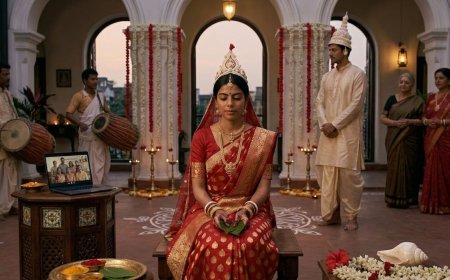
The wedding was in November, in the coffee estate in Coorg that they had chosen for the specific quality of its November light and for the specific smell of the coffee blossoms that her mother had said was the smell of auspiciousness and that the decorator had found a way to incorporate into the mandap flowers. The priest had agreed, in the pre-wedding consultation, to explain each element of the ceremony as it was conducted — to provide the assembly, which included Vikram's colleague from Berlin and three of Ishaan's university friends from Amsterdam and the full extended family from both sides, with the philosophical framework within which the specific acts were making sense.
The explanation of the saptapadi took six minutes. The priest explained each of the seven steps in terms that the assembly could understand — not the Sanskrit alone but the Sanskrit and the meaning and the specific claim that each step was making about the dimension of human life that the couple was committing to walk through together. At the seventh step — the step of friendship, the step that the tradition identifies as the most significant because it is the one that survives when the others are tested — Vikram turned to Ishaan and said something in her ear that she could not hear over the sound of the assembled family and that she would not repeat afterward when asked.
She had read the books. She had had the four-hour conversation. She had understood, as well as a person can understand before the experience, what the saptapadi was saying. Standing at the seventh step, having walked the six before it, she understood something additional that the reading had prepared for but not produced: the understanding that the philosophy was not a description of something abstract. It was a description of this — this specific man, this specific fire, this specific moment in the coffee estate in Coorg in the November light. The Shiva–Shakti union was not a cosmic principle happening somewhere else. It was happening in the seven steps around the agni, in the specific exchange of the two people walking them.
Read Pattanaik before the wedding — Shiva to Shankara at minimum, My Gita if the time permits. Have the philosophical conversation with each other before the vendor calls resume. Ask the priest to explain the saptapadi in the pre-wedding consultation and again to the assembly at the ceremony. Find the Ardhanarishvara image and look at it together and discuss which half you are at this specific moment, understanding that the answer will change.
And then stand at the seventh step of the saptapadi, having walked the six before it in the presence of the agni and the assembly and the four thousand years of the tradition that designed this specific sequence for this specific purpose, and understand that the philosophy was never abstract. It was always this. This fire. This person. This step.
Published by NRIWedding.com — The Premium Global Platform for Non-Resident Indians Planning Indian Weddings From Abroad.
What's Your Reaction?
 Like
0
Like
0
 Dislike
0
Dislike
0
 Love
0
Love
0
 Funny
0
Funny
0
 Angry
0
Angry
0
 Sad
0
Sad
0
 Wow
0
Wow
0