










































Lalgarh Palace, Bikaner — Marrying Inside a Museum-Grade Royal Palace: The NRI Wedding Guide
The bride had gotten lost on the way to the bathroom. Not the embarrassing lost — the lost that happens when the specific thing causing it is not the absence of signage but the presence of portraits. The portraits of the rulers of Bikaner on every wall. Not the decorative fiction of the heritage hotel interior designer. The specific, historically documented succession of the Maharajas whose line began in 1465 and whose family built this palace. She had stopped in front of one portrait and looked at the corridor around her — the Indo-Saracenic arches, the red Dulmera sandstone, the carved jali screens — and thought: we are getting married in this man's house. Not the hotel. His house. This complete guide gives NRI couples everything needed to plan a wedding at Bikaner's museum-grade royal palace — covering the five-century Bikaner royal lineage, Samuel Swinton Jacob's finest Indo-Saracenic architecture, every wedding space from the central courtyard to the portrait gallery corridors, two comprehensive tables with all venue costs and accommodation from ₹8,000 to ₹90,000 per night, complete budget from ₹2.33 crore to ₹4.79 crore, the Bikaner cuisine imperative, the Sadul Museum and Junagarh Fort guest programme, and the five mistakes that leave the museum-grade heritage unused.


Lalgarh Palace, Bikaner — Marrying Inside a Museum-Grade Royal Palace: The NRI Wedding Guide
The Portrait Gallery
The bride had gotten lost on the way to the bathroom.
Not the embarrassing lost — not the lost that requires the asking for directions from the stranger in the corridor. The lost that happens when you are walking through a palace whose rooms connect to other rooms whose corridors open into other corridors, and when the specific thing that causes the losing is not the absence of the signage but the presence of the portraits.
The portraits were on every wall.
Not the generic ancestral portraits of the heritage hotel whose walls are decorated with the paintings of people whose connection to the property is the decorative fiction of the interior designer's period atmosphere. The specific, individual, historically documented portraits of the rulers of Bikaner — the Maharajas whose succession began in 1465 with Rao Bika, the Rathor Rajput who established the kingdom in the heart of the Thar Desert, and whose line continued through the centuries in the specific, unbroken continuity that the Bikaner royal family maintains to the present day.
The bride had stopped in front of one portrait. The subject was a Maharaja of the early twentieth century — the specific era of the Lalgarh Palace's construction — dressed in the formal court regalia whose specific detail the painter had rendered with the meticulous care of the official portrait: the jewels, the weapons, the specific decorative elements of the Bikaner court whose catalogue is the visual history of the kingdom's material culture.
She had looked at the portrait for a long time.
Then she had looked at the corridor around her — the Indo-Saracenic arches whose repeated rhythm created the specific perspective of the long palace corridor, the red Dulmera sandstone whose warmth the corridor's light found at the specific angle of the late afternoon, the carved stone screens whose geometric patterns filtered the outside light into the specific, dappled interior illumination of the Rajput architectural tradition.
She had thought: we are getting married in this man's house.
Not the hotel. Not the heritage property. Not the managed venue. The house — the specific, continuous, inhabited house of the family whose portraits are on the walls and whose lineage is the building's living history.
She had not expected to feel that. She had expected to feel the beauty — she had researched the Lalgarh Palace thoroughly, had seen the photographs, had read the history. She had not expected to feel the specific weight of the continuous human presence that the portrait gallery produces in the person who stops to look at the people who were here before and who understands, for the first time in the researching and the planning and the site-visiting, what it actually means to get married in a royal palace that is not the theme park but the place.
This is what the Lalgarh Palace does — not merely to the bride who got lost on the way to the bathroom, but to every person who enters it with the attention it deserves.
This guide is for the NRI couple who wants to marry inside the museum-grade royal palace that Bikaner has been keeping at the edge of the Rajasthan destination wedding conversation — and who needs the complete knowledge to understand why the keeping is ending and why the timing of their discovery matters.
The Palace: History Written in Red Sandstone
Rao Bika and the Kingdom of the Desert
The Bikaner story begins in 1465 — the specific year that Rao Bika, the fifth son of the Jodhpur ruler Rao Jodha, rode into the Thar Desert with a small force and the specific ambition of the younger son who cannot inherit the father's throne and who therefore goes to find his own.
The territory he found was the heart of the Thar — the semi-arid landscape whose harshness had kept other kingdoms at its edges and whose specific emptiness was the opportunity that Rao Bika understood as the foundation rather than the obstacle. He established the kingdom of Bikaner in the desert's centre, built the fort that became the Junagarh — the inner fort whose construction began in 1589 under his descendant Rai Singh and whose extraordinary state of preservation makes it among India's most remarkable fort complexes — and founded the dynasty whose continuous occupation of the Bikaner throne across five and a half centuries is the specific historical depth that the Lalgarh Palace's wedding inherits.
The historical lineage matters because the Bikaner royal family is not the ceremonial remnant of the pre-independence princely state whose connection to the historical tradition is the nominal one. The House of Bikaner — headed currently by Maharaja Karni Singh's successors — maintains the active engagement with the cultural, social, and heritage responsibilities that the family understands as the continuation of the royal function. The Lalgarh Palace is not the abandoned seat that has been converted to the commercial purpose. It is the property of the family that built it, managed by the family's institutional structures, whose wedding hosting is the continuation of the hospitality tradition rather than the departure from the heritage into the commercial.
The Lalgarh Palace: Indo-Saracenic at Its Finest
The Lalgarh Palace was built between 1902 and 1926 under Maharaja Ganga Singh — the Bikaner ruler whose reign is among the most celebrated in the Rajputana's modern history, the ruler who built the Ganga Canal that brought water to the desert, who represented India at the Paris Peace Conference of 1919, who modernised the Bikaner administration with the specific energy of the reforming prince who understood that the continuation of the tradition required the adaptation to the changed world.
The architect was Sir Samuel Swinton Jacob — the British engineer and architect whose work in Rajputana included some of the finest examples of the Indo-Saracenic style, the architectural synthesis of the Rajput palace tradition and the European classical vocabulary that the late colonial period produced across the Indian subcontinent. Jacob had already designed significant buildings in Jaipur and other Rajputana centres when the Bikaner commission arrived, and the Lalgarh is widely considered among his finest achievements.
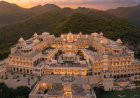
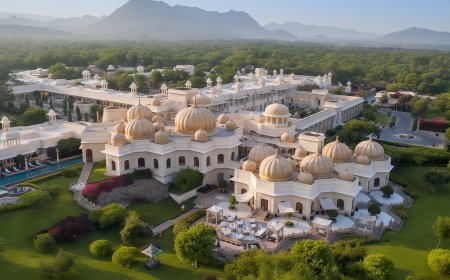
The building material is the red Dulmera sandstone — the specific, warm-toned stone quarried near Bikaner whose colour is different from the Jaisalmer yellow and the pink of the Jaipur, a deeper, richer red whose surface the Bikaner craftspeople worked with the specific filigree carving technique of the local tradition to produce the jali screens, the ornamental friezes, the carved panels, and the specific decorative vocabulary that makes the Lalgarh's exterior one of the most distinctive facades in Indian palace architecture.
The Indo-Saracenic synthesis — the Mughal dome meeting the Rajput chhatri, the European arcade meeting the Indian jali, the formal symmetry of the classical plan meeting the organic accumulation of the palace tradition — is the architectural achievement that the Lalgarh represents at the quality that the Maharaja's patronage and Jacob's professional mastery combined to produce.
The Museum: The Sadul Museum
The Lalgarh Palace complex includes the Sadul Museum — the museum established within the palace whose collection documents the Bikaner royal family's history through the specific, museum-grade artefacts whose quality and whose provenance are the product of five and a half centuries of royal accumulation.
The Sadul Museum's collection includes the vintage photographs — the extraordinary photographic archive of the Bikaner court whose images, taken from the late nineteenth century onward, are among the most comprehensive documentary records of any Rajputana royal family — the hunting trophies, the vintage cars, the weapons, the specific material culture of the Bikaner court whose documentation in the museum collection is the heritage conservation whose quality gives the Lalgarh its museum-grade designation.
For the wedding couple: the museum is not the separate institution whose visiting is the optional cultural programme. It is the integrated dimension of the Lalgarh's character — the specific quality of the collected, preserved, documented royal heritage whose presence in the building makes the palace the living museum rather than the managed heritage hotel. The wedding that happens at the Lalgarh happens within this museum-grade context — the wedding photographs taken in the portrait gallery's corridor, the ceremony in the courtyard whose arches carry the specific carved detail of Jacob's finest work, the reception in the space whose quality is the quality of the institution rather than the hotel.
The Bikaner Context: The Desert City Nobody Compares
The Underrated Rajasthan
Bikaner sits at the specific position in the Rajasthan tourism hierarchy that the destination wedding world has not yet corrected — the significant city, the extraordinary history, the museum-grade fort and palace complex, and the specific cultural tradition of the Bikaner court whose legacy in the crafts, the cuisine, and the visual arts is the legacy of the sophisticated desert kingdom — understood by the heritage traveller and undervalued by the destination wedding circuit whose attention has been concentrated on the Udaipur, the Jaipur, and the Jaisalmer.
The Junagarh Fort — whose construction in 1589 produced the fort that has never been conquered, whose interior is the continuous accumulation of the royal apartments and the temples and the darbar halls across four centuries of construction, and whose specific architectural quality is among the finest of any Indian fort — is the heritage asset sitting in the city that the destination wedding circuit drives through on the way to Jaisalmer.
The Karni Mata Temple — the specific, extraordinary temple at Deshnok whose resident rats are the sacred manifestation of the goddess's devotees and whose cultural significance in the Bikaner region is the significance of the living religious tradition — is the specific Bikaner experience that the international guest who attends the Lalgarh wedding should be given the access to as the irreplaceable cultural dimension of the destination's character.
The Bikaner cuisine — the specific culinary tradition of the desert kingdom whose snacks, the Bikaner bhujia and the related products, are among the most widely distributed Indian food products internationally, and whose full culinary tradition is the more complex and more sophisticated expression of the desert cooking that the snack products represent — is the catering dimension of the Lalgarh wedding whose engagement gives the occasion the specific Bikaner cultural identity that the generic Rajasthani menu does not.
The Access
Bikaner's access is the specific planning consideration that the destination's position at the edge of the Rajasthan tourist circuit imposes — the city that is accessible but not trivially so, whose distance from the major hubs requires the planning that the more conveniently located destination does not.
By air: the Bikaner Airport — the Nal Airport — receives the direct flights from Delhi and Jaipur whose journey time from Delhi is approximately one hour. The international guest will connect through Delhi, whose flight frequency to Bikaner has improved in recent years though the schedule is more limited than the flights to the major Rajasthan destinations. The Delhi to Bikaner flight is the primary international guest access route and should be specifically confirmed at the booking stage rather than assumed to be available at the required frequency.
By train: the Bikaner Junction is the well-connected railway station whose service from Delhi — the overnight trains whose journey time is approximately eight hours — provides the train alternative for the guests whose preference is the rail journey or whose flight connection does not work. The overnight train from Delhi to Bikaner is the specific experience of the desert crossing by rail whose arrival in the Bikaner morning is the arrival that begins the destination experience before the palace gates are reached.
By road from Jaisalmer: the three and a half hour road journey from Jaisalmer — the routing that connects the two Thar Desert cities through the landscape whose specific character is the desert interior — is the road option for the guests whose Rajasthan itinerary includes both destinations and who use the Lalgarh wedding as the Bikaner chapter of the larger Rajasthan journey.
The Wedding Spaces
The Central Courtyard
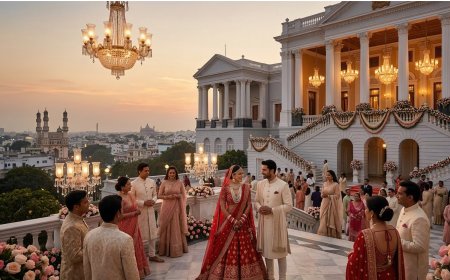
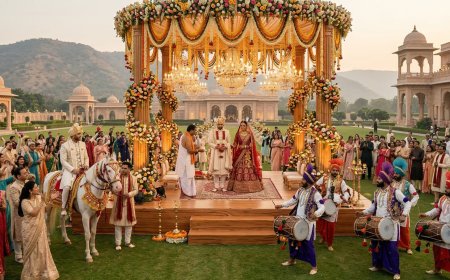
The Lalgarh Palace's central courtyard — the primary open space around which the palace's principal wings are organised and whose Indo-Saracenic arches create the specific rhythm of the enclosed outdoor space — is the primary wedding ceremony space whose architectural quality is the quality of Jacob's finest work applied to the outdoor enclosure.
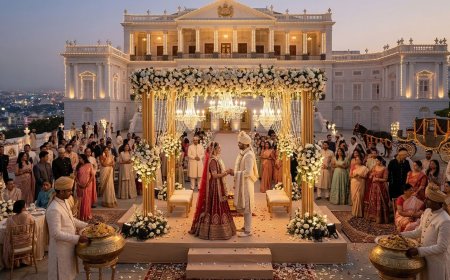
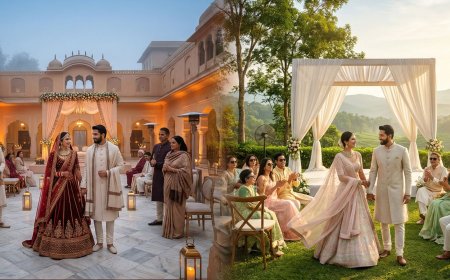
The courtyard ceremony at the Lalgarh — the mandap installed beneath the open sky with the red sandstone arches on all four sides, the carved jali screens filtering the Bikaner light, the specific warmth of the Dulmera stone in the late afternoon — is the ceremony whose setting is the complete architectural embrace of the Indo-Saracenic tradition. The guest who sits in the Lalgarh courtyard for the wedding ceremony is the guest who is inside one of the finest examples of the colonial-era palace architecture in India.
The courtyard capacity is up to two hundred guests for the seated ceremony and reception and up to three hundred for the standing function — the moderate to large scale that makes the Lalgarh the destination for the wedding whose guest count exceeds the boutique property's intimate limit while remaining within the scale that the personal rather than the managed occasion requires.
The Darbar Hall
The Lalgarh's darbar hall — the formal audience chamber whose specific function in the royal palace was the public reception of the petitioners and the ceremonial gatherings of the court — is the grandest of the palace's interior spaces and the indoor wedding space whose scale and whose character are the scale and character of the royal occasion.
The darbar hall's ceiling height, the ornamental plasterwork, the specific decorative vocabulary of the Indo-Saracenic interior — the combination produces the indoor space whose grandeur is the grandeur of the institution rather than the hotel ballroom. The sangeet in the darbar hall, the reception dinner in the darbar hall, the family gathering in the darbar hall — these are the functions whose specific character is determined by the space's irreducible quality as the room where the Bikaner court assembled.
The darbar hall's capacity is up to one hundred and eighty guests for the seated dinner and up to two hundred and fifty for the standing reception — the scale that accommodates the moderate to large Indian wedding's primary functions within the finest interior space that the Lalgarh provides.
The Portrait Gallery Corridors
The Indo-Saracenic corridors whose walls carry the portrait collection — the specific spaces where the bride got lost on the way to the bathroom and where the understanding of what it means to marry in a royal palace arrived — are the wedding spaces whose function is the transitional and the cocktail: the welcome reception that moves through the corridor, the pre-dinner cocktails that use the corridor's length as the gallery walk, the specific function whose character is the intimate engagement with the palace's heritage rather than the large event.
The corridor cocktail reception at the Lalgarh — where the guests move between the portraits and the carved arches with the champagne and the Bikaner canapes, guided by the heritage briefing that the couple has arranged as the welcome programme — is the event whose setting most completely captures the museum-grade quality of the palace and whose guest experience is the most specifically Lalgarh experience the wedding programme can provide.
The Gardens and the Pool
The Lalgarh Palace's gardens — the formally organised outdoor spaces whose relationship to the palace's wings creates the specific exterior setting of the Indo-Saracenic building — and the pool area are the wedding spaces for the outdoor functions whose character is the open air rather than the courtyard's enclosed warmth.
The garden reception — the evening gathering on the lawn with the Lalgarh's red sandstone facade as the backdrop, the carved jali screens illuminated by the event lighting, the specific visual impact of the palace's exterior in the Bikaner evening — is the reception space whose scale accommodates the larger guest count that the courtyard's dimensions cannot contain.
The garden's capacity for the standing reception is up to four hundred guests — the large Indian wedding's outdoor reception scale that the palace's grounds accommodate and that the courtyard cannot. The couple whose guest count requires the larger outdoor space will find the Lalgarh's gardens the appropriate scale.
The Heritage Suites and Interconnected Rooms
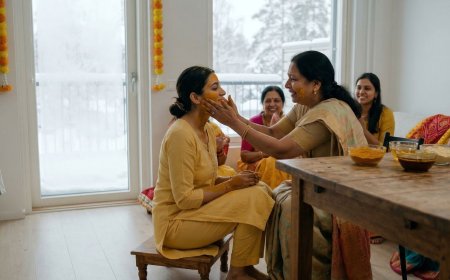
The Lalgarh Palace's heritage accommodation — the rooms and the suites whose interiors retain the specific furnishing and the décor of the palace's operational history — provides the intimate interior spaces for the pre-wedding functions: the mehendi in the heritage suite, the family gathering in the interconnected rooms, the morning haldi whose participants are the inner circle for whom the royal apartment's intimacy is the appropriate setting.
The Complete Planning and Pricing Tables
Table One: Wedding Spaces, Events, and Costs
| Space / Event | Capacity (Seated) | Capacity (Standing) | Approx. Venue Cost (INR) | Approx. Venue Cost (USD) | Best For |
|---|---|---|---|---|---|
| Central Courtyard – Ceremony | Up to 200 | Up to 300 | ₹12,00,000 – ₹22,00,000 | $14,400 – $26,400 | Pheras, Indo-Saracenic arches |
| Central Courtyard – Reception Dinner | Up to 200 | Up to 300 | ₹18,00,000 – ₹32,00,000 | $21,600 – $38,400 | Wedding dinner, sandstone setting |
| Darbar Hall – Sangeet | Up to 180 | Up to 250 | ₹15,00,000 – ₹28,00,000 | $18,000 – $33,600 | Sangeet, royal interior |
| Darbar Hall – Seated Dinner | Up to 180 | Up to 250 | ₹18,00,000 – ₹30,00,000 | $21,600 – $36,000 | Formal dinner, grandest interior |
| Portrait Gallery Corridors – Cocktails | Up to 80 | Up to 150 | ₹6,00,000 – ₹12,00,000 | $7,200 – $14,400 | Heritage cocktail reception |
| Garden Lawn – Outdoor Reception | Up to 300 | Up to 400 | ₹20,00,000 – ₹38,00,000 | $24,000 – $45,600 | Large guest count reception |
| Garden Lawn – Welcome Dinner | Up to 200 | Up to 300 | ₹15,00,000 – ₹25,00,000 | $18,000 – $30,000 | Arrival evening, garden setting |
| Heritage Suite – Mehendi | Up to 50 | Up to 80 | ₹3,00,000 – ₹6,00,000 | $3,600 – $7,200 | Pre-wedding intimate function |
| Heritage Suite – Haldi | Up to 40 | Up to 60 | ₹2,00,000 – ₹4,00,000 | $2,400 – $4,800 | Morning ritual, inner circle |
| Palace Approach – Baraat | Procession format | Up to 200 | ₹3,00,000 – ₹6,00,000 | $3,600 – $7,200 | Arrival procession, palace gates |
| Pool Area – Cocktail Reception | Up to 80 | Up to 150 | ₹5,00,000 – ₹10,00,000 | $6,000 – $12,000 | Daytime or evening cocktails |
| Full Palace – Exclusive Buyout (per day) | All spaces | All spaces | ₹60,00,000 – ₹1,10,00,000 | $72,000 – $1,32,000 | Complete exclusive use |
| Full 3-Day Wedding Package | 150–250 guests | — | ₹1,00,00,000 – ₹2,00,00,000 | $1,20,000 – $2,40,000 | All functions, full programme |
| Heritage Museum Tour – Guest Programme | Up to 200 | — | ₹1,00,000 – ₹3,00,000 | $1,200 – $3,600 | Sadul Museum guided tour |
| Bikaner Cultural Evening | Folk artists, camel display | ₹3,00,000 – ₹8,00,000 | $3,600 – $9,600 | Welcome evening entertainment | |
| Catering – Per Head (Welcome Cocktails) | — | — | ₹2,500 – ₹4,500 per head | $30 – $54 per head | Including Bikaner snack specialities |
| Catering – Per Head (Buffet Dinner) | — | — | ₹6,000 – ₹10,000 per head | $72 – $120 per head | Bikaner cuisine menu option |
| Catering – Per Head (Seated Dinner) | — | — | ₹8,000 – ₹14,000 per head | $96 – $168 per head | Formal reception, full service |
All prices are indicative estimates. The Lalgarh Palace management provides the formal bespoke quotation based on the specific event programme, the guest count, and the season. The Lalgarh's pricing sits between the boutique Shekhawati properties and the major palace destinations — reflecting the larger scale, the higher accommodation count, and the specific museum-grade heritage quality of the property.
Table Two: Accommodation, Full Budget, and Planning Essentials
| Category | Detail | Approx. Cost (INR) | Approx. Cost (USD) | Notes |
|---|---|---|---|---|
| LALGARH PALACE ACCOMMODATION | ||||
| Heritage Room | Palace wing, period furnishing | ₹8,000 – ₹15,000 per night | $96 – $180 per night | Original palace rooms, authentic |
| Deluxe Heritage Room | Larger room, superior furnishing | ₹14,000 – ₹22,000 per night | $168 – $264 per night | Upgraded appointments, better view |
| Junior Suite | Separate sitting area, heritage | ₹22,000 – ₹35,000 per night | $264 – $420 per night | Key family guests, VIP |
| Heritage Suite | Premier suite, royal appointments | ₹35,000 – ₹55,000 per night | $420 – $660 per night | Senior family, senior guests |
| Royal Suite | Finest suite, palace wing | ₹55,000 – ₹90,000 per night | $660 – $1,080 per night | Couple's suite, wedding night |
| Total Rooms Available | Approximately 55–65 rooms | Wedding group rate negotiated | Rate varies by season | Larger than boutique properties |
| OVERFLOW ACCOMMODATION | ||||
| Lallgarh Palace annexe properties | Adjacent heritage buildings | ₹5,000 – ₹12,000 per night | $60 – $144 per night | Heritage character, proximity |
| Hotel Bhanwar Niwas | Heritage haveli, city centre | ₹8,000 – ₹18,000 per night | $96 – $216 per night | Quality heritage alternative |
| Narendra Bhawan (Design Hotel) | Boutique design property | ₹15,000 – ₹35,000 per night | $180 – $420 per night | Premium overflow, design-led |
| Standard Bikaner hotels | Multiple city options | ₹3,000 – ₹10,000 per night | $36 – $120 per night | Budget-conscious guest option |
| COMPREHENSIVE WEDDING BUDGET | ||||
| Venue hire – all functions (3 days) | All spaces, 3-day programme | ₹55,00,000 – ₹1,00,00,000 | $66,000 – $1,20,000 | Exclusive buyout recommended |
| Catering – all functions (200 guests) | All meals, three events | ₹60,00,000 – ₹1,10,00,000 | $72,000 – $1,32,000 | Including Bikaner cuisine specialities |
| Decoration and florals | Full three-event installation | ₹35,00,000 – ₹70,00,000 | $42,000 – $84,000 | Local and Jaipur vendors available |
| Photography and videography | Destination wedding team | ₹12,00,000 – ₹28,00,000 | $14,400 – $33,600 | Heritage interior specialist needed |
| Entertainment | Folk artists, sangeet, DJ | ₹10,00,000 – ₹25,00,000 | $12,000 – $30,000 | Bikaner cultural tradition |
| Destination wedding planner | Rajasthan specialist essential | ₹8,00,000 – ₹18,00,000 | $9,600 – $21,600 | Bikaner experience preferred |
| Bridal and groom's clothing | Full trousseau | ₹15,00,000 – ₹40,00,000 | $18,000 – $48,000 | Personal to couple |
| Hair and makeup | On-site or travels from Jaipur | ₹2,00,000 – ₹6,00,000 | $2,400 – $7,200 | Bikaner artists available locally |
| Accommodation (55–65 rooms, 3 nights) | Wedding group rate | ₹15,00,000 – ₹35,00,000 | $18,000 – $42,000 | Full palace, negotiated rate |
| Guest transport | Delhi airport, Bikaner transfers | ₹6,00,000 – ₹14,00,000 | $7,200 – $16,800 | Flight and road coordination |
| Sadul Museum tour programme | Heritage guided tour | ₹1,00,000 – ₹3,00,000 | $1,200 – $3,600 | Essential guest programme |
| Junagarh Fort excursion | Guided fort visit for guests | ₹1,50,000 – ₹4,00,000 | $1,800 – $4,800 | Bikaner destination programme |
| Invitations and stationery | Indo-Saracenic design language | ₹1,50,000 – ₹4,00,000 | $1,800 – $4,800 | Carved sandstone motif design |
| Pandit and religious requirements | Available locally in Bikaner | ₹80,000 – ₹2,00,000 | $960 – $2,400 | Local Bikaner officiants available |
| Miscellaneous and contingency (10%) | Standard destination variance | ₹10,00,000 – ₹20,00,000 | $12,000 – $24,000 | Standard percentage |
| TOTAL ESTIMATED RANGE | 200 guests, 3-day wedding | ₹2,33,80,000 – ₹4,79,00,000 | $2,81,000 – $5,75,000 | Mid-range of guide series |
| PLANNING TIMELINE | ||||
| Initial inquiry | Contact Lalgarh management | 18 months before | 18 months before | Peak season books ahead |
| Contract and deposit | Date confirmed, terms agreed | 14–16 months before | 14–16 months before | Formal contract with management |
| Destination planner engaged | Rajasthan specialist essential | 14 months before | 14 months before | Before vendor outreach begins |
| Primary vendors confirmed | Decorator, photographer, caterer | 10–12 months before | 10–12 months before | Mix of local and Jaipur vendors |
| Guest transport coordination | Delhi flight and transfer plan | 6 months before | 6 months before | Flight frequency confirmation |
| Museum and fort tour arranged | Heritage specialist guides | 6 months before | 6 months before | Book specialist guides early |
| Room block distributed to guests | Hotel information sent | 6 months before | 6 months before | Include overflow options |
| Final guest count | To Lalgarh management | 6–8 weeks before | 6–8 weeks before | Space and catering finalisation |
| Final payments | All vendors and venue | 4 weeks before | 4 weeks before | Confirm everything in writing |
The Lalgarh Palace's total budget range sits at the guide series mid-point — more accessible than the Umaid Bhawan and the Suryagarh, more substantial than the Deogarh and the Alsisar — reflecting the larger property scale, the higher accommodation count, and the specific heritage quality whose museum-grade designation places it above the standard heritage hotel.
The Museum-Grade Difference
What Museum-Grade Means for the Wedding
The designation of museum-grade is not the hyperbole of the wedding brochure. It is the specific assessment of the quality and the provenance of the Lalgarh Palace's heritage content — the portrait collection, the Sadul Museum's artefacts, the architectural fabric of the Jacob building, the specific documentary and material record of the Bikaner royal family that makes the palace not merely a beautiful building but a building whose contents are the evidence of the continuous, documented, five-and-a-half-century human story.
The implication for the wedding: every element of the occasion happens within the specific gravitational field of this heritage. The ceremony in the courtyard is the ceremony in Jacob's finest Indo-Saracenic space. The dinner in the darbar hall is the dinner in the room where the Bikaner court assembled for the formal occasions whose photographs are in the Sadul Museum archive. The walk through the portrait gallery corridor is the walk through the documented succession of the rulers whose kingdom the wedding is happening within.
The couple who understands this — who has read the history, who has done the museum tour, who has briefed the guests with the specific knowledge of where they are — is the couple whose wedding has the depth that the beautiful setting alone does not provide. The couple whose guests arrive knowing only that the Lalgarh is a beautiful red palace has given the guests a fraction of what the Lalgarh offers.
The heritage briefing as the wedding planning element: the Lalgarh wedding should include the specific heritage briefing for the guests — the welcome letter that introduces the palace's history, the Sadul Museum tour as the day-before programme, the specific communication of the Junagarh Fort visit as the Bikaner destination's primary heritage experience. The couple who builds the museum-grade heritage into the wedding programme gives every guest the complete experience of the occasion they have come to.
The Bikaner Cuisine as the Cultural Dimension
The Bikaner culinary tradition — whose most famous expression is the bhujia, the spiced gram flour noodle snack whose Bikaner origins and whose specific recipe variations are the specific food heritage of the desert kingdom — is the catering dimension of the Lalgarh wedding whose engagement gives the occasion the specific cultural identity that the generic Rajasthani menu does not.
The full Bikaner culinary tradition extends well beyond the bhujia — the specific curries of the desert kitchen whose ingredient constraints and whose cooking techniques are the adaptation to the Thar's specific larder, the dairy tradition of the desert whose specific products — the camel milk preparations, the specific cheese traditions — are the culinary heritage whose engagement at the wedding banquet is the cultural statement as well as the gastronomic one.
The caterer whose knowledge of the Bikaner culinary tradition is the specific, deep knowledge of the regional cuisine rather than the generic Rajasthani offering is the caterer whose engagement the Lalgarh wedding most deserves. The wedding menu that begins with the Bikaner bhujia as the cocktail accompaniment and builds through the regional culinary tradition to the specific sweets of the Bikaner court is the wedding menu whose character is as specifically Bikaner as the palace itself.
Common Mistakes NRI Couples Make When Planning the Lalgarh Wedding
The first mistake is treating the Lalgarh as the generic heritage hotel rather than the museum-grade royal palace whose heritage content is the wedding's primary asset. The couple who plans the Lalgarh wedding without the heritage briefing, without the Sadul Museum tour, without the engagement with the palace's specific historical depth — who uses the building as the beautiful backdrop rather than the living heritage context — has left the most valuable dimension of the Lalgarh experience unused. Plan the heritage engagement as deliberately as the floral decoration. The building's history is the wedding's most distinctive element and the one whose communication to the guests requires the most intentional planning.
The second mistake is not confirming the Delhi flight frequency to Bikaner before the guest list is finalised. The Bikaner Airport's flight schedule — more limited than the major Rajasthan destination airports — is the specific access constraint whose confirmation should precede the invitation rather than follow it. The international guest whose Delhi connection to Bikaner is not available on the required day faces the road journey alternative whose three to four hours from Delhi is the manageable but significant adjustment. Confirm the flight schedule, communicate the access options specifically, and build the transport coordination around the actual availability rather than the assumed convenience.
The third mistake is not engaging the Bikaner culinary tradition in the catering. The couple who serves the generic five-star Rajasthani banquet at the Lalgarh Palace — the menu that could be served at any heritage hotel in any Rajasthan city — has missed the specific cultural dimension that the Bikaner destination offers as the catering's character. Engage the caterer whose Bikaner cuisine knowledge is the specific, deep regional knowledge. Begin the menu conversation with the regional tradition and build the banquet from the Bikaner culinary identity outward.
The fourth mistake is not using the portrait gallery corridors as the active wedding space. The portrait gallery — whose connection to the palace's history is the most direct and most personal of any space in the building — is the space that the couple most often underutilises as the transitional rather than the event space. The corridor cocktail reception, the portrait gallery heritage walk as the welcome programme, the specific engagement with the painted succession of the Bikaner rulers as the wedding's cultural context — these are the uses that the corridor most rewards and that most completely give the guests the museum-grade experience the Lalgarh provides.
The fifth mistake is not building the Junagarh Fort visit into the guest programme as the essential Bikaner experience. The Junagarh Fort — never conquered, four centuries of extraordinary interior accumulation, among the finest fort complexes in India — sits in the centre of Bikaner waiting for the wedding guests who are staying in the palace on the hill above the city. The guest who attends the Lalgarh wedding without visiting the Junagarh has been to Bikaner without seeing Bikaner. The day-before fort visit, guided by the heritage specialist, is the guest programme investment that gives the international guest the complete Bikaner experience — the fort, the palace, and the wedding as the three acts of the destination's story.
The Portrait's Subject
The bride had eventually found the bathroom.
She had also, in the finding, found the specific understanding of what the Lalgarh was — the understanding that the portrait gallery had produced and that the bathroom's direction had eventually provided as the incidental destination of the more significant journey.
At the welcome dinner that evening — the dinner in the courtyard whose arches the event lighting had found at the specific angle that the Jacob building's facade rewards — she had told the groom about the getting lost and the portrait and the specific thought that had arrived in the corridor.
She had said: I stood in front of this Maharaja's portrait and I thought, we are getting married in his house. Not a hotel. His house. The house of the family that has been here since 1465.
The groom had looked around the courtyard — the red sandstone arches, the carved jali screens, the specific warmth of the Dulmera stone in the evening light — and had said: does that feel strange?
She had said: it feels like the opposite of strange. It feels like the most specific place I have ever been. Like the place that knows exactly what it is.
The Lalgarh Palace knows exactly what it is.
It is the museum-grade royal palace of the family that built the kingdom of Bikaner in the heart of the Thar Desert in 1465 and that has been here, continuously, since.
It is the finest Indo-Saracenic building that Samuel Swinton Jacob produced in a career of producing fine buildings.
It is the red sandstone palace whose portrait gallery is the documented succession of the rulers whose house the wedding is happening in.
And it is, among the Rajasthan palace destinations, the one whose specific historical depth — whose five-and-a-half-century lineage, whose museum-grade heritage, whose continuous royal occupation — is the wedding's most irreplaceable asset.
Contact the Lalgarh management at eighteen months.
Engage the Rajasthan destination planner before the vendor search begins.
Confirm the Delhi flight frequency before the invitations go out.
Build the Sadul Museum tour and the Junagarh Fort visit into the guest programme as the essentials.
Use the portrait gallery corridor as the event space it is.
Serve the Bikaner cuisine whose tradition is as specific and as deep as the palace that contains it.
And stand in front of the portrait of the Maharaja in the corridor — the one on the way to the bathroom, or the one in the wing you were not supposed to be in, or the one whose subject looks at you with the specific expression of the person who has been painted with the full formality of the royal portrait and who is nevertheless, unmistakably, a person — and understand what it means to be getting married in his house.
It means the opposite of strange.
It means the most specific place.
The place that knows exactly what it is.
That is the Lalgarh.
Published by NRIWedding.com — The Premium Global Platform for Non-Resident Indians Planning Indian Weddings From Abroad.
What's Your Reaction?
 Like
0
Like
0
 Dislike
0
Dislike
0
 Love
0
Love
0
 Funny
0
Funny
0
 Angry
0
Angry
0
 Sad
0
Sad
0
 Wow
0
Wow
0