




















































North Goa Wedding Guide — Beach Parties, Portuguese Churches and Sangeet Nights: NRI Complete Guide — The Complete NRI Wedding Planning Guide
Priya had been to Goa eleven times and she had never gone for the beach. The first three trips had been the standard, college-and-early-twenties, Calangute-and-Baga, rented-scooter, beach-shack-and-feni, sunburn-and-regret variety. She had received the beach on those trips in the specific, crowded, sun-umbrella-to-sun-umbrella, motorboat-noise-and-parasailing-vendor quality of the North Goa beach in October. Then on the fourth trip she had stayed in Assagao rather than Candolim and had spent four days on a scooter going in the wrong direction from the beach — north through the paddy fields, through the village roads, through the specific, laterite-and-Portuguese, whitewashed-chapel-and-mango-tree, only-in-the-North-Goa-village quality of the interior landscape. She had been back seven times after that, each time going deeper. She was thirty-four now and engaged to Amit from Delhi, who had the specific, Goa-is-a-party-destination, beachside-beer-and-sunburn image that Priya had been gently dismantling across two years of their relationship. She had not said: we should get married in Goa. She had said: I want to show you the Goa that I have been going to. He said: the beach? She said: the village. She sent photographs of Siolim House, the Assagao villas, the heritage-Portuguese boutique-hotel vocabulary of the North Goa destination wedding geography that the beach resort had been obscuring. He looked for fifteen minutes. He said: this is not what I thought Goa looked like. She said: this is what Goa looks like when you go in the right direction. He said: this is where we are getting married. She said: yes. He said: which venue? She said: all of them. We need a guide. This guide gives NRI couples the complete framework for the North Goa destination wedding — every principal venue with detailed pricing, the Portuguese church ceremony options, the beach sangeet production, the village interior program, the Fontainhas heritage walk, the Konkani folk performance brief, the sorpotel and vindaloo catering commission, and the specific mistakes that separate the couple who uses the full range of North Goa from the couple who confined everything to the beach and missed the villages entirely.


North Goa Wedding Guide — Beach Parties, Portuguese Churches and Sangeet Nights: NRI Complete Guide — The Complete NRI Wedding Planning Guide
Priya had been to Goa eleven times and she had never gone for the beach.
This was not the position she had held at the beginning of the eleven trips. The first three had been the standard, college-and-early-twenties, Calangute-and-Baga, rented-scooter, beach-shack-and-feni, sunburn-and-regret variety that the Mumbai-to-Goa weekend circuit produces in the young professional community at a reliable rate. She had gone for the beach on those trips. She had received the beach on those trips in the specific, crowded, North-Goa-weekend, sun-umbrella-to-sun-umbrella, motorboat-noise-and-parasailing-vendor quality that the Calangute and the Baga beach in October produce for the visitor who had not yet understood that Goa was not the beach.
Goa was the villages.
She had understood this on the fourth trip, when she had stayed in a house in Assagao rather than a hotel in Candolim, and had spent four days on a scooter going in the wrong direction from the beach — north through the paddy fields, through the village roads, through the specific, laterite-and-Portuguese, whitewashed-chapel-and-mango-tree, only-in-the-North-Goa-village quality of the interior landscape that the beach circuit systematically missed.
She had been back seven times after that fourth trip, each time going deeper into the village landscape, each time finding the specific, accumulated, four-hundred-year, Portuguese-Catholic-and-Hindu-Goan, laterite-soil, cashew-and-coconut-grove, village-church-and-koli-fishing-community character of North Goa that was not the Goa of the beach resort brochure.
She was thirty-four now and engaged to Amit, who was from Delhi and who had been to Goa three times on the standard beach circuit and who had a specific, Goa-is-a-party-destination, beachside-beer-and-sunburn image of the state that Priya had been, gently and with the patience of eleven trips, dismantling across the two years of their relationship.
She had not said: we should get married in Goa. She had said: I want to show you the Goa that I have been going to. He had said: the beach? She had said: the village. He had said: is there a hotel? She had said: there are extraordinary hotels. He had said: send the photographs. She had sent the photographs of the Assagao villa, the Siolim House, the Alila Diwa, the specific, North-Goa-village-landscape, heritage-Portuguese, boutique-hotel vocabulary of the North Goa destination wedding geography that the beach resort had been obscuring since the Goa tourism conversation began.
He had looked at the photographs for fifteen minutes. He had said: this is not what I thought Goa looked like. She had said: this is what Goa looks like when you go in the right direction. He had said: this is where we are getting married. She had said: yes. He had said: which venue? She had said: all of them. We need a guide.
This guide is for every NRI couple who has been sent to the beach by the Goa wedding industry and who deserves to be shown the Goa that is the villages — for Priya and Amit and every couple who deserves the complete framework for the North Goa destination wedding that uses the Portuguese churches and the laterite landscape and the sangeet nights and the beach parties in the specific proportion that makes the Goa wedding genuinely extraordinary.
Understanding North Goa: The Wedding's Geography
North Goa is the northern taluka of the state of Goa — the specific, Bardez-and-Pernem-taluka, Mapusa-municipality, Calangute-to-Querim, beach-and-village-and-Portuguese-heritage geography whose wedding destination character is the product of the specific, accumulated, four-hundred-year, Portuguese-colonial, Catholic-mission, Hindu-Goan, coastal-fishing-community layering that no other Indian coastal destination produces in the same form.
The North Goa wedding geography divides into three distinct zones whose understanding is the foundation of the three-day wedding program.
The coastal zone — the beach belt from Calangute to Vagator, the specific, sea-facing, beach-shack, sunset-bar, Arabian-Sea-view, party-destination coastline — is the zone that the standard Goa wedding conversation defaults to and that is the genuine, extraordinary asset of the North Goa location when it is used specifically and selectively rather than as the entirety of the experience.
The village interior — the Assagao, the Siolim, the Anjuna, the Mapusa-hinterland, the specific, paddy-field, laterite-road, mango-tree, Portuguese-chapel, bougainvillea-and-frangipani, village-Goa landscape that is the state's most specific and most irreplaceable character — is the zone that the Goa wedding conversation has been systematically underusing and that most completely communicates what Goa actually is to the international guest who comes expecting the beach and finds, in the village interior, something they could not have imagined from the beach resort brochure.
The heritage zone — the Panaji old quarter, the Fontainhas Latin Quarter, the Old Goa basilicas and churches, the specific, UNESCO-registered, Portuguese-Baroque, only-in-the-former-colonial-capital, Goa-heritage architecture — is the cultural heritage dimension whose engagement in the wedding program most completely gives the occasion its specific, historical, four-hundred-year, only-in-Goa cultural grounding.
The North Goa Hotel Landscape: The Principal Venues
The North Goa wedding venue landscape is the most diverse of any destination in this series — the range from the international luxury beach resort to the boutique heritage villa to the Portuguese-era mansion conversion is wider in North Goa than anywhere else in India, and the NRI couple who understands this range can assemble the wedding program across multiple venues in the manner that most completely uses the destination's specific variety.
Alila Diwa Goa: The Paddy Field Palace
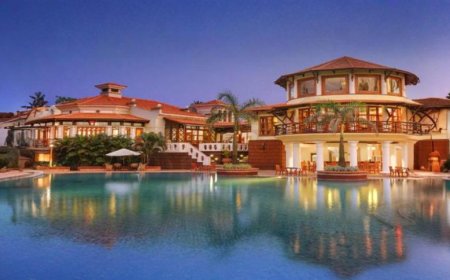
The Alila Diwa Goa — positioned in the Majorda-Fatrade area of South Goa but serving as the standard-setter for the luxury paddy field resort format that North Goa's boutique properties reference — is the specific, paddy-field-adjacent, infinity-pool-above-the-rice, Goan-vernacular-architecture, luxury-resort-in-the-village vocabulary that defines the premium Goa wedding destination standard.
The North Goa equivalent in the paddy field and village landscape — the properties in the Assagao, the Siolim, and the Aldona areas whose infinity pools look out over the paddy fields and whose architecture reflects the Goan vernacular rather than the international resort template — are the properties whose specific, village-landscape, paddy-field-view, locally-rooted quality most completely delivers the Priya vision of the Goa that was not the beach.
Siolim House: The Heritage Portuguese Mansion
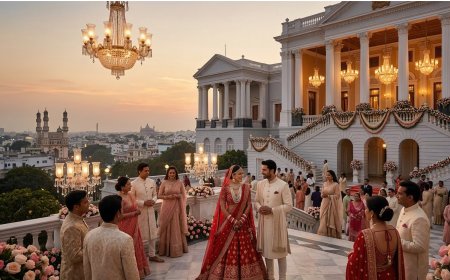
Siolim House — the converted, nineteenth-century, Portuguese-heritage, Siolim-village, heritage-boutique, former-viceroy's-governor's-residence property in the Siolim village whose restoration has produced the specific, Portuguese-architecture, high-ceiling, antique-furnished, only-in-the-heritage-Goa-mansion quality of the boutique heritage hotel that most directly communicates the Portuguese-colonial architectural heritage — is the primary heritage venue for the intimate wedding ceremony and the wedding reception for the couple whose guest list fits the boutique property's scale.
Siolim House accommodates fourteen rooms and suites — the full property buyout that makes it available exclusively to the wedding party — and the event spaces within the heritage mansion provide the ceremony setting, the reception dinner, and the sangeet in the specific, Portuguese-heritage, high-ceiling, courtyard-and-veranda quality of the nineteenth-century Goan mansion.
The ceremony at Siolim House — the mandap in the courtyard, the Portuguese-architecture facade above, the heritage interior visible through the open doorways — is the ceremony in the most complete expression of the Goa architectural heritage available at the boutique scale. The wedding dinner in the Siolim House dining room — the antique furniture, the high ceilings, the specific, heritage-Goa, only-in-this-mansion quality of the colonial-era interior — is the dinner that is most specifically and most permanently of the Goa heritage.
Taj Fort Aguada Resort & Spa: The Heritage Fort-Hotel
The Taj Fort Aguada Resort and Spa — the property built within the sixteenth-century Portuguese Fort Aguada on the Sinquerim headland, with the Arabian Sea on three sides and the fort's original Portuguese military architecture providing the heritage setting — is the large-format heritage venue for the Goa wedding whose guest list requires the scale of the Taj Hotels group's event infrastructure alongside the heritage authenticity of the Portuguese fort setting.
The Fort Aguada's specific heritage quality — the sixteenth-century Portuguese fort built to guard the mouth of the Mandovi River, the specific, military-architecture, bastioned, seaward-facing, only-in-Portuguese-Goa character of the structure that the Taj Hotels group has converted into a luxury resort while preserving the fort's exterior architecture — gives the Taj Fort Aguada wedding the heritage backdrop that most specifically communicates the Portuguese-colonial military history of Goa to the guests who understand it and that most immediately impresses the guests who do not.
The event spaces of the Taj Fort Aguada — the heritage amphitheatre within the fort, the beach below the fort walls, the restaurant and the lawn spaces — provide the range of outdoor and indoor settings for the large Goa wedding whose guest list requires the operational infrastructure of the Taj Hotels group.
The Leela Goa: The Luxury Beach Resort
The Leela Goa — the luxury resort on the Mobor Beach in South Goa that is the standard-bearer of the large-format luxury beach resort wedding in Goa — is included in this guide as the standard reference against which the North Goa boutique and heritage properties are compared rather than as the primary North Goa venue recommendation.
The Leela Goa's specific quality — the scale, the beach, the luxury resort infrastructure — is the quality that the couple who requires the large-format, hundred-plus-room, fully-serviced luxury beach resort will find and that the North Goa boutique properties cannot provide at the same scale.
W Goa: The Signature Design Hotel
The W Goa — the Starwood brand's Vagator-area, clifftop, design-hotel, pool-party, contemporary-luxury, Instagram-vocabulary property whose specific, W-brand, music-and-nightlife, twenty-to-thirty-five-demographic, design-statement hotel character gives it the specific, only-in-Goa, luxury-party-hotel, contemporary-design, pool-and-view quality that the heritage properties and the beach resorts do not provide in the same form.
The W Goa's specific quality for the NRI wedding is the sangeet venue — the pool deck, the clifftop view, the contemporary sound system, the W brand's specific, production-ready, party-infrastructure quality that makes the sangeet at the W Goa the sangeet that most completely delivers the party dimension of the Goa wedding.
The ceremony at the W Goa — the clifftop ceremony with the Arabian Sea below and the Vagator landscape visible — is the ceremony that uses the contemporary design hotel's specific, clifftop, sea-view quality rather than the heritage property's architectural quality. Choose the W Goa for the couple whose wedding vision is the contemporary luxury party rather than the heritage immersion.
Fort Tiracol Heritage Hotel: The Most Remote North Goa Heritage
Fort Tiracol — the converted sixteenth-century Portuguese fort at the northernmost tip of Goa, at the Tiracol estuary where the Terekhol River meets the Arabian Sea, on the Goa-Maharashtra border — is the most intimate, the most remote, and the most specifically heritage of the North Goa wedding venues.
The fort has seven rooms — the full property buyout produces the most intimate North Goa wedding available, the ceremony in the fort's chapel, the reception in the fort's courtyard, the overnight in the seven heritage rooms — and the specific, only-at-the-river-mouth, Portuguese-fort, Goa-Maharashtra-border, sea-and-estuary quality of the location gives the Fort Tiracol wedding its most specific and most irreplaceable geographical character.
The Portuguese Church: The Heritage Ceremony Option
The Portuguese churches of North Goa — the specific, Baroque, whitewashed, laterite-trim, village-chapel vocabulary of the church architecture that the Portuguese mission built across the Goan landscape in four centuries of colonial presence — are the most specific and the most visually extraordinary ceremony settings available in the North Goa wedding geography and the settings that most directly communicate the Portuguese-colonial-Goan heritage to the international guests.
The Church of Our Lady of Grace at the Fort Aguada — the sixteenth-century Portuguese chapel within the Fort Aguada complex — is the ceremony setting whose specific, military-fort, Portuguese-chapel, sea-view heritage gives the ceremony the combination of the architectural grandeur and the historical weight that the beach ceremony cannot provide.
The village chapels of the North Goa interior — the specific, small-scale, whitewashed, bougainvillea-covered, only-in-the-Goan-village, laterite-path-to-the-entrance chapels whose individual character is the character of the specific village community that built them — are the ceremony settings for the intimate Catholic or inter-faith ceremony that wants the specific, living-heritage, village-community, four-hundred-year-old chapel quality rather than the large basilica's monumentality.
The Basilica of Bom Jesus in Old Goa — the UNESCO World Heritage Site, the specific, Baroque, seventeenth-century, Jesuit, only-in-the-former-colonial-capital, St. Francis Xavier's-relics basilica whose religious significance and whose architectural grandeur make it the most important single Catholic heritage building in Asia — is not available as a wedding venue but is the cultural heritage visit that gives the Catholic NRI wedding's international guests the most complete encounter with the specific, Portuguese-Goa, Catholic-mission, colonial-heritage dimension that defines the Goa cultural identity.
The Sangeet in Goa: The Night That Defines the NRI Goa Wedding
The sangeet night in Goa — the specific, North-Goa, beach-party, DJ-and-bonfire, sunset-bar, party-on-the-sand, Arabian-Sea-background, music-and-dance, only-in-Goa sangeet format — is the event that most completely uses the Goa destination's specific party dimension and that most directly communicates what the Goa wedding is for to the guests who have been looking forward to it since the invitation arrived.
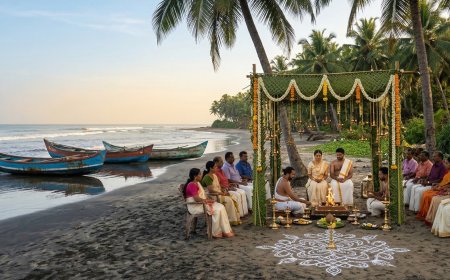
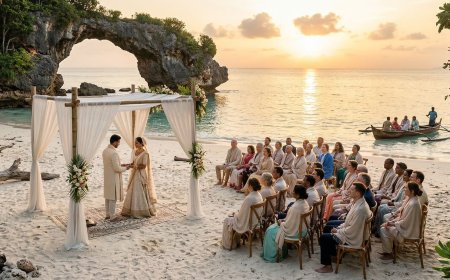
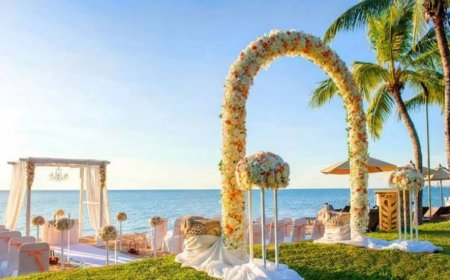
The beach sangeet — the sangeet on the beach at the hour when the Goa sunset transitions into the Goa night, the DJ established on the sand, the bonfire lit at the beach's edge, the guests dancing on the sand as the Arabian Sea provides the ambient backdrop — is the sangeet format that is the most specifically Goa event in the three-day program and that the inland Rajasthan and the Kerala backwater and the hill station venues cannot replicate in the same form.
The sunset bar format — the pre-sangeet gathering at one of the North Goa legendary sunset bars, the Chapora fort view, the Vagator cliff, the specific, only-in-North-Goa, sunset-bar-culture, this-is-Goa, sundowner-with-the-community quality of the Goa evening ritual — is the pre-sangeet cultural experience that most directly introduces the international guests to the Goa evening culture in its most immediately legible and most immediately enjoyable form.
The South Indian cultural performance element — the Konkani folk music, the Fugdi, the Dekhni — is the cultural performance element that gives the Goa sangeet its specific, living-Goan-tradition dimension alongside the DJ and the bonfire and the beach party. The Konkani folk tradition — the specific, Goa-coast, fishing-community, agricultural, syncretic, Hindu-and-Catholic, only-in-the-Goan-cultural, music-and-dance vocabulary that is the living cultural heritage of the state — is the performance element that gives the sangeet its cultural grounding in the Goa tradition rather than the generic beach party.
Comprehensive Pricing and Planning Reference
| Category | Detail | Approximate Range | Notes |
|---|---|---|---|
| Siolim House full buyout | 14 rooms; heritage | ₹1,50,000–₹3,00,000 per night | Complete Portuguese mansion |
| Siolim House ceremony hire | Courtyard; heritage | ₹3,00,000–₹6,00,000 per event | Heritage mansion ceremony |
| Taj Fort Aguada venue hire | Heritage fort; large | ₹10,00,000–₹20,00,000 per event | Fort amphitheatre; beach |
| W Goa pool deck | Sangeet; contemporary | ₹8,00,000–₹16,00,000 per event | Clifftop; production ready |
| Fort Tiracol full buyout | 7 rooms; intimate | ₹1,00,000–₹2,50,000 per night | Most remote; river mouth |
| Beach venue hire | Private beach; sunset | ₹3,00,000–₹8,00,000 per event | Bonfire; DJ; party format |
| Village chapel ceremony | Heritage; intimate | ₹1,00,000–₹3,00,000 per event | Living heritage; four centuries |
| Boutique villa hire — Assagao | Paddy field view | ₹80,000–₹2,00,000 per night | Village landscape; buyout |
| Accommodation — Heritage boutique | Siolim, Assagao area | ₹8,000–₹25,000 per night | Village character; intimate |
| Accommodation — Taj Fort Aguada | Heritage fort hotel | ₹18,000–₹35,000 per night | Fort position; sea view |
| Accommodation — W Goa | Design hotel; Vagator | ₹20,000–₹40,000 per night | Contemporary luxury; clifftop |
| Accommodation — Luxury villa rental | Private; 5-8 bedrooms | ₹30,000–₹1,00,000 per night | Full villa; private pool |
| Catering per cover — Goan feast | Sorpotel; vindaloo | ₹2,500–₹5,000 | Catholic Goan tradition |
| Catering per cover — beach dinner | Seafood; open fire | ₹3,000–₹6,000 | Fresh catch; beach cooking |
| Catering per cover — formal dinner | Contemporary Goan | ₹4,000–₹7,000 | Multi-course; heritage property |
| Catering per cover — daytime | Breakfast or lunch | ₹1,500–₹3,000 | Full service; poolside |
| Konkani folk performance | Fugdi; Dekhni | ₹50,000–₹1,50,000 | Living Goan tradition |
| DJ and beach party production | Full production | ₹1,50,000–₹5,00,000 | Beach sound; bonfire management |
| Old Goa heritage tour | Bom Jesus; Basilicas | ₹15,000–₹40,000 per group | UNESCO; guided heritage |
| Fontainhas walk | Latin Quarter; guided | ₹10,000–₹25,000 per group | Portuguese quarter; Panaji |
| Spice plantation visit | Tropical; guided | ₹10,000–₹30,000 per group | Ponda area; Goan agriculture |
| Scooter hire — guest activity | Village exploration | ₹3,000–₹8,000 per day group | Goa village roads; freedom |
| Décor and florals | Tropical; Goan palette | ₹4,00,000–₹18,00,000 | Bougainvillea; frangipani |
| Photography and videography | Full wedding | ₹3,00,000–₹10,00,000 | Beach and heritage specialists |
| Sound and lighting | Beach and indoor | ₹2,00,000–₹7,00,000 | Beach acoustic; party standard |
| Wedding planner fee | Full service | ₹5,00,000–₹14,00,000 | North Goa experience essential |
| Transport — Dabolim Airport to North Goa | Per vehicle | ₹1,500–₹3,000 | 45 minutes; NH66 |
| Transport — Mopa Airport to North Goa | Per vehicle | ₹800–₹1,500 | 20-30 minutes; direct |
| Total three-day wedding — 80 guests | Boutique program | ₹55,00,000–₹95,00,000 | Heritage and beach combination |
| Total three-day wedding — 150 guests | Mixed venues | ₹90,00,000–₹1,60,00,000 | Full North Goa program |
| Total three-day wedding — 250 guests | Large format | ₹1,40,00,000–₹2,50,00,000+ | Fort Aguada scale; full program |
The Goan Catholic Wedding: The Cultural Heritage Ceremony
The Goan Catholic wedding — the specific, Roman Catholic, Portuguese-heritage, Konkani-language, four-century, only-in-Goa, church-ceremony, reception-and-dance, Catholic-Goan-family-tradition wedding whose cultural identity is the cultural identity of the Goa community that produced the Portuguese colonial heritage — is the wedding tradition whose engagement in the NRI Goa wedding most completely honours the cultural heritage of the state.
The NRI couple from a Goan Catholic background — the diaspora of the specific, only-in-Goa, Portuguese-influenced, Konkani-speaking, Catholic community that has been one of the most globally dispersed of the Indian regional communities since the Portuguese colonial period — is the couple whose wedding at a North Goa chapel or at the Siolim House courtyard is the wedding in the landscape and the architectural tradition of their specific cultural identity.
The sorpotel — the specific, Goan Catholic, pork-and-offal, vinegar-and-spice, four-day-preparation, only-in-the-Goan-Catholic-kitchen, celebration-food whose recipe the community has been preparing for weddings and festivals since the Portuguese introduced the vinegar-preservation technique to the Goa coast — is the culinary element that most specifically communicates the Goan Catholic cultural identity to the guests who receive it. Brief the caterer on the sorpotel from the first menu planning conversation. Ask about the specific recipe — the proportion of the vinegar, the specific spice blend, the preparation time. The caterer who is enthusiastic about the sorpotel conversation is the caterer who knows the Goan Catholic kitchen from the inside.
The vindaloo — the specific, Goan, pork, wine-vinegar, garlic-and-spice, only-in-the-Goan-Portuguese-kitchen preparation whose global fame has produced the specific, restaurant-adapted, curry-industry version that bears the name without the character — should be commissioned in the traditional form from a caterer who knows the original rather than the adaptation.
The North Goa Guest Experience: The Village Immersion Program
The North Goa guest experience program — the activity and the cultural program for the wedding guests across the three days — should be designed around the village landscape rather than the beach circuit, with the beach as the specific element rather than the default.
The Assagao and Anjuna village morning — the hired scooters or the guided walk through the village roads, the mango trees, the laterite paths, the specific, only-in-the-Goan-village, bougainvillea-on-the-chapel-wall, cashew-wine-smell-in-the-morning, paddy-field-light quality of the North Goa interior at the morning hour — is the guest experience that most directly gives the international visitors the Goa that Priya had been going back for since the fourth trip.
The Fontainhas Latin Quarter in Panaji — the specific, Portuguese-heritage, nineteenth-century, colour-washed, narrow-lane, balcão-veranda, only-in-the-former-colonial-capital, Latin-Quarter quality of the Panaji residential neighbourhood that preserves the Portuguese domestic architecture in the most intact form available in Goa — is the heritage walk that most directly communicates the Portuguese-colonial character of the Goa cultural identity to the international guest who encounters it.
The Old Goa basilica visit — the Basilica of Bom Jesus, the Se Cathedral, the specific, UNESCO-registered, Portuguese-Baroque, seventeenth-century, former-colonial-capital, ecclesiastical architecture of Old Goa — is the heritage experience that most immediately communicates the scale of the Portuguese colonial presence to the guest who arrives from the beach resort without the historical context.
The spice plantation visit — the Ponda-area, tropical, cardamom-and-pepper-and-clove, guided, agricultural, specific, Goan-spice-heritage plantation whose tour gives the international guest the encounter with the spice trade geography that the Portuguese colonial presence was organised around — is the cultural program element that most directly connects the Goa heritage to the global trade history whose legacy shaped the state's cultural identity.
The Monsoon Wedding in North Goa: The Special Case
The Goa monsoon — the June through September southwest monsoon that transforms the North Goa landscape from the dry, tourist-season, sunshine-and-beach quality to the specific, rain-washed, green, waterfall-active, empty-beach, dramatically-lit, only-in-the-monsoon quality — is the most extraordinary season in North Goa and the season that the wedding industry most consistently advises against.
The monsoon wedding in North Goa is not the wedding for the couple who requires the certainty of the outdoor ceremony in the specific, four-hour-of-direct-sunshine quality of the dry season Goa day. It is the wedding for the couple who finds the monsoon Goa more beautiful than the tourist-season Goa — the couple who has seen the Chapora fort in the monsoon rain, the paddy fields in the monsoon green, the village roads in the monsoon afternoon — and who wants the wedding in the Goa that the tourists have not arrived for.
The monsoon beach party sangeet is operationally possible with the specific, covered infrastructure, the wind-resistant setup, and the weather contingency planning that the monsoon event requires. The monsoon ceremony in the heritage property's covered courtyard — the rain audible on the terrace above, the monsoon fragrance of the Goa air, the wet garden visible through the arches — is the ceremony in the most specific, only-in-the-monsoon, Goa-at-its-most-itself quality of the state's primary season.
Common Mistakes NRI Couples Make With the North Goa Wedding
The first mistake is confining the entire wedding program to the beach. The beach is the most immediately legible element of the North Goa destination and the element that the standard Goa wedding conversation defaults to — and the wedding program that uses only the beach is the program that has used the most easily found element of the destination while leaving the most specific and the most extraordinary elements — the village interior, the Portuguese heritage, the chapel, the Fontainhas, the paddy field landscape — unused. Design the program to use the full range of the North Goa destination. Give every day a different quality of Goa experience.
The second mistake is not using a North Goa specialist planner. The North Goa wedding landscape — the boutique property network, the venue licensing, the beach event permits, the heritage property access, the village vendor relationships — is the operational landscape whose management requires the specific local knowledge of the planner who has been working in it. The Delhi or Mumbai planner whose first North Goa wedding is this wedding is the planner whose learning curve is the couple's operational risk. Commission the North Goa specialist.
The third mistake is not including the Fontainhas Latin Quarter walk and the Old Goa basilica visit in the international guest program. The Portuguese-heritage architecture of Goa is the heritage that most specifically communicates what Goa is as a cultural and historical destination — the four centuries of colonial presence, the specific, only-in-India, Catholic-and-Hindu, Portuguese-influenced, Konkani-speaking, laterite-and-baroque cultural identity that the beach circuit systematically bypasses. The international guest who leaves Goa without visiting the Fontainhas or the Old Goa basilicas has been in one of India's most culturally distinctive states without encountering its cultural identity. Include the heritage visits.
The fourth mistake is not scheduling the beach sangeet for the sunset hour. The North Goa beach sunset — the Arabian Sea, the horizontal evening light, the sky performing its tropical colour sequence — is the natural event that the beach sangeet should be timed for and that the Goa destination provides in the specific, only-in-the-north-Goa, Arabian-Sea-west-facing, unobstructed-horizon form. The sangeet that begins at eight in the evening, after the sunset has passed, is the sangeet that has missed the most extraordinary single hour of the North Goa day.
The fifth mistake is not commissioning the Konkani folk performance alongside the DJ. The Fugdi and the Dekhni and the Konkani folk music tradition — the living cultural heritage of the Goa community whose specific, syncretic, Hindu-and-Catholic, fishing-community, agricultural-tradition, only-in-Goa character is the cultural identity that the DJ playlist cannot communicate — are the performance elements that give the sangeet its Goa dimension rather than its generic beach party dimension. Commission the Konkani performers. Place them before the DJ. Give the guests the culture before the party. Then give them the party.
Priya's wedding was in February — the North Goa February, the dry season in its most pleasant month, the paddy fields harvested and golden, the village roads in the specific quality of the post-harvest Goa that the tourist circuit photographs as the standard Goa landscape.
The ceremony was at Siolim House — the courtyard, the Portuguese-heritage facade, the high-ceiling rooms visible through the open doors, the bougainvillea on the outer wall in the specific, only-in-the-heritage-property, trained-and-old, only-this-vine quality that the recently planted bougainvillea never produces.
The sangeet was on the beach at Vagator — the sunset ceremony of the evening lighting, the Konkani folk performers in the first hour, the DJ from the second, the bonfire at the beach's edge, the Arabian Sea performing the February sunset for the assembled wedding party as it had been performing it at this hour and at this latitude since before anyone on the beach had been born.
Amit — who had been to Goa three times on the standard beach circuit, who had had the Goa-is-a-party-destination image that Priya had been dismantling for two years — stood at the sangeet fire as the Konkani performers sang the last song of their set.
He said to Priya: you have been coming here for eleven years. She said: yes. He said: and you never told me about this. She said: I told you about it continuously. He said: you described it. She said: yes. He said: the description was insufficient. She said: the description is always insufficient. He looked at the beach and the fire and the Konkani performers taking their bow and the DJ beginning the transition and the Arabian Sea in the dark beyond the bonfire. He said: now I understand why you kept coming back. She said: yes. He said: I will keep coming back too. She said: I know. He said: it is the villages. She said: it is the villages.
Design the program to use the full range of the North Goa destination. Commission the North Goa specialist planner. Include the Fontainhas and the Old Goa heritage visits. Schedule the beach sangeet for the sunset hour. Commission the Konkani performance before the DJ.
The Goa that is not the beach has been here for four hundred years. The Portuguese left the chapels and the heritage mansions and the Fontainhas and the cultural synthesis that makes Goa Goa. The Arabian Sea has been performing the sunset at the Vagator beach at this specific hour since before the Portuguese arrived.
Go in the right direction. It is the villages.
Published by NRIWedding.com — The Premium Global Platform for Non-Resident Indians Planning Indian Weddings From Abroad.
What's Your Reaction?
 Like
0
Like
0
 Dislike
0
Dislike
0
 Love
0
Love
0
 Funny
0
Funny
0
 Angry
0
Angry
0
 Sad
0
Sad
0
 Wow
0
Wow
0