













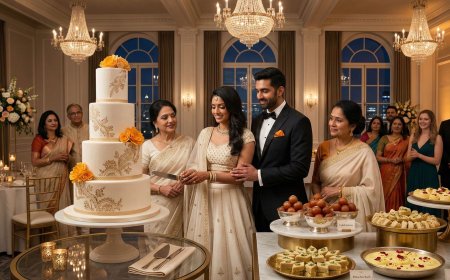













































The Wedding That Was Also the First Day of the Family: The NRI Couple's Complete Guide to Planning Your Indian Wedding with Children from Previous Relationships
The nine-year-old's question — will we be there the whole time, but what are we doing there — that changed the way her mother understood what the wedding was. Not a logistical question but an existential one: do I belong here, is this occasion mine as well as yours? The blended family wedding is the occasion that is also the beginning of a family, and the planning that serves it must design for every person who is part of it rather than accommodating the children as an afterthought. This guide delivers a complete framework covering child development stages and what each needs from the occasion, the unity rituals adapted for blended families including the Indian cultural elements, the vows to the children, the other parent question, the trusted adult whose sole responsibility is the children's experience, the timing adjustments the Indian wedding programme requires, the conversations before the engagement announcement, and the honest acknowledgment that the wedding is the beginning of the family's formation rather than its completion.


Planning Your Indian Wedding with Children from Previous Relationships
The NRI couple's thoughtful guide to the wedding that is also the beginning of a family — understanding what children need from this occasion, how to design for their genuine participation, and how to hold the complexity of joy and transition that the blended family wedding contains
The Wedding That Was Also the First Day of the Family
The bride had two children — a daughter of nine and a son of six. The groom had one child — a son of eleven. The three children had met, had been in each other's company on many occasions over the two years of the relationship, and had reached the specific equilibrium of children who are not yet close but who are no longer strangers.
The wedding planning had begun, as wedding planning usually begins, with the couple. The venue, the date, the guest list, the aesthetic vision. And then, about three months into the planning, the bride had a conversation with her daughter that changed the way she understood what the wedding was.
Her daughter had asked: will we be there the whole time?
The bride had said: of course, you are part of the wedding.
Her daughter had said: but what are we doing there?
The question was specific and entirely reasonable. The nine-year-old had been to weddings before — had sat through ceremonies she did not understand, had waited for meals that arrived late, had been present at occasions that were designed entirely for adults and that had accommodated children as an afterthought. She was asking, with the specific clarity of a nine-year-old, whether this wedding was going to be like those ones.
The bride sat with the question for several days before she understood what it was really asking. Her daughter was not asking about the logistics of the wedding day. She was asking: do I belong here? Is this occasion mine as well as yours?
The answer the wedding needed to give — through its design, its programme, and the specific choices the couple made about what the children's role would be — was yes. Unambiguously, specifically, genuinely yes.
The planning that followed was different from the planning that had preceded that conversation.
This guide is built on what that planning produced.
Understanding What Children Actually Need From This Occasion
The Developmental Context
Children at different developmental stages need different things from the experience of a parent's wedding — and the planning that serves a six-year-old is not the planning that serves an eleven-year-old or a fifteen-year-old.
The young child — under seven:
The young child's primary need at the parent's wedding is sensory comfort and emotional security — the knowledge that the familiar adult who manages their world is present and available, that the unfamiliar environment is safe, and that the occasion's emotional intensity is not something to be frightened by.
The young child does not have the cognitive framework to understand the wedding's significance in terms of family structure, legal change, or long-term implication. They experience the day as a day — a long, stimulating, emotionally charged day with a lot of adults and a lot of unfamiliar sensory input. The planning for the young child is primarily about managing this experience: familiar caregivers, predictable food timing, a quiet space to retreat to, and the specific reassurance of the parent's physical presence at key moments.
The young child who is given a specific role — the flower girl who scatters petals, the ring bearer who carries the cushion — has a defined participation that gives them a place in the occasion's structure. The role should be simple, rehearsed, and accompanied by the specific adult who will guide the child through it on the day.
The middle childhood child — seven to twelve:
The middle childhood child has the cognitive framework to understand something of what the wedding means — the family is changing, the parent is committing to a new partner, the household will be different — and has the emotional complexity to feel multiple things about it simultaneously.
This is the child who is most likely to carry ambivalence about the wedding — who may be genuinely happy for the parent and simultaneously grieving the specific loss that the parent's remarriage represents: the final confirmation that the original family is not returning. The ambivalence is not a problem to be solved. It is the honest emotional response of a child whose family has changed in ways they did not choose.
The planning for this child: genuine inclusion in the preparations, age-appropriate explanation of what the day will involve, specific acknowledgment of their feelings without requiring those feelings to be resolved before the wedding, and a role in the ceremony that is meaningful rather than merely decorative.
The adolescent — thirteen and over:
The adolescent's relationship to the parent's wedding is the most complex of the age groups — because the adolescent has the cognitive sophistication to understand the full implications of the family change, the emotional capacity for grief and ambivalence that is as deep as an adult's, and the specific developmental need for autonomy that makes imposed participation feel particularly uncomfortable.
The adolescent who is told they have a role in the ceremony rather than asked if they want one has been treated as a prop rather than a person. The adolescent who is genuinely consulted — whose preferences about their level of participation are genuinely sought and genuinely honored — is the adolescent who can find their way to genuine presence at the occasion rather than reluctant attendance.
The adolescent who does not want to participate in the ceremony, who wants to attend as a guest rather than as a participant, has made a reasonable choice that the planning should accommodate. The ceremony that accommodates the adolescent's honest position is a ceremony that the adolescent can actually be present to — which is more valuable than the ceremony that requires their participation and receives their performance.
The Children's Relationship to the Step-Parent
The children's relationship to the incoming step-parent — the specific quality of that relationship at the time of the wedding — is the most important variable in how the children experience the occasion.
The children who have a warm, established relationship with the step-parent — who have spent genuine time together, who have developed genuine affection — will experience the wedding differently from the children who are still navigating the relationship, who have ambivalence or resistance that has not yet resolved.
The wedding that happens before the children's relationships with the step-parent are established is a wedding whose family-formation function is ahead of the family-formation reality. This is not necessarily wrong — the legal and practical commitment can precede the emotional completion of the family's formation — but it requires specific honesty in the planning about what the wedding is doing and what it is not.
The planning question: where are the children, specifically, in their relationship to the step-parent? And how does the ceremony design need to reflect that reality rather than the family the couple hopes to become?
The Ceremony Design: Including Children Genuinely
The Unity Ritual
The unity ritual — a specific ceremonial moment in which the family's formation is acknowledged — is the ceremony element that most directly addresses the children's presence and role.
There are several unity rituals that specifically include children:
The family medallion ceremony:
The family medallion — a three-ring medallion symbolizing the joining of the couple's lives and the children's bonds — is presented to the children during the ceremony. The specific gesture of giving the children something at the ceremony that is theirs — that symbolizes their place in the family being formed — is a gesture whose meaning is felt rather than merely understood.
The unity candle adapted for a family:
The unity candle ceremony — in which the couple lights a central candle from two individual candles — can be adapted to include the children by giving each child their own candle, so that the central candle is lit from all the family members' individual flames rather than only the couple's. The adaptation communicates the specific thing the children need the ceremony to communicate: the family is being formed by all of us, not only by the two adults.
The sand ceremony:
The sand ceremony — in which different colors of sand are poured into a single vessel — is adaptable for any number of participants and produces a visible, permanent artifact that belongs to the family. Each child has their own color. The combined vessel — the mixed, inseparable sand — is a physical object that the children can see in the family home after the wedding.
The vows to the children:
Some couples choose to include specific vows to the children — spoken in the ceremony, directly to the children, as a formal commitment that is separate from the couple's vows to each other. The vow that is spoken to a specific child, by name, in front of everyone the family loves, is a ceremony moment whose emotional weight for that child is significant.
The vows to the children should be written with the specific children in mind — not generic promises but specific commitments that reflect the actual relationship and the actual role the step-parent is taking on. The vow that is honest — that commits to specific things rather than performing a completeness that the relationship has not yet reached — is more valuable to the child than the vow that overclaims.
The Indian cultural elements:
The Indian wedding tradition includes specific moments that can be adapted to include children in ways that are culturally resonant:
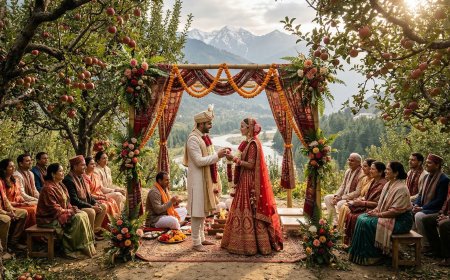
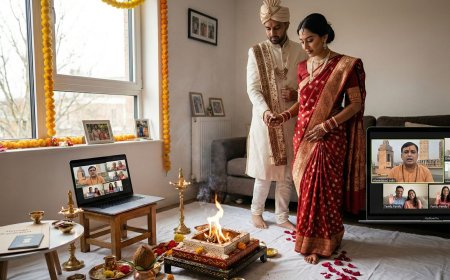
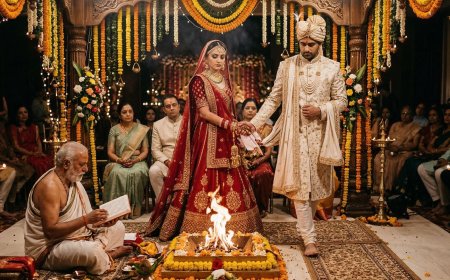
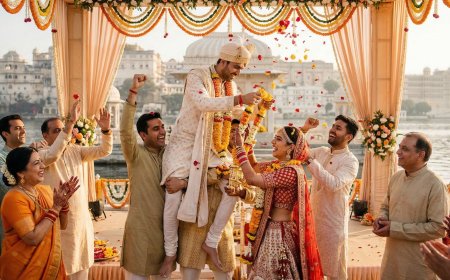
The aashirwad — the blessing — which is conventionally sought from elders, can be extended to include the children as part of the circle of people from whom the couple seeks and receives blessing. The specific moment where the couple turns to the children, where the children place their hands on the couple in the gesture of blessing or receive the couple's hands on their heads in the gesture of love and protection — this is a ceremony moment that is genuinely Indian in its cultural grammar and genuinely specific to this family.
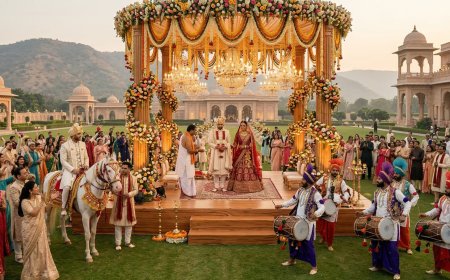
The phoolon ki chadar — the canopy of flowers under which the bride enters — can be held by the children rather than by brothers or cousins, giving the children the specific role of welcoming the parent and step-parent into the ceremony together.
The Rehearsal
The children who have rehearsed their roles — who have walked through the ceremony in the actual space, who know what they will be asked to do and when — are the children who can be present on the day rather than anxious. The rehearsal is not merely logistical. For children, it is an emotional preparation — the transformation of the unfamiliar into the known.
The rehearsal should be low-pressure and playful rather than demanding. The child whose rehearsal experience is positive — who has been praised, who has had the experience of doing it correctly, who has been made to feel capable — arrives at the ceremony with confidence rather than anxiety.
The Guest List: The Social Navigation
The Other Parent
The other parent — the children's biological parent who is not part of the new couple — is the most significant person in the guest list question for the blended family wedding. The question of whether the other parent is invited, whether they would come if invited, and whether their presence or absence would serve the children's experience of the day, is a question that many couples navigate imperfectly.
The honest positions:
The other parent who is invited and who comes — because the co-parenting relationship is sufficiently established and warm that their presence does not create tension — is the option that serves the children most straightforwardly. The child whose other parent is present at the wedding can experience the day without the specific grief of the absent parent. This option requires a quality of co-parenting relationship that not every divorced couple has reached, and the couple should be honest about whether their specific situation makes it available.
The other parent who is not invited — because the relationship between the divorced couple is not at the point where their shared attendance at the wedding is possible without tension — is the more common situation. The planning for this situation must acknowledge the children's awareness of the other parent's absence and must create specific space for the children to hold this without feeling that they must pretend the absent parent does not exist.
The specific thing not to do: require the children to not mention the other parent, to perform happiness about the other parent's absence, or to experience the wedding as though their other parent is not part of their lives. The child who feels they must hide their awareness of the other parent's absence to protect the adults from discomfort is carrying a burden that the adults have placed on them.
The Extended Families
The extended families of both the couple and the previous spouses may include people whose relationships to the children are genuine and significant — grandparents, aunts and uncles, cousins — whose presence or absence at the wedding has implications for the children's experience.
The children's grandparents from the previous marriage — if the co-parenting relationship permits and if the relationships are warm — are people whose presence at the wedding may serve the children's sense of continuity and belonging. The presence of people the children know and love, from the family context they know, in the new family context being created, is a presence that says to the children: you do not have to leave one life to enter another.
The Day's Design: What Makes It Work for Children
The Timing
The Indian wedding's programme — which often begins in the late afternoon or evening and extends well past midnight — is a programme designed for adults and experienced by children as a marathon of waiting, stimulation, and fatigue that they are not equipped for.
The planning that serves the children considers their physical and emotional capacity alongside the adults' celebration. The specific adjustments:
The children's meal served at a time appropriate for children — seven or eight in the evening rather than eleven at night. The children who are hungry and tired and who are waiting for a meal that will not arrive until adults are ready for it are the children whose experience of the wedding is dominated by discomfort rather than celebration.
The ceremony scheduled early enough that the children can be present and engaged rather than asleep or over-stimulated. The ceremony at seven in the evening is experienced differently by a six-year-old than the ceremony at ten.
The designated rest or retreat space — a quiet room with comfortable furniture, age-appropriate activities, and a trusted adult — that the children can access when the stimulation of the main event becomes too much. The retreat space is not a punishment. It is the recognition that children need to regulate their sensory experience in ways that adults do not.
The Trusted Adult
The children at the wedding need a specific, designated adult whose primary responsibility is their experience — whose attention is on the children rather than on the couple or the broader celebration.
This adult is not the parent who is being married. The parent who is being married cannot simultaneously be the person managing their children's experience of the day. The specific adult — a close family member, a trusted family friend, a professional childcare provider — whose responsibility begins when the children arrive and ends when they leave is the provision that allows the parent to be present to their own wedding and the children to be genuinely cared for.
The briefing for this adult: the specific children's names, ages, and characters. The food restrictions and preferences. The retreat space location. The ceremony role and rehearsed timing. The emotional landscape — which child might need extra support at which moment. The plan for if a child becomes distressed. The contact protocol for reaching the parent if necessary.
The Children in the Photographs
The family photographs — the specific images that will be the visual record of the day and of the family's formation — are a planning consideration with implications beyond the aesthetic.
The children who are included in the family photographs — who are positioned as part of the family being documented — are being told something specific about their place in the family. The family portrait that includes all the children, with the couple, is a different statement from the couple's portrait taken while the children wait to one side.
The photographer should be briefed on the family's composition and on the specific photographs the couple wants — including the specific family formation images — so that the documentation of the family includes the children as members rather than as accessories.
The children who want to be in the photographs should be included. The adolescent who does not want to be in many photographs should have their preference respected. The forced smile in the family portrait is not the documentation the family needs.
The Conversations: What to Say and When
With the Children Before the Engagement is Announced
The conversation with the children about the engagement — before it is announced to the extended family or made public — is the conversation that respects the children's specific position as the people most directly affected by the family change.
The conversation is not a request for permission. The couple's decision to marry is not subject to the children's approval, and the pretense that it is creates a false dynamic that ultimately serves no one. The conversation is an honest sharing: we are going to get married, and we wanted to tell you before anyone else, because you are the most important people in our lives.
The children's responses to this conversation will vary — and the couple should be prepared for the full range. The child who is immediately happy. The child who is quietly withdrawn. The child who asks specific, practical questions about what will change. The child who cries. All of these responses are legitimate, and the response in the immediate moment is not the final word on how the child feels about the marriage.
During the Planning
The children who are included in some of the wedding planning — whose opinions are genuinely sought on specific decisions that affect them — are the children who feel that the occasion is theirs as well as their parents'.
The specific invitations to participate: the children choosing their own outfit for the wedding, with guidance from the parent on the parameters. The children's input into the food menu for their own table. The children's involvement in choosing the music for a specific moment. The older child who is asked to read a poem or a passage in the ceremony, with the genuine option to decline.
The participation should be genuinely optional — the child whose input is sought but not required is the child who can engage freely rather than the child who feels pressured to perform enthusiasm.
The Night Before
The night before the wedding is the specific moment when children's anxieties about the transition tend to surface — when the proximity of the change makes it concrete in ways that the planning months have not.
The parent who creates specific, quiet time with each child the night before the wedding — not the rehearsal dinner's busy social occasion but a private moment with each child individually — is the parent who has given the children the specific reassurance that the wedding does not mean they are losing the parent, that the family being formed includes them fully, and that the parent's love for them is not divided by the love for the new partner.
The specific thing to say: something true. Not a promise that everything will be perfect — children know when they are being told what adults want them to hear. Something true about what the parent feels, what the family means, and what the child means to the parent. The truth, spoken simply, is the thing the child needs to hear before the morning of the wedding.
The Indian Cultural Dimension
The Extended Family's Relationship to the Children
The Indian extended family's relationship to the children of a previous marriage varies significantly by family and by community — from the warmly inclusive family that embraces the children as fully its own to the family whose acceptance of the children is more qualified or more complicated.
The children at the Indian wedding encounter the extended family in an intensive and sustained way — the multi-day programme, the shared meals, the ceremonies whose participation is communal — and the quality of the extended family's reception of the children shapes the children's experience of belonging to the new family.
The couple who has had specific conversations with key extended family members before the wedding — who has asked for the specific warmth and inclusion that the children need — is the couple who has given the extended family the opportunity to be at their best rather than at their default.
The specific request: please welcome these children as part of our family. Call them by name. Include them in the conversations and the rituals. Let them know they belong here.
The Children and the Rituals
The Indian wedding's rituals are rich with opportunities for the children's genuine inclusion — if the officiant and the family are willing to design for inclusion rather than for convention.
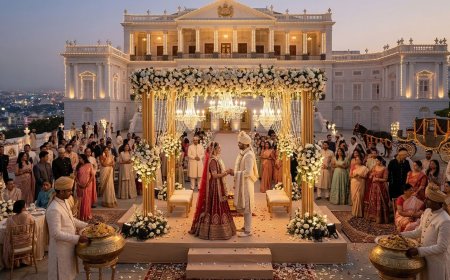
The Pandit who briefs the couple on the ceremony should be specifically asked: how can the children be included in the ceremony in a way that is culturally resonant and genuine? The Pandit who is willing to adapt the ceremony to include the children — to incorporate specific blessings, specific roles, specific moments of acknowledgment — is the Pandit whose ceremony serves the family that is actually being formed.
The rituals that are conventionally performed by siblings, parents, or other specific family members can sometimes be performed by or with the children — the role that acknowledges them as part of the family structure rather than as guests at their parent's wedding.
The Day After: The Family That Was Formed
The morning after the wedding is the first morning of the family that was formed the day before. The specific quality of that morning — whether it is warm or awkward, whether the children feel that something has genuinely changed or that the wedding was an event that the adults had and that the children attended — is shaped by everything that the planning has done and has not done.
The family that has been designed for in the planning — whose children have been genuinely included, whose roles have been specific and meaningful, whose emotional complexity has been honored rather than managed — wakes up on the morning after the wedding as a family whose formation has begun well.
Not completed. The family's formation — the genuine building of the relationships, the development of the specific warmth, the eventual ease that takes years to grow — is not accomplished by a wedding. The wedding is the beginning, not the completion.
But beginnings matter. The beginning that has honored every person who is part of it — that has told each child, through the design of the occasion, that they belong here, that they are seen, that their presence matters — is the beginning that the family can build on.
The nine-year-old's question — what are we doing there? — deserved the answer the wedding gave her.
She was the flower girl. She chose the flowers. She walked into the ceremony ahead of her mother, scattering petals on the ground. She sat in the front row with her brother and her new step-brother during the ceremony. At the moment when the officiant asked for the family's blessings on the couple, the three children came forward together and placed their hands on the couple's joined hands.
At dinner that evening, a family friend asked her how she was feeling.
She said: happy. And also a bit everything else.
It was exactly right.
NRIWedding.com — Expert guidance for Indian weddings planned across borders.
What's Your Reaction?
 Like
0
Like
0
 Dislike
0
Dislike
0
 Love
0
Love
0
 Funny
0
Funny
0
 Angry
0
Angry
0
 Sad
0
Sad
0
 Wow
0
Wow
0