






































































Political Unrest or Travel Warnings: Should You Postpone? — The Complete NRI Wedding Planning Guide
Meera found out about the travel advisory on a Thursday morning, not from the news but from her colleague at the architecture firm in Melbourne who forwarded it with a single line: "isn't your wedding in Rajasthan?" The UK Foreign, Commonwealth and Development Office had issued a Level 2 advisory for the region three days earlier. The US State Department had updated their India page the same week. Meera's wedding was in Udaipur. Eleven weeks away. One hundred and forty guests, of whom sixty-two were flying internationally — from Melbourne, from Toronto, from Houston, from Dubai, from London. Her mother-in-law was already forwarding the advisory to a family WhatsApp group with a string of question marks. The language of government travel warnings is written by committees of cautious bureaucrats whose job is to protect governments from liability, not to help an NRI couple in Melbourne make a rational decision about their Udaipur wedding. And yet the decision had to be made — with real information, real local intelligence, real guest constraints, and real vendor contracts on the line. This guide gives NRI couples the complete framework for responding to political unrest or travel warnings mid-planning — covering how to read advisory language correctly, gathering local intelligence, understanding the international guest reality, vendor contracts and the Indian Contract Act, the four-question decision framework, and how to communicate the decision to guests and family with precision and grace.


Political Unrest or Travel Warnings: Should You Postpone? — The Complete NRI Wedding Planning Guide
Meera found out about the travel advisory on a Thursday morning, not from the news but from her colleague at the architecture firm in Melbourne who forwarded it with a single line: "isn't your wedding in Rajasthan?" The UK Foreign, Commonwealth and Development Office had issued a Level 2 advisory for the region three days earlier. The US State Department had updated their India page the same week. Meera's wedding was in Udaipur. Eleven weeks away. One hundred and forty guests, of whom sixty-two were flying internationally — from Melbourne, from Toronto, from Houston, from Dubai, from London. Her mother-in-law was already forwarding the advisory to a family WhatsApp group with a string of question marks.
Meera did what most people do when confronted with alarming official language: she read the advisory three times and understood it less each time. The language of government travel warnings is written by committees of cautious bureaucrats whose job is to protect governments from liability, not to help an NRI couple in Melbourne make a rational decision about their Udaipur wedding. Words like "exercise increased caution" and "reconsider travel" and "monitor local conditions" exist on a spectrum that most civilians cannot read with any precision. Is this the kind of advisory that means stay home? Or is this the kind of advisory that means be aware? The difference matters enormously, and the advisory itself will not tell you.
Her fiancé Rohan was in London. He had been on a call with his office when the messages started coming in, and by the time he came off the call, the family WhatsApp group had forty-seven messages in it — his aunt in Toronto had found a different advisory, his cousin in Dubai had sent a news article, his mother had sent three voice notes, and the general temperature of the conversation had risen to a level where rational discussion was going to require significant effort to restore.
The wedding planner in Udaipur, a composed and experienced woman who had managed four destination weddings that season alone, messaged Rohan that evening. Her message was measured. She had spoken to the venue. The venue was operating normally. The local situation, she said, was stable. She understood the concern. She suggested they speak on Friday. She did not say postpone. She did not say proceed. She said: let us look at this together with clear information.
That Friday call — the one where Meera and Rohan came in with anxiety and the planner came in with data — was the turning point. Not because the planner had a magic answer, but because the call replaced the ambient panic of the WhatsApp group with a structured conversation about specific, verifiable facts. By the end of it, they had a framework. By the end of the following week, they had a decision. The decision was to proceed, with specific modifications to the guest communication, the travel arrangements, and the contingency planning. Eighty-eight percent of their international guests attended. The wedding was, by every account, extraordinary.
What Meera and Rohan had — and what most NRI couples in this situation do not have — was a method for moving from panic to clarity. This is that method.
This guide is for every NRI couple who has opened a government travel advisory and felt the ground shift — for Meera in Melbourne and Rohan in London and every couple like them who needs the complete framework, not the WhatsApp consensus.
Reading Travel Advisories Correctly: What the Language Actually Means
The first and most important skill in this situation is learning to read government travel advisories as the specific, calibrated documents they are, rather than as binary signals of danger or safety. Most people read them as the latter, which is why a Level 2 advisory for a country of 1.4 billion people triggers the same anxiety as a Level 4 advisory for an active conflict zone.
Every major Western government with significant Indian diaspora populations — Australia, the United States, the United Kingdom, Canada — operates a tiered travel advisory system, and the tiers mean different things in different systems. The US State Department uses four levels: Level 1 is exercise normal precautions, Level 2 is exercise increased caution, Level 3 is reconsider travel, and Level 4 is do not travel. The UK FCDO uses a different language system: advise against all travel, advise against all but essential travel, and no advisory. Australia's Smartraveller uses five tiers from "exercise normal safety precautions" through to "do not travel." Canada's system uses four levels with its own language.
The critical point is that advisories are almost always issued for entire countries or large regions, and they almost never reflect the specific conditions of the specific city or venue where your wedding is taking place. India regularly carries Level 2 advisories from multiple Western governments for reasons entirely unrelated to the tourist and wedding destination regions — the Kashmir situation, the northeastern border tensions, periodic communal incidents in specific states. A Level 2 advisory for India because of tensions in a border region is not the same situation as a Level 2 advisory for Rajasthan because something is happening in Rajasthan.
Your job, when you encounter a travel advisory, is to do three things before you form an opinion. Read the specific text of the advisory, not just the headline level, and identify what specific situation it is responding to. Identify the geographic specificity — is this a national advisory or a regional one, and does the specific region it references include your wedding location. Then compare the advisory across multiple governments, because the US, UK, Australian, and Canadian governments do not always agree, and the divergence between them is itself informative.
The Local Intelligence Question: Who Actually Knows
Government advisories are written in capital cities by officials who have not visited the specific location they are advising about. Your wedding planner, your venue manager, and your local contacts are the people who actually know what is happening on the ground in the city where your wedding is taking place, and their intelligence — gathered in real time, from direct observation — is more specific and more current than any government document.
This is not to say that local intelligence should override official advisories categorically. It is to say that the two sources of information serve different purposes and that you need both. The government advisory tells you how Western governments are formally characterising the risk environment in a broad region. The local intelligence tells you what is actually happening in the specific city, neighbourhood, and venue where your event will occur.
When you speak to your wedding planner or venue contact about a travel advisory situation, ask specific questions. Is the venue operating normally? Have any other events in the region been cancelled or postponed in the last two weeks? Have any of the vendors — the caterer, the decorator, the transport company — expressed any concern about operations? What is the local security situation at the venue itself? Have there been any incidents in the city that affect the wedding district? These questions produce specific, useful answers. "Is it safe?" does not.
The secondary layer of local intelligence is your own family network in India. If your parents or extended family are based in or near the wedding location, they are another real-time source. Their read on the situation is not official and is shaped by their own anxieties and loyalties, but it is human and present in a way that a government document is not. Weight it accordingly — neither dismiss it nor treat it as definitive.
The International Guest Reality: What Your Guests Are Actually Facing
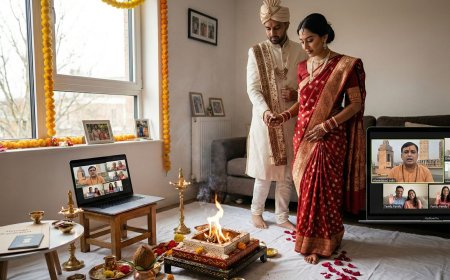
For domestic Indian couples, a travel advisory is primarily a question of personal risk tolerance. For NRI couples, it is also a question of what the advisory means for sixty or eighty or a hundred international guests who are making decisions about flights, insurance, visas, and employer travel policies.
This is the dimension that makes the NRI wedding situation categorically different from the domestic situation, and it is the dimension that most NRI couples underestimate when they are deciding whether to proceed. Even if you personally are comfortable with the risk level and your local intelligence is reassuring, your guests are operating under different constraints. An employee of a major corporation in the United States, Canada, or Australia may be subject to their employer's travel policy, which may prohibit or strongly discourage travel to countries or regions under a Level 2 or higher advisory. Their travel insurance may have exclusions that activate when a government advisory is in place. Their airline's cancellation and refund policy may change in advisory conditions.
The honest question to ask is not "is it safe enough for us to proceed?" but "is it fair to ask our international guests to absorb these constraints and this uncertainty on our behalf?" The answer to that question depends on the severity of the advisory, the specific geographic situation, the profile of your guest list, and the notice you can give them. It is not always no. But it deserves to be asked honestly.
When you communicate with international guests about a travel advisory situation — and you must communicate proactively, not wait for them to ask — be specific about what the advisory says, what you have found in your own research, and what your decision is and why. Tell them explicitly that you understand if they cannot attend given the advisory, that you will not be offended, and that their ticket and accommodation costs will not be their problem if the situation escalates. Make the opt-out easy and graceful. Some guests will take it. Most, if your communication is reassuring and your research is credible, will not.
The Vendor and Contract Dimension
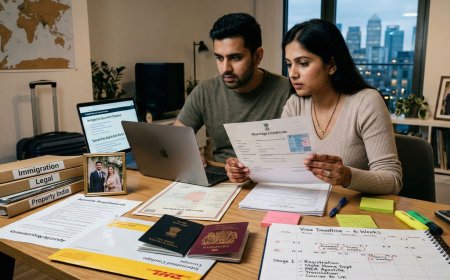
A political unrest or travel advisory situation creates a specific legal and commercial situation with your Indian vendors that is worth understanding clearly. The Indian Contract Act, 1872, and specifically the doctrine of frustration under Section 56, becomes relevant when an unforeseen event — a genuine security situation, an officially declared emergency, a government-imposed restriction on gatherings or movement — makes the performance of the contract impossible or radically different from what was agreed.
The key word is impossible. A travel advisory, by itself, does not make your wedding impossible. It makes it more complicated. It may make some of your guests unwilling to attend. It does not, in most advisory situations, physically prevent the event from occurring. This means that the standard contractual position is that vendors are not obligated to refund deposits or waive cancellation fees simply because a travel advisory exists, and that if you choose to postpone based on an advisory, you are making a voluntary choice rather than responding to a force majeure event.
This is important to understand not because it means vendors will be inflexible — most reputable vendors, understanding the genuine complexity of the situation, will work with you — but because understanding the legal baseline tells you what you are asking for when you request accommodation. You are asking for goodwill, not enforcing a right. The conversation goes better when you know that.
The exception is if the situation escalates to a point where the government of India, or the state government, imposes actual restrictions — on gatherings, on movement, on specific areas — that directly affect your event. At that point, Section 56 of the Indian Contract Act applies genuinely, and vendors have both a legal and a practical basis for treating the contract as frustrated. In that scenario, the Consumer Protection Act, 2019, also provides recourse if vendors attempt to retain deposits unconscionably when the event has been made genuinely impossible by government action.
Common Mistakes NRI Couples Make With Travel Advisory Situations
The first mistake is making a decision based on the WhatsApp consensus. The family group chat is the worst possible decision-making environment for a situation that requires calm, specific, evidence-based analysis. Forty-seven messages arrive in two hours. Aunts forward news articles of dubious provenance. The most anxious voices are the loudest. The most informed voices — the local contacts, the wedding planner, the people with actual knowledge — are not in the group at all. Remove the decision from the WhatsApp group and put it in a structured conversation with the right people.
The second mistake is conflating the advisory level with the actual risk at the specific location. A national Level 2 advisory does not mean that Udaipur is dangerous. It may mean that a border region two thousand kilometres away has experienced tension. Read the specific text of the advisory, identify the geographic basis, and assess whether that basis is relevant to your specific location before you treat the headline number as meaningful.
The third mistake is waiting too long to make a decision in the hope that the situation will resolve itself. Travel advisories can persist for months. Political situations can remain ambiguous for extended periods. International guests need lead time — they have flights to book, leave to arrange, insurance to purchase. If you wait six weeks hoping the advisory will be downgraded, you may find that the advisory remains and your guests have lost the ability to make flexible arrangements. Set a decision deadline. Gather your information. Make the call.
The fourth mistake is not purchasing wedding insurance before the situation arises. Many NRI couples do not purchase wedding insurance at all, and of those who do, many purchase it after the advisory has already been issued, at which point the advisory is a known event and is excluded from coverage. Wedding insurance that covers political unrest and government travel advisories exists and is specifically relevant for destination weddings in India. It must be purchased before the situation it is meant to cover arises. The time to think about this insurance is when you sign the first vendor contract, not when the advisory appears.
The fifth mistake is failing to build a genuine contingency plan into the event architecture. If you proceed with the wedding in an advisory situation, proceed with a documented contingency for escalation — a specific trigger point at which you would activate a postponement, a clear communication plan for guests if the situation changes in the final two weeks, a vendor agreement in writing about what happens if a government restriction is imposed after the decision to proceed has been made. Proceeding without a contingency is not confidence. It is avoidance wearing confidence as a costume.
The Decision Framework: How to Actually Decide
The decision of whether to postpone or proceed in a political unrest or travel advisory situation is not a single question. It is four questions, and the answer to each one informs the final decision.
The first question is geographic: is the advisory specifically relevant to the region and city where your wedding is taking place, or is it a national or regional advisory that does not directly apply to your location? If the honest answer is that the advisory is not geographically relevant to your specific location, your threshold for proceeding is significantly lower.
The second question is directional: is the situation that prompted the advisory improving, stable, or deteriorating? An advisory issued two weeks ago in response to a specific incident that has since resolved is different from an advisory issued last week in response to an ongoing situation with no clear resolution timeline. Track the direction of the situation, not just its current level.
The third question is practical: are your vendors, your venue, and your local contacts operating normally, and have they expressed any operational concern? If the venue is running events, the vendors are accepting bookings, and your planner reports normal conditions, that is significant ground-level evidence.
The fourth question is guest-centred: what proportion of your international guests are subject to employer travel restrictions, insurance exclusions, or personal risk tolerance levels that would prevent their attendance if the advisory remains in place? If the answer is a small minority, your calculus is different from a situation where a majority of your international guests are employed by corporations with strict travel policies.
Run these four questions honestly, with real information, and the answer will usually become clear. The situations that remain genuinely ambiguous after this analysis are the ones where postponement is probably the safer choice — not because the risk is definitive, but because genuine ambiguity, in the context of an event involving a hundred international guests and years of planning, deserves to be resolved conservatively.
Scaling the Communication to the Situation
Once you have made your decision — proceed or postpone — the communication to guests, family, and vendors requires the same precision that the decision itself required. Vague communication in this situation causes more anxiety than the situation itself.
If you are proceeding, your communication to international guests should include the specific advisory language, your specific research into why it does not materially affect your location, your local intelligence, and a clear statement that you understand and fully support any guest who chooses not to attend given the advisory. Include practical information about travel insurance and what guests should check with their own insurers. Provide emergency contact details for the wedding planner and the venue. Make the communication feel like the output of a rigorous decision process, because it should be.
If you are postponing, your communication should be prompt, specific about the reason, and clear about the timeline for announcing new dates. Do not postpone indefinitely — give yourself a specific window, two to three weeks, for confirming alternative dates, and communicate that window to guests so they know when to expect the new information. Acknowledge the disruption directly. Your guests have made arrangements. They deserve the honest acknowledgment that postponing creates real inconvenience, and they deserve it without excessive apologising or excessive explanation.
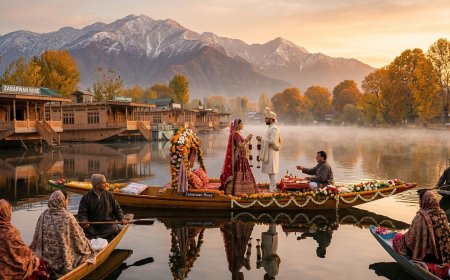
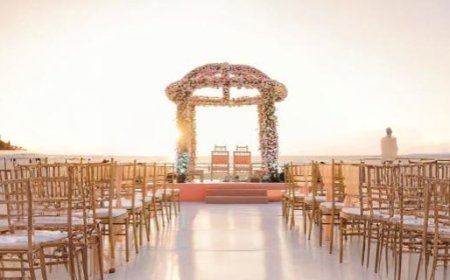
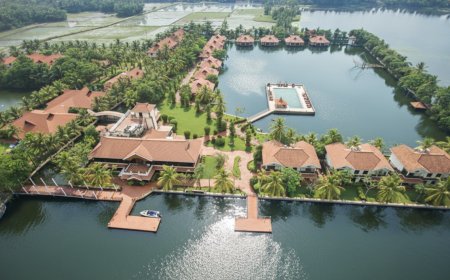
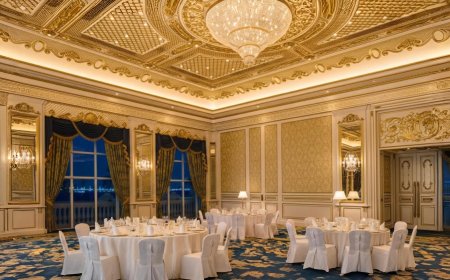
Meera and Rohan's wedding took place on the original date. The Udaipur venue, lit at dusk over the lake, was precisely what they had planned. Three of their sixty-two international guests did not attend — one because of an employer travel policy, one because of a personal anxiety about flying that the advisory had amplified, one because of an unrelated health situation that had nothing to do with the advisory at all. Fifty-nine flew in from six countries. At the reception, Rohan's aunt from Toronto, who had sent the most alarmed messages in the WhatsApp group in those early days, pulled Meera aside near the end of the night and said: I'm so glad we came. Meera said: I'm so glad you did.
The decision had not been easy. It had been methodical. The methodical decision had produced the outcome that the panic would never have found.
Read the advisory specifically, not just the headline level. Get local intelligence from the people who are actually there. Set a decision deadline and hold it. Communicate to guests with precision and with grace. Build the contingency into the plan before you need it.
The wedding you planned deserves a decision made with clear eyes. Make it with clear eyes.
Published by NRIWedding.com — The Premium Global Platform for Non-Resident Indians Planning Indian Weddings From Abroad.
What's Your Reaction?
 Like
0
Like
0
 Dislike
0
Dislike
0
 Love
0
Love
0
 Funny
0
Funny
0
 Angry
0
Angry
0
 Sad
0
Sad
0
 Wow
0
Wow
0