





































































Splurge vs. Save: Where to Allocate Your Indian Wedding Budget
Every NRI couple reaches the moment when the wedding budget meets reality — and trade-offs become unavoidable. This expert guide breaks down exactly where to spend generously and where to save strategically across every major Indian wedding category. From the high-leverage decisions that define the entire wedding experience — venue, photography, catering, and bridal outfit — to the low-leverage categories where intelligent savings free budget for what truly matters, this is the most complete, strategically intelligent wedding budget allocation guide written specifically for NRI couples worldwide.


The Budget That Has to Do Everything at Once
You have a number.
It took several weeks to arrive at — conversations with both families, honest discussions with your partner, a spreadsheet that went through more versions than you care to count, and the quiet recalibration that happens when you discover what things actually cost in the current Indian wedding market versus what everyone assumed they would cost.
But you have a number. And the number is real, and it is confirmed, and it is — if you are being completely honest — not quite as large as the wedding you have been imagining.
Which means you are now facing the decision that every NRI couple faces at the precise moment the planning gets serious: you cannot spend generously on everything. The budget that felt substantial when you were thinking about the wedding in the abstract becomes a set of genuine trade-offs when you start applying it to actual vendor categories with actual current market pricing.
Do you prioritise the venue — the space that will set the entire atmosphere, that will appear in every photograph, that your guests will experience from the moment they arrive? Or do you prioritise photography — the permanent record of the day, the thing that will remain when every other element has faded? Do you spend on décor, which transforms a space into an experience, or on catering, which is what your guests will actually talk about on the flight home?
These are not rhetorical questions. They are the real allocation decisions that determine the actual experience of your wedding — and the actual experience of your guests. And for NRI couples planning from abroad, they are made under conditions of additional complexity: you cannot walk into a venue and feel it, cannot taste a caterer's food before committing, cannot see how décor looks in the actual space you have booked. You are making significant financial trade-off decisions from a distance, based on portfolios and video calls and the judgement of people you are still getting to know.
This article gives you the framework for making those decisions well. Not a universal prescription for where to spend and where to save — but a complete, honest, intelligently structured guide to how to think about budget allocation for an NRI Indian wedding, what the highest-leverage spending decisions are, what can be reduced without meaningful loss, and how to sequence your allocation decisions so that the final result feels considered rather than compromised.
The Core Reality: Why Budget Allocation Matters More Than Budget Size
Here is the truth that most wedding budget conversations miss entirely: the quality of your wedding experience is determined far more by how intelligently you allocate your budget than by how large that budget is.
A wedding with a generous budget allocated carelessly — spread too thinly across too many categories, with no clear prioritisation of what matters most — produces a wedding that feels mediocre everywhere. A wedding with a modest budget allocated with genuine intelligence — generous where it counts, disciplined where it does not — produces a wedding that feels exceptional in the areas that actually drive the experience.
The couples whose weddings are remembered as extraordinary are not always the ones who spent the most. They are the ones who understood where the money creates experience and where it does not, and spent accordingly.
For NRI couples, this intelligence is even more valuable because the additional costs of planning from abroad — the travel, the shipping, the exchange rate exposure, the planner fees — mean that the effective budget available for the wedding itself is somewhat smaller than the headline number. Every rupee needs to be working harder.
The Experience Hierarchy
Not all wedding expenditure creates equal experience. Some spending is highly visible, deeply felt, and produces memories that last decades. Other spending is invisible to guests, forgotten within hours, and produces no meaningful difference in the experience of the day.
Understanding which is which — and allocating your budget accordingly — is the central skill of intelligent wedding budget management.
The hierarchy is not universal. Different couples, different families, and different guest profiles will weight categories differently. But there are consistent patterns across NRI weddings that hold true across a wide range of contexts and preferences.
Where to Splurge: The High-Leverage Categories
These are the categories where generous spending produces a return — in experience, in memory, in the lasting quality of what the wedding produces — that justifies the cost.
The Venue
Splurge recommendation: Yes, with intention
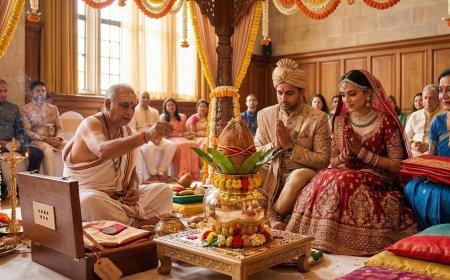
The venue is the single highest-leverage spending decision in your entire wedding budget. It is the container within which every other element exists. It sets the atmosphere before a single flower has been arranged or a single note of music played. It determines what your guests feel the moment they arrive — and that first impression shapes everything that follows.
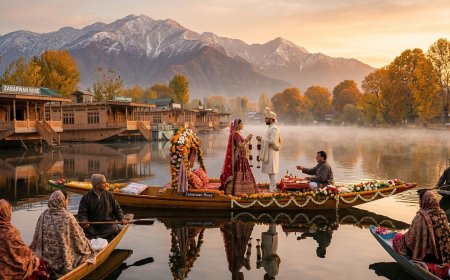
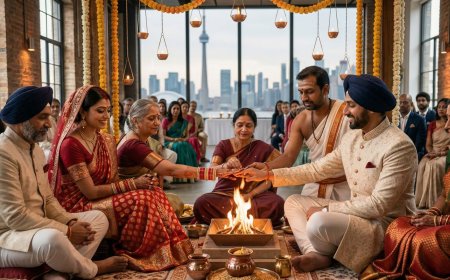
For NRI weddings in India, the venue is also the element most likely to be transformative in a way that justifies a premium. A heritage property in Rajasthan, a palace hotel in Jaipur, a waterfront resort in Goa — these venues do something that no amount of décor or entertainment can replicate. They provide an intrinsic atmosphere, a sense of place, and a visual grandeur that becomes the backdrop against which every photograph is taken and every memory is formed.
The calculus for venue spending is straightforward: the cost of upgrading your venue is spread across every guest who attends, every hour of the event, and every photograph taken for the rest of your lives. The per-person, per-hour, per-memory cost of a venue upgrade is almost always lower than it appears when viewed against the headline price.
Where the venue splurge makes sense: when the upgrade produces a genuinely transformative difference in atmosphere. A venue that is merely good versus one that is exceptional is a meaningful distinction. A venue that is exceptional versus one that is marginally more exceptional — at significantly more cost — may not be worth the premium.
Photography and Videography
Splurge recommendation: Strongly yes
This is the category where the case for spending generously is the most straightforward of any in the wedding budget.
Everything else about your wedding is temporary. The flowers will wilt within 48 hours. The food will be consumed and forgotten. The décor will be dismantled. The venue will host other weddings next weekend. The music will end when the last guest leaves.
The photographs and the video are permanent. They are the only thing from your wedding that you will still be experiencing in ten, twenty, and thirty years. They are what your children will look at. They are what you will return to when you want to remember what the day actually felt like.
The difference between a competent photographer and an exceptional one is not just technical quality. It is the capacity to capture the emotional truth of a moment — the expression on your mother's face during the pheras, the way your partner looked at you during the garland exchange, the moment of genuine laughter that happened when the baraat arrived. Competent photographers document events. Exceptional photographers create emotional records.
For NRI couples planning from abroad, photography is also the category where you will have the least ability to make corrections if the output is disappointing. You cannot reshoot a wedding. Whatever the photographer produces is what you have, permanently. The cost of under-investing in photography is a permanent one.
Allocate generously. Research thoroughly. Meet your photographer — virtually if necessary — and assess not just their portfolio but their personality and their approach. The photographer's presence on your wedding day is as important as their technical skill.
Food and Beverage
Splurge recommendation: Yes — this is what guests remember
Ask anyone who attended a wedding two or three years ago what they remember about it. A disproportionate number will mention the food. Specifically — they will remember whether it was exceptional, and they will remember if it was disappointing.
For an Indian wedding, the catering is not just sustenance. It is hospitality. It is the expression of generosity and care toward the people who have travelled — in many cases, across continents — to be with you. The quality of the food is one of the most direct communications of how much you value your guests' presence.
For NRI weddings specifically, the catering carries additional weight because many guests are returning to India after extended periods abroad and are hungry — literally and emotionally — for the food they have been missing. An exceptional spread of regional cuisine, perfectly prepared and generously served, creates a dining experience that guests talk about for years.
Where to be strategic within the catering category: the number of courses and the service style can be calibrated without reducing quality. A slightly smaller menu of exceptional quality produces a better guest experience than a sprawling menu of average quality. Invest in the quality of preparation and the freshness of ingredients. Be generous with quantities. Do not cut corners on the service staff ratio.
The Wedding Outfit
Splurge recommendation: Yes, for the primary outfit
The bridal lehenga — and the broader bridal trousseau for multi-function NRI weddings — represents an investment that is both deeply personal and highly visible. The primary wedding outfit appears in every significant photograph from the wedding ceremony. It is what you will show your children. It is the garment most associated with the day in visual memory.
For NRI brides, the wedding outfit often carries additional emotional weight — it is a connection to Indian textile traditions, to craftsmanship, to the cultural heritage that the wedding is celebrating. A beautifully crafted, custom-made lehenga from a reputable Indian designer is not merely clothing. It is an artefact.
Where to be strategic: the primary ceremony outfit warrants the largest investment. The mehendi outfit, the reception outfit, and the sangeet outfit can be calibrated more modestly without material impact on the overall visual impression. Many NRI brides find that the second and third outfits can be sourced from excellent mid-tier designers or even vintage and heritage pieces that carry their own beauty at a fraction of the cost of a headline designer.
The Décor and Florals — Selectively
Splurge recommendation: Selective — on anchor elements, not everywhere
Décor is the category where the relationship between spending and experience is most non-linear. There is a meaningful quality difference between minimal, poor-quality décor and beautifully executed signature décor. But there is often very little difference — in terms of guest experience — between beautifully executed décor and extravagantly expensive décor.
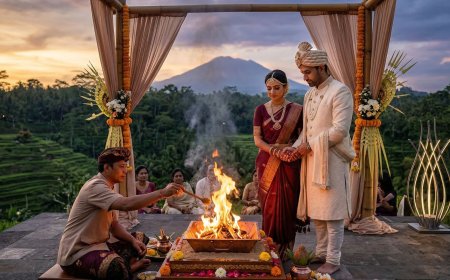
The intelligent approach to décor spending is to identify the anchor elements — the visual moments that will define the aesthetic of each function and that will appear most prominently in the photographs — and invest there. The ceremony mandap. The entrance to the reception. The floral installation behind the head table. These are the elements guests experience first and longest, and that feature most prominently in the photographic record.
Secondary décor elements — table centrepieces, corridor arrangements, back-of-room florals — can be executed more economically without meaningful loss of impact. Guests at a wedding do not notice the back-of-room florals. They notice the mandap, the entrance, and the sweeping floral arch behind the couple.
Spend generously on the anchors. Be disciplined about everything else.
Entertainment at the Sangeet
Splurge recommendation: Yes, for the sangeet specifically
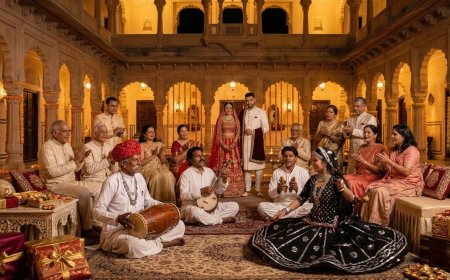
Of all the wedding functions, the sangeet is the one most directly shaped by the quality of the entertainment. It is the celebratory, musical, high-energy function — the night where guests dance, where families perform, where the wedding crosses from formal ceremony to genuine celebration.
A live band or a high-quality DJ who can read a crowd and manage the energy of the evening creates an experience that a mediocre entertainment arrangement cannot replicate. For many guests — particularly those who have travelled from abroad — the sangeet is the function they most look forward to and most remember.
The investment in quality entertainment for the sangeet pays dividends in atmosphere and memory that are immediately visible. This is a category where the quality difference between good and exceptional is felt by every guest in the room.
Where to Save: The Low-Leverage Categories
These are the categories where disciplined spending — reducing costs without eliminating quality — produces little or no meaningful loss in experience.
Printed Stationery and Physical Invitations
Save recommendation: Significant savings available
The wedding invitation is one of the first impressions your wedding makes. It should be beautiful. It should reflect the aesthetic of the wedding and the identity of the couple. It should feel considered.
What it does not need to be is expensive.
The Indian wedding stationery market has evolved dramatically. Beautifully designed, high-quality printed invitations can be produced at a fraction of the cost of bespoke, artisanal stationery. Digital invitation supplements — websites, digital save-the-dates, digital schedule cards — reduce the volume of physical printing required while adding functionality that print cannot match.
For NRI weddings specifically, the international postage cost of mailing physical invitations to overseas guests is itself a significant budget line. Supplementing physical invitations with digital alternatives for international guests reduces this cost substantially without compromising the guest experience.
Favours and Return Gifts
Save recommendation: Yes, with quality awareness
Wedding favours occupy an interesting position in the experience hierarchy. They are expected in the cultural context of Indian weddings. But they are also among the least remembered elements of the wedding experience. Guests will remember the food, the music, the photographs, the ceremony. The vast majority will not remember the favour.
The intelligent approach is to choose favours that are high in quality and cultural resonance — traditional Indian items, locally sourced edibles, items that connect to the region where the wedding is held — at a modest per-unit cost rather than spending significant amounts on elaborate favour packaging or imported items.
The exception: a genuinely meaningful, personalised favour — one that reflects the couple's story or the wedding's aesthetic in a specific way — can be worth a premium because it elevates from a generic gift to a genuine keepsake.
Elaborate Menus for Smaller Functions
Save recommendation: Yes
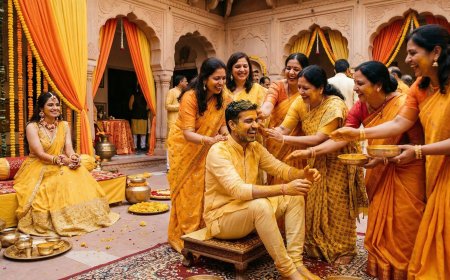
The mehendi and haldi functions, while important and joyful, do not require the same catering investment as the wedding ceremony and reception. Simpler, more informal food arrangements — well-executed snacks and light meals rather than full multi-course service — are entirely appropriate for these functions and save meaningful budget for the higher-stakes catering decisions.
The haldi in particular is a function where the emphasis is on ritual, play, and family intimacy rather than on food. A generous spread of simple, fresh snacks is entirely right for the atmosphere. An elaborate catering arrangement would feel mismatched.
Excessive Lighting and Technical Infrastructure
Save recommendation: Selective
Lighting can transform a venue dramatically. The right lighting design — uplighting that enhances the architecture, warm candlelit arrangements, a beautiful centerpiece lighting installation — adds significant atmosphere at relatively modest cost.
What it does not need to be is technically elaborate. Large-scale LED installations, complex dynamic lighting rigs, and extensive technical infrastructure represent significant costs that produce marginal returns in guest experience. The guest feels warm and beautiful lighting. They do not notice the technical complexity of how it was achieved.
Work with your décor and lighting team to identify the high-impact lighting moments and invest there. Resist the upsell toward technical elaboration.
Day-Of Coordination Staff Beyond What You Need
Save recommendation: Yes
Wedding planners appropriately provide day-of coordination support. Some NRI couples, anxious about everything going smoothly, are persuaded to invest in large coordination teams, multiple day-of coordinators, and extensive on-site management infrastructure.
The right coordination support — a competent planner with an appropriate team for the scale of your wedding — is essential. But beyond the right level, additional coordination staffing produces diminishing returns. An experienced planner with a well-briefed team of appropriate size is more effective than a large team of less experienced coordinators.
Trust your planner's judgement about the right staffing level. Resist the anxiety-driven impulse to add more people to the team beyond what the event actually requires.
Excessive Number of Functions
Save recommendation: Strongly consider
This is the allocation decision that most NRI couples resist having but that produces the most significant budget relief when honestly engaged.
Every additional function — every additional mehendi, every pre-wedding dinner, every post-wedding brunch — adds catering cost, décor cost, venue cost, and coordination cost. More functions does not automatically mean more meaningful. It can mean more expensive, more logistically complex, and more exhausting for guests who have already travelled significant distances.
For NRI couples whose budget is under pressure, an honest conversation about which functions are genuinely valued and which are being added out of social expectation can free meaningful budget for the functions that matter most. Two beautifully executed functions are more memorable than four functions where the budget is spread too thin to do any of them justice.
The NRI-Specific Allocation Considerations
Beyond the standard splurge-save framework, NRI weddings have specific allocation considerations that domestic budgets do not face.
Guest Hospitality Infrastructure
For NRI weddings with significant numbers of international guests, the hospitality infrastructure — how guests experience the logistics of attending the wedding — is a legitimate and important budget allocation.
Welcome hampers for guests arriving from abroad. Transportation arrangements from airport to hotel and hotel to venue. A well-designed wedding website with travel information, local recommendations, and function schedules. A guest WhatsApp group managed with warmth and responsiveness.
None of these are mandatory. All of them meaningfully improve the experience of guests who have invested significantly in travel and time to be present. The cost per guest of a well-executed hospitality package is modest relative to the goodwill and warmth it generates.
Planning and Professional Support
The professional infrastructure that makes an NRI wedding operationally possible — your wedding planner, your local coordinator, your trusted vendor ecosystem — deserves appropriate investment. Under-investing in planning support to save budget elsewhere is a false economy. The cost of planning failures — vendors who underperform, logistics that break down, family dynamics that escalate without professional management — is higher than the cost of adequate professional support.
Invest in a planner whose fees reflect genuine expertise and NRI-specific experience. The return is not just operational — it is emotional. A planner you trust completely gives you the freedom to be present at your own wedding rather than managing it.
The Decision Framework: How to Allocate Your Specific Budget
With the high-leverage and low-leverage categories identified, here is the practical framework for allocating your specific budget.
Start With Your Non-Negotiables
Before allocating any budget, identify the two or three elements that, for your specific couple and your specific wedding, are genuinely non-negotiable. The things that would make the wedding feel less than fully yours if they were compromised.
These items get budgeted first, at the level they require, before any other allocation is made. Everything else is built around them.
Sequence the High-Leverage Categories
After the non-negotiables, allocate budgets to the high-leverage categories in sequence — venue, photography, catering, primary outfit. Give each category the budget it needs to be excellent rather than adequate.
Apply Discipline to the Low-Leverage Categories
After the high-leverage categories are funded, allocate the remaining budget to the lower-leverage categories with genuine discipline. These are the areas where creative, intelligent cost management — without compromising quality — frees money for the things that matter most.
Review the Total Against Reality
When the allocation is complete, check the total against your actual budget including GST and contingency. If it exceeds the budget — which the first allocation often does — make cuts in the low-leverage categories first, and only move to the high-leverage categories when the low-leverage categories have been genuinely optimised.
Common Mistakes NRI Couples Make With Budget Allocation
Allocating Proportionally Rather Than Strategically
Many couples allocate their budget proportionally — giving each category a roughly equal share — rather than strategically concentrating spending in the high-leverage categories. The result is a wedding where nothing is underfunded and nothing is exceptional. Strategic concentration of spending produces a different outcome: a few things that are genuinely extraordinary and everything else that is good enough.
Spending on Visibility Rather Than Experience
Some NRI couples, conscious of the social visibility of their wedding, allocate disproportionate budget to elements that are highly visible in photographs but contribute less to the lived experience of guests. An elaborate floral installation that photographs beautifully but is seen by guests for thirty seconds as they walk past it is a less intelligent allocation than exceptional food that guests experience for three hours.
Allocate for experience first. Visibility follows from experience when the wedding is genuinely good.
Cutting Photography to Protect Other Spending
Photography is the category most frequently raided when budgets are under pressure. It should be the last category cut, not the first. The permanence of the photographic record means that under-investment in photography is the only wedding spending decision whose consequences are genuinely irreversible.
Not Accounting for GST in the Allocation
As covered extensively in the GST guide, different wedding categories attract different GST rates. An allocation that does not account for GST produces a budget that is understated in every category and will require revision at the contract stage. Build GST into each allocation from the beginning.
The Best Wedding Is Not the Most Expensive One
The couples who remember their weddings most joyfully are not always the ones who spent the most. They are the ones who spent with intention — who understood where the money creates experience, who protected the things that matter permanently, and who had the discipline to resist the pressure toward expensive mediocrity in the categories that do not.
Your budget, allocated intelligently, can produce a wedding that feels genuinely extraordinary. The venue that sets the atmosphere for everything that follows. The photographs that will make you cry for the rest of your life. The food that your guests will talk about on the flight home. The music that kept everyone dancing until the venue asked you to stop.
These are the things worth spending on. Everything else is background.
Spend where it matters. Save where it does not. And trust that the wedding you build with genuine intelligence — rather than with the anxiety of trying to do everything at maximum — will be the one you remember as exactly right.
It always is.
What's Your Reaction?
 Like
0
Like
0
 Dislike
0
Dislike
0
 Love
0
Love
0
 Funny
0
Funny
0
 Angry
0
Angry
0
 Sad
0
Sad
0
 Wow
0
Wow
0