






















































Taj Lake Palace Udaipur — The Floating Marble Palace Wedding: Complete NRI Destination Guide — The Complete NRI Wedding Planning Guide
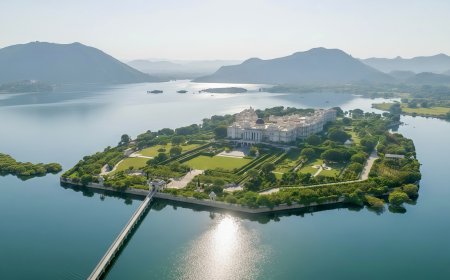
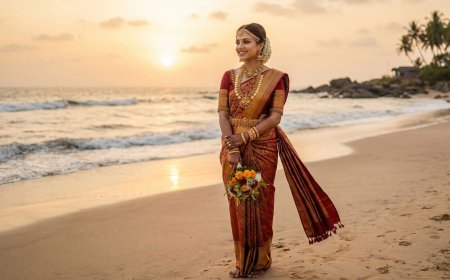
The boat left the Bansi Ghat jetty at six forty-five in the evening, just as the sun was beginning its final descent behind the Aravalli hills. There were eight people on the boat — Kaveri, her mother, her future mother-in-law, and five of their closest women, the advance party sent ahead to see the venue before the wedding week began. Ahead of them, in the centre of Lake Pichola, the Taj Lake Palace appeared to be floating. Not appeared. Was. The palace sits on a natural island of approximately four acres in the middle of the lake, surrounded on all sides by water, with no visible connection to either shore. When the boat docked and they stepped onto the marble jetty, Kaveri's mother turned to her and said, in Tamil, the single sentence that translated as: you chose well. Kaveri had been planning this wedding from Toronto for fourteen months. She had looked at forty-three venues before arriving at the Taj Lake Palace, almost deliberately last, because she had known since the beginning that if she looked at it first she would not be able to look at anything else properly. This guide gives NRI couples the complete framework for marrying at the Taj Lake Palace Udaipur — covering the full history, every event space with detailed pricing, the island buyout option, the boat transfer logistics system, the approved vendor framework, the fourteen-month planning timeline, and the specific mistakes that turn the world's most extraordinary wedding venue into an avoidable crisis.


Taj Lake Palace Udaipur — The Floating Marble Palace Wedding: Complete NRI Destination Guide — The Complete NRI Wedding Planning Guide
The boat left the Bansi Ghat jetty at six forty-five in the evening, just as the sun was beginning its final descent behind the Aravalli hills. There were eight people on the boat — Kaveri, her mother, her future mother-in-law, and five of their closest women, the advance party sent ahead to see the venue before the wedding week began. The boat was a traditional wooden vessel, white-painted, moving quietly across the still surface of Lake Pichola. The City Palace rose on the eastern bank behind them as they pulled away from the shore, its illuminated facades reflected in the water. Ahead of them, in the centre of the lake, the Taj Lake Palace appeared to be floating.
Not appeared. Was. The palace sits on a natural island of approximately four acres in the middle of Lake Pichola, with no visible connection to either shore, surrounded on all sides by water. In the evening light — the specific Udaipur evening light that painters have been trying to capture for centuries and that photographers return to again and again because it is always slightly different from what they remember — the white marble of the palace glowed in a way that Kaveri could only describe, later, as not quite of this world.
Her mother said nothing for the entire five-minute crossing. When the boat docked at the palace's water-level entrance and they stepped onto the marble jetty, she turned to Kaveri and said, in Tamil, the single sentence that translated as: you chose well.
Kaveri had been planning this wedding from Toronto for fourteen months. She had looked at forty-three venues across Rajasthan, Goa, Kerala, and Himachal Pradesh before arriving at the Taj Lake Palace. She had looked at it last, almost deliberately, the way you save the best thing on the plate, because she had known since the beginning that if she looked at it first she would not be able to look at anything else properly. She had been right.
The wedding — three days, four events, eighty-seven guests from nine countries — took place the following February. Every element of it was extraordinary. The arrival by boat of every guest at every event. The ceremony on the Lily Pond Lawn with the lake on all sides. The dinner in the Jiva Spa Garden under the stars, with the city's lights reflected in the water around the island. The specific quality of waking up on a marble island in the middle of a Rajasthani lake and understanding, before you have fully become conscious, that today you are getting married.
But the planning of it — the fourteen months from Toronto, the specific complexity of managing a venue that is accessible only by water, that has no expansion capacity beyond its own carefully managed spaces, that requires coordination of boat transfers for every guest at every event — was the most demanding logistical undertaking of Kaveri's professional and personal life combined. She is a corporate lawyer. She manages complex transactions for a living. The Taj Lake Palace wedding was harder.
This guide exists because Kaveri's experience — the extraordinary outcome and the demanding process — is the experience of every NRI couple who chooses this venue, and because the couple who arrives at that process with a complete framework rather than discovering it incrementally over fourteen months will find it manageable rather than merely survivable.
This guide is for every NRI couple who has seen the Taj Lake Palace from the shore and felt the particular pull of the impossible — for Kaveri in Toronto and every couple like her who deserves the complete, honest, specific framework for the most extraordinary wedding venue in India.
The Taj Lake Palace: Understanding What You Are Choosing
The Taj Lake Palace is not a venue that happens to be in a beautiful location. The location and the venue are the same thing, which is what makes it categorically different from every other wedding destination in India and what makes the planning of a wedding there categorically different from the planning of a wedding anywhere else.
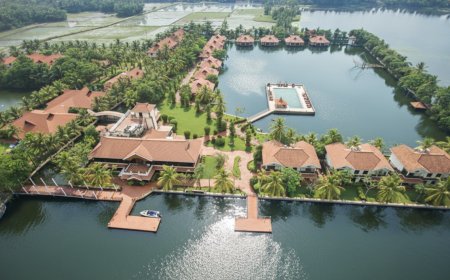
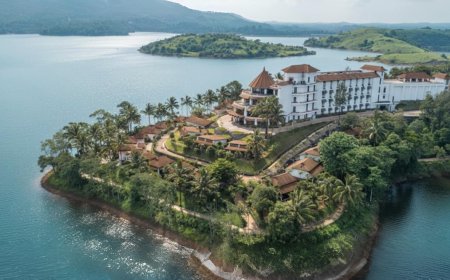
The palace was built between 1743 and 1746 by Maharana Jagat Singh II of the Mewar dynasty as a royal pleasure palace — a summer retreat and entertainment venue for the Mewar court, constructed on the natural island of Jagniwas in Lake Pichola. The choice of an island site was not merely aesthetic, though the aesthetic effect was clearly understood and celebrated from the beginning. The island location provided the specific quality of removal from the ordinary world that a pleasure palace is designed to offer — the sense of being elsewhere, of having crossed water to arrive at a place that operates by different rules from the shore.
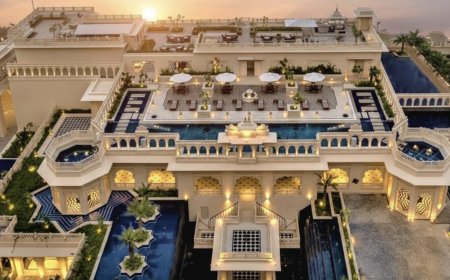
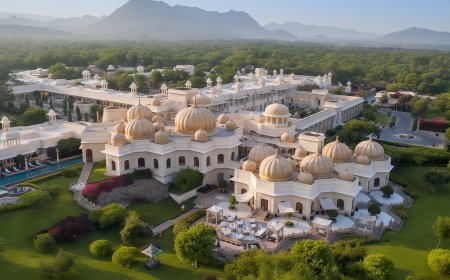
The palace was constructed in white marble, the material of Mewar royal architecture, with four interior courtyards, a formal garden on the northern end of the island, and the specific vocabulary of Rajput and Mughal architectural detail — the carved screens, the cusped arches, the painted chambers, the inlaid stonework — that characterises the finest royal architecture of the period. The scale is intimate relative to the grandeur of the construction: the palace covers the island entirely but the island is only four acres, producing a density of architectural and decorative detail per square metre that is extraordinary even by the standards of Rajasthani palace architecture.
The Taj Hotels group took over the management of the palace in 1971 and converted it into a luxury hotel, one of the first and most celebrated palace hotel conversions in India. The conversion was undertaken with a commitment to the preservation of the original architecture and decoration that has been consistently maintained across fifty years of hotel operation: the carved marble screens, the painted chambers, the original courtyard gardens are all maintained to a standard that keeps them as close to their original condition as the demands of a working hotel allow.
Today the Taj Lake Palace operates as a sixty-six room luxury hotel — one of the most photographed and most consistently highly rated hotels in the world — and as an exclusive wedding and event destination. The combination of complete island exclusivity, architectural magnificence, and the operational excellence of the Taj Hotels group makes it the single most prestigious wedding venue in India and one of the most sought-after destination wedding venues on earth.
The Event Spaces: Every Option, Every Detail
The Lily Pond Lawn: The Ceremony Venue
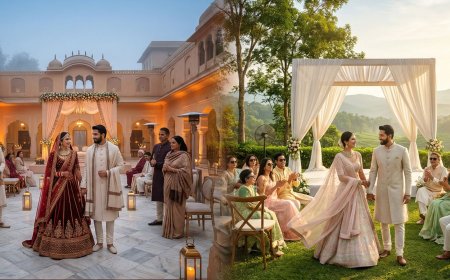
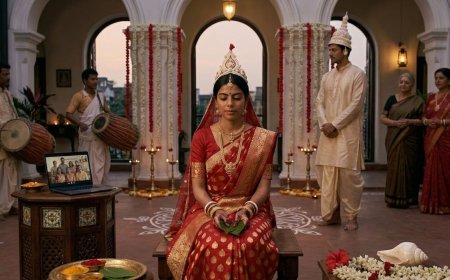
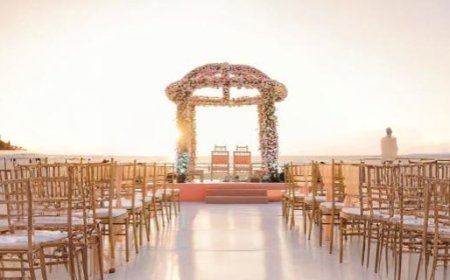
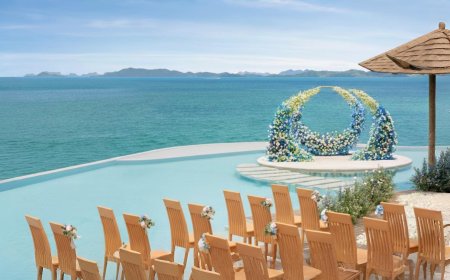
The Lily Pond Lawn is the primary outdoor ceremony space at the Taj Lake Palace and the space that most couples choose for the central wedding ritual — the pheras, the civil ceremony, the exchange of vows, whatever the specific ritual centrepiece of the wedding is. It is situated on the northern end of the island, surrounded by the lake on all sides, with the City Palace visible on the eastern bank and the Aravalli hills providing the backdrop on the west and north.
The Lily Pond Lawn accommodates up to two hundred and fifty guests for a seated ceremony with a central mandap structure, and up to three hundred and fifty for a standing reception. The open-air setting means that the ceremony takes place entirely surrounded by water — the sensation of being on an island in a lake, already powerful from the moment of arrival, reaches its most concentrated form here, where the guests who look up from the ceremony see water on every side and the city of Udaipur at a remove that makes it feel like a painted backdrop rather than a real place.
The morning and late afternoon light on the Lily Pond Lawn is the specific quality of light that Kaveri's wedding photographer, a specialist in destination wedding photography, described as the best available light for wedding ceremonies anywhere in India. The east-facing aspect catches the morning light from across the lake; the north-facing aspect in the afternoon hours produces the specific warm tone that defines the best Udaipur wedding photography. The Lily Pond Lawn is a photographer's gift.
The Bhairo Restaurant and Terrace: The Dining Experience
The Bhairo Restaurant and its associated terrace are the primary dining spaces for wedding events at the Taj Lake Palace. The restaurant occupies a position on the palace's upper level with panoramic views of the lake on three sides — the City Palace to the east, the Sajjangarh Monsoon Palace on the Bansdara hill to the west, and the open expanse of Lake Pichola to the north and south.
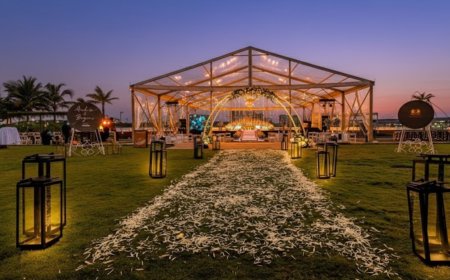
The Bhairo terrace can accommodate up to one hundred and fifty guests for a seated dinner. The interior restaurant, combined with the terrace, extends this capacity to approximately two hundred and twenty guests for a sit-down dinner. The space is at its most extraordinary for evening events, when the city's lights are reflected in the lake and the palace's own illumination creates the specific visual effect that defines the Taj Lake Palace at night — the white marble glowing against the dark water, the reflections shifting with the breeze.
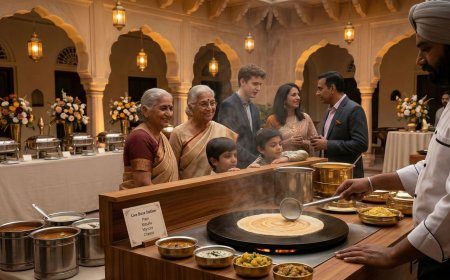
The Taj's culinary team at the Lake Palace operates at the level of the Taj group's most prestigious properties, and the wedding menu options range from traditional Rajasthani feasts to contemporary Indian tasting menus to international cuisine, with the specific capability to design a bespoke menu around the couple's preferences and dietary requirements. For NRI couples whose guest lists span multiple countries and dietary cultures, the Taj's kitchen flexibility is a significant operational advantage.
The Jiva Spa Garden: The Intimate Evening Space
The Jiva Spa Garden — a walled garden space within the palace complex — is the most intimate of the Taj Lake Palace's event spaces and the one that is best suited for the smaller, more personal events within a multi-day wedding program: the mehendi ceremony, the small family dinner, the post-ceremony gathering of the closest circle. The garden accommodates up to eighty guests for a seated dinner and produces a quality of enclosure and warmth that is different from the open, water-surrounded grandeur of the Lily Pond Lawn and the panoramic dining of the Bhairo terrace.
The walled garden's specific quality is that it feels, within the island palace, like a secret — a space within a space, contained and fragrant, with the palace's architecture on three sides and the garden's planting providing a living green against the white marble. Evening events in the Jiva Spa Garden, lit by lanterns and candles, are among the most intimate and most beautiful experiences available within the palace's event repertoire.
The Courtyard Spaces: The Architectural Heart
The palace's four internal courtyards — the Lily Courtyard, the Saffron Courtyard, the Lotus Courtyard, and the Kush Mahal courtyard — are available for small events, cocktail gatherings, and the kind of atmospheric pre-dinner reception that uses the palace's architectural interior as its setting. These spaces accommodate up to one hundred guests for a standing reception and are primarily used for the transition between events — the welcome drinks before the dinner, the post-ceremony gathering before the procession to the dining space.
The courtyards are the spaces where the palace's architectural detail is most concentrated and most immediately legible — the carved marble screens that filter the light into specific patterns, the painted chambers visible through open doorways, the inlaid stonework of the floor, the cusped arches framing views of the sky above. For guests encountering the palace for the first time, the courtyard introduction is often the moment that fully communicates what they have arrived at.
The Swimming Pool Terrace: The Morning and Afternoon Option
The palace's swimming pool terrace — a semi-outdoor space on the palace's western side with views across the lake toward the Aravalli hills — is available for daytime events: the morning breakfast gathering, the afternoon tea, the informal family lunch that punctuates a multi-day wedding program. The space is less formally configured for events than the primary venues and is best used for the unscheduled moments of the wedding program — the gathering of guests who want to sit together in the extraordinary setting and simply be in it.
Complete Pricing and Planning Reference
| Event Space | Capacity (Seated) | Capacity (Standing) | Approximate Venue Hire Per Event | Best Suited For |
|---|---|---|---|---|
| Lily Pond Lawn | Up to 250 | Up to 350 | ₹18,00,000–₹28,00,000 | Ceremony, reception, sangeet |
| Bhairo Restaurant and Terrace | Up to 220 | Up to 280 | ₹12,00,000–₹20,00,000 | Gala dinner, reception dinner |
| Jiva Spa Garden | Up to 80 | Up to 120 | ₹6,00,000–₹10,00,000 | Mehendi, intimate dinner, haldi |
| Courtyard Spaces | Up to 100 | Up to 150 | ₹4,00,000–₹8,00,000 | Welcome drinks, cocktail reception |
| Swimming Pool Terrace | Up to 60 | Up to 100 | ₹3,00,000–₹6,00,000 | Daytime gathering, breakfast event |
| Full Island Buyout (all spaces) | Combined | Combined | ₹80,00,000–₹1,50,00,000 per day | Complete privacy; multi-day weddings |
| Budget Category | Approximate Range | Notes |
|---|---|---|
| Accommodation — Deluxe Room per night | ₹35,000–₹55,000 | Lake or courtyard facing |
| Accommodation — Luxury Suite per night | ₹70,000–₹1,20,000 | Palace suites with premium views |
| Accommodation — Royal Suite per night | ₹1,50,000–₹2,50,000+ | Flagship accommodations |
| Catering per cover (multi-course dinner) | ₹6,000–₹10,000 | Taj culinary team; bespoke menus |
| Catering per cover (lunch or breakfast) | ₹3,500–₹6,000 | Full service included |
| Boat transfers per guest per crossing | ₹800–₹1,500 | Essential logistics; non-negotiable |
| Décor and florals per event | ₹10,00,000–₹40,00,000+ | Taj-approved vendors only |
| Photography and videography | ₹4,00,000–₹15,00,000+ | Palace-experienced teams essential |
| Sound and lighting per event | ₹3,00,000–₹8,00,000 | Approved vendors; palace restrictions apply |
| Wedding planner fee | ₹8,00,000–₹20,00,000 | Specialist with Taj Lake Palace experience |
| Government permissions and GST | 18% GST on services | Confirm current rates with Taj team |
| Total three-day wedding (100 guests) | ₹1,80,00,000–₹3,50,00,000+ | Full program; accommodation included |
| Total three-day wedding (150 guests) | ₹2,50,00,000–₹5,00,00,000+ | Full island buyout recommended at this scale |
The Island Exclusivity Option: Full Buyout
For couples whose guest lists and budgets allow it, the full island buyout — the exclusive reservation of the entire Taj Lake Palace hotel and all its event spaces for the duration of the wedding — is the most extraordinary option available at this venue and the one that produces the most complete version of the Taj Lake Palace wedding experience.
The full buyout accommodates all sixty-six hotel rooms for the wedding party and guests, provides exclusive access to all event spaces across the wedding period, and eliminates the operational complexity of managing a wedding within a working hotel that also has non-wedding guests. The island becomes, for the duration of the buyout, the couple's private kingdom — every marble corridor, every courtyard, every terrace and garden exclusively theirs and their guests'.
The full buyout pricing reflects the extraordinary nature of what is being provided. The minimum buyout period is typically two nights, though three-night buyouts are standard for wedding programs involving multiple events. The total buyout cost — accommodation, venue hire, and minimum food and beverage — typically ranges from two crore to five crore rupees or more, depending on the season, the duration, and the specific program.
For NRI couples whose guest lists are in the sixty to ninety range — small enough to fill the hotel's accommodation without overflow — the full buyout is not merely a luxury option. It is operationally cleaner and often more cost-effective than the partial-use alternative, which requires managing the interface between the wedding group and the hotel's regular guests in shared spaces.
The Boat Transfer Logistics: The Non-Negotiable Planning Challenge
Every guest who attends every event at the Taj Lake Palace arrives and departs by boat. This is not a charming detail of the wedding experience. It is the central logistical challenge of the entire planning exercise, and it must be managed with the precision and the contingency planning that any single-point-of-failure logistics system requires.
The boat transfer operation involves the Taj's own fleet of traditional wooden vessels and modern motorboats, operating between the Bansi Ghat jetty on the eastern shore of the lake and the palace's water-level arrival jetty. The crossing takes approximately five minutes in normal conditions. The fleet's capacity — the number of boats available and the number of passengers each can accommodate — determines the throughput rate for guest arrivals and departures, and at peak moments — the arrival of one hundred and fifty guests for a dinner event, all needing to cross within a forty-five minute window — the throughput rate is the limiting factor.
The wedding planner's role in managing the boat transfer logistics is critical and non-delegable. The transfer schedule must be built backward from the event start time, with the final boat arriving at the palace at least fifteen minutes before the event begins. The schedule must account for the slowest possible crossing conditions — wind, light rain, slight wave action — rather than the ideal conditions of a still lake and a calm evening. The schedule must include contingency for late arrivals, for guests who miss their assigned transfer window, and for the specific reality that Indian wedding guests in large numbers rarely adhere precisely to the timing communicated to them.
The boat transfer logistics also create a specific dynamic at the end of events. The departure of one hundred and fifty guests from an island venue via a limited fleet of boats takes time — typically forty-five minutes to an hour for a full guest complement. The event program must include this departure time explicitly, ensuring that the last guests are not still on the island at a time that creates operational difficulties for the hotel. Building a graceful, unhurried departure into the event timeline — with the boat transfers themselves treated as part of the experience rather than a queue to be managed — is the planning approach that produces the best outcome.
Weather Contingency
Lake Pichola in the winter wedding season — November through February — is generally calm and conducive to boat transfers. However, Udaipur's weather is not entirely predictable, and the planning must include a specific protocol for conditions that make boat transfers inadvisable: strong winds, heavy rain, or the occasional winter fog that settles on the lake in the early morning hours.
The weather contingency plan for the Taj Lake Palace wedding must be developed with the Taj's events team and the wedding planner, and must specify the trigger conditions under which the contingency is activated, the alternative access route — the palace has a limited land access option for service vehicles that can be adapted for emergency guest access — and the communication protocol for informing guests of a change. The contingency plan must be documented, distributed to all relevant parties, and tested logistically before the wedding dates.
Managing the Taj's Vendor Framework
The Taj Lake Palace operates with an approved vendor framework — a list of suppliers and service providers who have been vetted, approved, and trained to work within the specific constraints of the island venue. This framework applies to decorators, photographers, entertainment providers, and certain specialist service categories. It does not apply to the wedding planner, who can be independently appointed, but the planner must have established working relationships with the Taj's approved vendors to function effectively.
The approved vendor framework exists for good reasons. The island environment places specific constraints on how vendors can work — the weight and quantity of materials that can be brought across by boat, the restrictions on what can be attached to historic surfaces, the operational protocols around noise, lighting, and the use of pyrotechnics and open flame within the palace complex. Vendors who have not worked at the venue before do not know these constraints and may commit to delivering elements that the venue's protocols do not permit.
For NRI couples who have identified specific photographers, decorators, or entertainment providers they want to use — people whose work they have followed and selected specifically — the question of whether those vendors are on the Taj's approved list must be resolved early in the planning process. A vendor who is not on the approved list can sometimes be approved through a formal application process, but this takes time and is not guaranteed. Begin the vendor approval process at the same time as the booking process, not after the vendor has been contracted.
Décor at the Taj Lake Palace: The Water and the Marble
The décor philosophy at the Taj Lake Palace follows the same principle articulated for the City Palace in the previous guide in this series: the venue is already decorated. Four centuries of Mewar royal craftsmanship have produced a setting of such concentrated beauty that the decorator's role is to complement and enhance rather than to compete or to cover.
At the Taj Lake Palace, the additional element that all décor must work with is the water. The lake is omnipresent — visible from every outdoor space, audible in the silence between conversations, present as reflection and as horizon and as the medium of arrival and departure. The décor that works best at the Taj Lake Palace is the décor that acknowledges and incorporates the water rather than turning away from it.
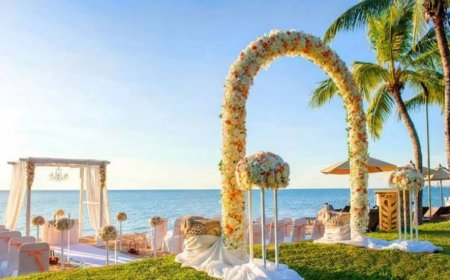
Floating floral installations on the lake — marigolds and roses released onto the water around the island, lit at night by floating candles — are among the most effective and most beautiful décor elements available at this venue, because they use the lake itself as their surface and turn the surrounding water into part of the event design. The mandap positioned at the edge of the Lily Pond Lawn, framing the lake view rather than blocking it, with the water visible behind the ceremony, produces ceremony photographs that the architecture alone cannot produce.
The colour palette that works best against the white marble and the blue-grey water of Lake Pichola is warm and rich rather than cool and pale — the deep marigold oranges, the jasmine whites, the rose pinks, the specific dark red of the Indian rose that reads as jewel-like against marble rather than washed out. The palette of the traditional Rajasthani flower market, applied with restraint and with the palace's own palette in mind, produces décor that looks as if it belongs at this venue because it does belong — it has always belonged, for as long as Rajasthani palaces and Rajasthani flowers have occupied the same landscape.
The NRI Couple's Fourteen-Month Planning Timeline
The Taj Lake Palace wedding requires a longer planning runway than almost any other Indian wedding venue. The combination of the venue's booking demand, the complexity of the logistics, the approved vendor framework, and the specific requirements of managing an island event for an international guest list means that fourteen to eighteen months is the minimum recommended planning timeline, not a comfortable upper bound.
The first two months of the planning period should be devoted entirely to the venue booking — the enquiry, the site visit, the quotation, the contract negotiation, and the deposit payment. Until the venue is confirmed, all other planning decisions are contingent and should be treated as such. Do not contract vendors, do not issue save-the-date communications, do not confirm guest counts until the venue contract is signed.
Months three and four should be devoted to the wedding planner selection — identifying candidates with specific Taj Lake Palace experience, interviewing them, assessing their vendor relationships and their proposed approach, and confirming the appointment. The planner appointment should precede all vendor appointments, because the planner's vendor relationships will determine which vendors are available and appropriate.
Months five through eight are the primary vendor contracting period — the photographer, the decorator, the entertainment providers, the additional catering requirements. All vendor appointments should go through the Taj's approval process during this period, with the planner managing the approval submissions. The guest accommodation planning — the hotel room blocks, the transport logistics, the guest welcome packages — should also be developed during this period.
Months nine through twelve are the detailed planning period — the event-by-event program development, the boat transfer schedule, the weather contingency plan, the guest communication materials, the menu finalisation. This is also the period during which the NRI couple's India visit — the on-site planning visit — should be scheduled, ideally in month ten or eleven.
Months thirteen and fourteen are the finalisation period — the confirmation of all vendor arrangements, the distribution of the guest information packages, the finalisation of the payment schedules, and the pre-wedding logistics of getting the couple, the immediate family, and the first wave of international guests to Udaipur.
Common Mistakes NRI Couples Make With the Taj Lake Palace Wedding
The first mistake is treating the boat transfer as a detail rather than a system. The boat transfer is the most operationally critical element of the entire Taj Lake Palace wedding, and the couple or planner who treats it as a background logistics question rather than a primary planning workstream will discover its importance at the worst possible moment — when a hundred guests are waiting at the Bansi Ghat jetty for boats that have not been adequately scheduled. The boat transfer logistics deserve their own planning workstream, their own dedicated time in every planning meeting, and their own detailed contingency documentation.
The second mistake is not doing the full island buyout when the guest list size makes it appropriate. The partial-use Taj Lake Palace wedding — the wedding that uses the venue while the hotel is also serving its regular guests — introduces operational complexity and experiential compromise that the full buyout eliminates. For guest lists of sixty to ninety, the full buyout cost, while substantial, is often comparable to the partial-use cost once the food and beverage minimums and the full accommodation costs are properly calculated. Do the complete financial comparison before dismissing the buyout option.
The third mistake is appointing a wedding planner without specific Taj Lake Palace experience. The Taj Lake Palace is a specific venue with specific operational protocols, specific vendor relationships, and specific physical constraints that a planner without island venue experience will encounter for the first time during your wedding planning — which is not the time you want your planner to be learning. The planner's learning curve is your operational risk. Eliminate it by appointing someone who has already climbed it.
The fourth mistake is over-programming the event schedule. The Taj Lake Palace experience has a specific quality — the arrival by boat, the marble underfoot, the water on all sides, the light in the afternoon and the reflections at night — that requires time and space to be experienced fully. The wedding program that schedules every hour of every day eliminates the unscheduled time in which the venue's own extraordinary character can be felt. Build in the empty hours. They will be the hours your guests remember most.
The fifth mistake is not briefing international guests on what to wear for boat travel. The five-minute boat crossing is a smooth experience in normal lake conditions, but it is a boat crossing — there is wind, there is the possibility of light spray, and the boarding and disembarking at the floating jetty requires a degree of physical mobility that formal Indian wedding attire does not always accommodate easily. A practical note in the guest information package about footwear for the boat crossing, about securing dupatta and stoles, and about the general logistics of arriving at a palace by water — this note, which takes fifteen minutes to write, prevents the small but genuine difficulties that unprepared guests encounter.
Kaveri's wedding was extraordinary. She has said this herself, repeatedly, in the specific way that people say something when they mean it rather than when they are summarising. Not: it was beautiful. Not: it was perfect. Extraordinary — the word that means outside the ordinary order, which is what the Taj Lake Palace is and produces.
The fourteen months of planning from Toronto were the most demanding fourteen months of her professional and personal life. The outcome was proportionate to the effort. It was, she has said, worth every hour.
Begin the venue enquiry at fourteen months minimum. Do the site visit before the deposit. Appoint the planner with specific palace experience before you appoint anyone else. Build the boat transfer logistics as a primary system, not a background detail. Leave the unscheduled hours in the program.
The palace will take care of the rest. It has been taking care of it since 1746.
Published by NRIWedding.com — The Premium Global Platform for Non-Resident Indians Planning Indian Weddings From Abroad.
What's Your Reaction?
 Like
0
Like
0
 Dislike
0
Dislike
0
 Love
0
Love
0
 Funny
0
Funny
0
 Angry
0
Angry
0
 Sad
0
Sad
0
 Wow
0
Wow
0