





































































The Board With Four Hundred Pins: The NRI Couple's Complete Guide to Using Pinterest Effectively for Indian Wedding Inspiration
Four hundred and twelve pins, twelve different weddings, and a wedding planner's question that cut through all of it: if you had to describe the feeling of your wedding in three words, what would they be? Pinterest is the most useful visual inspiration tool available to the NRI wedding couple and, used without specific discipline, the tool that produces a beautiful collection of contradictions rather than a coherent vision. This guide delivers a complete framework covering the four planning phases from open exploration to audit to edit to translation, the board architecture that supports the planning conversation, the Indian-specific search terms that reach the right content, the regional tradition coverage gaps, how to use the Pinterest brief with vendors effectively, the live screen-sharing review in video vendor meetings, the beautiful image that is not actually available to you, the trend that will date your wedding, and the vision document that converts Pinterest exploration into a planning decision vendors can act on.


Using Pinterest Effectively for Indian Wedding Inspiration
The NRI couple's guide to the world's largest visual inspiration database — how to use it with the specific discipline that produces a coherent vision rather than a beautiful collection of contradictions, and how to translate what you find there into conversations that vendors can actually act on
The Board With Four Hundred Pins
The bride had been on Pinterest for three months before the engagement was official. By the time she sat down with the wedding planner for their first meeting, her wedding inspiration board had four hundred and twelve pins.
The wedding planner — who had been doing this for nine years and who had sat across from many couples with Pinterest boards of similar scale — asked a specific question before looking at the board. She asked: if you had to describe the feeling of your wedding in three words, what would they be?
The bride thought for a moment and said: romantic, maximalist, and Indian.
The wedding planner looked at the board.
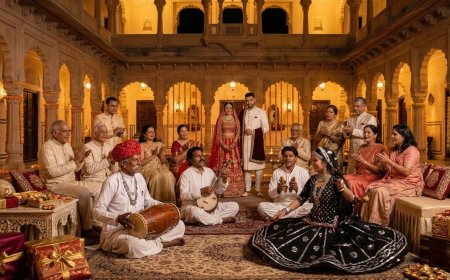
There were pins of minimalist Scandinavian tablescapes in white and grey. There were pins of lush tropical floral installations in deep green and coral. There were pins of classic Indian wedding mandaps dripping in marigold and roses. There were pins of modern geometric wedding arches in gold metal. There were pins of candlelit intimate dinners for thirty. There were pins of grand ballrooms set for five hundred. There were pins of brides in heavily embroidered red lehengas. There were pins of brides in simple ivory gowns. There were pins of Rajasthani palace settings and pins of contemporary Mumbai rooftop venues.
Every pin was beautiful. Together, they described approximately twelve different weddings.
The wedding planner did not say this. She said: there is a lot of beauty here. Now let us find which parts of this are actually your wedding.
That conversation — the conversation that translates the accumulated inspiration of three months of Pinterest use into the coherent vision that a wedding can actually be — is the conversation that Pinterest on its own does not facilitate and that many couples arrive at their first vendor meeting without having had.
Pinterest is the most useful visual inspiration tool available to the NRI wedding couple. It is also, used without specific discipline, the tool that produces the board of four hundred contradictions and the feeling of having done a great deal of work while having made very few actual decisions.
This guide provides the discipline.
Understanding What Pinterest Actually Is
The Strength: Access to the Global Indian Wedding Visual Archive
Pinterest has indexed, over its fifteen years of operation, a visual archive of extraordinary breadth and depth — including a specific archive of Indian wedding imagery that is larger and more diverse than any other publicly accessible collection.
The Rajasthani palace wedding photographed by the best photographers in the market. The intimate Mumbai apartment wedding whose decor was designed by a self-taught bride with a specific vision. The NRI wedding in London whose ceremony combined a Hindu mandap with a Victorian orangery. The Bengali wedding whose aesthetic was entirely different from the Punjabi wedding whose aesthetic was entirely different from the Tamil wedding — all documented, all searchable, all accessible from a kitchen table in Toronto at eleven o'clock at night.
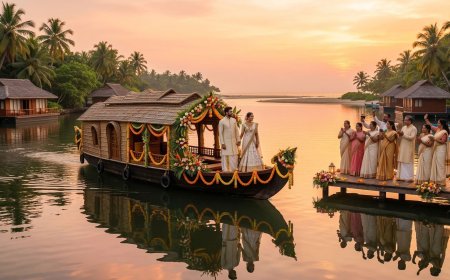
This access is genuinely valuable. The NRI couple planning an Indian wedding from abroad has, through Pinterest, visual access to a range of Indian wedding aesthetics that would previously have required years of attending weddings across regions and styles to accumulate. The ability to compare a Rajasthani haveli wedding's aesthetic with a Kerala backwater wedding's aesthetic with a contemporary Delhi farmhouse wedding's aesthetic — in a single sitting, on a single screen — is a specific capability that the pre-Pinterest planning process did not have.
The Weakness: Pinterest Does Not Know Your Wedding
Pinterest's recommendation algorithm is designed to show the user more of what they have already saved — more pins similar to the pins they have engaged with, more images in the aesthetic territory they have explored. This algorithm serves the platform's engagement goals. It does not serve the couple's decision-making goals.
The algorithm that shows the bride who pinned a maximalist Mughal-inspired floral installation more maximalist Mughal-inspired floral installations — and also, because she paused on a minimalist European table setting for two seconds, more minimalist European table settings — is an algorithm that is widening the inspiration pool rather than narrowing it toward a specific, coherent vision.
The couple who uses Pinterest without specific discipline is not using Pinterest as a decision-making tool. They are using it as a visual entertainment platform that produces the feeling of planning progress without the substance of planning decisions.
The Specific Challenge for Indian Wedding Inspiration
The Indian wedding's specific visual richness — the range of regional traditions, the depth of the textile and jewellery traditions, the variety of ceremony aesthetic from the intimate to the spectacular — makes the undisciplined Pinterest use problem more acute for NRI couples than for couples planning simpler aesthetic occasions.
The Indian wedding's aesthetic vocabulary includes: the regional traditions whose visual languages are distinct — the Rajasthani palette, the Bengali aesthetic, the Tamilian tradition, the Gujarati sensibility. The jewellery traditions whose significance varies by region and community. The textile traditions that span from the simple handloom to the heavily embroidered to the diaphanous and delicate. The ceremony aesthetics that range from the formally traditional to the contemporary fusion.
Each of these is a Pinterest rabbit hole. The couple who begins exploring Rajasthani wedding aesthetics, follows a pin to Jodhpur's blue city, follows another to Jaipuri block print, follows another to Rajasthani mirror work, and arrives forty minutes later looking at Moroccan wedding décor — this couple has taken a specific Pinterest journey that is entirely understandable and has produced nothing useful for their wedding planning.
The discipline that makes Pinterest useful is the discipline that keeps the exploration purposeful rather than random.
The Strategic Pinterest Approach
Phase One: The Open Exploration
The first phase of Pinterest use for wedding planning is open exploration — the unconstrained saving of anything that produces a strong positive response, without yet attempting to impose coherence or to make decisions.
The purpose of the open exploration phase is to surface the couple's genuine aesthetic instincts — the visual responses that are immediate and visceral rather than considered and performed. The image that produces a sharp intake of breath is a different kind of data than the image that the couple thinks they should like because it is the style their friends have had at their weddings.
The discipline of the open exploration phase: save genuinely, not aspirationally. The image that is beautiful in the abstract but that produces no specific excitement about this wedding is not useful data. The image that makes the couple want to be in the room it depicts — that produces the specific feeling of recognition, the sense of yes, that is the feeling — this image is the data the exploration phase is designed to collect.
The open exploration phase should be time-limited — two to three weeks, not three months — and should be conducted by both partners independently before their boards are compared. The couple who builds their Pinterest boards separately and then compares them discovers something specific and useful about where their aesthetic instincts align and where they diverge.
Phase Two: The Audit
The audit is the specific analytical work that the open exploration does not perform — the examination of the accumulated pins that asks not what is beautiful but what is consistent.
The audit process:
Print or screenshot the full board — all the saved pins, arranged by category if possible — and look at them simultaneously rather than sequentially. The sequential viewing of a Pinterest board conceals the contradictions that the simultaneous viewing reveals. The board whose pins look coherent when scrolled through often looks contradictory when laid flat.
Identify the clusters — the groups of pins that share an aesthetic sensibility, a color palette, a formality level, a structural approach. Most boards of significant size contain three to five distinct aesthetic clusters. The identification of these clusters is the identification of the different weddings competing within the board.
For each cluster, ask: does this represent a wedding we would actually have, given our guest list, our venue, our cultural context, and our family's expectations? Or does this represent a wedding we find beautiful but that is not actually available to us?
The second question is important because Pinterest's visual archive contains beautiful weddings that are not achievable for specific budgets, specific venues, or specific cultural contexts. The intimate forty-person candlelit dinner that is pinned alongside the grand five-hundred-person ballroom reception cannot both be the couple's wedding. The heavily traditional mandap that is pinned alongside the completely secular ceremony space cannot both be the ceremony. The audit forces the reckoning with the gaps between the aspirational and the achievable.
Phase Three: The Edit
The edit is the act of removing pins — the specific work that Pinterest's design does not encourage but that the planning process requires.
Every pin removed from the board is a decision made. Every pin that remains is a pin the couple has specifically decided belongs in their wedding vision. The board of four hundred pins that has been edited to sixty is not a smaller board. It is a more useful board — a board that has made two hundred and forty decisions that the board of four hundred had not made.
The edit should be conducted by both partners together — because the pins whose removal one partner is uncertain about reveal the specific points of aesthetic tension that the planning conversation needs to address.
The criterion for removal: does this pin belong in the wedding we are actually planning — for this guest list, this venue, this budget, this cultural context — or does it belong in a different beautiful wedding that is not this one?
Phase Four: The Translation
The translation phase is the work that converts the edited Pinterest board into the specific, actionable brief that vendors can use.
A Pinterest image is not a vendor brief. The florist who receives a board of sixty floral inspiration pins and is asked to "do something like this" has received less useful information than the florist who receives a paragraph description of the feeling the couple wants the ceremony space to produce, with five specific pins that illustrate specific aspects of that feeling, with notes on what specifically attracts the couple to each pin.
The translation process:
For each category — florals, décor, lighting, attire, food presentation — select the three to five pins that most specifically represent the couple's vision for that category. For each selected pin, write a note that explains what specifically about this pin is being referenced. Not "I like this" but "I like the specific way the marigold garlands are combined with white flowers here, and I want the warmth of this palette without the heaviness of the full garland density."
The specificity of the note is the useful information. The pin without the note is a beautiful image. The pin with the note is a brief.
The Board Architecture: How to Organize for Planning Usefulness
The Category Structure
The Pinterest board whose pins are organized into specific categories — rather than accumulated in a single undifferentiated board — is the board that supports the planning conversation rather than complicating it.
The category structure that works for NRI wedding planning:
A separate board or board section for each event in the wedding programme — the mehendi, the sangeet, the ceremony, the reception. The event-specific boards allow the couple to develop a distinct aesthetic for each event rather than applying a single aesthetic across a programme whose events have different characters and different requirements.
A separate board for each visual category within each event — florals and decor, lighting, attire, food presentation, stationery, photography style. The category-specific boards allow the vendor conversation to be specifically focused — the florist conversation uses the florals board, the photographer consultation uses the photography style board.
A separate board for the "do not want" category — the aesthetic approaches, the colors, the styles that the couple specifically does not want. The "do not want" board is as useful to a vendor as the inspiration board, because it defines the boundaries of the vision as specifically as the positive references do.
The Annotation Practice
The most useful Pinterest boards are annotated — each pin is supplemented by a note that explains the pin's relevance to the planning vision. Pinterest allows notes to be added to saved pins, and the discipline of adding a brief note at the time of saving — while the specific response to the image is fresh — produces a board that is a planning document rather than a visual archive.
The annotation does not need to be long. Three sentences is sufficient: what specifically attracts the couple to this image, what aspect of this image they want to reference in their wedding, and what they would change about it.
The Indian Wedding Specific Searches: Getting to the Right Content
The Search Terms That Work
The generic search term — "Indian wedding" — returns the most popular pins in the broad category, which are not necessarily the most relevant to the couple's specific region, tradition, or aesthetic vision. The specific search term returns the content that is most relevant to the specific planning challenge.
The regional tradition searches:
"Rajasthani wedding," "Bengali biye," "Punjabi wedding," "Tamil Brahmin wedding," "Gujarati wedding," "Malayali wedding" — the region-specific search returns content whose aesthetic vocabulary is specific to the tradition being celebrated rather than the generic Indian wedding aesthetic that reflects no tradition specifically.
The aesthetic vocabulary searches:
"Mughal wedding décor," "minimalist Indian wedding," "contemporary Indian wedding," "fusion Indian wedding," "intimate Indian wedding" — the aesthetic-specific search returns content in the specific visual register the couple is exploring.
The specific element searches:
"Phoolon ki chadar," "mandap design," "mehendi design bridal," "lehenga colour palette," "Indian wedding florals," "Banarasi bridal," "Indian wedding table setting" — the element-specific search returns the specific category of content the couple needs for a specific planning decision.
The photographer name searches:
Indian wedding photographers whose work represents specific aesthetic sensibilities — searching by photographer name rather than by generic category returns a coherent aesthetic body of work rather than the mixed results of the generic search. The couple who has identified a photographer whose aesthetic they love can use that photographer's portfolio as a curated inspiration source rather than a generic category search.
The Regional and Traditional Content Gap
Pinterest's Indian wedding content, while extensive, has specific coverage gaps that reflect the platform's audience distribution rather than the full range of Indian wedding traditions.
The Punjabi wedding and the large, photographically elaborate destination wedding are heavily represented — they are the Indian wedding aesthetics most frequently documented by photographers who market through Pinterest. The smaller community traditions, the regional aesthetics of less-photographed communities, and the simpler, more intimate traditional wedding are less represented.
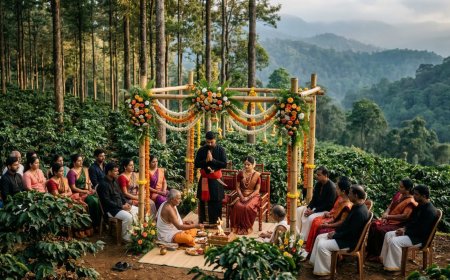
For NRI couples whose tradition is less well-represented on Pinterest — for the wedding that is specifically a Kerala sadya-style celebration, or a specific regional community's tradition that has not been extensively photographed by the Pinterest-optimized wedding photography market — Pinterest is a starting point rather than a complete reference. The supplementary sources: the wedding photography portfolios of photographers who specifically document that tradition, the community's own visual archive, and the advice of family members and community elders whose knowledge of the aesthetic tradition is lived rather than found.
The Vendor Conversation: How to Use Pinterest With Vendors Effectively
What Vendors Want From the Pinterest Brief
The experienced Indian wedding vendor — the florist, the photographer, the décor designer — has received thousands of Pinterest briefs. The vendor knows, from this experience, the specific ways in which the Pinterest brief is useful and the specific ways in which it is not.
What vendors find useful:
A curated selection of a small number of pins — five to ten — that specifically represent the element they are being briefed on, rather than a full board of hundreds of pins that the vendor must interpret without guidance. The couple who sends the florist sixty pins without annotation has given the florist less useful information than the couple who sends five pins with a paragraph explaining what specifically about each pin is being referenced.
The annotation described above — the note that explains what the couple likes about each specific pin and what they would change — is the information the vendor needs to translate inspiration into a specific proposal.
The "do not want" board — the negative inspiration — is information that experienced vendors specifically request, because it defines the vision as precisely as the positive references do.
What vendors find difficult:
The board that contains contradictory aesthetics — the maximalist and the minimalist, the traditional and the contemporary — without any indication of which direction the couple is actually going. The vendor who receives this board must ask the couple to resolve the contradiction before they can propose anything coherent. The audit and the edit are the work that prevents the vendor from having to do this resolution work during the planning process.
The pin that the couple has saved for one specific element without indicating which element. The floral installation pin that is being referenced for its color palette rather than for its structural approach — if the vendor does not know this, they will propose the structural approach and the color palette will be wrong.
The Live Pinterest Review in the Vendor Meeting
The most productive use of Pinterest in the vendor meeting — whether in person or via video call — is the live review: the couple and the vendor looking at the relevant board together, with the couple explaining each pin in real time and the vendor asking specific questions about what they are seeing.
The live review converts the static board into a conversation — and the conversation produces the specific understanding that the static board, however well-annotated, cannot fully achieve. The florist who can ask "when you pinned this, was it the height of the arrangement or the specific combination of flowers that you were responding to?" is the florist who will propose something that specifically reflects the couple's vision rather than their interpretation of an image.
For the NRI couple conducting vendor meetings by video call, the screen sharing feature — the couple sharing their Pinterest board on their screen while the vendor looks at it simultaneously — produces the closest available approximation of this live review. The screen sharing Pinterest session, with the couple narrating their responses to each pin and the vendor asking questions in real time, is significantly more useful than sending the board link before the call and assuming the vendor has reviewed it.
The Pinterest Trap: The Image That Is Not Actually What You Want
The Beautiful Image That Is Not Available to You
Pinterest specializes in the image of the wedding at its peak — the ceremony at the perfect moment of light, the reception when the room is full and the table settings are undisturbed and the flowers are at their most vibrant. The image does not show the setup, the timing, the specific conditions that produced the peak moment.
The couple who pins the ceremony photograph taken from a helicopter at a Rajasthani palace at sunset — and who is planning a ceremony in a hotel ballroom in Mumbai — has saved a reference point that is partially useful at best. The color palette of the image, the floral density, the overall warmth of the aesthetic — these can be referenced. The architectural grandeur, the landscape, the specific light quality of the Rajasthani sunset — these cannot be replicated in the Mumbai hotel ballroom.
The translation question for every Pinterest pin: what specifically about this image is available to us, in our venue, at our budget? And what specifically about this image is native to a context that we do not have?
The Trend That Will Date Your Wedding
Pinterest's algorithm promotes the current trend — the aesthetic vocabulary that is most shared and saved in the current moment. The couple who builds their inspiration board entirely from the current Pinterest moment is building a wedding that will look, in three years, specifically of its era.
The Indian wedding aesthetic has a specific richness that resists dating — the traditional elements, the regional textile traditions, the ceremonial aesthetics that are rooted in something deeper than the current trend cycle — whose incorporation into the wedding vision produces an aesthetic that is specific and coherent rather than trend-dependent.
The discipline: for every trend reference saved, look for a traditional or timeless reference in the same aesthetic territory. The contemporary Indian wedding whose aesthetic is balanced between the current and the enduring photographs better, is remembered more fondly, and ages more gracefully than the wedding whose aesthetic was entirely of the moment.
The Vision Document: Pinterest's Final Output
The culmination of the Pinterest process — the open exploration, the audit, the edit, the translation — should be a vision document: a specific, written description of the wedding's aesthetic that the couple produces for themselves and shares with their vendors.
The vision document is not the Pinterest board. It is the board translated into language — the specific words that describe the feeling, the color palette, the formality level, the aesthetic references, and the specific elements that are non-negotiable.
The vision document for each event, for each visual category, serves the vendor conversation in a way that the Pinterest board cannot: it commits the couple to a specific description of what they want, it gives the vendor a specific brief they can respond to, and it creates the shared reference point that both the couple and the vendor can use to assess whether a proposal is aligned with the vision.
The couple who produces this document has converted their Pinterest exploration into a planning decision. The wedding is still being designed — the vendors will bring their own expertise and creativity to the vision — but the vision itself is specific and owned.
Pinterest got them here. The document takes them forward.
NRIWedding.com — Expert guidance for Indian weddings planned across borders.
What's Your Reaction?
 Like
0
Like
0
 Dislike
0
Dislike
0
 Love
0
Love
0
 Funny
0
Funny
0
 Angry
0
Angry
0
 Sad
0
Sad
0
 Wow
0
Wow
0