











































































When the Venue Is Gone: Your Legal Rights as an NRI Couple After a Double-Booking — The Complete NRI Wedding Planning Guide
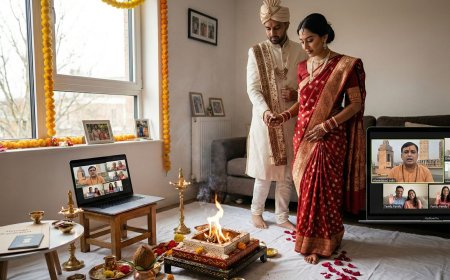
Priya found out on a Wednesday. The WhatsApp message came in at eleven forty-seven in the morning, London time. The venue coordinator was polite. The message was brief. The hall had been inadvertently confirmed to another family for the same weekend. The other family's booking was slightly older. Priya's wedding was eleven weeks away. The invitations were in a box in her parents' hallway in Pune, waiting to be sent. The caterer was booked. The flights were non-refundable. She and her fiancé Arjun were both abroad, both in offices, both separated from the crisis by oceans and time zones. They accepted a refund. They found a smaller venue. The wedding happened. Three months later, Priya calculated what a fair settlement would have looked like — and it was nearly four times what they had taken. This guide gives NRI couples the complete legal framework for venue double-bookings — covering the Indian Contract Act, the Consumer Protection Act, the Specific Relief Act, what your contract must contain before any of this becomes necessary, the exact steps to take in the first seventy-two hours, and how to pursue the compensation you are actually owed.


When the Venue Is Gone: Your Legal Rights as an NRI Couple After a Double-Booking
Priya found out on a Wednesday. Not a dramatic Wednesday — an ordinary one, somewhere between a team meeting and a lukewarm coffee at her desk in Canary Wharf. The WhatsApp message came in at eleven forty-seven in the morning, London time, which made it five seventeen in the evening in Pune, where her mother had spent the last three months doing what Priya could not: being physically present, following up, checking in, reassuring herself that the Deccan Heritage banquet hall was real, was theirs, was happening.
The message was from the venue coordinator. It was polite. It was brief. It was, in the specific and irreversible way that only truly catastrophic messages can be, completely impossible. There had been a "system error," the coordinator explained. The hall had been "inadvertently confirmed" to another family for the same weekend. The other family's booking was "slightly older." The venue was "deeply sorry for the inconvenience" and would be "happy to offer alternative dates."
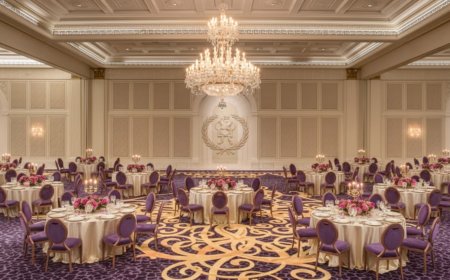
Priya's wedding was eleven weeks away. The invitations — the actual printed, addressed, stamped invitations — were in a box in her parents' hallway in Pune, waiting to be sent. The caterer had been booked around that venue. The mehendi and sangeet had been scheduled around the wedding day. Her in-laws had booked their flights from Vancouver. Her own flights were non-refundable. The entire architecture of a wedding that had taken fourteen months to build was, in the space of one WhatsApp message, suddenly without its central pillar.
She called her fiancé Arjun in Toronto. They were both in offices, both in time zones that were not India's, both separated from the problem by oceans and working hours and the particular helplessness of being an NRI in a crisis that requires physical presence. Arjun's first instinct was to call the venue. Priya's first instinct was to call her mother. Her mother's first instinct was to drive to the venue and speak to the manager in person, which she did, and which produced nothing except a confirmation that yes, it was true, and yes, they were sorry, and no, the date could not be recovered.
What none of them did — because they did not know they could — was assert their legal rights. They did not know that what the venue had done was not merely unfortunate but potentially actionable under Indian law. They did not know that their booking confirmation, their advance payment receipt, and the WhatsApp messages from the coordinator constituted a legally binding contract. They did not know that the Indian Contract Act of 1872 had a view on this. They did not know that the Consumer Protection Act of 2019 was specifically designed for situations like theirs. They negotiated from a position of panic rather than a position of legal standing, and they settled for far less than they were entitled to.
This guide is for every NRI couple who has been double-booked, who fears they might be, or who wants to understand exactly what their rights are before they sign a venue contract — so that if this happens to them, they do not make the same mistakes Priya and Arjun made.
What a Double-Booking Actually Is, and Why It Happens More Than You Think
A double-booking, in its simplest form, is a venue confirming the same space for the same date to two different parties. But the reality of how this happens in the Indian wedding venue industry is more specific than that, and understanding it matters because it affects both your legal position and your negotiating power.
The most common cause is the advance-deposit system. Many Indian venues — particularly mid-tier banquet halls, heritage hotels, and standalone wedding venues — operate with informal confirmation processes. A verbal agreement or a WhatsApp message from a coordinator is treated as a "soft hold." The booking is not considered fully confirmed until a specific deposit threshold is crossed, and that threshold is often not clearly communicated to the client. Two families can both believe they have booked the same venue in good faith, each having paid some portion of the advance, with the venue itself making the decision only when one family completes a larger payment.
The second cause is staff turnover and coordination failure. Venues that do significant volume — especially in popular wedding cities like Udaipur, Jaipur, Mumbai, and Hyderabad — sometimes have multiple coordinators managing different clients, and internal communication breaks down. One coordinator confirms a date that another coordinator has already committed.
The third cause, which is less charitably explained, is deliberate overbooking with the intention of offering the better client the date and compensating the other. This happens most often when a venue receives a larger or more prestigious booking after they have already committed to a smaller one, and they calculate that the financial penalty of losing the smaller client is worth the gain of the larger event.
For NRI couples, the risk of double-booking is meaningfully higher than for domestic couples. The distance creates informational asymmetry — you cannot drop in to verify, you cannot read the room when something feels off, you cannot apply the social pressure of physical presence that often keeps venues honest. Your entire relationship with the venue is mediated through screens and phones, which makes it easier for a venue to manage multiple competing obligations simultaneously without any one client being aware of the others. The time zone gap means that by the time you are awake and responsive to a query, the Indian business day has ended, and decisions get made without you. This is not paranoia. It is the structural reality of managing an India-based wedding from abroad.
The Legal Framework: What Indian Law Actually Says
This is where most couples — and, frankly, most wedding planning guides — stop short of giving you the complete picture. Indian law provides more protection to wronged wedding clients than most people realise, and that protection comes from three distinct sources.
The Indian Contract Act, 1872
A venue booking is a contract. This is not a metaphor or an aspiration — it is a legal fact under the Indian Contract Act, and it does not require a formal signed document to be true. A contract exists wherever there is an offer, an acceptance, and consideration. The venue offered a specific space on a specific date. You accepted by confirming the booking. Consideration passed in the form of your advance payment. The contract was formed at that moment.
When a venue double-books and informs you that they cannot honour your booking, they have committed a breach of contract. Section 73 of the Indian Contract Act is the operative provision: it entitles you, as the party who has suffered from the breach, to receive compensation for any loss or damage which naturally arose in the usual course of things from the breach. This is not limited to your advance deposit. It includes the consequential losses — the non-refundable payments you made to other vendors who were engaged in reliance on that venue booking, the difference in cost if you are forced to book a replacement venue at a higher price, and, in some circumstances, the cost of reprinting invitations or communicating the change to guests.
The advance deposit is not the ceiling of what you are owed. It is often the floor.
The venue will almost certainly try to tell you that their refund policy, or their terms and conditions, limits their liability to the return of the advance payment. Whether or not those terms are legally enforceable depends on how they were communicated to you, whether you had a meaningful opportunity to review them, and whether they are unreasonably one-sided — which is where the Consumer Protection Act becomes relevant.
The Consumer Protection Act, 2019
The Consumer Protection Act of 2019 is a powerful piece of legislation that is often misunderstood as applying only to product purchases. It applies equally to services, and a wedding venue booking is unambiguously a service. You are a consumer under this Act, and the venue is a service provider.
The Act defines "deficiency in service" broadly, and a double-booking — a failure to deliver a service that was contracted and paid for — falls squarely within that definition. It also addresses "unfair trade practices," which can include the use of misleading confirmations, the withholding of material information (such as the existence of a competing booking), and the imposition of disproportionate terms in standard-form contracts.
The Consumer Protection Act provides access to a tiered system of Consumer Disputes Redressal Commissions. For claims up to fifty lakh rupees, you can approach the District Commission. For claims between fifty lakh and two crore rupees, the State Commission. Above two crore, the National Commission. Filing a complaint is relatively accessible and does not require a lawyer, though having one helps. The commissions have the power to award compensation for the loss suffered, the cost of litigation, and in appropriate cases, punitive damages.
For NRI couples, there is an important practical dimension here. You can, in principle, file a Consumer Commission complaint from abroad. The complaint can be submitted in writing, and many proceedings can be handled through a representative in India — a family member, or an authorised legal representative. You do not need to be physically present at every stage, though complex contested matters often benefit from in-person representation.
The Specific Relief Act, 1963
In most double-booking situations, the remedy you want is money, not the specific performance of the contract — meaning, you want fair compensation, not a court order forcing the venue to actually hold your wedding there. But in cases where the venue is genuinely irreplaceable — a heritage property, a family estate, a location with specific religious or ceremonial significance that cannot be substituted — the Specific Relief Act allows you to seek a court order compelling the venue to honour the contract. This is a high bar to meet and involves litigation timelines that are rarely compatible with wedding planning, but it is a tool that exists, and a strongly worded legal notice invoking it can occasionally produce results that ordinary negotiation cannot.
What Your Contract Should Contain Before Any Of This Becomes Necessary
The best legal position is the one established before a dispute arises. Most NRI couples sign venue contracts without the scrutiny the document deserves, partly because they are relieved to have secured the venue, partly because the contract is often presented as standard and non-negotiable, and partly because the relevant expertise — a lawyer who understands both Indian contract law and the wedding industry — is not part of the typical wedding planning team.
There are specific provisions your contract must contain, and if they are absent, you must insist on their inclusion before you pay a single rupee of advance.
The first is a precise definition of what has been booked. Not "the banquet hall" but the specific named space, the specific date, the specific time window, the specific access arrangements for setup and breakdown. Vagueness in this definition gives the venue room to manoeuvre in a dispute.
The second is the exclusivity clause. Your contract must state explicitly that the venue is confirming this specific space as exclusively available to you on the specified dates, and that no other booking for the same space on those dates exists or will be accepted. A venue that refuses to include this clause is telling you something important.
The third is the double-booking indemnity clause. This should specify, in rupee terms or as a formula, what the venue will pay you if they fail to deliver the booked space due to any conflict with another booking. The minimum reasonable indemnity is a full refund of all payments made plus a penalty of equal value. A better clause specifies the full consequential loss — the downstream vendor penalties, the difference in replacement venue cost, and the documented costs of communicating the change to guests.
The fourth is the substitution clause, which works in your favour. If the booked space becomes unavailable for any reason, the venue must offer you a comparable or superior space at no additional cost, with your right to decline and receive the full indemnity if the substitution is not acceptable.
The fifth is the escalation contact provision. Your contract should name a specific senior individual — not "the management" but an actual named person — who is the point of contact for any dispute regarding the booking, along with their direct contact details. This matters enormously for NRI couples who need to resolve problems quickly across time zones.
When It Happens: The First Seventy-Two Hours
If you receive the message that your venue has been double-booked, the first seventy-two hours are not the time to panic. They are the time for a specific sequence of actions that will determine both your practical options and your legal position.
Document everything immediately. Every WhatsApp message, every email, every payment receipt, every booking confirmation — screenshot and save to a location that is not dependent on any single device. If the venue coordinator calls you by phone, follow up in writing with a message that summarises what was said: "As discussed in our call today, you have informed us that our booking for [date] for [space] can no longer be honoured due to a conflict with another booking. Please confirm this in writing." You want a paper trail, and sometimes you have to create it yourself.
Do not accept a refund of your advance payment as a final resolution without explicit written reservation of your right to pursue additional claims. Accepting a refund without reservation can, in some circumstances, be interpreted as a full and final settlement of the dispute. If the venue offers to return your deposit, respond in writing: "We accept the return of our advance payment of [amount] as a partial refund and expressly reserve all rights to seek compensation for additional losses arising from your breach of our booking agreement."
Get a clear written statement from the venue of what happened and why. You are entitled to this, and it will be important if you pursue a Consumer Commission complaint or a civil claim. The statement does not need to be a confession — even a politely worded email confirming that the booking is cancelled due to a conflict is sufficient documentation.
Engage a local lawyer — in the city where the venue is located — early. Not eventually. Not if the negotiation fails. Early, so that a formal legal notice can be sent within days of the double-booking coming to light. A legal notice under the Indian Contract Act and the Consumer Protection Act, drafted on a lawyer's letterhead, changes the nature of the conversation immediately. Venues that are dismissive of emotional appeals tend to respond differently to formal legal correspondence.
Common Mistakes NRI Couples Make With Venue Double-Bookings
The first mistake is treating it as a customer service problem rather than a legal one. NRI couples often spend the first week making increasingly agitated calls to venue coordinators and posting in wedding planning groups, when what they should be doing is sending a formal legal notice. The venue's coordinator does not have the authority or the incentive to give you a fair settlement. Their job is to manage your distress with minimum cost to the venue. The only person who can authorise a meaningful settlement is usually the venue owner or their legal representative, and those people pay attention to legal notices.
The second mistake is settling for a full refund of the advance and calling it done. A full refund of the advance is not compensation — it is the venue returning money they were not entitled to keep. The harm done by a double-booking is not the loss of the advance payment. It is the loss of months of planning, the non-refundable payments to other vendors who were booked around that venue, the cost difference in securing an alternative, and the documented emotional and logistical damage of restructuring an entire wedding at short notice. All of this is compensable, and accepting the advance refund alone means leaving significant and legitimate claims on the table.
The third mistake is failing to document the downstream losses in real time. When a double-booking forces you to renegotiate with a caterer, a decorator, a photographer, or a priest, keep every email and every invoice that shows the additional cost or the penalty incurred. When you book a replacement venue at a price higher than your original booking, keep that invoice. When you pay a reprinting charge for invitations, keep that receipt. Consumer Commissions and civil courts can only award compensation for losses that are documented. Losses that exist only in your memory and your distress are not the same as losses that exist in a paper trail.
The fourth mistake is waiting too long to get legal advice because the wedding is soon and there is no time for legal processes. The legal process and the wedding planning run in parallel. You can be securing a replacement venue while simultaneously instructing a lawyer to send a legal notice and file a Consumer Commission complaint. One does not delay the other. The complaint can take months to resolve, and the resolution will come after your wedding is over — but the compensation will still be real and the process must begin promptly to preserve limitation periods and credibility.
The fifth mistake, specific to NRI couples, is assuming that being abroad means you cannot effectively pursue a claim in India. You can. A legal notice can be sent by an Indian lawyer on your behalf. A Consumer Commission complaint can be filed by an authorised representative. Proceedings can be managed with periodic travel or through a representative with a power of attorney. Many NRI couples write off their legal rights because they cannot imagine engaging with Indian legal processes from London or Toronto or Dubai. The engagement is possible and is frequently worth the effort.
Choosing a Replacement Venue Without Repeating the Same Risk
If you are scrambling to replace a venue after a double-booking, the instinct is to move fast, and fast decisions carry their own risks. The three things you absolutely must not do in a replacement search are: skip the written contract, pay a full advance before the contract is signed, and accept verbal confirmations that you will "sort out the paperwork later."
The replacement contract should include the double-booking indemnity clause that your original contract may have lacked. You are now negotiating from experience, and you have every right to insist on contractual protection before money changes hands. Any venue that refuses to put exclusivity and double-booking indemnity in writing should be removed from your list immediately.
Ask the replacement venue explicitly, in writing, whether your date is currently committed to any other client in any form — a soft hold, a pencilled-in reservation, or any verbal undertaking. Request written confirmation that as of the date of your contract signing, no other booking exists or is pending for your space on your dates. This does not guarantee you against future problems, but it creates a strong legal position if problems arise.
Returning to Priya and Arjun
Priya and Arjun accepted the advance refund. They found a replacement venue — smaller, less beautiful, available on short notice — and they absorbed the difference in cost and the pain of re-coordinating every other vendor. Their wedding happened. It was, by all accounts, full of love and colour and the specific intensity of a celebration that almost did not occur.
But three months later, in the quiet after it was all over, Priya read about the Consumer Protection Act. She looked at the WhatsApp messages she had saved. She looked at the invoices for the alternative venue, the penalty she had paid to the caterer for renegotiating, the emergency reprinting of two hundred invitations. She calculated what a fair settlement would have looked like, and it was not the advance refund they had taken. It was nearly four times that amount.
They did not pursue it. The window had not fully closed, but the energy had. The wedding was done, and the fight felt like the wrong way to start a marriage.
You do not have to make that calculation after the fact. The framework exists. The law is on your side. The process is navigable.
Get your venue contract reviewed before you sign it. Insist on the double-booking indemnity clause. Hire a local Indian lawyer the moment a problem arises. Document every downstream loss from the day the bad news arrives. Do not accept the advance refund as a final settlement without reserving your rights in writing. Move fast — on both the replacement venue and the legal notice.
Your wedding deserves a venue that is actually yours. When a venue fails on that basic promise, Indian law gives you more than sympathy — it gives you a claim.
Published by NRIWedding.com — The Premium Global Platform for Non-Resident Indians Planning Indian Weddings From Abroad.
What's Your Reaction?
 Like
0
Like
0
 Dislike
0
Dislike
0
 Love
0
Love
0
 Funny
0
Funny
0
 Angry
0
Angry
0
 Sad
0
Sad
0
 Wow
0
Wow
0