





































































Horses, Dhol and Dancing Uncles: How NRI Families Are Keeping the Rajasthani Baraat Alive Abroad
The Rajasthani Baraat is one of Indian wedding culture's most electrifying traditions — a grand ceremonial procession announcing the groom's arrival with horses, dhol drums, dancing, and generations of joy. This guide explores the Baraat's Vedic roots, community variations across India, and step-by-step practical advice for NRI families recreating this spectacular entrance in cities like London, Toronto, Houston, and Melbourne — including horse hire, street permits, dhol players, and live streaming for relatives back in Rajasthan.

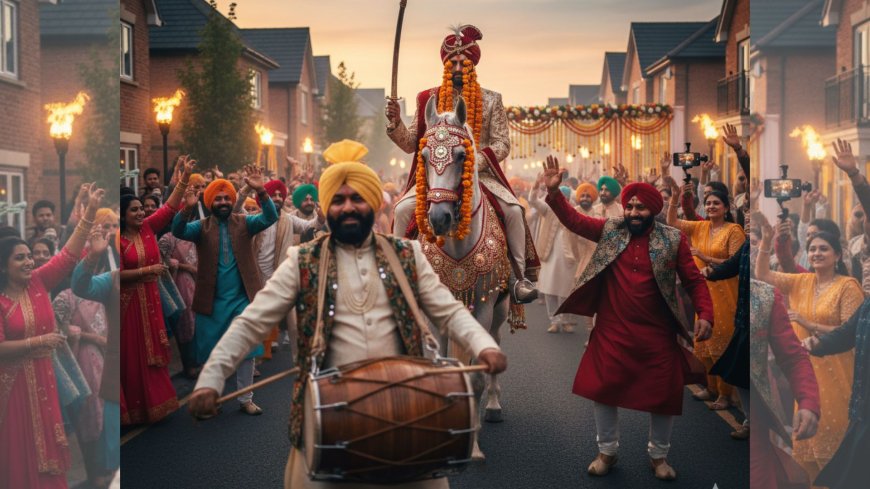
In Rajasthani wedding culture, the baraat is not a procession — it is a declaration. The groom does not simply arrive at his bride's home; he is announced by drums, horses, fire torches, and the collective joy of everyone who loves him. For NRI families recreating this spectacle in cities far from Rajasthan's golden sands, the baraat is the single most visible act of cultural pride in the entire wedding — and one of the most logistically complex to pull off abroad.
You grew up watching baraat videos on grainy cassette tapes at your nana's house — your uncle on a white horse, your grandfather dancing in the street at 2 AM, your grandmother's bangles catching the light of a torch held by someone you never met. Nobody had to explain to you what was happening. The joy was its own language.
Now you are the groom. Or you are the mother of the groom, lying awake in your house in Brampton or Brisbane, wondering how to explain to a wedding venue coordinator why your son cannot simply walk in through the front door. Why there must be a horse. Why there must be a dhol. Why the entrance is not a formality — it is the entire point.
The Rajasthani baraat is not about showing off. It has never been about showing off. It is about a family's love made so loud and so visible that even the sky has to take notice. And if you are carrying that tradition across an ocean, this guide is for you.
🌟 DID YOU KNOW?
- The word Baraat derives from the Sanskrit Varaayatra — meaning "the groom's journey" — and references in ancient texts suggest ceremonial groom processions existed in the Indian subcontinent as far back as the Vedic period, over 3,000 years ago.
- In traditional Rajput baraat processions, the groom rode an elephant as a symbol of royal status. The shift to white horses happened gradually as elephant ownership became restricted — but in Rajasthan today, elephant baarats still occur at heritage fort weddings in Jaipur and Jodhpur.
- A 2023 diaspora wedding study found that over 74% of Rajasthani NRI grooms in the UK and Canada specifically requested a dhol player for their baraat — making it the single most requested cultural element across all NRI wedding bookings in both countries.
What Is the Baraat?
The Baraat (from Sanskrit Varaayatra, meaning the groom's ceremonial journey) is the formal wedding procession in which the groom, accompanied by his family, friends, and community, travels from his own home or gathering point to the bride's venue. In Rajasthani tradition specifically, this is among the most elaborately choreographed moments in the entire wedding sequence — a moving celebration that can last anywhere from forty minutes to several hours depending on family tradition and route.
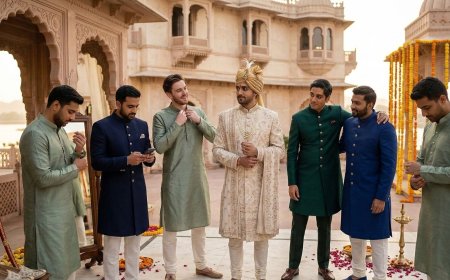
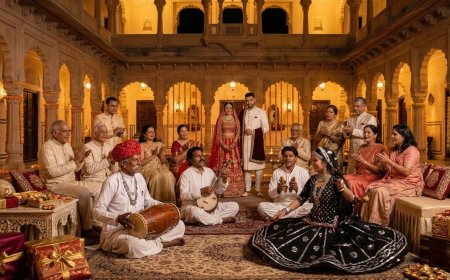
The procession typically begins after the groom is dressed and blessed at his own home or hotel. He mounts a decorated white mare — the ghodi — which is led by close male relatives. Ahead of and around him, the dhol (double-headed drum) and nagaras (large ceremonial kettledrums) set the rhythm for dancing. Baraatis (members of the procession) — uncles, cousins, childhood friends — dance in the street with complete abandon. Shehnai (the classical oboe-like wind instrument) players may accompany, their sound carrying for streets in every direction. At night, mashaalchis carry flaming torches called mashaals, and in many Rajasthani families, a brass band in matching uniforms adds a layer of almost surreal splendour.
The procession ends at the bride's venue with the Milni ceremony — a formal meeting and garlanding between senior male members of both families. The bride's family receives the baraat at the gate, and a ritual face-off of joy and welcome begins. In Rajasthani custom, the bride's brothers traditionally block the groom's entry — demanding gifts, sweets, or shagun before allowing him to pass. This is not obstruction. It is affection, performed at full volume.
The baraat matters because it announces that something irreversible and beautiful is about to happen. The groom is not sneaking into a new life. He is arriving — witnessed, celebrated, and surrounded by everyone who helped make him who he is.
Community Comparison Table
| Community / State | Local Name | Key Tradition | How NRIs Abroad Adapt It |
|---|---|---|---|
| Rajasthani (Marwari) | Baraat | White horse, dhol-nagara, brass band, mashaals, full street dancing; groom in safa (turban) with sehra (floral veil) | Horse hired locally; dhol players sourced via Indian music agencies; procession held in venue car park or closed street |
| Rajasthani (Rajput) | Baraat / Ghudchadi | Emphasis on horse ceremony; sword carried by groom; royal-style procession with ancestral symbols | Sword brought from India; ceremonial horse walk done for 10–15 minutes outside venue for photos |
| Himachali | Barat | Groom travels with Nati folk dancers and traditional Himachali musicians; procession is shorter but musically rich | Himachali diaspora organise Nati dance groups in UK; folk musicians hired from community associations |
| Garhwali | Barat | Accompanied by traditional Garhwali dhol-damau drummers; groom often on horse or palanquin in traditional ceremonies | Dhol-damau players rare abroad; tabla and folk music played via speaker; community members dance Choliya |
| Kumaoni | Barat | Kumaoni folk songs sung by women lining the route; groom welcomed with aarti at bride's threshold | Women of both families sing live at venue entrance; aarti preserved in full even at hotel venues |
| Kashmiri Pandit | Baraat / Varnav | Relatively understated procession; emphasis on shehnai music and saffron-tinted rituals at arrival | Shehnai recording played; Kashmiri pandit communities in Mississauga hold intimate indoor processions |
| Punjabi | Baraat | High-energy bhangra dancing, dhol, sometimes tractor or vintage car instead of horse; very loud and very long | Bhangra troupes hired in Southall and Brampton; vintage cars rented as groom's vehicle; procession filmed by drone |
| Marathi | Warat | Procession accompanied by lezim (folk percussion instrument) and traditional Marathi band; groom wears mundavalya (pearl string on forehead) | Lezim groups found in Melbourne and London Marathi associations; mundavalya handmade by family |
| Tamil | Varat / Mappillai Azhaippu | Groom welcomed rather than processed; bride's family sends formal invitation party to escort groom; nadaswaram (wind instrument) played | Nadaswaram player hired through Tamil cultural associations in Markham or Harrow; escort ceremony done indoors |
| Bengali | Bor Jatri | Groom's party travels with ululation (ulu dhwani) from women; conch shells blown at arrival; groom under a white umbrella | White umbrella preserved as key symbol; conch shells brought from Kolkata; female relatives ululate at venue entrance |
| Rajasthani (Jain) | Baraat with Jain customs | Same procession structure but religious songs replace some folk music; groom may arrive on horse or decorated car | Jain devotional music played alongside dhol; community in Leicester organises full baraat on closed private road |
The Meaning Behind the Ritual
The Rajasthani baraat exists at the intersection of joy and gravity. On its surface it is a party. Beneath that surface it is one of the most theologically loaded moments in the Hindu wedding sequence.
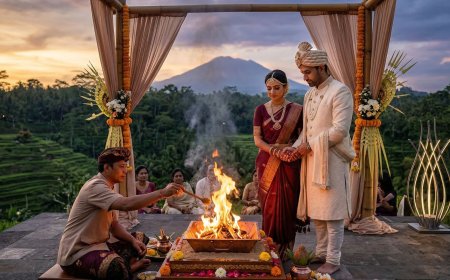
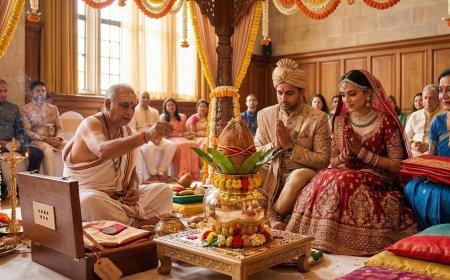
The groom, in Vedic understanding, is temporarily elevated to the status of Vishnu — the preserver of the universe — on his wedding day. He is no ordinary man walking to an ordinary door. He is a divine figure undertaking a sacred journey. The horse he rides echoes the Ashvamedha (ancient horse ritual) and centuries of Rajput warrior tradition — a reminder that this man comes from a lineage, carries a history, and is arriving with intention.
The dhol does not merely provide music. In Indian spiritual tradition, sound is Brahman — the universe itself. The drumbeat that accompanies the baraat is understood to clear the path of negative energy, to awaken auspiciousness, and to signal to the cosmos that a grihastha (householder, the second of life's four stages) is about to begin. The noise is not excess. The noise is prayer.
The dancing baraatis — those uncles who loosen their sherwanis and give themselves entirely to the dhol's rhythm — are participating in something ancient. They are saying: we witnessed this man become who he is. We are here. We are celebrating. We are not ashamed of our joy.
For a non-Indian partner or guest trying to understand: the baraat is the groom's family saying to the world — and to the bride's family — look at what we are bringing you. Look at how much we love him. Now love him too.
Doing the Baraat Abroad: The Practical Reality
This is the section where honesty matters most, because the Rajasthani baraat is the ritual that NRI families most want to do in full — and the one that requires the most advance planning to execute without compromise.
The horse is your first challenge and your most important symbol. In the UK, horses can be hired for wedding processions through specialist equestrian event companies, several of which are now explicitly experienced with Indian wedding baarats — search specifically for "wedding horse hire baraat" in your city. In London, companies operating out of Hertfordshire and Essex regularly bring decorated mares to venues across Greater London. In Toronto and Mississauga, South Asian wedding horse services are well established, particularly around the Brampton corridor. Houston has multiple vendors serving the large Desi community, and in Melbourne, baraat horse hire is available through South Asian wedding agencies in the Dandenong and Craigieburn areas. Book your horse a minimum of three to four months ahead — on busy spring and autumn wedding weekends, availability disappears fast.
The dhol is non-negotiable for most Rajasthani families, and the good news is that dhol players are now well distributed across every major diaspora city. In London, Southall and Wembley have multiple professional dhol players who are experienced with wedding processions. In Toronto, Gerrard Street East and Brampton community networks will connect you quickly. For Houston, Dallas and the wider Texas corridor has a thriving community of South Asian musicians available through wedding vendor platforms. In Sydney and Melbourne, community Facebook groups for Rajasthani and Punjabi NRIs are your fastest route to finding a dhol player who understands a Rajasthani baraat specifically — not just a generic beat.
Street permits are the detail most families forget until too late. If your baraat will move along a public road — even briefly — you will need local council permission in the UK, a municipal permit in Canada, and a city permit in the US and Australia. Apply eight to twelve weeks ahead. Many experienced baraat coordinators will handle this for you, and NRI.Wedding's vendor network includes event coordinators who specialise in exactly this process.
Venue restrictions on fire mean that traditional mashaals are often impossible at indoor or semi-indoor venues. The practical alternatives are high-powered LED torch props that mimic flame visually, or cold sparkler fountains which many venues allow with advance notice. Several UK and Canadian wedding venues have now created specific baraat arrival packages that include a designated route, lighting, and even a sound system for the dhol procession — ask your venue directly and you may be surprised.
For relatives in India watching via video call, the baraat is the moment they most want to witness. Set up a dedicated live stream — not just a WhatsApp call — using a phone on a stabilised gimbal carried by a designated family member. If your family is in Rajasthan, the IST overlap for a late-afternoon baraat in London (3:00–5:00 PM GMT) is a comfortable 8:30–10:30 PM IST — perfect for elderly relatives to watch from home.
Doing the Baraat as a Destination Wedding in India
Rajasthan is, without question, the greatest baraat destination on earth. The state's heritage infrastructure — its fort roads, palace driveways, and ancient havelis — was built for exactly this kind of grand arrival.
Jaipur offers the most iconic baraat experiences, particularly at venues like Samode Palace, Dera Amer, and the various heritage hotels around the old city where elephant or horse processions move through actual Mughal-era gateways. Jodhpur is increasingly popular for its dramatic blue-city backdrop — a baraat moving toward Mehrangarh Fort at golden hour is a photographer's dream and a family's lifetime memory. Udaipur suits families who want grandeur with intimacy — the lake palace approach by boat is an unforgettable alternative to the traditional horse procession.
When briefing local bands and dhol players in Rajasthan, specify your regional tradition clearly — Marwari, Rajput, and Shekhawati baarats have different musical traditions and different sequences for the Milni ceremony. A written brief provided two weeks before the wedding prevents confusion on the day.
For non-Indian guests, the baraat is typically the moment that converts the sceptical into the devoted. Assign a bilingual family member or hire an English-speaking cultural host to walk alongside international guests during the procession, explaining each element as it unfolds. By the time the groom reaches the gate, your non-Indian guests will be dancing too.
What You Need: Ritual Checklist
Ritual Items Decorated ghodi (white mare) with floral and fabric adornments, safa (groom's turban) in family-traditional colour, sehra (floral or pearl veil hung from turban over face), sword for Rajput families, mashaals or LED torch alternatives, dhol and if possible shehnai or brass band, fresh marigold garlands for Milni ceremony, shagun envelopes for the bride's brothers, decorated thali for the bride's mother to perform aarti at arrival.
People Required The groom at centre, surrounded by his closest male relatives and friends as primary dancers. The groom's father walks beside or slightly behind the horse. The groom's sisters and female cousins dance alongside. A designated ghodi handler leads the horse at all times — never leave this to an untrained family member. A dhol player, and ideally a second percussionist. A photographer and a dedicated videographer — the baraat moves fast and is chaotic; two camera operators are strongly recommended.
Preparation Steps Confirm horse and handler eight to twelve weeks in advance. Apply for street or venue permits eight weeks ahead. Book dhol player and musicians six to eight weeks ahead. Brief all baraatis on the route, timing, and sequence two weeks before. Prepare groom's ceremonial outfit and accessories one week before. Conduct a brief route walk-through the day before to check for obstacles, low ceilings, or surface issues for the horse. Set up India video call link and test it the morning of the wedding.
NRI.Wedding connects you with verified baraat coordinators, dhol players, horse hire vendors, and photographers who know exactly how a Rajasthani groom deserves to arrive — find them in our vendor directory.
5 Questions NRI Couples Always Ask
Our venue is an indoor hotel ballroom. Can we still do a proper baraat?
Yes — and many of the most memorable NRI baarats happen in hotel car parks and entrance driveways rather than open streets. Work with your venue to designate the arrival route from a nearby drop-off point to the main entrance. Even a hundred-metre procession with a horse, a dhol, and a dancing family is fully and completely a baraat. The length of the route has never been the point — the presence of joy has always been the point.
My partner is not Indian and his family has never seen anything like a baraat. How do we prepare them?
Send them a video of a Rajasthani baraat at least a month before the wedding — not to intimidate, but to excite. Let them know they are not spectators; they are invited to dance. Assign a warm, English-speaking family member as their personal guide during the procession who can hold their hand through the chaos and make sure they are part of it rather than watching from the side. Most non-Indian families describe the baraat as the moment they understood, at a cellular level, why Indian weddings are the way they are.
How do I find a Rajasthani-style brass band or dhol player in the UK or Canada?
Start with South Asian wedding Facebook groups specific to your city — Rajasthani NRI groups in Leicester, Wembley, Mississauga, and Brampton are active and members regularly recommend vetted musicians. NRI.Wedding's vendor directory also lists musicians by regional tradition. For a full brass band, Indian wedding music companies in Southall can replicate the Rajasthani band sound closely — book them specifically asking for a "Rajasthani baraat set."
Can we live stream the baraat for relatives in India and how do we make it look good?
Invest in a simple phone gimbal — a stabilised camera makes an enormous difference for live streaming a moving procession. Use Instagram Live or YouTube Live rather than a WhatsApp call so multiple family members in India can watch simultaneously without a group size limit. Have someone in India designated to share the link to elderly relatives who may need help accessing it. Start the stream five minutes before the procession begins so relatives can settle in — and consider having someone speak to camera briefly to explain the setting.
We've already done our civil wedding six months ago. Does the baraat still make sense?
Completely and entirely yes. The baraat belongs to your religious and cultural ceremony — it has nothing to do with legal marital status. Many NRI couples have their civil ceremony months or even years before their religious wedding, and the baraat retains every drop of its meaning regardless. You are not arriving as a legally married man. You are arriving as a groom — and that is a role that exists entirely within the ceremony you are about to enter.
The Emotional Angle
There is a specific moment in every baraat that nobody warns you about. It is not when the dhol starts. It is not when the horse appears. It is the moment the groom's mother looks at her son — this boy she bathed and fed and drove to school and argued with and prayed for — sitting on a horse in a safa turban with flowers across his face, and she realises that the world she built for him has worked.
NRI mothers carry a particular weight to this moment. They raised their sons in countries where no one knew what a safa was. Where the dhol needed to be explained, justified, booked months in advance, and squeezed into a venue car park. Where the procession happened not on a street lined with neighbours who had known the family for generations, but in a Mississauga parking lot with December wind cutting through everyone's sherwanis.
And yet.
The dhol starts. The boy on the horse straightens his back. An uncle who has not danced in fifteen years removes his jacket and hands it to someone. And then it begins — that ancient, unstoppable current of joy that no migration has ever managed to interrupt. The baraat moves. The family dances. And the mother, standing at the edge of it all, understands that she did not fail to pass anything on.
She gave her son a culture that knows how to celebrate. In any weather. On any road. In any country on earth.
A Moment to Smile
At a baraat in Southall last October, everything was going to plan until the hired white mare — a beautiful, experienced wedding horse named Percy — decided that the dhol player was standing slightly too close and expressed this opinion by refusing to move forward for eleven full minutes.
The groom, resplendent in his red and gold safa, sat on Percy with extraordinary dignity while three uncles attempted to negotiate with the horse using a combination of encouraging words, a handful of sugar lumps, and what one witness described as "an extremely firm look." The dhol player retreated three steps. Percy reconsidered. The procession resumed to thunderous applause from the assembled family, who by this point had been dancing in place for long enough to constitute a full workout.
The video of Percy's moment of independence has been watched over four thousand times in the family WhatsApp group. The groom says it was the best eleven minutes of his life.
Quotes from the Diaspora
"My husband's family is from Jodhpur and I kept hearing about the baraat for two years before our wedding. I thought I understood it. Then the dhol started and I was standing at the gate waiting and I heard it coming from down the road and I just — I understood everything at once. No one can explain a baraat to you. You have to hear it arrive." — Meera Rathore, Rajasthani-Marathi family, Melbourne
"I hired a horse in Brampton in November. It was four degrees. My sherwani was not designed for four degrees. My mother cried the entire procession. My cousins danced so hard one of them lost a shoe in a snow pile. I would do every single second of it again without changing a thing." — Vikram Singhvi, Marwari community, Brampton
"My mother-in-law had one condition for the entire wedding. Not the venue, not the food, not the flowers. The dhol. She said: I don't care about anything else, but my son will arrive to his wedding with a dhol. We found a player in Houston at 11 PM the night before because our original booking cancelled. He was worth every frantic phone call." — Anjali Bhati, Rajput community, Houston
Your Roots Travel With You
The Rajasthani baraat is many things — spectacle, tradition, prayer, party, declaration. But at its most essential, it is a family's refusal to let their son arrive quietly into the most important moment of his life. It is the insistence that joy deserves to be heard. That culture deserves to take up space. That a groom deserves to feel, for one procession-length stretch of time, like the whole world is dancing for him.
NRI.Wedding exists to make sure that no distance, no permit application, no confused venue coordinator, and no uncertain December morning can take that away from you. From baraat coordinators and dhol players in London, Toronto, Houston, Melbourne, and Dubai, to horse hire vendors who have done this a hundred times before, to photographers who know exactly where to stand when Percy refuses to move — we are here for every step of the procession.
Your roots travel with you. Let them dance.
What's Your Reaction?
 Like
0
Like
0
 Dislike
0
Dislike
0
 Love
0
Love
0
 Funny
0
Funny
0
 Angry
0
Angry
0
 Sad
0
Sad
0
 Wow
0
Wow
0