

































































Beach Weddings in Goa — Everything NRI Couples Need to Know Before Planning Theirs
A Goa beach wedding is one of the most beautiful and most logistically complex events an NRI couple can plan — and the gap between the barefoot dream and the regulatory, seasonal, and operational reality is wider than most planning resources acknowledge. This complete guide covers everything NRI couples need to know about planning a beach wedding in Goa — from the CRZ regulations and beach permit process, the best beaches and venue options, the November to February season window, beachfront resort versus villa versus operator routes, the specific logistical realities of power, sound, lighting, catering and seating on sand, elderly guest management, realistic budget frameworks, and the common mistakes that turn the barefoot dream into an expensive and stressful planning experience.


The Barefoot Dream That Requires Serious Planning
You have had the image in your mind for longer than you can precisely remember.
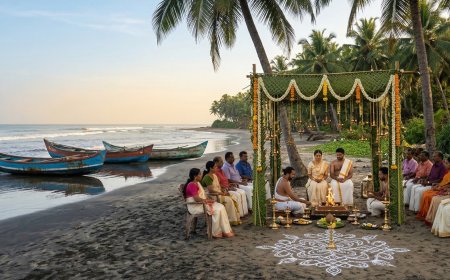
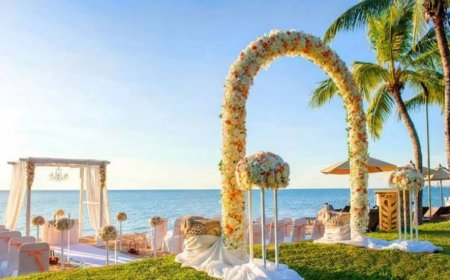
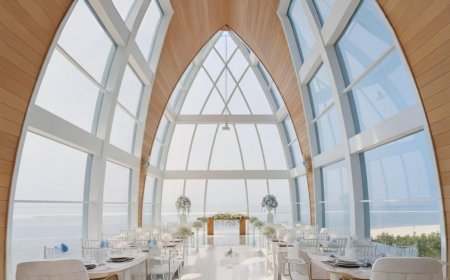
The sun going down over the Arabian Sea. The sky doing what Goa skies do in the late afternoon — that particular sequence of orange and pink and deep purple that no photographer entirely captures and no guest entirely forgets. The sand underfoot. The sound of waves in the background of the ceremony. The people you love most gathered in a loose, warm semicircle around the two of you, dressed in colours that the light makes extraordinary, their faces carrying the particular expression that only a genuinely beautiful setting combined with a genuinely moving ceremony produces.
The barefoot beach wedding.
It is one of the most evocative images in the entire landscape of Indian wedding possibilities — and for NRI couples specifically, who are often drawn to Goa's combination of Indian cultural roots and international aesthetic sensibility, it represents a wedding that feels both rooted and distinctive. Neither a conventional banquet hall wedding that could be anywhere nor a purely Western beach ceremony that has lost its Indian identity — but something genuinely its own. Warm, beautiful, personal, and unmistakably Goa.
And then the planning begins.
And the image — which was always real and remains real — reveals itself to be the conclusion of a planning process that is significantly more complex, more regulated, more logistically demanding, and more weather-dependent than the image itself suggests.
The beach wedding in Goa is entirely achievable Thousands of couples have achieved it. NRI couples arrive from London and Toronto and Dubai and Melbourne every wedding season and stand on a Goa beach at sunset and exchange vows and dance until midnight and leave with photographs that are everything the image promised.
But they achieve it because they understood — before the planning began, not in the middle of it — exactly what a Goa beach wedding actually involves. The permits and the regulations. The specific beaches where events are permitted and the specific beaches where they are not. The season that makes it possible and the season that makes it genuinely unwise. The vendors who know how to deliver a high-quality outdoor event on sand without infrastructure and the vendors who do not. The logistical realities of catering, sound, lighting, seating, and guest management on a beach that has no walls, no permanent power supply, no kitchen, and no weather protection.
This guide gives you all of that — completely, honestly, and with the practical specificity that the barefoot dream deserves to be built on.
The Core Reality: What a Goa Beach Wedding Actually Involves
The Regulatory Framework
The single most important thing NRI couples planning a Goa beach wedding need to understand before anything else is the regulatory environment that governs beach events in Goa — because it is significantly more complex than most planning resources acknowledge.
The Coastal Regulation Zone:
India's Coastal Regulation Zone notification — issued by the Ministry of Environment, Forest and Climate Change — restricts certain activities within specified distances from the high tide line on Indian coastlines. The CRZ notification divides coastal areas into categories with different restriction levels.
For beach events in Goa, the practical implication is that permanent structures, significant earthworks, and certain activities are restricted within CRZ zones. Wedding events — temporary gatherings with temporary structures — occupy a regulatory grey area that varies by specific beach location, by the nature of the structures being erected, and by the permissions obtained from relevant authorities.
The Goa Coastal Zone Management Authority oversees CRZ compliance in Goa. Event permissions for beach weddings involve coordination with multiple authorities — the CZMA, the local panchayat or municipal authority, the beach shack licence holders, and in some cases the Goa Tourism Development Corporation.
The practical reality:
Many Goa beach weddings happen through a combination of formal permissions and informal arrangements — working through established beach event organisers who have existing relationships with local authorities and understand the current permission landscape. Attempting to organise a Goa beach wedding without experienced local event management — particularly for NRI couples planning from abroad — is a significant risk.
The Beach Classification
Not all Goa beaches are equal from a wedding events perspective. The beaches divide broadly into three categories.
Category 1 — Established Event Beaches
Beaches where wedding events have established precedent, where venue operators or beach shack owners have existing permissions and infrastructure relationships, and where the wedding event process is relatively streamlined.
North Goa examples: Vagator, Anjuna, Mandrem, Morjim, Ashwem South Goa examples: Palolem, Agonda, Benaulim, Cavelossim
These beaches offer the most straightforward path to a permitted beach wedding event — typically through a beach resort, a beach shack operator, or an established Goa wedding events company that has existing permissions and infrastructure.
Category 2 — Resort Beach Access
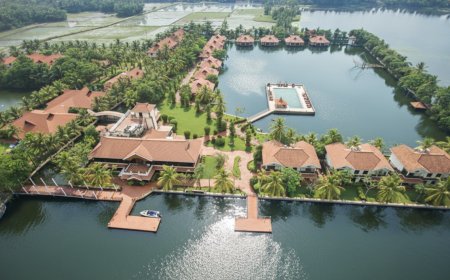
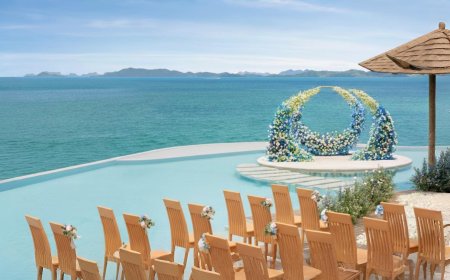
Many Goa's premium beachfront resorts — the Taj Exotica, the Leela Goa, the W Goa, the Park Hyatt — have private beach access or beach areas associated with their property. Weddings at these resorts can use the beach under the resort's own permissions and infrastructure — which significantly simplifies the regulatory process.
This is the most straightforward route to a Goa beach wedding — particularly for NRI couples who want the aesthetic of the beach without the full complexity of independent beach event management. The resort handles the permissions, the infrastructure, and the vendor coordination within their property framework.
Category 3 — Public Beaches Without Event Infrastructure
Popular tourist beaches — Baga, Calangute, Colva — that are heavily trafficked, lack private event infrastructure, and are not appropriate for private wedding events regardless of permissions.
Practical recommendation: Plan your Goa beach wedding through a beachfront resort or through an established beach venue operator — not as an independently organised event on a public beach. The resort or operator route is more expensive than independent organisation but significantly more reliable, more legally straightforward, and more likely to deliver the experience you are planning for.
The Season Question: When to Plan a Goa Beach Wedding
As established in the previous weather guide, Goa's wedding season is tightly constrained by its climate. But the beach wedding dimension adds specific weather considerations beyond the general outdoor event guidance.
November to February — The Ideal Window
This is Goa's wedding season for good reason.
November: Post-monsoon Goa is at its most lush and beautiful. The landscape is green, the air is clear, the beaches are clean after the monsoon rains. Early November carries some residual moisture risk — particularly in the first two weeks — but from mid-November onward, conditions are generally excellent.
December: The peak of Goa beach wedding season. Conditions are outstanding — warm days, comfortable evenings, minimal rainfall risk, and the particular quality of December light that makes outdoor photography extraordinary. The caveat is that December in Goa — particularly Christmas and New Year period — is the most expensive and most congested period of the year. Venue availability is extremely limited, prices are at their annual peak, and the general Goa tourist population is at its maximum.
January: Excellent conditions continue. Slightly cooler than December — evenings can be pleasantly cool rather than warm. January is arguably the sweet spot of the Goa beach wedding calendar — good conditions, somewhat lower pricing than December, and post-New Year crowd reduction.
February: Conditions remain good through February, with temperatures beginning to rise toward the end of the month. February is an underrated beach wedding month in Goa — good weather, pre-Holi availability, and lower vendor pricing than the peak December-January period.
March — The Transitional Month
March is Goa's transitional month — warm, increasingly humid, but still manageable for beach events, particularly in the evening. Early March events carry modest weather risk. Late March events begin to encounter the pre-monsoon heat and humidity that make extended outdoor exposure uncomfortable.
April to May — The Heat Barrier
Temperatures and humidity rise sharply in April and May. Beach events in afternoon hours are not advisable. Evening beach events are possible in April but require realistic assessment of humidity — which, at a coastal location in April, is significant.
June to October — The Monsoon
Goa's monsoon is not suitable for beach wedding events. The southwest monsoon arrives reliably in early June and produces sustained, often heavy rainfall through September. October is nominally post-monsoon but carries residual moisture and occasional late-season rain.
The romantic image of a monsoon Goa beach wedding — rain, dramatic waves, grey skies — is a beautiful photograph and a terrible event. The practical reality of catering, seating, sound equipment, and guest management on a beach in monsoon rain is not romantic. It is logistically untenable.
The Venue Options: How to Structure a Goa Beach Wedding
Option 1 — Beachfront Resort Wedding
Best for: NRI couples who want the beach aesthetic with managed infrastructure and simplified logistics.
How it works:
The resort provides the beach venue — either a section of the beach directly adjacent to the resort or a beachfront lawn that transitions to the beach. The resort handles permissions, infrastructure, catering, accommodation, and vendor coordination within their property framework.
The premium Goa beach resort options:
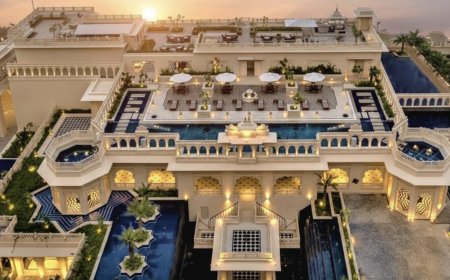
• Taj Exotica Resort and Spa, South Goa — one of India's most established luxury beach wedding properties. Beachfront access, full wedding planning services, consistent execution quality.
• The Leela Goa — extensive beach frontage, established wedding programme, large event capacity.
• W Goa, Vagator — more contemporary aesthetic, strong event infrastructure, popular with younger NRI couples seeking a modern beach wedding.
• Park Hyatt Goa — South Goa location, extensive beach access, strong reputation for wedding execution.
• Alila Diwa Goa — boutique luxury option, smaller capacity, more intimate beach wedding experience.
Advantages of the resort route:
• Permissions managed by the resort
• Infrastructure — power, kitchen, changing rooms — on property
• Accommodation for wedding party and guests on site
• Single vendor relationship for venue, catering, and accommodation
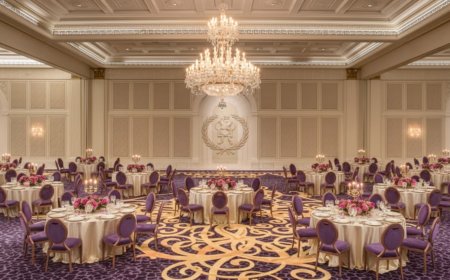
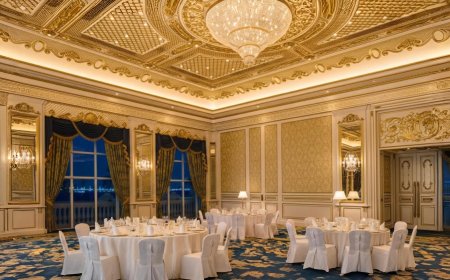
• Weather backup spaces within the resort
Disadvantages:
• Higher total cost than independent organisation
• Less flexibility on vendor choices — most resorts have mandatory or preferred vendor lists
• Standardised package elements that may not align with the couple's specific vision
Option 2 — Beach Villa or Private Property Wedding
Best for: NRI couples seeking a more intimate, personalised beach wedding with greater vendor flexibility.
How it works:
Goa has a significant market in luxury villa rentals with private or semi-private beach access. These properties — ranging from heritage Portuguese villas to contemporary luxury estates — provide the venue infrastructure while allowing the couple to bring their own vendors for catering, decor, entertainment, and coordination.
What to look for in a beach villa wedding property:
• Actual beach access — confirm that the property has legal access to the beach, not merely proximity to it
• Guest capacity — villa properties typically accommodate smaller guest counts than resort venues
• Infrastructure — generator backup, kitchen facilities, bathroom provision for event-scale guest counts
• Permit history — has the property hosted previous events? Do they have the necessary permissions?
• Accommodation — can the wedding party and key guests stay on property?
Advantages of the villa route:
• Greater personalisation and vendor flexibility
• More intimate atmosphere for smaller guest counts
• Often more distinctive aesthetic than standard resort settings
• Lower base venue cost than premium resort packages
Disadvantages:
• Requires independent vendor coordination — more complex for NRI couples planning from abroad
• Permission management falls to the couple or their coordinator
• Infrastructure may be less robust than resort facilities
• Weather backup may be limited
Option 3 — Beach Shack or Operator Partnership
Best for: Couples seeking a more casual, authentic Goa beach experience at lower cost.
How it works:
Established Goa beach shack operators — particularly in North Goa — have developed event hosting capabilities alongside their regular hospitality operations. These operators have existing beach permissions, established vendor relationships, and experience hosting smaller beach events.
This option is most suitable for:
• Smaller guest counts — typically under 100
• More casual event formats — cocktail parties, sangeet events, beach dinners rather than formal seated weddings
• Budget-conscious planning where the beach aesthetic is more important than premium infrastructure
Advantages:
• Lower cost than resort or villa options
• Authentic Goa beach atmosphere
• Operator's existing permissions and local relationships
Disadvantages:
• Variable quality — operators range from highly professional to unreliable
• Limited infrastructure for large events
• Catering quality may not meet NRI wedding standards
• Less appropriate for formal ceremony and reception formats
The Logistical Realities: What the Beach Does Not Provide
Power
A beach has no mains power supply. Every watt of electricity used at a beach wedding event — for lighting, for sound, for catering equipment, for cooling fans, for emergency phone charging — comes from generators.
Generator requirements for a beach wedding of 150-200 guests:
• Minimum two generators — one primary, one backup
• Combined capacity adequate for sound system, full lighting installation, catering equipment, and cooling
• Fuel supply managed throughout the event
• Silent or semi-silent generator specification — standard generators at a beach wedding create sound competition with the music and ceremony audio
Budget implication: Generator hire, fuel, and management for a full beach wedding event: typically ₹50,000–₹1.5 lakhs depending on event size and duration.
Sound
Beach sound management is one of the most technically challenging aspects of a Goa beach wedding. The open environment — no walls, ambient wave sound, sea breeze — creates acoustic conditions that require specialist audio management.
The specific challenges:
• The wind: Sea breezes at beach locations are consistent and can be strong. Wind against a microphone or speaker creates noise that is difficult to manage and that disrupts ceremony audio in ways that are not a problem at enclosed venues.
• The ambient sound: Waves are beautiful as a backdrop. They are less beautiful when they are competing with the ceremony audio at a volume that makes the vows difficult to hear from the third row.
• Sound dispersion: Open air dissipates sound in all directions. The speaker system that delivers clear audio in an enclosed ballroom requires significantly more power and more carefully engineered placement to deliver equivalent clarity on an open beach.
What this requires:
• A specialist outdoor audio company — not a standard wedding DJ who primarily works indoor events
• Directional speaker placement that delivers audio to the audience area rather than dispersing it into the environment
• Wind-protected microphone solutions for ceremony audio
• Sound testing in advance — ideally at the specific beach location at a similar time of day
Budget implication: Specialist beach audio for a wedding event: typically ₹1–3 lakhs for quality outdoor audio management.
Lighting
Beach lighting for evening events is one of the most beautiful elements of a Goa beach wedding — and one of the most complex to execute well.
The specific challenges:
• No attachment points: A beach has no walls, no ceiling, no permanent structures to attach lighting to. Every lighting element requires its own support structure — poles, frames, or furniture-integrated solutions.
• Wind: String lights and lanterns in sea breezes require secure attachment and wind-rated installation. Lighting that looks magical in still air can become a hazard in strong wind.
• Sand: Sand gets into everything. Generator connectors, lighting cables, speaker equipment, catering infrastructure. Dust and moisture protection for all electrical equipment is essential.
The lighting approach that works:
• Ground-level lighting: Candles in hurricane lanterns, low LED installations, torches — ground-level lighting is wind-resistant and creates the warm, romantic atmosphere of the best Goa beach wedding photographs.
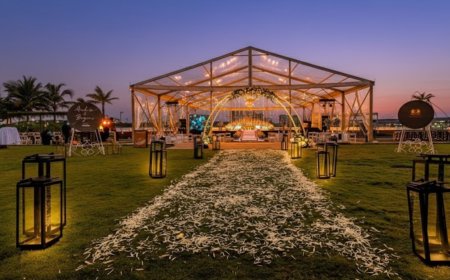
• Pole-mounted string lights: When properly installed in a grid or canopy formation with adequate pole support, string lights create the signature Goa beach wedding canopy effect.
• Floral and natural elements: Marigold garlands, tropical floral installations, and natural materials like bamboo and coconut palm work with the beach aesthetic rather than against it.
What to avoid:
• Elaborate hanging installations that require overhead attachment points which do not exist on a beach
• Lighting that depends on proximity to walls or ceilings that a beach does not have
• Delicate lighting elements that cannot survive sea breeze and sand
Seating and Furniture
Sand is a fundamentally different surface from a ballroom floor — and the furniture choices that work in one environment do not necessarily work in the other.
The seating challenge:
Standard wedding chairs — Chiavari chairs, banquet chairs — sink into sand, wobble on uneven surfaces, and look contextually wrong in a beach setting. The seating solution for a beach wedding needs to be sand-appropriate.
What works:
• Low seating: Ottomans, cushioned floor seating, poufs — lower seating is more stable on sand and creates the relaxed aesthetic that suits a beach setting
• Bamboo and rattan furniture: Lightweight, contextually appropriate, stable on uneven sand
• Wooden platforms: Raised wooden deck platforms provide stable, level surfaces for dining tables and seating areas — removing the instability of direct sand contact
What does not work:
• Heavy furniture that sinks into soft sand
• Standard banquet chairs in large numbers — they tip, they sink, they scratch guests who are barefoot
• Long dining tables in a formal arrangement — on a beach, a more casual seating arrangement typically serves the aesthetic and practical requirements better
Catering
Beach catering is one of the most logistically challenging aspects of a Goa beach wedding — and the aspect most likely to compromise quality if not managed carefully.
The fundamental challenge: There is no kitchen on a beach. Everything — every dish, every garnish, every serving vessel — must either be prepared off-site and transported to the beach, or prepared in a temporary kitchen setup adjacent to the event.
The quality implications:
• Hot food that travels from an off-site kitchen to a beach location loses temperature. Management of food temperature during transport and service on a beach — without the kitchen warming equipment of a permanent venue — requires specific logistics planning.
• Live cooking stations — the element that guests most enjoy at Indian weddings — require gas equipment, preparation surfaces, and waste management that work differently on a beach than in a venue kitchen.
• Service logistics on sand — carrying dishes, managing buffet lines, clearing plates — is physically more demanding than equivalent service on a hard floor. Service quality depends on staffing ratios that need to be higher than for equivalent indoor events.
What works best for beach catering:
• Live counter focus: Chaat stations, live grill stations, fresh juice counters — live cooking elements that are designed for outdoor operation and that guests gather around rather than being served from
• Simplified menu: Fewer complex dishes that require last-minute finishing, more items that hold well and serve well in outdoor conditions
• Experienced outdoor catering team: Caterers who have specifically managed beach events — not caterers who are excellent at indoor events attempting their first beach operation
The Guest Experience: Managing 200 People on a Beach
Arrival and Orientation
Guests arriving at a beach wedding need more arrival management than guests arriving at an indoor venue. There is no obvious entrance, no reception desk, no natural funnelling of arrivals toward the event space.
What effective beach arrival management requires:
• Clear directions from accommodation to the beach venue — beach entrances are not always obvious, particularly at night
• Visible event markers from the beach access point — lighting, signage, staff
• A welcome point with staff to orient arriving guests
• A footwear management solution — a basket or stand for shoes at the beach entry point if the event is barefoot, or guidance for guests who cannot walk barefoot
Elderly Guest Management
Sand is challenging terrain for elderly guests — particularly those with mobility limitations, those using walking aids, or those in formal footwear that is not sand-appropriate.
Planning for elderly guests:
• Identify in advance which guests have mobility limitations
• Arrange a hard-surface or wooden platform pathway from the beach access point to the seating area
• Designate a specific seating area for elderly guests that is most accessible and most protected from wind
• Brief venue staff on supporting elderly guests during the event
Children
A beach is an irresistible environment for children — which is simultaneously charming and logistically challenging. Children at beach weddings require specific management to prevent event disruption and ensure their safety near the water.
What works:
• A designated children's area with appropriate supervision
• Clear communication to parents about the event's proximity to the water
• Adequate lighting in all areas children might explore after dark
Common Mistakes NRI Couples Make With Goa Beach Weddings
Planning Without a Local Goa Wedding Specialist
The complexity of permissions, vendor relationships, beach logistics, and seasonal weather management in Goa is genuinely beyond what can be managed effectively from abroad without local specialist support.
Correction: Engage a Goa-based wedding planner with specific beach wedding experience — not a general India wedding planner who handles Goa occasionally, but a specialist with a portfolio of Goa beach wedding executions. Ask to speak with NRI couples they have managed specifically.
Underestimating the Premium Cost of Beach Events
Beach weddings in Goa are not budget weddings. The additional cost of generator hire, specialist audio, wooden platforms, outdoor-appropriate furniture, higher service staffing ratios, and the premium pricing of peak season Goa venues makes a quality Goa beach wedding significantly more expensive per head than an equivalent-quality indoor venue event.
Correction: Build a Goa beach wedding budget with a twenty to thirty percent premium over what an equivalent indoor event would cost. The premium reflects the genuine additional cost of quality outdoor beach event management — not vendor overcharging.
Not Confirming Beach Access Rights With the Venue
Some Goa properties market themselves as beachfront venues without having clear legal beach access rights for private events. The property may be adjacent to the beach without having the permissions to host an exclusive private event on the beach itself.
Correction: Before signing any venue contract, ask specifically: do you have the permissions to host an exclusive private wedding event on the beach? What is the nature of those permissions? Have you hosted beach wedding events in the last twelve months — and can you provide references?
Not Having a Weather Contingency Plan
Even in peak season, Goa occasionally experiences unexpected weather — an early pre-monsoon shower in late February, an unusually windy evening, an unseasonal cloud system. The couple who has no indoor contingency has no options.
Correction: Every Goa beach wedding contract should include a confirmed indoor backup space with capacity for the full guest count — equipped and reserved for the event date. The backup is for the ten percent probability scenario. Its availability is one hundred percent essential.
Booking Sound and Lighting Vendors Without Beach-Specific Experience
The sound and lighting vendor who is excellent at indoor Goa events is not automatically qualified for outdoor beach events. The technical requirements are different — and the difference becomes apparent during execution.
Correction: Ask every sound and lighting vendor specifically about their beach event portfolio. Request references from beach events specifically — not from their indoor event work.
The Goa Beach Wedding Budget Framework
The following gives a realistic budget framework for a Goa beach wedding of 100-150 guests in peak season — December to January.
Venue — beachfront resort or private beach access:
• Resort package: ₹8–25 lakhs depending on property tier
• Villa rental: ₹3–8 lakhs for the property, plus all vendor costs
Catering — per plate:
• Resort catering: ₹2,500–₹6,000 per plate
• Independent caterer: ₹1,800–₹4,000 per plate
Decor — beach-appropriate outdoor: ₹4–12 lakhs depending on scope and style
Sound — outdoor specialist: ₹1–3 lakhs
Lighting — outdoor installation: ₹1.5–4 lakhs
Generator — hire, fuel, management: ₹50,000–₹1.5 lakhs
Photography and video: ₹3–10 lakhs for quality coverage
Wedding planner — Goa specialist: ₹2–6 lakhs for full service
Guest accommodation — peak season Goa: ₹8,000–₹25,000 per room per night depending on property
Total realistic budget range for a quality Goa beach wedding of 100-150 guests: ₹30–80 lakhs, with significant variation based on venue tier, guest count, and season.
The Emotional and Cultural Layer: Why Goa and Why the Beach
There is something worth naming about why the Goa beach wedding resonates so specifically with NRI couples — beyond the obvious aesthetic beauty of the setting.
Goa occupies a unique cultural position in the NRI imagination. It is Indian — unmistakably, historically, culturally Indian — but it is also international in a way that most of India is not. Its Portuguese heritage, its coastal openness, its tradition of welcoming people from everywhere — these qualities make it a place where the NRI experience of living between cultures feels not like a compromise but like a natural home.
The beach wedding in Goa is, in this sense, a deeply NRI wedding. It does not require choosing between Indian cultural identity and the international aesthetic sensibility that NRI life develops. It holds both — the Indian ceremony, the international setting, the family from four countries gathered in a place that belongs equally to all of them.
The planning complexity is real. The cost is real. The regulatory requirements are real.
But so is the image — the sun going down over the Arabian Sea, the sky doing what Goa skies do, the people you love gathered in the particular light of a Goa beach evening.
It is achievable. Thousands of couples have achieved it. With the right planner, the right venue, the right season, and the right understanding of what the barefoot dream actually requires — it is entirely, genuinely, beautifully achievable.
Plan it properly. Execute it carefully. And then stand on that beach at sunset and let it be everything it was always supposed to be.
Goa Beach Wedding Planning Checklist
Twelve to Eighteen Months Before
• Confirm target season — November through February only for beach events
• Identify venue type — resort, villa, or beach operator
• Research and shortlist three to five Goa beach wedding specialists
• Request proposals from shortlisted planners — confirm beach wedding portfolio
• Begin venue research — confirm beach access rights with each venue
• Build initial budget with beach wedding premium factored in
Nine to Twelve Months Before
• Confirm venue and sign contract — with indoor backup provision
• Engage Goa beach wedding specialist planner
• Begin NRI guest accommodation booking — peak season fills early
• Confirm sound and lighting vendors — verify beach-specific experience
• Confirm catering approach — resort package or independent caterer
Six to Nine Months Before
• Confirm all vendor contracts — generator, furniture, decor, photography
• Begin permit and permissions process with planner's guidance
• Plan guest arrival logistics — from accommodation to beach venue
• Plan elderly guest and mobility accessibility provisions
• Confirm weather contingency plan and indoor backup activation protocol
Three to Six Months Before
• Confirm all vendor site visits to the beach location
• Sound and lighting technical planning — site assessment
• Catering logistics planning — transport, temperature management, staffing ratios
• Finalise seating arrangement and furniture selection
• Guest communication — weather guidance, footwear guidance, arrival directions
Final Month
• Generator test at venue
• Sound system test at beach location — equivalent time of day
• Final vendor briefing — beach-specific logistics for each team
• Weather monitoring — daily from two weeks before event
• Confirm indoor backup readiness — fully equipped and staffed
The Dream That Planning Makes Real
The Goa beach wedding is not a simple wedding. It is a complex, expensive, logistically demanding, regulatory-aware, weather-dependent event that requires specialist planning, significant budget, and the specific local expertise that only a Goa beach wedding specialist can provide.
And it is worth every bit of that complexity.
Because when it is done right — when the sun is going down over the Arabian Sea and the sky is doing what Goa skies do and the people you love are gathered in the light that exists nowhere else — the result is something that a ballroom cannot produce, that a rooftop cannot replicate, and that a video tour cannot fully capture.
It is the barefoot dream, made real.
Plan it with the seriousness it deserves. Execute it with the local expertise it requires. And then stand on that beach and let the image you have carried for longer than you can precisely remember become the memory you will carry for the rest of your life.
Goa is waiting. The planning starts now.
Published by NRIWedding.com — The Premium Global Platform for Non-Resident Indians Planning Indian Weddings From Abroad.
What's Your Reaction?
 Like
0
Like
0
 Dislike
0
Dislike
0
 Love
0
Love
0
 Funny
0
Funny
0
 Angry
0
Angry
0
 Sad
0
Sad
0
 Wow
0
Wow
0